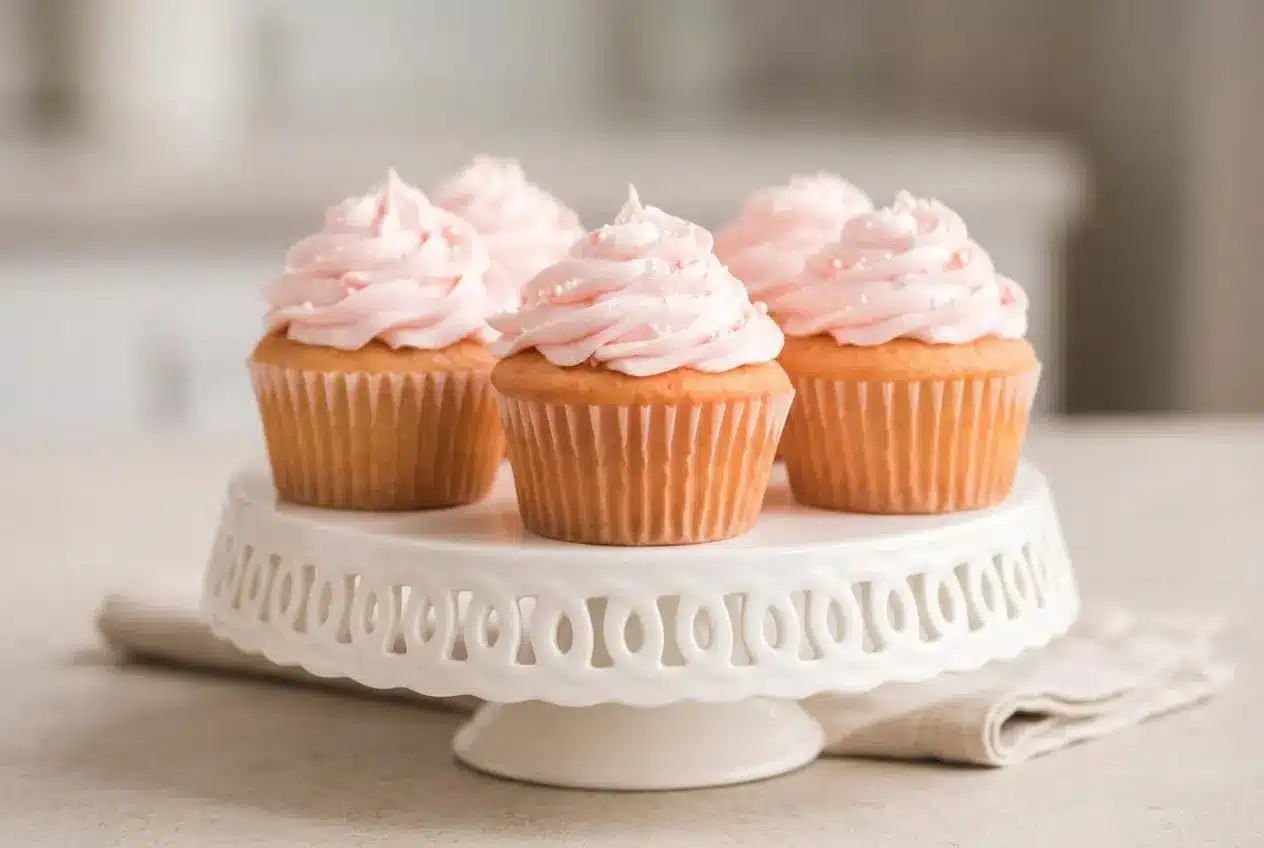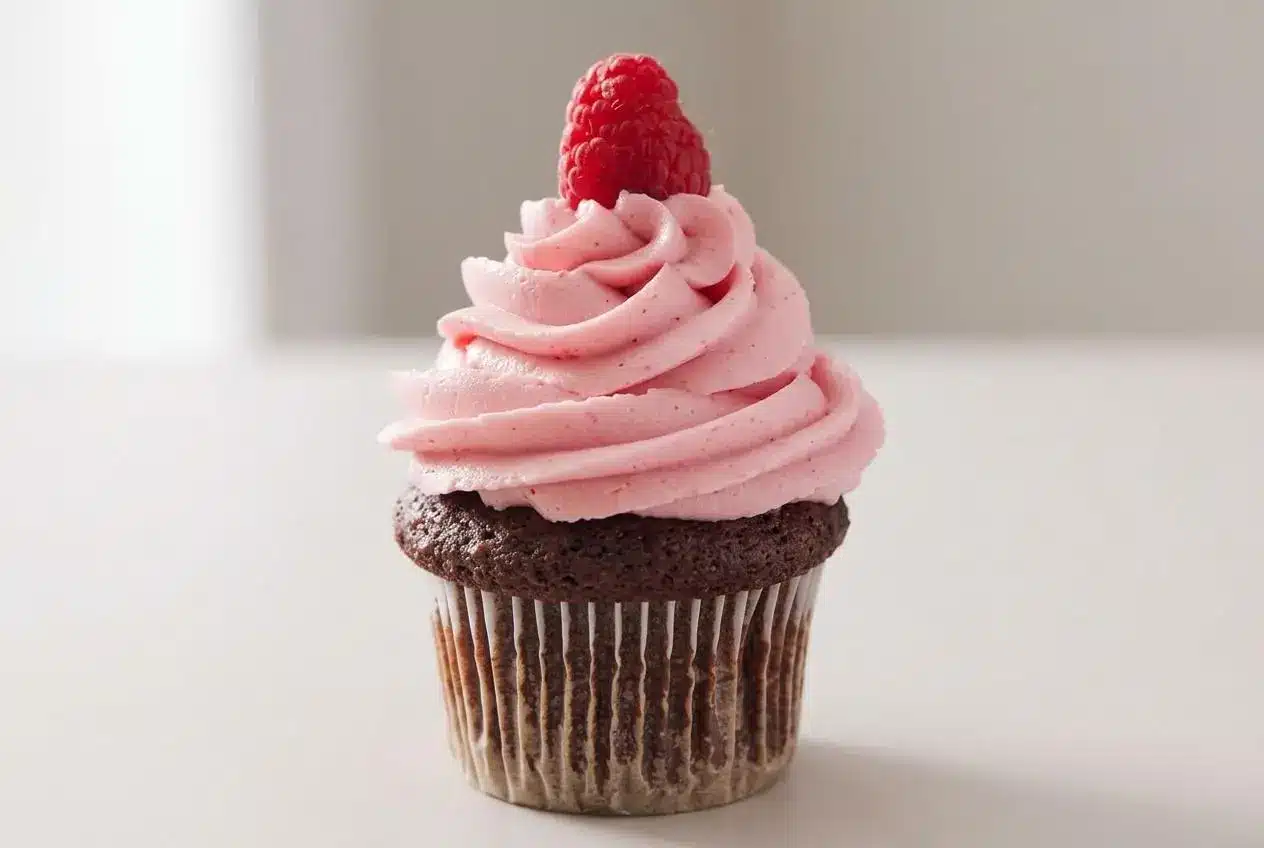
For stable raspberry buttercream, cook the berries with lemon juice into a thick reduction, chill it completely, then add it slowly to whipped room-temperature butter and confectioners’ sugar.
Raspberry buttercream tastes like real berries, not candy, and the color comes out naturally vibrant pink to deep magenta depending on how much reduction you add.
It’s velvety, tart, and pipeable when the butter is softened properly and the fruit goes in cold. That final temperature match is the whole trick.
Wash fresh raspberries well and let them drain before cooking so you do not add extra water to the pan.
Essential Ingredients and Their Roles
Each ingredient here does real work, from building the emulsion to sharpening the berry flavor and giving the frosting its smooth structure.
- 1 cup raspberries (120g)
- 3 tablespoons fresh lemon juice
- 1 pound confectioner’s sugar (450g/ about 4 cups)
- 1 cup unsalted butter room temperature (226g)
Raspberries bring the tart fruit flavor and natural pink color, but they also carry a lot of water, which is why they need to be reduced before they ever meet the butter. Lemon juice brightens the berry flavor and helps the fruit cook down into a thicker, more balanced reduction instead of tasting flat or overly sweet.
Confectioner’s sugar does more than sweeten. It thickens the buttercream, helps bind the small amount of fruit you add, and gives the frosting a stable body for spreading or piping. Sifting it first is worth the extra minute because little sugar lumps can leave the finished frosting grainy.
Butter is the structure. When it’s at room temperature, it traps air as you beat it and creates that light, fluffy base that carries the fruit. Unsalted butter gives you better control over flavor, and it keeps the berry note clean rather than muddy.
I look for butter that feels soft when pressed but still looks matte, not shiny or greasy. Once it starts looking oily, it is already too warm for the best texture.
Fresh vs Frozen vs Freeze-Dried Fruit
The fruit choice changes both flavor and stability, so it helps to pick the one that matches your baking day.
- Fresh raspberries give the brightest flavor and a clean berry aroma. They are ideal when you want a classic reduction and a fresh, slightly tart finish.
- Frozen raspberries work very well, but they release more water as they thaw. Drain off excess liquid first, then expect the simmer to take a little longer before the mixture turns thick and jammy.
- Freeze-dried raspberries are the most stable option because they add intense fruit flavor without extra moisture. They are especially useful when the frosting needs to hold up better in a warm kitchen.
- Seedless preserves or jam are the quickest shortcut. They trade some fresh flavor for speed and convenience.
Selecting the Right Butter
Butter temperature matters as much as butter type. Standard American unsalted butter works well here because the recipe is built around it, and once whipped, it creates the classic structure you expect from classic buttercream frosting.
European-style butter usually has a slightly higher fat content and a bit less water, so it can make the frosting feel richer and a touch firmer. Standard American butter has a little more water, which is one reason the raspberry reduction must stay very thick and very cold before you add it. Either can work, but unsalted butter is the best choice if you want the berry flavor to stay front and center.
How to Make Perfect Raspberry Buttercream
This method works because you control moisture first, then build the buttercream in stages so the emulsion stays smooth.
- Cook the raspberries and lemon juice in a saucepan over medium heat, wait until the fruit softens, then mash and simmer for about 10 minutes.
The mixture should darken from bright pink to deep magenta and smell more concentrated, with a jam-like thickness instead of a loose puree. - Press the cooked fruit through a fine mesh sieve into a bowl, discard the seeds, cover, and chill the reduction until cold, about 2 hours.
The strained puree should look smooth and thick, and it must feel fully cold before mixing so it does not melt the butter. - Beat the room-temperature butter on medium speed with an electric mixer or stand mixer until it looks lighter in color and noticeably fluffier.
Properly whipped butter turns pale, expands in volume, and loses that dense, heavy look. - Add the confectioner’s sugar gradually on low speed, then beat in the cold raspberry reduction one tablespoon at a time until the color and consistency look right, using about 1/4 cup if needed.
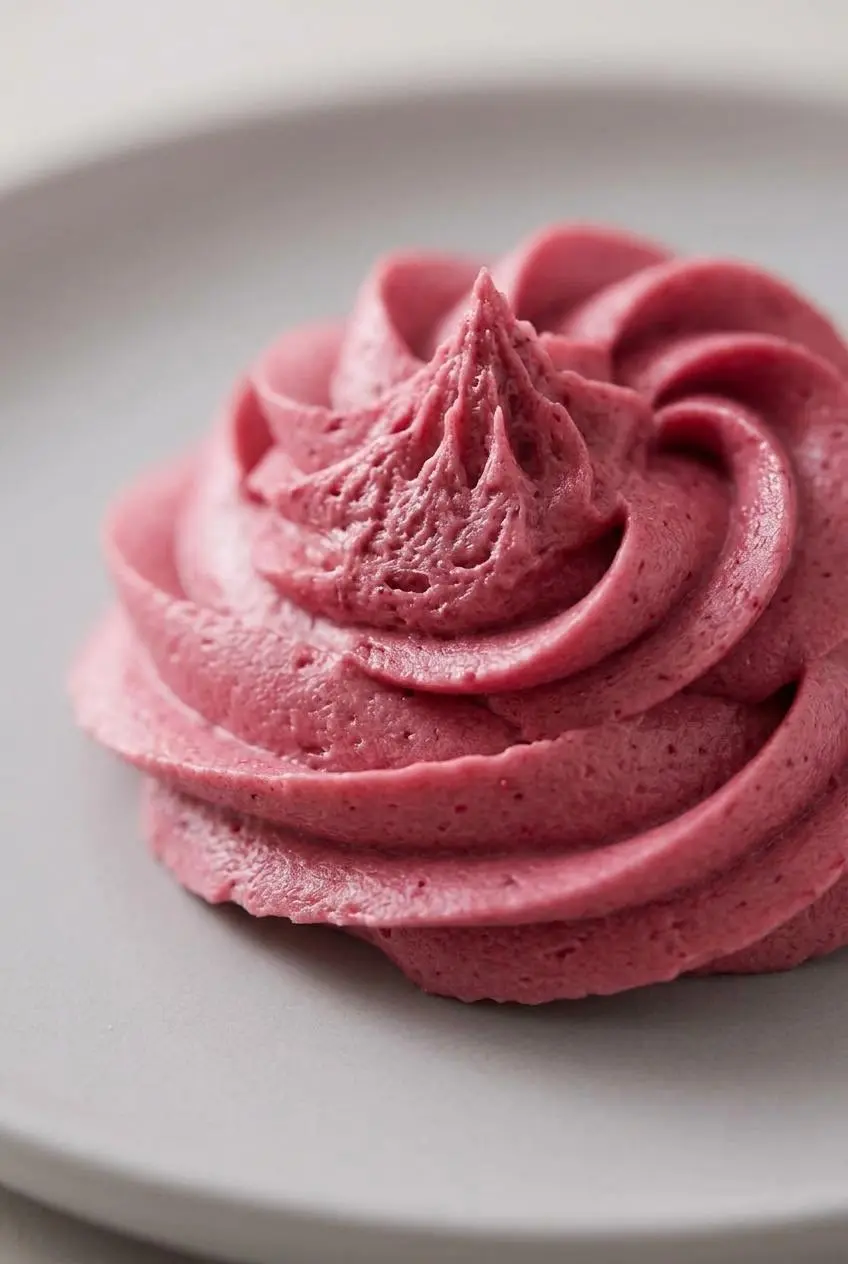
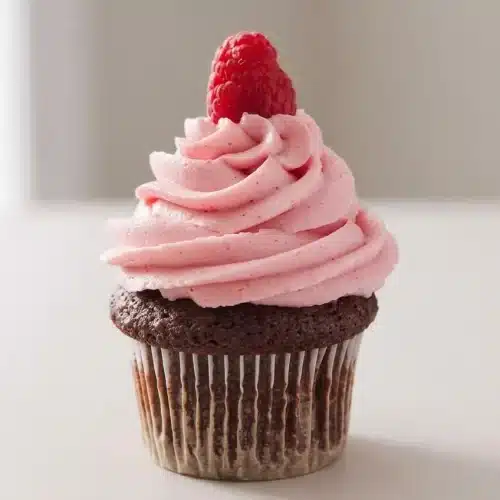
The finished frosting should look smooth and matte, hold soft peaks, and spread or pipe without slumping.
Step 1: Making the Thick Raspberry Reduction
This is where the frosting either succeeds or fights back. Simmering drives off excess water, which is the main enemy of a stable buttercream.
At first, the berries look loose and glossy. After several minutes, the bubbles get slower and thicker, the color deepens, and the aroma shifts from fresh fruit to a more concentrated berry scent. By the end, you want something closer to a thin jam than a sauce. If it still pours like juice, keep cooking.
Step 2: Straining and Cooling
Press the cooked berries firmly through a fine mesh sieve so you keep the flavorful pulp but leave the seeds behind. Scrape the underside of the sieve too, because that thicker pulp is useful flavor and color.
Then chill the reduction until fully cold, about 2 hours. This is non-negotiable. Warm puree softens the butter too quickly, and then the frosting can look greasy, curdled, or flat instead of fluffy.
Step 3: Whipping the Butter Base
Give the butter enough time to lighten before sugar goes in. A few minutes works, but a longer whip can make it even airier if your butter started a little dense.
You are looking for a pale, fluffy texture that spreads easily around the bowl. If the butter still looks heavy and glossy, it has not trapped enough air yet.
Step 4: Slow Emulsification
Add the sugar gradually so it blends in smoothly instead of packing into lumps. Then add the cold raspberry reduction slowly, one tablespoon at a time, and stop as soon as the flavor, color, and texture land where you want them.
That slow finish matters because butter and fruit do not naturally want to stay together. When it works, the frosting turns silky and matte, with no graininess, puddling, or streaks of butter.
The Science of Emulsification: Raw Juice vs Reduced Puree
Fruit buttercream splits when too much water hits a fat-based frosting too fast. Butter is mostly fat, raspberries are mostly water, and those two need help to stay blended.
Raw raspberry juice is thin and high in moisture, so it can overwhelm the structure of the butter and sugar. Reduced puree works better because simmering removes water and concentrates the fruit into a thicker paste. That gives you stronger berry flavor with less liquid, which is exactly what this kind of frosting needs.
If you have ever watched buttercream go from fluffy to curdled in seconds, that is usually the reason. The temperatures do not match, the fruit is too loose, or both happen at once.
To Strain or Not to Strain: Handling Raspberry Seeds
For the smoothest piping texture, strain the seeds out. A seedless finish moves cleanly through star tips and round tips, and it looks more polished on cupcakes and layer cakes.
If you are using the frosting more as a rustic cake filling, a few seeds are not the end of the world. They add texture and make the berry element look more natural. Still, for macarons or decorative piping, seedless is the better path.
How to Naturally Intensify Raspberry Flavor
If the frosting tastes sweet but not especially raspberry-forward, a few small adjustments help. Let the reduction cook down fully, because concentrated fruit always tastes bolder than a loose puree.
You can also cool the reduction with a scraped vanilla bean for a rounder aroma, or add a tiny pinch of fine sea salt to sharpen the contrast between sweet butter and tart fruit. If the berry flavor still needs a lift, a very small extra drop of lemon juice can brighten it. Go carefully. Too much extra liquid pushes the texture the wrong way.
The Sturdiest Method: Freeze-Dried Powder
When maximum stability matters, freeze-dried raspberries are the easiest workaround because they bring color and flavor without adding extra moisture.
Grind the berries into a fine powder, then sift that powder into the confectioner’s sugar before it goes into the whipped butter. Sifting matters here too. It removes hard bits that can clog piping tips and keeps the frosting smoother.
This version is especially helpful for outdoor celebrations, tall swirls on cupcakes, or any time your kitchen runs warm. The flavor is often a little more intense and tangy than a fresh reduction version, and the texture stays firmer because you are not adding liquid fruit.
The Quick Preserves Shortcut
Seedless raspberry preserves or jam can stand in for the fresh reduction when time is tight. Use it as an optional shortcut, not as a change to the main recipe.
Because jam is already sweet and concentrated, add it cautiously and taste as you go. You may want slightly less confectioner’s sugar so the frosting does not turn cloying, but keep the adjustment modest so the texture stays stiff enough for piping.
Troubleshooting Split or Curdled Buttercream
Most raspberry buttercream problems come down to temperature or excess moisture, and both are usually fixable.
- If the frosting looks curdled and stiff, the butter is probably too cold or the fruit reduction was colder than the butter base. Warm the bowl gently, then whip again until it smooths out.
- If the frosting looks loose, glossy, or slightly soupy, the mixture is too warm. Chill the bowl briefly, then beat again so the butter can firm back up.
- If the frosting tastes good but feels too soft, the reduction may have been too wet or too much may have been added. Beat in a little more confectioner’s sugar to help bind the excess liquid.
- If the frosting is lumpy, the butter may have started too cold or the sugar was not well incorporated. Keep mixing after the temperature evens out, and next time sift the sugar first.
- If the frosting separates after a long mix, stop beating once it turns smooth. Overbeating after the fruit goes in can push the emulsion too far.
- If the color looks pale, add another small spoonful of cold reduction rather than chasing color with unreduced puree. More liquid is rarely the answer.
How to Fix a Cold Split Bowl
If the bowl feels cool and the buttercream looks grainy or broken, warm the outside of the bowl for a few seconds with a hair dryer on low, then whip again. Short bursts work better than a long blast.
You are trying to soften the butter just enough for the emulsion to reconnect. Once the frosting turns smooth and fluffy, stop warming and keep mixing only until it stabilizes.
How to Fix a Warm, Melting Frosting
If the frosting looks shiny, loose, or slightly melted, place the bowl in the refrigerator for 10 minutes, then beat it again. That short chill helps the butter firm up so it can hold the fruit properly.
If needed, repeat once more rather than adding random ingredients. Temperature solves this problem more often than anything else.
Make-Ahead, Storage, and Freezing Directions
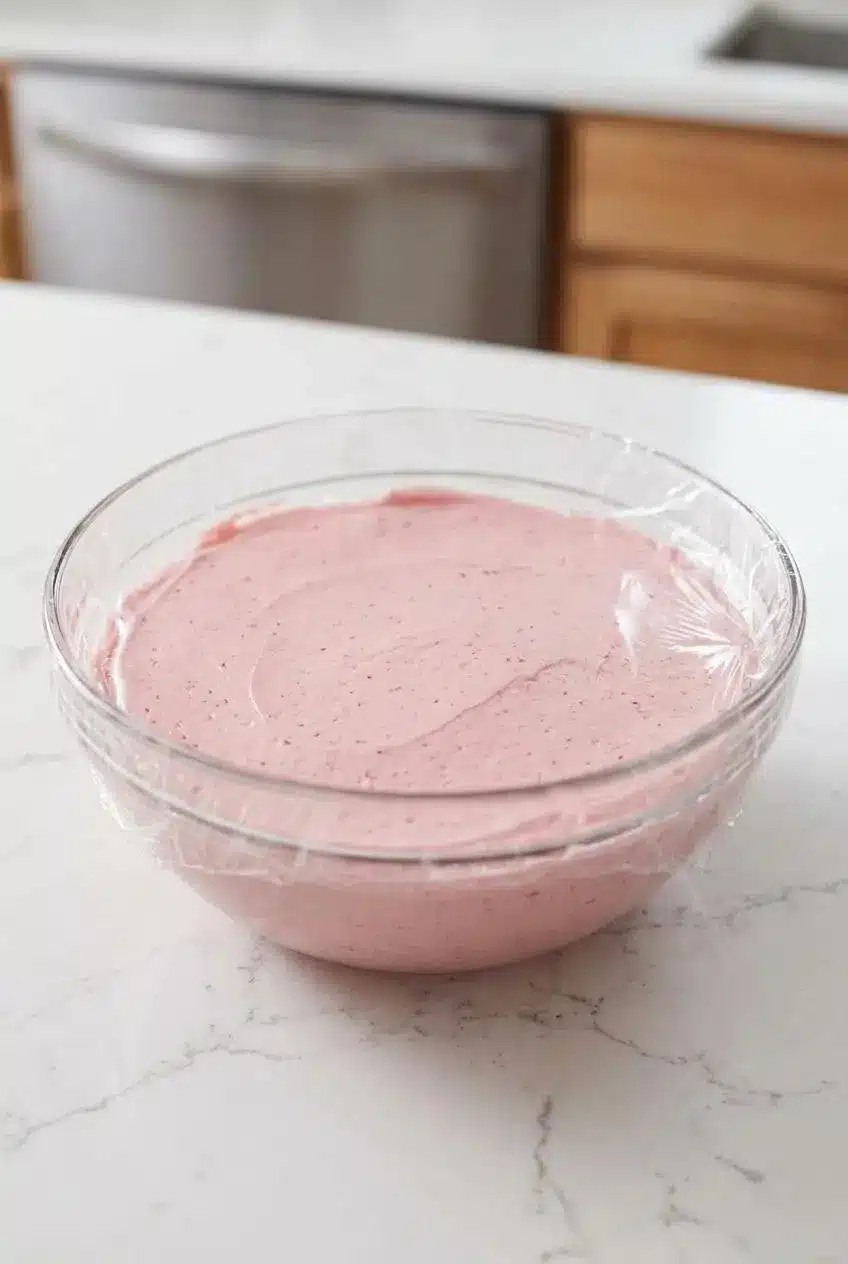
You can make this frosting ahead and keep it chilled until you need it. Store it in an airtight container with plastic wrap pressed directly against the surface to limit air exposure.
Refrigerate it for up to 1 week or freeze it for up to 3 months. Keep dairy-based frostings properly chilled, and keep your refrigerator at or below 40°F and your freezer at 0°F.
When you are ready to use it again, bring the frosting back to room temperature naturally, then re-whip until it turns light and spreadable. Do not try to loosen frozen or cold buttercream with warm water. Re-whipping is what restores the texture.
If you start with fresh berries, wash and handle them well before cooking. Rinsing produce under running water and keeping your prep area clean helps reduce the risk of bringing unwanted grit or contamination into the saucepan, especially when you are working with fruit that breaks down quickly during cooking when washing fresh produce under running water.
Perfect Pairings for Cakes and Cupcakes
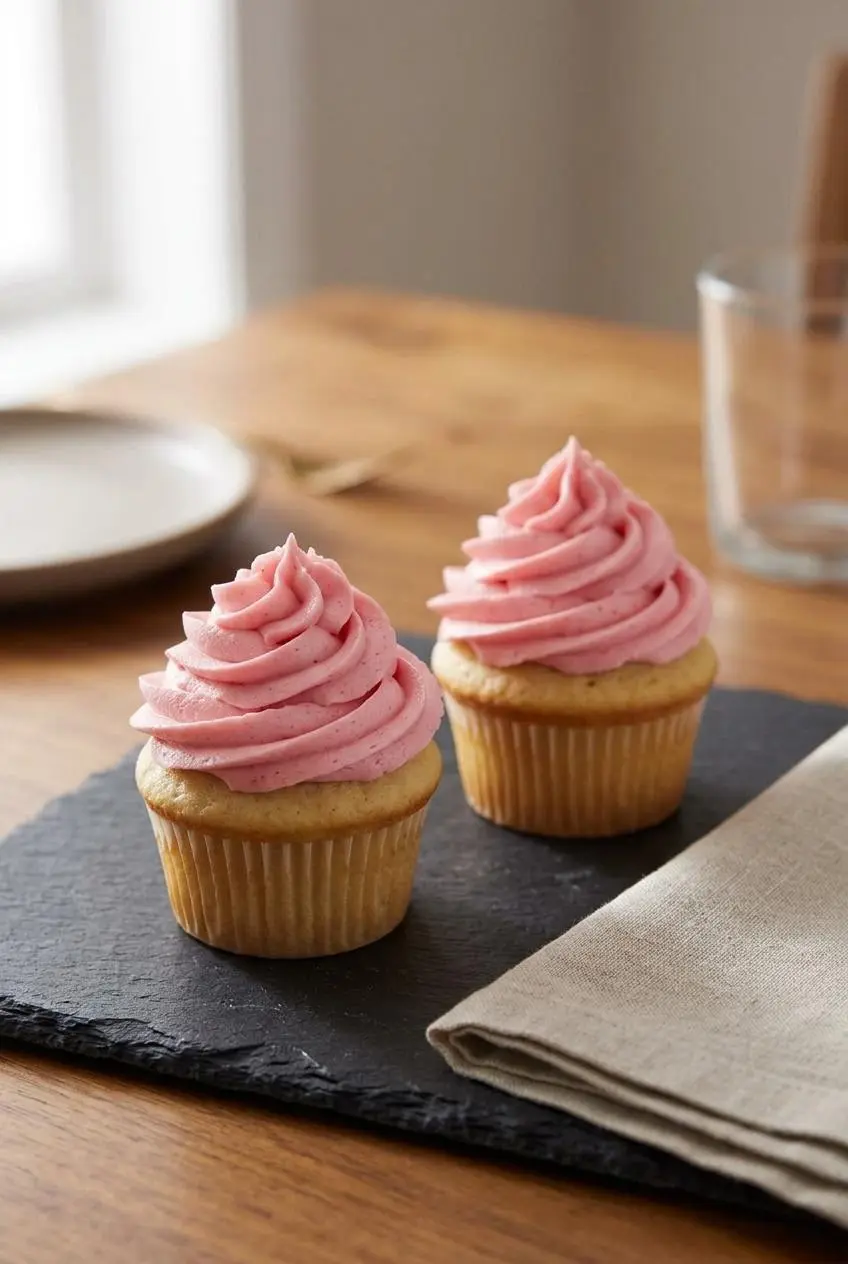
This frosting shines most when the cake underneath gives it contrast. Tart berry buttercream loves mellow, rich, or citrusy layers.
- Vanilla cake keeps the raspberry flavor front and center and makes the color pop.
- Chocolate cake gives you that classic sweet-tart contrast, especially with dark chocolate layers.
- Lemon cake makes the berry notes taste even brighter. It’s especially good on a lemon raspberry cake.
- Pistachio cake adds a nutty, slightly savory edge that makes the fruit feel more complex.
- French macarons pair beautifully with this frosting because the reduced fruit keeps the filling flavorful without making it overly loose.
- Rich white chocolate layers also work well, especially in a white chocolate raspberry cake where the tart frosting cuts the sweetness.
Conclusion
Real fruit gives this buttercream its best qualities: bright flavor, natural color, and a finish that tastes fresher than extract-heavy frosting. The reduction step is what makes all of that possible without wrecking the texture.
If you remember one thing, make it this: the raspberry reduction must be completely cold before it goes into the bowl. Get that right, and the rest comes together beautifully.
Frequently Asked Questions
Can I use frozen raspberries instead of fresh?
Yes. Frozen raspberries work very well in this frosting. Thaw and drain them first so you are not starting with extra liquid. Simmer them a bit longer if needed until the reduction looks thick and jammy.
How do I fix curdled or separated raspberry buttercream?
If the bowl is cold, warm the outside briefly and whip again. If the frosting is too warm, chill it for 10 minutes, then re-whip. If excess moisture caused the problem, add a little more confectioner’s sugar to help bring it back together.
Can I use raspberry jam instead of fresh berry reduction?
Yes, seedless raspberry jam is a useful shortcut. Add it gradually, since it is already sweet and concentrated. Keep any extra liquid to a minimum so the frosting stays firm enough to pipe.
How much cake or cupcakes will this recipe frost?
This batch makes about 3 cups of frosting. That is enough for 12 to 15 cupcakes, depending on how generously you pipe. It also works for filling and lightly frosting an 8-inch two-layer cake.
Raspberry Buttercream

Equipment
- Saucepan
- Electric hand mixer or stand mixer
- Mixing Bowl
- Fine-Mesh Sieve
Ingredients
- 1 cup raspberries (120g)
- 3 tablespoons fresh lemon juice
- 1 pound confectioner’s sugar (450g/ about 4 cups)
- 1 cup unsalted butter room temperature (226g)
Instructions
- Add the raspberries and lemon juice to a saucepan over medium heat. After the mixture heats up for a few minutes, mash the raspberries then allow it to simmer for about 10 minutes.
- Strain the mixture into a bowl through a fine mesh sieve, and discard any solids. Cover the raspberry mixture and chill until cold, about 2 hours.
- Cream the room temperature butter for a few minutes on medium speed with an electric or stand mixer.
- Gradually beat in the confectioner’s sugar while mixing on low speed, and add the raspberry reduction a tablespoon at a time until the desired color and consistency are reached. (I usually end up using 1/4 cup.) Use the frosting immediately.