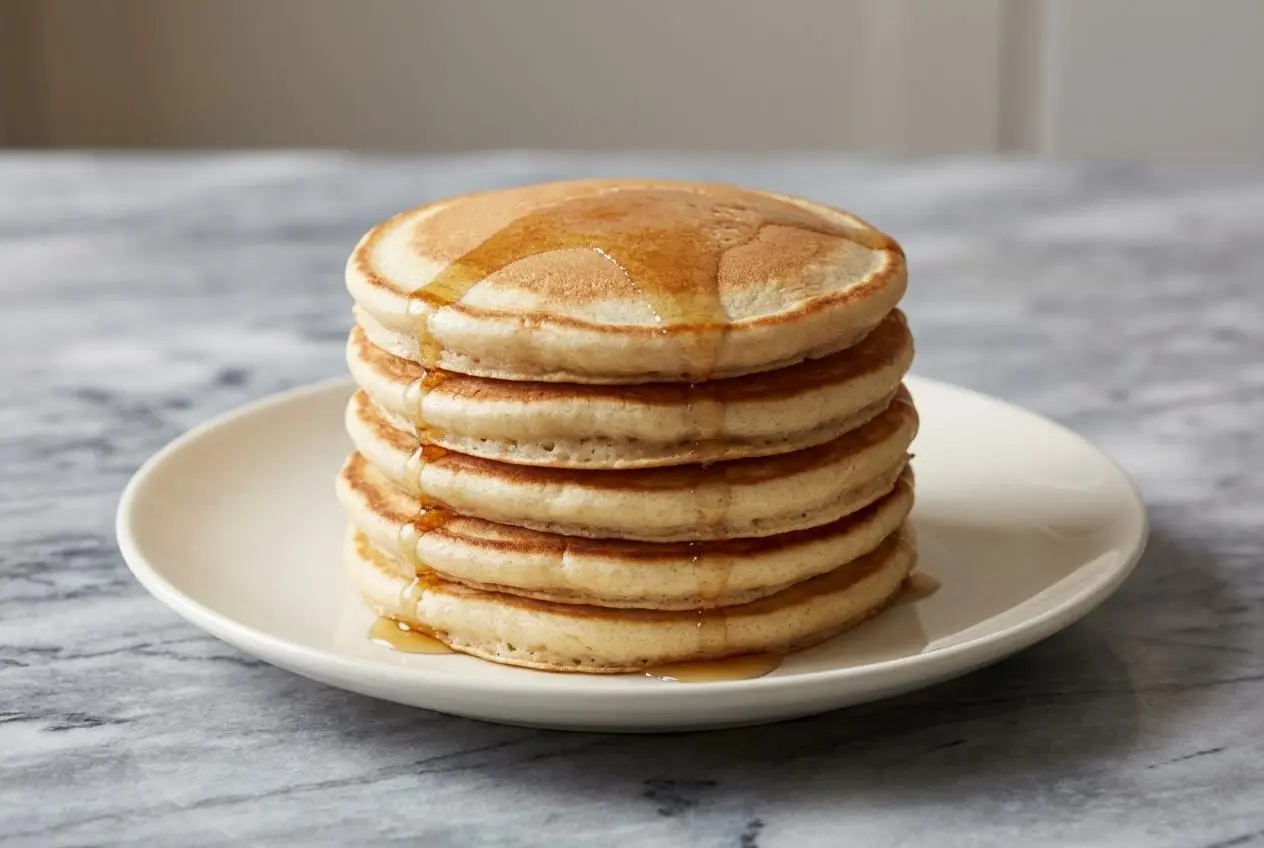
I’ve made enough disappointing protein pancakes to know the usual heartbreak, dense centers, dry edges, and that chalky finish nobody wants at breakfast. These protein vegan pancakes are my answer when I want a high-protein breakfast that actually tastes like a treat, whether it’s for a post-workout meal or just a better start to a busy morning.
What makes this version worth keeping is how simple it is. You get a thick, fluffy, tender stack with pantry basics and a few smart technique tweaks, so the pancakes stay satisfying and easy instead of fussy.
Why You’ll Love These Protein Pancakes
Fluffy, not heavy: In my kitchen, the biggest difference comes from using a quick vegan buttermilk made with plant-based milk and apple cider vinegar. That little bit of acidity gives the baking powder more lift, so the pancakes cook up lighter and taller.
Tender and sturdy: Ground flaxseed is the quiet hero here. It acts like an egg-free binder, helping the pancakes hold together beautifully so they stay tender instead of crumbling when you flip them.
Better flavor: Protein powder can sometimes taste flat or a little earthy, especially with pea protein. The subtle tang from the vegan buttermilk balances that flavor and makes the whole stack taste more rounded and satisfying.
Perfect for real life: These fluffy pancakes feel cozy enough for a slow weekend breakfast, but they also fit neatly into meal prep. I love recipes that can do both without sacrificing texture.
Ingredients and Substitutions
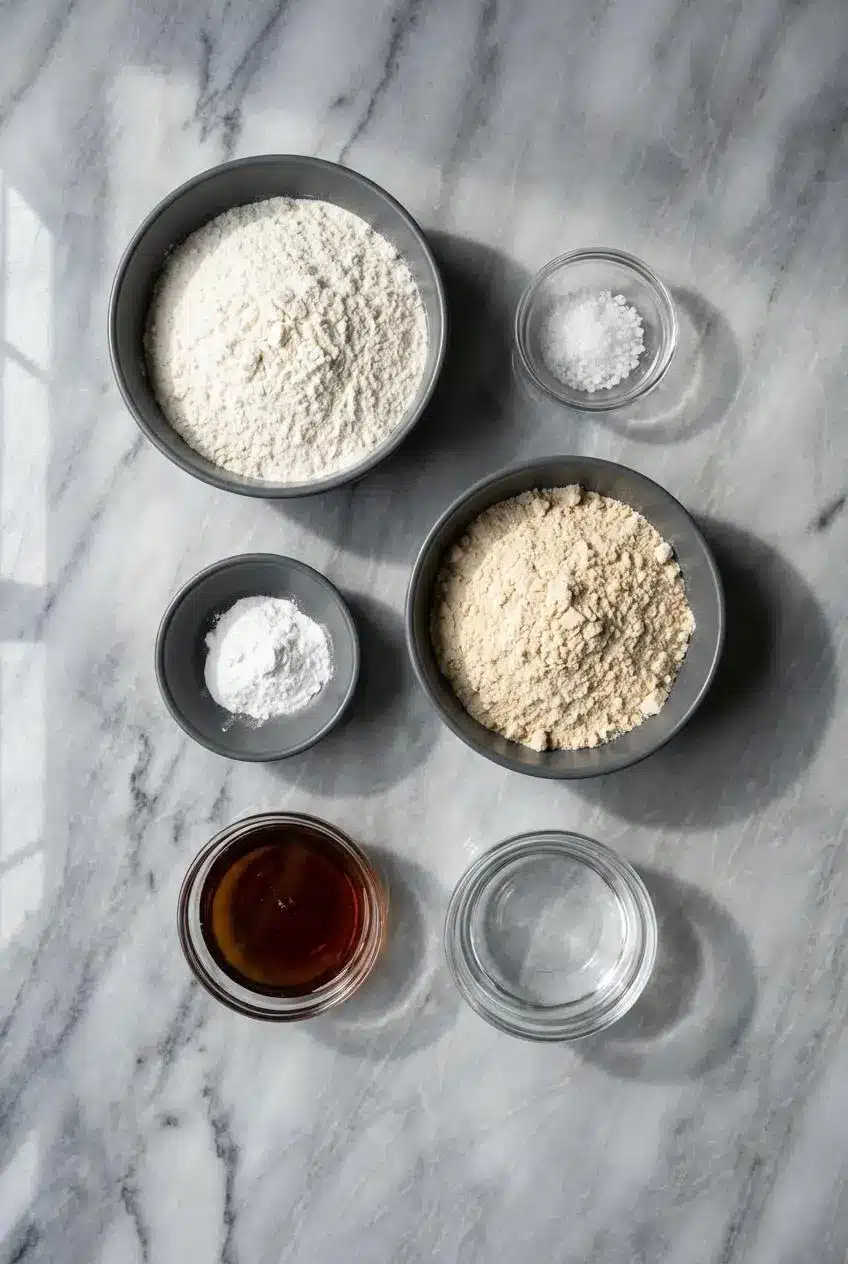
This batter keeps things simple, with pantry staples doing most of the heavy lifting. The balance of flour, vegan protein powder, and liquid is what gives these pancakes their soft, hearty bite.
Ingredients
- 1 cup all-purpose flour
- 1/4 cup vegan protein powder of choice
- 1 tbsp baking powder
- 1/2 tsp sea salt or kosher salt
- 2 tbsp maple syrup
- 1 cup water, plus more as needed
Ingredient Notes & Substitutions
All-purpose flour: This is the easiest choice for reliably fluffy pancakes with a tender crumb. If you want to swap in gluten-free flour, use a good 1:1 gluten-free baking blend, and if you use whole wheat flour or oat flour, expect a slightly heartier texture and be ready to add a splash more liquid.
Vegan protein powder: Different powders behave very differently in batter. Soy protein is often smoother and more neutral, while pea protein can be thirstier and more earthy, so if your batter looks too thick to pour easily, add a little extra liquid until it loosens up.
Maple syrup: If your vegan protein powder is already sweetened, I’d reduce the maple syrup or even leave some of it out. A quick taste of the batter tells you a lot, and it helps keep the pancakes from turning overly sweet.
Flaxseed meal: Even though it is not in the base ingredient list here, I often add flaxseed meal when I want a little more structure and moisture in egg-free pancakes. If you like the same effect, ground chia seeds can stand in, but leaving both out means the pancakes will be a bit more delicate.
Plant-based milk and apple cider vinegar: The core recipe uses water, but when I want the fluffiest texture possible, I swap that liquid for plant-based milk mixed with a little apple cider vinegar. It creates a homemade vegan buttermilk that gives the pancakes a gentler tang and a more tender rise.
How to make protein vegan pancakes
Mix the dry base
In a medium bowl, whisk together the all-purpose flour, vegan protein powder, baking powder, and salt until the mixture looks even and no pockets of powder remain. Take an extra moment to press out any clumps from the protein powder, because those little lumps can leave dry spots in the finished pancakes.
Build the batter
- Pour in the maple syrup first, then slowly add the water while stirring gently. Mix only until the batter comes together, and stop while it still looks a little lumpy and quite thick but still pourable.
- If the batter feels more like paste than pancake batter, add a small splash of extra water. You want it substantial enough to hold shape on the pan, but loose enough to spread slightly on its own.
Rest and cook
- Let the batter sit for 5 to 10 minutes while you heat a non-stick pan or griddle over medium-low heat. This short rest gives the flour time to hydrate, and the batter will usually thicken slightly as it stands.
- Lightly coat the pan with cooking spray if needed, then scoop about 1/4 cup of batter per pancake onto the warm surface. When bubbles start appearing across the top and the edges look dry and set, flip each one and cook for 1 to 2 more minutes until both sides are golden brown and the centers feel springy.
Serve warm
These are at their best straight from the pan, when the edges are lightly golden and the middles are still soft and steamy. Finish them with your favorite toppings and serve right away.
The Science of Perfectly Fluffy Protein Pancakes
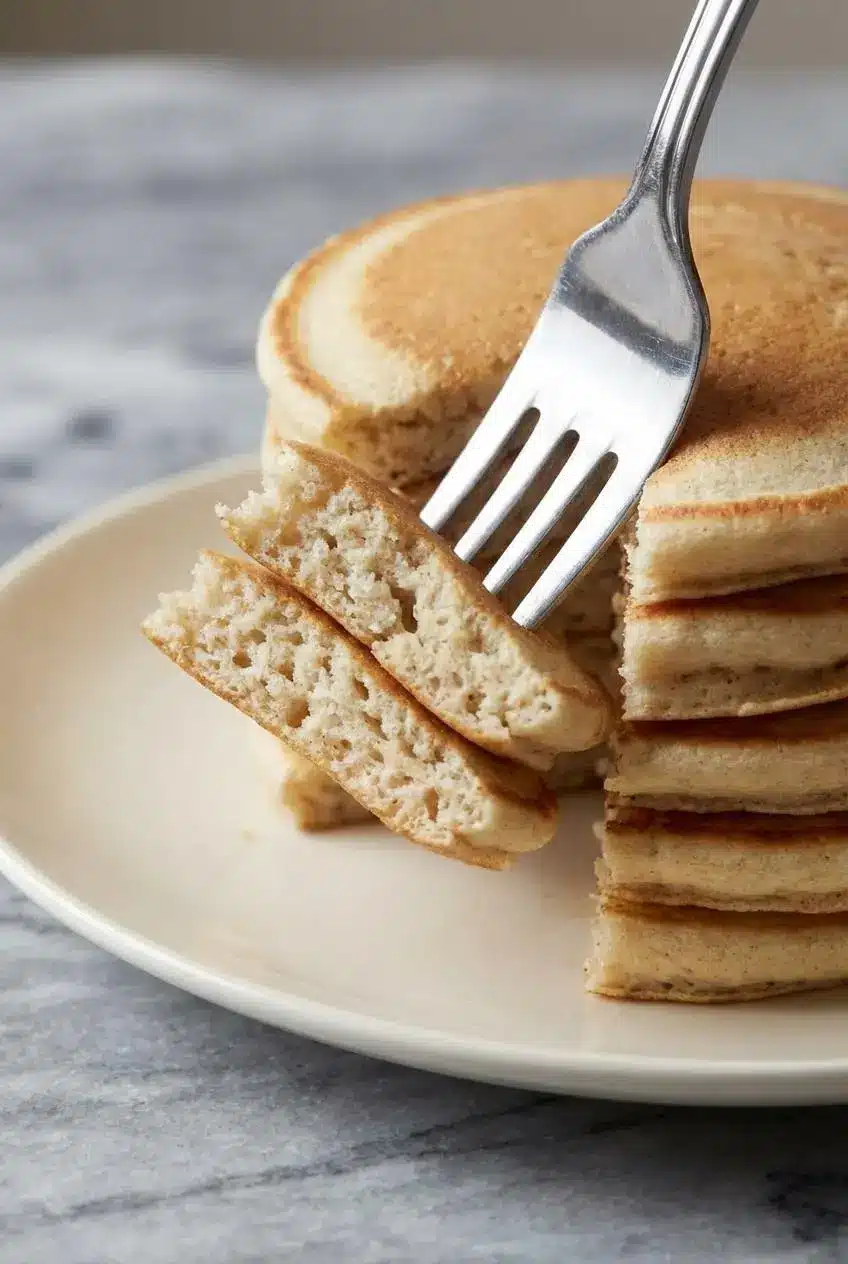
The reason protein pancakes often turn dense comes down to how protein powder changes the structure of the batter. It absorbs moisture and can weigh down the crumb, so you need enough lift and enough tenderness to keep the pancakes airy instead of rubbery.
That is why I love the vegan buttermilk trick, even when a basic recipe starts with water. The acid from apple cider vinegar reacts with the baking powder to create more gas bubbles, which helps build a lighter pancake, and it also softens the flavor of stronger vegan protein powder.
Flaxseed meal helps in a different way. Once it meets liquid, it forms a gel that gives egg-free batter more structure and moisture, which is one reason pancakes with flax tend to feel more tender and less crumbly.
The final piece is restraint. If you stir until the batter is completely smooth, you develop more gluten in the flour and end up with a tougher, gummier result, especially once protein powder is in the mix, so a few lumps are actually a very good sign.
Choosing the Best Vegan Protein Powder for Pancakes
Not all vegan protein powder behaves the same way in a pancake batter, and that is usually where home cooks get tripped up. Some powders blend in smoothly, while others soak up liquid fast and turn the batter thick almost instantly.
Pea protein tends to be hearty and filling, but it can bring an earthy flavor and usually needs more liquid. In baking, proteins really do absorb liquid differently, which is why a pea-based batter often benefits from an extra splash of plant-based milk or water before it hits the pan.
Soy protein is often my easiest pick for pancakes because the flavor is more neutral and the texture is usually smoother. It tends to make a batter that is easier to pour, with less grit and a more classic fluffy pancake feel.
Hemp protein has a stronger, nuttier taste and can make pancakes darker and more rustic. I like it when I want a hearty breakfast, but it rarely gives the softest texture of the bunch.
Brown rice protein can be a little chalky if the brand is not finely milled. When I use it, I am especially careful not to overdo the amount, because too much can leave the pancakes dry.
Flavored powders can work beautifully, especially vanilla in a breakfast recipe like this. If the powder is sweetened, I dial back the maple syrup, and if it is strongly flavored, I keep the rest of the batter simple so the taste stays balanced.
Learning how your protein powder behaves is useful well beyond pancakes. The same liquid-balancing instinct matters in other baked breakfasts too, which is why recipes like protein banana bread also benefit from paying close attention to how thirsty your powder is.
Tips, Tricks, and Troubleshooting
Pro Tips
- Let the batter rest for 5 to 10 minutes before cooking. That short pause helps the flour hydrate and gives you thicker, fluffier pancakes.
- Keep the heat at medium-low, not high. Protein pancake batter needs a gentler pace so the center cooks through before the outside gets too dark.
- Use the water-drop test to judge the pan. A few drops should sizzle and dance steadily, not vanish instantly and not sit still.
- Drop blueberries or dairy-free chocolate chips onto each pancake after the batter is on the pan, instead of stirring them into the bowl. That keeps the mix-ins evenly spread and less likely to scorch.
- If you use flaxseed for extra binding here, you will notice the same texture-building magic in other seed-based breakfasts, including this creamy chocolate chia pudding, where seeds do a lot of the structural work.
Common Mistakes to Avoid
- Dense and gummy pancakes: The batter was probably overmixed, or the pan heat was too low. Stir just until combined and leave a few lumps behind.
- Dry and gritty texture: This usually points to the protein powder. Some powders need more liquid, and skipping flaxseed in adapted versions can also reduce moisture.
- Burnt outside, raw inside: The pan is too hot. Lower it to medium-low and give the pancakes time to cook through slowly.
- Flat pancakes: Batter that goes straight to the pan without resting often spreads too much. A short rest helps the batter thicken and the baking powder begin its work.
Serving Suggestions and Storage
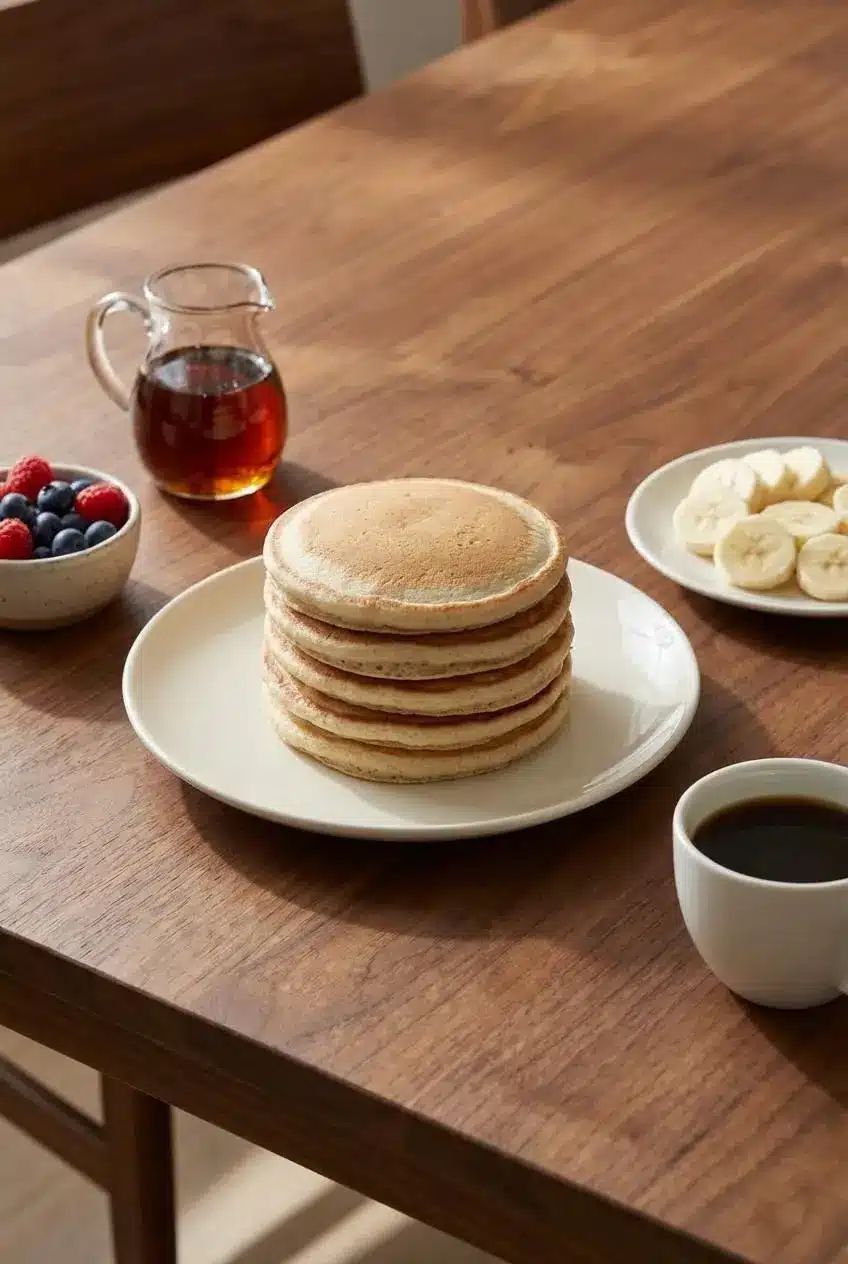
Delicious Topping Ideas
These pancakes welcome all the classics. I love them with maple syrup, fresh berries, sliced banana, almond butter, peanut butter, or a spoonful of vegan yogurt for a creamy finish.
If you want a little crunch, cacao nibs, shredded coconut, or dairy-free chocolate chips work beautifully. For a more filling plate, I’ll sometimes add cashew cream or tahini and call it breakfast with staying power.
Storing, Freezing, and Reheating
Leftover pancakes keep well in an airtight container in the fridge for up to 3 to 4 days. Food safety guidance on how to store leftover pancakes lines up nicely with that window, and it is the schedule I use in my own meal prep.
For the freezer, let the pancakes cool completely first so steam does not turn into ice crystals. Stack them with parchment paper between each one, then tuck them into a freezer-safe bag or container.
To reheat, a toaster or toaster oven gives the best texture, because it brings back a little crispness around the edges while keeping the middle soft. The microwave works too for speed, but use short bursts so they stay tender.
If you enjoy high-protein breakfast recipes that can be made ahead, these pancakes fit right in with a good protein waffle recipe for weekends and a batch of blueberry protein muffins for grab-and-go mornings. I like rotating all three so breakfast never feels repetitive.
For an easy dry mix prep, whisk together larger amounts of the flour, vegan protein powder, baking powder, and salt and keep it in an airtight container. On a busy morning, you only need to measure out a portion and stir in the wet ingredients for a much faster pancake routine.
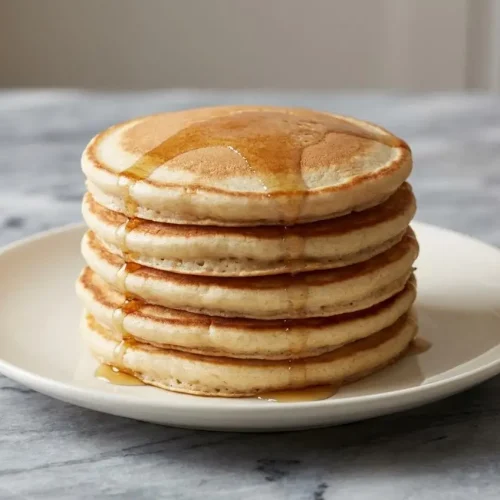
Fluffy Protein Vegan Pancakes

Equipment
- Medium bowl
- Whisk
- Non-stick pan or griddle
Ingredients
- 1 cup all-purpose flour
- 1/4 cup vegan protein powder of choice
- 1 tbsp baking powder
- 1/2 tsp sea salt or kosher salt
- 2 tbsp maple syrup
- 1 cup water, plus more as needed
Instructions
Mix the Dry Ingredients
- In a medium bowl, whisk together the all-purpose flour, vegan protein powder, baking powder, and salt. Make sure to break up any clumps from the protein powder to ensure a smooth batter.
Build the Batter
- Pour the maple syrup into the dry ingredients. Slowly add the water while stirring gently. Mix only until the batter is just combined; it should still be thick and slightly lumpy.
- If the batter seems too thick or paste-like, add another splash of water until it’s a thick but pourable consistency.
Rest and Cook
- Let the batter rest for 5 to 10 minutes. While it rests, heat a non-stick pan or griddle over medium-low heat.
- Lightly grease the warm pan if needed. Scoop about 1/4 cup of batter per pancake onto the pan. Cook until bubbles form on the surface and the edges look set and dry.
- Flip the pancakes and cook for another 1 to 2 minutes, or until both sides are golden brown and the center is cooked through.
Serve Warm
- Serve the pancakes immediately while warm, finished with your favorite toppings like maple syrup, fresh fruit, or almond butter.
Notes
Conclusion
Good protein vegan pancakes should be fluffy, tender, and deeply satisfying, not dry or chalky. A smart batter, a short rest, and gentle heat make all the difference, and if you like to experiment, the vegan buttermilk and flaxseed approach is a beautiful upgrade.
I hope this becomes one of those breakfast recipes you can make almost from memory. Once you find the protein powder and texture you love, the stack is yours to personalize.
Frequently Asked Questions
What is the best vegan protein powder to use for pancakes?
How can I make these protein pancakes gluten-free?
Why are my pancakes dense or gummy, and how can I make them fluffier?
What’s the best way to store and reheat leftover pancakes?
Can I add mix-ins like fruit or chocolate chips to the batter?
How do I know if my pan is at the right temperature?