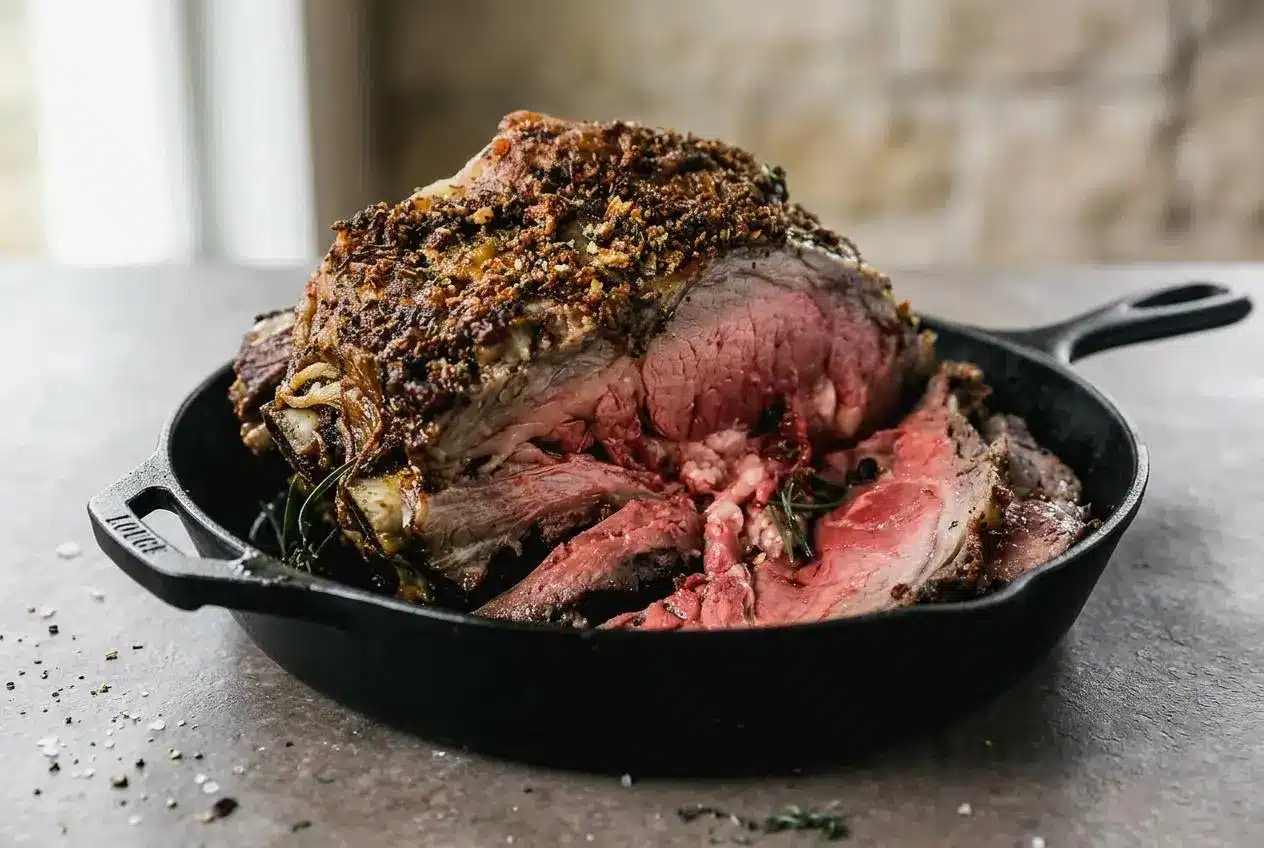
For a reliable prime rib, season a room-temperature roast, start it at 500°F for 15 minutes, lower the oven to 325°F, cook to your target temperature with a meat thermometer, then rest it for 30 minutes before carving.
A great prime rib roast recipe should feel clear, not nerve-racking. This one gives you the classic method, the key temperatures, and the buying advice that keeps an expensive roast from becoming a guessing game.
You’ll also get help with doneness, carving, au jus, and common fixes if dinner goes a little sideways. The herb and garlic crust is worth sticking around for.
Set your thermometer out before you start so it’s impossible to “forget it and wing it.”
Why This Is the Only Prime Rib Guide You’ll Need
Prime rib can look dramatic on the table, but the cooking logic is actually pretty straightforward once you know what matters most. The big wins are choosing the right roast, seasoning it well, roasting by temperature instead of hope, and resting it long enough to keep the juices where they belong.
This guide walks you through the full process, from buying bone-in or boneless to understanding medium-rare, comparing cooking methods, making au jus, and fixing common problems. If this is your first standing rib roast, you’re in the right place.
How to Choose the Best Prime Rib Roast
Buying the roast well makes the whole meal easier. You do not need butcher-level expertise, but a few smart choices will give you better flavor, easier carving, and portions that actually fit your gathering.
Prime vs. Choice: Is It Worth the Price?
Prime grade has more marbling, which usually means richer flavor and a more luxurious texture. If budget allows, it’s a wonderful choice for a holiday centerpiece.
Choice is still an excellent option, especially when it’s well marbled and cooked carefully. A properly roasted Choice prime rib can still come out deeply beefy, tender, and impressive, so don’t feel like dinner is doomed if Prime isn’t available.
Bone-In vs. Boneless: Which Is Right for You?
Bone-in prime rib looks classic and the bones can help shield part of the roast as it cooks. It also gives you that dramatic standing rib roast presentation people love at the table.
Boneless prime rib is easier to maneuver, season, and carve. If you want the best of both worlds, ask the butcher to cut the bones off and tie them back on. You get the bone-in roasting setup with much easier slicing later.
If you’re considering a boneless prime rib roast for a smaller or simpler dinner, it’s a very practical choice. It cooks beautifully with this style of seasoning and makes portioning much easier.
How Much Prime Rib to Buy Per Person
A good planning rule is about 1/2 pound per person for a boneless roast and 3/4 to 1 pound per person for a bone-in roast, since the bones add weight. For 10 adults, that usually means roughly 5 pounds boneless on the lighter end of serving or closer to 7 1/2 to 10 pounds if you want generous bone-in portions.
For a small prime rib roast, use the same idea and size the roast to your group rather than chasing a specific roast shape. Smaller roasts cook faster, so the thermometer matters even more.
Key Ingredients for a Perfect Herb Crust
Each ingredient here earns its place by building aroma, browning, richness, or balance against the deep flavor of the beef.
- 5 pounds beef prime rib ((if larger, double the spices/seasonings))
- Sea salt
- 2 teaspoons freshly ground black pepper
- 2 teaspoons fresh rosemary
- 1 teaspoon fresh thyme
- 8 cloves garlic (, minced)
- 1/4 cup olive oil
- horseradish (, for serving (optional))
The rosemary and thyme bring that unmistakable roast-house aroma, while garlic gives the crust a savory punch that stands up to rich beef. Olive oil helps the herbs cling to the surface and encourages even browning.
Sea salt seasons the meat deeply from the outside in, and black pepper adds a warm bite that keeps the roast from tasting flat.
I always mince the garlic fresh here because the rub smells much more fragrant and lively before it ever hits the roast.
How to Make a Perfect Prime Rib (Classic Method)
This is the classic high-heat then lower-heat approach, and it works beautifully when you want a browned crust and a juicy center. The thermometer is non-negotiable here, because time per pound is only a guide.
- Take the prime rib out of the refrigerator 1 hour before cooking, season it all over with salt, and loosely cover it with plastic wrap as it sits.
The roast cooks more evenly when it loses some of its chill instead of going straight from fridge to oven. - Move an oven rack so the roast will sit in the center of the oven, then heat the oven to 500°F.
Center placement helps the roast brown more evenly and keeps the top from getting too close to the heat. - Stir together 1 1/2 teaspoons salt, black pepper, rosemary, thyme, garlic, and olive oil in a small bowl.
The mixture should look loose enough to spread and smell strongly of garlic and herbs. - Pat the roast dry with paper towels, rub the herb mixture over all sides, and place it in a roasting cast iron pan with the bones down if it is bone-in or on a rack if it is boneless.
A dry surface helps the crust develop better color instead of steaming. - Roast the beef at 500°F for 15 minutes, then reduce the oven temperature to 325°F and continue cooking until it reaches your preferred doneness.
When the roast first hits the hot oven, you should hear an assertive sizzle, which is a good sign the crust is getting started. - Check the internal temperature with a meat thermometer and use these targets as your guide: rare 120°F, medium-rare 130°F, medium 140°F, medium-well 150°F.
Pull the roast slightly before your ideal final doneness since the temperature continues to rise a bit while it rests. - Transfer the roast from the oven, tent it loosely with foil, and let it rest for 30 minutes before carving.
The roast will settle and reabsorb juices, which keeps the slices fuller and less messy on the cutting board. - Slice the prime rib against the grain into about 1/2 inch thick slices and serve with horseradish if desired.
At medium-rare, the meat should feel firm with a little give when pressed and slice cleanly with a rosy center.
Prime Rib Doneness: A Perfect Temperature Guide
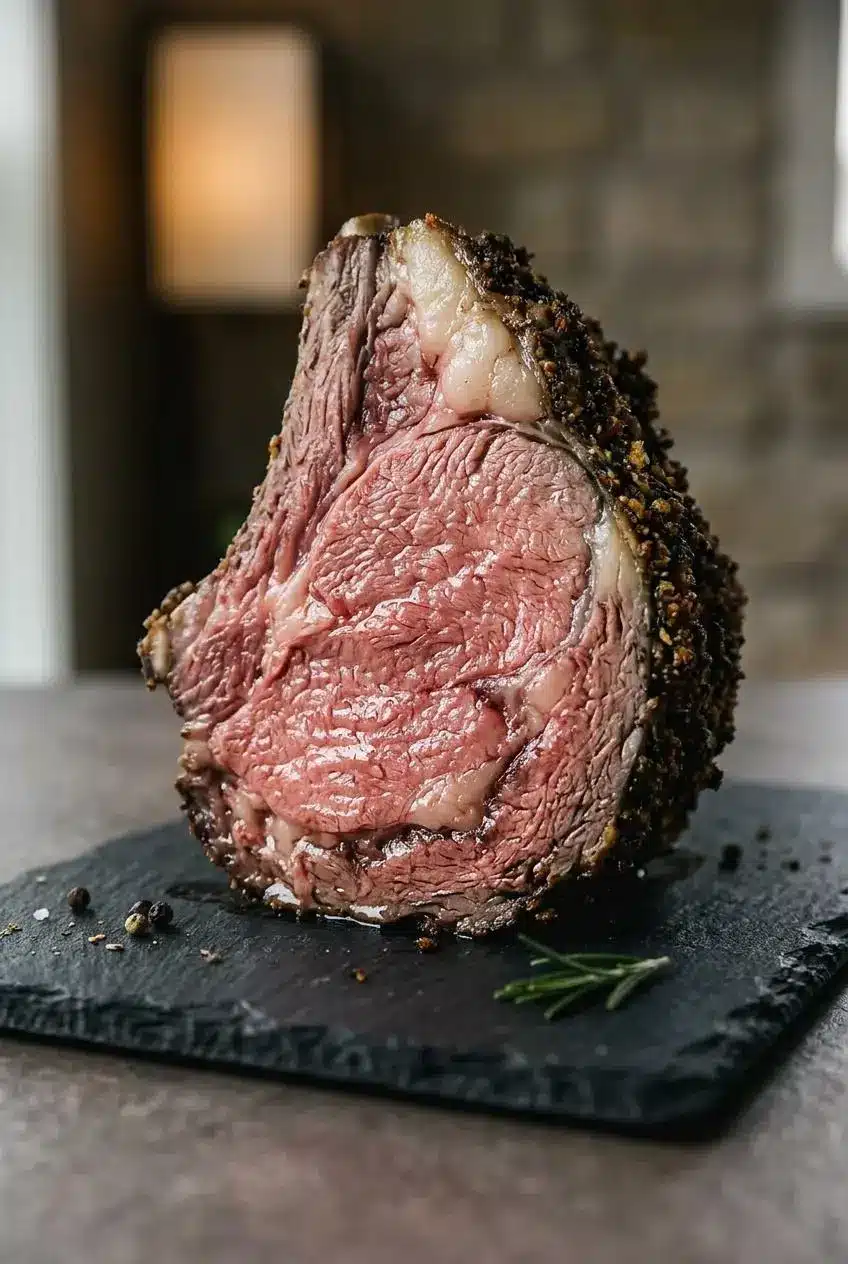
If you want truly accurate doneness, use temperature, not the clock. A meat thermometer is essential for prime rib because roast size, shape, and oven behavior can all change the timing.
| Doneness Level | Pull Temperature | Final Temperature After Resting | What It Looks Like |
|---|---|---|---|
| Rare | about 115 to 120°F | around 120 to 125°F | deep red center, very soft texture |
| Medium-Rare | about 125°F | around 130°F | warm red to rosy center, tender and juicy |
| Medium | about 135°F | around 140°F | pink center, firmer bite |
| Medium-Well | about 145°F | around 150°F | slight blush in the middle, noticeably firmer |
The roast keeps cooking gently after it leaves the oven, which is why pulling it a little early matters. That carryover cooking is the difference between beautifully medium-rare and accidentally medium.
If you’re wondering about time per pound, the classic method often lands around 10 to 12 minutes per pound for rare, 13 to 14 minutes per pound for medium-rare, and 14 to 15 minutes per pound for medium. Use those numbers as a rough road map, then trust the thermometer.
Alternative Cooking Methods Explained
The classic roast is fantastic, but it isn’t the only good option. Different methods give you different strengths, whether you want the most even pink center or the easiest hands-off approach.
The Reverse Sear Method (For the Most Even Cooking)
With reverse sear prime rib, you start low and slow, usually around 225°F, until the roast is roughly 15 degrees below your target temperature. Then you let it rest briefly and finish it with a blast of high heat right before serving.
This method gives you a very even color from edge to center, which is why many home cooks love it for medium-rare. The tradeoff is a little more timing management at the end.
The 500-Degree Method (Easiest Set and Forget Roast)
This approach uses a very hot 500°F oven at the start, then the oven is turned off and the roast stays inside without opening the door. It can be appealing when you want less active oven management.
There is one big catch. This method does not play well with ovens that have automatic cooling fans that kick on after shutoff, because the heat can drop too quickly and throw off the result.
The classic method below is still the most straightforward choice for many kitchens, but this comparison makes the strengths clear.
| Method | Difficulty | Time | Best For | Main Tradeoff |
|---|---|---|---|---|
| Classic high heat then 325°F | Easy | Moderate | Crispier crust and familiar roasting flow | Slightly less even color from edge to center |
| Reverse sear | Moderate | Longer | Most even cooking | Needs careful finish timing |
| 500-degree oven-off | Easy when the oven suits it | Hands-off | Simple holiday timing | Less reliable in ovens with cooling fans |
Essential Tips for Success
These are the small decisions that make a prime rib feel much easier to pull off, especially when it’s your first time.
- Pat the surface dry before adding the rub so the crust browns instead of steaming.
- Cook the roast uncovered. Covering it in the oven traps moisture and softens the exterior.
- Use a meat thermometer from the beginning instead of checking only near the end.
- For a deeper seasoning and slightly crisper crust, salt the roast ahead and leave it uncovered in the refrigerator before cooking. That dry-brine style prep is optional but very effective.
- Place thick slices of onion under the roast if you want a natural rack and extra flavorful drippings.
- If you like a garlic-butter prime rib, swap the olive oil rub for a softened butter version with the same herbs and garlic. It’s rich, aromatic, and especially nice when you want a slightly more decadent crust.
- For bone-in roasts, having the bones tied back on makes carving much less awkward later.
How to Make a Rich Au Jus from Pan Drippings
A good au jus turns the pan drippings into something worth spooning over every slice. It tastes much fresher and more beefy than a packet mix, and it’s a smart use of everything left in the roasting pan.
After you remove the roast, pour the drippings into a measuring cup and let the fat separate from the darker juices. Return a little of the fat and the browned bits to the pan, set the pan over the stovetop, and add beef broth to loosen what’s stuck on the bottom.
Scrape up those browned bits with a wooden spoon and let the liquid simmer until it tastes fuller and a little more concentrated. If you like, a splash of red wine can go in during the deglazing step for extra depth, but beef broth alone works well and keeps the focus on the roast.
Strain if you want a smoother finish, then taste before serving since the roast drippings can already be quite savory. Keep it thin and pourable, not thick like gravy.
What to Serve with Prime Rib
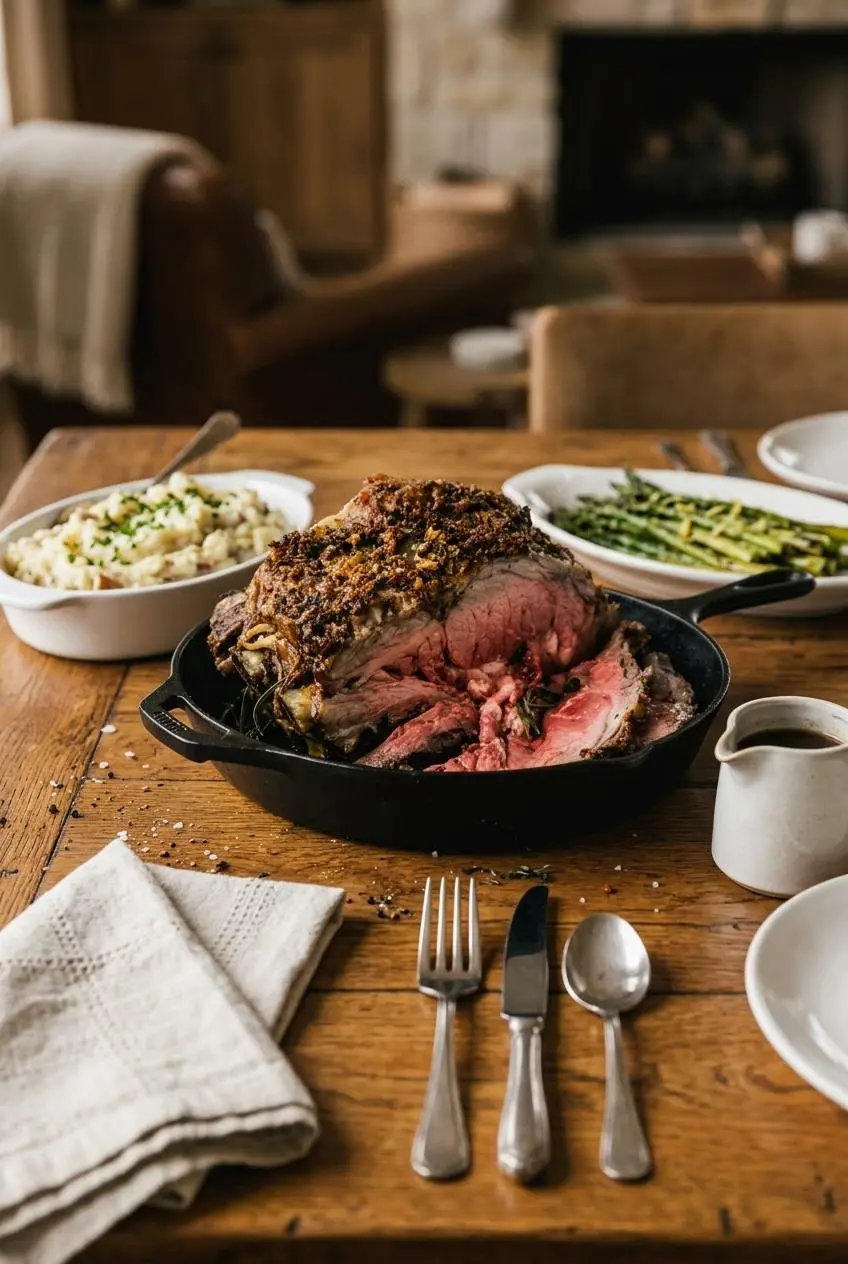
Prime rib is rich, so the best sides either lean classic and comforting or bring some contrast. Think creamy, crisp, or bright enough to balance the beef.
For a steakhouse-style plate, serve it with mashed potatoes, creamed spinach, horseradish sauce, and that warm au jus. Yorkshire pudding is also a great fit if you want to use some of the drippings in a very traditional way.
For a lighter menu, roasted asparagus, a simple green salad, or roasted Brussels sprouts work beautifully. Their slight bitterness helps cut through the richness of the meat.
If you’re building a bigger holiday meal, a starter like butternut squash soup also fits nicely before the roast. Roasted carrots are another natural match if you want a sweeter vegetable on the table.
Storing and Reheating Leftovers
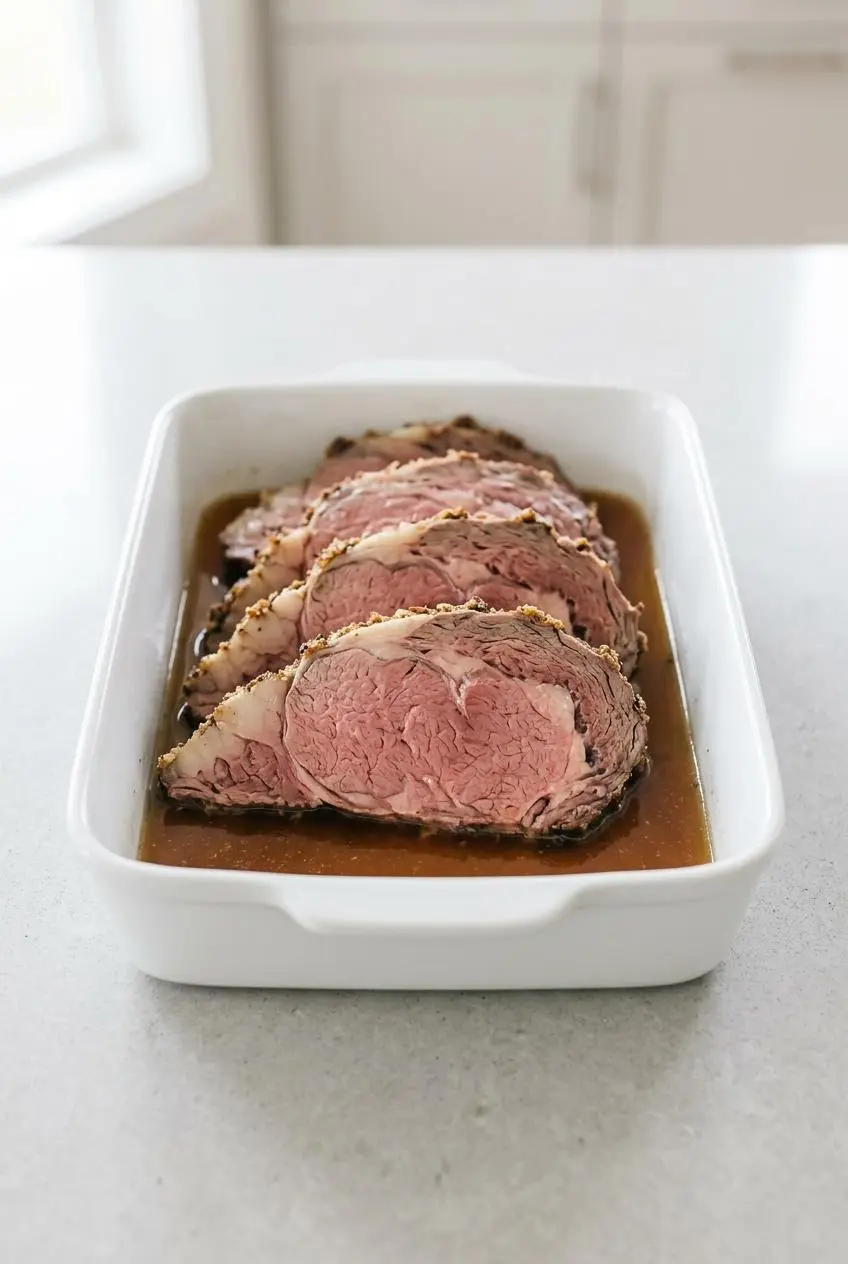
Leftover prime rib is worth handling gently because reheating too aggressively can push it from tender to tough very quickly. Store carved slices or larger pieces in a covered airtight container once cooled.
To reheat, arrange slices in a baking dish with a splash of beef broth, cover tightly with foil, and warm in a 300°F oven until just heated through. The goal is gentle heat, not a second cook.
The microwave can work in a pinch, but it tends to overcook the edges before the center warms. If you have enough leftovers, they’re also excellent tucked into hash, tacos, or a hearty steak salad.
Troubleshooting Common Prime Rib Problems
Even a beautiful roast can throw a curveball. Here’s how to fix the most common issues without panic.
| Problem | Likely Cause | Fix |
|---|---|---|
| My roast is undercooked after resting | It was pulled too early or the thermometer reading was off | Return it to a 325°F oven and check again in short intervals until it reaches the doneness you want |
| My roast is cooking too quickly | Oven runs hot or the roast is smaller in shape than expected | Check temperature sooner than planned and lower the heat slightly if the crust is getting dark too fast |
| My crust isn’t crispy | The surface was damp or the roast was covered | Pat the meat very dry before seasoning and keep it uncovered in the oven so the exterior can brown properly |
| My slices are losing lots of juice | The roast was cut too soon | Give it the full rest before carving and slice only when the meat has had time to settle |
If you need one rule to remember under pressure, make it this: check early and trust the thermometer more than the clock. Prime rib is expensive, but it’s also very fixable when you catch things in time.
Conclusion
Prime rib is absolutely doable at home when you keep the process simple and cook by temperature. The classic method gives you a deeply browned herb crust, juicy slices, and a centerpiece that feels every bit as special as it looks.
If you remember one thing, make it the thermometer. Once that part is handled, the rest feels a lot more fun, and dinner gets a lot more delicious.
Frequently Asked Questions
Do I really need a meat thermometer for prime rib?
Yes. It’s the only reliable way to know when the roast is actually done. Cooking time can point you in the right direction, but roast size, shape, and oven performance all vary. For an expensive cut like prime rib, guessing is usually what causes overcooking.
Why do I have to let my prime rib rest?
Resting gives the juices time to redistribute through the meat. If you slice too soon, those juices run onto the board instead of staying in the roast. The texture also settles, so carving is cleaner and the slices hold together better.
What’s the best way to reheat leftover prime rib?
Use low, gentle heat rather than blasting it hot and fast. Place slices in a baking dish with a little beef broth, cover with foil, and warm in a 300°F oven. Avoid the microwave if you can, because it tends to make the meat tough around the edges.
Can I prepare prime rib ahead of time?
You can absolutely do the prep ahead, especially the seasoning. Salting or dry-brining the roast in advance helps flavor the meat and improve the crust. For the best texture and presentation, cook the roast close to when you plan to serve it.
What’s the difference between prime rib and a ribeye steak?
They come from the same part of the cow. Prime rib is the larger roast, while ribeye steaks are individual slices cut from that roast before cooking. The flavor profile is very similar, but the cooking method and presentation are different.
How do I get a crispy crust on my prime rib?
Pat the roast very dry before you add the seasoning rub. Use the high-heat start so the outside browns quickly. Keep the roast uncovered in the oven, since trapped steam softens the crust.
Prime Rib Roast Recipe

Equipment
- Roasting pan
- Meat Thermometer
- Rack (for boneless roast)
Ingredients
- 5 pounds beef prime rib (if larger, double the spices/seasonings)
- Sea salt
- 2 teaspoons freshly ground black pepper
- 2 teaspoons fresh rosemary
- 1 teaspoon fresh thyme
- 8 cloves garlic minced
- 1/4 cup olive oil
- horseradish for serving (optional)
Instructions
- Take the prime rib out of the refrigerator 1 hour before cooking, season it all over with salt, and loosely cover it with plastic wrap as it sits. The roast cooks more evenly when it loses some of its chill instead of going straight from fridge to oven.
- Move an oven rack so the roast will sit in the center of the oven, then heat the oven to 500°F. Center placement helps the roast brown more evenly and keeps the top from getting too close to the heat.
- Stir together 1 1/2 teaspoons salt, black pepper, rosemary, thyme, garlic, and olive oil in a small bowl. The mixture should look loose enough to spread and smell strongly of garlic and herbs.
- Pat the roast dry with paper towels, rub the herb mixture over all sides, and place it in a roasting cast iron pan with the bones down if it is bone-in or on a rack if it is boneless. A dry surface helps the crust develop better color instead of steaming.
- Roast the beef at 500°F for 15 minutes, then reduce the oven temperature to 325°F and continue cooking until it reaches your preferred doneness. When the roast first hits the hot oven, you should hear an assertive sizzle, which is a good sign the crust is getting started.
- Check the internal temperature with a meat thermometer and use these targets as your guide: rare 120°F, medium-rare 130°F, medium 140°F, medium-well 150°F. Pull the roast slightly before your ideal final doneness since the temperature continues to rise a bit while it rests.
- Transfer the roast from the oven, tent it loosely with foil, and let it rest for 30 minutes before carving. The roast will settle and reabsorb juices, which keeps the slices fuller and less messy on the cutting board.
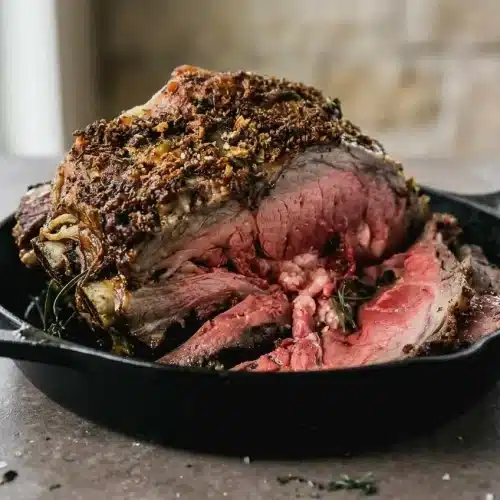
- Slice the prime rib against the grain into about 1/2 inch thick slices and serve with horseradish if desired. At medium-rare, the meat should feel firm with a little give when pressed and slice cleanly with a rosy center.