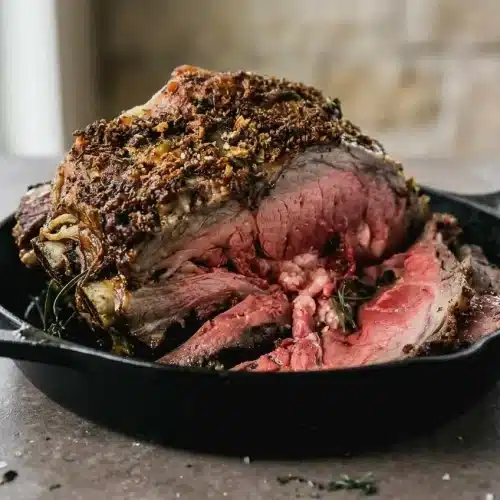
Prime Rib Roast Recipe

Create a stunning prime rib roast with a fragrant garlic and herb crust. This recipe relies on a meat thermometer for perfect doneness, starting with a high-heat sear and finishing low and slow for a juicy, foolproof result.
Equipment
- Roasting pan
- Meat Thermometer
- Rack (for boneless roast)
Ingredients
- 5 pounds beef prime rib (if larger, double the spices/seasonings)
- Sea salt
- 2 teaspoons freshly ground black pepper
- 2 teaspoons fresh rosemary
- 1 teaspoon fresh thyme
- 8 cloves garlic minced
- 1/4 cup olive oil
- horseradish for serving (optional)
Instructions
- Take the prime rib out of the refrigerator 1 hour before cooking, season it all over with salt, and loosely cover it with plastic wrap as it sits. The roast cooks more evenly when it loses some of its chill instead of going straight from fridge to oven.
- Move an oven rack so the roast will sit in the center of the oven, then heat the oven to 500°F. Center placement helps the roast brown more evenly and keeps the top from getting too close to the heat.
- Stir together 1 1/2 teaspoons salt, black pepper, rosemary, thyme, garlic, and olive oil in a small bowl. The mixture should look loose enough to spread and smell strongly of garlic and herbs.
- Pat the roast dry with paper towels, rub the herb mixture over all sides, and place it in a roasting cast iron pan with the bones down if it is bone-in or on a rack if it is boneless. A dry surface helps the crust develop better color instead of steaming.
- Roast the beef at 500°F for 15 minutes, then reduce the oven temperature to 325°F and continue cooking until it reaches your preferred doneness. When the roast first hits the hot oven, you should hear an assertive sizzle, which is a good sign the crust is getting started.
- Check the internal temperature with a meat thermometer and use these targets as your guide: rare 120°F, medium-rare 130°F, medium 140°F, medium-well 150°F. Pull the roast slightly before your ideal final doneness since the temperature continues to rise a bit while it rests.
- Transfer the roast from the oven, tent it loosely with foil, and let it rest for 30 minutes before carving. The roast will settle and reabsorb juices, which keeps the slices fuller and less messy on the cutting board.
- Slice the prime rib against the grain into about 1/2 inch thick slices and serve with horseradish if desired. At medium-rare, the meat should feel firm with a little give when pressed and slice cleanly with a rosy center.
Notes
Doneness Tip: The roast's temperature will rise while resting (carryover cooking). Pull it from the oven just before it reaches your ideal temperature for a perfect result.
For a Crispy Crust: Patting the roast completely dry with paper towels before adding the rub is essential. A dry surface allows the crust to brown and crisp up instead of steaming.
Don't Skip the Rest: Let the roast rest, tented with foil, for a full 30 minutes before carving. This allows the juices to settle back into the meat, ensuring every slice is moist.
Reheating Leftovers: To keep leftover prime rib tender, reheat slices gently in a 300°F oven with a splash of beef broth. Cover with foil to trap steam and prevent the meat from drying out.
Nutrition information is an estimate based on common ingredients and serving sizes. Values may vary depending on brands, portions, and substitutions.