Potato chip cookies are old-fashioned, five-ingredient shortbread cookies made with butter, sugar, vanilla, flour, and crushed salted potato chips. They bake at 350°F without eggs or baking powder, giving you a tender, buttery crumb with little pockets of salty crunch.
Those salty crumbs at the bottom of the chip bag have a delicious second act. In potato chip cookies, they break up the sweetness of buttery shortbread without making the cookies taste like a savory snack.
The dough needs no chilling, and you can leave the cookies plain or finish them with chocolate or powdered sugar. The key is knowing when to stop baking. Watch those bottom edges.
Before mixing, check that your butter yields easily to gentle finger pressure but still holds its shape.
Ingredients Explained: What You Need for Potato Chip Cookies
Butter creates richness and tenderness, sugar supplies sweetness and delicate crispness, and flour gives the cookies structure. Vanilla softens the savory edge of the potato chips, which bring salt and scattered crunchy bits.
- 1 lb. butter (softened)
- 1¼ cups granulated sugar
- 2 teaspoons vanilla extract
- 3½ cups all purpose flour
- 1½ cups crushed potato chips
Softened butter matters because it needs to blend thoroughly with both the sugar and flour. Beating butter and sugar incorporates air, giving this eggless dough a lighter texture. Melted butter won’t cream the same way.
Granulated sugar helps the cookies develop a delicate crispness, while vanilla rounds out their sweet-and-salty flavor. Flour binds the buttery mixture into a dough that holds its shape rather than rising into a fluffy cookie.
Measure the chips after crushing them, since the amount listed refers to crushed chips, not whole ones. Break up large pieces before measuring so you don’t leave big empty spaces in the cup.
I look for butter that’s soft all the way through, not just around the edges, so the flour blends in without any added liquid.
Choosing the Best Potato Chips: Classic, Ruffled, or Kettle
Choose plain salted chips so their crunch and salt complement the vanilla rather than compete with it.
- Classic thin chips: Their delicate flakes blend easily into the dough and create a lighter, more evenly distributed crispness.
- Ruffled or wavy chips: Thicker ridges leave more noticeable savory pockets, especially when you crush them by hand.
- Kettle-cooked chips: These give the firmest crunch, so break up stubborn pieces rather than leaving large, hard shards.
Salted vs. Unsalted Butter: Getting the Salt Balance Right
Either butter works, but taste a chip before choosing. Unsalted butter gives you more control when your chips already taste heavily salted. Salted butter works well with lightly salted chips when you want a bolder sweet-and-salty contrast.
Don’t assume all kettle chips are lightly salted or all thin chips are very salty. The brand and seasoning level matter more than the shape.
How to Make Grandma’s Potato Chip Cookies Step by Step
Allow about 10 minutes for prep and 12 to 15 minutes for baking, plus cooling. The listed yield is 36 cookies. A mixer helps cream the butter thoroughly, and a small cookie scoop makes portioning easier.
- Set the oven to 350°F before starting the dough.
A fully heated oven helps the cookies bake consistently from the moment the tray goes in. - Beat the softened butter with the granulated sugar until the mixture becomes noticeably lighter in color and fluffy.
This stage incorporates the air that gives the eggless cookies a delicate crumb rather than a dense, greasy texture. - Blend the vanilla extract into the whipped butter mixture.
Look for an even mixture without streaks of vanilla around the bowl. - Work the flour into the butter mixture until the loose crumbs gather into a cohesive dough.
The mixture may look sandy at first, but continued mixing should produce a stiff, pliable mass rather than a bowl of dry crumbs. - Distribute the crushed potato chips throughout the dough with gentle stirring.
Stop when chip pieces appear throughout the mixture so you don’t grind away their crunchy texture. - Portion the dough onto a cookie sheet in 1-tablespoon mounds, using a small scoop if helpful, then gently press each mound with your palm or a glass bottom.
A slightly flattened shape helps these low-spreading cookies bake evenly instead of keeping a tall, rounded center. - Bake the cookies for 12 to 15 minutes, removing them when their bottom edges turn golden.
The tops should remain pale, with the clearest browning underneath and along the lowest edges. - Leave the cookies on the baking sheet for 3 to 5 minutes, then carefully transfer them to a wire rack to finish cooling.
The brief rest lets the delicate cookies firm up enough to move without crumbling. - Finish with a dusting of powdered sugar if desired, or dip cooled cookies into melted chocolate and scatter additional crushed chips over the coating.
For the chocolate finish, add the chip crumbs while the coating is still wet so they adhere.
Expert Baking Tips and Troubleshooting
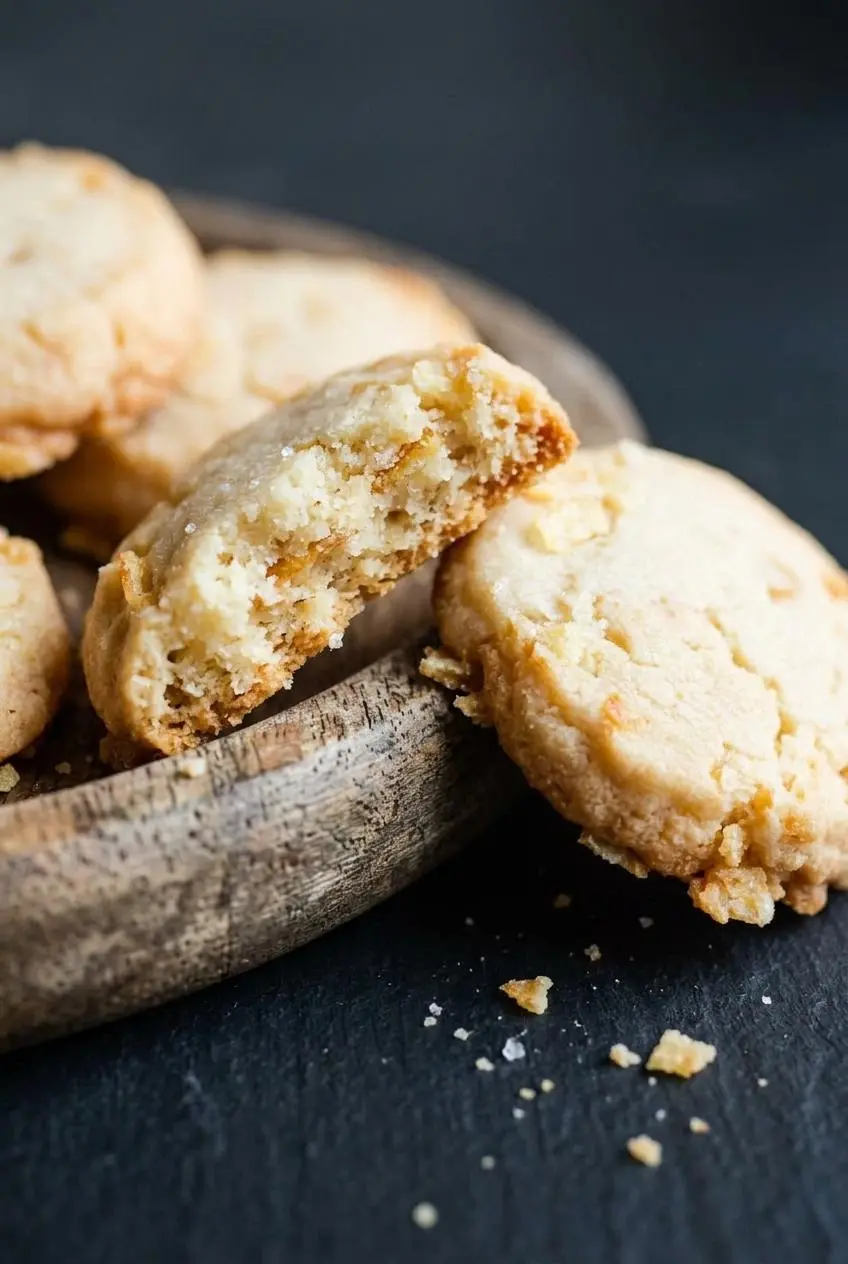
This dough behaves much like classic shortbread cookies: it starts crumbly, gathers as you mix, and doesn’t need a deeply browned top to be done.
- The dough looks dry: Properly softened butter needs time to distribute through the flour, so continue mixing before deciding anything is wrong. Don’t pour in water or milk to force it together.
- The cookies stay in mounds: This dough spreads very little. Flatten each portion gently before baking rather than expecting oven heat to shape it.
- Some cookies brown before others: Uneven portions or thicknesses can cause uneven baking. Use the same scoop and a similar gentle press for every cookie.
- The sugar coating turns sticky: Hot cookies melt powdered sugar. For a generous, powdery coating, let the cookies cool completely first.
Hand-Crushing vs. Food Processor: Controlling Cookie Texture
Hand-crushing gives you control over the crunchy pockets. Gently squeeze the chips in their bag, leaving small flakes and occasional pea-sized pieces rather than oversized shards. The result has a more distinct crunch, somewhat like the scattered bits in pecan sandies.
For a finer, sandy meltaway texture, pulse the chips in a food processor. Use brief pulses and stop once they’re finely broken down. Measure after crushing either way, and stir the crumbs into the dough at the same stage.
Doneness Cues to Prevent Overbaking
Start checking at the beginning of the bake window. Look for pale ivory tops and lightly golden bottom edges. A broad brown rim means the cookies have gone beyond that delicate shortbread finish.
Don’t wait for the tops to match the bottoms. Extra baking dries the crumb, and deeply browned edges can taste bitter. Let the cooling rest do its job before judging the final texture.
Delicious Variations and Finishing Touches
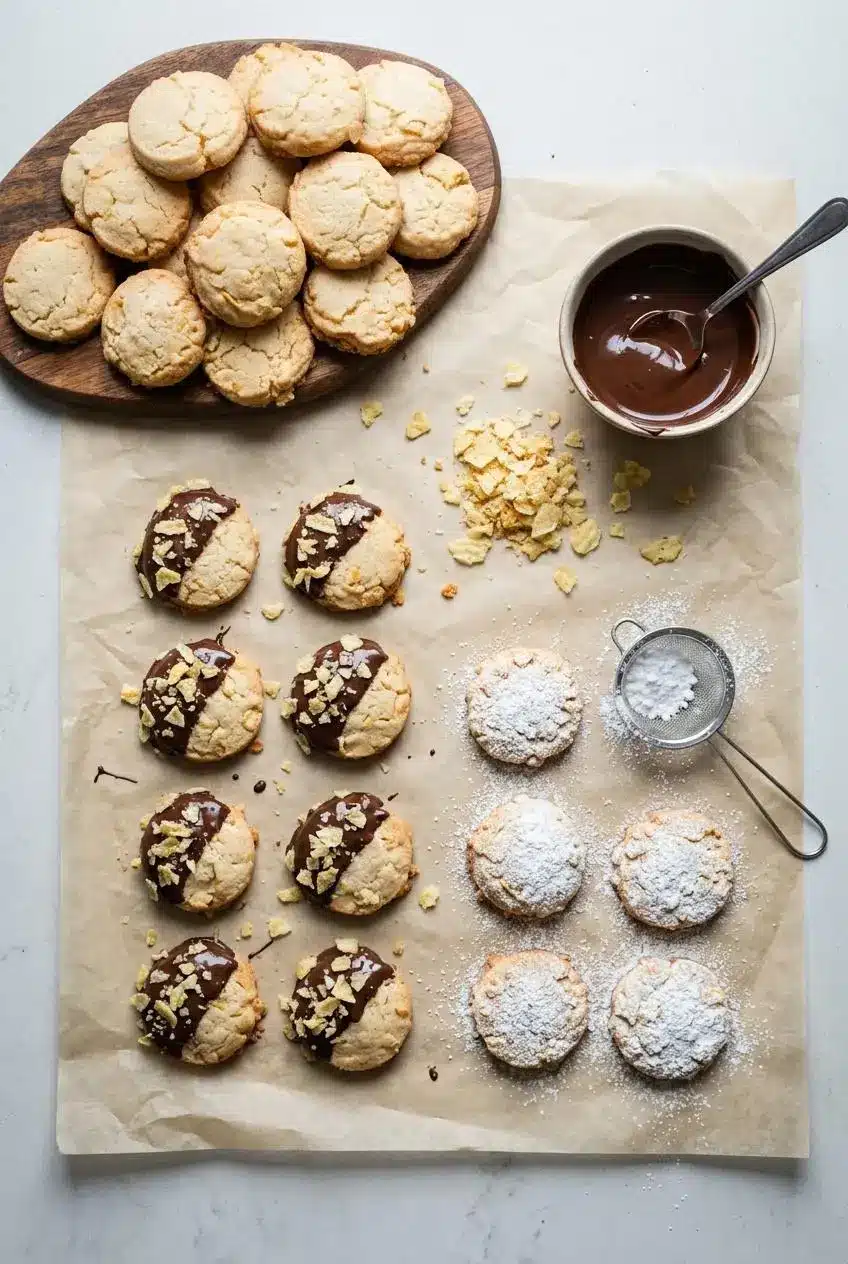
Choose a finish after deciding how much sweetness you want. Plain cookies emphasize butter and salt; chocolate adds richness, while powdered sugar gives a soft, sweet coating.
Chocolate-Dipped Potato Chip Cookies
Hold a completely cooled cookie gently and dip half into melted chocolate. Let the excess drip away, place it on parchment paper, and sprinkle the wet coating with extra chip crumbs before it sets.
- Milk chocolate: Adds a creamy, sweeter finish that softens the salty contrast.
- Dark chocolate: Brings a deeper cocoa flavor that balances the rich cookie.
- White chocolate: Creates the sweetest coating and pairs especially well with noticeable salty chip pieces.
If the chips are lightly salted, an optional tiny pinch of flaky sea salt over the wet chocolate can sharpen the contrast. For another cookie built around that balance, try sea salt chocolate chip cookies.
Vintage Powdered Sugar Snowball Finish
Finely crushed chips work particularly well with this meltaway-style finish. Sift powdered sugar lightly over cooled cookies, or carefully roll them in it for a more generous coating reminiscent of Mexican wedding cookies.
A light dusting can cling to barely warm cookies, but wait until they’re completely cool before rolling them heavily. Avoid coating them straight from the oven, when the sugar can melt into a sticky layer.
Storage and Serving Suggestions

Protect the crisp texture by letting the cookies release all their warmth before packing them. A closed container traps moisture as effectively as it keeps moisture out.
Keeping Baked Cookies Crisp
Cool the cookies completely on a wire rack, then place them in an airtight container or tightly closed tin at room temperature, away from heat and humidity. Avoid packing them beside soft, moist cookies that could soften their crisp edges.
Let chocolate coatings set before stacking. Separate decorated layers with parchment so the finishes don’t stick together, and handle powdered-sugar-coated cookies gently to preserve their coating.
How to Serve and Pair Shortbread Cookies
- Holiday trays: Arrange plain and chocolate-dipped cookies alongside fudge for a mix of textures and sweetness.
- Gifts and potlucks: Pack fully cooled cookies snugly in an airtight tin, with parchment between layers to limit rubbing and breakage.
- Coffee or tea: Serve with hot black coffee or unsweetened tea to balance the buttery richness and salt.
For an afternoon cookie assortment, add Earl Grey tea cookies for a fragrant contrast to the salty crunch.
Conclusion
These old-fashioned cookies turn crushed potato chips into buttery shortbread with a tender crumb and satisfying salty pockets. Chip style and crush size let you choose between delicate crispness and a more noticeable crunch.
Flatten the dough gently and pull the tray when the bottom edges turn golden, even if the tops still look pale. Enjoy them plain first, then save a few for a chocolate dip.
Frequently Asked Questions
What Kind of Potato Chips Are Best for Potato Chip Cookies?
Plain salted classic or wavy chips are good choices. Thin chips blend into the dough more evenly, while ridged chips leave more noticeable crunchy pockets. Kettle chips work too, with a firmer bite.
Should I Use Salted or Unsalted Butter for Potato Chip Cookies?
Either works. Choose unsalted butter when your chips taste strongly salted, or salted butter when the chips are lightly salted and you want a stronger savory contrast.
Why Don’t Potato Chip Cookies Have Eggs or Baking Powder?
They’re shortbread-style cookies rather than fluffy drop cookies. Butter provides richness and tenderness, while the flour gives structure. Creaming adds lightness without baking powder, and the dough holds its shape instead of rising dramatically.
How Do You Store Potato Chip Cookies So the Chips Stay Crisp?
Cool them completely on a wire rack before closing them in an airtight container. Keep them away from humidity and moist baked goods, and let any chocolate finish set before packing.

Potato Chip Cookies

Equipment
- OXO Good Grips Small Cookie Scoop
- KitchenAid 5-Qt. Stand Mixer
Ingredients
- 1 lb. butter softened
- 1¼ cups granulated sugar
- 2 teaspoons vanilla extract
- 3½ cups all purpose flour
- 1½ cups crushed potato chips
Instructions
- Set the oven to 350°F before starting the dough. A fully heated oven helps the cookies bake consistently from the moment the tray goes in.
- Beat the softened butter with the granulated sugar until the mixture becomes noticeably lighter in color and fluffy. This stage incorporates the air that gives the eggless cookies a delicate crumb rather than a dense, greasy texture.
- Blend the vanilla extract into the whipped butter mixture. Look for an even mixture without streaks of vanilla around the bowl.
- Work the flour into the butter mixture until the loose crumbs gather into a cohesive dough. The mixture may look sandy at first, but continued mixing should produce a stiff, pliable mass rather than a bowl of dry crumbs.
- Distribute the crushed potato chips throughout the dough with gentle stirring. Stop when chip pieces appear throughout the mixture so you don’t grind away their crunchy texture.
- Portion the dough onto a cookie sheet in 1-tablespoon mounds, using a small scoop if helpful, then gently press each mound with your palm or a glass bottom. A slightly flattened shape helps these low-spreading cookies bake evenly instead of keeping a tall, rounded center.
- Bake the cookies for 12 to 15 minutes, removing them when their bottom edges turn golden. The tops should remain pale, with the clearest browning underneath and along the lowest edges.
- Leave the cookies on the baking sheet for 3 to 5 minutes, then carefully transfer them to a wire rack to finish cooling. The brief rest lets the delicate cookies firm up enough to move without crumbling.
- Finish with a dusting of powdered sugar if desired, or dip cooled cookies into melted chocolate and scatter additional crushed chips over the coating. For the chocolate finish, add the chip crumbs while the coating is still wet so they adhere.