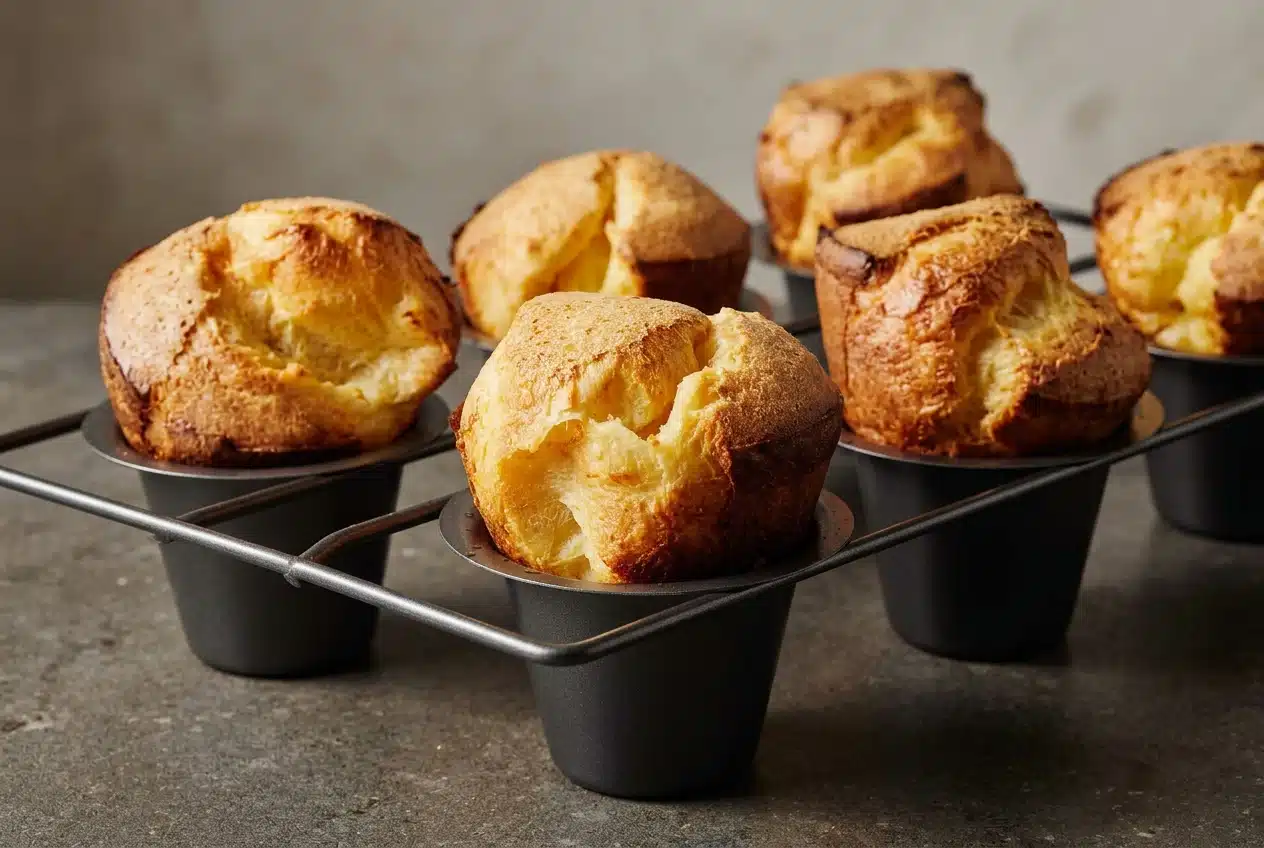
This popovers recipe makes classic popovers with crisp, golden shells and airy, custardy centers. A hot oven gives them their initial lift, and a lower heat finishes the bake. Choose your pan below, then follow the numbered steps.
Popovers start with a batter thin enough to pour. In the oven, it billows into a golden shell with an open pocket and tender walls inside.
Serve them warm at brunch or in place of dinner rolls. Split one open and watch the steam escape.
Set the oven rack in the lower third so the tops have room to rise without getting too close to the upper heating element.
Popover Ingredients and Pan Options
Eggs and flour give the popovers enough structure to hold their shape, while milk makes the batter pourable. Sea salt seasons the shell and center, and melted butter adds richness. The extra butter coats the wells so the popovers release more easily.
- 4 large eggs (at room temperature)
- 1½ cups milk (at room temperature)
- ¾ teaspoon sea salt
- 1½ cups all-purpose flour (spooned and leveled)
- 2 tablespoons unsalted butter (melted, plus more for the pan)
Room-temperature eggs and milk are easier to whisk together with melted butter. To measure the flour, spoon it into the cup and sweep off the excess. Scooping straight from the bag can pack in extra flour and leave you with a thicker batter.
Popover Pan vs. Muffin Tin
- Popover pan: The deeper wells give the batter room to climb, producing a taller popover with a narrower base.
- Standard muffin tin: The shallower wells give you a shorter popover with a broader base. It can still have a crisp shell and an airy center.
Muffin-Tin Popovers
If you already own a standard muffin tin, there’s no need to buy a dedicated pan to try popovers. Expect a different silhouette, and judge the result by splitting one open. A roomy pocket with tender walls tells you more than the height of the top.
How to Make Popovers
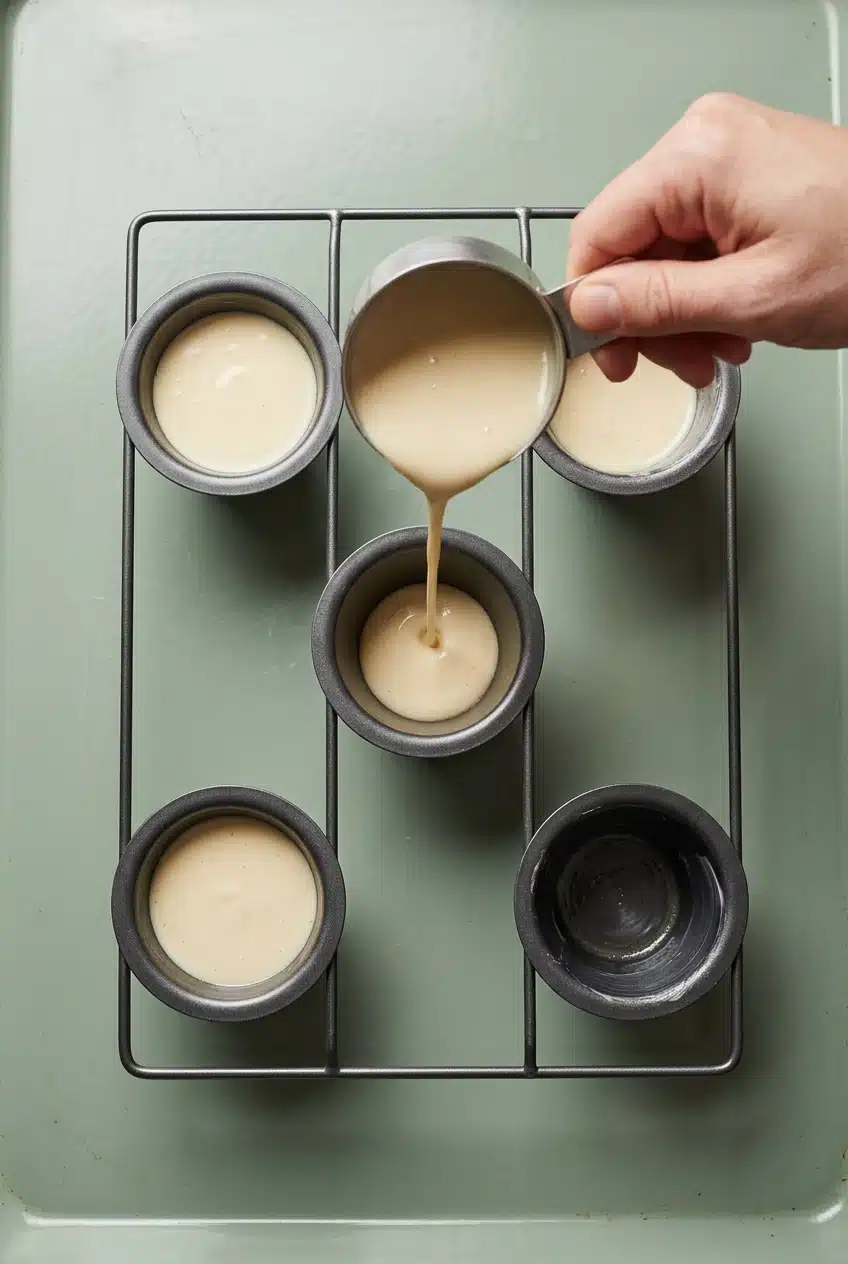
Look for a smooth batter that flows freely from the whisk rather than clinging to it in a thick ribbon. The hotter first stage helps the batter puff, and the gentler finish gives the shells time to set and brown. Keep the door closed when you lower the heat. Near the end, look through the oven window for puffed, golden tops, then vent them once they’re out.
Prep: 10 minutes Cook: 30 minutes Total: 40 minutes Yield: 12 popovers
- Beat the eggs, milk, and salt in a large bowl until the whites blend in completely, then whisk in the flour followed by the melted butter.
Once the batter looks smooth, leave it to rest as the oven heats. - Set the oven to 450°F with a rack in the lower third.
Coat the wells of one 12-cup popover pan or two 6-cup popover pans generously with butter. - Heat the buttered pans in the fully preheated oven for 2 minutes.
Take them out with oven mitts when the time is up. - Use a ¼-cup measure to portion the batter evenly into the hot wells, bringing each to about the halfway mark.
Return the pans to the lower rack and bake for 20 minutes. - Turn the oven down to 350°F without opening the door.
Bake for 10 more minutes, or until the shells have puffed and turned golden brown. - Make a small opening in each top with the tip of a sharp knife to let steam escape.
Serve the popovers right away.
Why Popovers Turn Out Dense or Deflate
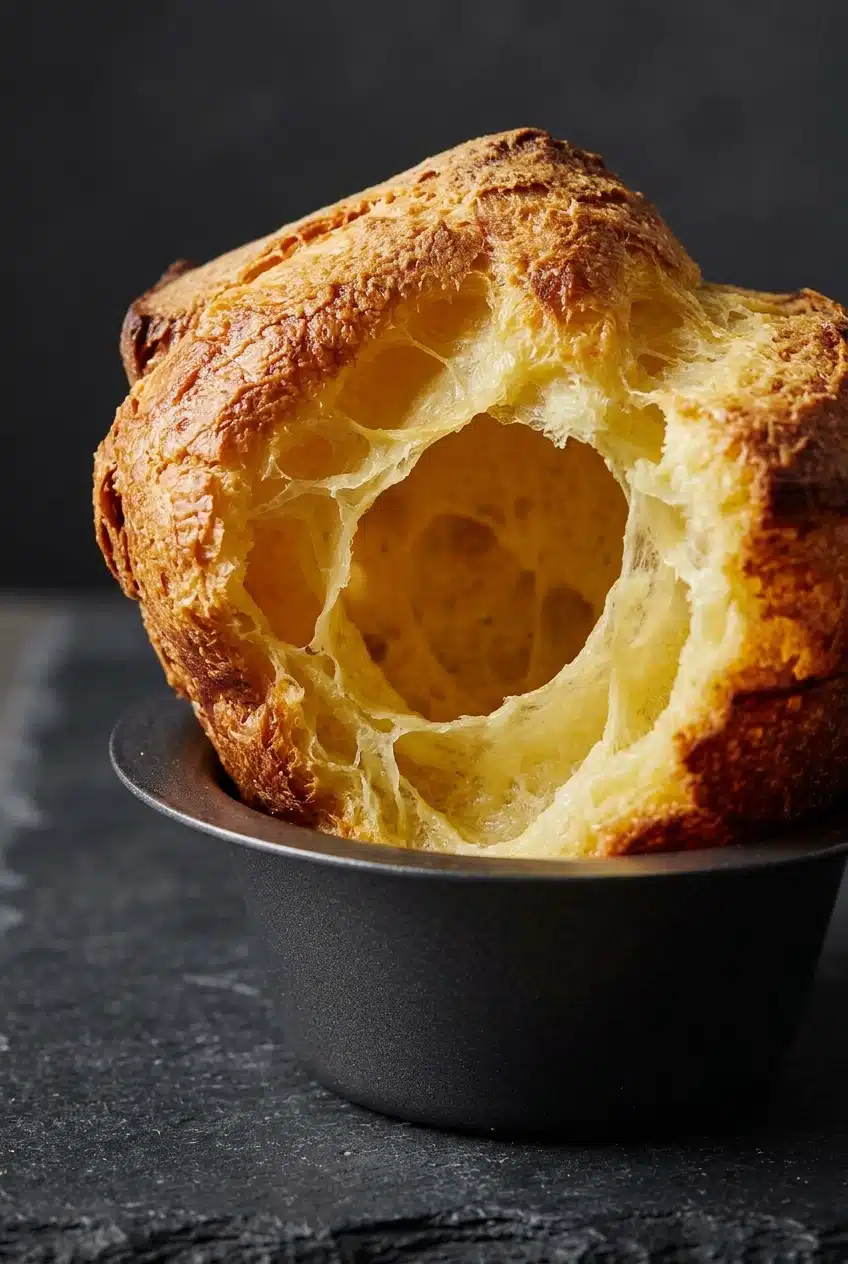
Start with when the problem appeared. A batch that barely rose in the oven calls for different checks than one that puffed nicely and sank on the counter.
Low Rise or a Dense Center
- They barely rose: Check whether the oven had fully preheated before you warmed the pans. If you opened the door early to check the rise, use the oven light next time so you can look without letting heat out.
- The tops darkened early: Check the rack position. Too close to the top of the oven, the crowns can color before the rest of the shell has set. Start with the rack in the lower third.
- They look short: Split one before changing anything. A muffin-tin popover with a generous cavity and thin, tender walls has done its job. A tight, heavy center is the sign to revisit the bake.
Settling After Baking
- They puffed, then sank: Think back to the color when you took them out. Height alone doesn’t tell you the shell has set. Look for a golden-brown exterior as well as a full puff.
- The shells softened on the counter: Check whether you vented the tops as soon as the pan came out. The small opening gives steam a way out instead of leaving it trapped inside the shell.
What to Serve with Popovers
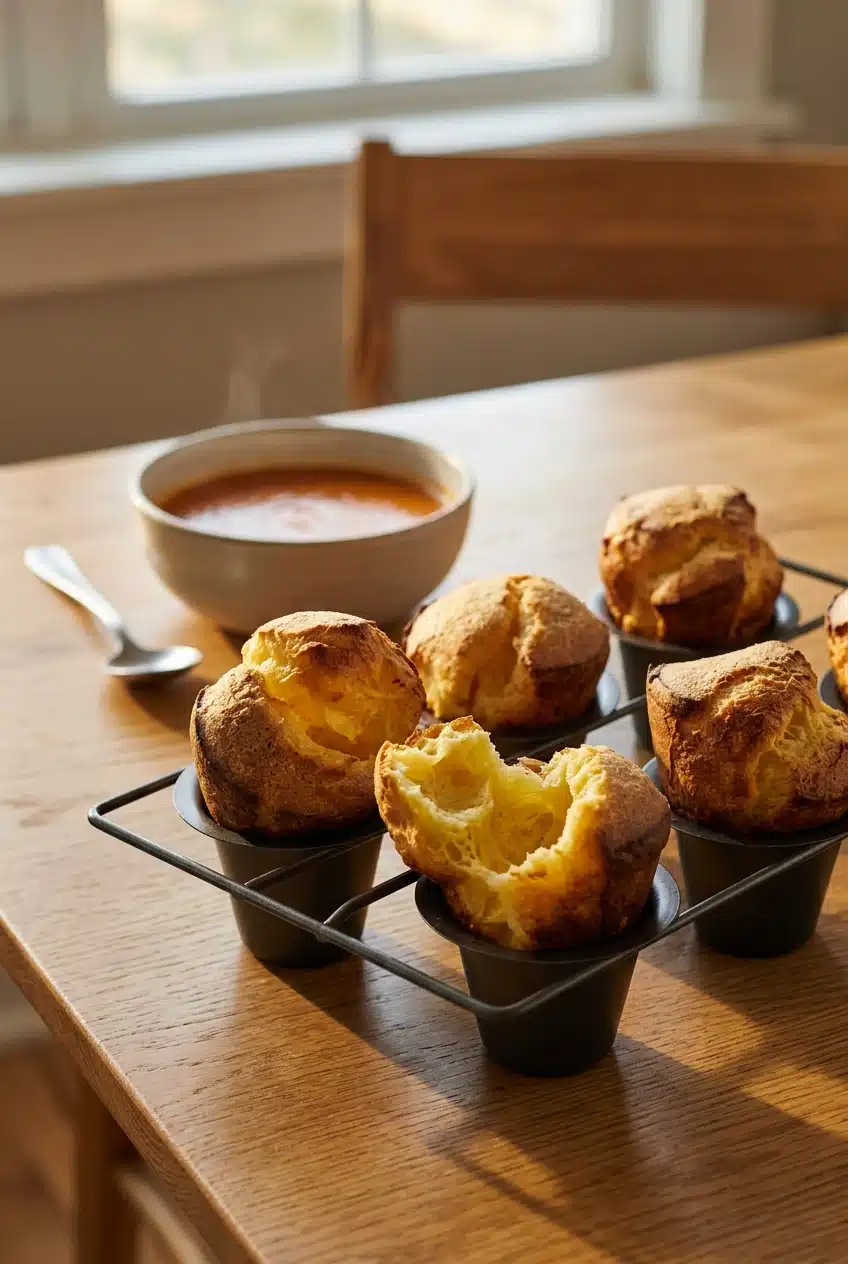
Serve plain popovers with a bowl of soup or stew. Tear one open and use the crisp edge for dipping. At a roast dinner, put them on the table in place of rolls so everyone can use the tender centers to soak up the pan juices.
Sweet-Topped Popovers
Keep the batter plain and offer honey butter or peach jam at brunch. Split the popovers just before spreading so the butter melts into the warm center without softening the whole shell.
Storing and Reheating Popovers
Popovers are crispest straight from the oven. If you have leftovers, let them cool before covering them so steam doesn’t collect in the container, then keep them covered and chilled.
Warm only what you plan to serve in the oven to help crisp the outside. Reheating can take the chill off and improve the shell, though it won’t necessarily bring back the fresh-baked texture.
The Keys to Tall, Crisp Popovers
Choose a popover pan for height or a muffin tin for a shorter shape. In either case, look for a crisp shell and an open, tender center.
Use the numbered steps for the oven settings: preheat fully and keep the door closed when you turn down the heat. Have the table ready so you can serve them while they’re still crisp.
Popovers FAQ
Why Are My Popovers Dense?
Check the center first: a short popover with an open pocket isn’t dense. If the inside is tight and heavy, check that the oven was fully preheated, the door stayed closed, and the shells baked until puffed and golden.
Can I Make Popovers in a Muffin Tin?
Yes, a standard muffin tin works as an alternative. Its shallower wells give the popovers a shorter profile than a dedicated pan, but the centers can still be airy.
What Temperature Should Popovers Be Cooked At?
Use the hotter setting in the numbered steps to start, then turn the oven down to the lower setting for the finish. Change the temperature without opening the door.
What Are Popovers Called in the UK?
Yorkshire pudding is the closest British comparison, rather than another name for the same dish. Both are baked batters that puff in the oven, but the names aren’t interchangeable.
Are Popovers a New England Thing?
Think of “New England popovers” as a regional label, not proof that the dish originated there. The version here is a classic American popover.
How Should I Store and Reheat Leftover Popovers?
Let them cool before packing them in a covered container and keeping them chilled. When you’re ready to serve, warm them in the oven to help the shells crisp up.
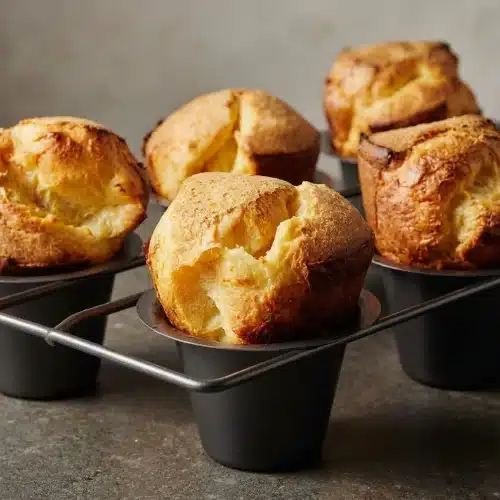
Popovers Recipe

Equipment
- large bowl
- Whisk
- Popover pan
- ¼-cup measure
- Oven mitts
- Sharp knife
Ingredients
- 4 large eggs at room temperature
- 1½ cups milk at room temperature
- ¾ teaspoon sea salt
- 1½ cups all-purpose flour spooned and leveled
- 2 tablespoons unsalted butter melted, plus more for the pan
Instructions
- Beat the eggs, milk, and salt in a large bowl until the whites blend in completely, then whisk in the flour followed by the melted butter. Once the batter looks smooth, leave it to rest as the oven heats.
- Set the oven to 450°F with a rack in the lower third. Coat the wells of one 12-cup popover pan or two 6-cup popover pans generously with butter.
- Heat the buttered pans in the fully preheated oven for 2 minutes. Take them out with oven mitts when the time is up.
- Use a ¼-cup measure to portion the batter evenly into the hot wells, bringing each to about the halfway mark. Return the pans to the lower rack and bake for 20 minutes.
- Turn the oven down to 350°F without opening the door. Bake for 10 more minutes, or until the shells have puffed and turned golden brown.
- Make a small opening in each top with the tip of a sharp knife to let steam escape. Serve the popovers right away.