
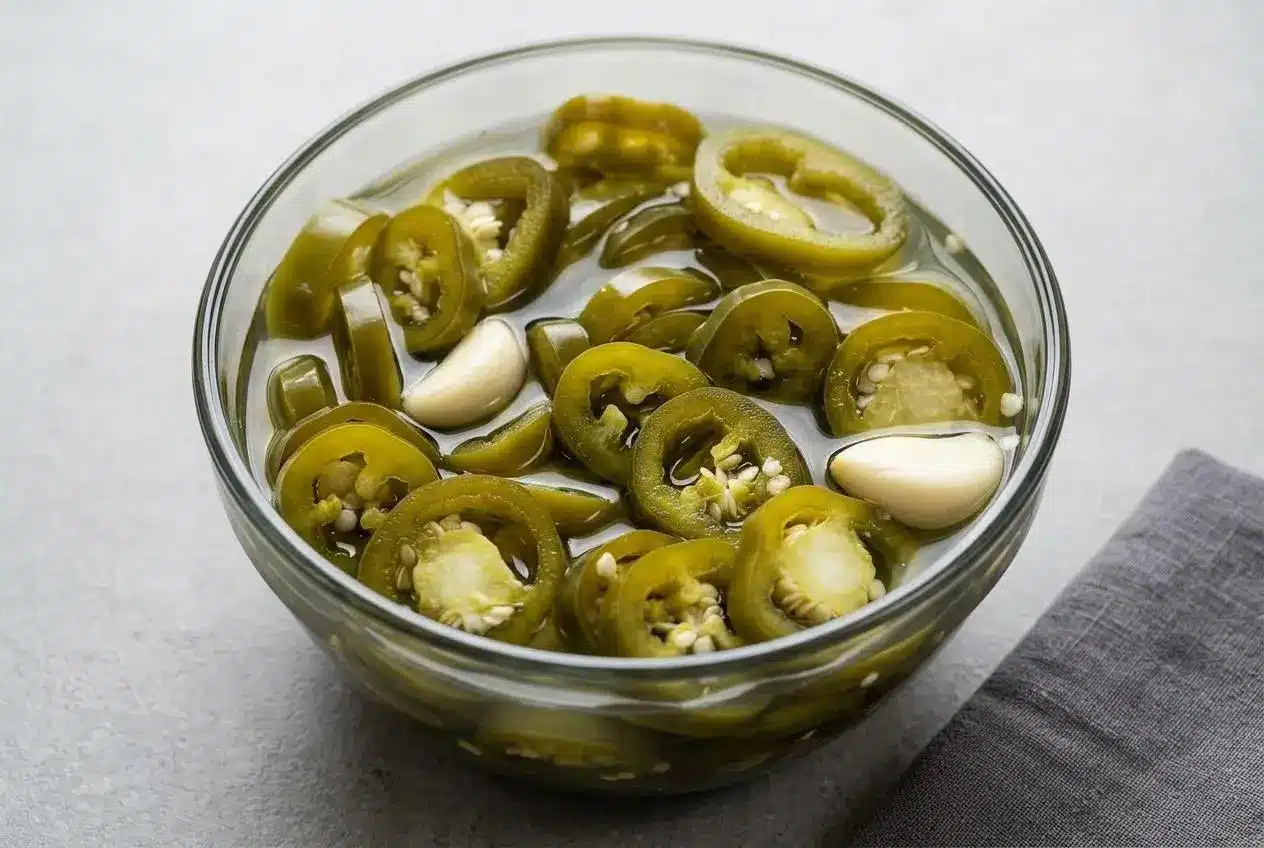
This quick pickled jalapeño method gives you crunchy, tangy peppers in under an hour with a hot vinegar brine, fresh garlic, and just enough sugar to balance the heat.
Homemade jalapeños have a brighter crunch and cleaner flavor than most store-bought jars. This Pickled Jalapeños recipe also gives you that taqueria-style bite that wakes up tacos, burgers, eggs, and more.
It is fast, flexible, and easy to adjust for heat. The hardest part is waiting for the flavor to settle in.
Wear gloves before slicing the peppers, especially if you are working with a full pound.
Why You’ll Love This Recipe
This one earns a spot in the fridge because it solves a lot of meals with very little effort.
- It moves quickly, with about 10 minutes of prep and a short brine on the stove.
- The jalapeños stay pleasantly crisp because they are not boiled to death in the brine.
- You can easily make them milder or hotter by how you handle the seeds and membranes.
- The flavor lands right in that sweet spot between tangy, spicy, and lightly sweet, like the peppers from a good taqueria.
Key Ingredients for Perfect Pickled Jalapeños
Each ingredient pulls its weight here, building heat, tang, crunch, aroma, and balance in the finished jar.
- 1 lb. jalapeños
- 2 cloves garlic
- 1.5 cups white vinegar
- 1/2 cup water
- 1 Tbsp salt
- 1 Tbsp sugar
Jalapeños are the whole point, of course, and slicing them into rounds helps the brine reach every piece. Garlic adds a savory edge that keeps the brine from tasting flat.
White vinegar is the best choice for classic pickled jalapeños because it has a clean, sharp tang and keeps the flavor bright. The water softens that acidity just enough so the peppers stay bold without tasting harsh.
Salt seasons the peppers and the brine, but the type matters. Non-iodized salt, such as kosher, sea, or pickling salt, is the better choice if you want a clear brine and a cleaner pickled flavor. Iodized table salt can leave the liquid cloudy.
Sugar is not here to make the peppers sweet. It smooths out the sharp vinegar and balances the jalapeños’ heat, so the finished pickle tastes lively instead of aggressive.
I always wear gloves when slicing this many jalapeños because capsaicin likes to linger on your hands longer than you’d think.
How to Make Pickled Jalapeños
This is a refrigerator pickle recipe, which means the peppers are pickled in a hot brine and then chilled rather than fermented. The steps are simple, but the little visual cues make the difference between crisp and mushy.
- Rinse the jalapeños, slice them into rounds, and peel the garlic cloves.
The peppers should look fresh and glossy, and even slices will pickle more evenly. - Pour the vinegar and water into a medium sauce pot, then add the salt and sugar and bring it to a boil over medium-high heat while stirring.
Keep stirring until the brine goes from cloudy to clear, which shows the salt and sugar have dissolved. - Add the sliced jalapeños and garlic as soon as the brine boils, then turn off the heat, cover the pot, and let everything sit for 30 minutes, stirring occasionally.
The hot brine does the pickling here, and a sharp vinegary smell is normal, so a little ventilation helps. - Transfer the peppers and brine to a non-reactive airtight container after the 30-minute soak.
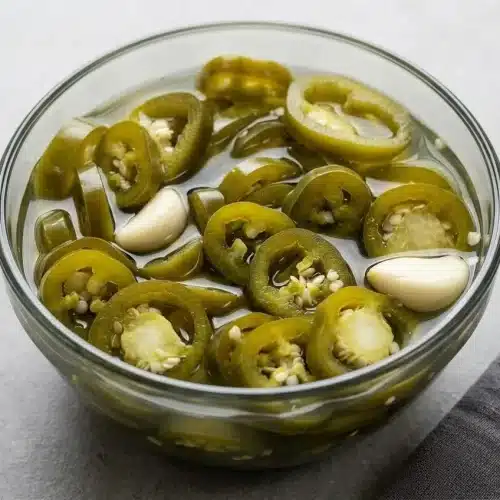
The jalapeños will shift from bright green to a more muted olive green, which is the sign they are pickling properly.
You can eat them once they have cooled, but the flavor gets rounder and more even after they spend time in the fridge. That wait is annoying, but worth it.
Tips for the Best Texture and Flavor
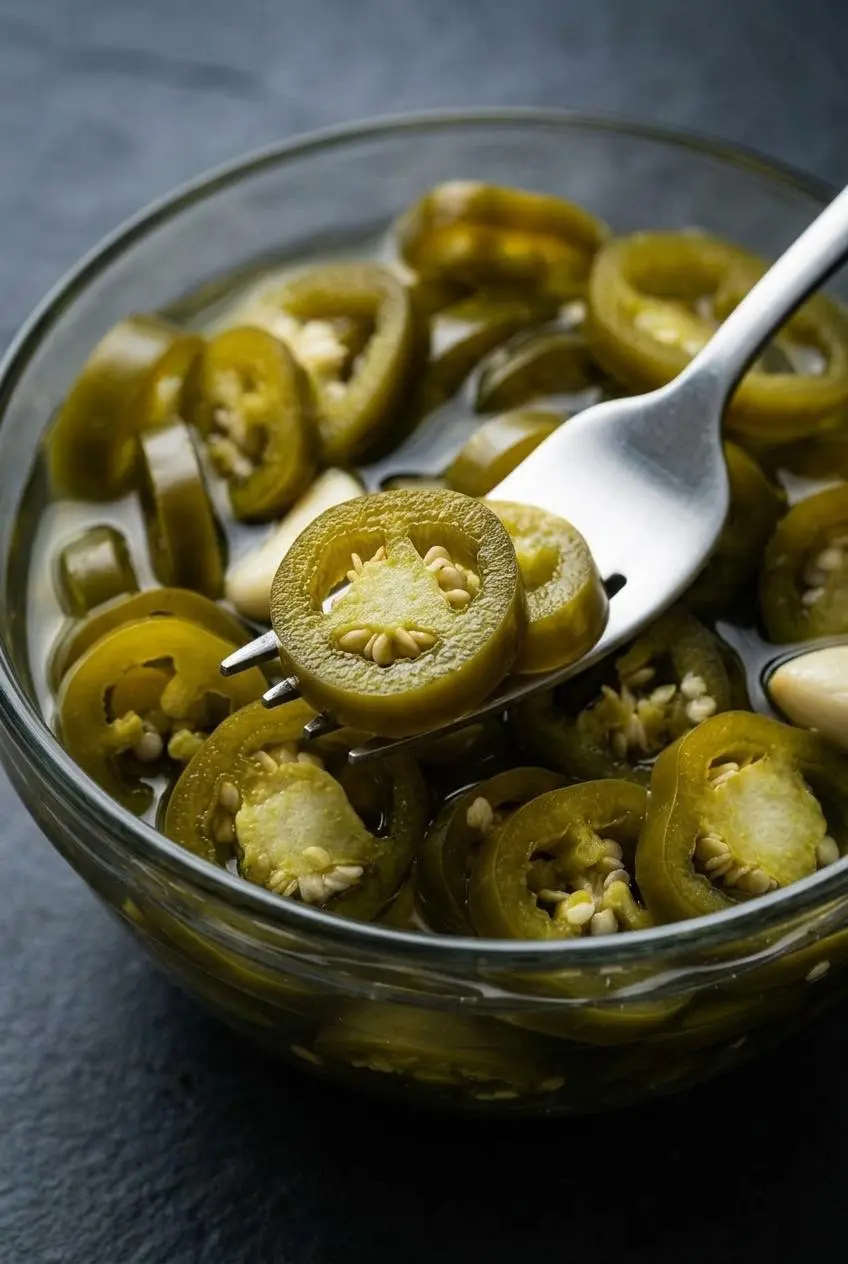
If you want crunchy pickles instead of floppy ones, this is the section that matters most. A few small choices have a big effect on texture, heat, and overall flavor.
How to Get Super Crunchy Pickles
The biggest rule is simple. Do not boil the jalapeños.
Once the brine comes to a boil, the heat goes off. That hot brine is enough to start pickling the peppers without overcooking them. If the jalapeños simmer in the pot, they soften fast and lose that snappy bite.
For the crunchiest result, keep the slices relatively even and avoid leaving them on active heat. Their 30-minute soak is plenty. The peppers will soften a little as they pickle, but they should still have some bite, not a canned-vegetable texture.
If you are very particular about crunch, a small pinch of pickle crisp can help. It is optional, but some home cooks like that extra insurance for texture.
- Mushy peppers usually mean too much heat exposure. Keep the peppers off the burner once they go into the brine.
- Cloudy brine usually points to iodized table salt. Switch to non-iodized salt next time.
- Metallic flavor can happen if you use a reactive pot or container. Stainless steel for the pot and glass or plastic for storage work best.
How to Control the Spice Level
Most of the heat lives in the white membranes and seeds. If you want milder pickled jalapeños, remove some or all of them before slicing.
If you like a stronger burn, leave them in. The brine slightly mellows the peppers over time, but they still keep a real kick. For a middle ground, remove some of the seeds and leave the membranes mostly intact.
Why You Should Let Them Rest
They are technically ready after the hot brine step, but they taste better after a rest in the refrigerator. The vinegar, salt, sugar, garlic, and pepper flavor start to blend instead of sitting in separate corners.
The heat also becomes more rounded. Right after pickling, the vinegar can feel sharp and the spice can hit harder. After a full day in the fridge, the peppers taste more balanced and a little less wild.
Recipe Variations to Try
Once you know the base method, it is easy to steer the flavor in a different direction. Keep these as optional twists, not changes to the main recipe.
With Carrots & Onions (Escabeche-Style)
For a classic taqueria-style escabeche, add one thinly sliced carrot and half a thinly sliced white onion along with the jalapeños. A bay leaf and a few black peppercorns in the brine also push the flavor in that savory, old-school direction.
If you like this style of brine, quick pickled onions are another great fridge project.
Sweet ‘Candied’ Jalapeños
If you want that sweet-hot, candied style, increase the sugar significantly. A good place to start is 1/2 cup, then taste the brine and adjust the sweetness from there.
This variation shifts the balance from tangy and sharp to glossy, sweet heat. It is especially good on burgers, cream cheese crackers, and sandwiches.
Pickling Whole Jalapeños
You can pickle whole jalapeños, but each pepper needs a few holes poked with a knife tip or skewer first. That gives the brine a way in, so the centers actually pickle instead of staying raw and harsh.
Whole peppers also need more patience because the brine takes longer to move through them. If quick results matter, sliced rounds are still the better choice.
Storage: Refrigerator vs. Canning
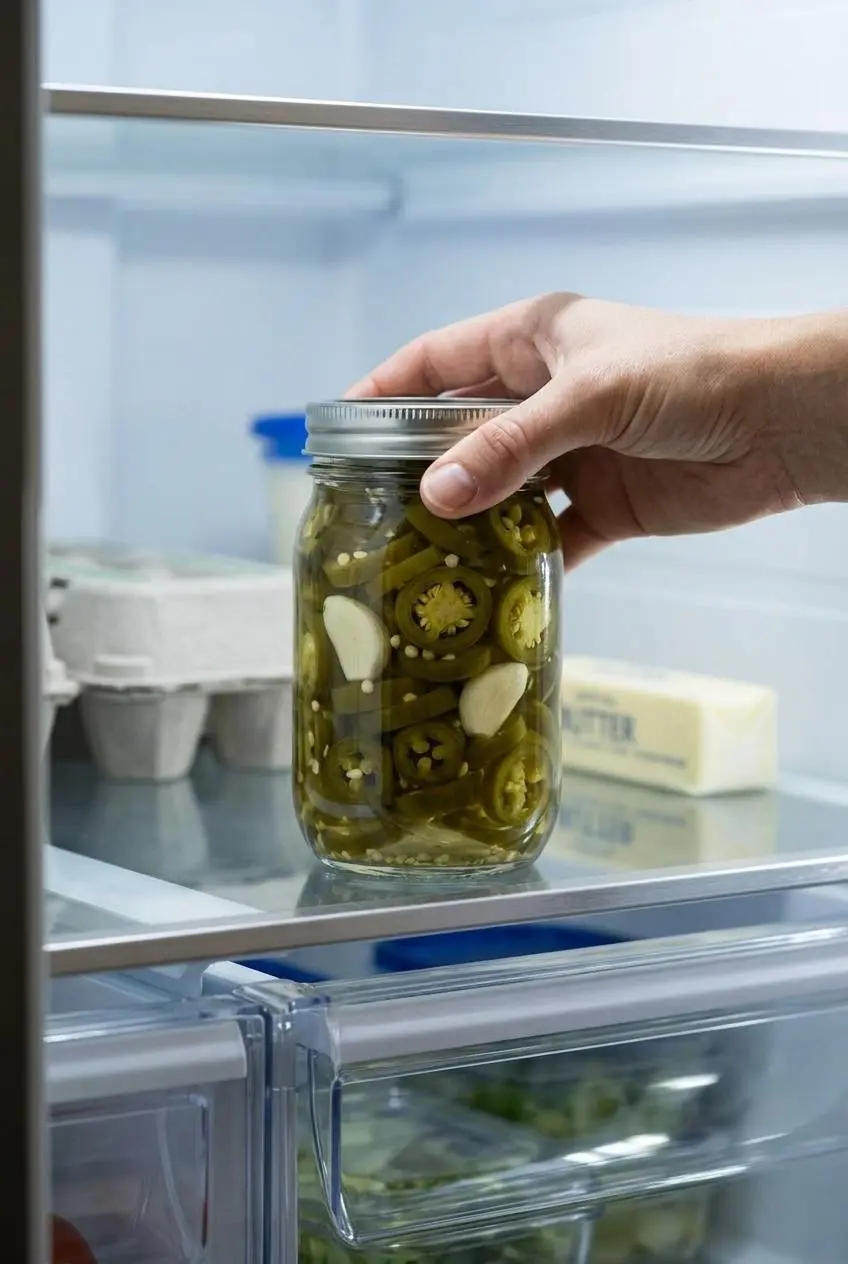
These two methods are related, but they are not the same thing. The main recipe here is a quick refrigerator pickle, while canning is a separate preservation method with its own rules.
Quick Refrigerator Pickles
This recipe is designed for the refrigerator. Once the peppers and brine are in a clean airtight container, keep them chilled and use a clean fork or tongs each time you take some out.
The official recipe stores them in the refrigerator for up to two months. If the texture, smell, or appearance seems off, it is better to discard them and make a fresh batch.
These are also refrigerator pickles, not fermented pickles. Fermented pickles rely on salt and time to sour naturally, while this method uses a hot vinegar brine for a fast, bright result.
For Long-Term Storage: Water Bath Canning Method
If you want shelf-stable pickled jalapeños, use a tested water bath canning method rather than the refrigerator approach alone. That means packing hot, clean jars, pouring in the hot brine with 1/2-inch headspace, removing air bubbles, wiping the rims, sealing the jars, and processing them in a boiling water bath for the time your canning recipe specifies, with altitude adjustments as needed.
Canning needs more precision than fridge pickles, so follow a tested method from a trusted home preservation resource before using it for pantry storage. This recipe works best as an everyday refrigerator pickle unless you are deliberately using a proper canning process.
Creative Ways to Use Pickled Jalapeños
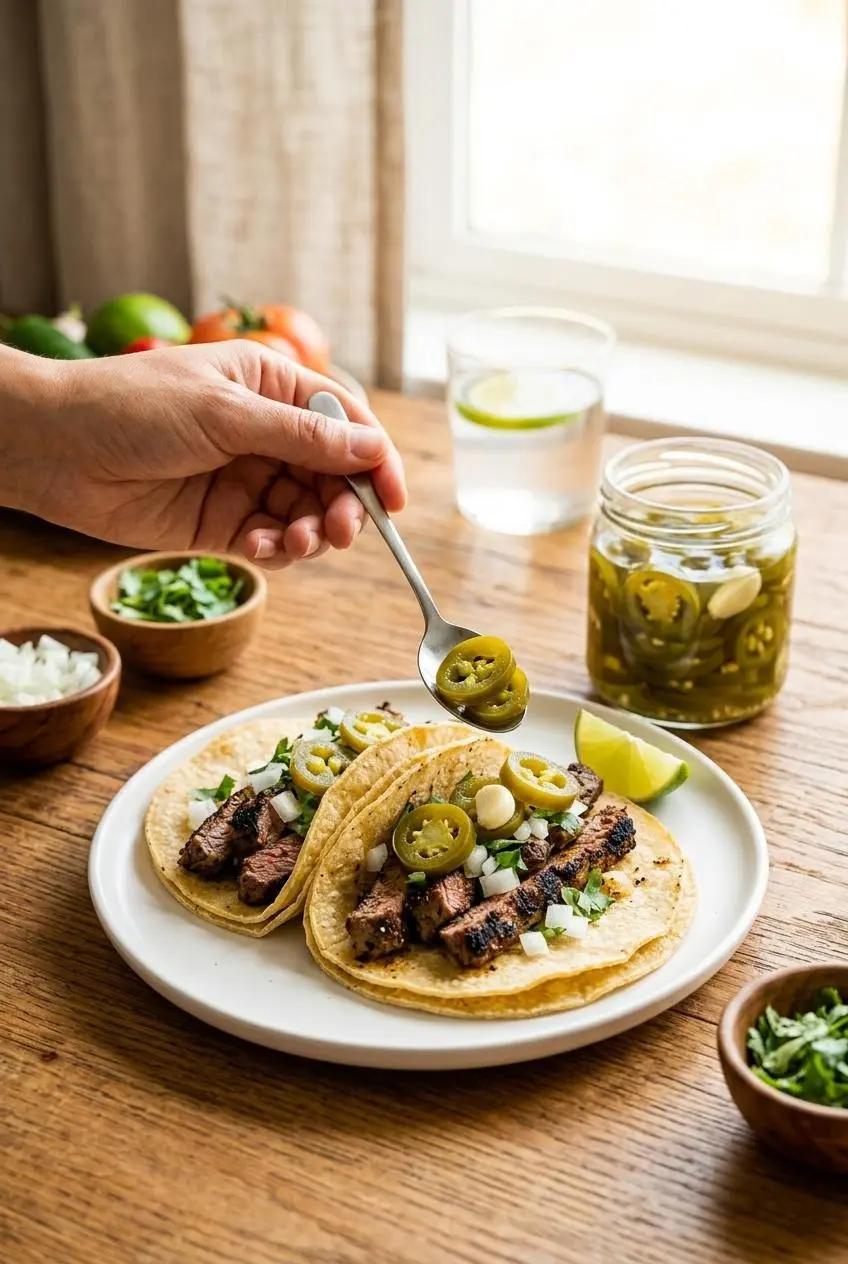
Once you have a jar in the fridge, they end up on everything. Their tang cuts through rich food, and their crunch wakes up soft dishes fast.
- Pile them onto tacos, nachos, tostadas, and quesadillas.
- Serve them with chips and homemade blender salsa for an easy snack spread.
- Add them to burgers, hot dogs, grilled cheese, or a deli sandwich.
- Use them on pizza right before serving for bright heat and bite.
- Scatter them over scrambled eggs, breakfast tacos, or breakfast burritos.
- Chop them into guacamole, salsa, bean dip, or creamy party dips.
- Stir a few into chili, soup, or stew when a bowl needs acid and heat.
- Top baked potatoes, mac and cheese, or loaded fries.
- Use them as a punchy finish for creamy Taco Pasta.
- Tuck them into subs and sandwiches where rich fillings need a sharp contrast, including a hearty meatball sub.
Conclusion
This is one of those small fridge recipes that pays off all week. You get crunchy, tangy jalapeños with very little effort, and the flavor is fresher than anything from a standard store jar.
Keep the peppers out of a hard boil, let the hot brine do the work, and give them a little time to settle in the fridge. Your tacos will thank you.
Frequently Asked Questions (FAQ)
How do you keep pickled jalapeños crispy?
Do not boil the peppers. Bring the brine to a boil, add the jalapeños, then turn off the heat and let the residual heat pickle them. If you want extra help with crunch, a little pickle crisp is an optional add-in.
How long do homemade pickled jalapeños last in the fridge?
The official recipe stores them in the refrigerator for up to two months in a clean, airtight jar or container. Use a clean fork or tongs when removing peppers so you do not introduce extra moisture or debris.
Can I use less sugar or a sugar substitute?
Yes. The sugar mainly balances the vinegar and heat in this quick pickle, so you can reduce it for a tarter result or leave it out if you prefer. A sugar substitute can also work if you follow the package directions for flavor balance.
Why is my pickling brine cloudy?
The most common cause is iodized table salt, which can contain additives that make the brine look hazy. Hard water can also do it. For a clearer brine, use non-iodized salt such as pickling salt, kosher salt, or sea salt.
Pickled Jalapeños Recipe

Equipment
- medium sauce pot
- air-tight container
Ingredients
- 1 lb. jalapeños
- 2 cloves garlic
- 1.5 cups white vinegar
- 1/2 cup water
- 1 Tbsp salt
- 1 Tbsp sugar
Instructions
- Rinse the jalapeños, slice them into rounds, and peel the garlic cloves. The peppers should look fresh and glossy, and even slices will pickle more evenly.
- Pour the vinegar and water into a medium sauce pot, then add the salt and sugar and bring it to a boil over medium-high heat while stirring. Keep stirring until the brine goes from cloudy to clear, which shows the salt and sugar have dissolved.
- Add the sliced jalapeños and garlic as soon as the brine boils, then turn off the heat, cover the pot, and let everything sit for 30 minutes, stirring occasionally. The hot brine does the pickling here, and a sharp vinegary smell is normal, so a little ventilation helps.
- Transfer the peppers and brine to a non-reactive airtight container after the 30-minute soak. The jalapeños will shift from bright green to a more muted olive green, which is the sign they are pickling properly.




1 thought on “Pickled Jalapeños Recipe”