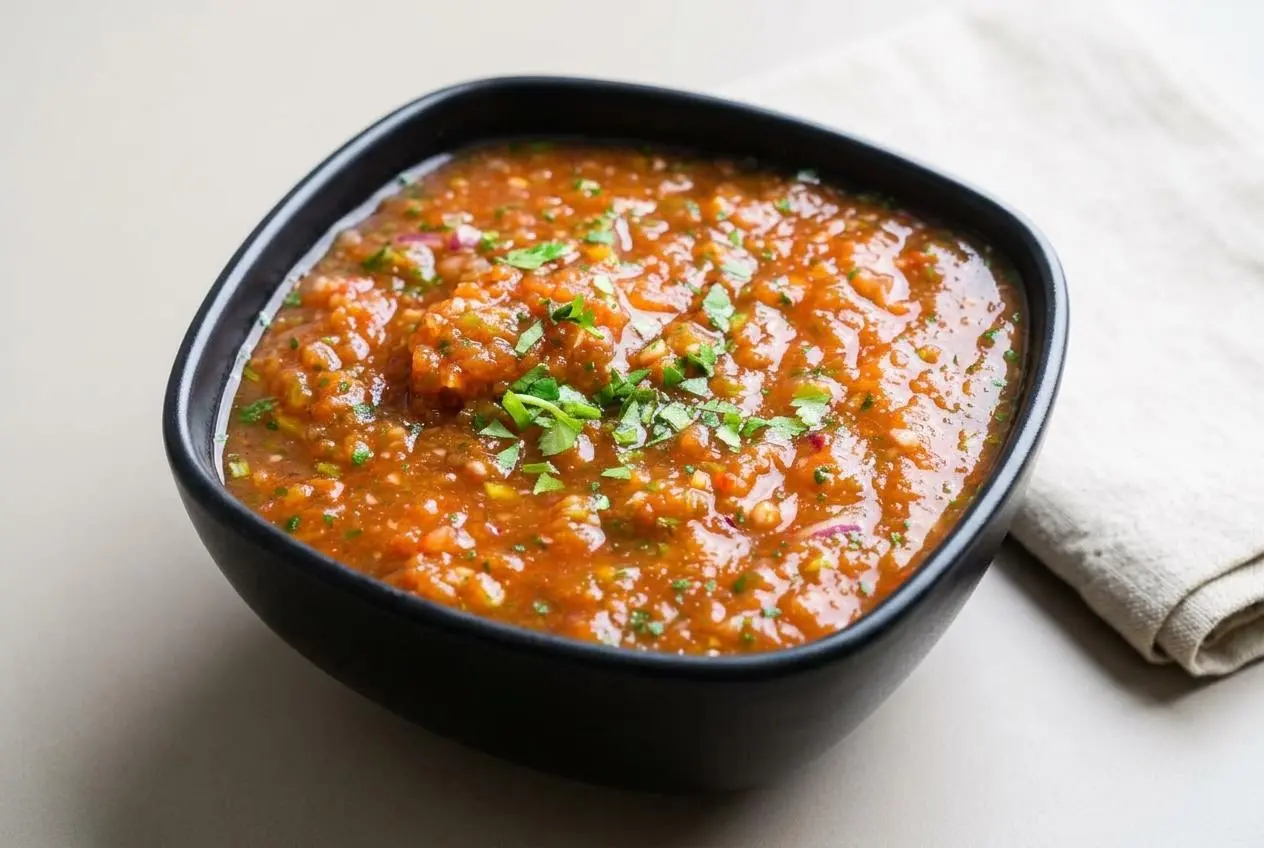
This Blender Salsa is a quick 5-minute restaurant-style salsa made with canned tomatoes, fresh lime, cilantro, onion, and jalapeño for a bright, chunky finish.
It lands right between fresh pico de gallo and smooth jarred salsa, with a zesty flavor and just enough body to scoop. Canned tomatoes keep it consistent, so it works any time of year.
You’ll like how fast it is, but the real win is the texture. The pulse trick makes all the difference.
Start with one or two very short pulses, especially in a powerful blender, because the mixture can go from chunky to pourable fast.
Why You’ll Love This 5-Minute Salsa
If you want homemade salsa without chopping forever or dirtying a pile of dishes, this one earns a regular spot in the fridge.
- It’s ready in about 5 minutes, so it works for last-minute taco night or snack emergencies.
- The flavor tastes fresh and lively, with lime, cilantro, garlic, and cumin balancing the tomatoes.
- Cleanup stays easy because everything comes together in one blender or food processor.
- It tastes brighter and more customizable than most jarred salsa, and usually costs less too.
It also fits a lot of eating styles naturally, since it’s light, gluten-free, and easy to serve with whatever you’re already making.
Key Ingredients for Restaurant-Style Salsa
Each ingredient has a job here, from building body and freshness to balancing heat, acidity, and that classic salsa roja flavor.
- 1 (14.5-ounce can) Diced Tomatoes (don’t drain)
- 1/4 small Red Onion (about 1/3 cup coarsely chopped)
- 1/4 cup Cilantro
- 1 Lime (zested and juiced)
- 1 Jalapeno Pepper (or Serrano Pepper) (seeded and coarsely chopped)
- 2 cloves Garlic (coarsely chopped)
- 1/4 teaspoon Ground Cumin
- Salt (to taste)
- Black Pepper (to taste)
Canned tomatoes are the backbone of this salsa. They give you dependable flavor, color, and moisture year-round, which is a big reason restaurant-style salsa often tastes so consistent. Red onion brings a sharper, fresher bite than yellow onion, but it still blends into the salsa without taking over. White onion gives a more classic taqueria-style flavor, while yellow onion tastes a little sweeter and softer.
Fresh lime matters more than it seems. It brightens the tomatoes, wakes up the cilantro, and keeps the salsa tasting lively instead of flat. Bottled lime juice can work in a pinch, but it usually tastes duller and less crisp.
Garlic and cumin add depth, while salt and black pepper pull everything together. The jalapeño controls the heat, and cilantro keeps the whole thing tasting fresh rather than canned.
I always prefer zesting the lime before juicing it, because it’s much easier and gives the salsa an extra pop without changing the texture.
Canned vs. Fresh Tomatoes: Which Is Better?
Both work, but they give you different results.
- Canned tomatoes: best for speed, consistency, and that classic smooth-chunky restaurant texture. Diced tomatoes are the easiest place to start.
- Fresh tomatoes: best for a brighter, garden-style flavor, especially when tomatoes are in season. Roma tomatoes are a smart choice because they’re meatier and less watery.
- Fire-roasted canned tomatoes: great if you want a subtle smoky edge without changing the method.
- Stewed tomatoes: can make the salsa taste a little sweeter and softer.
- Whole peeled tomatoes: work too, but they usually need a little more pulsing control because they break down fast.
If your main goal is a reliable homemade salsa with almost no prep, canned wins. If your tomatoes are really ripe and flavorful, fresh can be excellent, but you’ll want to manage the extra juice so the salsa doesn’t turn thin.
Controlling the Spice Level
Most of the heat lives in the seeds and white ribs inside the pepper. That gives you a lot of control without changing the rest of the recipe.
- Mild: remove all seeds and membranes before blending.
- Medium: leave in a small amount of the inner ribs or a few seeds.
- Spicy: use the whole jalapeño, or use the serrano option listed in the ingredient line for more heat.
If you want a gentler version without losing flavor, blend in the pepper lightly at first, then taste before adding more heat.
How to Make Restaurant-Style Blender Salsa
This method is all about control. Pulse instead of running the blender continuously, and stop while the salsa still has visible texture.
- Add the diced tomatoes, red onion, cilantro, lime zest and juice, jalapeno or serrano, garlic, cumin, salt, and black pepper to a blender or food processor, or use a tall-sided container if working with a stick blender.
The tall container helps contain splatter, and the rough chopping gives the machine a cleaner, more even start. - Pulse in short bursts until the salsa is mixed and as chunky or fine as you like, stopping often to check the texture.
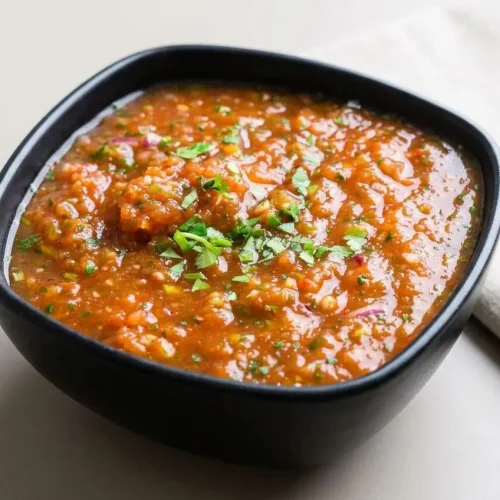
Look for a mixture where you can still see distinct small pieces of onion and cilantro, not a uniform pink liquid. - Serve right away, or transfer the salsa to an airtight container and chill before serving if you want the flavor to settle a bit more.
After a short rest, the sharp onion smell softens and the salsa tastes more balanced and blended.
Be careful with that first pulse. High-powered blenders can move fast, and salsa soup is only a few seconds away.
Tips for Perfect Salsa Every Time
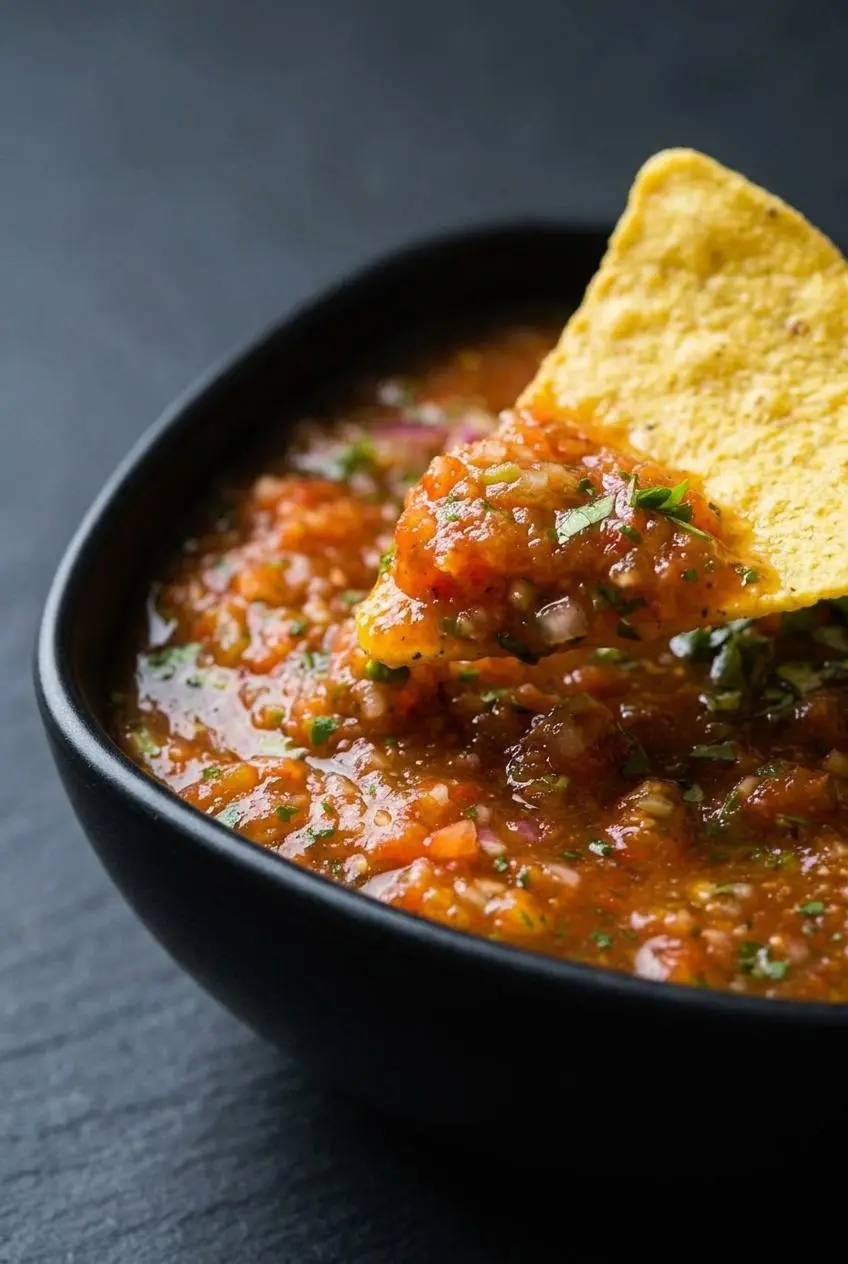
- The art of the pulse: Use the pulse button in short bursts instead of hitting blend and walking away. That keeps the salsa chunky and prevents the tomatoes from turning watery.
- Let it rest: A short chill in the fridge, about 20 to 30 minutes, helps the lime, garlic, onion, and cumin come together. The flavor gets rounder, and the raw onion bite mellows.
- Taste and adjust: Salsa often needs one final tweak after blending. Add a bit more salt for depth, more lime for brightness, or a little more pepper if the flavor feels sleepy.
- Think about your tomatoes: If you’re serving this with salty tortilla chips, low-sodium canned tomatoes can help you control the final seasoning better.
If you’ve ever wondered why restaurant style salsa tastes better after it sits for a bit, this is why. The ingredients start out separate, then settle into one brighter, fuller flavor.
Troubleshooting: How to Fix Common Salsa Problems
Most salsa problems are easy to rescue. A quick adjustment usually gets it back on track without starting over.
How to fix watery salsa?
- Likely cause: too much tomato liquid or too much blending.
- Prevention: drain off part of the tomato liquid before blending if you know you like a thicker dip.
- Fix: pour the salsa into a fine-mesh sieve for a few minutes to let excess liquid drip away.
- More body: stir in a little tomato paste, then pulse once or twice to combine. This thickens the salsa without muting the flavor too much.
How to fix bland or acidic salsa?
- Likely cause: it needs more seasoning, or the tomatoes and lime are dominating.
- Fix for bland salsa: add a pinch more salt and a little more cumin, then taste again.
- Fix for harsh acidity: add a small pinch of sugar at a time until the edge softens. You want balance, not sweetness.
- Extra tip: chilling the salsa briefly can also help the flavors round out.
How to fix salsa that’s too spicy?
- Likely cause: the pepper was hotter than expected, or too much seed and membrane went in.
- Best fix: blend in more diced tomatoes to dilute the heat and stretch the batch.
- Another option: add a little diced avocado for a softer, creamier edge.
- For a slight sweet balance: a small drizzle of honey can take the sharp edge off without making the salsa taste like dessert.
Blender Salsa Variations
This salsa is easy to customize once you have the texture right. Keep the main recipe as written, then use one of these optional twists when you want a different mood.
Smoky Chipotle Blender Salsa
Swap the fresh jalapeño for canned chipotle peppers in adobo sauce if you want a deeper, smokier flavor. A small pinch of smoked paprika also works well here and gives the salsa a darker, almost fire-roasted feel.
Fresh Tomato Blender Salsa
Use about 1.5 pounds of ripe Roma tomatoes, cored and roughly chopped. Gently squeeze out some of the seeds and juice before blending so the salsa keeps a scoopable texture instead of turning loose and watery.
Mild Kid-Friendly Version
For a milder batch, remove all seeds and membranes from the jalapeño or leave the pepper out entirely. Mild diced green chiles are also a good optional swap when you want flavor without much heat.
If you like fruity salsas too, fresh Mango Salsa is a fun change of pace from tomato-based versions.
How to Store and Freeze Homemade Salsa
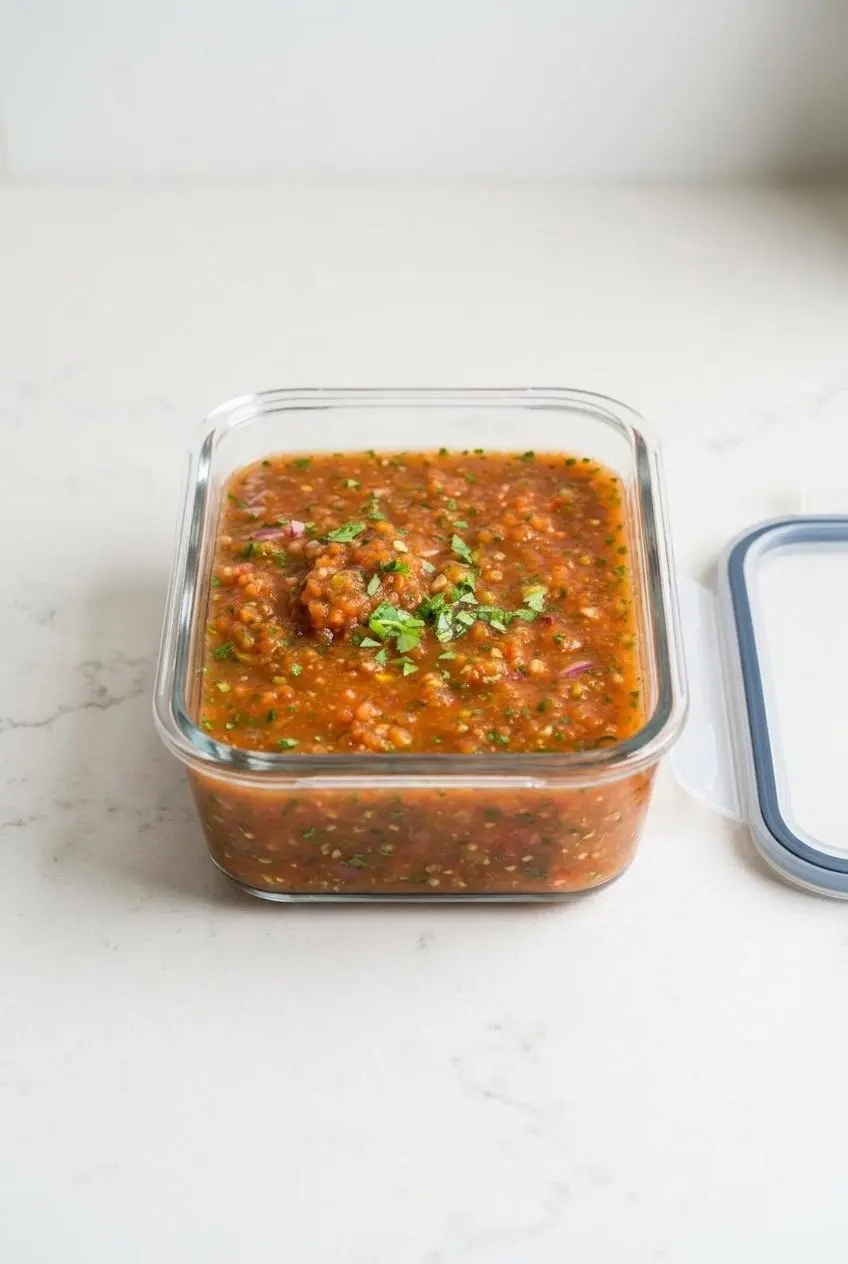
For refrigerator storage, transfer the salsa to an airtight container and keep it chilled. A homemade fresh salsa like this is commonly kept for up to 1 week in the fridge, which lines up with homemade salsa storage guidance of up to one week in the refrigerator.
If you want to freeze it, use a freezer-safe container or bag and leave a little space at the top for expansion. The flavor holds up better than the texture, so expect the salsa to seem a bit looser after thawing.
After thawing, stir the salsa well before serving. If it looks thin, drain off a little liquid or pulse in a spoonful of tomato paste to bring back some body.
Because this salsa includes fresh produce, wash your lime, cilantro, and pepper well and keep your tools and hands clean to reduce the risk of contamination. Good produce handling matters just as much as good seasoning.
Serving Suggestions
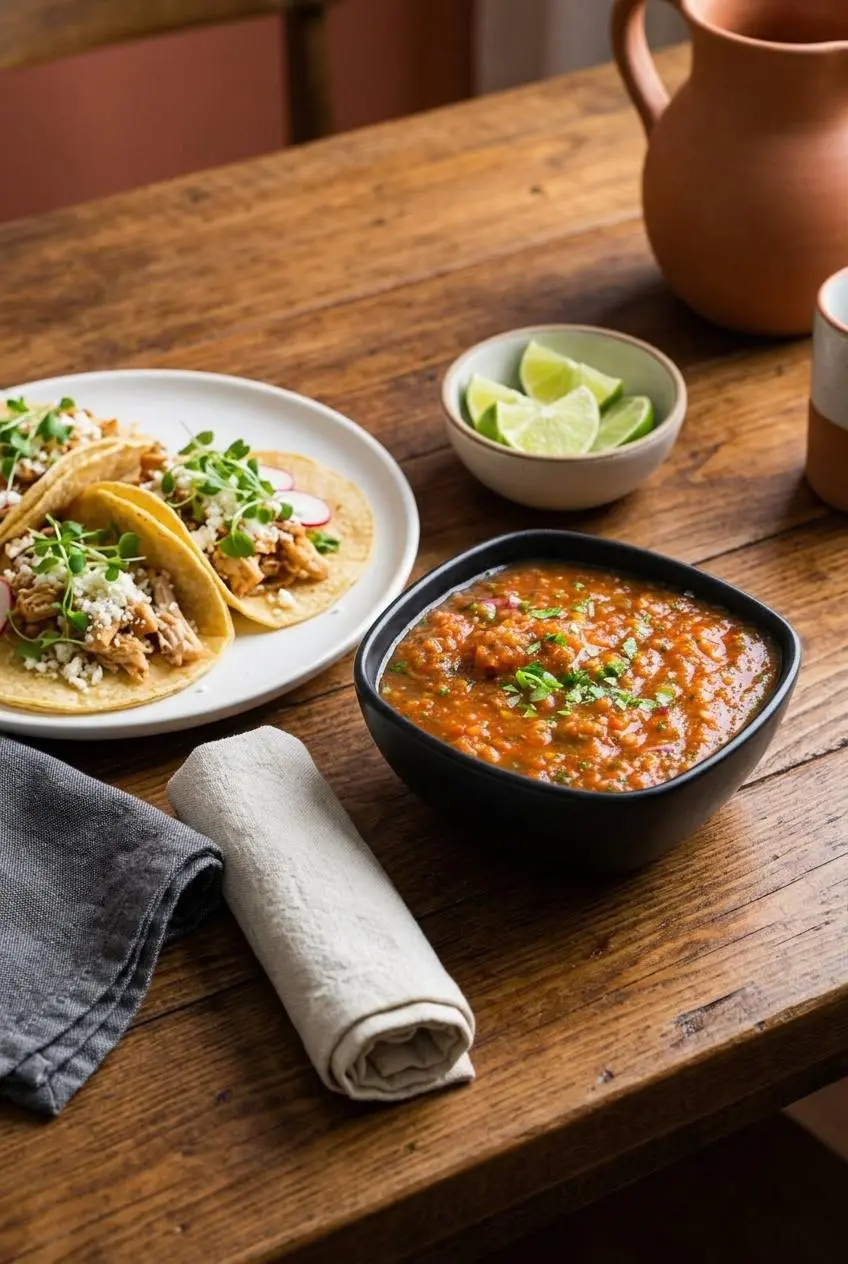
- Serve it the classic way with tortilla chips.
- Spoon it over tacos, burritos, nachos, or quesadillas.
- Add it to scrambled eggs or tuck it into a breakfast burrito.
- Use it over grilled chicken or turn it into dinner with easy Salsa Chicken.
- Spoon it over grilled fish for a fresh, tangy finish.
- Stir it into rice or quinoa to wake up a plain side dish.
- Use a few spoonfuls as a light dressing for taco salad.
Conclusion
This is the kind of homemade salsa that earns repeat status because it’s fast, bright, and genuinely useful. Five minutes and one blender get you a fresher, livelier dip than most store-bought jars.
If you remember one thing, make it this: pulse, don’t blend. Keep those little bits of onion and cilantro visible, and your salsa will taste and feel right from the first scoop.
Frequently Asked Questions (FAQ)
What’s the best way to get chunky salsa in a blender?
Use the pulse button, not the regular blend setting. Work in short 1 to 2 second bursts and check the texture often. Roughly chop the onion and pepper first so the blender doesn’t have to work as hard. Stop when you still see small pieces throughout the salsa.
Can I make this salsa in a food processor?
Yes, absolutely. A food processor often gives you even more control over texture, especially if you like chunkier salsa. The wider bowl helps ingredients move around without turning into puree as quickly. If your blender runs very strong, a food processor can be the easier choice.
How can I make my blender salsa less watery?
Drain off some of the tomato liquid before blending. Pulse less, because over-blending releases more liquid and breaks everything down too far. If it’s already too thin, strain it briefly through a fine-mesh sieve. For a thicker finish, mix in a little tomato paste and pulse once or twice.
Do I have to use canned tomatoes?
No, fresh tomatoes work well too. Ripe Roma tomatoes are a good choice because they have more flesh and less water. Core them and remove some seeds and juice before blending to keep the salsa from thinning out. Canned tomatoes are still the easiest option for reliable restaurant-style texture any time of year.
Blender Salsa

Equipment
- Chef’s knife
- Cutting board
- latex gloves optional for seeding peppers
- Garlic Press
- 7-cup food processor or immersion blender
- airtight storage container
Ingredients
- 1 (14.5-ounce can) Diced Tomatoes don’t drain
- 1/4 small Red Onion about 1/3 cup coarsely chopped
- 1/4 cup Cilantro
- 1 Lime zested and juiced
- 1 Jalapeno Pepper (or Serrano Pepper) seeded and coarsely chopped
- 2 cloves Garlic coarsely chopped
- 1/4 teaspoon Ground Cumin
- Salt to taste
- Black Pepper to taste
Instructions
- Add the diced tomatoes, red onion, cilantro, lime zest and juice, jalapeno or serrano, garlic, cumin, salt, and black pepper to a blender or food processor, or use a tall-sided container if working with a stick blender. The tall container helps contain splatter, and the rough chopping gives the machine a cleaner, more even start.
- Pulse in short bursts until the salsa is mixed and as chunky or fine as you like, stopping often to check the texture. Look for a mixture where you can still see distinct small pieces of onion and cilantro, not a uniform pink liquid.
- Serve right away, or transfer the salsa to an airtight container and chill before serving if you want the flavor to settle a bit more. After a short rest, the sharp onion smell softens and the salsa tastes more balanced and blended.