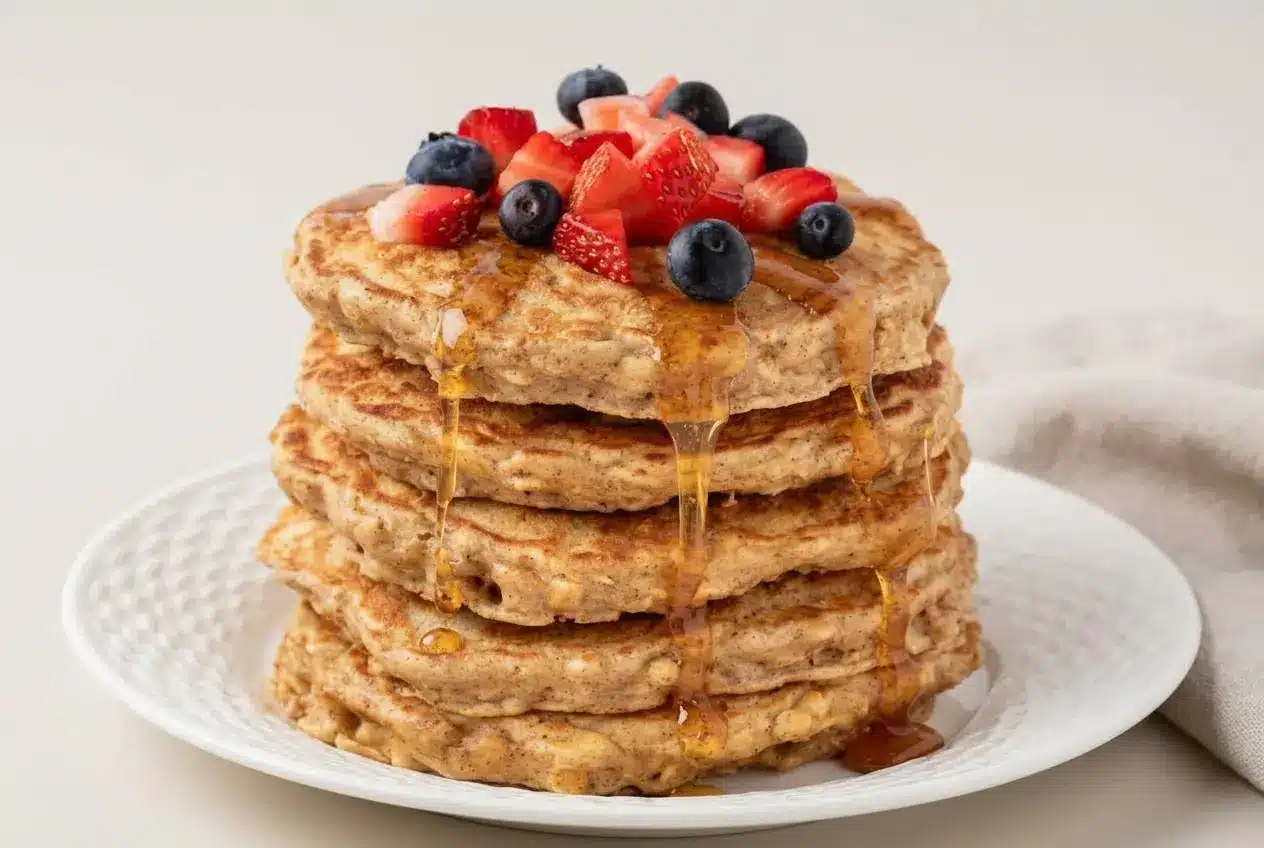
Make fluffy oatmeal pancakes by soaking rolled oats in milk and eggs for 10 minutes, then stirring in flour and baking powder before cooking on medium heat. This no-blender method makes thick, tender pancakes that hold together beautifully.
This oatmeal pancakes recipe brings a pleasantly hearty oat texture to a familiar stack of pancakes. The oats soften in the batter, so each pancake feels tender rather than chewy or grainy.
A soft griddle sizzle and warm vanilla aroma make the wait worthwhile. The key is giving the oats their moment.
Use a wide bowl so the oats can hydrate evenly and the batter is easy to scoop from the bottom.
Why Oatmeal Pancakes Deserve a Spot on Your Table
Oatmeal pancakes have more texture and nutty character than standard white-flour pancakes, while still delivering a soft, fluffy center. Rolled oats bring dietary fiber and complex carbohydrates to breakfast, making this stack a satisfying option for mornings when you want something with more staying power.
The difference comes down to hydration. Dry oats can pull moisture from pancake batter as they cook, which leads to a dense or rubbery crumb. Soaking them first lets the grains soften before they hit the skillet. The result is hearty but tender, with little flecks of oat in every bite instead of a heavy, wet center.
If oats are already part of your breakfast routine, hearty baked oatmeal is another cozy way to enjoy their toasted, nutty flavor.
These pancakes are not meant to mimic a perfectly smooth diner flapjack. They have a rustic, spoonable batter and a more substantial bite, yet the flour, eggs, and baking powder keep them pleasantly light.
Key Ingredients and Why Each One Matters
Each ingredient contributes to the pancake’s structure, moisture, lift, and warm flavor, from the hydrated oats and eggs to the butter that gives the edges their tender golden finish.
- 1 cup old-fashioned oats
- 1 cup milk (any)
- 2 large eggs
- 1 tablespoon sugar
- 1 teaspoon vanilla
- 1/2 teaspoon cinnamon (optional)
- 1 tablespoon butter (melted)
- 2/3 cup all-purpose flour
- 2 1/2 teaspoons baking powder
- Pinch salt (omit if butter is salted)
Old-fashioned oats are the best choice here because they keep a gentle, distinct oat texture after soaking. Quick oats absorb liquid faster and can make the batter feel softer and less textured. The milk and eggs hydrate the oats while also creating a batter that can rise and hold its shape.
Eggs provide binding and help the pancakes puff instead of breaking when flipped. Baking powder creates tiny air pockets as the batter cooks, while melted butter gives the pancakes richer flavor and softer edges. Vanilla and cinnamon round out the oat flavor with warmth.
Certified gluten-free rolled oats can replace standard rolled oats for those avoiding gluten, but use a gluten-free flour blend as well if the finished pancakes need to be fully gluten-free.
I level the measuring cup of rolled oats rather than packing it, which keeps the milk-to-oat balance right and prevents an overly thick batter.
How to Make Fluffy Oatmeal Pancakes Step by Step
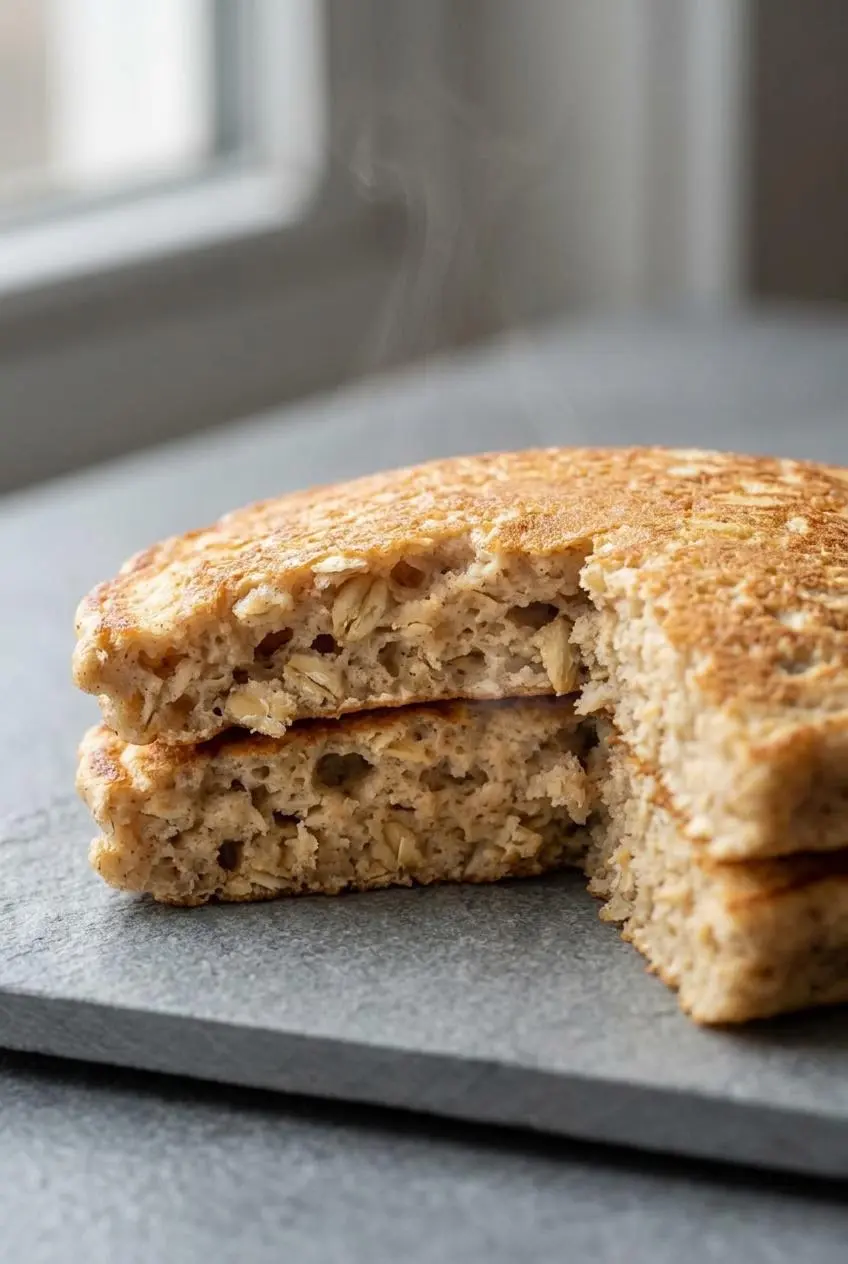
The two resting periods are what turn this batter from loose and grainy into thick, spoonable pancake batter. Give the oats time to drink in the liquid, then let the flour and baking powder settle briefly before cooking.
Make the batter
- Whisk the milk, eggs, sugar, vanilla, and cinnamon (if using) in a large bowl, then stir in the oats.
Make sure the oats are fully coated so they can soften evenly. - Leave the oat mixture undisturbed for 10 minutes, and melt the butter during that time so it has a chance to cool slightly.
The oats should look plumper and less dry when the rest is complete. - Stir the soaked oats once, then fold in the cooled melted butter, flour, baking powder, and salt until no dry flour remains.
Let the batter stand for 5 minutes until it thickens into a soft, spoonable consistency.
Cook the pancakes
- Warm a nonstick skillet or griddle over medium heat, grease the surface, and portion up to 1/4 cup batter for each pancake.
Scoop from the bottom of the bowl so the heavier oats do not remain in a dense layer at the bottom. - Cook for 2 minutes, then turn the pancakes and cook for another 2 minutes.
Flip when bubbles have formed and begun to pop, the edges look defined and matte, and the underside is golden. - Move cooked pancakes to a plate or hold them in a 200°F oven while finishing the remaining batter.
A lightly pressed pancake should spring back gently instead of feeling wet in the center.
Serve & Storage
- Serve the pancakes warm with syrup and any favorite pancake toppings.
The warm surface absorbs syrup best while the edges are still lightly crisp. - Place cooled leftovers in an airtight container and refrigerate for up to 3 days.
Warm pancakes in the microwave for 30 seconds to 1 minute, in a skillet, or in a toaster oven until heated through.
Hydrating the Oats: The 10-Minute Soak Rule
The 10-minute soak is the essential no-blender technique. Rolled oats are dry and sturdy, so they need time in the milk-and-egg mixture before flour enters the bowl. This rest hydrates the oat starches, allowing the pancakes to cook through with a soft crumb instead of a gritty, dry texture.
It also gives you a useful window to melt the butter and let it cool. Adding very hot butter to the egg mixture can make the batter less even, so slightly cooled butter blends in more smoothly.
Mixing the Batter Without Overworking
Once the oats have soaked, stir in the remaining ingredients just until the flour disappears. A few small lumps are fine. Stirring aggressively works the flour too much and can make the pancakes tougher than they need to be.
The second 5-minute rest matters, too. It lets the flour hydrate and gives the baking powder time to begin building lift. By the time the skillet is ready, the batter should feel thicker than standard pancake batter but still fall from the scoop without forcing it.
Griddle Temperature and Golden Doneness Cues
Medium heat gives the thicker oat batter time to set in the middle before the outside gets too dark. You should hear a gentle sizzle when the batter hits the greased skillet, and the vanilla aroma should smell warm rather than sharply toasted.
If the pancakes brown before bubbles appear across the surface, lower the heat. If they look pale and spread too much, let the pan warm a little longer. Keep scooping from the bottom of the bowl throughout cooking, especially after the batter has been sitting, so every pancake gets an even share of oats.
Troubleshooting Common Oatmeal Pancake Mistakes
- Gummy centers: The skillet is likely too hot, so the outside browns before the thick middle can set. Lower the heat slightly and allow the pancake to cook steadily before flipping.
- Dense, rubbery pancakes: The oats may not have rested long enough, or the batter may have been stirred too much after adding flour. Complete both rests and mix only until combined.
- Batter that becomes very thick: Oats continue absorbing liquid while the bowl sits. Gently stir in 1 tablespoon of milk to loosen the batter without making it runny.
- Uneven oat distribution: Oats naturally sink as the batter rests. Reach the scoop all the way to the bottom of the bowl before each pour.
- Pancakes that tear while flipping: They need more time on the first side. Wait for popped bubbles and a firm, matte perimeter before sliding the spatula underneath.
- Burnt surfaces with undercooked middles: Butter or oil can brown quickly on a hot skillet. Wipe away any dark residue, regrease lightly, and continue over gentler heat.
Storing and Reheating for Busy Mornings
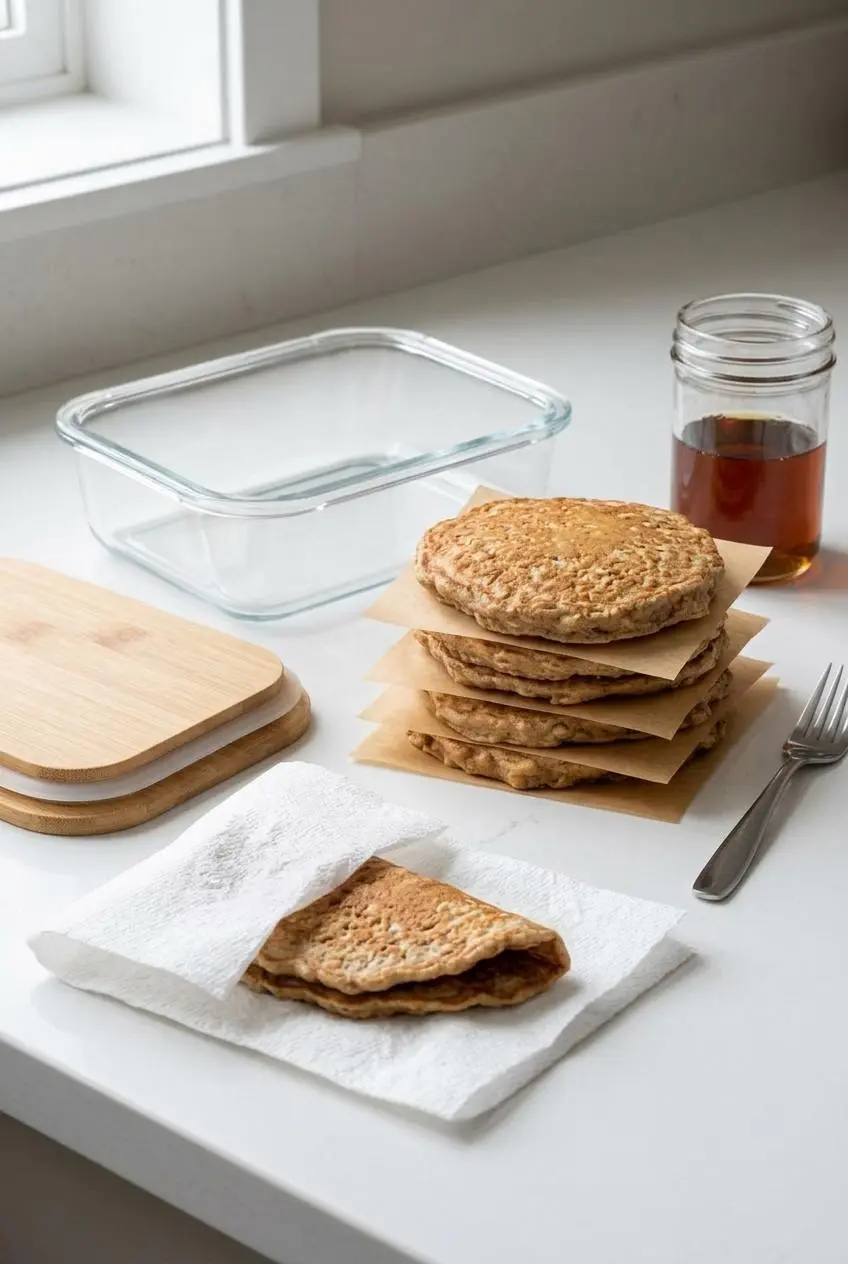
Let cooked pancakes cool before placing them in an airtight container. They can be refrigerated for up to 3 days, as directed in the method, which makes them useful for a quick breakfast later in the week.
For microwave reheating, cover a pancake with a damp paper towel before warming it for 30 seconds to 1 minute. The added moisture helps the oat crumb stay soft instead of dry. For crisper edges, use a toaster oven or warm the pancakes in a skillet over low heat.
Reheat only the portion you plan to eat. That keeps the remaining pancakes from repeatedly warming and cooling, and it preserves their tender texture.
Delicious Variations and Dietary Adaptations
The main recipe has a classic whole-oat texture, but you can take the flavor in different directions without changing the character of the pancakes. For a bright citrus lift, stir a pinch of freshly grated orange zest into the soaked batter before cooking.
Flourless Blender Oat Pancakes
For a smoother, flourless-style oat pancake, blend certified gluten-free rolled oats with ripe banana and eggs until the batter looks pourable and mostly smooth. This version has a softer, more uniform texture than the whole-oat method, with banana adding sweetness and helping the batter hold together.
Blend only until smooth. Running the blender longer than needed can make oat batter gluey and heavy. For another blender-based breakfast option with extra protein, try these banana oatmeal protein pancakes.
Vegan Applesauce Oatmeal Pancakes
For an egg-free and dairy-free adaptation, use unsweetened applesauce for gentle binding and soy or almond milk for moisture. The pancakes will have a slightly softer center and less egg-driven lift, so keep the skillet at moderate heat and wait for the edges to set before flipping.
Applesauce adds mild fruit sweetness without overpowering the cinnamon and vanilla. If you want a fully plant-based stack with a different texture, these protein vegan pancakes offer another satisfying direction.
Buttermilk Soak Method
For a tangier variation, soak the rolled oats in buttermilk in the refrigerator before cooking. The chilled soak softens the grains and gives the finished pancakes a pleasant cultured tang that pairs especially well with maple syrup and toasted nuts.
Use this option when you want a more pronounced buttermilk flavor than the standard milk version provides. The texture stays hearty, but the flavor leans closer to classic breakfast pancakes.
Serving Ideas for a Hearty Breakfast
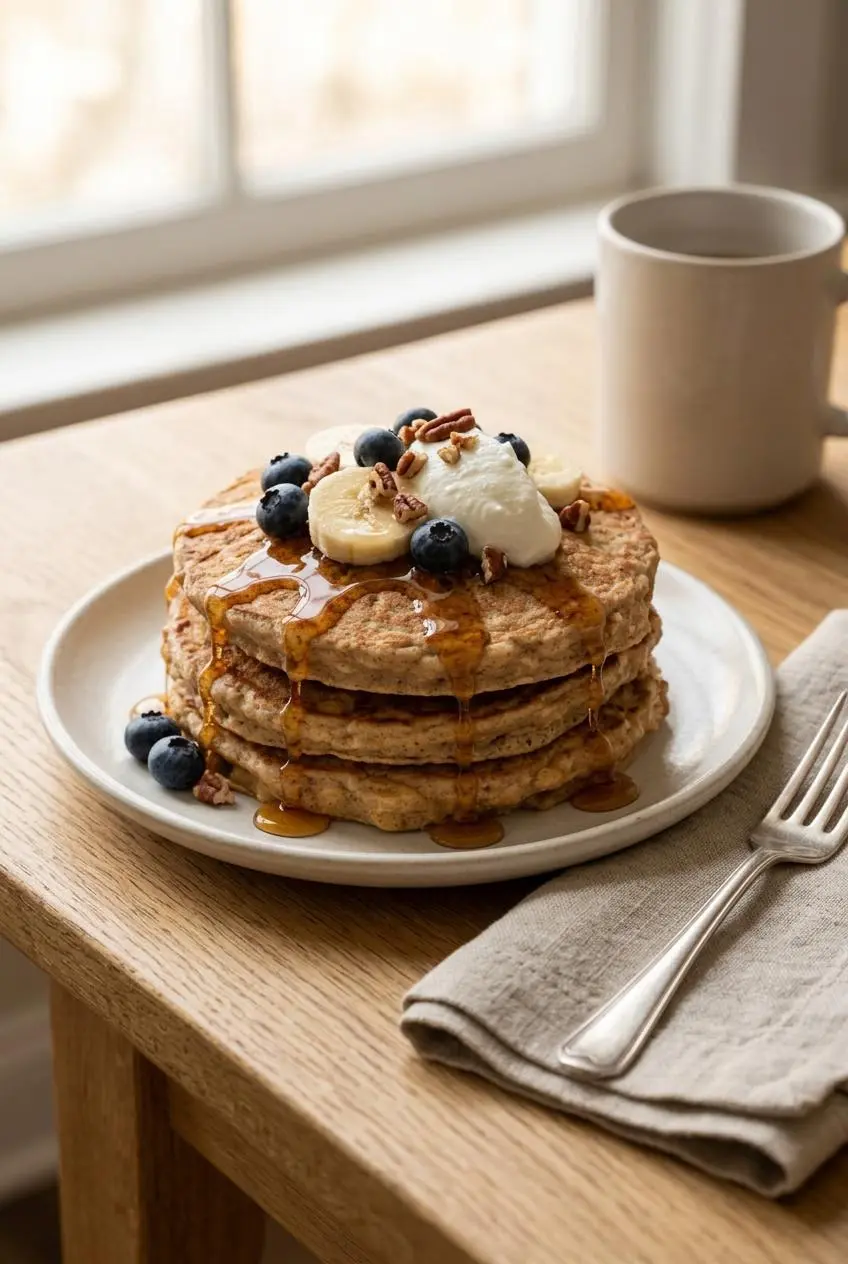
Serve these pancakes while they are warm and the centers are still soft. A drizzle of pure maple syrup with fresh blueberries or sliced bananas complements the oats without covering their nutty flavor.
- Add thick Greek yogurt, ground cinnamon, and toasted chopped pecans for creamy contrast and crunch.
- Layer sliced bananas over the stack, then finish with warm maple syrup for a cozy, naturally sweet breakfast.
- Top with fresh berries and a light dusting of cinnamon when you want a brighter, fruit-forward plate.
Because these pancakes are hearty, a small stack goes a long way. Keep toppings ready before the first pancake leaves the skillet so everyone can eat while the edges are at their best.
Conclusion
Soaking the oats before mixing is the small step that makes these pancakes soft, fluffy, and pleasantly hearty without needing a blender. Give the batter its two rests, keep the heat at medium, and scoop from the bottom of the bowl.
Dress each stack with the toppings that sound good that morning, then gather everyone around while the pancakes are warm and golden.
Frequently Asked Questions
How Do You Make Fluffy Oatmeal Pancakes Without a Blender?
Soak whole rolled oats in milk and eggs for 10 minutes before adding the flour and baking powder. The oats soften in the liquid, while the eggs and leavening provide structure and lift. A second 5-minute rest thickens the batter before it reaches the skillet.
Are Oatmeal Pancakes Healthier Than Standard White Flour Pancakes?
Oatmeal pancakes include rolled oats, which contribute dietary fiber and complex carbohydrates alongside the flour. They can be a more filling choice than pancakes made entirely with refined white flour, especially when served with fruit, yogurt, or nuts.
Why Do My Oatmeal Pancakes Turn Out Mushy Inside?
Mushy centers usually mean the pan is too hot or the oats did not soak long enough. Use medium or medium-low heat so the middle can set gradually, and wait for popped bubbles and matte edges before flipping.
How Should I Store and Reheat Leftover Oatmeal Pancakes?
Cool the pancakes, keep them in an airtight container in the refrigerator, and follow the storage timing in the method above. Reheat one portion at a time with a damp paper towel in the microwave for a softer crumb, or use a toaster oven when you want crisp edges.
Oatmeal Pancakes Recipe

Equipment
- Aluminum-free baking powder
- Pancake Flipper
- Ceramic Pancake Warmer
Ingredients
- 1 cup old-fashioned oats
- 1 cup milk (any)
- 2 large eggs
- 1 tablespoon sugar
- 1 teaspoon vanilla
- 1/2 teaspoon cinnamon (optional)
- 1 tablespoon butter (melted)
- 2/3 cup all-purpose flour
- 2 1/2 teaspoons baking powder
- Pinch salt (omit if butter is salted)
Instructions
Make the batter
- Whisk the milk, eggs, sugar, vanilla, and cinnamon (if using) in a large bowl, then stir in the oats. Make sure the oats are fully coated so they can soften evenly.
- Leave the oat mixture undisturbed for 10 minutes, and melt the butter during that time so it has a chance to cool slightly. The oats should look plumper and less dry when the rest is complete.
- Stir the soaked oats once, then fold in the cooled melted butter, flour, baking powder, and salt until no dry flour remains. Let the batter stand for 5 minutes until it thickens into a soft, spoonable consistency.
Cook the pancakes
- Warm a nonstick skillet or griddle over medium heat, grease the surface, and portion up to 1/4 cup batter for each pancake. Scoop from the bottom of the bowl so the heavier oats do not remain in a dense layer at the bottom.
- Cook for 2 minutes, then turn the pancakes and cook for another 2 minutes. Flip when bubbles have formed and begun to pop, the edges look defined and matte, and the underside is golden.
- Move cooked pancakes to a plate or hold them in a 200°F oven while finishing the remaining batter. A lightly pressed pancake should spring back gently instead of feeling wet in the center.
Serve & Storage
- Serve the pancakes warm with syrup and any favorite pancake toppings. The warm surface absorbs syrup best while the edges are still lightly crisp.
- Place cooled leftovers in an airtight container and refrigerate for up to 3 days. Warm pancakes in the microwave for 30 seconds to 1 minute, in a skillet, or in a toaster oven until heated through.