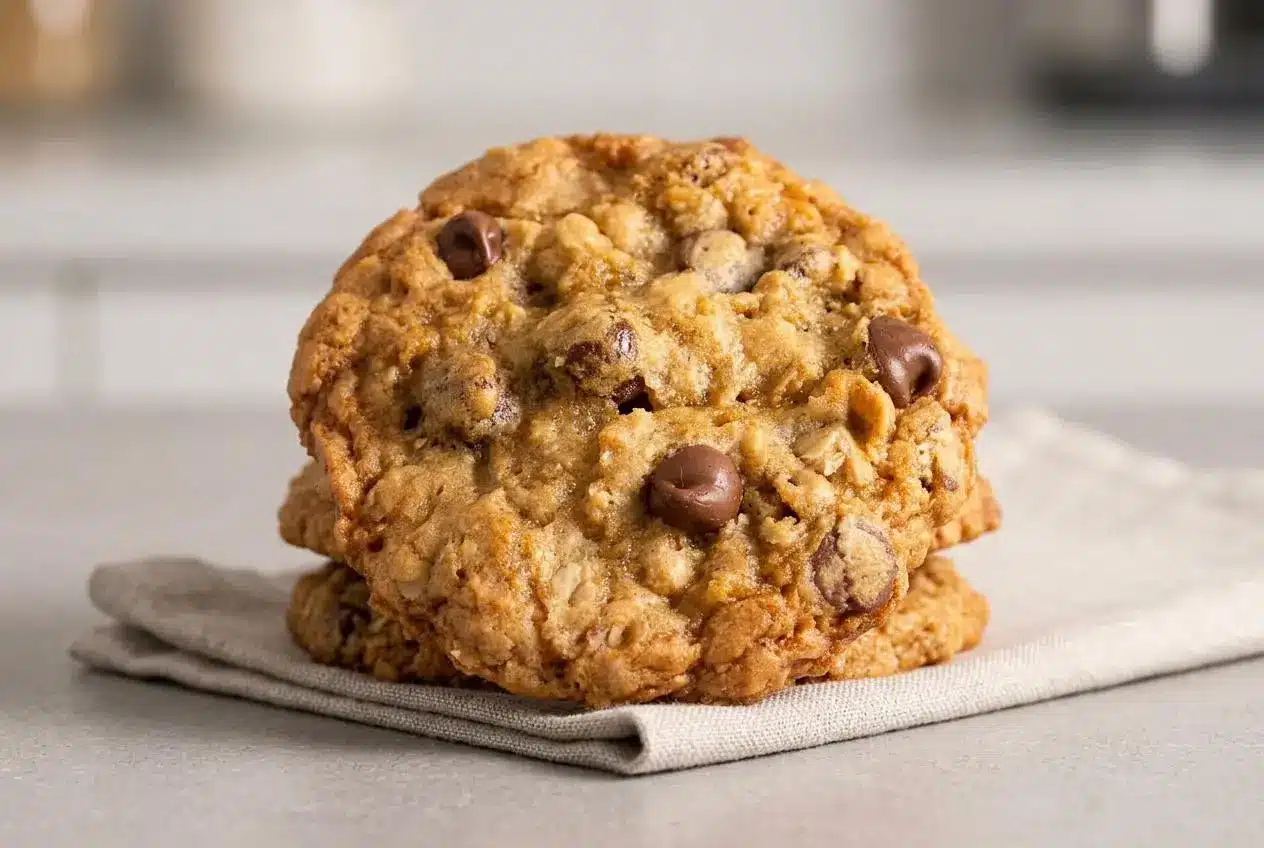
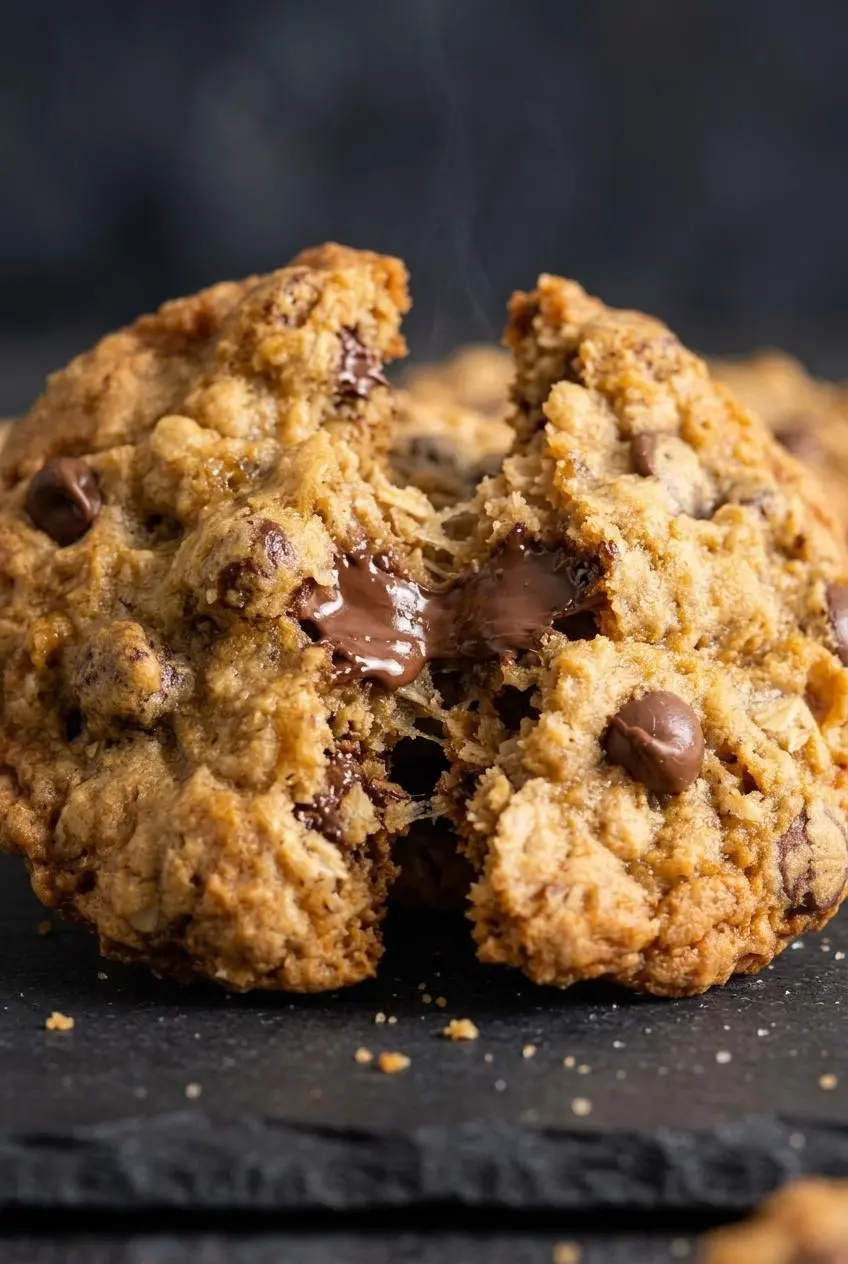
Classic Oatmeal Chocolate Chip Cookies combine rolled oats, rich brown sugar, creamed butter, and semisweet chocolate chips into a thick dough. Chilled and baked at 375 degrees F for 8 to 10 minutes, they develop toasted golden edges while keeping their centers remarkably soft and tender.
Nothing matches the cozy comfort of homemade Oatmeal Chocolate Chip Cookies pulling hot from the oven. The sweet aroma of melting vanilla, caramelized brown sugar, and toasted grains instantly fills the kitchen, promising bakery quality results with everyday baking precision.
The magic lies in balancing crisp outer rims with deeply chewy, buttery centers that do not turn dry or cakey. Getting that contrast right transforms a standard cookie into something unforgettable, and a single easy technique makes all the difference.
Pull the butter from the refrigerator about forty-five minutes before mixing so it yields gently to light pressure without becoming shiny or greasy.
Ingredients for Oatmeal Chocolate Chip Cookies
Every ingredient in this recipe serves a dedicated purpose, working together to build balanced structure, rich moisture, deep caramel flavor, and pleasant chewiness throughout the cookie crumb.
- 1 cup all-purpose flour (120g)
- 1/2 tsp baking soda (3g)
- 1/2 tsp salt (5g)
- 1/2 cup unsalted butter (room temperature, 113g)
- 1/3 cup granulated sugar (65g)
- 2/3 cup light-brown sugar (140g, packed)
- 2 tsp pure vanilla extract (10mL)
- 1 large egg
- 1 1/2 cups rolled oats (135g)
- 1 cup semisweet chocolate chips (150g)
All-purpose flour forms the gluten network that gives the dough stability without becoming heavy. The combination of light brown sugar and granulated white sugar regulates moisture, chewiness, and edge crispness. Pure vanilla extract and fine salt balance the sweet notes, while the whole egg binds the fats and liquids into a cohesive dough.
I always fluff my flour with a fork and spoon it lightly into the measuring cup to avoid packing excess starch into the dough.
Choosing Between Rolled Oats and Quick Oats
Old-fashioned rolled oats provide the essential structure and hearty chew that define this treat. Because rolled oat groats are simply steamed and flattened, they absorb moisture slowly during the bake, retaining their distinct texture and nutty bite.
Quick oats, by comparison, are cut into tiny fragments and rolled much thinner. When mixed into cookie dough, quick oats hydrate rapidly, absorbing excess liquid and often yielding a dry, dense, or cake-like crumb. Steel-cut oats should never be used here, as they remain rock hard and will not soften during a quick bake.
The Role of Brown Sugar and Butter Temperature
A higher ratio of packed light brown sugar to white granulated sugar is crucial for achieving soft, bendable centers. Brown sugar contains natural molasses, which attracts and retains ambient moisture while adding subtle toffee undertones during caramelization.
Butter temperature also directly dictates how the dough behaves in the oven. Properly softened butter at cool room temperature holds air pockets when creamed with sugars, creating gentle lift without causing the fat to puddle across the baking pan.
How to Make Oatmeal Chocolate Chip Cookies
- Whisk the all-purpose flour and baking soda together in a medium bowl until evenly blended.
The dry mixture will look uniform and completely free of compact lumps. - Beat the room-temperature butter with the granulated sugar and packed light brown sugar on medium speed.
The mixture will turn pale and fluffy after two to three minutes of creaming. - Reduce mixer speed to low and incorporate the salt, vanilla extract, and whole egg for about one minute.
The wet base will become silky, glossy, and fully emulsified. - Add the whisked dry flour mixture into the wet ingredients and mix on low speed.
Stop mixing as soon as the flour streaks are nearly absorbed to avoid overworking the gluten. - Fold the rolled oats and semisweet chocolate chips into the dough with a sturdy spatula, then cover and chill the bowl.
The dough will turn thick, slightly tacky, and firm to the touch after resting in the refrigerator. - Heat your oven to 375 degrees F and line two large baking sheets with parchment paper.
The preheated oven will ensure an immediate rise and quick edge caramelization. - Drop heaping two-tablespoon portions of chilled dough onto the prepared baking sheets, spacing each mound about two inches apart.
The portions will sit high and round on the paper without slumping. - Bake the cookies for 8 to 10 minutes until the rims turn golden brown while the tops remain soft.
A pale, dime-sized center signals that the cookies are ready to leave the heat. - Set the hot baking sheet on a counter for one to two minutes before moving the cookies onto a wire cooling rack.
The warm centers will finish firming up while the base cools into a crisp bottom crust.
Chilling the Dough for Controlled Spread
Allowing the mixed dough to rest in the refrigerator solidifies the butter fats and gives the dry oats time to absorb excess moisture. When chilled dough enters a hot oven, the exterior edges set quickly while the cold center expands gradually, resulting in thick cookies with concentrated flavor.
Baking and Visual Doneness Markers
Timing in the oven determines whether an oatmeal cookie turns out pleasantly chewy or unpleasantly dry. Watch for the outer edges to show a defined golden rim while the center still looks puffed, pale, and slightly underbaked. Residual heat on the hot baking pan will gently finish setting the interior during cooling.
The Post-Bake Edge Reshaping Trick
If any cookies spread into slightly uneven shapes during baking, you can easily correct them while the sugar remains molten. Immediately after pulling the pan from the oven, invert a round biscuit cutter or use the curved edge of a large spoon to gently swirl around the edges of each hot cookie. This quick movement nudges the warm dough into a thick, uniform round circle.
Troubleshooting Common Oatmeal Cookie Mistakes
- Flat or greasy cookies happen when the butter was melted instead of softened, or when the dough entered the oven unchilled. Keep the butter at cool room temperature and refrigerate the portioned dough before baking.
- Dry, crumbly, or cakey cookies occur when flour is scooped directly with a measuring cup, packing too much dry matter into the bowl. Measure flour using a kitchen scale or the spoon and level method.
- Hard, brittle cookies result from leaving the baking sheet in the oven until the centers are fully browned. Pull the tray when the center still looks slightly soft and glossy.
- Excessive sticking to the pan happens when baking directly on ungreased metal. Always line your baking sheets with unbleached parchment paper or reusable silicone mats.
Make-Ahead and Storage Instructions
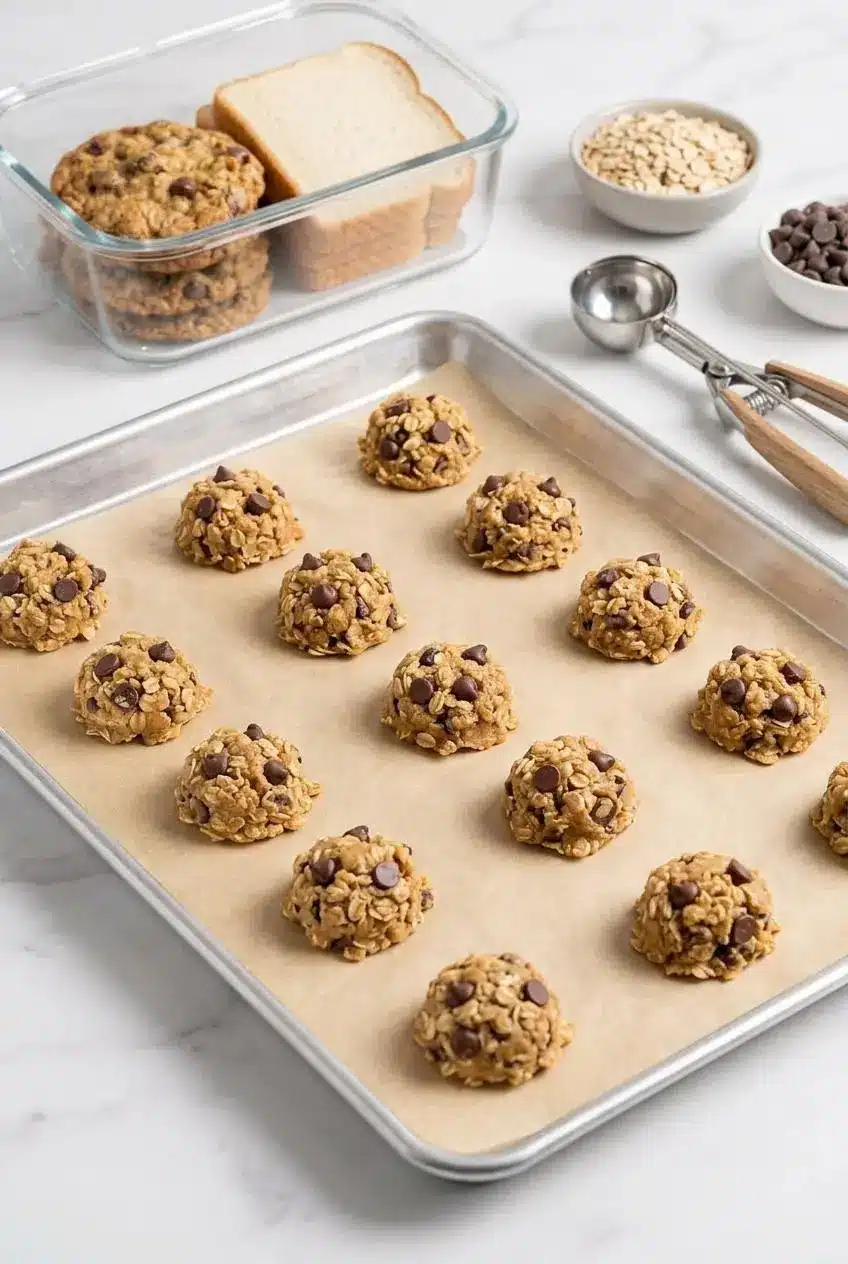
Proper storage methods protect the delicate moisture balance inside baked cookies and allow you to keep dough on hand for fresh treats whenever a craving strikes.
If you prefer baking smaller quantities without committing to an entire dozen, you can easily adapt portioned dough using methods similar to those for small batch chocolate chip cookies.
Storing Baked Cookies for Lasting Softness
Allow the cookies to cool completely to room temperature before packing them into a sealed airtight container. Storing warm cookies creates trapped steam that softens the crisp exterior edges. To help maintain soft centers over several days, place a fresh slice of plain sandwich bread inside the container alongside the cookies.
Freezing Dough Balls for Fresh Cookies on Demand
Portion the mixed dough into two-tablespoon mounds and place them closely on a parchment-lined baking sheet. Transfer the tray to the freezer until the dough balls are frozen solid, then move the firm portions into a heavy-duty freezer bag. You can bake these frozen portions straight from the freezer on a lined tray at 375 degrees F, simply adding one to two minutes to the standard baking time.
Creative Variations and Mix-In Ideas
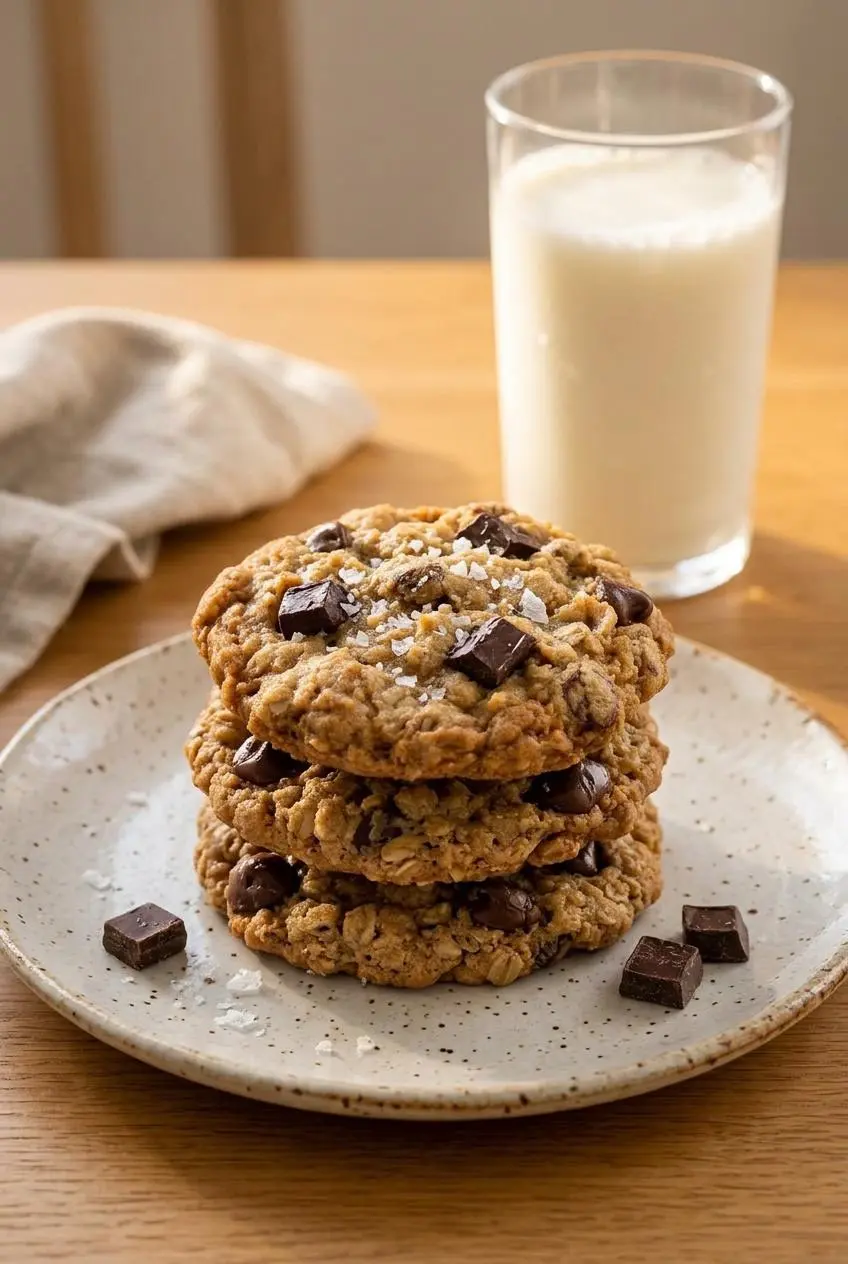
While the classic combination is timeless, this sturdy oat base readily accommodates complementary mix-ins as long as total additions remain within one to one and a half cups.
- Fold in chopped toasted walnuts or pecans alongside dark chocolate chunks for extra crunch and deep roasted flavor.
- Incorporate dried fruit like sweet raisins or tart cranberries for a classic fruit and grain balance.
- Swap standard milk chocolate for bittersweet dark chocolate feves to intensify the cocoa richness.
Toasted Nut and Chocolate Chunk Variation
Replacing half of the standard chocolate chips with rough-chopped dark chocolate chunks and lightly toasted pecans adds rich texture. The molten pools of dark chocolate weave through the nutty oat crumb for a heartier, more rustic cookie experience.
Salted Dark Chocolate Twist
For a sophisticated finish reminiscent of gourmet bakery style sea salt chocolate chip cookies, finish warm cookies with a light pinch of flaky sea salt right as they leave the oven. The delicate mineral salt cuts through rich brown sugar and enhances the bittersweet chocolate pockets.
Conclusion
Mastering homemade oatmeal cookies comes down to respecting a few simple baking principles: properly softened butter, rolled oats for texture, and pulling the baking sheet while centers remain pale and soft. These foundational steps ensure bakery quality results from your very first batch.
Whether you bake a full tray for sharing or keep portioned dough tucked away in the freezer for quick desserts, this recipe delivers dependable comfort and rich buttery flavor every single time.
Frequently Asked Questions
Can I use quick oats instead of old-fashioned rolled oats?
Quick oats can work if needed, but they absorb liquid much faster and produce a denser, more compact cookie crumb. For the signature chewy texture and distinct oat flakes, old-fashioned rolled oats are the best choice.
Why did my oatmeal cookies turn out flat and greasy?
Cookies spread excessively when the butter is too warm or melted, when dough is baked without proper chilling, or when flour is undermeasured. Chilling the dough solidifies the fat so the cookie edges set before the center melts flat.
How do I know when oatmeal chocolate chip cookies are done baking?
Look for light golden brown edges that appear firm and set, while the very center of the cookie remains soft, puffed, and slightly pale. The cookies will finish setting on the hot sheet during their brief resting period.
Can I freeze the cookie dough to bake later?
Yes. Scoop the dough into individual balls and freeze them solid on a lined tray before transferring to an airtight container. Bake the frozen dough balls at 375 degrees F directly from the freezer, adding one to two extra minutes to the total bake time.

Oatmeal Chocolate Chip Cookies

Equipment
- Baking Sheets
- Small cookie scoop
Ingredients
- 1 cup all-purpose flour (120g)
- 1/2 tsp baking soda (3g)
- 1/2 tsp salt (5g)
- 1/2 cup unsalted butter (room temperature, 113g)
- 1/3 cup granulated sugar (65g)
- 2/3 cup light-brown sugar (140g, packed)
- 2 tsp pure vanilla extract (10mL)
- 1 large egg
- 1 1/2 cups rolled oats (135g)
- 1 cup semisweet chocolate chips (150g)
Instructions
- Whisk the all-purpose flour and baking soda together in a medium bowl until evenly blended. The dry mixture will look uniform and completely free of compact lumps.
- Beat the room-temperature butter with the granulated sugar and packed light brown sugar on medium speed. The mixture will turn pale and fluffy after two to three minutes of creaming.
- Reduce mixer speed to low and incorporate the salt, vanilla extract, and whole egg for about one minute. The wet base will become silky, glossy, and fully emulsified.
- Add the whisked dry flour mixture into the wet ingredients and mix on low speed. Stop mixing as soon as the flour streaks are nearly absorbed to avoid overworking the gluten.
- Fold the rolled oats and semisweet chocolate chips into the dough with a sturdy spatula, then cover and chill the bowl. The dough will turn thick, slightly tacky, and firm to the touch after resting in the refrigerator.
- Heat your oven to 375 degrees F and line two large baking sheets with parchment paper. The preheated oven will ensure an immediate rise and quick edge caramelization.
- Drop heaping two-tablespoon portions of chilled dough onto the prepared baking sheets, spacing each mound about two inches apart. The portions will sit high and round on the paper without slumping.
- Bake the cookies for 8 to 10 minutes until the rims turn golden brown while the tops remain soft. A pale, dime-sized center signals that the cookies are ready to leave the heat.
- Set the hot baking sheet on a counter for one to two minutes before moving the cookies onto a wire cooling rack. The warm centers will finish firming up while the base cools into a crisp bottom crust.