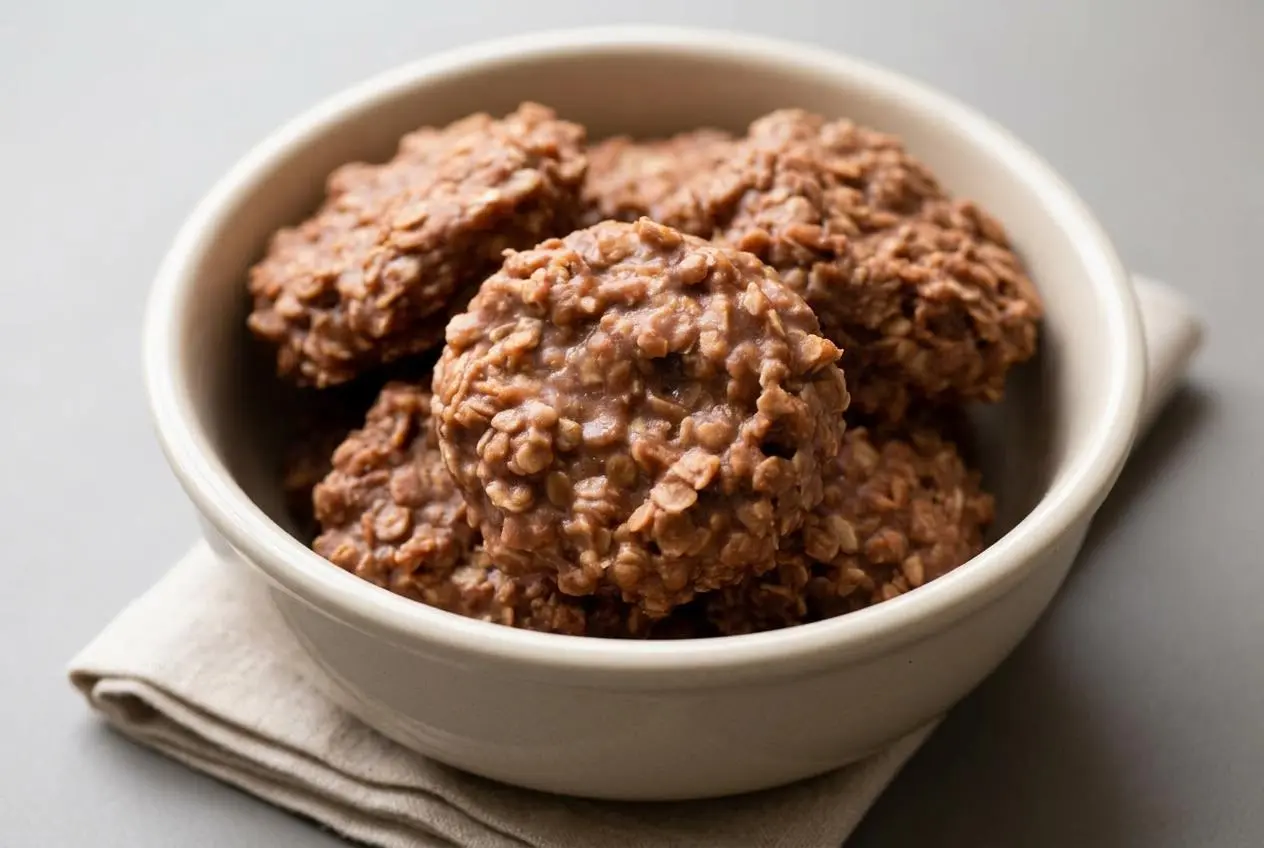
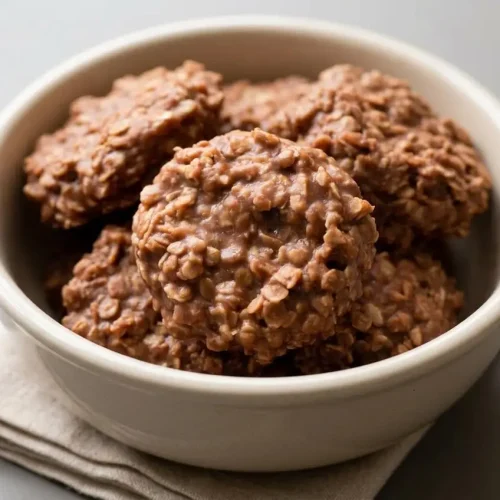
Classic chocolate peanut butter no-bake cookies start with butter, sugar, milk, and cocoa boiled for exactly 60 seconds, then get stirred with peanut butter, vanilla, and quick oats before setting on parchment.
This No Bake Cookie Recipe delivers rich cocoa aroma, a fudgy center, and plenty of oat texture without turning on the oven. The key is giving the syrup its full rolling-boil minute.
As the warm chocolate mixture hits the oats, it thickens quickly and fills the kitchen with that unmistakable peanut butter cocoa scent. The timer does the heavy lifting.
Measure everything before heating the saucepan so the hot cocoa syrup never waits around while you search for the vanilla.
Key Ingredients and Why They Work
Each ingredient contributes to the cookies’ chocolate flavor, creamy richness, firm structure, or tender oat-filled texture as the mixture cools.
- 1/2 cup (115 grams) butter (sliced into pieces)
- 2 cups (400 grams) granulated sugar
- 1/2 cup (120 ml) milk
- 1/4 cup (20 grams) unsweetened cocoa powder
- 1/2 cup (125 grams) creamy peanut butter
- 1 teaspoon pure vanilla extract
- 3 cups (300 grams) quick-cooking oats
Butter brings richness and helps the cookies firm as they cool. Milk gives the cocoa syrup a smooth consistency, while unsweetened cocoa powder keeps the sweetness balanced with deep chocolate flavor. Creamy peanut butter blends into the hot syrup for a soft, fudgy bite, and vanilla rounds out the cocoa.
Quick-cooking oats are the structural finish. They absorb the warm syrup rapidly, helping each scoop hold its shape while keeping the cookies pleasantly tender rather than hard.
I reach for conventional creamy peanut butter here because it blends smoothly and gives the finished cookies the most dependable texture.
The Crucial Role of Sugar and Fat
Granulated sugar creates the candy-like structure that lets these cookies set without baking. The brief boil concentrates the sugar syrup; cutting back on the sugar can leave the mixture too loose to hold together once the oats are added.
Butter softens the bite and adds body to the cocoa mixture. As the cookies cool, the butter firms along with the sugar syrup, giving the mounds their characteristic fudgy resistance. Use the amount listed rather than trying to adjust the fat balance mid-batch.
Quick Oats vs Rolled Oats
Quick-cooking oats work best because their smaller pieces soak up the chocolate syrup quickly and create compact cookies with a tender chew. Old-fashioned rolled oats can work, but their larger flakes stay more distinct and make a chewier, rougher-textured cookie.
If rolled oats are all you have, pulse them briefly in a food processor until they resemble quick oats. Avoid turning them into oat flour; you still want small flakes that give the cookies their familiar bite.
Choosing the Right Peanut Butter
Use a standard no-stir creamy peanut butter for the smoothest mixture. Its oil is already blended into the peanut butter, so it incorporates evenly with the cocoa syrup.
Natural peanut butter can separate in the jar, leaving free oil and a thicker peanut paste. That uneven texture can make the cookies greasy, dry, or crumbly instead of cohesive.
How to Make Classic No-Bake Cookies Step by Step
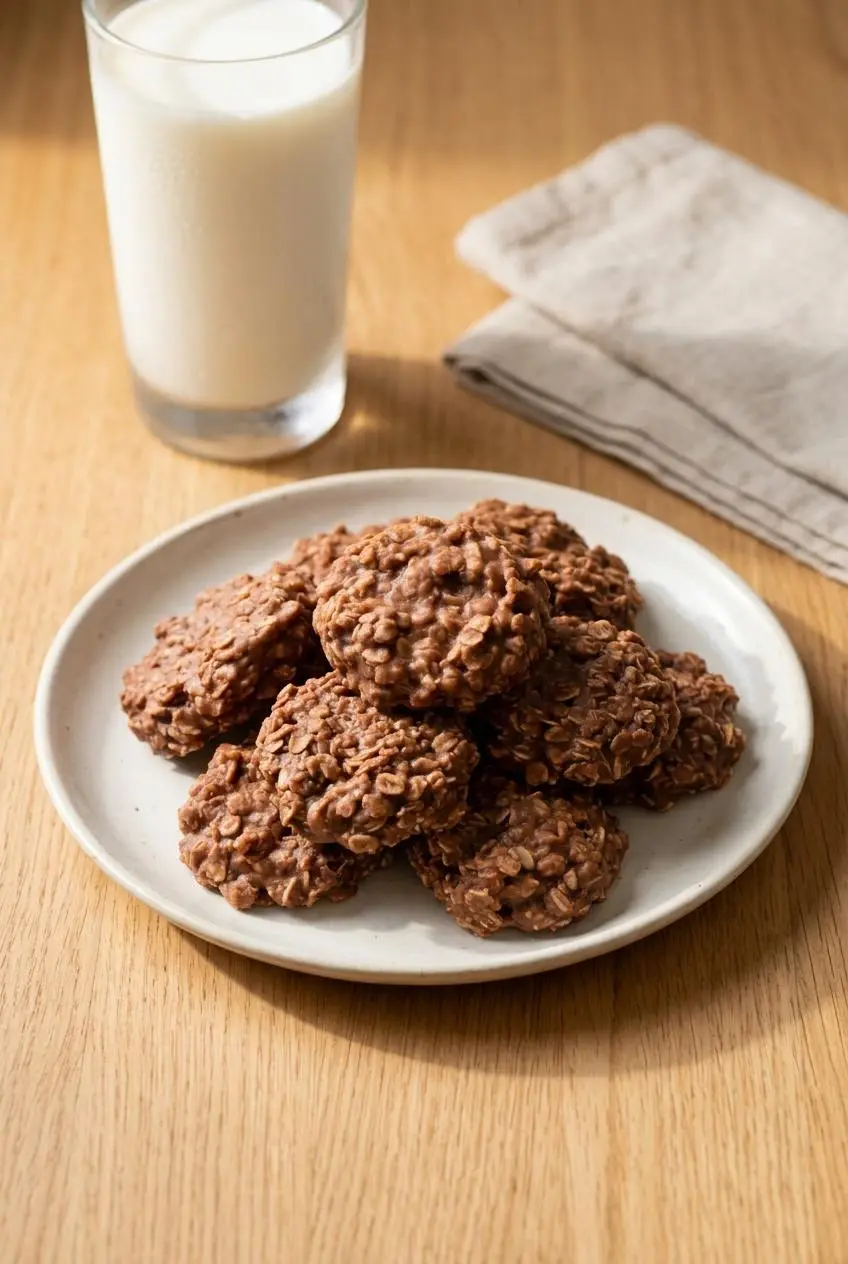
Set up the baking sheets first, then focus on the boil. Once the syrup reaches the right stage, the remaining steps move fast.
- Measure the ingredients and line two large baking sheets with parchment paper before heating the saucepan.
Having everything ready lets you stir the hot mixture immediately when the timer ends. - Place the butter, sugar, milk, and cocoa powder in a large saucepan over medium heat, stirring often until smooth, then bring the mixture to a rolling boil and boil for 60 seconds.
The surface should bubble vigorously all over, with a glossy, molten chocolate sheen rather than a few bubbles around the edge. - Take the saucepan off the heat and stir in the peanut butter and vanilla until the mixture looks uniform, then fold in the quick-cooking oats.
The oats should become fully coated as the mixture thickens noticeably with each stir. - Scoop spoonfuls onto the prepared baking sheets and leave the cookies to cool for 20 to 30 minutes.
They will lose their wet shine and offer slight resistance when gently nudged on the parchment.
For evenly sized cookies, a 1.5 tablespoon cookie scoop is useful, but two spoons work well too. Scoop promptly because the mixture begins to set rapidly once it leaves the heat.
Essential Techniques for This No Bake Cookie Recipe
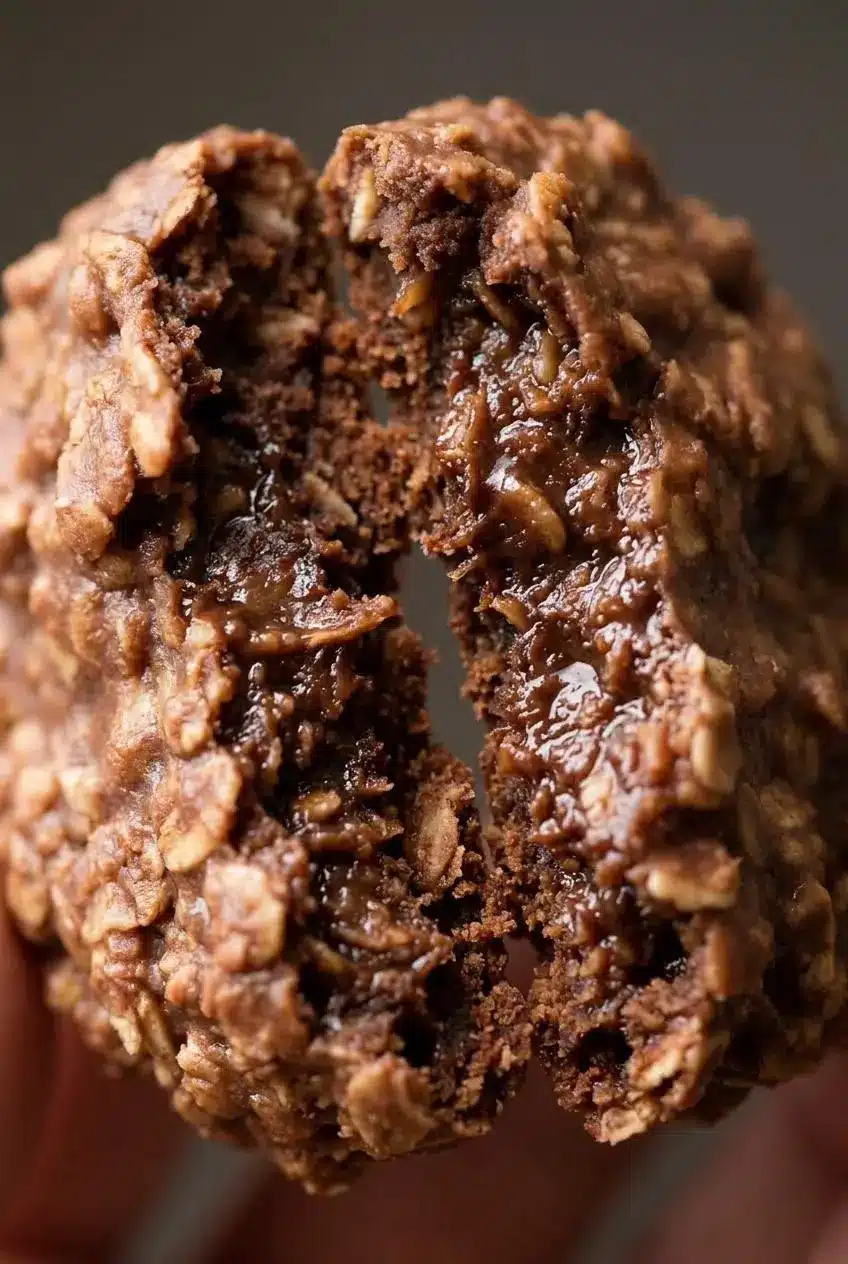
The most important cue is a true rolling boil. Start the 60-second timer only when large bubbles break across the entire surface of the cocoa mixture. Bubbling around the saucepan edges is a simmer, and starting the timer then often leads to cookies that stay soft.
Keep the heat at medium and stir regularly before the boil so the cocoa does not scorch on the bottom. Once the full boil begins, occasional stirring is enough. A candy thermometer can be helpful if boiling sugar syrups makes you nervous, but the full-surface bubbling and a strict timer are the most practical cues for this method.
- Before boiling: The mixture should look smooth and glossy, with no dry cocoa pockets.
- At a simmer: Small bubbles gather near the edges, but the center stays relatively calm.
- At a rolling boil: Large bubbles rise and burst across the whole pan, including the center.
- After adding oats: Work briskly so every oat gets coated before the mixture begins to stiffen.
Humid or rainy weather can slow the cooling process because the cookies take longer to lose moisture. Give them extra time on the parchment, or chill the baking sheets briefly if the kitchen is especially warm.
Troubleshooting Common No-Bake Cookie Problems
Most texture issues come down to the boil, the oats, or the peanut butter. The good news is that a batch that looks imperfect can often still become a satisfying dessert.
Cookies That Turn Out Too Soft
- They stay gooey after cooling: The syrup likely did not reach a full rolling boil or did not boil for the full 60 seconds. Chill the dropped cookies to help the butter firm while they continue to set.
- The mixture was scooped while very loose: Let it stand briefly in the saucepan after stirring in the oats, then check whether it thickens before scooping another mound.
- The whole batch remains unset: Scrape it back into the saucepan, warm it gently until it reaches a proper rolling boil, then scoop again onto fresh parchment. Watch closely so it does not overcook.
Cookies That Turn Out Dry and Crumbly
- They seem chalky or brittle: The syrup probably boiled beyond the 60-second window, concentrating it too much. Set the timer before the boil starts so you do not have to estimate.
- They feel oily yet fall apart: Natural separated peanut butter may have disrupted the mixture. Use no-stir creamy peanut butter for future batches.
- The batch is already dry: Turn the crumbles into a topping for vanilla ice cream or scatter them over warm baked oatmeal for a chocolate peanut butter crunch.
Dietary Swaps and Flavor Variations
Keep the classic version as written for the most predictable set, then use these changes as optional ways to tailor the flavor or accommodate ingredient needs.
- Nut-free seed butter version: Swap the creamy peanut butter for sunflower seed butter or soy nut butter. Choose a smooth, no-stir style when possible, since separated oils can affect the finished texture.
- Dairy-free and vegan adaptation: Use plant-based stick butter and an unsweetened plant-based milk. The cookies may set a little differently depending on the products, so rely on the rolling-boil cue and cool them fully before serving.
- Espresso and sea salt chocolate boost: Stir in a little instant espresso powder and flaky sea salt with the vanilla for a deeper chocolate flavor that balances the sweetness.
- Coconut variation: Fold in toasted coconut flakes with the oats for a caramel-like, tropical accent. For another oven-free cookie idea with coconut flavor, try these no-bake Samoa cookies.
Keeping Cookies Fresh
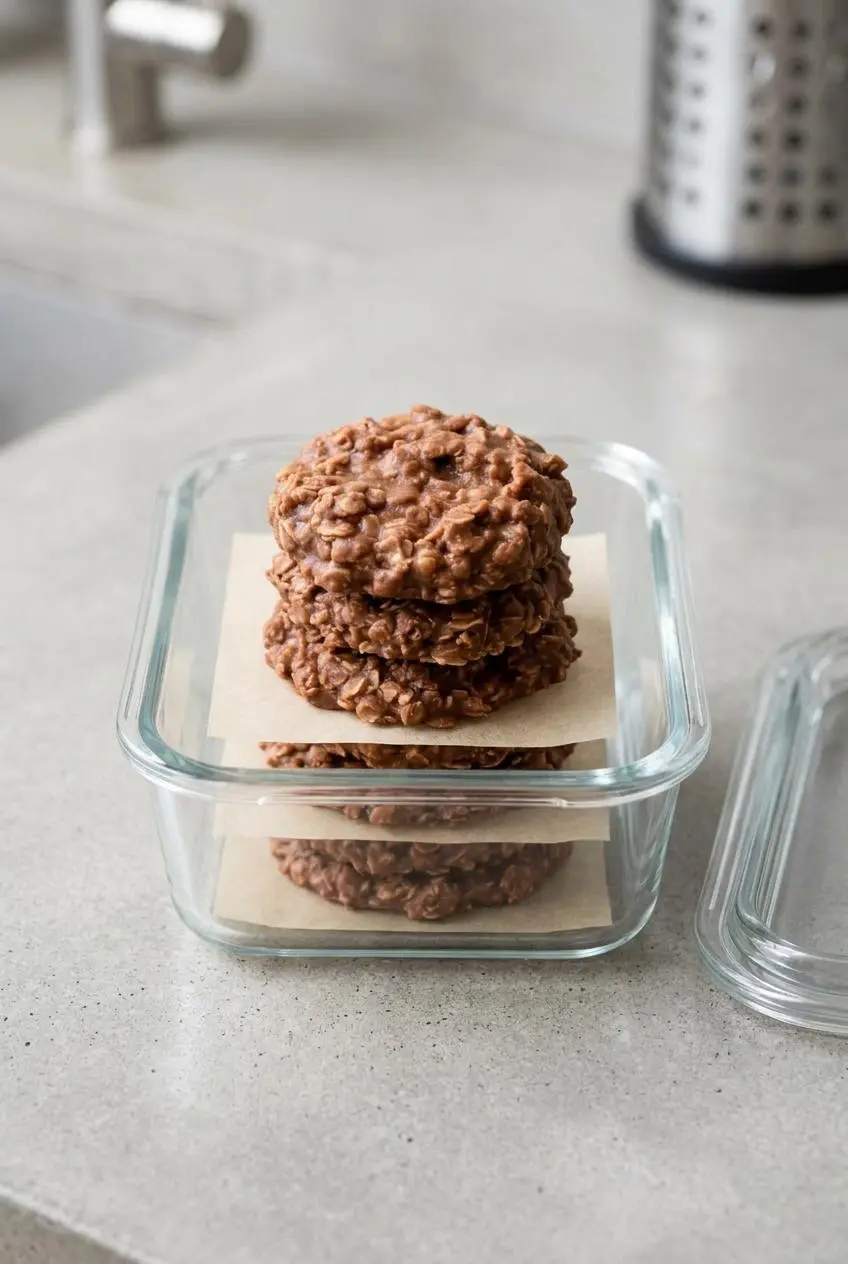
Once completely cooled, place the cookies in an airtight container with parchment or wax paper between layers so they do not stick together. Keep the container away from heat and humidity, which can soften the chocolate oat texture.
Refrigeration is optional rather than required for setting. Chilled cookies have a firmer bite, while cookies held at room temperature stay softer and more fudgy. If they have picked up moisture, separate them onto parchment briefly before returning them to the container.
Conclusion
These classic stovetop cookies bring together fudgy chocolate, creamy peanut butter, and chewy oats in a dessert that needs no oven. Prepare the sheets and ingredients first, then let the rolling-boil timer guide the batch.
Once you see the full-surface bubbles, count 60 seconds and move quickly with the oats. That small bit of precision makes the difference between soft scoops and cookies that set with a satisfying fudgy bite.
Frequently Asked Questions
Why Did My No-Bake Cookies Not Set?
The cocoa syrup probably did not boil long enough at a full rolling boil. Start the 60-second timer only when bubbling covers the entire surface of the pan. High humidity can also slow the process. Give the cookies more cooling time or chill them briefly to help them firm.
Can I Use Old-Fashioned Rolled Oats Instead of Quick Oats?
Yes, but the cookies will be chewier and less compact because rolled oats absorb the syrup more slowly. Pulse them briefly in a food processor to create smaller flakes closer to quick-cooking oats.
Can I Make No-Bake Cookies With Natural Peanut Butter?
Standard creamy no-stir peanut butter works best. Natural peanut butter often separates into oil and dense peanut solids, which can lead to a dry, crumbly, or greasy batch.
Do No-Bake Cookies Need to Be Refrigerated?
No. Properly boiled cookies can set at room temperature. Refrigeration is useful on warm days or when you want a firmer texture more quickly.
No Bake Cookie Recipe

Equipment
- Large saucepan
- Two large baking sheets
- Parchment Paper
- 1.5 tablespoon cookie scoop
Ingredients
- 1/2 cup butter sliced into pieces (115 grams)
- 2 cups granulated sugar (400 grams)
- 1/2 cup milk (120 ml)
- 1/4 cup unsweetened cocoa powder (20 grams)
- 1/2 cup creamy peanut butter (125 grams)
- 1 teaspoon pure vanilla extract
- 3 cups quick-cooking oats (300 grams)
Instructions
- Measure the ingredients and line two large baking sheets with parchment paper before heating the saucepan. Having everything ready lets you stir the hot mixture immediately when the timer ends.
- Place the butter, sugar, milk, and cocoa powder in a large saucepan over medium heat, stirring often until smooth, then bring the mixture to a rolling boil and boil for 60 seconds. The surface should bubble vigorously all over, with a glossy, molten chocolate sheen rather than a few bubbles around the edge.
- Take the saucepan off the heat and stir in the peanut butter and vanilla until the mixture looks uniform, then fold in the quick-cooking oats. The oats should become fully coated as the mixture thickens noticeably with each stir.
- Scoop spoonfuls onto the prepared baking sheets and leave the cookies to cool for 20 to 30 minutes. They will lose their wet shine and offer slight resistance when gently nudged on the parchment.