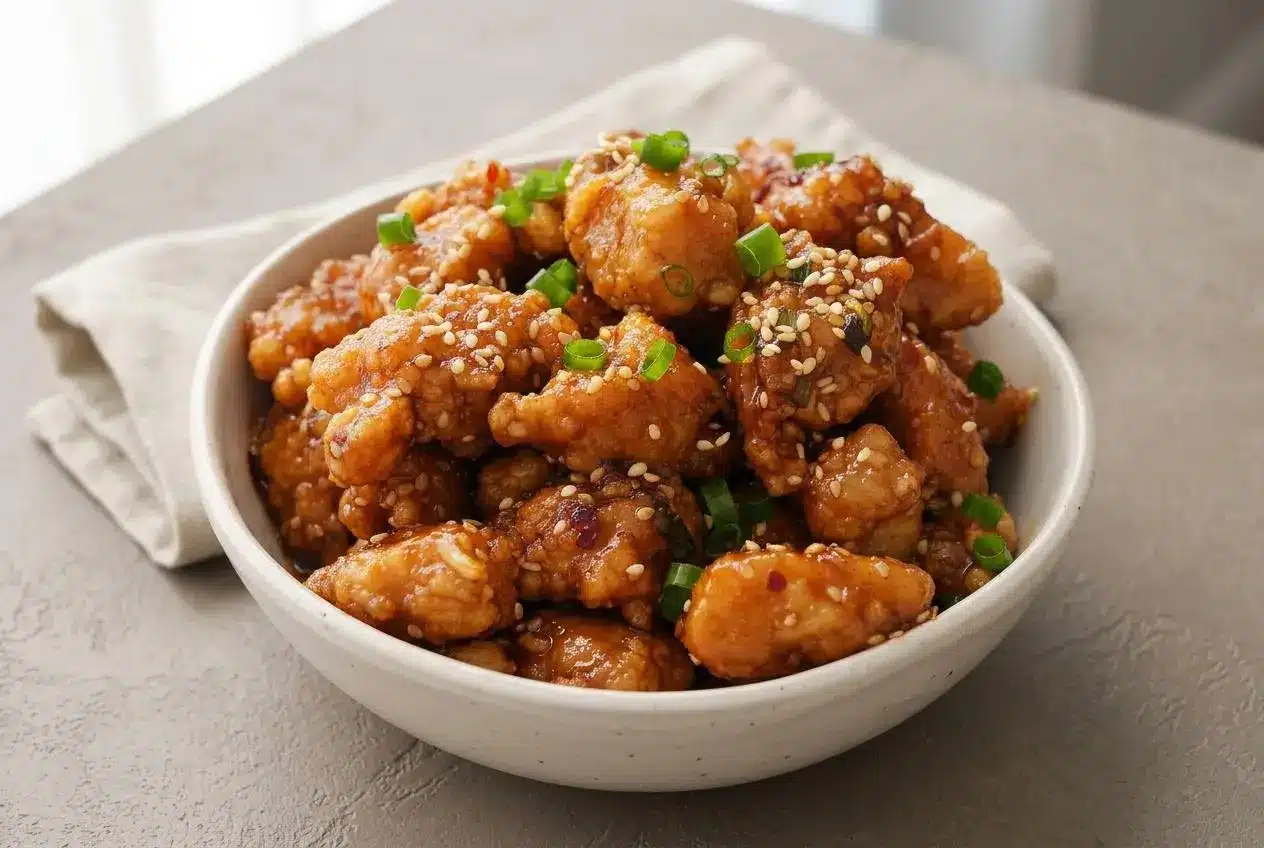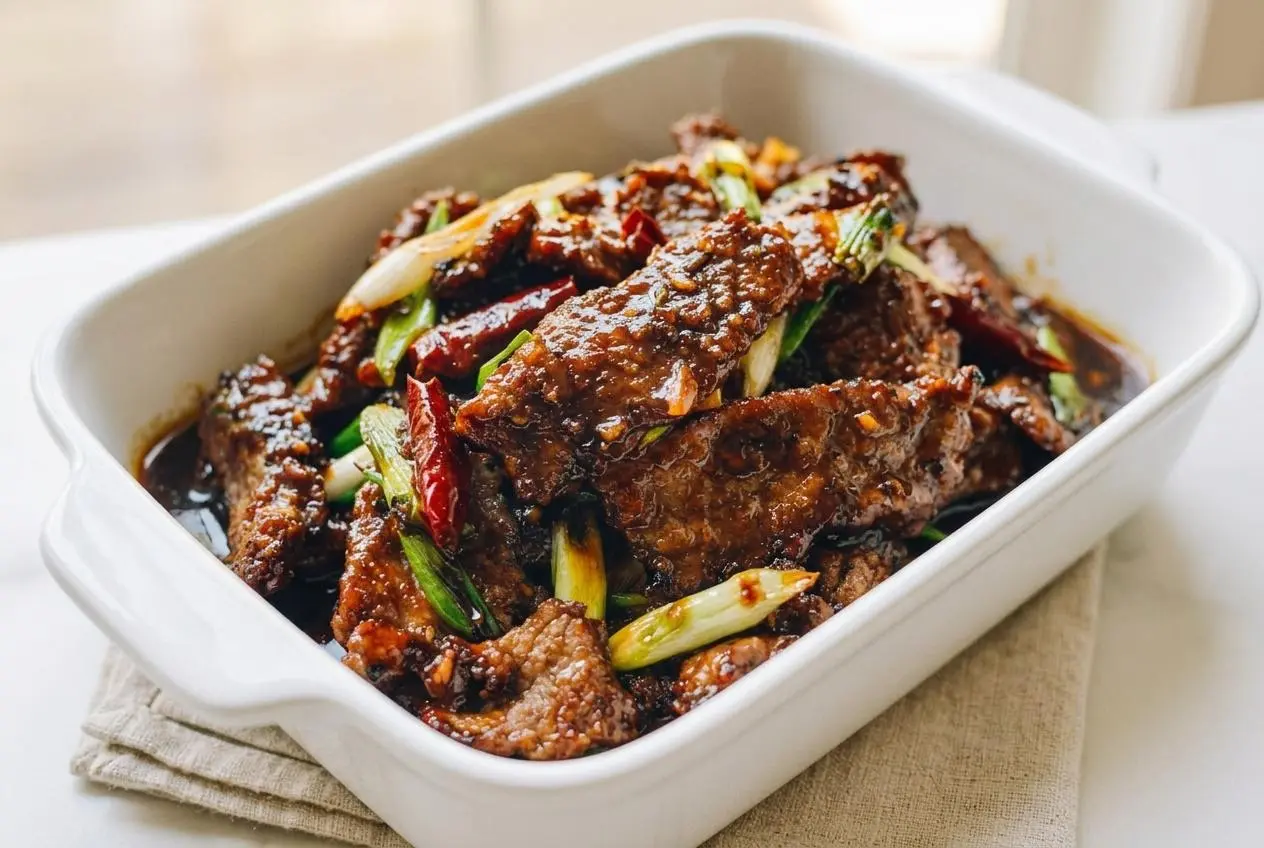
This mongolian beef recipe gives you tender, crispy flank steak in a sticky sweet-savory sauce with reliable, weeknight-friendly steps and classic takeout flavor.
Mongolian beef is one of those stir-fries that feels a little dramatic in the best way: glossy sauce, fragrant garlic and ginger, and beef that stays tender instead of chewy. This version keeps the method clear and the texture front and center.
You get the crisp coating, the rich brown sugar and soy sauce glaze, and the scallions right at the end for freshness. The trick is simple, and it works.
If your flank steak feels slippery and moist after marinating, you’re right on track.
Ingredients
These are the exact ingredients for the base recipe, and each one pulls its weight.
For marinating the beef
- 1 pound flank steak (sliced against the grain into 1/4-inch/6mm thick slices)
- 2 teaspoons neutral oil (such as vegetable, canola, or avocado oil)
- 2 teaspoons Shaoxing wine (or dry cooking sherry, optional)
- 1 teaspoon soy sauce
- 1 tablespoon cornstarch
- 1 tablespoon water
- 1/4 teaspoon baking soda
For the sauce
- 1/4 cup light brown sugar
- 3/4 cup hot water (or hot low sodium chicken or beef stock)
- 1/4 cup soy sauce
- 1 teaspoon dark soy sauce (optional)
For coating and searing the beef
- 1/2 cup cornstarch
- 2/3 cup neutral oil
For the rest of the dish
- 1 teaspoon ginger (minced)
- 8 dried red chili peppers (optional)
- 3 cloves garlic (finely chopped)
- 4 scallions (white and green parts separated, cut on the diagonal into 2-inch/5cm pieces)
- 1 1/2 tablespoons cornstarch (mixed with 2 tablespoons/30ml water to make a slurry)
Ingredient notes that matter
Flank steak is the base recipe choice for good reason. It has a strong grain, which makes it easy to slice thinly against the grain for tender bites. I personally like buying the thinnest, most evenly shaped piece I can find because it makes prep much less annoying.
Soy sauce brings the salty, savory backbone. Brown sugar gives the sauce that classic sticky sheen and gentle sweetness. Cornstarch shows up more than once here because it does more than thicken. In the marinade it helps with texture, in the coating it creates that crisp outer layer, and in the slurry it gives the sauce body so it clings instead of pooling.
Ginger, garlic, and scallions build the fast, punchy stir-fry flavor. Shaoxing wine adds depth and a subtle restaurant-style aroma, though it’s optional. Dark soy sauce is also optional and affects color more than salt level, so think of it as a richer finish rather than a must-have.
What not to change in the base recipe
If you want the signature texture, keep the baking soda marinade, the cornstarch coating, and the slurry exactly as written. Those three pieces are doing the heavy lifting for tenderness, crispness, and that glossy sauce.
You can certainly think about other cuts like sirloin or skirt steak, but treat those as optional guidance, not as changes to the core recipe. The base method was built around flank steak, and it shows.
How to Make mongolian beef recipe
This goes fast once the wok is hot, so a little organization up front makes the whole thing feel easy.
- Combine the sliced beef with the marinade ingredients: the neutral oil, Shaoxing wine, light soy sauce, cornstarch, water, and baking soda. Marinate for 1 hour. The beef should still look quite moist after marinating, almost slick rather than dry or chalky. If it looks too dry, add a tablespoon of water to it. That moist texture matters because it helps the coating grab on later.
- In a small bowl, mix the sauce. Dissolve the brown sugar in the hot water or stock, then stir in the light and dark soy sauces. Stir until the sugar fully disappears. You want a smooth, dark liquid with no gritty sugar sitting at the bottom.
- Next, dredge the marinated beef slices in the cornstarch until thoroughly coated. Make sure each piece gets covered well. A thin, even layer is better than big clumps. I usually separate the slices with my fingers as I coat them so they don’t stick together in one giant beef puzzle.
- Heat 2/3 cup neutral oil in a wok over high heat. Just before the oil starts to smoke, spread the flank steak pieces evenly in the wok, and sear for 1 minute on each side, until you have a crispy coating. You should hear a loud sizzle, not a soft hiss. Turn off the heat and transfer the beef to a plate. The beef does not need to be fully finished inside at this stage, because it goes back into the sauce later.
- Drain the oil from the wok, saving it for other cooking, and leave 1 tablespoon behind. Turn the heat to medium-high. Add the ginger and dried chili peppers, if using. If you want the dish spicier, break 1 to 2 chilies in half. After about 15 seconds, add the garlic and white parts of the scallions. Stir for another 15 seconds and add the premixed sauce. The wok should smell amazing here, all garlic and ginger with that quick toasted chili aroma.
- Let the sauce simmer for about 2 minutes, and slowly stir in the cornstarch slurry mixture. Cook until the sauce has thickened enough to coat the back of a spoon. Watch closely. Honestly, this is the moment where it can go from loose to thick very quickly.
- Add the beef and green parts of the scallions, and toss everything together for another 30 seconds. The scallions should just be wilted, and there should be almost no liquid left, since the sauce should cling to the beef. If you still have sauce, increase the heat slightly and stir until thickened. Plate and serve with steamed rice.
Optional flavor note
If you like a slightly tangier finish, a small splash of Chinese black vinegar in the sauce can give the glaze a sharper edge. Keep that as a finishing idea, not part of the core recipe.
Why the beef turns out tender and crisp
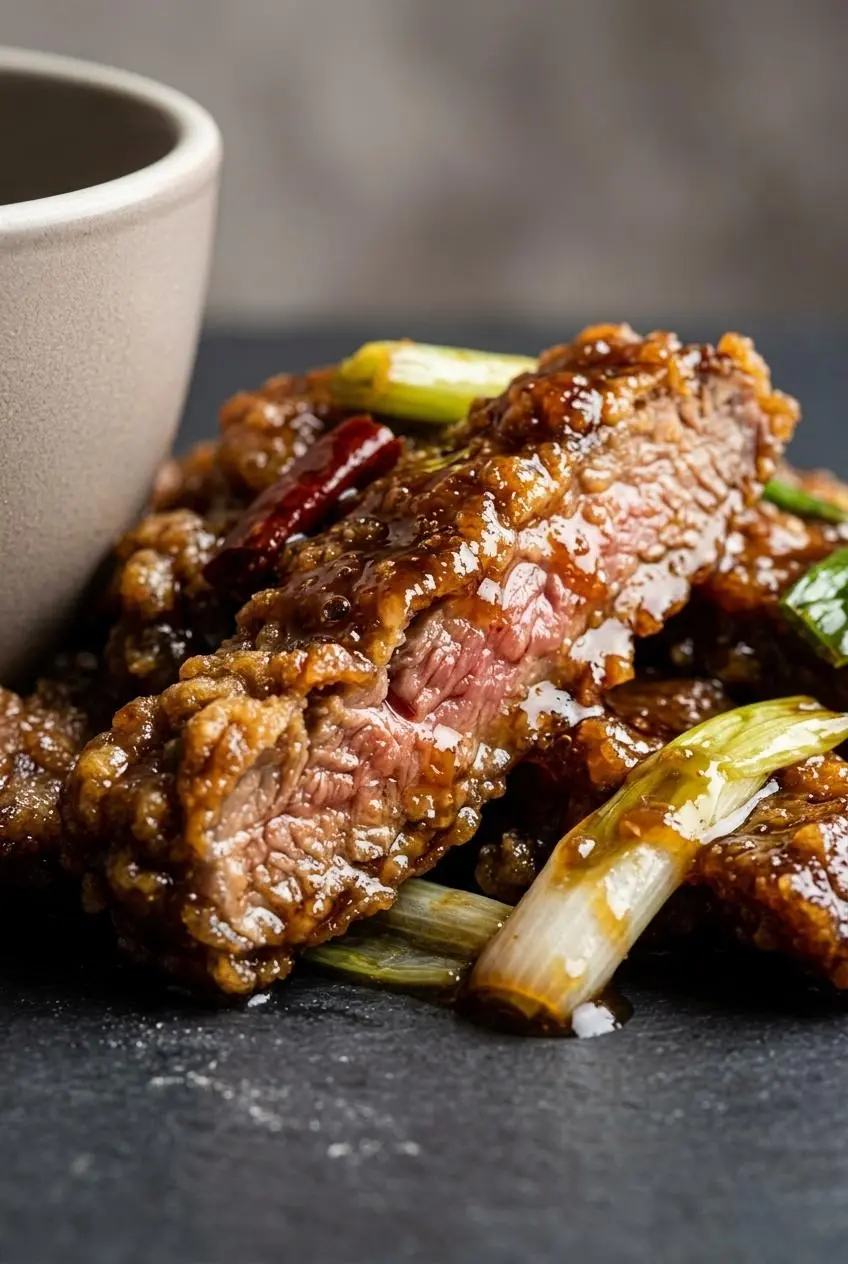
This is where the recipe earns its keep. A lot of home cooks ask why restaurant-style Mongolian beef feels soft inside but still crisp outside, and the answer is a combination of slicing, marinating, and high-heat cooking.
The baking soda in the marinade helps tenderize the beef by changing the surface environment of the meat, which makes those thin slices stay more relaxed and less chewy when cooked quickly. Cornstarch helps too, but in a different way. It creates a light coating that crisps in the hot oil and also protects the beef a bit during the sear.
Slicing against the grain matters just as much. When you cut across those long muscle fibers, each bite feels shorter and easier to chew. If you want an easier time slicing, you can freeze the raw flank steak for 20 to 30 minutes first so it firms up.
Best cuts for this dish
Flank steak is the best fit for this recipe because it’s lean, flavorful, and easy to slice thinly against a very visible grain. It’s usually my first pick when I want those classic takeout-style strips.
| Cut | Texture | Cost | Best use here |
|---|---|---|---|
| Flank steak | Lean, beefy, tender when sliced correctly | Usually moderate | Best base recipe choice |
| Sirloin | Softer, slightly less chewy | Often a bit higher | Good optional swap |
| Skirt steak | Very flavorful, looser texture | Varies | Works, but cooks fast and can get ragged-looking |
If you swap cuts, keep the slicing thin and keep an eye on the sear. Skirt steak especially can go from gorgeous to overdone in a blink.
How to slice against the grain
Look at the flank steak before you cut it. You’ll see long lines running in one direction across the meat. Those lines are the grain. To slice against the grain, cut across those lines, not parallel to them.
A simple visual cue helps: if the lines run left to right, your knife should move top to bottom. Thin slices are the goal here, and once you spot the grain, the whole recipe gets easier.
Sauce and sear troubleshooting
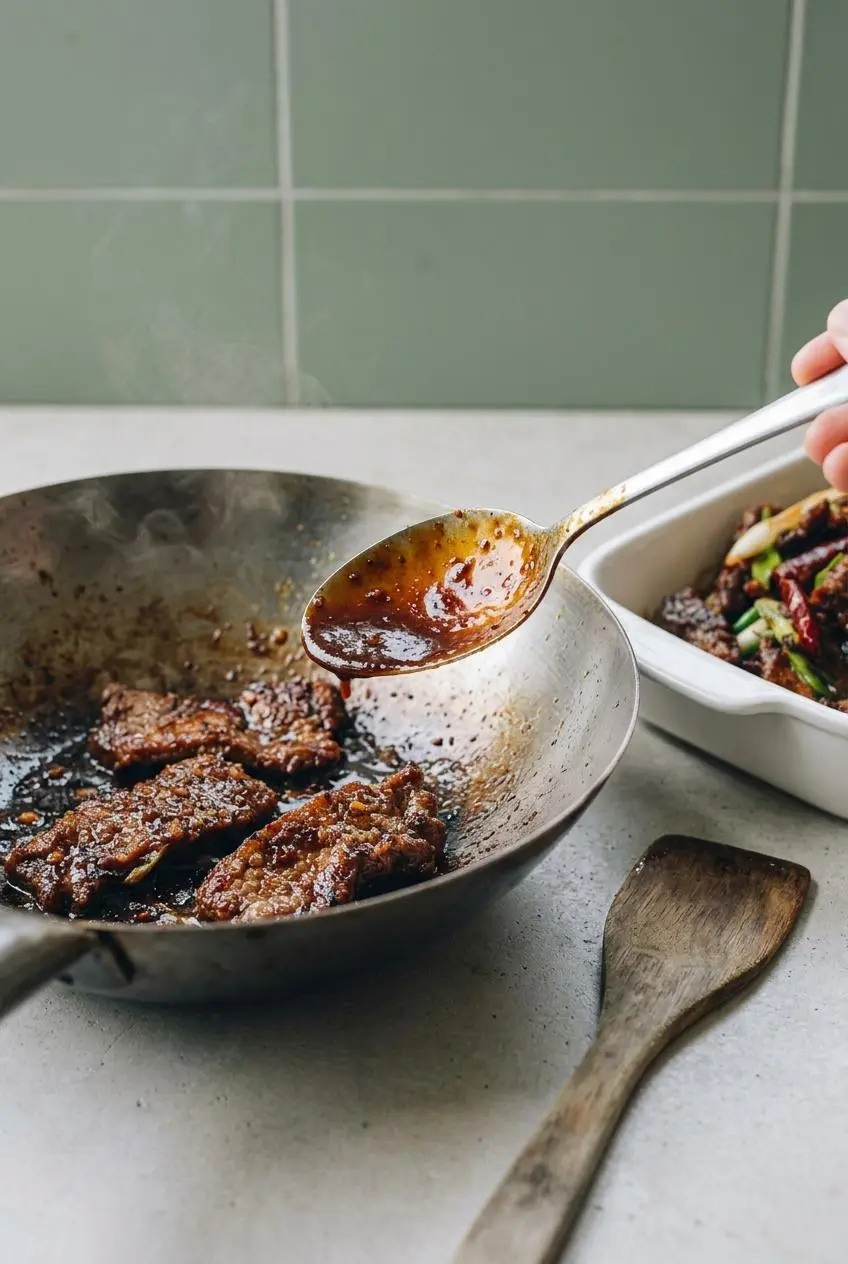
If something goes sideways, it usually happens in the wok. The good news is that most Mongolian beef problems are easy to fix once you know what caused them.
Why the beef is not crispy
The biggest challenge home cooks face here is overcrowding. If too much beef goes into the wok at once, the meat releases moisture and starts steaming instead of searing. That crisp coating never really gets a chance.
Low heat can cause the same problem. So can beef that went into the coating still dripping wet. Keep the wok very hot, spread the beef in a single layer, and give it that full minute per side so the crust can form. You want a strong sizzle from the second it hits the oil.
How to fix sauce that is too thin, too thick, too salty, or too sweet
Here’s the quick sauce clinic:
| Problem | Likely cause | What to do |
|---|---|---|
| Too thin | It hasn’t reduced enough yet | Let it simmer a bit longer before adding the beef |
| Too thick | The slurry tightened the sauce fast | Loosen it with a small splash of hot water or stock |
| Too salty | Soy sauce came through too strongly | Balance carefully with a little more hot water or stock |
| Too sweet | The sauce needs more savory balance | Use restraint and adjust only lightly if you tweak it at all |
Taste before the final toss if you’re unsure. Once the beef goes back in, the sauce tightens quickly and flavors feel more concentrated.
Shallow fry vs less oil
The listed oil amount gives you the best shot at a crisp, takeout-style coating because the beef gets stronger contact with hot oil across more of its surface. That’s the crispier route.
You can use less oil for a lighter result, but expect less crunch and more of a seared texture. Still tasty, just different. Think of it as choosing between glossy takeout energy and weeknight shortcut energy.
Make ahead, store, and serve
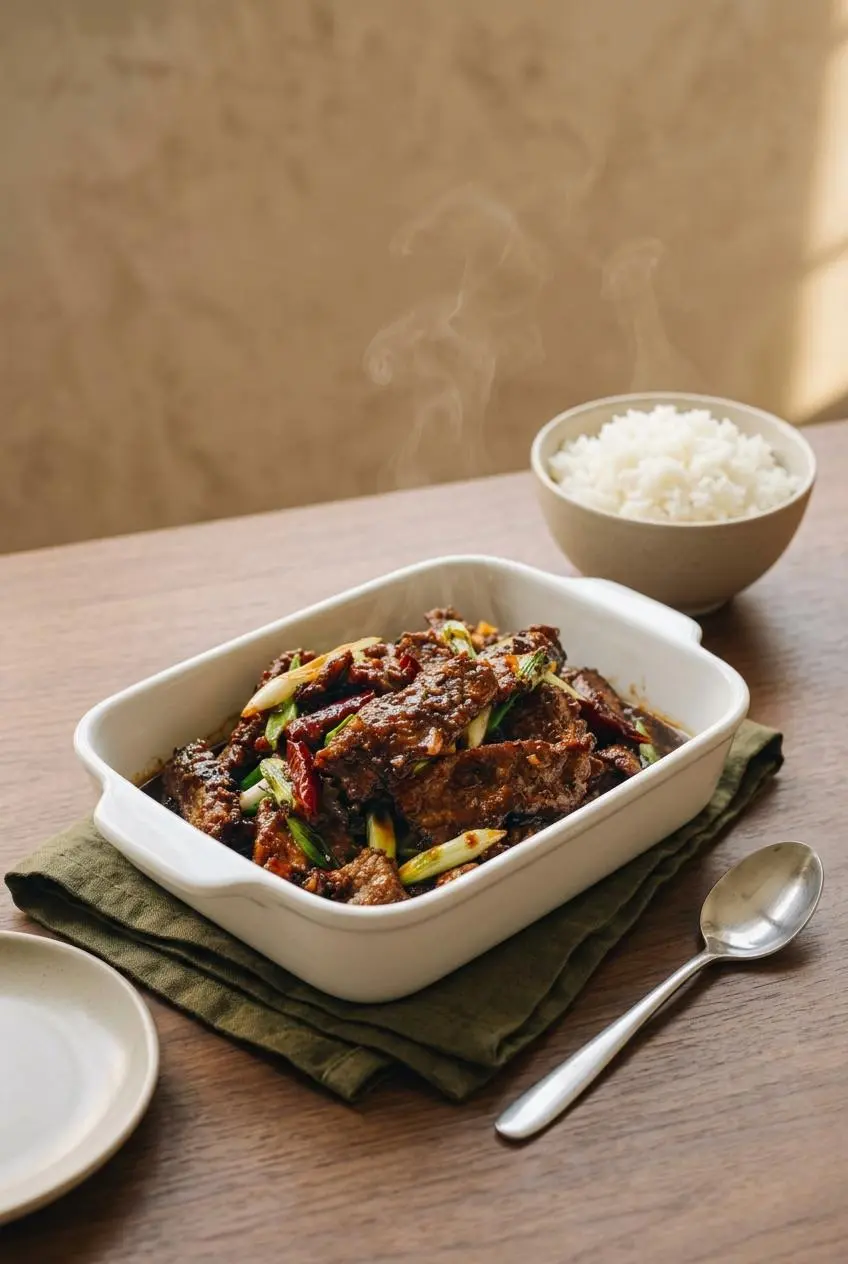
This recipe is fast at the stove, so prep-ahead really helps on busy nights.
Prep ahead for a faster dinner
You can slice the beef, mix the sauce, and chop the ginger, garlic, and scallions ahead of time so the final cook feels quick and calm. Keep those components separate, then follow the same cooking order when you’re ready to make dinner.
If noodles sound good with these flavors, Mongolian Ground Beef is a handy weeknight variation built around a similar sweet-savory profile.
How to store and reheat leftovers
Leftovers can be refrigerated in an airtight container for up to 3 to 4 days. For general safe food storage guidance, it’s smart to follow current government recommendations for cooked beef dishes.
For the best texture, reheat in a hot skillet so the sauce loosens and the beef gets some edge back. An air fryer at 350°F for 3 to 5 minutes or a preheated oven can also help preserve more crispness. The microwave works in a pinch, but it softens the coating, so expect a saucier, less crispy finish.
You can freeze leftovers if you want to save them, but the coating will soften after thawing and reheating. Flavor stays good, texture just shifts a bit.
What to serve with it
Steamed white rice and jasmine rice are the obvious classics because they soak up every bit of that sticky sauce. Noodles work too if you want something a little heartier.
For vegetables, bok choy, broccoli, and green beans all fit nicely. Keep them simple, either steamed or quickly stir-fried, so the beef stays the star. Extra sliced green onions and toasted sesame seeds are great on top if you want a little more color and crunch.
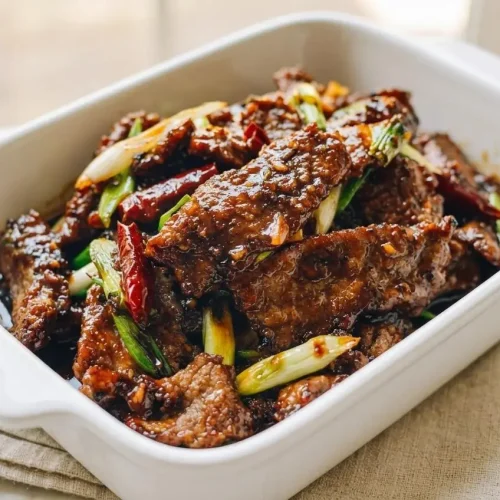
Mongolian Beef Recipe

Equipment
- wok
- Small bowl
- Plate
Ingredients
For marinating the beef
- 1 pound flank steak sliced against the grain into 1/4-inch/6mm thick slices
- 2 teaspoons neutral oil such as vegetable, canola, or avocado oil
- 2 teaspoons Shaoxing wine or dry cooking sherry, optional
- 1 teaspoon soy sauce
- 1 tablespoon cornstarch
- 1 tablespoon water
- 1/4 teaspoon baking soda
For the sauce
- 1/4 cup light brown sugar
- 3/4 cup hot water or hot low sodium chicken or beef stock
- 1/4 cup soy sauce
- 1 teaspoon dark soy sauce optional
For coating and searing the beef
- 1/2 cup cornstarch
- 2/3 cup neutral oil
For the rest of the dish
- 1 teaspoon ginger minced
- 8 dried red chili peppers optional
- 3 cloves garlic finely chopped
- 4 scallions white and green parts separated, cut on the diagonal into 2-inch/5cm pieces
- 1 1/2 tablespoons cornstarch mixed with 2 tablespoons/30ml water to make a slurry
Instructions
- Combine the sliced beef with the marinade ingredients: the neutral oil, Shaoxing wine, light soy sauce, cornstarch, water, and baking soda. Marinate for 1 hour. The beef should still look quite moist after marinating, almost slick rather than dry or chalky. If it looks too dry, add a tablespoon of water to it. That moist texture matters because it helps the coating grab on later.
- In a small bowl, mix the sauce. Dissolve the brown sugar in the hot water or stock, then stir in the light and dark soy sauces. Stir until the sugar fully disappears. You want a smooth, dark liquid with no gritty sugar sitting at the bottom.
- Next, dredge the marinated beef slices in the cornstarch until thoroughly coated. Make sure each piece gets covered well. A thin, even layer is better than big clumps. I usually separate the slices with my fingers as I coat them so they don’t stick together in one giant beef puzzle.
- Heat 2/3 cup neutral oil in a wok over high heat. Just before the oil starts to smoke, spread the flank steak pieces evenly in the wok, and sear for 1 minute on each side, until you have a crispy coating. You should hear a loud sizzle, not a soft hiss. Turn off the heat and transfer the beef to a plate. The beef does not need to be fully finished inside at this stage, because it goes back into the sauce later.
- Drain the oil from the wok, saving it for other cooking, and leave 1 tablespoon behind. Turn the heat to medium-high. Add the ginger and dried chili peppers, if using. If you want the dish spicier, break 1 to 2 chilies in half. After about 15 seconds, add the garlic and white parts of the scallions. Stir for another 15 seconds and add the premixed sauce. The wok should smell amazing here, all garlic and ginger with that quick toasted chili aroma.
- Let the sauce simmer for about 2 minutes, and slowly stir in the cornstarch slurry mixture. Cook until the sauce has thickened enough to coat the back of a spoon. Watch closely. Honestly, this is the moment where it can go from loose to thick very quickly.
- Add the beef and green parts of the scallions, and toss everything together for another 30 seconds. The scallions should just be wilted, and there should be almost no liquid left, since the sauce should cling to the beef. If you still have sauce, increase the heat slightly and stir until thickened. Plate and serve with steamed rice.
Notes
What home cooks ask most
These are the questions that come up again and again, especially from people chasing that takeout texture at home.
What is the secret to making Mongolian beef tender?
The short answer is the baking soda marinade, thin slicing, and cutting against the grain. Together, they keep the beef from turning chewy. Then the quick sear finishes the job by cooking the outside fast without drying everything out.
Can I make it spicy?
Yes. The dried red chilis already give you an easy path to more heat, and breaking a couple in half makes the dish punchier. If you like extra spice at the table, chili sauce works well as an optional serving addition.
Is Mongolian beef actually from Mongolia?
Not really. It’s generally treated as a Chinese American or Taiwanese restaurant-style dish rather than a traditional Mongolian recipe. The name stuck, but the flavor profile belongs more to takeout stir-fry territory.
Conclusion
This recipe delivers exactly what most of us want from Mongolian beef: crisp-edged, tender slices of beef and a glossy sauce that clings instead of sliding off. The biggest win is still proper slicing and a very hot wok.
If you make it once, you’ll see how manageable it is at home. And if you like a slightly sharper finish, that optional black vinegar touch is a nice little flourish to play with next time.
FAQ
What is the best cut of beef for Mongolian Beef?
Flank steak is the best choice for this recipe. It has strong beefy flavor, slices neatly, and turns tender when you cut it thinly against the grain. Sirloin is a good optional swap, and skirt steak works too, but flank is the clearest match for the base method.
How do you get the beef so tender in this recipe?
Use the baking soda marinade, slice the beef thinly, and cut against the grain. Then don’t overcook it during the first sear. The beef only needs that quick crisping step before it finishes in the sauce.
Can I make this recipe less sweet or less salty?
Yes, but do it carefully if you adjust at all. Using the hot water option or a low sodium stock helps keep the sauce from getting too intense, and low sodium soy sauce can help control salt. Taste the sauce before thickening if you want to understand where the balance is headed.
What can I serve with Mongolian Beef?
Steamed rice is the easiest and most classic choice. Jasmine rice, noodles, broccoli, bok choy, or green beans also pair well. If you want a simple finishing touch, scatter extra green onions over the top.
How do I store and reheat leftovers to keep them crispy?
Store leftovers in the fridge in a sealed container. Reheat them in a hot skillet when possible so the sauce loosens and the beef regains some texture. If the sauce feels too tight, add a small splash of water. The microwave will warm it through, but the coating softens.
Can I add vegetables to this dish?
Absolutely. Broccoli, bell peppers, and snow peas all work well. Add them near the end so you don’t crowd the pan during the beef sear, because crisp beef comes first here.