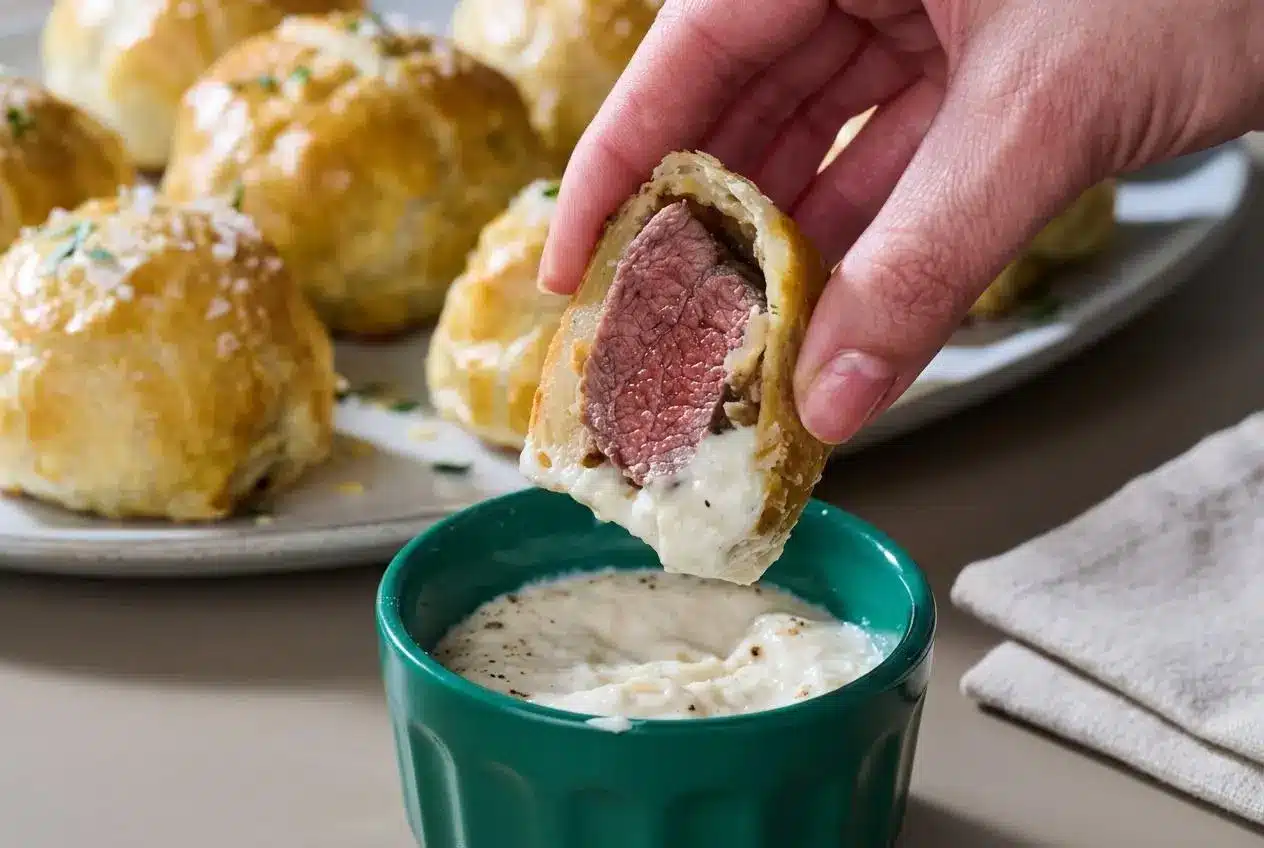
For golden mini beef Wellingtons, briefly sear filet pieces, cook mushroom duxelles until dry, stir in Dijon mustard, and enclose the filling in puff pastry. Bake at 400°F for 16 to 18 minutes, checking both the pastry color and the beef’s doneness before serving.
Mini Beef Wellington wraps tender steak and earthy mushrooms in a buttery, flaky crust. These individual parcels bring the flavors of a classic British centerpiece to an appetizer platter, complete with horseradish cream for dipping.
You get crisp pastry, savory thyme, and browned beef in a portion that doesn’t require carving at the table. The assembly is manageable when the filling and dough stay cool. Crisp bottoms start in the mushroom pan.
Keep the pastry chilled while you prepare the filling, and clear enough counter space to roll and cut both sheets.
Why Mini Beef Wellingtons Are the Ultimate Party Appetizer
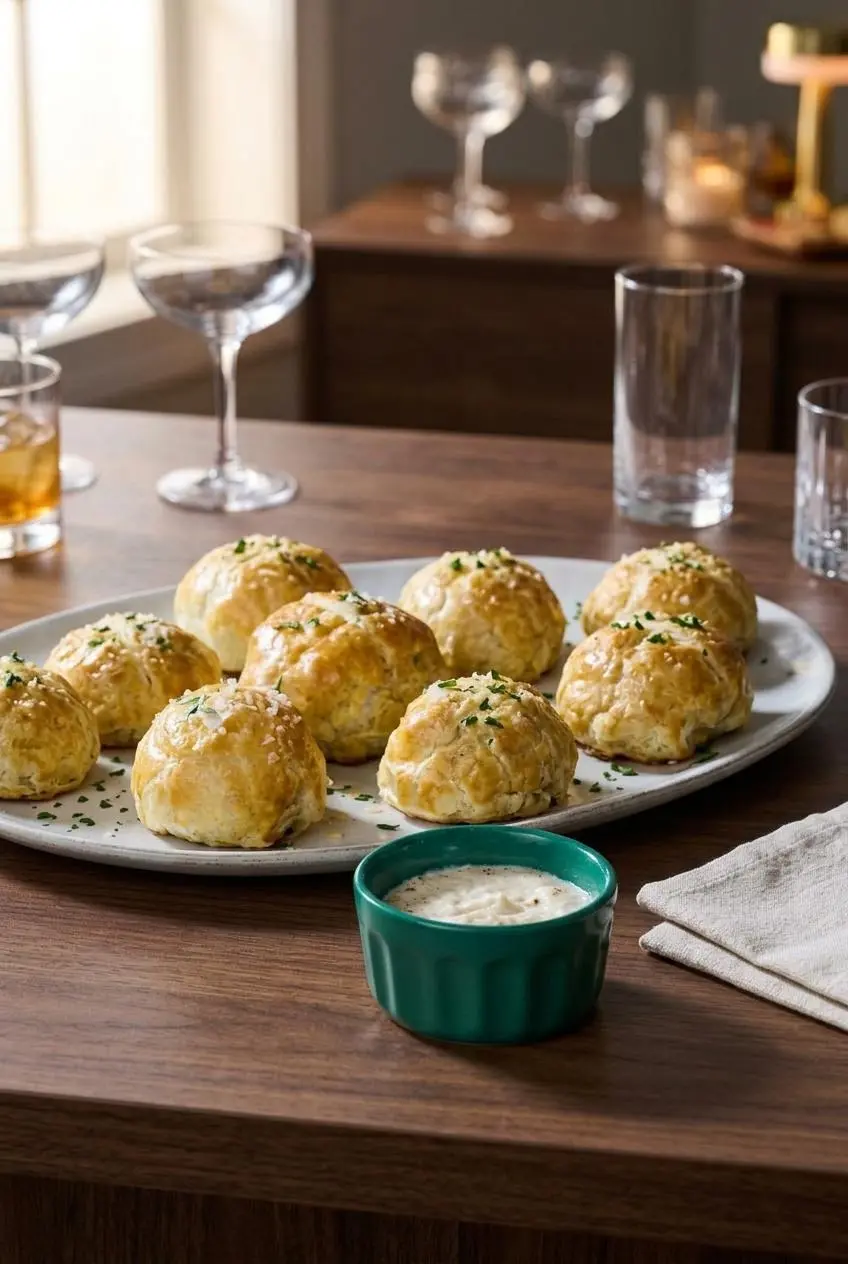
Individual pastry parcels make a special-occasion beef dish easier to serve. Each guest gets a complete portion with steak, mushrooms, and crust, rather than a slice that might unravel on the way to the plate.
Unlike traditional roast beef, these Wellingtons need no carving station. Arrange them on a platter with small plates and napkins, and keep the dipping sauce alongside rather than pouring it over the pastry.
This recipe makes 12 parcels using 1-by-2-inch pieces of beef. They’re substantial appetizers rather than tiny one-bite hors d’oeuvres, so plan your platter accordingly. The enclosed shape keeps the filling contained, while the separated egg provides both a seam seal and a golden finish.
Serve them warm, after the filling has cooled slightly from the oven. That brief pause makes them easier to handle without losing the contrast between the crisp shell and tender center.
Essential Ingredients for Mini Beef Wellington
Beef supplies tenderness, mushrooms and thyme build savory depth, and puff pastry creates the flaky shell. Butter and oil support browning, Dijon adds tang, egg seals and colors the dough, and the finishing salt, parsley, and horseradish cream balance the rich filling.
- 1 tbsp. salted butter
- 1 tbsp. olive oil
- 1 1/2 lb. beef filet, cut into 12 (1-by-2-inch) pieces
- 1 tsp. kosher salt
- 1/2 tsp. black pepper
- 6 oz. cremini mushrooms, stems removed
- 1 medium onion, diced finely
- 1 tbsp. fresh thyme, minced
- 1 tbsp. dijon mustard
- 1 (17.3-ounce) package frozen puff pastry (such as Pepperidge Farm), thawed
- All-purpose flour, for dusting
- 1 large egg, separated and beaten
- 1 tsp. sea salt flakes
- Chopped fresh parsley, for garnish
- Bottled horseradish cream sauce, for serving
Tenderloin is especially useful here because the meat cooks quickly inside the pastry. Cremini mushrooms contribute a deeper earthy flavor than the crust alone can provide, while fresh thyme adds aroma without overwhelming the beef.
Dijon sharpens the mushroom mixture and balances the buttery dough. It isn’t a waterproof barrier, though: cooking moisture out of the mushrooms does the important work of protecting the pastry. Egg white helps join the edges; egg yolk gives the surface its rich color.
I keep the second pastry sheet chilled while rolling the first so it stays firm enough to lift without stretching.
Selecting and Trimming the Beef
Choose center-cut beef tenderloin or filet mignon for the softest texture. A fairly even piece makes it easier to cut portions that cook at a similar rate. Trim any tough silverskin before dividing the meat, and blot surface moisture with paper towels before seasoning.
Trimmed top sirloin filet is an optional, more economical substitute, but expect a firmer bite. Tenderloin remains the better choice when tenderness is the priority. Whichever cut you use, keep the pieces consistent rather than mixing thin strips with thick chunks.
Building the Earthy Mushroom Duxelles
Duxelles is a finely chopped mushroom mixture cooked down into a concentrated savory filling. Pulse the cremini mushrooms in a food processor until the pieces are small and relatively uniform. Stop before they become a wet purée.
The diced onion softens in the beef drippings, and thyme perfumes the mixture as it cooks. Once the mushrooms go in, their released liquid needs to evaporate. A spoon dragged through the finished mixture should leave a dry path, not a puddle that quickly flows back.
Handling Frozen Puff Pastry
Follow the package directions for thawing, and start assembly with dough that bends without cracking but still feels cool. If it becomes sticky, limp, or difficult to lift, return it to the refrigerator until it firms up.
An all-butter puff pastry is an optional choice for a pronounced buttery flavor; the packaged pastry listed here also works. In either case, temperature matters more than brand. Cold fat between the dough layers helps create lift during baking.
Dust the work surface lightly with flour. Too much flour can coat the sealing edges and make them harder to join, so brush away loose flour before applying egg white.
How to Make Mini Beef Wellington
Prepare the beef and mushroom filling before enclosing them in dough. You’ll need a large skillet, food processor, rolling pin, sheet pan, parchment paper, and separate bowls for the beaten egg white and yolk. The recipe yields 12 parcels.
- Set the oven to 400°F and cover a sheet pan with parchment paper.
The lined surface will help you lift the baked parcels without tearing their undersides. - Season the beef with kosher salt and pepper, then heat the butter and olive oil in a large skillet over medium-high heat.
Wait until the butter has melted and the fat is hot enough for the meat to sizzle on contact. - Sear the beef for about 45 seconds per side, then transfer it out of the skillet to partially cool.
Look for a browned exterior rather than a cooked-through center, since the meat still has an oven bake ahead. - Pulse the mushrooms into fine pieces, then cook the onion and thyme in the skillet drippings over medium heat for 5 minutes.
The onion should look translucent and the thyme should smell fragrant. - Stir the chopped mushrooms into the skillet and cook for 8 to 10 minutes, stirring as needed, then take the pan off the heat and mix in the Dijon mustard.
The filling is ready when the mushrooms look golden and no liquid remains pooled in the pan. - On a lightly floured surface, roll one pastry sheet into a 10-inch square, cut along its folds into 3 strips, and halve each strip crosswise; repeat with the second sheet.
You should have 12 pastry pieces with enough room to enclose the filling. - Center about 2 teaspoons of mushroom filling on each pastry piece and add a piece of beef.
Keep the borders clear, and make sure the filling no longer feels hot enough to soften the dough. - Coat the pastry borders with beaten egg white, bring the dough around the filling, press the edges closed, and arrange each parcel with its seam underneath on the prepared pan.
The joins should hold together without gaps or exposed filling. - Brush the tops with beaten egg yolk, scatter over the sea salt flakes, and bake for 16 to 18 minutes until golden.
Look for puffed layers and deeply colored edges, while checking the beef separately for doneness. - Let the parcels cool slightly, then finish with chopped parsley and serve with the bottled horseradish cream sauce.
The pastry should remain crisp while the filling becomes easier to handle.
The baking window guides pastry browning, but it doesn’t guarantee a particular beef doneness. Meat thickness, starting temperature, and oven performance all affect the center. Use a food thermometer rather than judging the beef by the crust.
Pro Tips for Crisp Pastry and Tender Beef
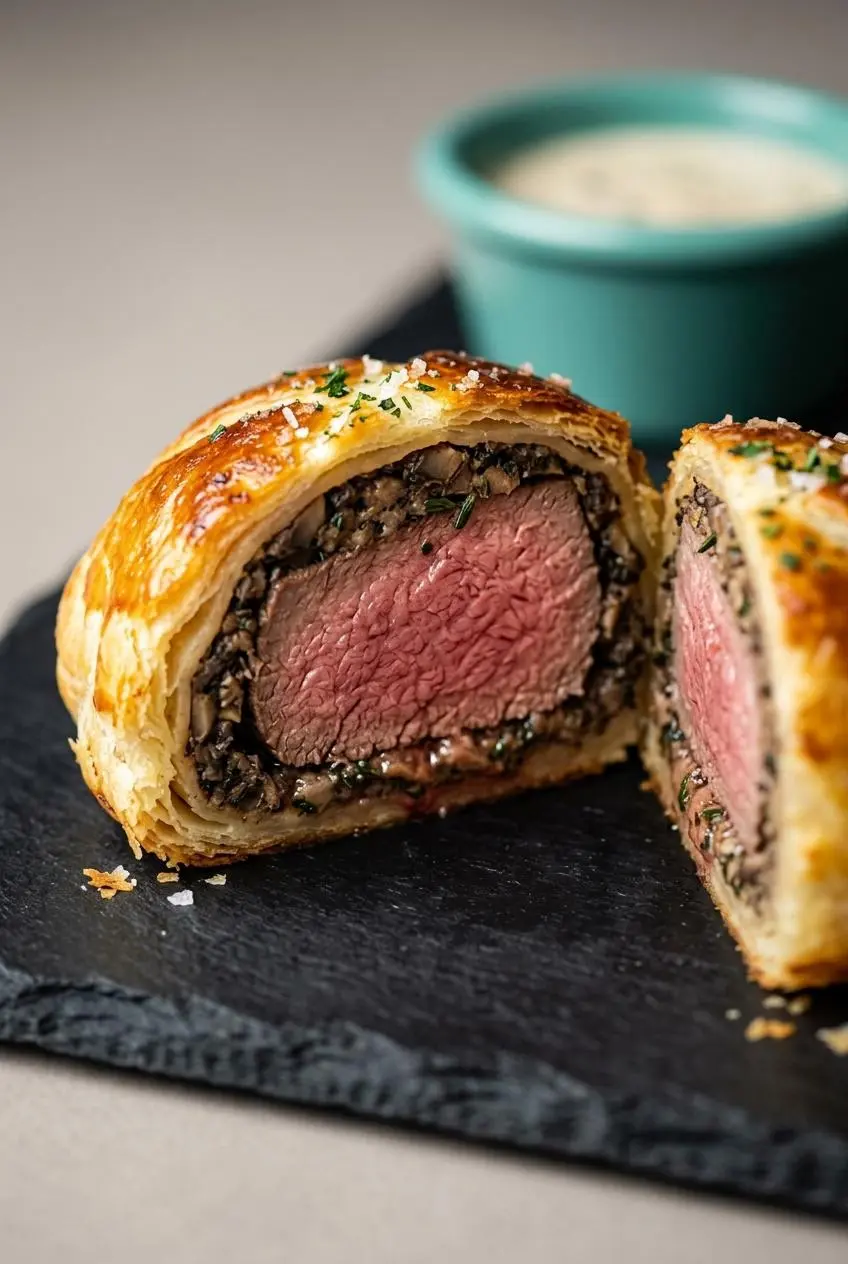
Moisture and warm dough cause most texture problems. Focus on those two issues before changing the baking time.
- Soggy bottoms: Wet duxelles releases liquid into the pastry during baking. Cook it until the skillet shows no pooled moisture, using the dry-pan cue rather than the timer alone.
- Soft dough during assembly: Hot beef or mushroom filling can soften the pastry fat. Let the filling lose its heat, and refrigerate dough that becomes floppy before continuing.
- Juice leaking from the parcels: Excess liquid on the seared beef can collect at the seams. Gently blot visible surface juices before wrapping, without pressing or squeezing the meat.
- Seams opening: Filling on the borders or loose folds prevent a good seal. Keep the edges clean, apply egg white, press firmly, and place the join underneath.
- Pale tops: An uneven yolk coating leaves bare patches. Brush a thin, even layer across the exposed dough rather than allowing yolk to puddle around the base.
- Tough beef: A lengthy skillet cook leaves less room for oven cooking. Keep the sear brief and avoid treating that stage as the final cook.
If the assembled dough has warmed during handling, chilling it until firm can help preserve its layers. Treat that as a texture adjustment, not an extra mandatory stage. There’s no need to keep working with dough that sticks to your fingers.
For pale undersides, check that the oven has fully preheated and that the pan sits where heat can circulate around it. An optional preheated baking sheet beneath the parchment can improve bottom heat, but handle it carefully and check that your parchment suits the oven temperature.
For whole-cut beef, use a thermometer to check a minimum internal temperature of 145°F followed by a 3-minute rest. A golden shell alone doesn’t establish that the meat has reached that point, so continue cooking as needed.
Preparation, Storage, and Reheating
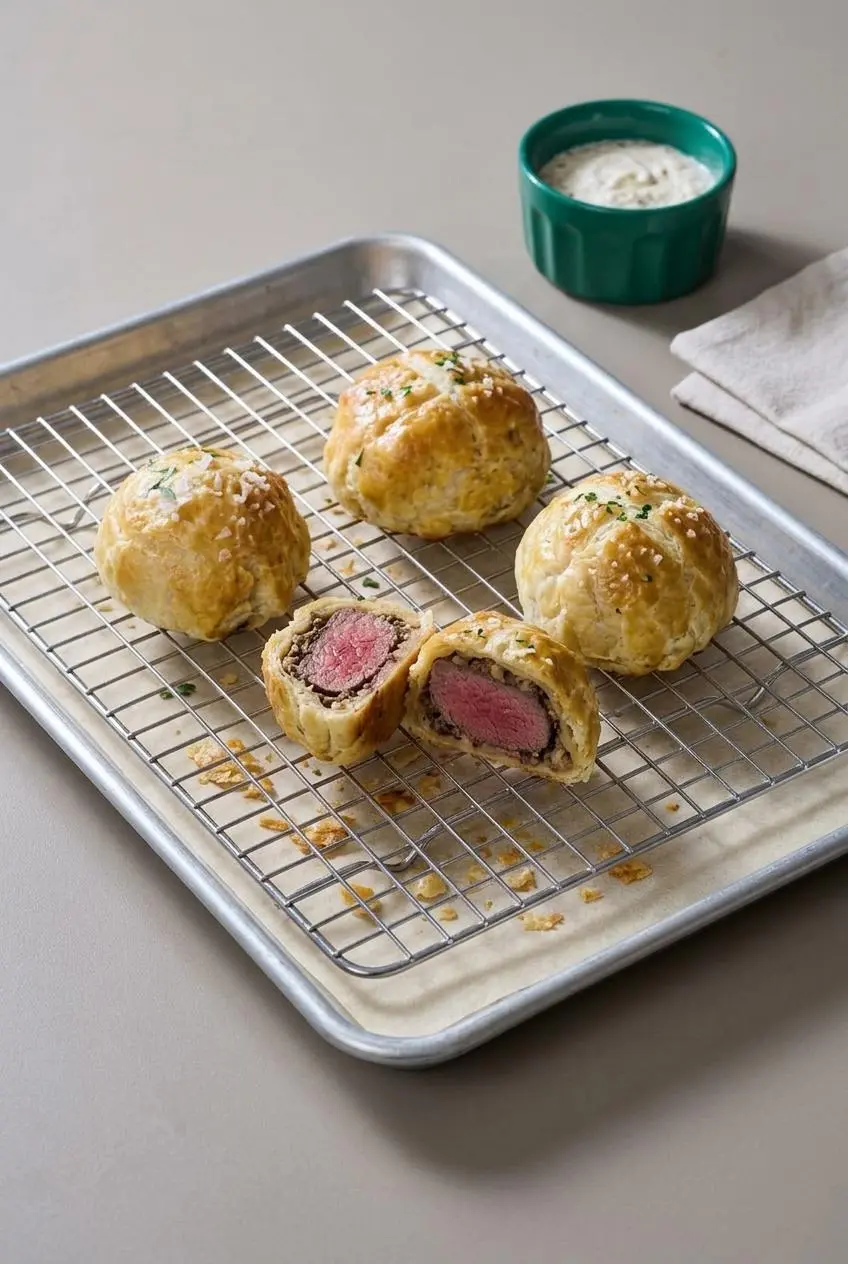
Reduce last-minute work by organizing the equipment and ingredients before heating the skillet. Line the pan, separate the egg, mince the thyme, and dice the onion so you can move through assembly without searching for utensils.
Keep the pastry chilled until you’re ready to roll it. The filling needs to lose its heat before touching the dough, but don’t leave partially cooked beef sitting out while you tackle unrelated party tasks. Complete the cooking process rather than treating the brief sear as a finished preparation step.
These parcels have their best texture freshly baked. Refrigerate leftovers promptly in a covered container, keeping the horseradish sauce separate so it doesn’t soak into the crust.
For reheating, use the oven and place the parcels on a rack over a baking sheet so air can reach the bottoms. Heat them thoroughly, and expect the beef to cook further. A microwave tends to soften the pastry, so it’s a less appealing choice when crispness matters.
Tasty Flavor Variations and Dipping Sauces
Keep optional changes restrained so the beef, mushrooms, and flaky crust remain the focus. Rich additions work best as thin layers, and dips belong beside the parcels rather than over them.
Garlic Herb Boursin Cheese Mini Wellingtons
For an optional creamy layer, spread a thin smear of garlic-and-herb Boursin over the seared beef before wrapping. It melts into the mushrooms and adds a mellow garlic flavor.
Avoid a thick mound of cheese, which makes the parcel harder to seal and adds moisture to the filling. This variation changes the richness, not the core assembly technique.
The Quick Mini Muffin Tin Cup Shortcut
Open-faced puff pastry cups are an optional alternative when folding individual parcels feels fiddly. Press pastry pieces into mini muffin wells and use the mushroom mixture and smaller steak pieces as the filling.
This changes both the shape and how the ingredients receive heat. Don’t carry over the enclosed-parcel baking time without checking: the pastry needs to cook through, and the exposed beef needs a separate doneness check.
Expect more exposed filling and a less enclosed presentation. It’s a different appetizer format, not a faster version with an identical result.
Scaling From Party Finger Bites to Plated Individual Steaks
Larger individual Wellingtons turn the same flavor combination into a plated entrée, but they need their own pastry dimensions and cooking plan. A thicker filet cooks differently from the small pieces used here.
Don’t assume the appetizer baking window applies, and don’t simply stretch the existing pastry pieces around oversized steaks. Allow enough dough for a secure seal, then judge the pastry and beef separately.
If a sit-down beef dinner matters more than the wrapped presentation, roasted beef tenderloin offers another way to serve a larger cut without adapting these parcels.
Zesty Horseradish and Mustard Dipping Creams
Bottled horseradish cream sauce is the ready-to-serve accompaniment here. Its sharpness cuts through the rich pastry and mushroom filling.
- Optional sour cream horseradish dip: Stir prepared horseradish into sour cream gradually, tasting as you go so the heat doesn’t overwhelm the beef.
- Optional mustard cream: Mix whole-grain mustard into sour cream or crème fraîche for a tangy dip with a little texture.
- Optional platter garnish: Arrange rosemary sprigs around the parcels for an aromatic presentation, keeping the chopped parsley on the Wellingtons themselves.
Serve dips in small bowls beside the warm parcels. Leaving the pastry uncovered by sauce preserves the crisp surface you worked to achieve.
Conclusion
These mini Wellingtons bring golden pastry, concentrated mushroom flavor, and tender beef together in individual parcels that suit a special gathering.
Keep the mushroom filling dry, the pastry cool, and the seams firmly closed. Then serve them warm with horseradish cream and let that flaky crust do the talking.
Frequently Asked Questions
What Cut of Meat Is Best for Mini Beef Wellingtons?
Center-cut beef tenderloin or filet mignon is the best choice for tenderness. Trimmed top sirloin filet is an optional budget-friendly substitute, but it produces a firmer bite. Cut evenly sized pieces for more consistent cooking.
How Do You Prevent Mini Beef Wellingtons From Getting Soggy Bottoms?
Cook the mushroom mixture until no liquid remains, blot visible juices from the seared beef, and keep the pastry cool during assembly. Seal clean edges firmly and bake in a fully preheated oven.
Can You Make Mini Beef Wellingtons Ahead of Time?
You can organize the equipment and measure the ingredients before cooking. For these parcels, plan to complete the searing, assembly, and baking together rather than holding partially cooked beef for later. Keep pastry chilled until you need it.
How Long Should Mini Beef Wellingtons Bake?
Bake them at 400°F for 16 to 18 minutes, looking for golden, puffed pastry. That timing doesn’t guarantee medium-rare beef or establish its doneness; use a thermometer and the whole-cut beef temperature guidance above.
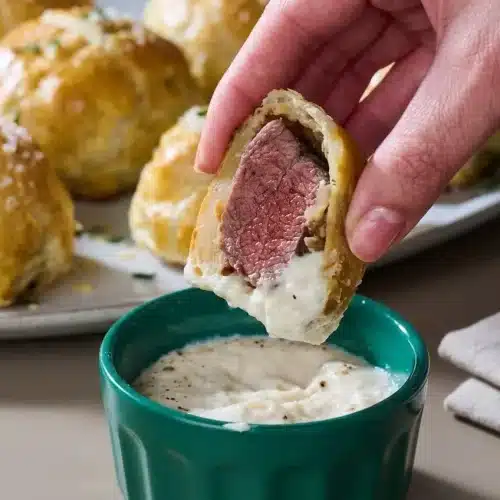
Mini Beef Wellington

Equipment
- Large Skillet
- Food processor
- Rolling Pin
- Sheet Pan
- Parchment Paper
Ingredients
- 1 tbsp. salted butter
- 1 tbsp. olive oil
- 1 1/2 lb. beef filet cut into 12 (1-by-2-inch) pieces
- 1 tsp. kosher salt
- 1/2 tsp. black pepper
- 6 oz. cremini mushrooms stems removed
- 1 medium onion diced finely
- 1 tbsp. fresh thyme minced
- 1 tbsp. dijon mustard
- 1 package frozen puff pastry (such as Pepperidge Farm) 17.3-ounce, thawed
- All-purpose flour for dusting
- 1 large egg separated and beaten
- 1 tsp. sea salt flakes
- Chopped fresh parsley for garnish
- Bottled horseradish cream sauce for serving
Instructions
- Set the oven to 400°F and cover a sheet pan with parchment paper. The lined surface will help you lift the baked parcels without tearing their undersides.
- Season the beef with kosher salt and pepper, then heat the butter and olive oil in a large skillet over medium-high heat. Wait until the butter has melted and the fat is hot enough for the meat to sizzle on contact.
- Sear the beef for about 45 seconds per side, then transfer it out of the skillet to partially cool. Look for a browned exterior rather than a cooked-through center, since the meat still has an oven bake ahead.
- Pulse the mushrooms into fine pieces, then cook the onion and thyme in the skillet drippings over medium heat for 5 minutes. The onion should look translucent and the thyme should smell fragrant.
- Stir the chopped mushrooms into the skillet and cook for 8 to 10 minutes, stirring as needed, then take the pan off the heat and mix in the Dijon mustard. The filling is ready when the mushrooms look golden and no liquid remains pooled in the pan.
- On a lightly floured surface, roll one pastry sheet into a 10-inch square, cut along its folds into 3 strips, and halve each strip crosswise; repeat with the second sheet. You should have 12 pastry pieces with enough room to enclose the filling.
- Center about 2 teaspoons of mushroom filling on each pastry piece and add a piece of beef. Keep the borders clear, and make sure the filling no longer feels hot enough to soften the dough.
- Coat the pastry borders with beaten egg white, bring the dough around the filling, press the edges closed, and arrange each parcel with its seam underneath on the prepared pan. The joins should hold together without gaps or exposed filling.
- Brush the tops with beaten egg yolk, scatter over the sea salt flakes, and bake for 16 to 18 minutes until golden. Look for puffed layers and deeply colored edges, while checking the beef separately for doneness.
- Let the parcels cool slightly, then finish with chopped parsley and serve with the bottled horseradish cream sauce. The pastry should remain crisp while the filling becomes easier to handle.