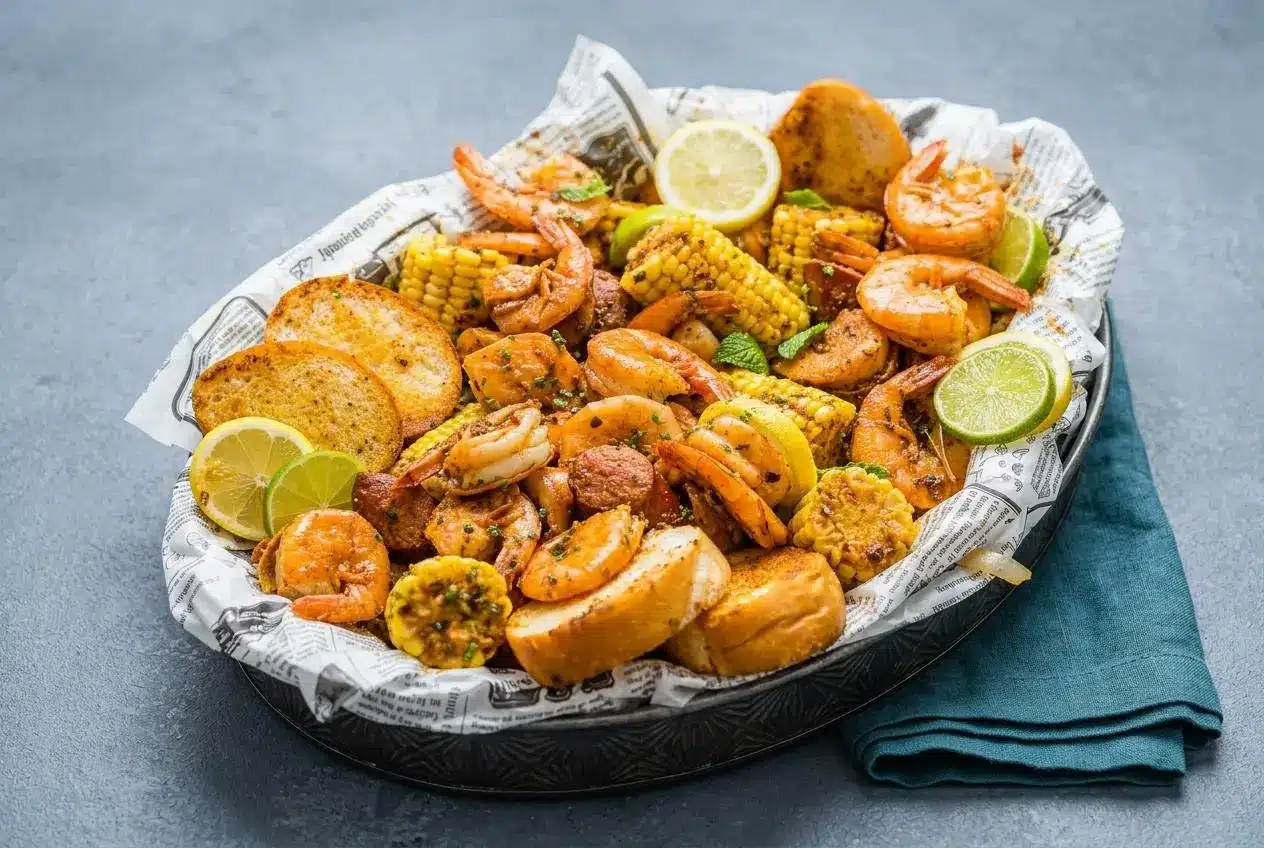
A Low Country Boil Recipe is a classic one-pot meal of shrimp, sausage, corn, and potatoes cooked in a boldly seasoned broth, then finished with rich garlic butter sauce.
Low Country Boil Recipe is the kind of meal that feels casual and festive at the same time. It comes from the coastal South and brings together shrimp, smoked sausage, corn, potatoes, and plenty of seasoning in one big pot.
You’ll love how straightforward it is once the ingredient order clicks into place. Get the timing right, and everything lands tender, juicy, and ready for a spread-the-table feast.
Have your colander, skimmer, or strainer basket ready before the shrimp go in, because the finish moves fast.
What Is a Low Country Boil? (And Is It the Same as Frogmore Stew?)
This dish is all about timing and good seasoning. A traditional Low Country Boil combines shrimp, smoked sausage, corn, and potatoes in a fragrant broth, then gets drained and served family-style so everyone can dig in at once.
Yes, Low Country Boil and Frogmore Stew are two names for the same dish. The name Frogmore Stew is tied to the South Carolina Lowcountry, and the meal is closely associated with the coastal cooking traditions of South Carolina and Georgia.
And despite the word “stew,” it isn’t thick or spooned into bowls. It’s usually piled onto a platter or straight onto a paper-lined table, which is half the fun.
Essential Equipment for a Seafood Boil
The pot matters more than anything else here. For this recipe, a large stockpot of at least 20 quarts gives the ingredients enough room to cook evenly without boiling over the second you add corn and potatoes.
If you’re cooking indoors, a big stovetop stockpot works well for a batch this size. For a larger gathering, an outdoor propane burner makes life easier because it heats faster and handles a heavier pot with less fuss. Keep the setup on a stable surface, don’t overcrowd the pot, and follow the burner directions carefully.
A long-handled skimmer is handy for lifting ingredients without splashing yourself. A strainer basket is even better if your pot has one, because you can lift the whole boil out quickly the moment the shrimp are done.
Ingredient Guide: Choosing the Best Shrimp, Sausage, and Seasoning
The boil is simple in structure, so the key ingredients really carry the whole pot. Good shrimp, the right sausage, and bold seasoning make the difference between flat and unforgettable.
The Best Shrimp for a Boil
Go with large or jumbo shrimp so they stay juicy and meaty in the pot. Fresh shrimp are great when you can get them, but frozen shrimp are often the better buy because they’re usually frozen close to harvest and thaw beautifully.
Shell-on shrimp give the broth extra briny depth. Peeled and deveined shrimp are more convenient and still work well, which is exactly what this recipe uses. If you’re buying frozen shellfish or adding crab, clams, or mussels, good handling and thorough cooking help reduce risk, and official guidance is useful for selection and cooking basics.
Sausage Showdown: Andouille vs. Kielbasa
This choice sets the tone of the whole pot. Andouille brings a smokier, spicier Cajun edge, while kielbasa tastes milder and a little sweeter.
The official recipe uses smoked sausage, so either style fits. If you want more heat in the broth and butter sauce, pick andouille. If you want the shrimp and Old Bay to stay front and center, kielbasa is a great call.
Seasoning: Store-Bought vs. Homemade
Old Bay is the classic shortcut here, and it works because it seasons the broth fast and hits the savory, peppery, celery-salt notes people expect. Zatarain’s Crab Boil or a Creole blend can also work if you want a sharper or spicier profile.
Homemade seasoning gives you more control over salt and heat, especially if you like a deeper paprika note or a gentler cayenne finish. There’s a full homemade blend later on if you want that route.
Ingredients
Each ingredient has a job here: broth builds savoriness, lemons and onions add aroma, potatoes bring heft, corn adds sweetness, and the garlic butter sauce ties everything together with richness and spice.
- 6 qts Water
- 64 oz Chicken Broth, (2 32 oz boxes)
- 2 Sweet Onions, sliced
- 2 Lemons, sliced
- 10 Garlic Cloves, smashed
- 1 cup Old Bay Seasoning
- 2 tbsps Whole Peppercorns
- 5 Bay Leaves
- 2 lbs Red Potatoes, cut in half
- 8 Ears of Corn, cut in half
- 1 lb Smoked Sausage, cut into chunks
- 2 lbs Jumbo Shrimp, (deveined)
- 1 loaf Sourdough Bread, optional
Garlic Butter Sauce for Topping
- 2 cups Butter, melted
- 8 cloves Garlic, finely diced
- 2/3 cup Cajun Seasoning
- 2 tbsps Old Bay Seasoning
- 2 tbsps Onion Powder
- 1-2 cups Reserved Seafood Broth from above
- 1/4 cup Fresh Parsley, diced
- Salt, to taste
- Hot Sauce, for serving
I like using shell-on shrimp when I’m feeding a crowd, but for an easier table setup, deveined shrimp are a lot less messy and still soak up plenty of flavor.
How to Make the Perfect Low Country Boil
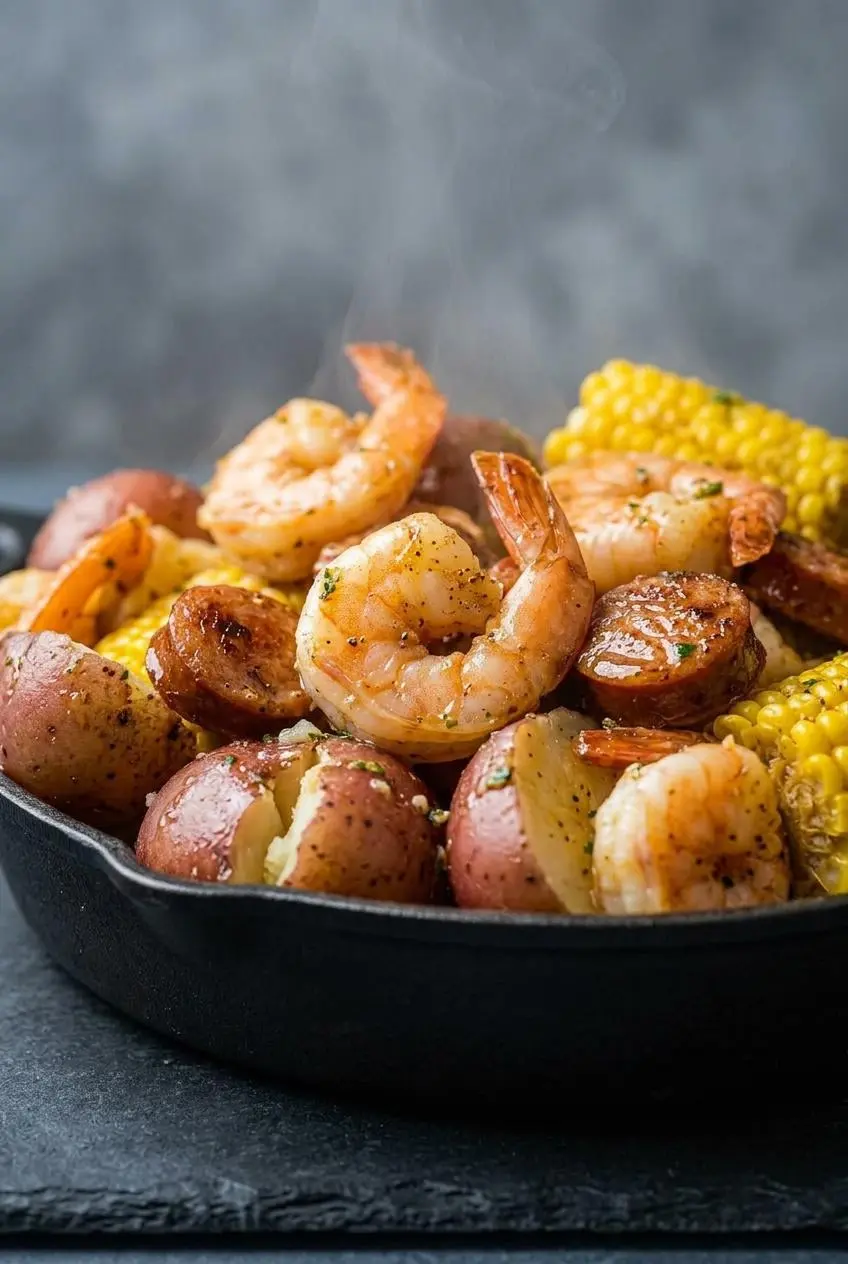
- Pour the water and chicken broth into a large stockpot, then add the sliced onions, lemons, smashed garlic, Old Bay seasoning, whole peppercorns, and bay leaves; bring everything to a full boil over high heat.
The liquid should smell intensely fragrant, citrusy, and savory before anything else goes in. - Add the red potatoes, corn, and smoked sausage to the boiling broth and cook for 15 minutes.
The potatoes should be tender when pierced with a fork but still hold their shape instead of crumbling. - Stir in the jumbo shrimp and continue cooking for 5 to 8 minutes, then scoop out and reserve 1 to 2 cups of the broth.
The shrimp are ready when they turn pink and opaque, so don’t leave them in longer than needed.
Make the garlic butter sauce:
- Warm the melted butter in a large saucepan over medium-low heat, then add the finely diced garlic and cook for about 3 minutes.
You want a steady sizzle and a strong garlic aroma, not browned bits. - Stir in the Cajun seasoning, Old Bay seasoning, onion powder, and salt, then add 1 cup of the reserved broth and simmer on low for 3 to 5 minutes.
The sauce should look glossy and slightly thickened; add up to 2 cups broth if you want it looser. - Fold in the fresh parsley, take the pan off the heat, and spoon the sauce over the boil when serving.
The finished sauce should taste buttery, spicy, and deeply seasoned with a little kick.
Low Country Boil Cooking Timeline
This is the part that saves dinner. The ingredient order matters because potatoes need the longest time, corn and sausage need enough time to heat through and absorb flavor, and shrimp cook fast.
| Time | Action / Ingredients |
|---|---|
| 0 min | Add water, chicken broth, onions, lemons, garlic, Old Bay, peppercorns, and bay leaves to the pot and bring to a rolling boil. |
| When boiling | Add potatoes, corn, and smoked sausage. |
| 15 min later | Check the potatoes. If tender, add the shrimp. |
| 20 to 23 min total cooking after the vegetables go in | Pull the pot once the shrimp are pink and opaque. Reserve some broth for the garlic butter sauce before draining. |
A lot of home cooks ask for a strict minute-by-minute chart because overcooked shrimp are the fastest way to ruin the party. Trust the potato check as much as the clock: a fork should slide in with a little resistance, not fall straight through.
If you add pre-cooked crab legs, warm them during the last 5 to 8 minutes with the corn and sausage. For clams or mussels, add them a few minutes before the shrimp so they have time to open without turning the shrimp tough.
Tips for Success and Common Mistakes to Avoid
This section is where most first-timer problems get fixed. The biggest challenge home cooks face here is trying to rush a pot that really wants a little order.
| Problem | Likely Cause | Fix |
|---|---|---|
| Rubbery shrimp | Shrimp stayed in the hot broth too long | Add shrimp last and drain as soon as they turn pink and opaque. |
| Hard potatoes | Potatoes were too large or not cooked long enough | Keep them halved as written and test with a fork before moving on. |
| Mushy vegetables | Everything went in too early or cooked too long | Follow the staged order and avoid letting the pot sit after the shrimp are done. |
| Weak flavor | The broth was under-seasoned | The liquid should smell bold and taste strongly seasoned before the potatoes go in. |
| Boil-over mess | The pot was too small or too full | Use a roomy stockpot and remember the liquid level rises once the ingredients are added. |
Honestly, the shrimp are the main event, so build your setup around them. Have your serving platter ready, have the sauce started, and don’t wander off once they hit the pot.
Variations and Add-Ins
Once you’ve got the basic method down, it’s easy to make the boil feel more like your own. Keep these changes optional so the main recipe stays reliable.
| Option | What It Adds | When to Add It |
|---|---|---|
| Crab legs | Sweet, rich seafood flavor | During the last 5 to 8 minutes to heat through |
| Clams or mussels | Briny shellfish flavor | A few minutes before the shrimp |
| Hard-boiled eggs | Extra richness and sauce-catching power | Add after cooking or serve alongside |
| Different vegetable-base boil | A heartier, more cabbage-forward variation | Use as a separate recipe idea |
If you love boil-style meals but want a different spin, Shrimp and Sausage Cabbage Boil is a great next move.
How to Add Crab Legs
Use pre-cooked crab legs here, since they only need to heat through. Add them during the last 5 to 8 minutes of cooking, around the same stage as the corn and sausage if you want them hotter by serving time.
Snow crab is easier to crack at the table, while king crab feels a little more luxurious. Either way, don’t boil them endlessly or you’ll lose that sweet clean flavor.
Adding Clams and Mussels
Scrub them well and add them shortly before the shrimp. They usually need a bit more time than shrimp but much less than potatoes, so that middle-late stage is the sweet spot.
Discard any clams or mussels that stay closed after cooking. If you like the whole seafood-boil vibe with extra saucey add-ins, Spicy Egg Boil is a fun one to try another day.
How to Scale This Recipe for Any Crowd
This is the easiest way to plan a boil without guessing. A solid rule of thumb per person is about 1/2 lb shrimp, 1/4 lb sausage, 2 to 3 small potatoes, and 1/2 ear of corn.
| Serving Size | Shrimp | Sausage | Potatoes | Corn |
|---|---|---|---|---|
| Per person | 1/2 lb | 1/4 lb | 2 to 3 small potatoes | 1/2 ear |
| 4 people | 2 lbs | 1 lb | 8 to 12 small potatoes | 2 ears |
| 8 people | 4 lbs | 2 lbs | 16 to 24 small potatoes | 4 ears |
| 12 people | 6 lbs | 3 lbs | 24 to 36 small potatoes | 6 ears |
| 20 people | 10 lbs | 5 lbs | 40 to 60 small potatoes | 10 ears |
For a party of 10, plan on about 5 lbs shrimp, 2 1/2 lbs sausage, 20 to 30 small potatoes, and 5 ears of corn. You’ll also need to scale up the water, broth, and seasoning so the liquid still tastes punchy instead of watered down.
Once you go bigger than a home stockpot can comfortably handle, split the boil between two pots or move outdoors to a larger setup. More food also means more seasoning and more room, not just more ingredients dumped into the same pot.
Homemade Low Country Boil Seasoning
If you want more control over salt and heat, mix your own blend. It gives you the same warm, peppery backbone with a little more flexibility.
- 1/4 cup paprika
- 1/4 cup celery salt
- 2 tbsp kosher salt
- 2 tbsp black pepper
- 2 tbsp garlic powder
- 2 tbsp onion powder
- 1 tbsp dry mustard
- 2 tsp cayenne pepper
- 2 tsp dried thyme
- 1 tsp ground bay leaf
Stir everything together until evenly mixed, then keep it in a tightly closed jar away from heat and moisture. Use about 1 cup of this blend for a pot this size, then adjust the next batch to match how spicy or salty you like your boil.
If you want it milder, pull back on the cayenne. If you want it punchier, lean harder into black pepper and paprika rather than just adding more salt.
What to Serve with Your Low Country Boil
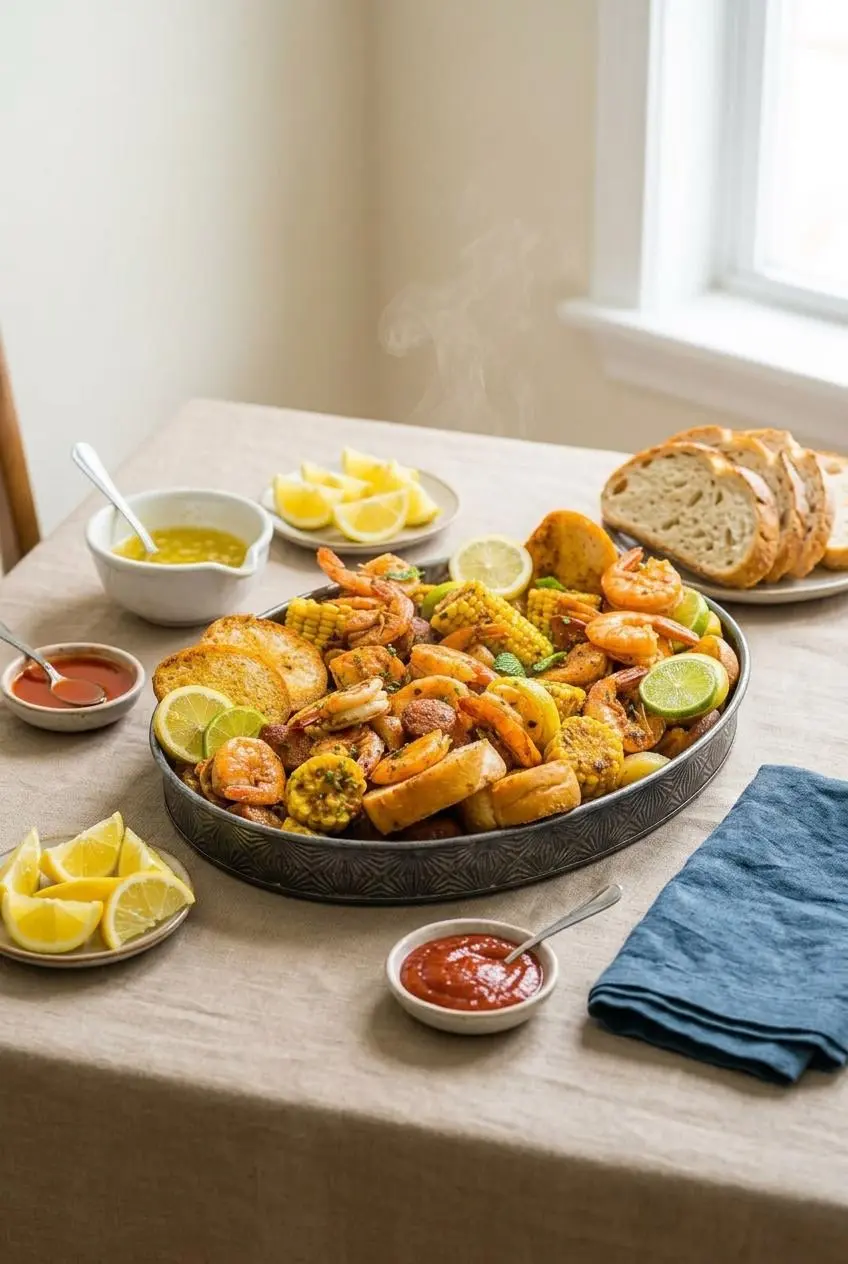
This meal shines when it feels a little messy and generous. Drain the boil, spread it onto a lined table or large platter, and let everyone grab what they want while it’s hot.
The essentials are the garlic butter sauce, extra lemon wedges, hot sauce, cocktail sauce, and plenty of sourdough bread for dipping. That bread earns its place fast once it hits the buttery broth on the plate.
If you want a little more to round things out, coleslaw or hush puppies fit the Southern feel nicely. Keep the sides easy so the boil stays the star.
Storing and Reheating Leftovers
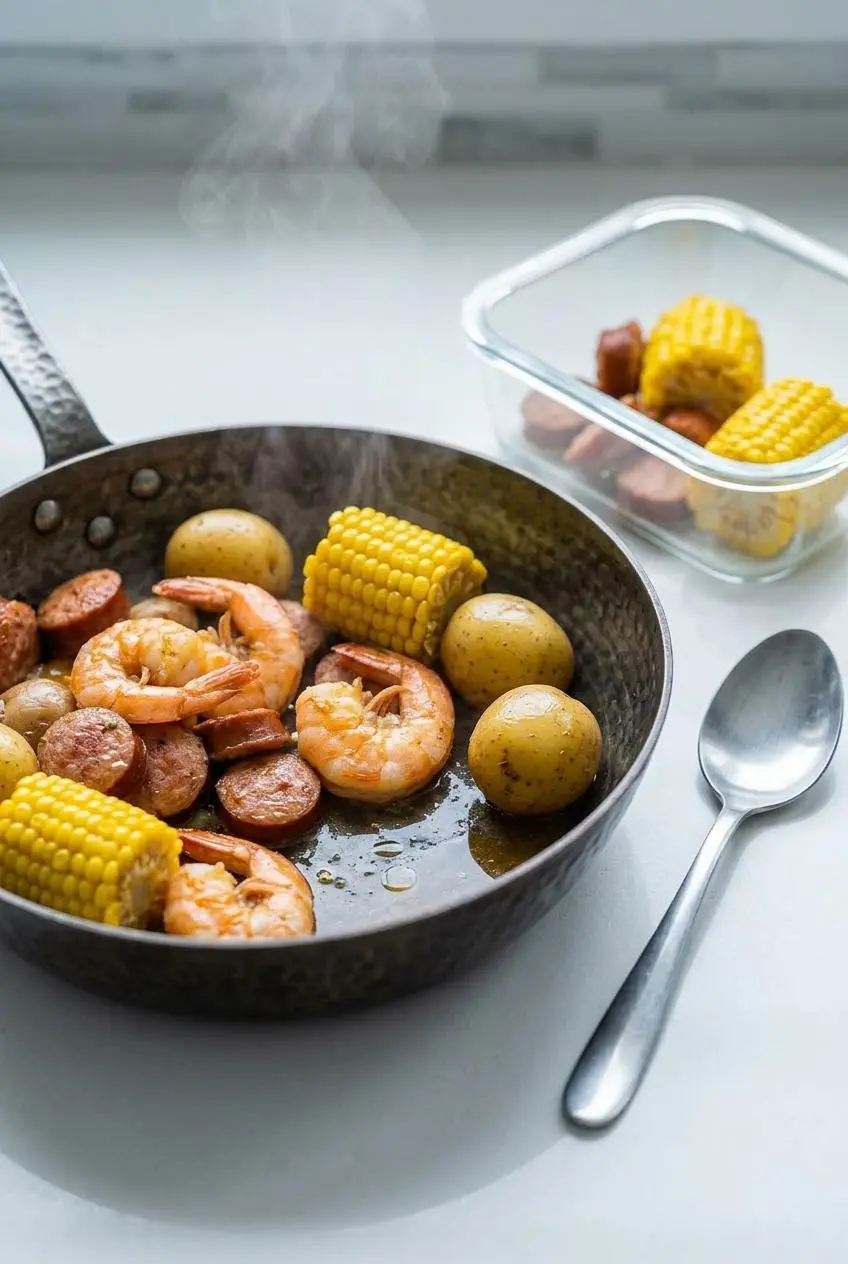
Seafood leftovers need quick handling, so get everything into shallow airtight containers and chill it promptly. For cooked leftovers, official guidance supports refrigerating them for up to 2 days.
For reheating, skip the microwave if you can. Warm the leftovers gently in a covered skillet with a splash of broth or water just until heated through, which helps keep the shrimp from turning rubbery and the potatoes from drying out.
Conclusion
A great Low Country Boil comes down to three things: a big enough pot, bold broth, and the right ingredient order. Once you know when each piece goes in, the whole meal feels easy.
With the timeline, crowd guide, and garlic butter sauce in your back pocket, you’re set for a seriously good seafood feast. Grab the biggest pot you’ve got and enjoy the mess.
Frequently Asked Questions
What Is the Correct Order to Put Ingredients in a Low Country Boil?
Go by cooking time. Start with the seasoned broth, then add the potatoes, corn, and sausage for the main boil, and finish with the shrimp last so they stay tender. The cooking timeline above makes the order easy to follow.
How Much Low Country Boil Do I Need per Person?
A good rule is 1/2 pound of shrimp, 1/4 pound of sausage, 2 to 3 small potatoes, and 1/2 ear of corn per person. If you’re serving lots of sides, you can be a little lighter.
Can I Make a Low Country Boil on My Stovetop?
Yes, absolutely. You just need a large stockpot, ideally at least 16 to 20 quarts, so the liquid and ingredients have enough space to boil without crowding.
What’s the Best Sausage for a Low Country Boil?
Kielbasa is milder and a little more traditional in flavor, while andouille is spicier and smokier. Both work well, so it really comes down to how much heat you want in the pot.
How Do I Store and Reheat Leftover Low Country Boil?
Cool the leftovers, refrigerate them covered, and reheat them gently in a skillet with a splash of broth or water. That soft reheating method helps protect the shrimp texture much better than a microwave.
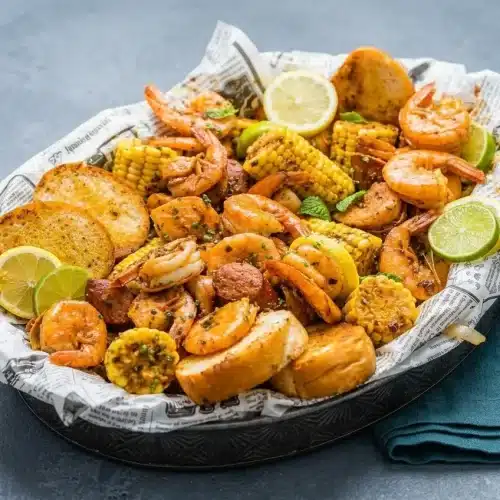
Low Country Boil Recipe

Equipment
- Large Stockpot (at least 20 quarts)
Ingredients
- 6 qts Water
- 64 oz Chicken Broth (2 32 oz boxes)
- 2 Sweet Onions, sliced
- 2 Lemons, sliced
- 10 Garlic Cloves, smashed
- 1 cup Old Bay Seasoning
- 2 tbsps Whole Peppercorns
- 5 Bay Leaves
- 2 lbs Red Potatoes, cut in half
- 8 Ears of Corn, cut in half
- 1 lb Smoked Sausage, cut into chunks
- 2 lbs Jumbo Shrimp (deveined)
- 1 loaf Sourdough Bread optional
Garlic Butter Sauce for Topping
- 2 cups Butter, melted
- 8 cloves Garlic, finely diced
- 2/3 cup Cajun Seasoning
- 2 tbsps Old Bay Seasoning
- 2 tbsps Onion Powder
- 1-2 cups Reserved Seafood Broth from above
- 1/4 cup Fresh Parsley, diced
- Salt to taste
- Hot Sauce for serving
Instructions
- Pour the water and chicken broth into a large stockpot, then add the sliced onions, lemons, smashed garlic, Old Bay seasoning, whole peppercorns, and bay leaves; bring everything to a full boil over high heat. The liquid should smell intensely fragrant, citrusy, and savory before anything else goes in.
- Add the red potatoes, corn, and smoked sausage to the boiling broth and cook for 15 minutes. The potatoes should be tender when pierced with a fork but still hold their shape instead of crumbling.
- Stir in the jumbo shrimp and continue cooking for 5 to 8 minutes, then scoop out and reserve 1 to 2 cups of the broth. The shrimp are ready when they turn pink and opaque, so don’t leave them in longer than needed.
Make the garlic butter sauce:
- Warm the melted butter in a large saucepan over medium-low heat, then add the finely diced garlic and cook for about 3 minutes. You want a steady sizzle and a strong garlic aroma, not browned bits.
- Stir in the Cajun seasoning, Old Bay seasoning, onion powder, and salt, then add 1 cup of the reserved broth and simmer on low for 3 to 5 minutes. The sauce should look glossy and slightly thickened; add up to 2 cups broth if you want it looser.
- Fold in the fresh parsley, take the pan off the heat, and spoon the sauce over the boil when serving. The finished sauce should taste buttery, spicy, and deeply seasoned with a little kick.