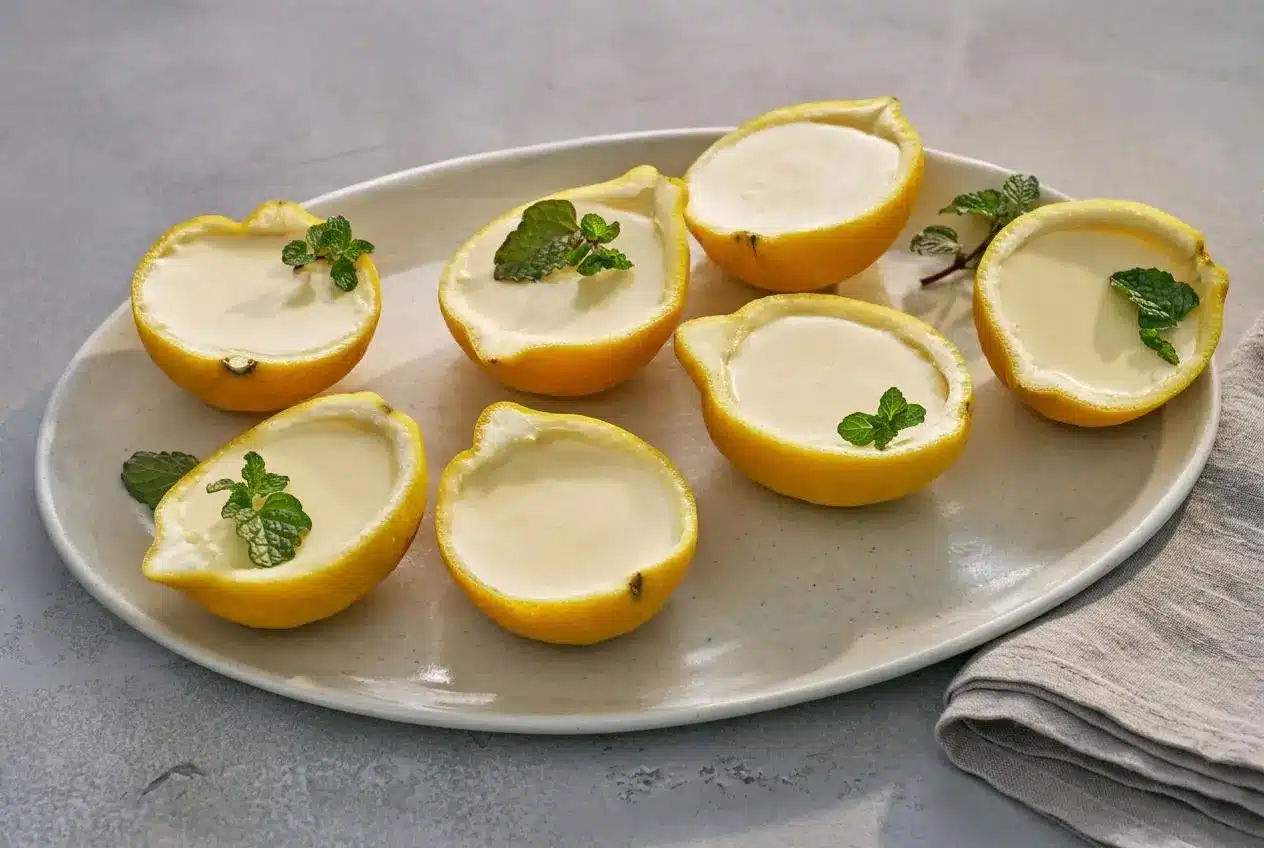
Lemon posset is a chilled British dessert made by simmering heavy cream and sugar, then adding fresh lemon juice. It thickens as it chills without eggs, gelatin, or starch, creating a rich, spoonable citrus cream.
This lemon posset balances bright lemon flavor with a velvety texture. Fresh zest perfumes the cream, while the juice brings enough tartness to keep each spoonful from tasting heavy.
Serve it in hollow lemon halves for a cheerful dessert platter or choose ramekins for easier portioning. The stovetop work is brief, but the full simmer and refrigerator rest matter. Watch for that first gentle thickening.
Clear a level refrigerator shelf and set out your sieve and heatproof pitcher before heating the cream.
What Makes a Traditional Posset Unique
Posset gives you custard-like richness without making an egg custard. There’s no tempering, water bath, or oven involved: the cream cooks on the stove, and the dessert finishes setting in the refrigerator.
The name belongs to a British tradition that once centered on warm milk drinks. Today’s lemon version is a chilled dessert with a smooth, dense texture and a clean citrus finish.
Fresh lemon juice helps the cooked cream thicken, and chilling completes the spoonable set. For practical purposes, the balance of cream, sugar, juice, and reduction matters more than a complicated chemistry explanation. Avoid changing those proportions casually.
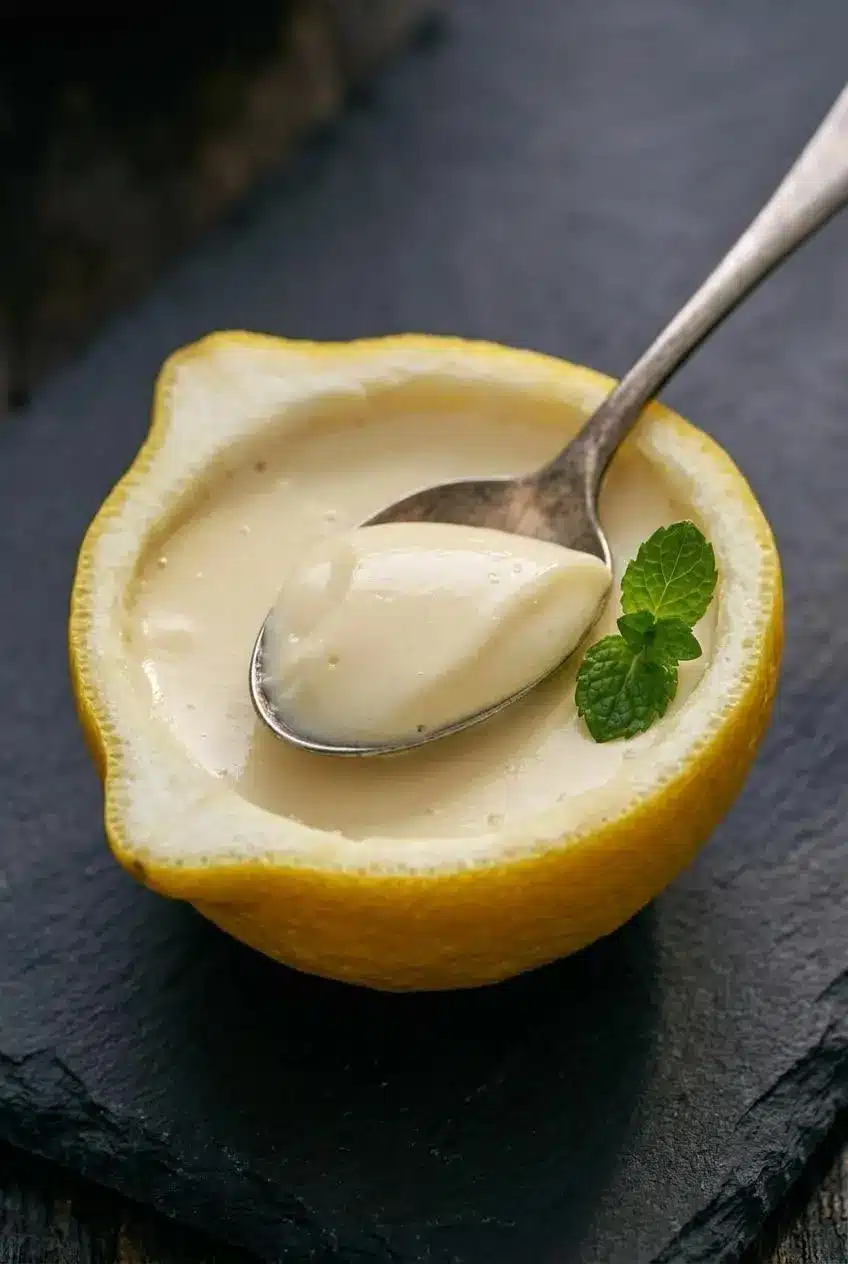
Expect a texture closer to soft custard than whipped cream. Unlike an airy chilled lemon mousse, posset has a compact, creamy body that melts on your tongue rather than feeling fluffy.
Essential Ingredients and Their Roles
Cream supplies richness and body, sugar balances the lemon’s tartness, and fresh juice helps the dessert thicken. Lemon zest adds fragrance, salt sharpens the flavor, and mint brings a fresh finishing aroma.
- 6 large lemons
- 2 cups/480 milliliters heavy cream
- ⅔ cup sugar
- Pinch of fine salt
- Fresh mint, for garnish
Heavy cream: Choose heavy cream or heavy whipping cream, preferably with at least 36 percent milk fat. Don’t substitute half-and-half, milk, or plant milk directly; those changes alter the recipe’s balance and may leave you with a loose dessert. British recipes often call for richer double cream, but this method uses US heavy cream.
Lemons: You’ll use the fruit for juice, zest, and serving cups. Freshly squeezed juice gives a bright flavor, and squeezing the lemons yourself lets you measure the amount precisely. Bottled juice isn’t the preferred choice here, but it’s too broad to assume every bottled product lacks enough acidity.
Zest only the colored outer layer of the reserved lemon. The white pith underneath can taste bitter. Infusing that zest in warm cream gives the posset fragrance without leaving chewy flecks in the finished dessert.
Sugar and salt: Sugar softens the sharp citrus edge and dissolves into the cream before reduction. Keep the stated amount rather than reducing it on the fly. The salt supports the sweet-tart balance without making the dessert taste salty.
I look for lemons that feel heavy for their size and give slightly under gentle pressure; they’re a practical choice for juicing and hollowing.
How to Make Lemon Posset Step by Step
This recipe makes 10 servings. Have a fine-mesh sieve, bowl, medium saucepan, whisk, heatproof measuring cup or pitcher, and a tray or muffin tin ready. Plan for at least 4 hours of chilling in addition to preparation and cooking.
- Cut 5 lemons lengthwise into halves, then use a spoon to lift their pulp into a fine-mesh sieve positioned over a bowl, loosening the edges with a knife if needed.
Keep the outer shells intact so they can hold the cream without leaking. - Press the pulp against the sieve, measure ⅓ cup of the collected juice, and reserve any remaining juice for another use.
The measured juice should be free of seeds and coarse pulp. - Arrange the empty shells with their openings facing upward on a tray or in a muffin tin, then zest the remaining lemon.
Each shell should sit securely without rocking when the tray moves. - Add the cream, sugar, 1 tablespoon lemon zest, and salt to a medium saucepan, then heat over medium heat while stirring until the sugar dissolves and a gentle boil begins.
Look for bubbling foam across the surface rather than an occasional bubble at the edge. - Maintain a gentle simmer for the full 3 minutes without stirring.
The cream should concentrate slightly, with a light coating on a spoon and possibly a subtle shift toward pale ivory. - Take the saucepan off the burner and strain its contents into a heatproof measuring cup or pitcher through a fine-mesh sieve.
The sieve should catch the zest while the fragrant cream flows into the pitcher. - Whisk the measured lemon juice into the strained cream until evenly incorporated.
The mixture should gain a little body, though it will still pour readily. - Fill the prepared lemon shells while the mixture remains warm and fluid, using very gentle low heat only if it begins setting before you finish pouring.
It should flow smoothly without bubbling, leaving a level surface in each cup. - Transfer the tray to the refrigerator and leave the possets uncovered for at least 4 hours, continuing to chill if they have not fully set.
The finished cream should hold a spoonful rather than flow like a sauce.
Stay beside the saucepan during the simmer. Cream foam can climb quickly, so lower the heat if it approaches the rim while keeping the gentle simmer going. Don’t replace the timed reduction with a momentary boil.
The thickening after adding lemon juice may be subtle. You might feel slightly more resistance against the whisk, but don’t expect a dramatic pudding-like transformation. Pour while the mixture is fluid, then let the refrigerator do the remaining work.
Serving Styles with Lemon Cups and Ramekins
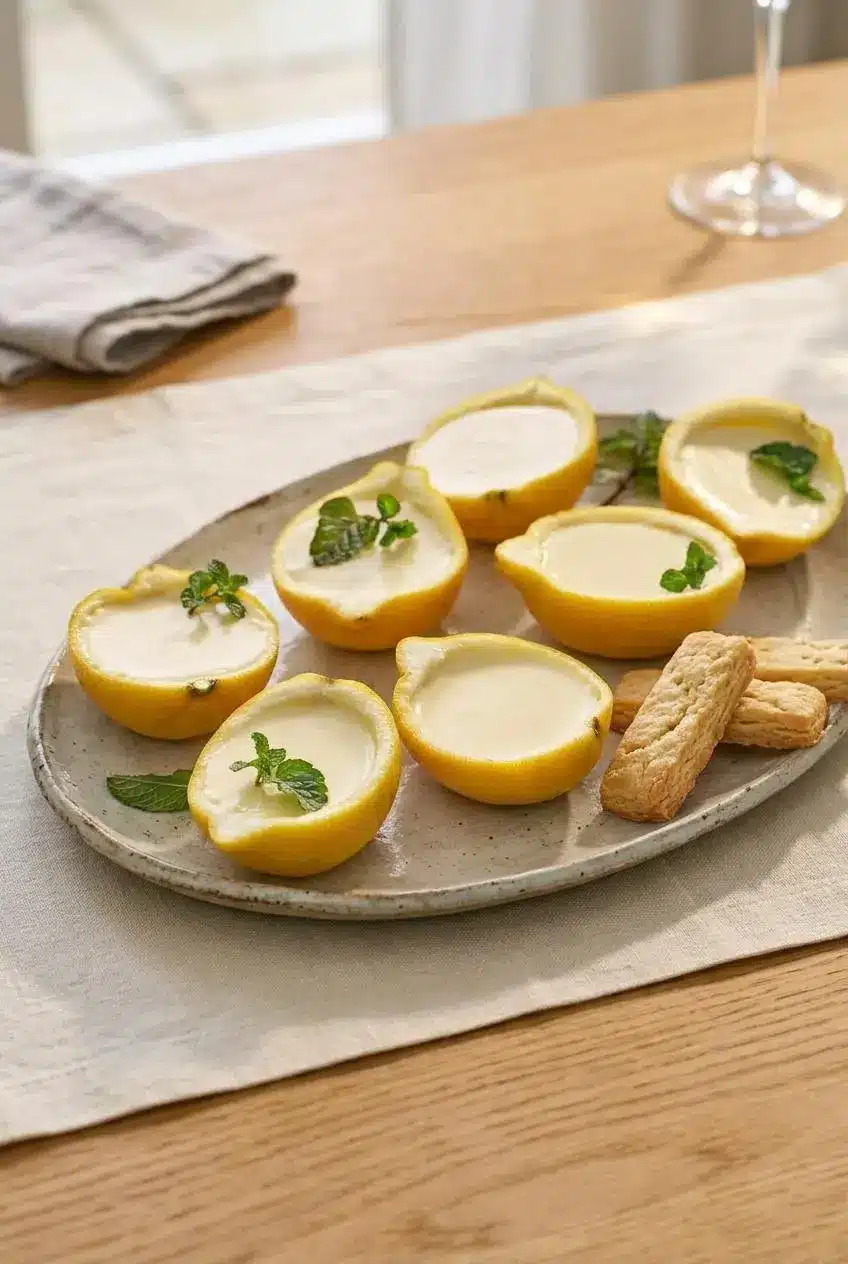
Choose lemon shells when presentation matters most, or use ramekins when you want sturdy portions that are easy to cover and carry. Both suit the rich texture, so keep the portions modest.
How to Hollow Lemon Cups Perfectly
Work slowly around the membrane rather than digging directly into the rind. A sharp paring knife can loosen the pulp at the perimeter, but keep its tip shallow and pointed away from the bottom of the shell.
- Loosen the edge: Trace around the flesh just inside the white lining without cutting through the outer peel.
- Lift the pulp: Slide a spoon beneath the loosened segments and scoop them over the sieve.
- Clean gently: Remove dangling membranes and stringy pulp, but don’t scrape away the shell’s structural white lining.
- Check stability: Nestle rounded halves in muffin-tin wells so they stay upright during filling and chilling.
A torn shell is better replaced with a ramekin than patched. Avoid trimming the bottom to make it flat, since a cut through the rind can create a slow leak that only becomes obvious after filling.
Classic Ramekin and Glass Presentations
Small ramekins, heatproof glass jars, and food-safe teacups offer a tidy alternative to fruit shells. Use vessels suitable for warm food, and avoid pouring into fragile glass while the cream is bubbling hot.
Shallow portions are easy to spoon and leave room for berries or mint. Transparent glasses also let you see whether the mixture has settled evenly, though the real texture check still comes from the cream itself.
Serve with crisp shortbread for contrast, or add a plate of lemon lavender cookies alongside the dessert. Fresh raspberries or blackberries bring a tart finish without overwhelming the lemon.
Troubleshooting Common Posset Pitfalls
A loose posset usually points to an ingredient mismatch, insufficient reduction, or incomplete chilling. Diagnose the likely cause before adding anything, since extra acid or aggressive reheating can create another texture problem.
- Still pourable: Check whether you used heavy cream, measured the juice correctly, and completed the full simmer; let the dessert finish chilling before attempting a repair.
- Rough surface: The mixture may have begun setting before pouring; fill the vessels while it is still warm and fluid.
- Zest flecks: Straining was incomplete; use a fine-mesh sieve before adding the juice for a smoother finish.
- Bitter flavor: Deep zesting or forceful scraping may have included too much pith; use only colored zest and hollow the shells gently.
How to Rescue a Posset That Will Not Set
First, distinguish a soft set from a completely liquid batch. Posset should be creamy, not sliceable. If it holds on a spoon but feels softer than expected, additional chilling may be all it needs.
If it remains liquid, review the cream and measurements. There isn’t a dependable fix for every batch, especially when lower-fat dairy replaced heavy cream.
For a batch made with the correct ingredients that needs redistributing, pour it into a saucepan, warm it very gently over low heat only until fluid, then return it to clean serving vessels and chill again. This can help with uneven texture or premature setting during pouring, but it won’t reliably correct insufficient reduction.
Avoid trying to force a set by boiling the finished lemon mixture or adding unmeasured juice. Those changes can make it grainy or excessively tart. If the texture remains smooth but loose, serve it as a chilled citrus cream with berries rather than expecting a firm custard.
Preventing Curdling and Grainy Texture
Add the juice only after the cream has finished cooking and you’ve removed it from the heat. Boiling the acidic mixture can encourage separation, so the reduction belongs before the juice goes in.
Use a gentle simmer rather than fierce heat, and strain out the zest before whisking in the juice. Straining removes solid flecks; it doesn’t repair a separated mixture.
Don’t treat the recommended cream fat level as a magical guarantee. Correct proportions, reduction, and chilling work together. A carton labeled heavy whipping cream is the appropriate starting point for this recipe.
Make-Ahead Guidelines and Safe Storage
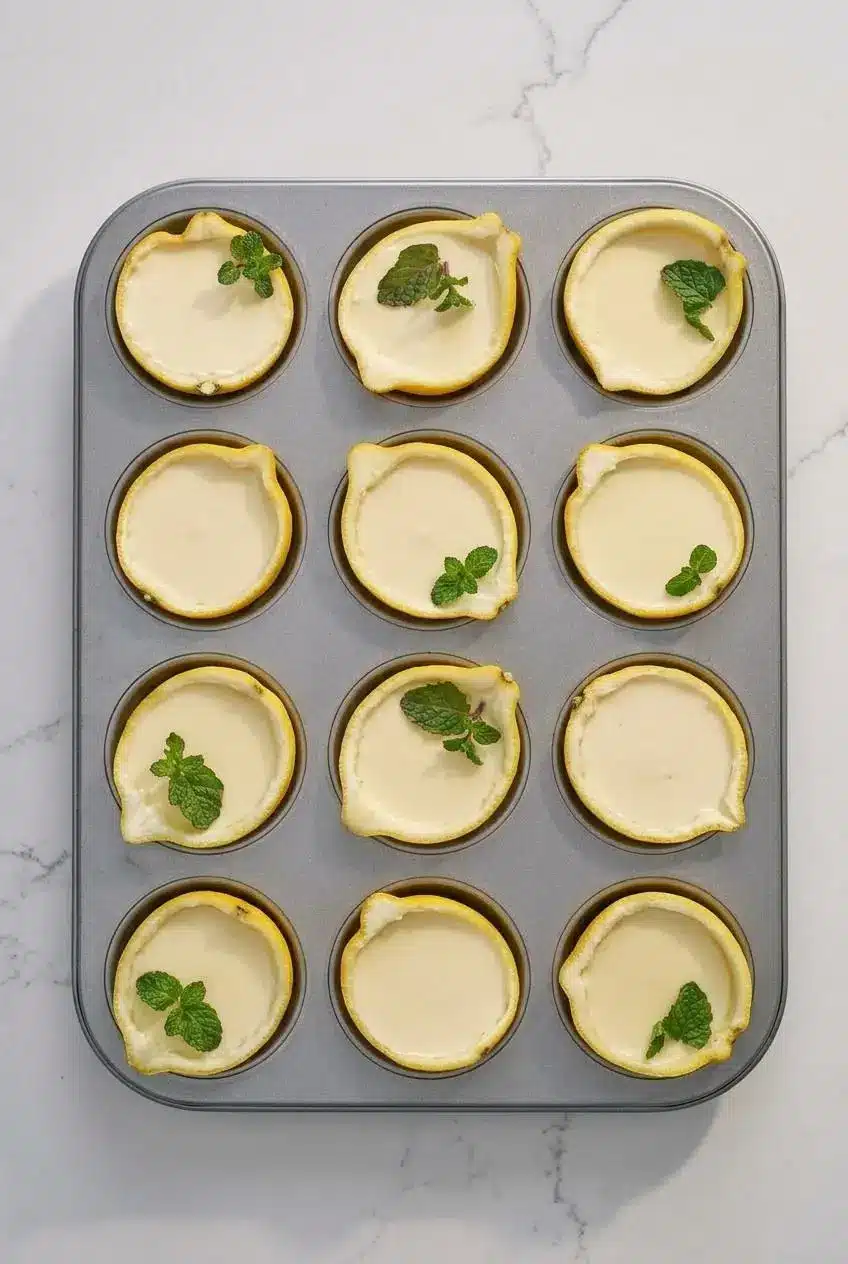
Posset needs refrigerator time before serving, making it convenient to finish the stovetop work before the rest of your meal. Allow it to complete the full chilling step instead of rushing it to the dessert course.
Chill uncovered as directed, then cover the set portions to protect them from refrigerator odors. Keep the covering above the surface so it doesn’t pull away the smooth top when removed.
Ramekins are easier to cover and handle than lemon shells. If using fruit cups, keep them supported on their tray and avoid stacking. Add mint and other garnishes just before serving for a fresher appearance and texture.
Keep the dessert refrigerated until serving and return leftovers to covered containers promptly. A precise refrigerator shelf life isn’t established here, so don’t use the setting time as a storage limit or assume that fruit shells preserve the cream.
Creative Serving and Flavor Variations
Optional accents work best when they support the lemon rather than compete with it. Keep the official cream, sugar, and juice proportions unchanged while exploring toppings or strained infusions.
For a warmer spice accent, infuse crushed green cardamom pods in the cream and remove them during straining. A dusting of crushed freeze-dried raspberry adds tartness and a delicate crisp finish just before serving.
Lemon Posset Brulee Technique
Use fully chilled posset in heatproof ramekins for this optional finish. Gently blot visible surface moisture without pressing into the cream, then scatter an even, thin layer of granulated sugar over the top.
Move a kitchen torch across the sugar until it melts and turns golden. Keep the flame moving to limit heating the custard underneath, and serve promptly while the topping is crisp. Lemon shells aren’t the preferred vessels for this technique.
Citrus Swaps and Herb Infusions
- Meyer lemon: Expect a softer, more floral citrus flavor; differences in acidity mean an identical set isn’t assured.
- Lime: It brings a sharper aroma, but a direct substitution needs its own tested proportions for predictable results.
- Blood orange: Use it as a flavor accent rather than replacing all the lemon juice, since sweetness doesn’t tell you whether the mixture will set.
- Vanilla bean: Infuse it in the warming cream for a rounded aroma, then remove the pod before filling.
- Botanical herbs: Culinary lavender, lemon verbena, or lemon thyme can perfume the cream; keep the infusion restrained and strain thoroughly.
Conclusion
A smooth posset depends on careful proportions and patient chilling. Use heavy cream, complete the gentle reduction, strain the zest, and add the lemon juice off the heat.
Choose lemon cups for a bright presentation or ramekins for convenience. Finish with fresh mint and something crisp alongside, then enjoy the contrast between cool citrus cream and that first crunchy bite.
Frequently Asked Questions
What Makes Lemon Posset Thicken Without Gelatin or Eggs?
Fresh lemon juice helps the reduced cream thicken, and refrigeration develops the final set. The important kitchen controls are the ingredient proportions, full simmer, and complete chilling.
Why Did My Lemon Posset Fail to Set and Stay Runny?
The likely causes are lower-fat dairy, incomplete reduction, incorrect juice measurement, or insufficient chilling. Check those details before adding more juice or reheating, since neither is a guaranteed repair.
How Far in Advance Can I Prepare Lemon Possets?
Plan around the full setting period, then keep the finished portions covered and refrigerated until serving. Ramekins are easier to protect than lemon shells, and garnishes should go on just before serving; an exact make-ahead storage limit isn’t established here.
How Should I Protect the Texture of Leftover Lemon Posset?
Keep leftover portions covered and chilled, with the covering clear of the custard’s surface. Store crisp accompaniments separately and add fresh garnishes when serving rather than leaving them on the cream.
Lemon Posset

Equipment
- Fine-Mesh Sieve
- Medium saucepan
- heatproof measuring cup or pitcher
- Whisk
- Muffin Tin
Ingredients
- 6 large lemons
- 2 cups heavy cream 480 milliliters
- 2/3 cup sugar
- Pinch fine salt
- Fresh mint for garnish
Instructions
- Cut 5 lemons lengthwise into halves, then use a spoon to lift their pulp into a fine-mesh sieve positioned over a bowl, loosening the edges with a knife if needed. Keep the outer shells intact so they can hold the cream without leaking.
- Press the pulp against the sieve, measure ⅓ cup of the collected juice, and reserve any remaining juice for another use. The measured juice should be free of seeds and coarse pulp.
- Arrange the empty shells with their openings facing upward on a tray or in a muffin tin, then zest the remaining lemon. Each shell should sit securely without rocking when the tray moves.
- Add the cream, sugar, 1 tablespoon lemon zest, and salt to a medium saucepan, then heat over medium heat while stirring until the sugar dissolves and a gentle boil begins. Look for bubbling foam across the surface rather than an occasional bubble at the edge.
- Maintain a gentle simmer for the full 3 minutes without stirring. The cream should concentrate slightly, with a light coating on a spoon and possibly a subtle shift toward pale ivory.
- Take the saucepan off the burner and strain its contents into a heatproof measuring cup or pitcher through a fine-mesh sieve. The sieve should catch the zest while the fragrant cream flows into the pitcher.
- Whisk the measured lemon juice into the strained cream until evenly incorporated. The mixture should gain a little body, though it will still pour readily.
- Fill the prepared lemon shells while the mixture remains warm and fluid, using very gentle low heat only if it begins setting before you finish pouring. It should flow smoothly without bubbling, leaving a level surface in each cup.
- Transfer the tray to the refrigerator and leave the possets uncovered for at least 4 hours, continuing to chill if they have not fully set. The finished cream should hold a spoonful rather than flow like a sauce.