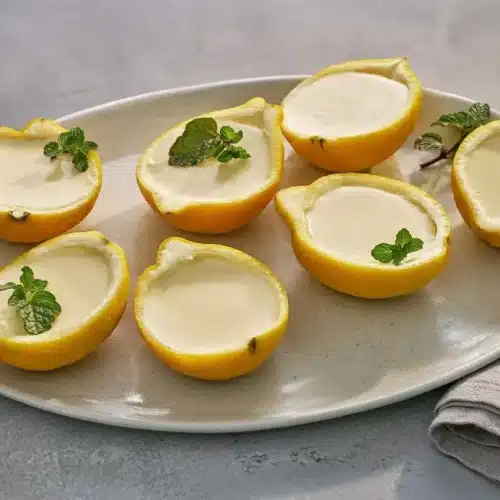
Lemon Posset

This chilled British lemon posset combines simmered heavy cream and sugar with fresh lemon juice, setting into a rich, velvety citrus cream without any eggs or gelatin.
Equipment
- Fine-Mesh Sieve
- Medium saucepan
- heatproof measuring cup or pitcher
- Whisk
- Muffin Tin
Ingredients
- 6 large lemons
- 2 cups heavy cream 480 milliliters
- 2/3 cup sugar
- Pinch fine salt
- Fresh mint for garnish
Instructions
- Cut 5 lemons lengthwise into halves, then use a spoon to lift their pulp into a fine-mesh sieve positioned over a bowl, loosening the edges with a knife if needed. Keep the outer shells intact so they can hold the cream without leaking.
- Press the pulp against the sieve, measure ⅓ cup of the collected juice, and reserve any remaining juice for another use. The measured juice should be free of seeds and coarse pulp.
- Arrange the empty shells with their openings facing upward on a tray or in a muffin tin, then zest the remaining lemon. Each shell should sit securely without rocking when the tray moves.
- Add the cream, sugar, 1 tablespoon lemon zest, and salt to a medium saucepan, then heat over medium heat while stirring until the sugar dissolves and a gentle boil begins. Look for bubbling foam across the surface rather than an occasional bubble at the edge.
- Maintain a gentle simmer for the full 3 minutes without stirring. The cream should concentrate slightly, with a light coating on a spoon and possibly a subtle shift toward pale ivory.
- Take the saucepan off the burner and strain its contents into a heatproof measuring cup or pitcher through a fine-mesh sieve. The sieve should catch the zest while the fragrant cream flows into the pitcher.
- Whisk the measured lemon juice into the strained cream until evenly incorporated. The mixture should gain a little body, though it will still pour readily.
- Fill the prepared lemon shells while the mixture remains warm and fluid, using very gentle low heat only if it begins setting before you finish pouring. It should flow smoothly without bubbling, leaving a level surface in each cup.
- Transfer the tray to the refrigerator and leave the possets uncovered for at least 4 hours, continuing to chill if they have not fully set. The finished cream should hold a spoonful rather than flow like a sauce.
Notes
Simmer cue: Maintain a gentle simmer for the full 3 minutes without stirring so the cream reduces properly to ensure a firm, spoonable set.
Shell handling: Nestle rounded lemon halves into muffin tin wells to keep them upright and stable during filling and chilling.
Pouring tip: Fill the hollowed shells while the mixture is still warm and fluid so the surface remains smooth and level.
Nutrition information is an estimate based on common ingredients and serving sizes. Values may vary depending on brands, portions, and substitutions.
Nutrition
Calories: 236kcalCarbohydrates: 21gProtein: 2gFat: 18gSaturated Fat: 11gCholesterol: 55mgSodium: 30mgPotassium: 85mgFiber: 2gSugar: 16gVitamin A: 450IUVitamin C: 15mgCalcium: 45mg
Tried this recipe?Let us know how it was!