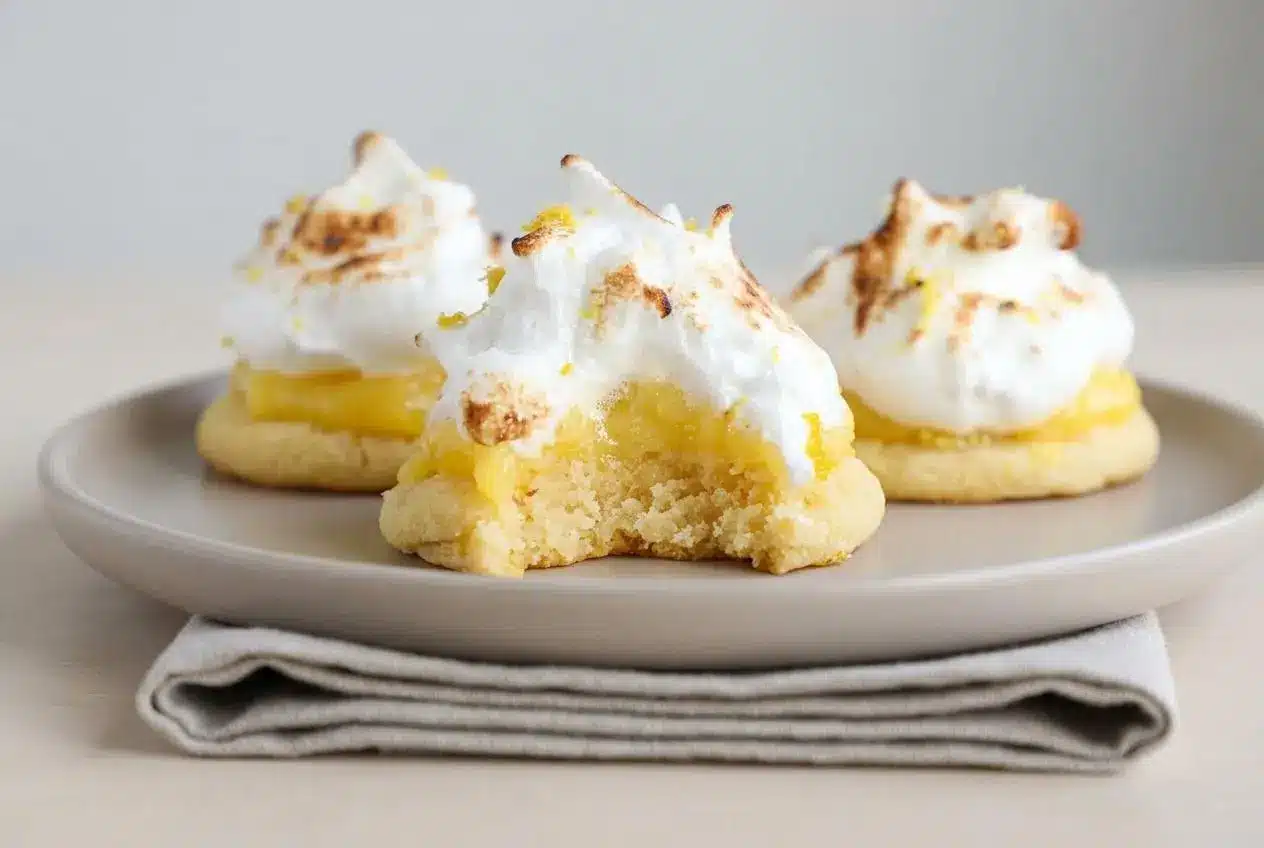
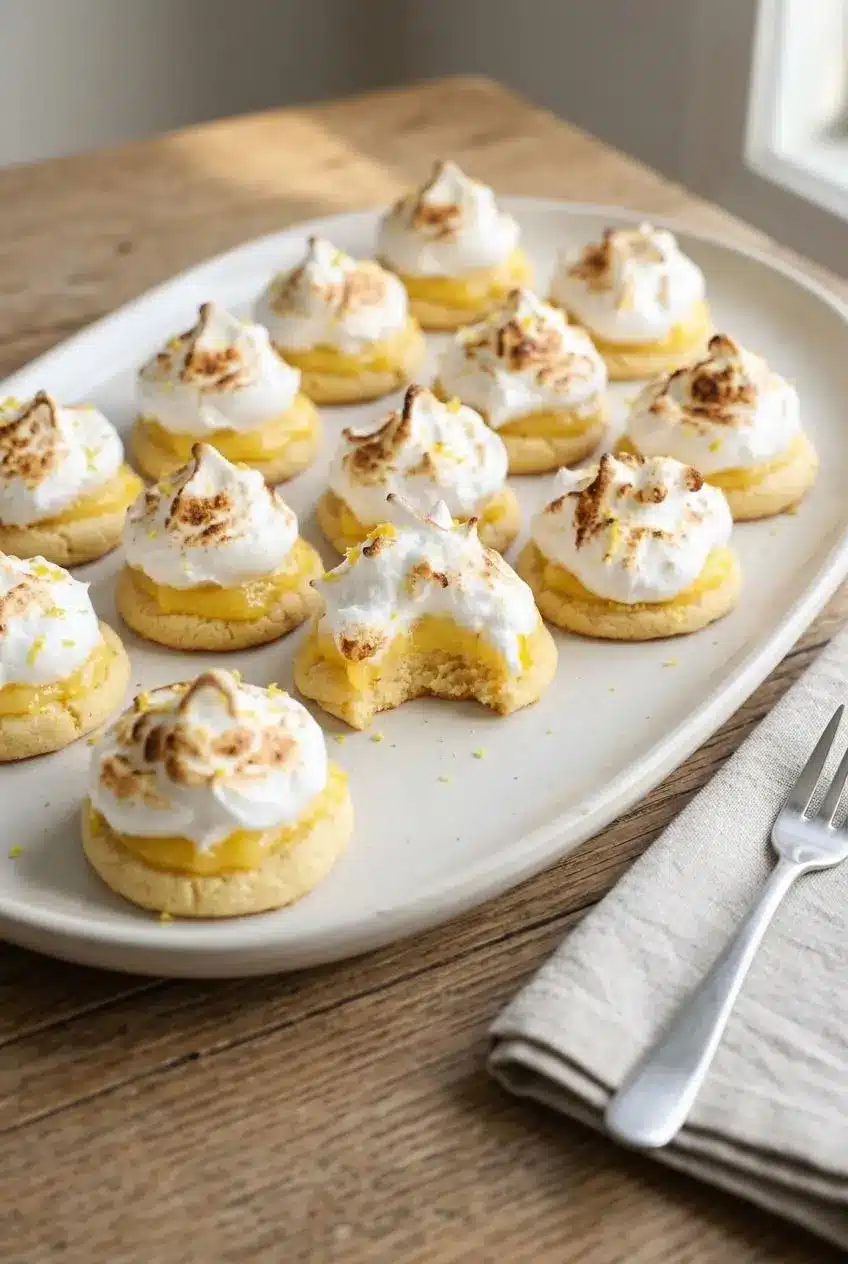
These lemon meringue pie cookies pair a soft lemon cookie with homemade citrus curd and toasted Swiss meringue. Each bite brings buttery richness, bright lemon flavor, and a marshmallow-soft topping, with three distinct layers that stay neatly stacked when the cookies and filling cool completely.
Fresh lemon zest gives the filling a bright, fragrant lift, while lemon extract flavors the dough without adding extra liquid. These lemon meringue pie cookies deliver the familiar contrasts of a slice of pie in a small dessert you can pick up.
The recipe makes about 40 cookies, so it suits a spring dessert platter or a gathering with plenty of citrus fans. You’ll bake the cookies, cook the filling, then whip and toast the topping. Those golden peaks are worth the finish.
Separate the filling eggs into clean bowls before starting, keeping every trace of yolk out of the whites reserved for meringue.
Essential Ingredients and Their Baking Roles
Butter and egg yolks give the cookies richness, flour builds structure, and lemon extract adds concentrated flavor. In the filling, citrus supplies tang and aroma while cornstarch creates body; egg whites, sugar, and cream of tartar form the glossy topping.
Lemon Cookies
- 1 cup butter, softened
- 1½ cups granulated sugar
- 1 large egg
- 1 large egg yolk
- 2 tsps lemon extract
- 1½ tsp baking powder
- 1 tsp baking soda
- 1 tsp salt
- 2½ cups all-purpose flour (360 grams)
Lemon Filling
- 5 egg yolks
- 6 tbsp cornstarch
- 1 cup granulated sugar
- ½ tsp salt
- 1 cup water
- zest of 3 lemons
- ½ cup lemon juice (about 3 lemons)
Meringue
- 5 egg whites
- ½ tsp cream of tartar
- ½ cup granulated sugar
- 1 pinch salt
The filling should be thick enough to sit on the cookies rather than flow toward their edges. A thick store-bought lemon curd also works as an optional shortcut. Choose one that mounds on a spoon, and follow its label for handling and refrigeration.
I look for butter that yields to gentle finger pressure but still holds its shape; greasy, partly melted butter makes cookie spread harder to control.
The Cookie Base: Butter, Sugars, and Lemon Extract
Beat softened butter with the granulated sugar until the mixture looks lighter and fluffy. This distributes the sugar and incorporates air, helping the dough bake evenly. The extra yolk contributes fat and richness, supporting a tender, chewy center rather than a dry bite.
Lemon extract delivers citrus flavor without the additional water that lemon juice would bring. Juice isn’t a direct substitute here: it changes both the dough’s moisture and acidity. Keep the fresh juice in the filling, where its tartness belongs.
Flour supplies the cookie’s framework, while baking powder and baking soda help it rise and spread. Salt balances the sweetness. Once the flour disappears into the dough, stop mixing rather than continuing to beat it.
The Tart Curd: Egg Yolks, Starch, and Citrus
Egg yolks give the filling richness and a smooth texture that rounds out the sharp lemon juice. Zest adds fragrant citrus oils, so grate the yellow skin without digging into the bitter white pith.
Cornstarch thickens the water and juice into a spoonable filling. Unlike a loose sauce, this filling needs enough body to support meringue on a flat cookie. Sugar balances the acidity, and salt keeps the sweetness from tasting flat.
If you enjoy citrus fillings in a different format, a fresh lemon tart offers another way to enjoy that balance of rich custard and bright lemon.
The Topping: Egg Whites and Stabilizers
Whipping egg whites traps air in a network of proteins. Sugar sweetens the foam and gives it a glossy finish, while cream of tartar adds acidity that helps the foam resist collapsing. The pinch of salt balances flavor rather than acting as a stabilizer.
Use a thoroughly clean bowl and beaters. Butter residue or a smear of egg yolk can interfere with whipping. For this topping, aim for shiny soft peaks with tips that gently curl, not dry, rigid clumps.
How to Make Lemon Meringue Pie Cookies: Step-by-Step Guide
Finish the cookies and filling before starting the meringue so both have time to cool. Have a baking sheet, wire rack, medium saucepan, heatproof bowl or double boiler, mixer, and kitchen torch ready.
Yield: about 40 cookies. Listed prep time: 20 minutes. Listed cook time: 60 minutes. Listed total: 80 minutes. Individual cookie batches bake for 8 minutes; allow the components to cool completely before topping.
Lemon Cookies
- Set the oven to 350°F before mixing the dough.
A fully heated oven helps the small cookies bake evenly. - Beat the butter and granulated sugar together in a large bowl until light and fluffy.
The mixture should look paler, with no large pieces of butter remaining. - Mix the whole egg, extra yolk, and lemon extract into the butter mixture.
Scrape the bowl as needed so the batter looks uniform. - Incorporate the baking powder, baking soda, salt, and flour, stopping when the dough comes together.
No dry flour pockets should remain. - Measure a heaping tablespoon of dough for each cookie and roll it between your palms.
Keep the balls similar in size so they finish baking together. - Arrange the dough balls on a baking sheet with room to spread and bake for 8 minutes.
Look for set edges with a faint golden rim rather than deeply browned tops. - Leave the cookies on the sheet for 1–2 minutes, then transfer them to a wire rack.
Let the centers firm as they cool, and wait until the cookies feel completely cool before topping.
Lemon Filling
- Loosen the egg yolks with a whisk in a medium bowl.
The yolks should form an even mixture without intact streaks. - Combine the zest, juice, water, cornstarch, sugar, and salt in a medium saucepan, whisking smooth before heating over medium heat to a simmer.
Small bubbles and a bright citrus aroma signal that the mixture is heating through. - Gradually whisk about half the hot mixture into the yolks, return everything to the saucepan, and stir over the heat for 1–3 minutes before setting the thickened filling aside to cool.
The filling should coat a spoon and fall in a thick, glossy ribbon rather than a watery stream.
Meringue
- Bring a few inches of water to a gentle simmer in a pot that supports a heatproof bowl above the water.
The bowl’s underside must remain clear of the water. - Whisk the whites, sugar, cream of tartar, and pinch of salt in the upper bowl over the simmering water, then lift the bowl away once the mixture turns frothy and the sugar dissolves.
The mixture should look opaque, with no gritty sugar remaining. - Whip with a handheld mixer or a stand mixer fitted with a whisk, beginning on low and gradually increasing the speed until soft peaks form.
The glossy white topping should hold a mound with a gently bending tip.
Assembling the Cookies
- Spoon cooled lemon filling onto each cooled cookie, add meringue above it, and lift the topping with the back of a spoon.
Keep the filling centered and create soft ridges for browning. - Toast the meringue with a kitchen torch, sweeping the flame in steady circles.
Stop when the raised ridges turn golden and release a toasted marshmallow aroma.
Mastering the Meringue: Whipping, Peaking, and Torching
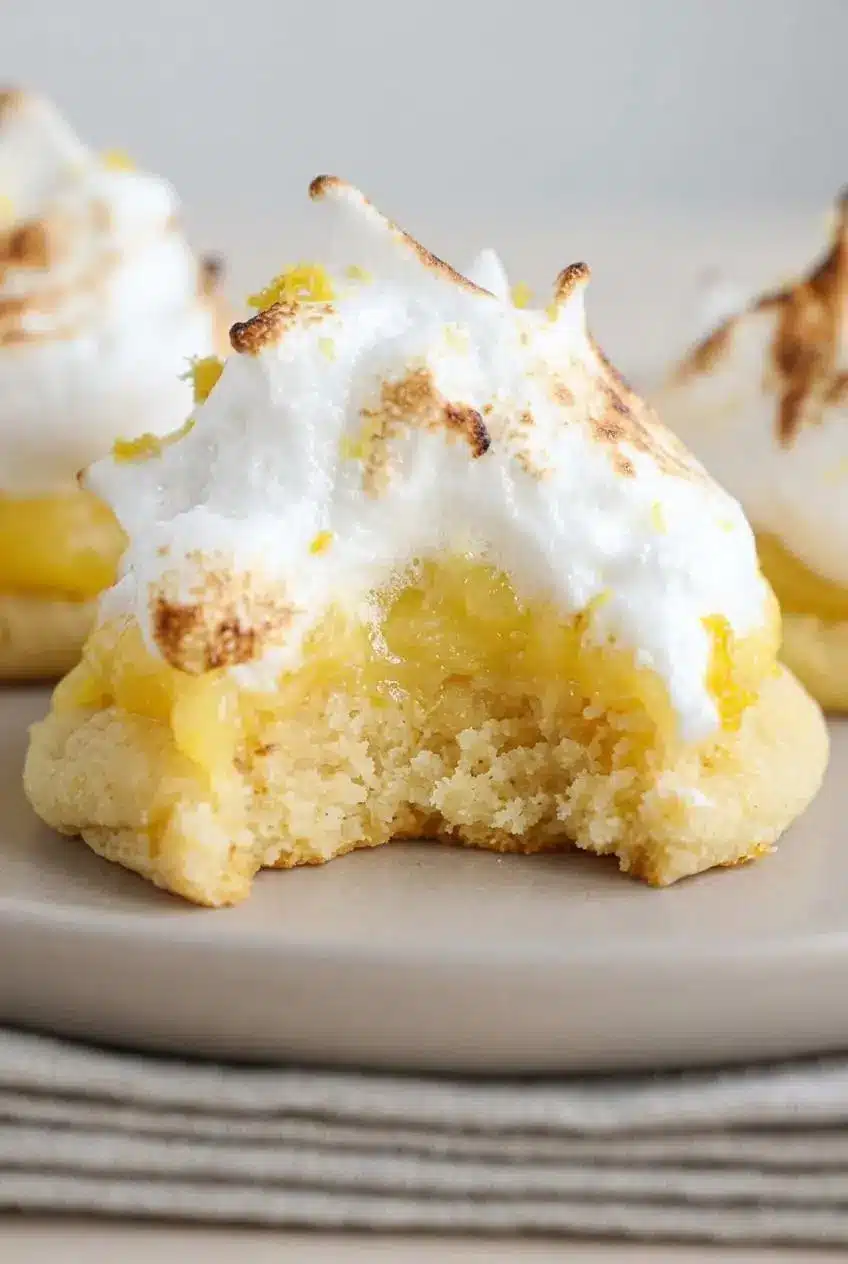
A glossy topping starts with dissolved sugar, clean equipment, and controlled heat. These cookies echo the layered appeal of traditional lemon meringue pie, but their small size calls for modest dollops rather than towering heaps.
Swiss Meringue Technique: Heat and Dissolve
The water bath gently warms the whites and sugar together before whipping. Keep the water at a simmer, not a vigorous boil, and use a bowl that sits securely on the pot. Whisk across the bottom and around the sides so the mixture warms evenly.
Check sugar dissolution by cooling a small dab enough to handle, then rubbing it between clean fingertips. It should feel smooth. Grit means the sugar needs more whisking over the water bath.
Foam and dissolved sugar are texture cues, not proof that the eggs have reached a verified food-safety temperature. As a precaution, choose pasteurized egg whites suitable for whipping when using this method.
During whipping, loose bubbles become finer and the mixture turns shiny. Lift the whisk to check: a soft peak stands briefly, then bends at its tip. Stop there. Continuing until the topping looks dull or clumpy makes it harder to spread into graceful swirls.
Torching vs Oven Broiler Methods
A kitchen torch gives the most control over individual cookies. Place them on a bare metal baking sheet or another suitable heat-resistant surface, keep flammable materials away, and move the flame continuously. Don’t direct it at parchment or paper liners.
Brown the ridges first and leave some of the valleys white. Holding the flame in one place can blacken a peak before the surrounding topping develops color.
Without a torch, arrange topped cookies on a bare metal baking sheet and use a preheated high broiler on an upper rack. Allow roughly 60–90 seconds, but watch continuously and remove them sooner if the peaks brown quickly. Broilers vary, and this is a browning guide rather than a doneness test.
Use a broiler-safe pan, follow the oven’s rack-clearance instructions, and avoid parchment. The broiler heats the whole cookie, so it may soften the filling more than a torch does.
Troubleshooting Common Lemon Meringue Cookie Mistakes
Use the texture of each component to identify the problem before assembling the full batch. A loose filling or unstable topping is easier to address while it’s still in the bowl.
Preventing Runny Curd and Cookie Spread
- Filling runs off the spoon: It may not have cooked enough after tempering, or it may still be warm. Stir through the specified thickening stage, then let it cool before judging its final body.
- Filling has egg flecks: Hot liquid added too quickly can cook patches of yolk. Pour gradually while whisking; for an optional smoother finish, pass the cooked filling through a fine-mesh sieve.
- Cookies spread too far: Very soft butter, warm dough, or a hot baking sheet can contribute. Weigh the flour using the listed 360 grams, use a cool sheet, and chill overly soft dough until it holds its shape.
- Centers turn dry: Deep browning usually means the cookies baked beyond the intended soft finish. Check at the listed bake time and let the brief rest on the sheet help them firm.
Stopping Meringue from Weeping or Sliding
- Liquid beads appear: Undissolved sugar can contribute to weeping. Check for grit during the warming stage rather than trying to beat it away afterward.
- The topping slips: Warm filling or an oversized dollop can make the layers unstable. Cool both lower layers completely and keep the filling centered.
- Whites won’t build volume: Grease or yolk contamination may interfere with the foam. Start with clean equipment and carefully separated whites.
- Peaks soften after assembly: Humidity and condensation can affect meringue. Keep the cookies away from steam and handle them gently when covering.
Make-Ahead Strategy and Proper Storage
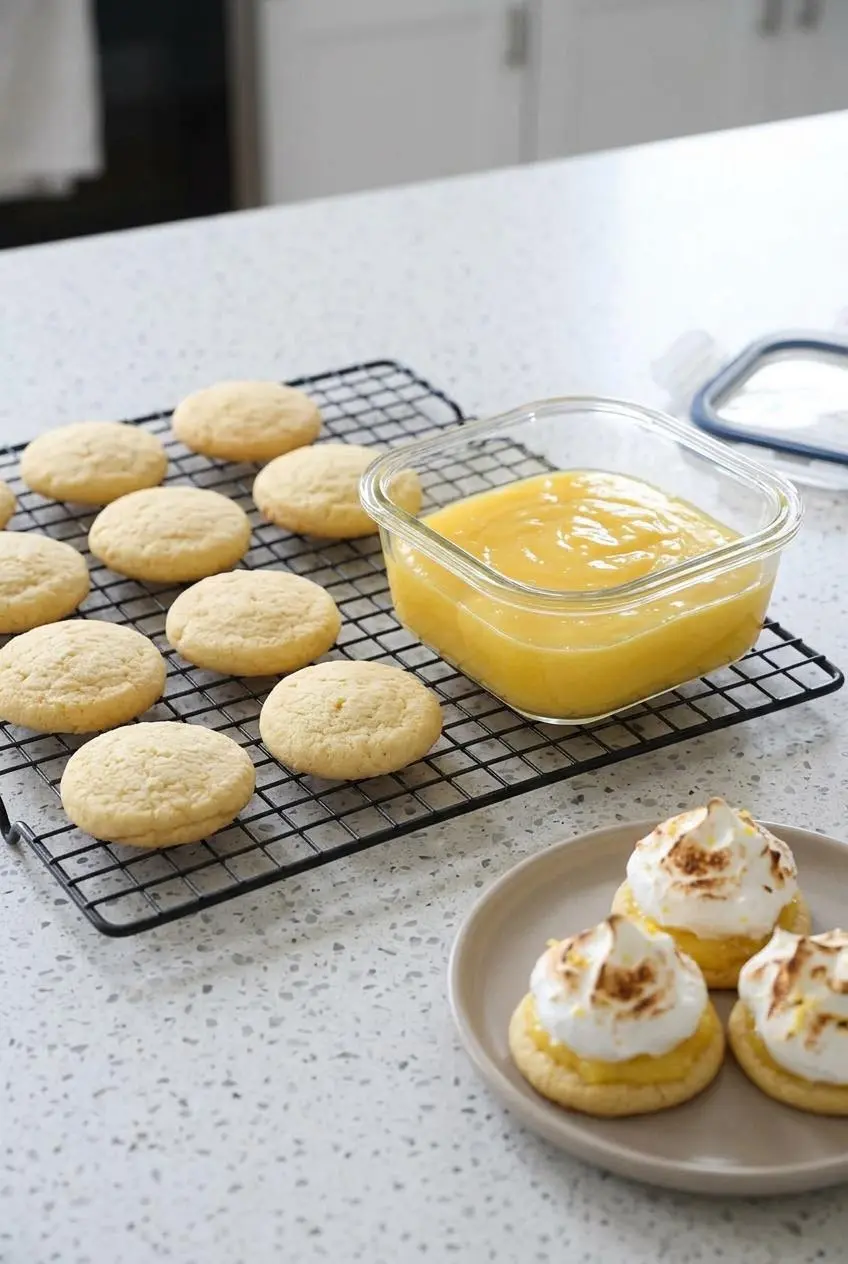
Keep the components separate until you’re ready to finish the cookies. This protects the bases from filling moisture and gives you more control over the topping’s texture.
- After baking: Cool the cookie bases completely on a rack before placing them in an airtight container.
- After cooking the filling: Cool it, transfer it to a covered container, and keep it refrigerated rather than leaving it on the counter while other preparations continue.
- When ready to serve: Whip the meringue, assemble the cooled layers, and toast the peaks for the freshest presentation.
- For assembled leftovers: Keep them covered in the refrigerator in a single layer, using a container tall enough to avoid crushing the topping.
Refrigeration can soften the browned surface and introduce moisture, so expect a softer finish after chilling. Keep the layers separate when presentation matters, and don’t stack assembled cookies.
For a dessert platter, arrange the finished cookies in a single layer. Unsweetened iced tea or sparkling water complements the sweet topping and bright lemon filling without adding more sweetness.
Delicious Recipe Variations
These optional changes offer different flavors or a faster finish. Keep them separate from the ingredient list and method above so the classic three-layer version remains clear.
The Marshmallow Fluff Shortcut for Busy Bakers
Skip whipping egg whites by spooning prepared marshmallow fluff over the cooled filling. Use the back of a spoon to swirl it, keeping the curd underneath rather than mixing the layers together. Store-bought curd makes this an even quicker assembly option.
The topping will be sweeter and stickier than Swiss meringue, so use a restrained dollop. If you toast it, keep the torch moving and watch closely for rapid browning. Add fluff after baking the cookies, not before.
Chewy Brown Sugar Citrus Cookies
- Brown sugar variation: Replace part of the cookie dough’s granulated sugar with light brown sugar for a caramel note and a chewier character; expect some change in spread and color.
- Zest-infused sugar: Rub fresh lemon zest into the cookie sugar before creaming it with butter for a more fragrant citrus finish.
- Floral citrus variation: Add a restrained touch of dried culinary lavender to the zest-infused sugar, keeping it subtle so it doesn’t overwhelm the filling.
For a dedicated floral version with its own proportions, try lemon lavender cookies rather than guessing at a generous lavender addition.
Conclusion
A buttery cookie, tangy lemon filling, and toasted, marshmallow-soft topping give these little treats their pie-like appeal. The contrast works best when each layer keeps its own texture.
Give the cookies and filling time to cool, dissolve the meringue sugar thoroughly, and toast with a moving flame. Finish the peaks close to serving for a platter that looks as inviting as it tastes.
Frequently Asked Questions
Can I Make Lemon Meringue Pie Cookies Ahead of Time?
Prepare the components separately rather than storing fully assembled cookies for the freshest presentation. Keep cooled bases airtight and the cooked filling covered in the refrigerator. Whip, dollop, and toast the meringue when you’re ready to serve.
Why Is My Meringue Weeping or Sliding Off the Cookies?
Undissolved sugar can contribute to weeping, so check that the warmed mixture feels smooth. Warm cookies or filling can soften the topping and make it slide. Cream of tartar helps stabilize the foam, but it won’t compensate for warm layers or greasy equipment.
Can I Brown the Meringue Without a Kitchen Torch?
Yes, use a preheated high broiler with the topped cookies on a bare, broiler-safe metal baking sheet. Watch continuously and remove the pan as soon as the peaks turn golden. Follow the rack-clearance instructions for your oven and keep parchment out from under the broiler.
Can I Use Store-Bought Lemon Curd Instead of Homemade?
Yes, choose a thick curd that holds a mound on a spoon. Use it cool so the filling supports the topping rather than softening it. Follow the jar’s handling and refrigeration instructions.
Lemon Meringue Pie Cookies

Equipment
- Baking Sheet
- Wire rack
- Medium saucepan
- Double Boiler
- Handheld mixer or stand mixer with whisk attachment
- Kitchen torch
Ingredients
Lemon Cookies
- 1 cup butter, softened
- 1 1/2 cups granulated sugar
- 1 large egg
- 1 large egg yolk
- 2 tsps lemon extract
- 1 1/2 tsp baking powder
- 1 tsp baking soda
- 1 tsp salt
- 2 1/2 cups all-purpose flour (360 grams)
Lemon Filling
- 5 egg yolks
- 6 tbsp cornstarch
- 1 cup granulated sugar
- 1/2 tsp salt
- 1 cup water
- 3 lemons zest of
- 1/2 cup lemon juice (about 3 lemons)
Meringue
- 5 egg whites
- 1/2 tsp cream of tartar
- 1/2 cup granulated sugar
- 1 pinch salt
Instructions
Lemon Cookies
- Set the oven to 350°F before mixing the dough. A fully heated oven helps the small cookies bake evenly.
- Beat the butter and granulated sugar together in a large bowl until light and fluffy. The mixture should look paler, with no large pieces of butter remaining.
- Mix the whole egg, extra yolk, and lemon extract into the butter mixture. Scrape the bowl as needed so the batter looks uniform.
- Incorporate the baking powder, baking soda, salt, and flour, stopping when the dough comes together. No dry flour pockets should remain.
- Measure a heaping tablespoon of dough for each cookie and roll it between your palms. Keep the balls similar in size so they finish baking together.
- Arrange the dough balls on a baking sheet with room to spread and bake for 8 minutes. Look for set edges with a faint golden rim rather than deeply browned tops.
- Leave the cookies on the sheet for 1–2 minutes, then transfer them to a wire rack. Let the centers firm as they cool, and wait until the cookies feel completely cool before topping.
Lemon Filling
- Loosen the egg yolks with a whisk in a medium bowl. The yolks should form an even mixture without intact streaks.
- Combine the zest, juice, water, cornstarch, sugar, and salt in a medium saucepan, whisking smooth before heating over medium heat to a simmer. Small bubbles and a bright citrus aroma signal that the mixture is heating through.
- Gradually whisk about half the hot mixture into the yolks, return everything to the saucepan, and stir over the heat for 1–3 minutes before setting the thickened filling aside to cool. The filling should coat a spoon and fall in a thick, glossy ribbon rather than a watery stream.
Meringue
- Bring a few inches of water to a gentle simmer in a pot that supports a heatproof bowl above the water. The bowl’s underside must remain clear of the water.
- Whisk the whites, sugar, cream of tartar, and pinch of salt in the upper bowl over the simmering water, then lift the bowl away once the mixture turns frothy and the sugar dissolves. The mixture should look opaque, with no gritty sugar remaining.
- Whip with a handheld mixer or a stand mixer fitted with a whisk, beginning on low and gradually increasing the speed until soft peaks form. The glossy white topping should hold a mound with a gently bending tip.
Assembling the Cookies
- Spoon cooled lemon filling onto each cooled cookie, add meringue above it, and lift the topping with the back of a spoon. Keep the filling centered and create soft ridges for browning.
- Toast the meringue with a kitchen torch, sweeping the flame in steady circles. Stop when the raised ridges turn golden and release a toasted marshmallow aroma.