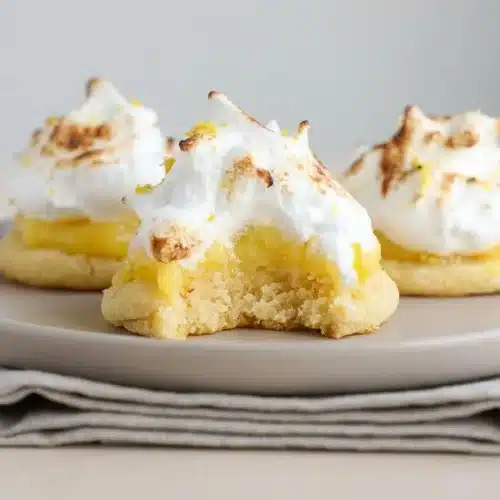
Lemon Meringue Pie Cookies

These lemon meringue pie cookies layer soft, buttery lemon cookies with tangy homemade citrus curd and toasted, fluffy meringue for a balanced bite with classic pie flavor in handheld form.
Equipment
- Baking Sheet
- Wire rack
- Medium saucepan
- Double Boiler
- Handheld mixer or stand mixer with whisk attachment
- Kitchen torch
Ingredients
Lemon Cookies
- 1 cup butter, softened
- 1 1/2 cups granulated sugar
- 1 large egg
- 1 large egg yolk
- 2 tsps lemon extract
- 1 1/2 tsp baking powder
- 1 tsp baking soda
- 1 tsp salt
- 2 1/2 cups all-purpose flour (360 grams)
Lemon Filling
- 5 egg yolks
- 6 tbsp cornstarch
- 1 cup granulated sugar
- 1/2 tsp salt
- 1 cup water
- 3 lemons zest of
- 1/2 cup lemon juice (about 3 lemons)
Meringue
- 5 egg whites
- 1/2 tsp cream of tartar
- 1/2 cup granulated sugar
- 1 pinch salt
Instructions
Lemon Cookies
- Set the oven to 350°F before mixing the dough. A fully heated oven helps the small cookies bake evenly.
- Beat the butter and granulated sugar together in a large bowl until light and fluffy. The mixture should look paler, with no large pieces of butter remaining.
- Mix the whole egg, extra yolk, and lemon extract into the butter mixture. Scrape the bowl as needed so the batter looks uniform.
- Incorporate the baking powder, baking soda, salt, and flour, stopping when the dough comes together. No dry flour pockets should remain.
- Measure a heaping tablespoon of dough for each cookie and roll it between your palms. Keep the balls similar in size so they finish baking together.
- Arrange the dough balls on a baking sheet with room to spread and bake for 8 minutes. Look for set edges with a faint golden rim rather than deeply browned tops.
- Leave the cookies on the sheet for 1–2 minutes, then transfer them to a wire rack. Let the centers firm as they cool, and wait until the cookies feel completely cool before topping.
Lemon Filling
- Loosen the egg yolks with a whisk in a medium bowl. The yolks should form an even mixture without intact streaks.
- Combine the zest, juice, water, cornstarch, sugar, and salt in a medium saucepan, whisking smooth before heating over medium heat to a simmer. Small bubbles and a bright citrus aroma signal that the mixture is heating through.
- Gradually whisk about half the hot mixture into the yolks, return everything to the saucepan, and stir over the heat for 1–3 minutes before setting the thickened filling aside to cool. The filling should coat a spoon and fall in a thick, glossy ribbon rather than a watery stream.
Meringue
- Bring a few inches of water to a gentle simmer in a pot that supports a heatproof bowl above the water. The bowl’s underside must remain clear of the water.
- Whisk the whites, sugar, cream of tartar, and pinch of salt in the upper bowl over the simmering water, then lift the bowl away once the mixture turns frothy and the sugar dissolves. The mixture should look opaque, with no gritty sugar remaining.
- Whip with a handheld mixer or a stand mixer fitted with a whisk, beginning on low and gradually increasing the speed until soft peaks form. The glossy white topping should hold a mound with a gently bending tip.
Assembling the Cookies
- Spoon cooled lemon filling onto each cooled cookie, add meringue above it, and lift the topping with the back of a spoon. Keep the filling centered and create soft ridges for browning.
- Toast the meringue with a kitchen torch, sweeping the flame in steady circles. Stop when the raised ridges turn golden and release a toasted marshmallow aroma.
Notes
Texture tip: Ensure both the baked cookie bases and the cooked filling cool completely before assembling to prevent the meringue topping from slipping.
Meringue check: Rub a tiny drop of the warmed egg white and sugar mixture between clean fingers to confirm the sugar granules are completely dissolved before whipping, which prevents weeping.
Storage: Store assembled leftover cookies covered in a single layer in the refrigerator, choosing a tall container so the toasted peaks stay intact without touching the lid.
Alternative browning: If you do not have a kitchen torch, brown the topped cookies on a bare metal sheet under a preheated high broiler for 60 to 90 seconds, watching constantly.
Nutrition information is an estimate based on common ingredients and serving sizes. Values may vary depending on brands, portions, and substitutions.
Nutrition
Calories: 145kcalCarbohydrates: 22gProtein: 2gFat: 6gSaturated Fat: 3gCholesterol: 45mgSodium: 178mgPotassium: 45mgFiber: 0.3gSugar: 15gVitamin A: 120IUVitamin C: 3mgCalcium: 15mgIron: 0.6mg
Tried this recipe?Let us know how it was!