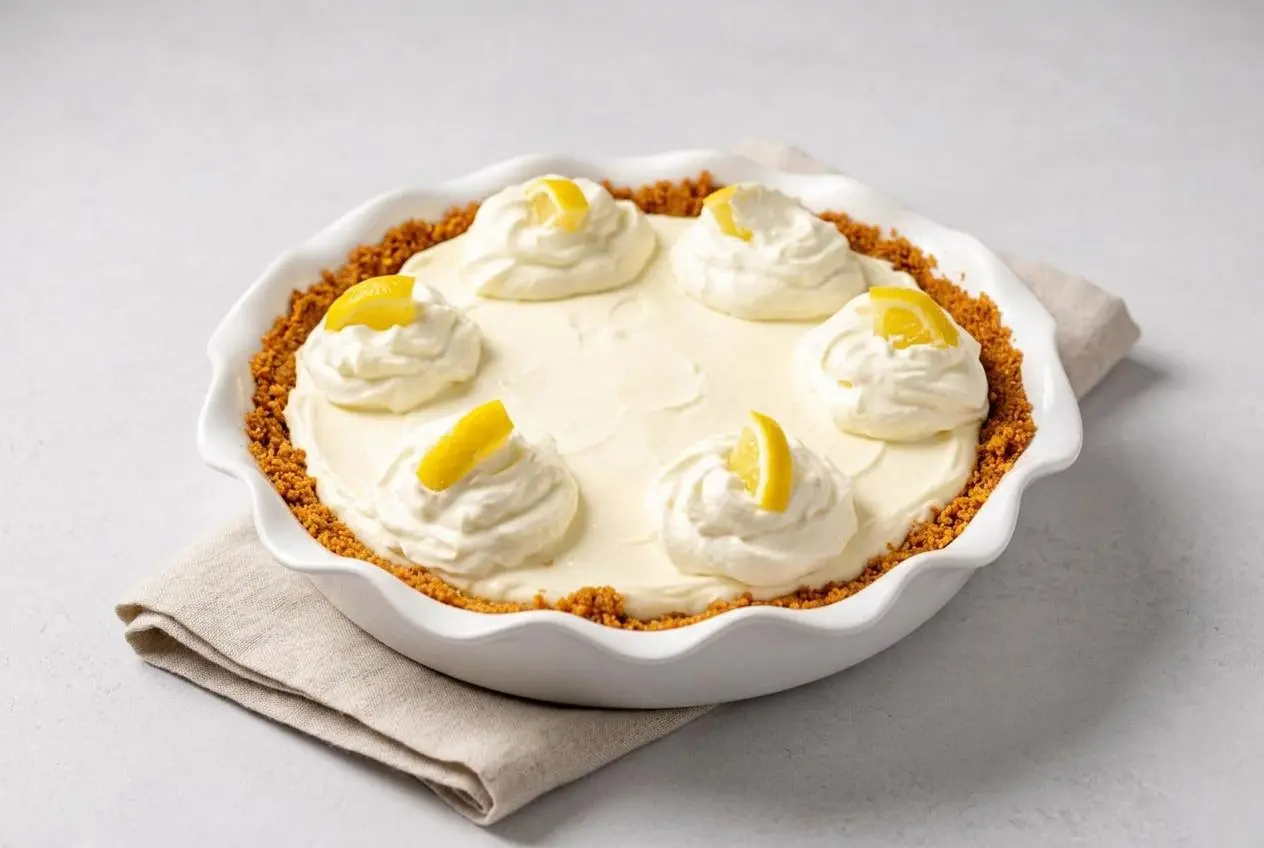
To make Lemon Cream Cheese Pie, bake a graham cracker crust, blend softened cream cheese with sugar and sour cream, add fresh lemon juice and zest, fold in whipped topping, then chill until fully set.
This pie lands right between cheesecake and lemon icebox pie, with a silky filling, bright citrus bite, and buttery graham crunch. It is cool, creamy, and especially good when you want a make-ahead dessert that still feels fresh.
You do not need tricky techniques, but the texture does depend on a few details like fully softened cream cheese, a cooled crust, and enough chill time. That clean, neat slice is worth the wait.
Zest the lemon before juicing it, and stop as soon as you reach the fragrant yellow skin so the filling stays bright instead of bitter.
Essential Ingredients and Their Roles
Each ingredient has a job here, from the crust’s buttery structure to the filling’s creamy body, citrus aroma, and balanced tang.
Crust
- 1 1/4 cup graham cracker crumbs
- 3 tbsp sugar
- 1/3 cup butter
Filling
- 2 (8 oz) package of Philadelphia Cream Cheese
- 2/3 cup sugar
- 1 cup sour cream
- 1/2 cup freshly squeezed lemon juice
- zest of 1 lemon
- 1 (4 oz) tub of Cool Whip
Full-fat cream cheese is what gives this pie enough body to slice cleanly. Lower-fat versions tend to soften faster and can make the filling looser, so this is one place where richness helps structure.
Sour cream keeps the filling from tasting flat or overly sweet. It adds tang, softens the density of the cream cheese, and helps the lemon taste more rounded instead of sharply sour.
Fresh lemon juice and zest do different jobs. Juice brings the tart punch, while zest carries the fragrant citrus oils that make the pie taste lively. Bottled juice can work in a pinch, but it usually tastes flatter and misses that bright aroma. If you enjoy a firmer, curd-like lemon dessert instead, a traditional lemon tart gets its texture in a very different way.
Cool Whip lightens the filling so it feels creamy instead of heavy. Fold it in gently and it keeps the pie fluffy enough to cut while still melting smoothly on the fork.
Room-temperature dairy matters more than people expect. Softened cream cheese blends smoothly with sugar and sour cream, while cold cream cheese tends to stay in stubborn little lumps.
I like to unwrap the cream cheese early and let it lose its chill completely before mixing, because even a slightly cool center can leave tiny bumps in an otherwise silky pie.
How to Make Lemon Cream Cheese Pie
This method is simple, but the texture depends on doing the steps in the right order and not rushing the cooling or chilling phases.
For the Crust
- Stir the graham cracker crumbs, sugar, and butter together until every crumb looks evenly moistened, then press the mixture firmly into a 9-inch pie plate across the bottom and up the sides.
An even, compact layer should hold its shape against the dish with no dry patches or thick mounds at the rim. - Bake the crust at 350 degrees for 8 minutes, then set it aside until completely cool before adding the filling.
The crust should look lightly set and smell buttery, and cooling it fully helps keep the filling from softening on contact.
For the Filling
- Blend the softened cream cheese, sugar, and sour cream until smooth, then mix in the lemon juice and lemon zest, and gently fold in the Cool Whip until fully combined.
The filling should look thick and creamy, and a smooth, velvety trail should briefly hold where the blender passes before settling back. - Spoon the filling into the cooled crust, smooth the top, and chill for 3-4 hours before slicing.
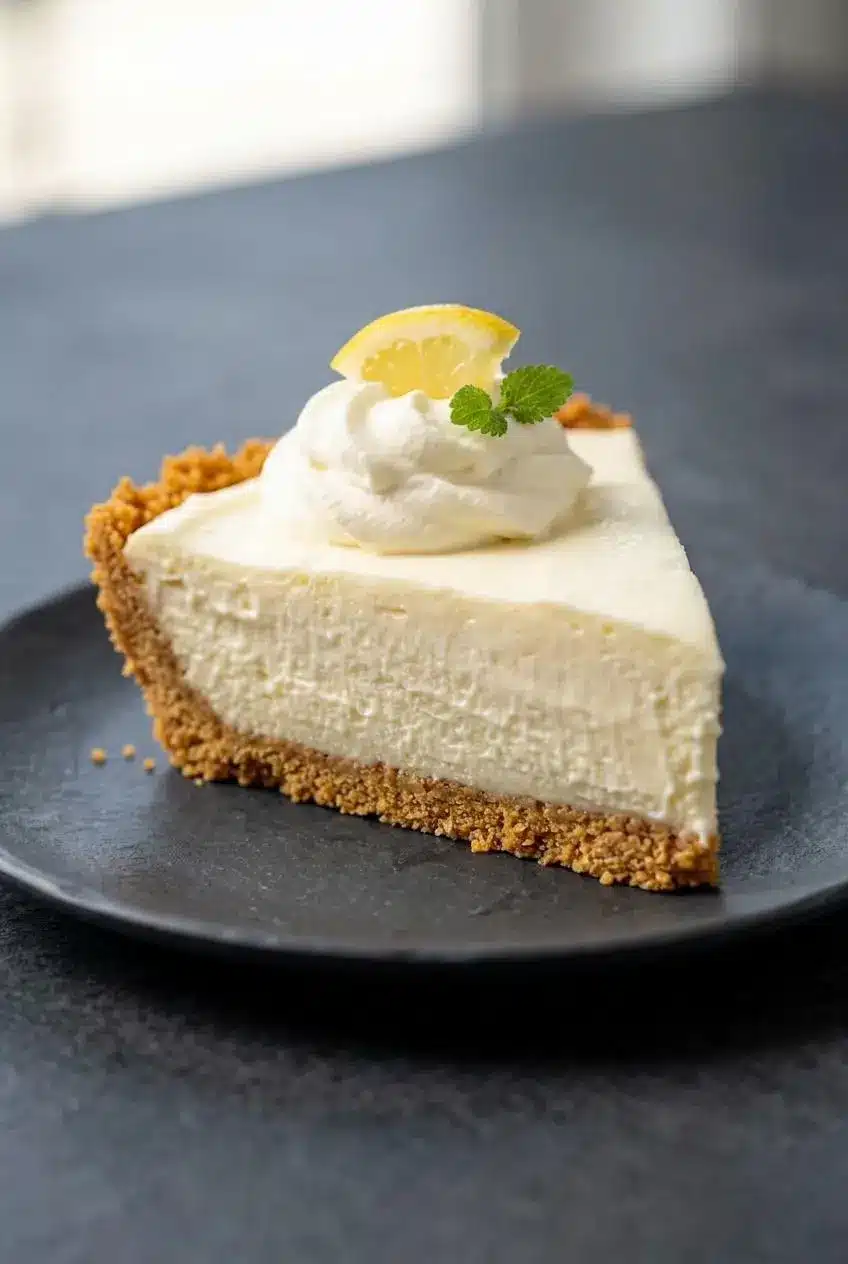
When fully set, the pie should feel firm at the center and cut into neat slices instead of slumping.
Pressing the crust matters more than it sounds. Use the bottom of a measuring cup or drinking glass to compact the crumbs into an even base, then use your fingers to shape a tidy edge so the slices hold together better.
The short bake is there for texture, not color. It helps the butter and crumbs set into a firmer shell, which means less crumbling and less chance of a soggy bottom once the creamy filling goes in.
For the filling, blend only until the cream cheese mixture is smooth, then switch to a lighter hand once the whipped topping goes in. Beating whipped topping hard can flatten the airy structure that helps the pie stay creamy instead of dense.
Crucial Success Tips and Troubleshooting
If this pie gives people trouble, it is usually texture trouble. The good news is that the fixes are pretty straightforward.
- Lumpy filling: Cold cream cheese is the usual cause. If you notice lumps early, keep blending the cream cheese, sugar, and sour cream before adding the lemon juice, and stop only when the mixture looks completely smooth.
- Runny filling: This usually happens when the cream cheese got too warm, the whipped topping was overmixed, or the pie did not chill for the full 3-4 hours. Chill it longer first, because time often solves what looks like a mixing problem.
- Weak slice structure: Full-fat cream cheese makes a real difference here. Reduced-fat blocks or spreadable tubs can leave the filling softer and less tidy when cut.
- Soggy crust: Filling the crust before it cools can soften it quickly. Let the crust cool all the way so the butter resets and the crumbs stay crisp.
- Bitter lemon flavor: Too much white pith in the zest is the culprit. Grate only the yellow surface, because the white layer tastes sharply bitter fast.
- Messy slices: Dip a sharp knife in warm water, wipe it dry, and cut with clean strokes. That warm blade gives you the satisfying clean slice this pie deserves.
If the filling seems softer than expected right after mixing, do not panic and start adding random thickeners. This pie is meant to firm up in the refrigerator, and extra flour or starch would change the texture in all the wrong ways.
If you accidentally overbeat the whipped topping, the filling may lose some of its lightness. It will still taste good, but the texture will be denser and less cloudlike. Next time, fold gently just until no white streaks remain.
Make-Ahead and Storage Directions
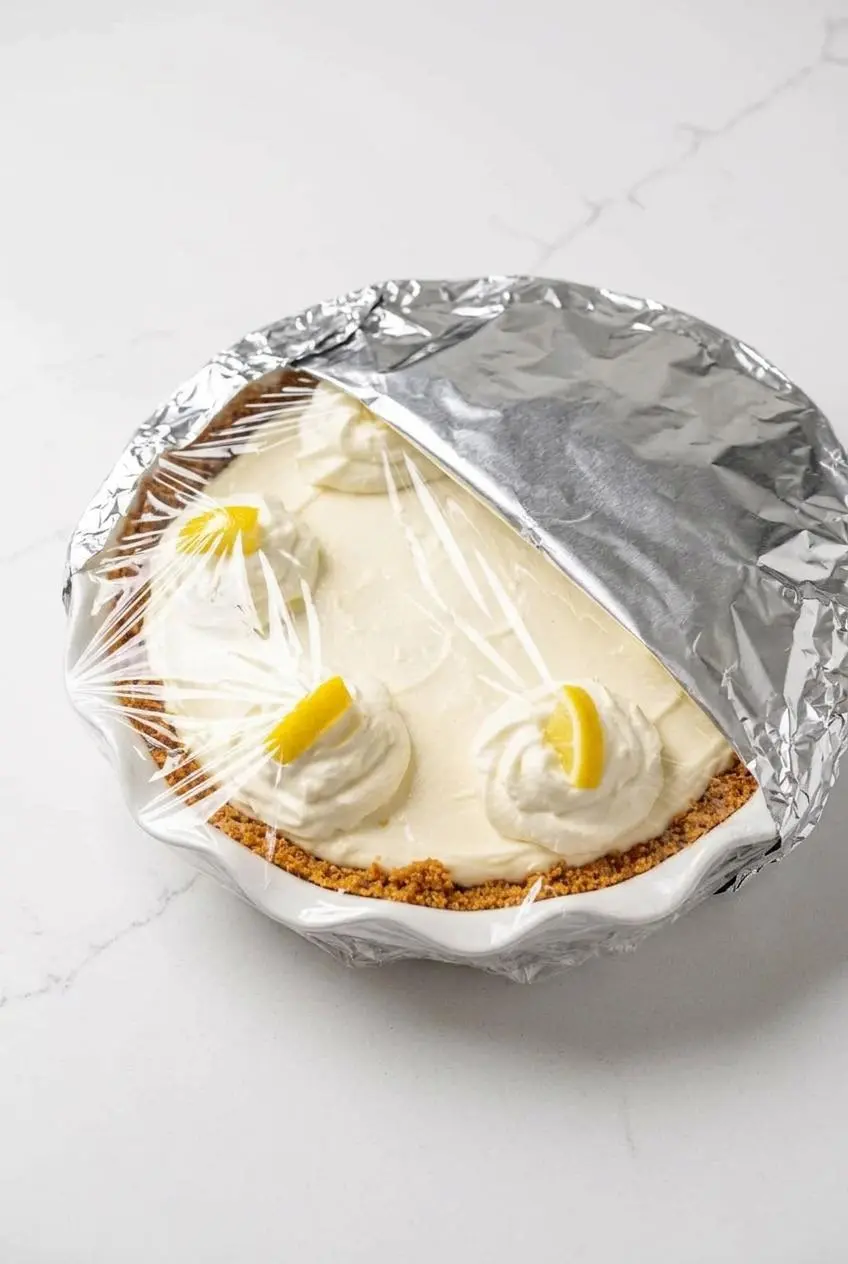
This pie is meant to be served cold, and the dairy filling holds best when kept covered and chilled. Do not leave it out for long, because the texture softens quickly as it warms.
If you want to prepare it ahead, make the pie completely, let it set fully in the refrigerator, then keep it covered until serving. A loose tent of wrap can protect the surface without dragging across the top.
For leftovers, cover the pie well or transfer slices to an airtight container and keep them refrigerated. Fresh dairy ingredients like cream cheese, sour cream, and butter are best handled with chilled storage practices supported for these products in safe refrigeration and storage practices for dairy ingredients.
You can freeze this pie after it has fully set. Wrap it in two layers of plastic wrap and one layer of foil to help protect the crust and surface from freezer burn, then thaw it slowly in the refrigerator before serving.
After thawing, the texture may be a little softer than freshly chilled pie, but it should still slice well if it stays cold. For the best crust, keep the pie wrapped tightly so moisture does not settle into the crumbs.
Delicious Flavor Variations

Once you have the classic version down, it is easy to branch out without changing what makes this dessert work.
Baked Southern Lemon Cream Cheese Pie
If you prefer a more traditional baked texture, turn this into a custard-style pie with sweetened condensed milk and eggs. The filling bakes up firmer, richer, and more old-fashioned than the no-bake version, which stays lighter and fluffier because of the whipped topping.
Use this baked route when you want a smoother, denser slice that feels closer to cheesecake or lemon custard. Because eggs are involved in that variation, proper chilling and thorough baking matter more than they do for the no-bake pie. If that texture is your favorite, lemon custard cake is another dessert with a similarly soft, set center.
Meyer Lemon Cream Cheese Pie
Meyer lemons are sweeter, less sharp, and more floral than standard lemons. That means the pie will taste softer and slightly more perfumed, with a gentler citrus edge.
If you use Meyer lemons, taste the filling before it goes into the crust. Some home cooks like the softer profile as is, while others prefer a touch more brightness from extra zest. The finished pie will feel rounder and less punchy than one made with regular lemons.
The Sweetened Condensed Milk Alternative
For a five-ingredient variation, use sweetened condensed milk in place of the sour cream and sugar. The result is sweeter, tighter, and a little more pudding-like, with a glossier finish and a stronger citrus pop.
This version is handy when you want a filling that comes together quickly, but expect a different balance. Sour cream gives more tang and softness, while condensed milk brings sweetness and a denser set.
Double Lemon Curd Swirl Twist
For extra lemon flavor, swirl ribbons of lemon curd into the filling just before chilling. Use a light hand so you get visible streaks instead of fully blending it in.
If you like lemon desserts in portable form, lemon cream cheese bars are a great next bake with the same creamy citrus idea in tidy squares.
Conclusion
This pie works because it balances rich cream cheese, tangy sour cream, bright lemon, and a buttery crust that stays crisp enough to support every slice. It tastes cool and fresh, but still feels satisfying.
Give it the full chill time, keep the filling cold, and use a warm knife for serving. That is how you get the smooth texture and clean slices that make this pie such a keeper.
Frequently Asked Questions
Why is my lemon cream cheese pie runny?
A runny pie usually comes down to texture and temperature. The cream cheese may have been too warm when mixed, which makes the filling looser. The whipped topping may have been over-blended, which can knock out its airy structure. The pie may not have chilled for the full 3-4 hours needed to firm up.
Can I use bottled lemon juice instead of fresh?
Yes, but fresh is the better choice for flavor. Bottled lemon juice brings acidity, so the pie will still taste lemony. Fresh juice tastes brighter and less flat. Fresh zest adds the aromatic oils that bottled juice cannot provide.
Can I freeze lemon cream cheese pie?
Yes, this pie can be frozen once fully set. Wrap it in two layers of plastic wrap and one layer of foil. Thaw it slowly in the refrigerator so the filling stays as stable as possible. Serve it well chilled for the neatest slices.
What can I use instead of sour cream?
Full-fat plain Greek yogurt is the best swap. It keeps the filling thick and creamy. It brings the same tangy balance that sour cream gives the pie. The flavor may be a little more yogurt-forward, but the structure stays close.
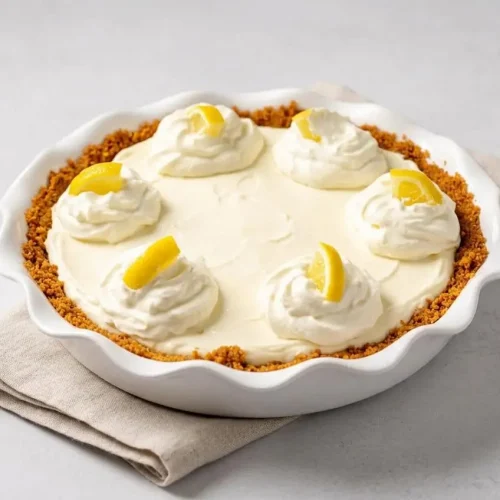
Lemon Cream Cheese Pie

Equipment
- 9-inch pie plate
- Mixing Bowls
- Blender
- Zester
Ingredients
Crust
- 1 1/4 cup graham cracker crumbs
- 3 tbsp sugar
- 1/3 cup butter
Filling
- 2 package Philadelphia Cream Cheese (8 oz each)
- 2/3 cup sugar
- 1 cup sour cream
- 1/2 cup freshly squeezed lemon juice
- 1 zest of 1 lemon
- 1 tub Cool Whip (4 oz)
Instructions
For the Crust
- Stir the graham cracker crumbs, sugar, and butter together until every crumb looks evenly moistened, then press the mixture firmly into a 9-inch pie plate across the bottom and up the sides. An even, compact layer should hold its shape against the dish with no dry patches or thick mounds at the rim.
- Bake the crust at 350 degrees for 8 minutes, then set it aside until completely cool before adding the filling. The crust should look lightly set and smell buttery, and cooling it fully helps keep the filling from softening on contact.
For the Filling
- Blend the softened cream cheese, sugar, and sour cream until smooth, then mix in the lemon juice and lemon zest, and gently fold in the Cool Whip until fully combined. The filling should look thick and creamy, and a smooth, velvety trail should briefly hold where the blender passes before settling back.
- Spoon the filling into the cooled crust, smooth the top, and chill for 3-4 hours before slicing. When fully set, the pie should feel firm at the center and cut into neat slices instead of slumping.