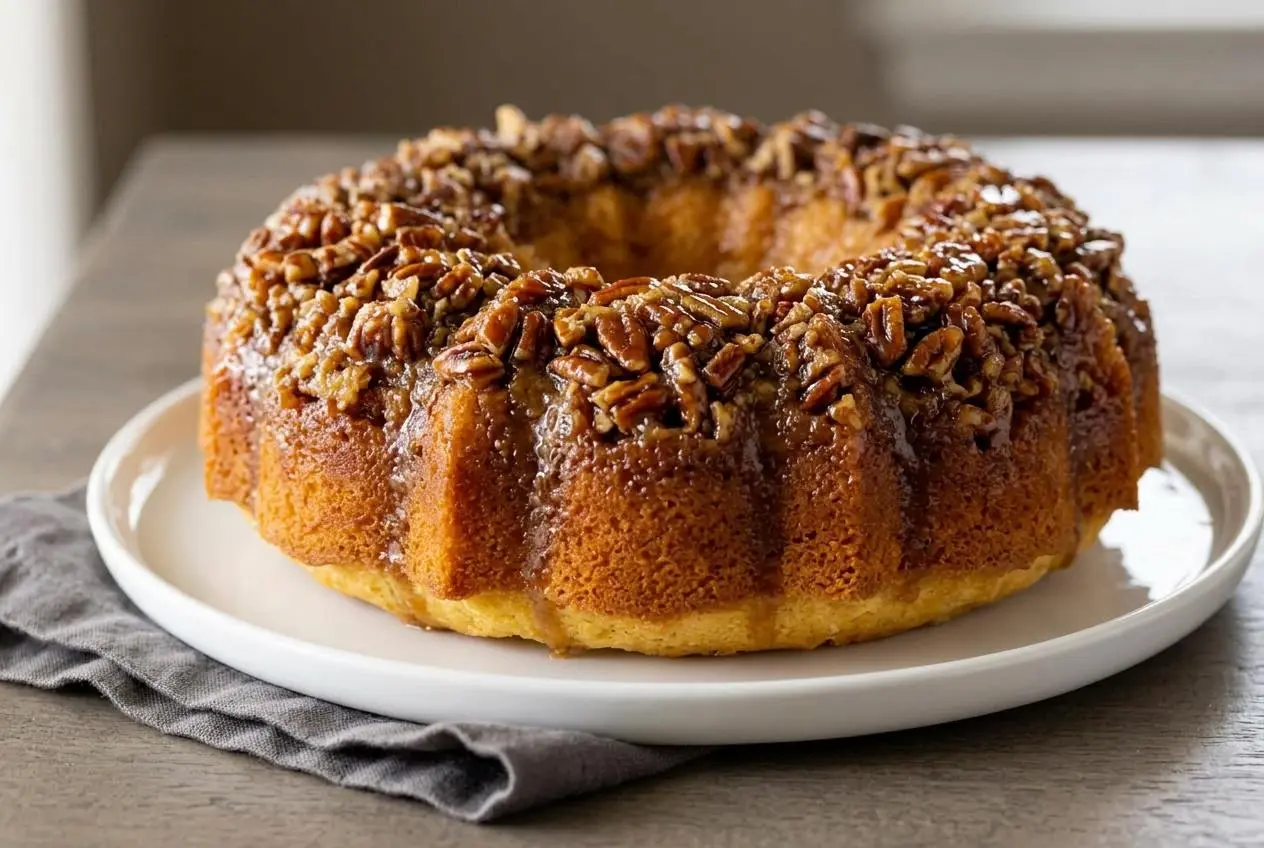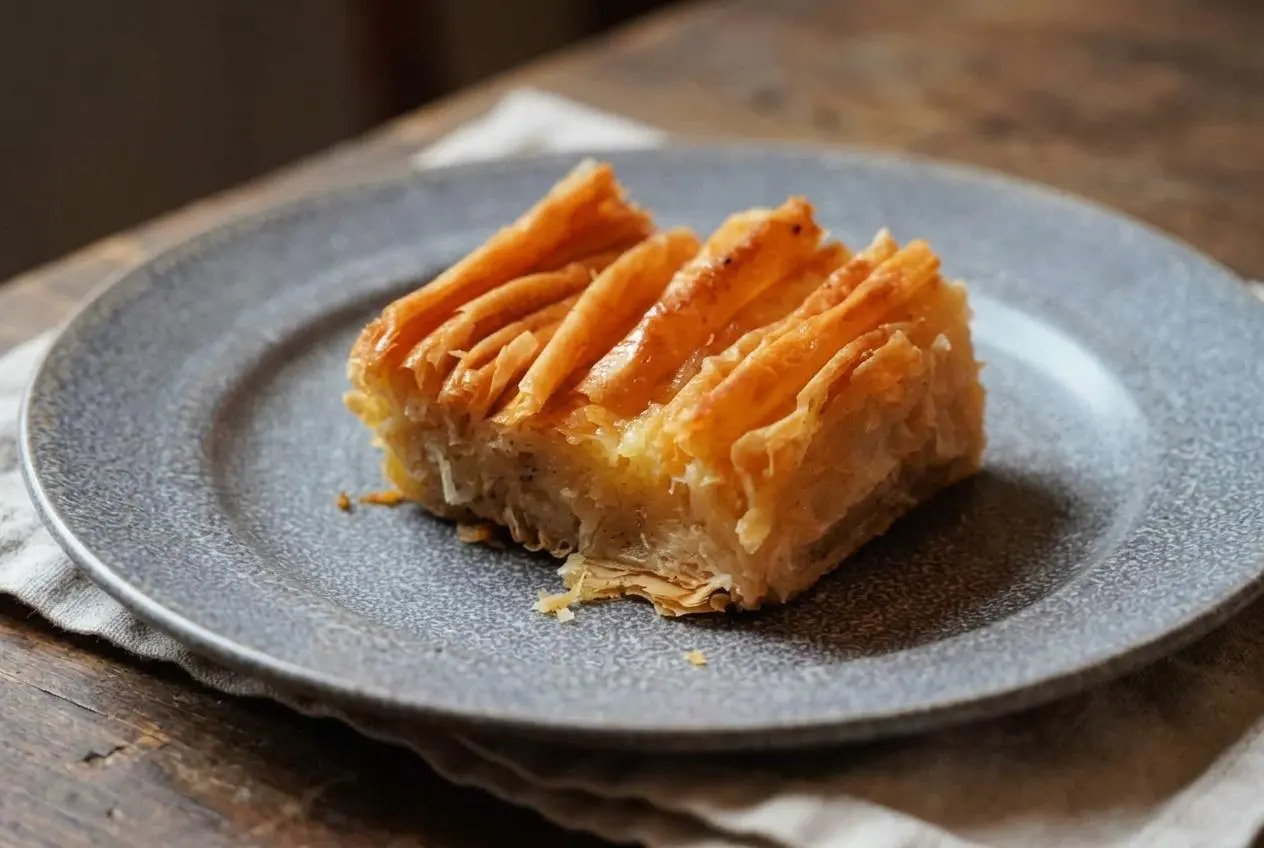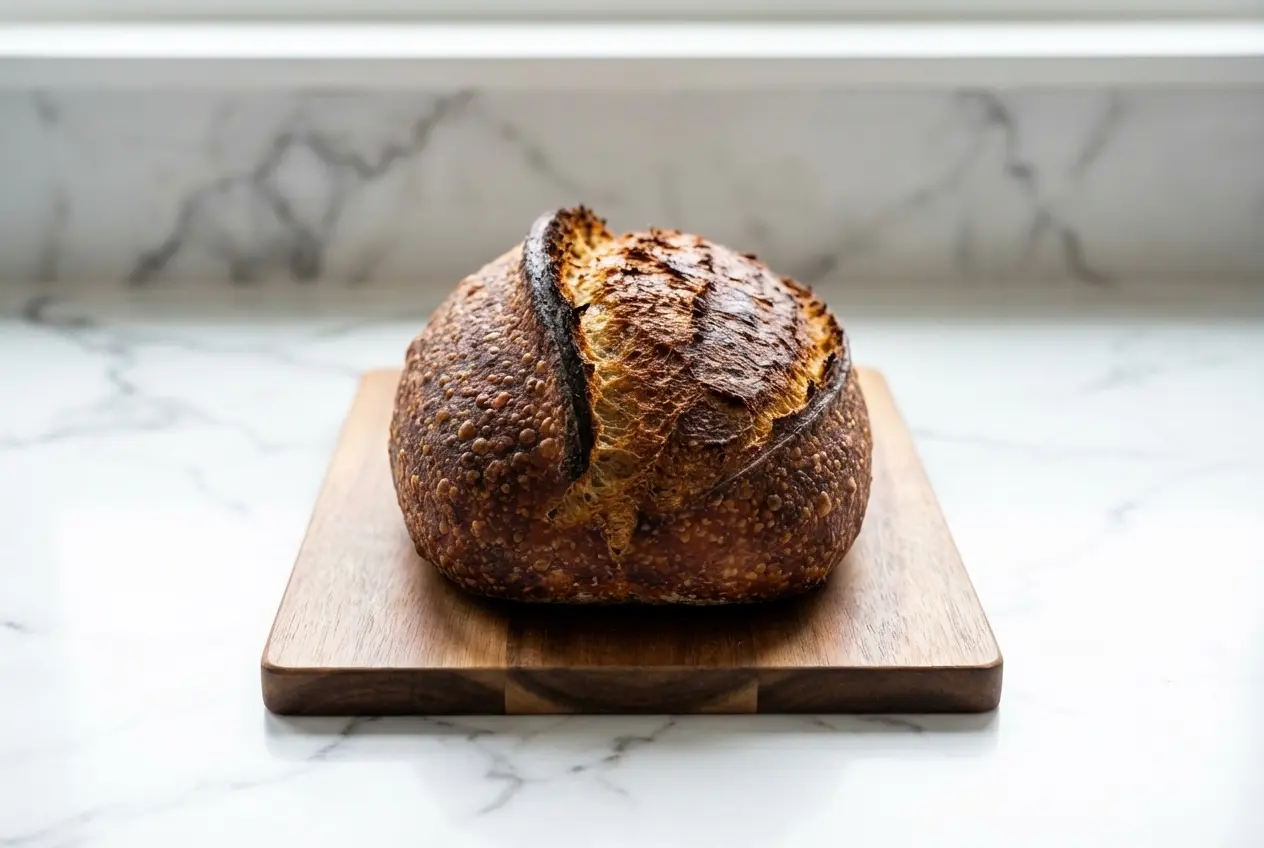
The first time I tried to reverse-engineer an izzio sourdough bread recipe, I chased that exact artisan bakery feeling, the crackle when you squeeze the crust, the tang on your tongue, and that warm, wheaty perfume that fogs up the car windows on the drive home. In my kitchen, I learned it is not one trick, it is a rhythm of natural fermentation, patient timing, and a little cold magic.
This guide walks you through the real craft, from a stiff starter built on wild yeast to a long cold retard for flavor and blistered crust. Then, because great bread never goes to waste, we turn leftover Izzio focaccia into an outrageously good pistachio chocolate bread pudding.
Why You’ll Love This Recipe
That true artisan bakery bite: I’m chasing the same contrast you get at the counter, a crisp, blistered crust that shatters lightly, and a chewy, open crumb structure that feels alive.
The stiff starter twist: In my experience, a stiff starter leans the flavor toward deeper tang, because it encourages more acetic character during natural fermentation without turning the loaf harsh.
36 hours of cold patience: A long cold retard is where the “why does this taste so complex?” moment happens, slow enzymatic work builds aroma, and the crust bakes up mahogany with freckles.
Reliable structure, not luck: When you pair autolyse with stretch and fold, the dough gains strength gradually, so hydration feels manageable and the loaf springs instead of spreading.
Ingredients and Substitutions
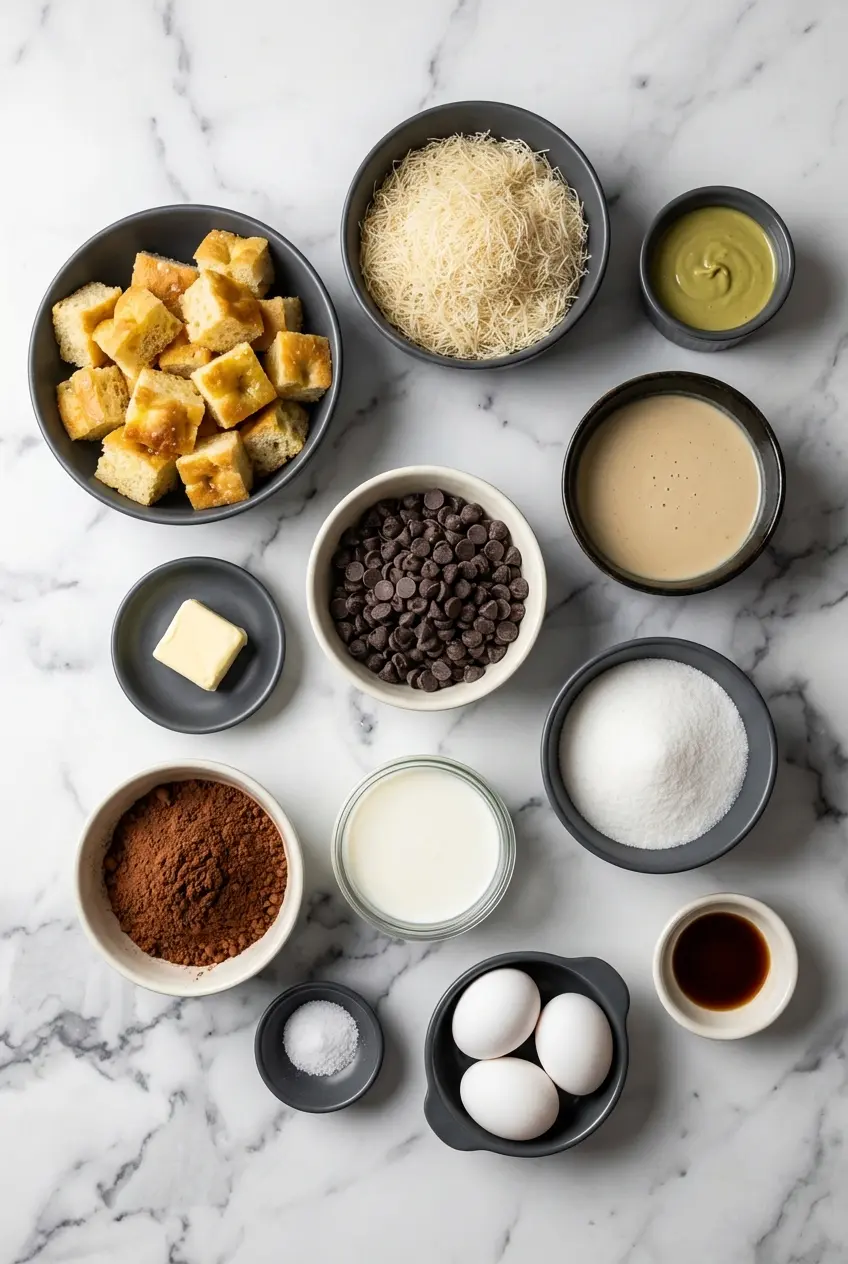
These are the dessert-side ingredients for turning cubed Izzio focaccia into a glossy, custardy bread pudding with crunchy kataifi and pockets of melted chocolate.
Ingredients
- 4 c cubed izzio Olive Oil Sea Salt Focaccia
- 3 oz kataifi
- 7 oz pistachio cream
- 2 tbsp tahini
- 2 tbsp butter, plus more for greasing
- 3/4 c (125g) semisweet chocolate chips, divided
- 1/2 c (100g) granulated sugar
- 1/4 c (22g) cocoa powder
- 1 1/2 c (340g) whole milk or half-and-half
- 3 large eggs
- 1/4 tsp salt
- 1 tsp vanilla extract
Ingredient Notes & Substitutions
Whole milk or half-and-half: Go as rich as you can here, because the custard is the “sauce” that rehydrates the bread, and higher fat gives you that silky set instead of a thin, eggy bake.
Pistachio cream: The difference between “nice” and “stop talking, I need another bite” is real pistachio flavor, choose a thick, fragrant pistachio cream that smells like fresh nuts, not just sugar.
Kataifi: Toast it until it turns lightly golden and smells nutty, it is the crunch layer that keeps the top exciting even after the custard sets.
Tahini: That little bit of sesame bitterness keeps the chocolate from tasting flat, and it makes the pistachio taste deeper, almost roasted.
Savory variation: A Savory Sourdough Bread Pudding is fantastic, swap the chocolate and pistachio direction for gruyere, sausage, and egg, and keep the same soak and bake logic for a brunch-style pan.
How to make izzio sourdough bread recipe
Sourdough Fundamentals and the Stiff Starter Twist
- Start with a mature sourdough starter that is bubbly and smells pleasantly tangy, not sharp or alcoholic. In my kitchen, I look for a starter that doubles predictably after feeding, because that is your signal the wild yeast and bacteria are in balance.
- Build a stiff starter by making your levain noticeably firm, not pourable, so it holds its shape in the bowl. This thicker build tends to push flavor toward a more assertive tang, and it also makes the fermentation feel steadier when you are aiming for an artisan bakery profile.
Mixing, Autolyse, and Stretch and Fold
- Mix flour and water first and let it rest for 1 hour, this is the autolyse that makes the dough feel smoother and more elastic before you even “work” it. After the rest, the dough should look more cohesive and feel less sticky when you pinch it.
- Add your stiff starter and salt after autolyse, then mix until the dough tightens and looks satiny. Over the next couple of hours, use the stretch and fold method until the dough holds its shape better, looks slightly puffy, and feels springy when you lift an edge.
The Cold Retard and Dutch Oven Bake
- Shape the dough into a boule or batard, then place it into the refrigerator for a full 36-hour cold retard. When it is ready, it should look gently risen, feel airy under the skin, and smell complex, like yogurt, toasted grain, and a touch of vinegar.
- Score with confidence so the loaf has a clear path to expand, that is how you coax a proud “ear.” Bake in a preheated Dutch oven so steam is trapped early on, giving you maximum oven spring and a crust that blisters before it sets.
The Epic Leftover Transformation, Pistachio Chocolate Bread Pudding
- Whisk the wet mixture until smooth and glossy, so the cocoa dissolves and the eggs disappear into the milk, it should smell like chocolate and vanilla with a faint sesame warmth from the tahini. Pour it over the cubed focaccia and let the bread drink it in until the pieces feel heavy and custard-soaked, not floating dry on top.
- Toast the kataifi in butter until it turns golden and fragrantly nutty, then cool it slightly so it stays crisp. Layer the soaked focaccia and toasted kataifi in a well-greased pan, tuck in the pistachio cream and part of the chocolate chips, and finish with the remaining chips for those molten puddles on top.
- Bake at 350F until set, the center should jiggle like a soft custard, not slosh like liquid, and the top should smell like a brownie shop. Rest it a bit before serving so the slice holds together and the chocolate settles into shiny pockets.
Secrets for Artisan Bakery Perfection
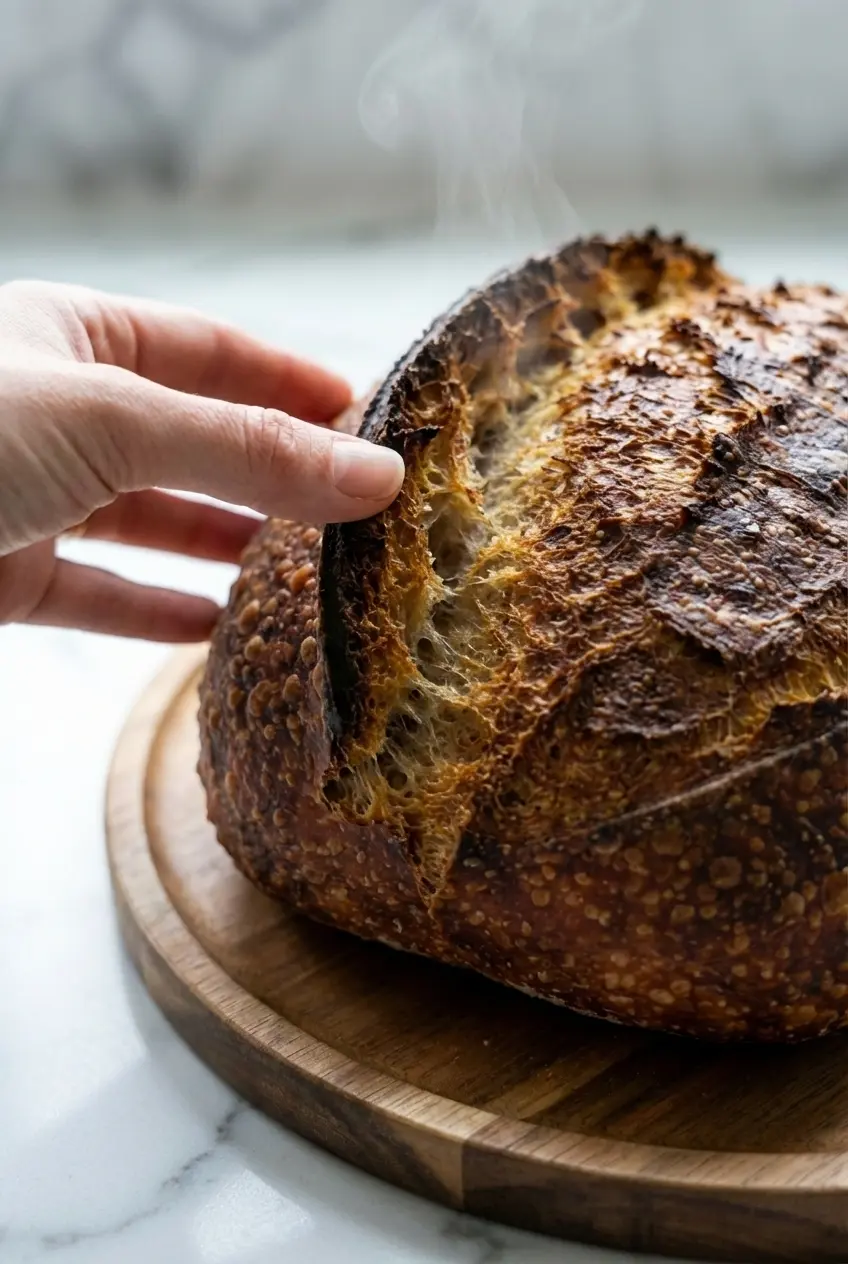
If you want an Izzio-style loaf at home, think like a bakery, baker’s percentages, hydration, and fermentation control matter more than any single “special” ingredient.
For a classic open crumb structure, many artisan doughs live in the neighborhood of 70 to 80 percent hydration, depending on flour strength and your comfort handling sticky dough. Higher hydration encourages bigger holes, but it demands better gluten development through autolyse and gentle folds.
Scoring is not decoration, it is engineering. A clean, angled slash gives expansion a place to go, and that is how you earn a defined ear instead of random side blowouts.
The Dutch oven is your home version of a steam-injected deck oven. Trapped steam delays crust setting, so the loaf can fully spring, then it dries into that blistered, lacquered finish.
Pro Tips & Troubleshooting
Pro Tips
- A mature, active starter fed with 50/50 bread flour and whole wheat flour gives a more complex, “bakery” aroma, and it tends to ferment with better reliability.
- Autolyse matters, mix flour and water only, then rest for 1 hour before adding salt and starter, the dough will feel stronger and less messy during stretch and fold.
- For bread pudding, slightly dry bread wins, leaving cubed focaccia out overnight or lightly toasting it helps it absorb custard without collapsing into mush.
- That sweet salty finish is magic, a drizzle of miso caramel sauce balances pistachio richness. I keep the drizzle light so the kataifi stays crisp.
Common Mistakes to Avoid
- Under-fermenting leads to a dense, gummy crumb, give the dough time to feel airy and alive before shaping, especially when working with natural fermentation.
- Slicing the loaf while it is hot ruins the set of the gelatinized starches, and the interior can turn sticky, wait until it cools fully for a clean, tender slice.
- Baking without steam makes the crust set too early, which limits oven spring and blocks blistering, a Dutch oven (or a serious steam setup) is the difference maker.
Serving & Storage
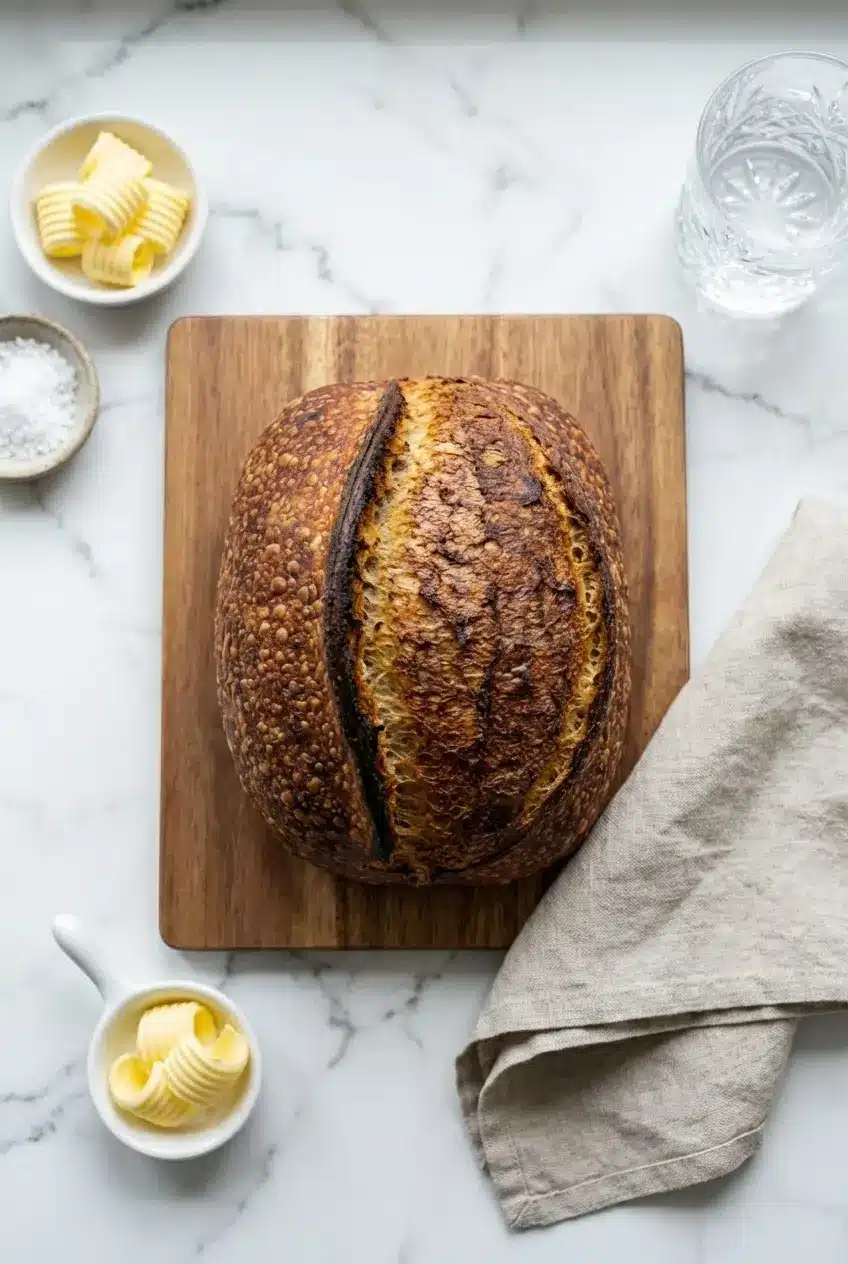
Serving Ideas
I love thick slices of fresh sourdough, lightly toasted, then rubbed with a raw garlic clove so the warmth perfumes the crumb without overpowering it.
Cultured butter and flaky sea salt are the simplest luxury, the butter melts into the open crumb structure and tastes like you did something fancy when you did not.
That chewy crumb is also built for brothy dinners, especially alongside rustic comfort bowls like poor man’s stew. It soaks up the broth without disintegrating, which is exactly what you want.
For the bread pudding, finish with chopped pistachios right before serving so every bite gets that fresh crunch against the warm custard.
Storage & Make-Ahead
For sourdough, avoid sealing it in plastic on day one, that is how you lose the crust. A paper bag or bread box keeps the exterior crisp while preventing the loaf from turning stale too quickly.
If the crust softens after a couple of days, a quick toast brings it back to life, and the flavor is still beautiful for dipping and dunking.
For the bread pudding, you can whisk the wet mixture ahead and refrigerate it, then soak and assemble when you are ready to bake. I also like cubing the focaccia in advance so it has time to dry slightly, which makes the bake more custardy and less soggy.
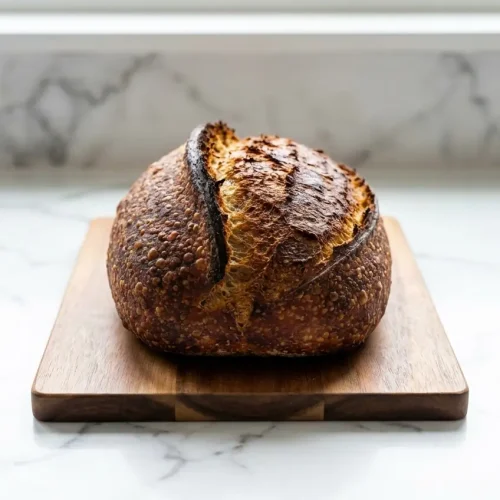
Artisan Izzio Sourdough Bread Recipe

Equipment
- Dutch oven
- Baking pan
- Whisk
Ingredients
- 4 c cubed izzio Olive Oil Sea Salt Focaccia
- 3 oz kataifi
- 7 oz pistachio cream
- 2 tbsp tahini
- 2 tbsp butter, plus more for greasing
- 3/4 c semisweet chocolate chips, divided (125g)
- 1/2 c granulated sugar (100g)
- 1/4 c cocoa powder (22g)
- 1 1/2 c whole milk or half-and-half (340g)
- 3 large eggs
- 1/4 tsp salt
- 1 tsp vanilla extract
Instructions
Sourdough Fundamentals and the Stiff Starter Twist
- Start with a mature sourdough starter that is bubbly and smells pleasantly tangy, not sharp or alcoholic. Look for a starter that doubles predictably after feeding, signaling that the wild yeast and bacteria are in balance.
- Build a stiff starter by making your levain noticeably firm, not pourable, so it holds its shape in the bowl. This thicker build pushes the flavor toward a more assertive tang and makes the fermentation steadier.
Mixing, Autolyse, and Stretch and Fold
- Mix the flour and water first and let it rest for 1 hour for the autolyse phase. This makes the dough feel smoother and more elastic before you begin working it, resulting in a cohesive and less sticky dough.
- Add your stiff starter and salt after the autolyse, then mix until the dough tightens and looks satiny. Over the next couple of hours, use the stretch and fold method until the dough holds its shape better, looks slightly puffy, and feels springy.
The Cold Retard and Dutch Oven Bake
- Shape the dough into a boule or batard, then place it into the refrigerator for a full 36-hour cold retard. When ready, it should look gently risen, feel airy under the skin, and smell complex with notes of yogurt and toasted grain.
- Score the dough with confidence so the loaf has a clear path to expand, ensuring a proud ear. Bake in a preheated Dutch oven so steam is trapped early on, maximizing oven spring and blistering the crust before it sets.
The Epic Leftover Transformation, Pistachio Chocolate Bread Pudding
- Whisk the wet mixture until smooth and glossy, ensuring the cocoa dissolves and the eggs disappear into the milk. Pour the custard over the cubed focaccia and let the bread drink it in until the pieces feel heavy and soaked, not floating dry.
- Toast the kataifi in butter until it turns golden and fragrantly nutty, then cool it slightly so it stays crisp. Layer the soaked focaccia and toasted kataifi in a well-greased pan, tuck in the pistachio cream and part of the chocolate chips, and finish with the remaining chips on top.
- Bake at 350F until set. The center should jiggle like a soft custard rather than sloshing like liquid, and the top should smell rich and brownie-like. Rest it a bit before serving so the slice holds together and the chocolate settles.
Notes
Conclusion
Mastering an Izzio-style loaf at home is pure satisfaction, a stiff starter for that bold tang, a 36-hour cold rest for depth, then steam for the crackling crust. And when a few slices linger on the counter, that is not “stale,” that is tomorrow’s pistachio chocolate bread pudding waiting to happen.
Keep notes, adjust hydration to your flour, and let your senses guide you, the dough always tells the truth if you listen.
Frequently Asked Questions
What makes Izzio bread considered ‘real sourdough’?
Why does my sourdough bread come out dense?
How should I store fresh sourdough bread to keep it crusty?
How the 36-hour cold retard changes flavor and crust
When you slow fermentation in the fridge, yeast activity quiets down, but flavor development keeps working, which is why the loaf tastes deeper and bakes darker. The science behind a 36-hour cold retard before baking explains why timing and temperature create complexity without overproofing.
I also notice the skin of the dough dries slightly in the cold, and that helps the crust blister and bronze more dramatically once it hits high heat and steam.