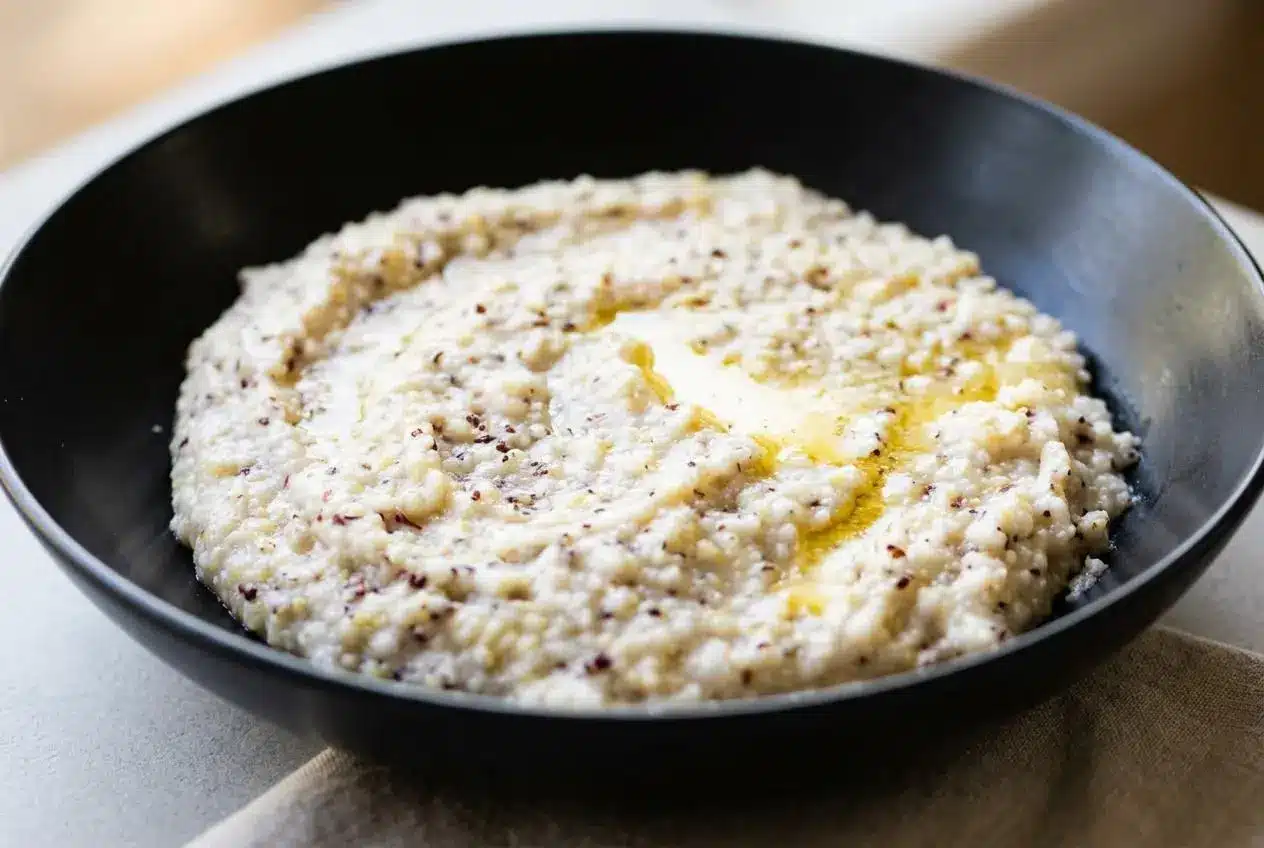
To make creamy stone-ground grits, cook 1 cup of grits with 5 cups of seasoned water in a heavy pot, rest them for 15 minutes, then simmer gently until tender before finishing with butter, cheese, and dairy.
How To Make Grits comes down to patience, enough liquid, and low heat. Stone-ground corn needs time to soften, but its deep corn flavor and velvety texture are worth every stir.
As the pot simmers, the scent shifts from plain corn to warm, savory comfort. The little rest before simmering makes all the difference.
Use a heavy-bottomed Dutch oven and a flat wooden spoon so you can reach the pot corners before starch has a chance to stick.
Ingredients for Authentic Stone-Ground Grits
Each ingredient supports the finished bowl: coarse corn brings texture, water hydrates the starch, bay leaf adds aroma, and dairy, cheese, lemon, and pepper create richness and balance.
- 1 cup stone-ground grits (not quick or instant)
- 5 cups water (plus more as needed)
- 1 bay leaf
- 1 teaspoon kosher salt
- Butter, to taste
- Freshly ground black pepper, to taste
- A squeeze of lemon
- ½ to 1 cup grated cheddar or parmesan cheese
- A splash of heavy cream or milk
Stone-ground grits give the dish its rustic grain flavor and tender chew. Water lets the starch hydrate without putting milk solids at risk of scorching. Add the bay leaf and salt early so the corn itself tastes seasoned, then use butter, cheese, and cream for a glossy finish. Lemon keeps the dairy from tasting heavy.
I look for freshly milled, coarse stone-ground cornmeal whenever possible because it gives the grits a fuller corn aroma and a more satisfying texture than highly processed boxes.
How to Make Grits on the Stovetop
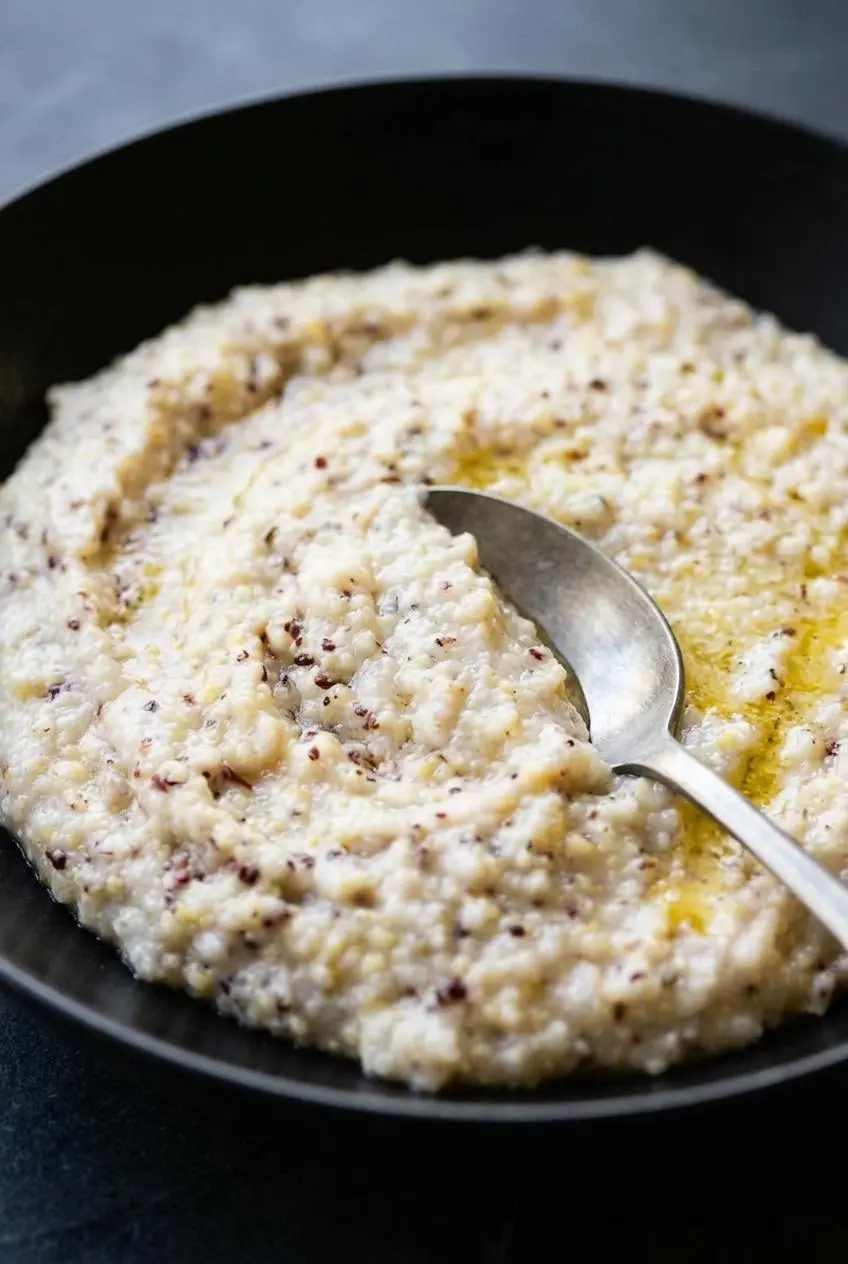
A low, unhurried simmer is the key to grits that taste creamy rather than pasty. The grains should become fully tender before you enrich them with butter, cheese, or cream.
- Put the stone-ground grits and 5 cups of water in a heavy-bottomed pot or Dutch oven, then bring the mixture to a boil.
Remove the pot from the heat, cover it, and leave it undisturbed for 15 minutes so the coarse corn can begin softening. - Set the pot back over the heat and stir in the bay leaf and kosher salt.
Bring the liquid back to a boil, then immediately lower the heat until the surface gives quiet, slow bubbles. - Cook at a low simmer for 30 to 60 minutes, stirring often with a flat spoon and scraping along the bottom and corners.
Add hot water as needed if the grits tighten before the grains feel tender between your teeth. - Take the pot off the heat once the grits fall from the spoon in thick, smooth ribbons, then stir in butter, black pepper, lemon, cheese, and cream or milk to taste.
Serve while hot, when the texture is loose and velvety rather than firm. - Transfer any extra grits to a dish and refrigerate them overnight.
Once chilled and firm, cut them into squares and fry them in butter the next day until crisp and golden.
The covered rest is not a shortcut around cooking. It gives the tough outer parts of the coarse corn time to absorb water, so the later simmer can work more evenly. Keep the heat low. Higher heat can send up aggressive steam bubbles and scorch the starch before the centers turn tender.
Choosing the Right Grits and Liquid Ratios
The package matters as much as the pot. Stone-ground grits need a different approach from quick or instant varieties because the corn is coarser and less processed.
Stone-Ground vs Quick Grits
- Stone-ground grits: Coarse-ground corn with more natural texture and corn flavor. Use a 5 to 1 liquid-to-grits ratio and allow time for a gentle simmer.
- Hominy grits: Made from corn treated before grinding, often with a distinct flavor and pale color. They can be stone-ground or more finely processed, so follow the package while keeping the texture goal in mind.
- Quick grits: More finely ground and partially processed for faster cooking. They do not need the extended stone-ground method and can become soft and muddy if simmered too long.
- Instant grits: Precooked and dried for speed. They are useful when time is tight, but they will not develop the same slow-cooked texture as coarse stone-ground grits.
For this method, use 5 cups of liquid for every 1 cup of stone-ground grits. That generous ratio gives the corn enough moisture to hydrate gradually and release starch without turning dry at the edges. Keep extra hot water nearby because different mills absorb liquid differently.
Water vs Broth and When to Add Dairy
Start with water, or replace some of it with broth if you want a more savory base. Season that liquid with salt from the beginning. Milk and cream contain proteins and sugars that can catch on the bottom during a long simmer, so add them only after the grits are tender.
Butter and cheese belong at the finish as well. Stir them in off the heat or during the last moments of cooking so they melt smoothly into the corn instead of coating undercooked grains. For classic Southern cheddar cheese grits, fold in grated sharp cheddar or aged parmesan, then finish with lemon zest and smoked black pepper if you want a brighter, smokier edge.
Troubleshooting Common Grits Mistakes
Grits are forgiving when you adjust liquid and heat instead of rushing them. Most texture problems come from cooking too hot, using the wrong grind, or serving after the starch has tightened.
- Grits are gritty or crunchy: The grains need more hydration and time. Stir in hot water gradually and continue simmering on low until the texture is fully tender.
- Grits thicken before they soften: The pot is losing moisture faster than the corn can absorb it. Add hot water, stir well, and keep the lid nearby to reduce evaporation between stirs.
- The bottom is sticking: Heat is too high or the pot has not been scraped often enough. Move the unscorched grits to a clean pot without digging into the dark layer, then continue over lower heat.
- Grits taste bland: Salt added only at the end cannot season the grain as deeply. Add salt to the cooking liquid at the beginning, then adjust the finished bowl with pepper, lemon, and cheese.
- Grits turned stiff after sitting: Corn starch sets quickly as it cools. Warm the grits gently and whisk in warm water, broth, milk, or cream a little at a time until they loosen.
- Grits look lumpy: Stir steadily around the bottom and sides rather than beating the pot aggressively. Slow, regular stirring keeps the thickening starch smooth and prevents dry pockets.
Storage, Reheating, and Crispy Fried Grits Cakes

Leftover grits naturally firm into a sliceable block as they chill. Cool them promptly, keep them covered in an airtight container in the refrigerator, and reheat only the portion you plan to eat.
Reheating Grits to Restore Silkiness
Break cold grits apart with a fork before warming them on the stovetop over low heat. Add warm milk, cream, water, or broth gradually, then whisk until the block relaxes into a creamy spoonable texture. A microwave also works when you heat in short intervals and stir between them.
Warm liquid matters here. Cold liquid can make already-thick grits harder to smooth out and cool the pot just when the starch needs gentle heat. Stop adding liquid as soon as the grits look glossy and flow slowly from the spoon.
Slicing and Pan-Frying Leftover Grits Cakes
For crisp grits cakes, spread warm leftover grits in a shallow buttered dish, cover, and chill until firm. Turn the slab onto a cutting board, cut it into even squares, and pat the surfaces dry so they can brown instead of steam.
Heat butter in a cast-iron skillet over medium heat until it foams, then cook the squares without crowding the pan. Let each side turn deeply golden before flipping. The outside should be crisp while the center stays soft and corn-forward.
Serving Ideas for Southern Meals
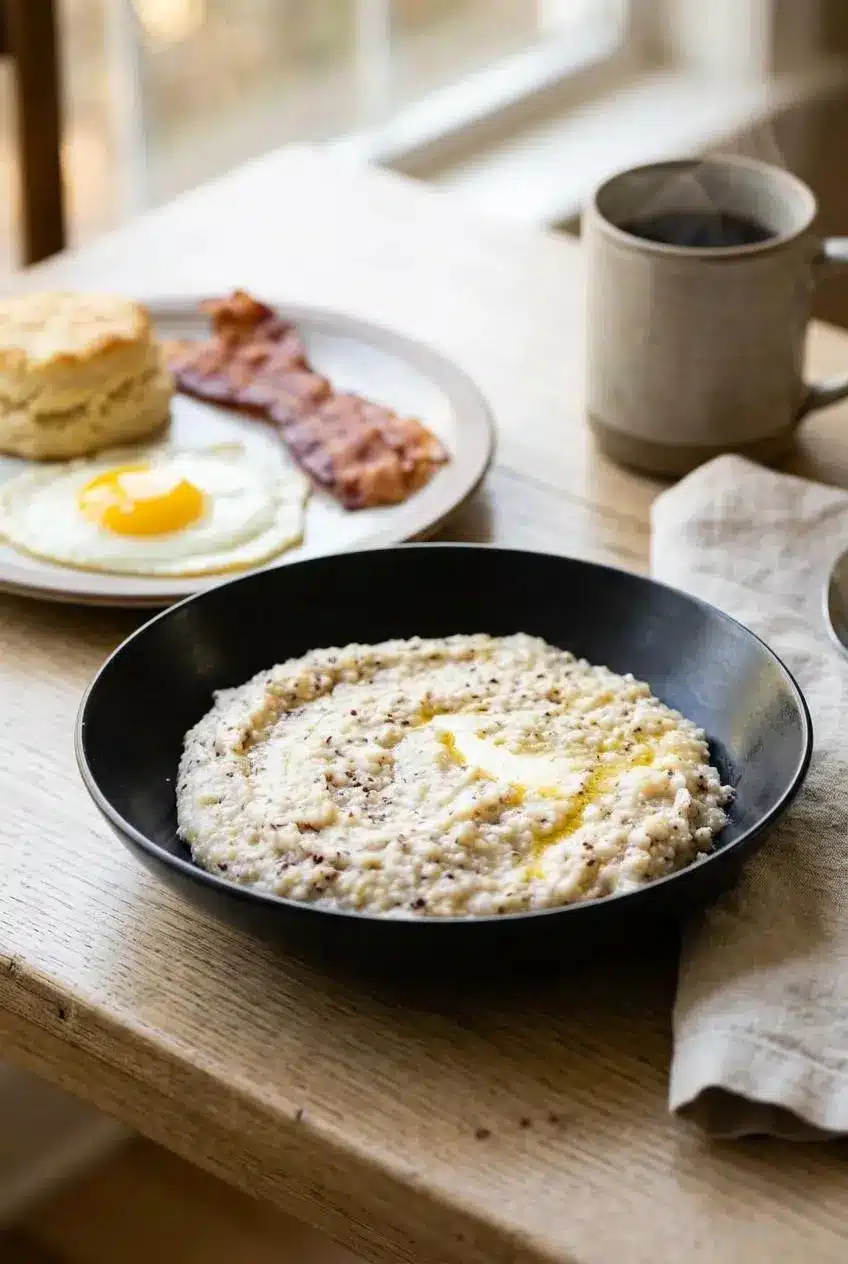
Creamy grits can anchor breakfast, brunch, or dinner because their mild corn flavor welcomes rich and savory toppings.
- Set a bowl beneath garlicky seafood for classic shrimp and grits.
- Serve them with sunny-side-up eggs, bacon, and warm buttermilk biscuits for a relaxed Southern breakfast.
- Use the grits as a soft base for braised beef short ribs and tender collard greens.
- Top fried grits cakes with a fried egg and plenty of black pepper for a crisp-edged breakfast plate.
If the meal includes a strongly seasoned topping, keep the finished grits slightly looser than usual. They will continue to thicken under hot shrimp, eggs, or braised meat.
Conclusion
Silky stone-ground grits come from a generous 5 to 1 liquid ratio, a covered rest, and steady low-heat stirring. Scrape the bottom often, and give the grains time to become genuinely tender.
Finish with sharp cheese, butter, lemon, or whatever savory topping suits the meal. A warm bowl of grits rewards a little patience.
Frequently Asked Questions
What Is the Ideal Liquid-to-Grits Ratio for Stone-Ground Grits?
Use 5 cups of liquid for every 1 cup of coarse stone-ground grits. This ratio gives the corn enough moisture to soften fully and become creamy. Keep hot water available during cooking. Add more gradually only if the grits become thick before the grains are tender.
Why Do Stone-Ground Grits Take So Long to Cook?
Stone-ground grits are coarse and retain more of the corn’s natural structure than quick or instant products. The outer portions need extended gentle heat and moisture to soften. The 15-minute covered rest starts that hydration process. Afterward, the low simmer gradually turns separate grains into creamy, tender grits.
Can You Cook Grits Entirely in Milk?
It is better to cook stone-ground grits in water or broth first, then stir in milk or cream near the end. Milk can scorch during the long simmer required for coarse corn. Finishing with dairy gives you a richer flavor while keeping the pot easier to manage. Add cheese off the heat for the smoothest melt.
How Do You Fix Grits That Have Become Too Thick and Stiff?
Return the grits to low heat and whisk in warm water, broth, milk, or cream gradually. Keep stirring until the starch loosens and the texture becomes creamy again. Do not use cold water for this job. Warm liquid blends in more smoothly and helps the grits regain their soft, silky consistency.
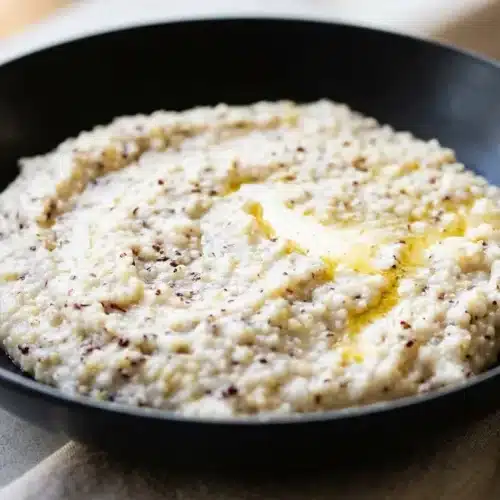
How To Make Grits

Equipment
- Heavy-bottomed pot or Dutch oven
- Tight-fitting lid
- stirring spoon
Ingredients
- 1 cup stone-ground grits not quick or instant
- 5 cups water plus more as needed
- 1 bay leaf
- 1 teaspoon kosher salt
- Butter to taste
- Freshly ground black pepper to taste
- lemon a squeeze
- ½ to 1 cup grated cheddar or parmesan cheese
- heavy cream or milk a splash
Instructions
- Put the stone-ground grits and 5 cups of water in a heavy-bottomed pot or Dutch oven, then bring the mixture to a boil. Remove the pot from the heat, cover it, and leave it undisturbed for 15 minutes so the coarse corn can begin softening.
- Set the pot back over the heat and stir in the bay leaf and kosher salt. Bring the liquid back to a boil, then immediately lower the heat until the surface gives quiet, slow bubbles.
- Cook at a low simmer for 30 to 60 minutes, stirring often with a flat spoon and scraping along the bottom and corners. Add hot water as needed if the grits tighten before the grains feel tender between your teeth.
- Take the pot off the heat once the grits fall from the spoon in thick, smooth ribbons, then stir in butter, black pepper, lemon, cheese, and cream or milk to taste. Serve while hot, when the texture is loose and velvety rather than firm.
- Transfer any extra grits to a dish and refrigerate them overnight. Once chilled and firm, cut them into squares and fry them in butter the next day until crisp and golden.