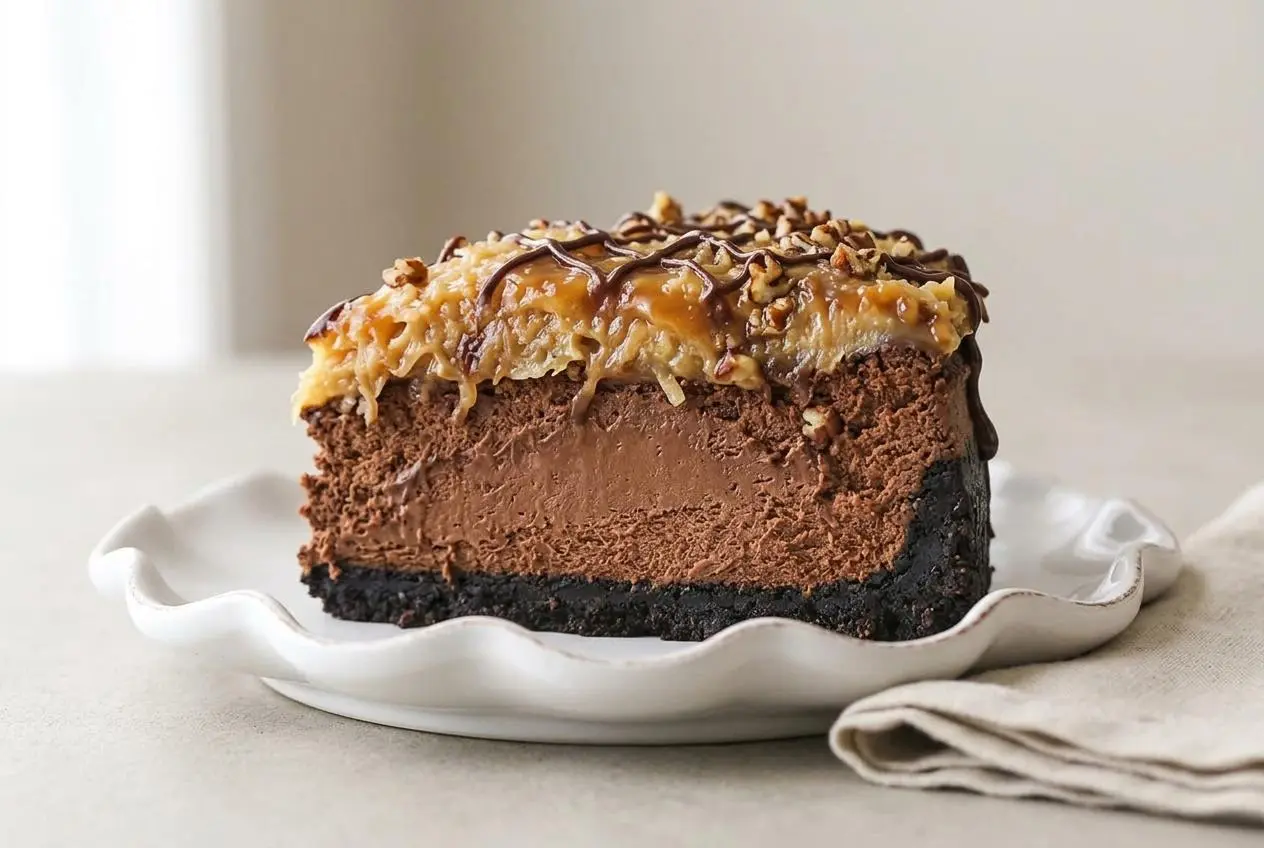
German Chocolate Cheesecake layers a chocolate cookie crust, smooth chocolate filling, and gooey coconut pecan topping into one rich dessert. A water bath and slow cooling help keep the texture creamy and the top smooth.
German Chocolate Cheesecake tastes like the best parts of classic German chocolate cake and a dense, silky cheesecake combined. You get deep chocolate, tangy cream cheese, toasted pecans, and sweet coconut in every slice.
It takes time, but most of that is cooling and chilling, which is exactly what gives the filling its clean slice and lush texture. The gentle wobble at the center is the clue to watch.
Bring the cream cheese, sour cream, and eggs to room temperature before you start so the filling blends smooth instead of turning grainy.
The History Behind German Chocolate
German chocolate is not named for Germany. It traces back to Samuel German, an English-American chocolate maker who developed a sweet baking chocolate in the United States.
That chocolate became known for its milder cacao flavor and higher sweetness than many other baking chocolates. It is the reason German chocolate desserts taste softer, sweeter, and a little more caramel-like than desserts made with dark or semi-sweet chocolate.
Essential Ingredients Explained
Each ingredient has a real job here, from structure in the filling to crunch in the crust and that signature gooey finish on top.
Coconut-Pecan Topping
- 4 large egg yolks
- 12 oz can evaporated milk
- 1 1/2 tsp vanilla extract
- 1 1/2 cups (310g) sugar
- 3/4 cup (168g) unsalted butter, cubed
- 2 2/3 cups (227g) sweetened shredded coconut
- 1 1/4 cups (133g) chopped pecans, toasted
Crust
- 2 1/2 cups (335g) Oreo crumbs (about 30 Oreos)
- 1/4 cup (56g) unsalted butter, melted
Filling
- 24 oz (678g) cream cheese, room temperature
- 1 cup (207g) sugar
- 1 tbsp (8g) all-purpose flour
- 3 tbsp (21g) natural unsweetened cocoa powder
- 1 cup (230g) sour cream
- 1/2 tsp vanilla extract
- 8 oz German chocolate, chopped and melted
- 4 large eggs, room temperature
Brick-style cream cheese gives the filling its body and helps it bake up dense and smooth instead of loose. Egg yolks thicken the topping as it cooks, while evaporated milk keeps it rich without making it candy-sweet. German sweet baking chocolate brings mellow cocoa flavor that feels softer and sweeter than unsweetened chocolate.
I like to touch the cream cheese and eggs before mixing. If they still feel cool in the center, I wait a bit longer, because that small pause usually means a much smoother batter.
Understanding German Baking Chocolate
This is one of the biggest points of confusion. German sweet chocolate is a sweet baking chocolate, usually around 48 percent cacao, so it is milder and sweeter than semi-sweet chocolate and much gentler than dark chocolate.
That matters in this cheesecake because the filling already includes cocoa powder for depth. German chocolate adds sweetness and a rounded chocolate flavor without pushing the dessert into bitter territory.
If you cannot find it, the closest substitute is semi-sweet chocolate with a little extra sugar, or a mix of milk chocolate and dark chocolate to mimic that softer flavor profile. Melt it gently for the smoothest batter. If you want a refresher on melting baking chocolate, that guide is useful for avoiding clumps or seized chocolate.
Selecting the Right Dairy
Use full-fat brick cream cheese here, not whipped tub cream cheese. The brick style holds its shape better during baking and gives the cheesecake that firm yet creamy slice.
Sour cream loosens the batter just enough and adds tang, which keeps the chocolate from tasting flat. Evaporated milk in the topping is also non-negotiable. It is concentrated but unsweetened, so it thickens properly with the yolks and butter. Sweetened condensed milk is much sweeter and heavier, and it can throw off both the texture and flavor of the topping.
Step-by-Step German Chocolate Cheesecake
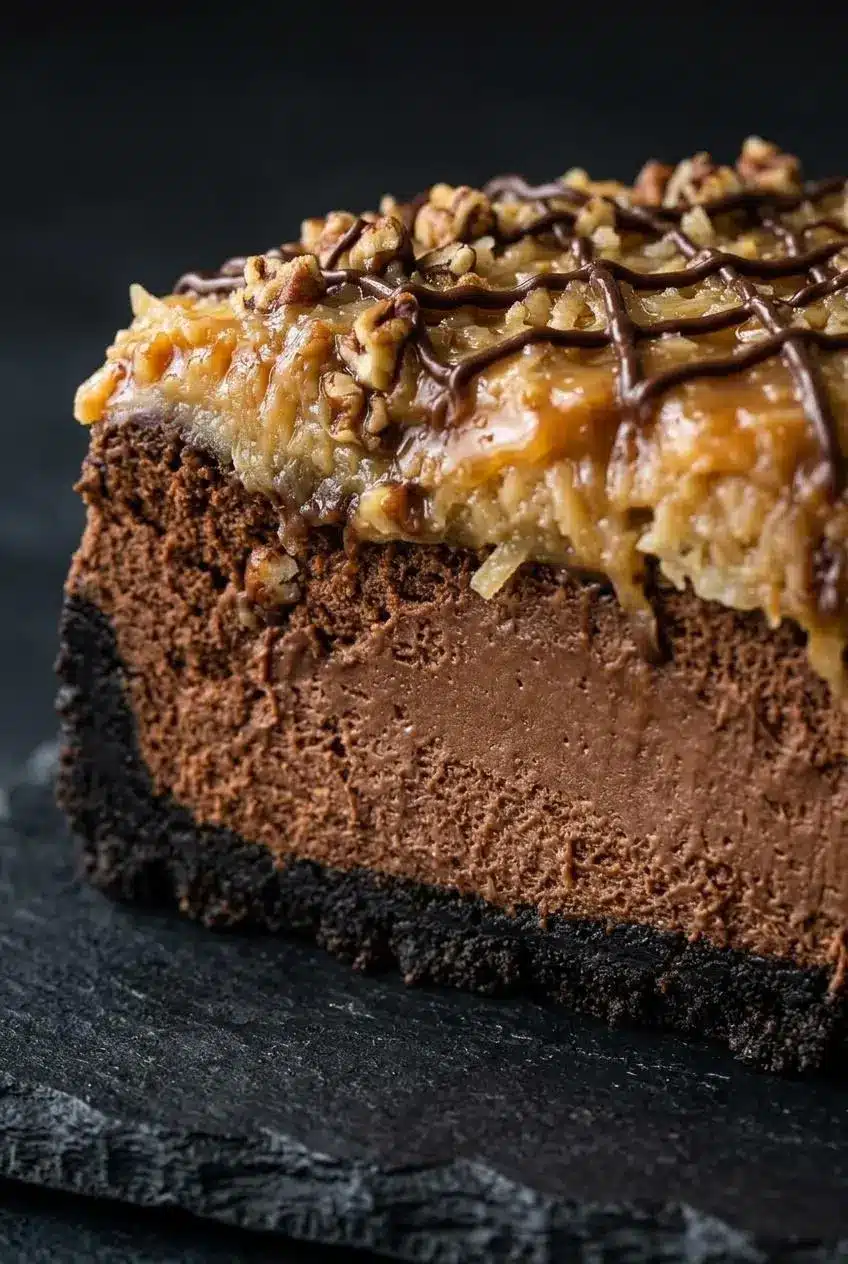
This recipe works best when you treat it as three parts that come together at the end: topping, crust, and filling. Each one has a clear texture cue that tells you when to move on.
Make the topping
- Whisk the egg yolks, evaporated milk, and vanilla extract together in a large saucepan until the mixture looks even and fully blended.
The base should look smooth and pale with no streaks of yolk left behind. - Add the sugar and cubed butter, then cook over medium heat for 12 to 15 minutes while stirring constantly.
Keep cooking until it thickens to a pudding-like consistency that slowly mounds on itself instead of running thinly across the pan. - Take the pan off the heat and stir in the shredded coconut and toasted pecans until everything is well coated.
The finished topping should look glossy, thick, and spoonable, then cool completely before layering.
Make the crust
- Heat the oven to 325°F (163°C), line the bottom of a 9-inch springform pan with parchment paper, and grease the sides.
This setup helps the crust release cleanly and keeps the edges from sticking. - Mix the Oreo crumbs with the melted butter in a small bowl, then press the mixture into the bottom and up the sides of the pan.
It should feel like wet sand and hold its shape when pressed between your fingers. - Bake the crust for 8 to 10 minutes, then set it aside to cool.
The crust will smell toasty and look slightly darker once it is ready. - Wrap the outside of the springform pan with heavy-duty aluminum foil before the water bath step.
The foil should fit snugly with no easy gaps where water could sneak in.
Make the filling
- Lower the oven temperature to 300°F (148°C).
A gentler oven helps the cheesecake bake evenly without puffing too fast. - Beat the cream cheese, sugar, flour, and cocoa powder on low speed in a large bowl until smooth, stopping to scrape the bowl as needed.
The mixture should look thick and creamy with no visible lumps. - Mix in the sour cream and vanilla extract on low speed until fully incorporated.
The batter should loosen slightly and turn extra silky. - Add the melted chocolate in two additions, mixing after each one just until combined.
This helps the chocolate blend in evenly instead of forming streaks or small firm bits. - Add the eggs one at a time, mixing slowly after each addition and scraping the bowl when needed.
Stop as soon as the batter looks uniform, because too much mixing adds air and encourages cracks. - Spread about a cup of the cheesecake filling into the crust as the first layer.
This base layer should cover the bottom evenly so the topping stays centered. - Spoon about 1 1/2 cups of the coconut pecan topping over that filling layer.
Keep it gentle so the layers stay distinct instead of blending together. - Pour the remaining cheesecake batter over the topping layer with a light hand.
The batter should flow over it and cover it without digging down into the center. - Set the springform pan inside a larger pan and pour warm water into the outer pan until it reaches halfway up the sides of the springform pan.
The cheesecake pan should stay upright and the foil should remain above the water line. - Bake for 1 hour 25 minutes to 1 hour 30 minutes.
The center should look set around the edges but still have a gentle wobble when you tap the pan. - Turn off the oven and leave the door closed for 30 minutes.
This first cooling stage lets the cheesecake settle without a sudden drop in temperature. - Crack the oven door open and leave the cheesecake inside for another 30 minutes.
The top should stay level as it cools slowly. - Remove the cheesecake from the oven and water bath, then refrigerate for 5 to 6 hours or overnight.
It should feel firm and well chilled before you add the final topping and slice it. - Spread the remaining coconut pecan topping over the chilled cheesecake before serving.
The topping should sit thickly on top instead of sliding off the sides.
Preparing the Crunchy Cookie Crust
A good Oreo crust should feel like damp beach sand before it goes into the pan. If it looks dusty, it needs the butter worked through more evenly. If you press it and it immediately crumbles apart, keep mixing.
Pack it firmly into the base and up the sides with the bottom of a measuring cup or glass. Tight packing helps prevent weak spots that can soften once the filling goes in. The short bake sets the crust and gives it a sturdier bite.
Cooking the Gooey Coconut-Pecan Topping
This topping should not be rushed. Stir constantly and watch for the change from thin and glossy to thick and pudding-like. When you drag the spoon across the bottom of the pan, the trail should briefly hold before the mixture settles back.
If it comes off the stove too early, it can run when sliced. If it gets too thick, it will still taste great but spread less smoothly. Toasted pecans make a big difference here, because they bring out a deeper nutty aroma that stands up to the sweet coconut.
Mixing the Decadent Filling
Low speed is the trick. Cheesecake batter should be mixed just enough to smooth it out, not whipped like cake batter. Too much air makes the cheesecake rise, then sink and crack.
The flour helps with structure, and the cocoa powder deepens the chocolate flavor without making the filling too soft. If you want an optional flavor boost, you can fold in some very finely chopped toasted pecans and a pinch of espresso powder to the batter. Keep that as a personal twist, not a requirement.
How to Toast Coconut and Pecans to Perfection
You can toast pecans in a dry skillet over medium-low heat, stirring often, until they smell fragrant and a shade darker. For coconut, spread it on a baking sheet and toast briefly in the oven, checking often since it can color quickly.
Pull either one as soon as the aroma turns rich and nutty. Overbrowned coconut tastes harsh fast, and pecans can swing from perfect to bitter in a hurry.
Scaling Down: Making a Mini 6-Inch Cheesecake
If you want a smaller version, use this recipe as a guide rather than forcing the full amount into a 6-inch pan. A smaller pan needs less filling and a shorter bake, and the center should still finish with the same gentle wobble.
A 10-inch pan can work for a slightly shorter, wider cheesecake, but it will bake differently and the layers will not be as tall. Watch the center closely rather than relying only on the clock.
How to Prevent Cheesecake Cracks: The Water Bath Method
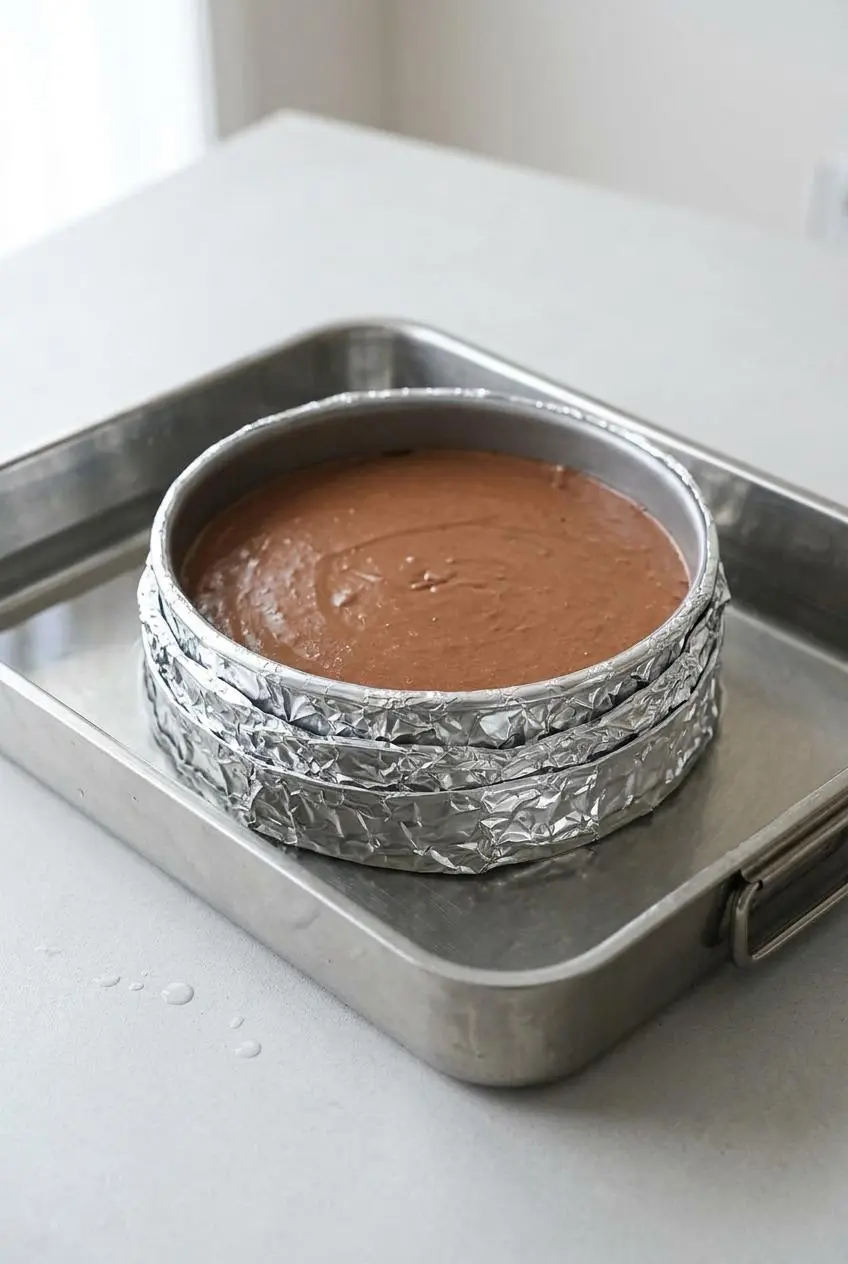
If you want the smoothest top and creamiest texture, the water bath is worth it. It softens the oven heat and adds moisture, so the edges do not overcook while the center finishes.
Wrap the springform pan with multiple tight layers of heavy-duty foil, pressing the foil up the sides and around the base. If you have a reusable silicone protector for springform pans, that works well too. The goal is to reduce the chance of water reaching the crust.
Set the wrapped pan inside a larger pan before adding the warm water. Pour the water into the outer pan only after both pans are in place. That keeps splashes away from the crust and makes the setup easier to move.
If you skip the true water bath, you can still bake the cheesecake at 300°F and place a separate pan of hot water on the rack below to add humidity. It can work, but the texture is usually less even and the risk of cracking is higher.
Slow cooling matters just as much as the water bath. First let the cheesecake rest in the turned-off oven, then cool it again with the door cracked open. That gradual drop in temperature helps prevent sudden shrinkage and those deep canyon-like cracks nobody asked for.
Scratch-Made vs. Boxed Mix Options
A fully scratch-made cheesecake gives you tighter control over flavor and texture. The chocolate stays velvety, the tang of the cream cheese comes through clearly, and the coconut-pecan topping tastes rich instead of one-note sweet.
Boxed cake style desserts can still scratch the same flavor itch, but they bake up more like a hybrid cake dessert than a classic cheesecake. If you want an easier cake-style option with that same coconut and pecan profile, german chocolate poke cake is a good alternative.
No-Bake German Chocolate Cheesecake
You can make an oven-free version, but it is a variation, not the same dessert. A no-bake filling usually relies on whipped cream cheese and melted chocolate, so the texture lands lighter and mousse-like rather than dense and baked.
Use the same flavor direction if you want it, but expect a softer slice and less of that classic baked cheesecake tang. It is great for hot weather, just different.
Gluten-Free Chocolate Crust Swap
For a gluten-free version, swap the regular chocolate sandwich cookies for certified gluten-free chocolate cookies in the crust. The flavor stays close, and the coconut-pecan topping still carries the classic profile.
If you also need a filling adjustment, a little cornstarch can stand in for the flour. That change is optional and should be treated as an adaptation, not part of the core recipe.
Storage, Freezing, and Slicing Tips
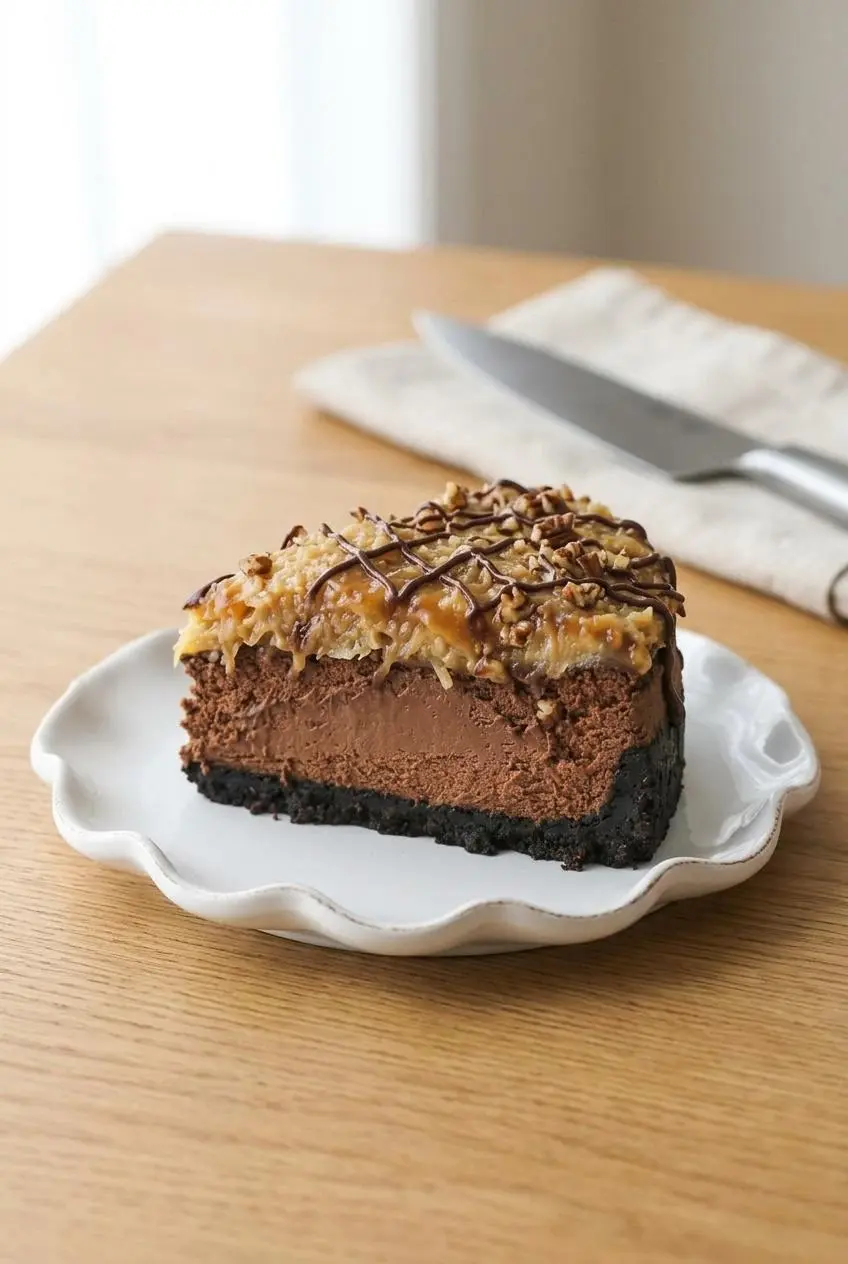
Once baked and chilled, keep the cheesecake covered in the refrigerator for 5 days. Because this dessert is rich in dairy and eggs, it should stay cold, and perishable dairy foods should be kept refrigerated at or below 40°F.
You can freeze individual slices for up to 3 months. Wrap each slice tightly in plastic wrap and then aluminum foil, and for the neatest texture, freeze the slices without extra fresh decorative toppings added on top.
For the cleanest cuts, chill the cheesecake thoroughly before slicing. Use a large chef’s knife dipped in warm water, wipe it dry, then cut straight down without sawing. Clean and warm the knife again between slices so the layers stay sharp and the topping does not drag.
If you are serving this for a holiday table, a light drizzle of warm chocolate ganache, a few extra toasted pecan halves, or a spoonful of softly whipped cream all fit naturally without covering up the main topping.
Conclusion
This cheesecake earns its time with a rich chocolate filling, sturdy Oreo crust, and that unmistakable coconut-pecan topping. The water bath and slow cooling are what turn it from good to bakery-level smooth.
Make it when you want a true centerpiece dessert and give it the patience it needs to chill well. The first clean slice is extremely satisfying.
Frequently Asked Questions
What Is the Difference Between German Chocolate and Regular Chocolate?
German chocolate is a sweet baking chocolate, so it contains more sugar and tastes milder than semi-sweet or dark baking chocolate. It usually sits around 48 percent cacao, which gives it a softer chocolate profile. That is why it works so well in desserts with coconut and pecans.
Why Does My German Chocolate Cheesecake Crack?
Overmixing is the most common cause. Too much air in the batter makes the cheesecake puff in the oven, then fall and split as it cools. High heat and fast cooling can also do it. Bake low, use the water bath when possible, and let the cheesecake cool gradually in the oven before chilling.
Can I Make This Cheesecake Without a Water Bath?
Yes, but it is less reliable. Bake at the same low temperature and place a separate pan of hot water on the rack below to add moisture to the oven. That method can help, but the edges may cook more quickly and the top is more likely to crack than with a true water bath.
How Do I Store and Freeze German Chocolate Cheesecake?
Store it covered in the refrigerator and keep it well chilled between servings. Slice only what you need if you want the rest to stay neat and fresh. For longer storage, freeze individual slices wrapped tightly in plastic wrap and aluminum foil. Thaw them in the refrigerator before serving.
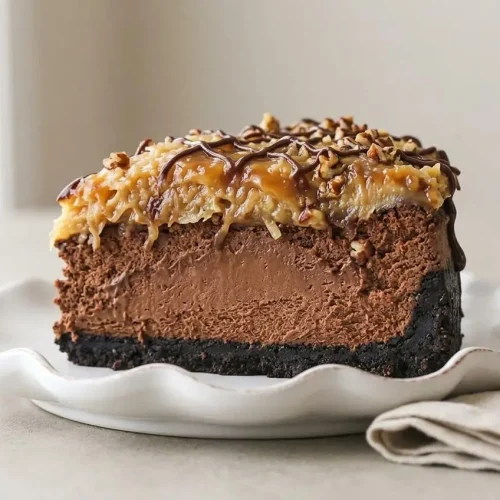
German Chocolate Cheesecake

Equipment
- 9-inch Springform Pan
- Large saucepan
- Stand mixer
- Large baking pan
- Aluminum Foil
- Parchment Paper
Ingredients
Coconut-Pecan Topping
- 4 large egg yolks
- 12 oz can evaporated milk
- 1 1/2 tsp vanilla extract
- 1 1/2 cups sugar (310g)
- 3/4 cup unsalted butter (168g), cubed
- 2 2/3 cups sweetened shredded coconut (227g)
- 1 1/4 cups chopped pecans (133g), toasted
Crust
- 2 1/2 cups Oreo crumbs (335g) (about 30 Oreos)
- 1/4 cup unsalted butter (56g), melted
Filling
- 24 oz cream cheese (678g), room temperature
- 1 cup sugar (207g)
- 1 tbsp all-purpose flour (8g)
- 3 tbsp natural unsweetened cocoa powder (21g)
- 1 cup sour cream (230g)
- 1/2 tsp vanilla extract
- 8 oz German chocolate chopped and melted
- 4 large eggs room temperature
Instructions
Make the topping
- Whisk the egg yolks, evaporated milk, and vanilla extract together in a large saucepan until the mixture looks even and fully blended. The base should look smooth and pale with no streaks of yolk left behind.
- Add the sugar and cubed butter, then cook over medium heat for 12 to 15 minutes while stirring constantly. Keep cooking until it thickens to a pudding-like consistency that slowly mounds on itself instead of running thinly across the pan.
- Take the pan off the heat and stir in the shredded coconut and toasted pecans until everything is well coated. The finished topping should look glossy, thick, and spoonable, then cool completely before layering.
Make the crust
- Heat the oven to 325°F (163°C), line the bottom of a 9-inch springform pan with parchment paper, and grease the sides. This setup helps the crust release cleanly and keeps the edges from sticking.
- Mix the Oreo crumbs with the melted butter in a small bowl, then press the mixture into the bottom and up the sides of the pan. It should feel like wet sand and hold its shape when pressed between your fingers.
- Bake the crust for 8 to 10 minutes, then set it aside to cool. The crust will smell toasty and look slightly darker once it is ready.
- Wrap the outside of the springform pan with heavy-duty aluminum foil before the water bath step. The foil should fit snugly with no easy gaps where water could sneak in.
Make the filling
- Lower the oven temperature to 300°F (148°C). A gentler oven helps the cheesecake bake evenly without puffing too fast.
- Beat the cream cheese, sugar, flour, and cocoa powder on low speed in a large bowl until smooth, stopping to scrape the bowl as needed. The mixture should look thick and creamy with no visible lumps.
- Mix in the sour cream and vanilla extract on low speed until fully incorporated. The batter should loosen slightly and turn extra silky.
- Add the melted chocolate in two additions, mixing after each one just until combined. This helps the chocolate blend in evenly instead of forming streaks or small firm bits.
- Add the eggs one at a time, mixing slowly after each addition and scraping the bowl when needed. Stop as soon as the batter looks uniform, because too much mixing adds air and encourages cracks.
- Spread about a cup of the cheesecake filling into the crust as the first layer. This base layer should cover the bottom evenly so the topping stays centered.
- Spoon about 1 1/2 cups of the coconut pecan topping over that filling layer. Keep it gentle so the layers stay distinct instead of blending together.
- Pour the remaining cheesecake batter over the topping layer with a light hand. The batter should flow over it and cover it without digging down into the center.
- Set the springform pan inside a larger pan and pour warm water into the outer pan until it reaches halfway up the sides of the springform pan. The cheesecake pan should stay upright and the foil should remain above the water line.
- Bake for 1 hour 25 minutes to 1 hour 30 minutes. The center should look set around the edges but still have a gentle wobble when you tap the pan.
- Turn off the oven and leave the door closed for 30 minutes. This first cooling stage lets the cheesecake settle without a sudden drop in temperature.
- Crack the oven door open and leave the cheesecake inside for another 30 minutes. The top should stay level as it cools slowly.
- Remove the cheesecake from the oven and water bath, then refrigerate for 5 to 6 hours or overnight. It should feel firm and well chilled before you add the final topping and slice it.
- Spread the remaining coconut pecan topping over the chilled cheesecake before serving. The topping should sit thickly on top instead of sliding off the sides.