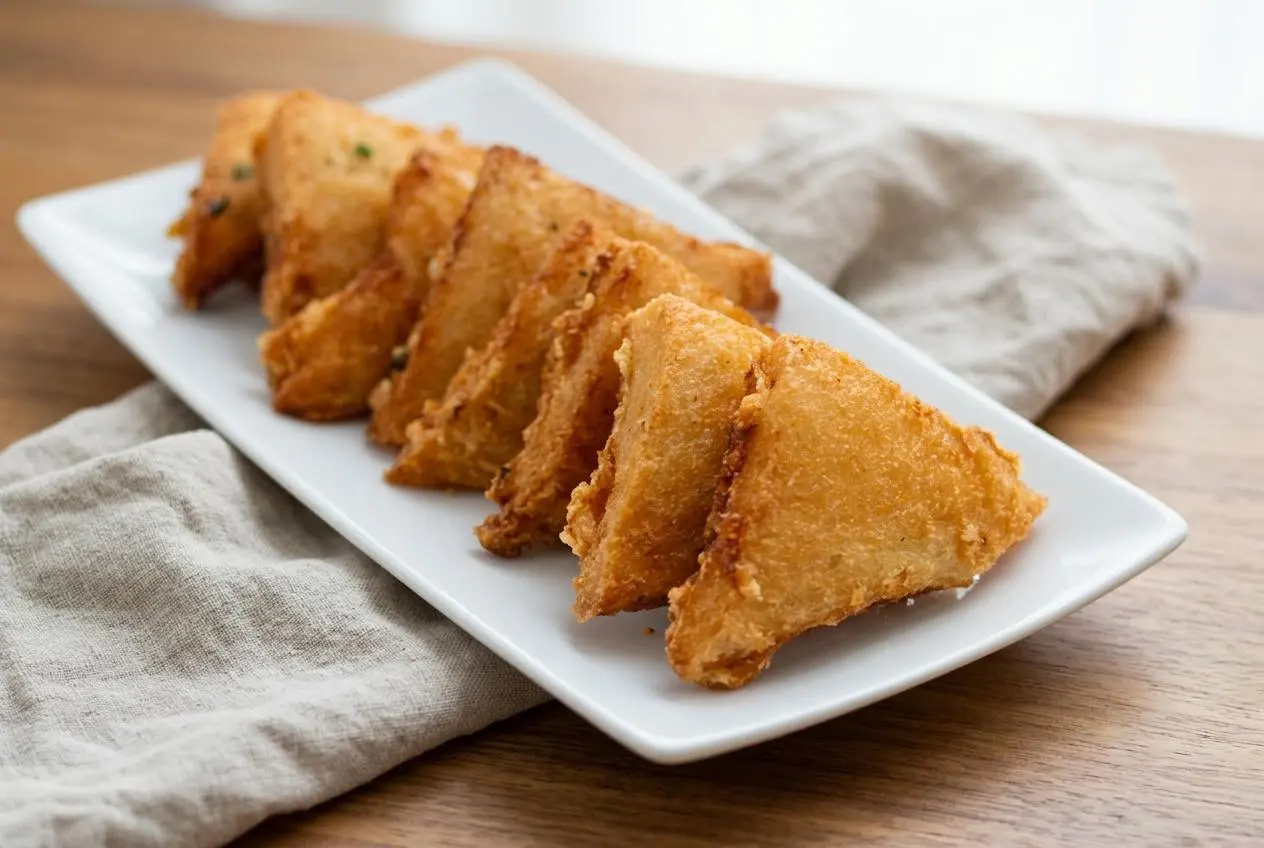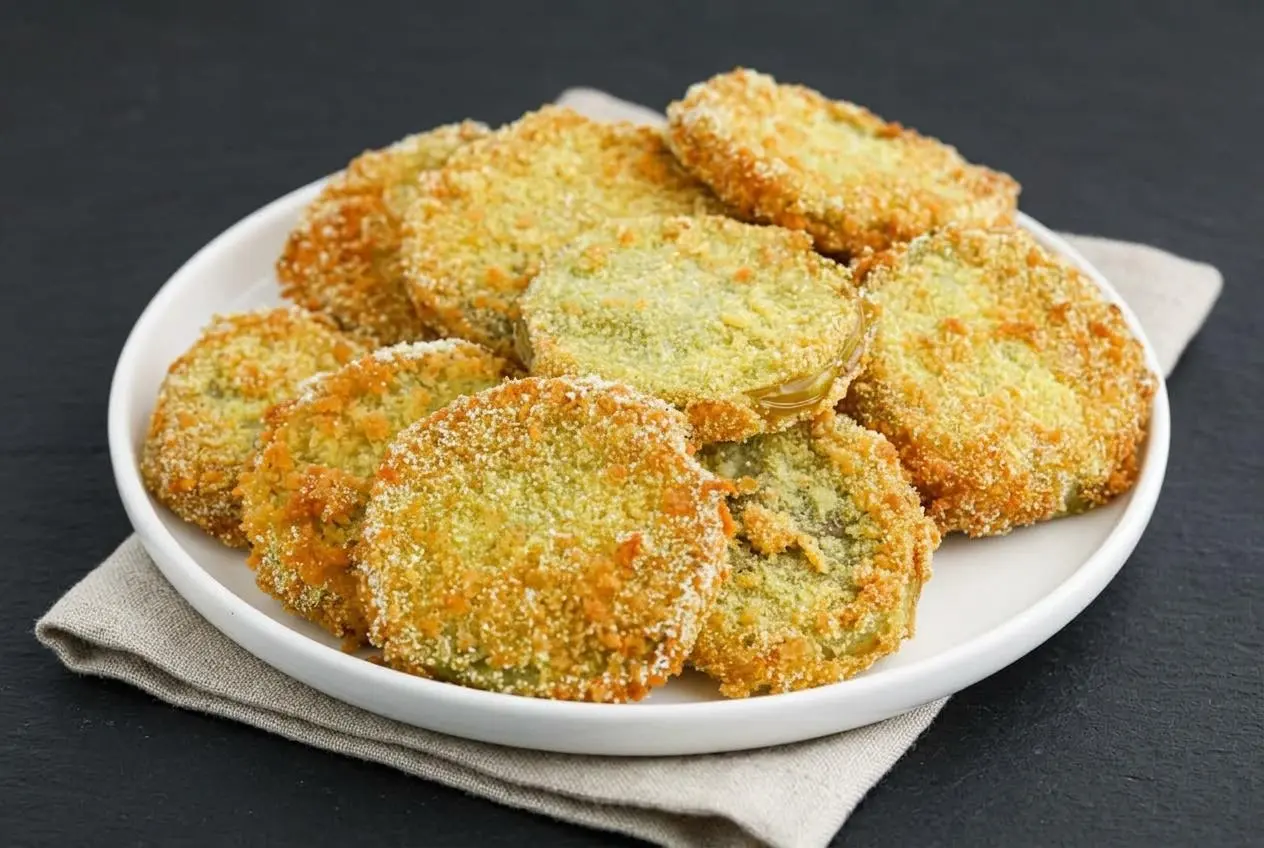
For the crispiest results, use firm room-temperature green tomatoes, pat them dry, coat them in flour, egg, and a cornmeal-panko mixture, then fry at 350°F to 375°F until the edges turn deep golden and the center just softens.
This fried green tomatoes recipe gives you that classic Southern contrast of a crunchy crust and a tart, tender middle. It’s quick, satisfying, and built around a simple pan-fry method that keeps the coating attached.
You’ll also get the small details that matter, like how to choose the right tomatoes, how to avoid clumpy fingers at the dredging station, and when to flip for the best color. The edge cue is everything.
Set your tomatoes out ahead of time so they lose their fridge chill before they hit the oil.
Understanding Green Tomatoes
Green tomatoes are not just unripe red tomatoes in a different mood. They are firm, dense, and naturally tart, which makes them ideal for frying. That sturdy structure helps them hold their shape in hot oil instead of collapsing into softness the way ripe red tomatoes often do.
That firmness is exactly why the centers stay pleasantly tender instead of mushy. As they cook, the heat softens the flesh just enough while the slice still stays intact, so you get a crisp shell around a tangy middle.
When shopping, look for tomatoes that feel heavy, tight-skinned, and very firm all over. A good frying tomato should be solid green, not pale yellow-green and definitely not soft. If it has started turning yellow or has wrinkled spots, it will taste sweeter and softer, which works against the clean slices you want here.
Wash the tomatoes well before slicing, and handle them with the same care you’d use for any fresh produce. Good rinsing and clean prep habits help reduce the risk of contamination when working with fresh vegetables, as outlined in safe washing and handling practices for fresh produce.
Slice them evenly, about 1/4 inch thick as written in the recipe, so every piece fries at the same rate. Uniform slices are the difference between a batch that cooks beautifully and one that gives you some mushy centers and some underdone ones.
I always pass on green tomatoes that feel even slightly soft near the stem end. That tiny bit of softness usually means the slices won’t stay as neat in the skillet.
Firm vegetables tend to fry better for the same reason crispy fried eggplant works best when the slices are thick enough to hold their structure.
Essential Ingredients for Crispy Tomatoes
Each ingredient here has a real job, from building a sturdy crust to balancing the tomatoes’ sharp tang with warmth, crunch, and color.
- 3 fresh green tomatoes (cut into 1/4 inch slices and room temperature)
- Seasoned salt and pepper to taste
- ½ cup all-purpose flour
- 2 large eggs (beaten with 1 tablespoon of hot sauce OR water)
- ½ cup yellow cornmeal
- ½ cup panko crumbs (or plain bread crumbs)
- 1/2 teaspoon smoked paprika
- 1/2 teaspoon garlic powder (optional)
- 1/2 teaspoon onion powder (optional)
- 1/4 teaspoon lemon pepper (optional)
- a pinch of cayenne (optional)
- oil for frying
The green tomatoes are the backbone of the recipe, and they need to be firm and unripened. Their acidity gives fried green tomatoes that signature bright bite, while their dense texture helps the slices stay whole in the pan.
The flour lays down the first dry layer so the egg has something to grip. Eggs then act as the binder that helps the cornmeal and crumbs stay put instead of sliding off into the oil. The tablespoon of hot sauce adds a little punch and a bit more flavor to the wet coating, while water keeps the egg wash plain and practical if that’s what you have.
The seasoning blend matters more than it looks on paper. Smoked paprika adds color and a faint smoky warmth, while the optional garlic powder, onion powder, lemon pepper, and cayenne round out the tangy tomato with savory depth and a little edge.
Selecting the Perfect Unripe Tomato
Choose tomatoes that are completely green, smooth, and very firm. If they feel soft or show blushes of yellow or red, they’ll be less tart and more likely to slump during frying.
Room-temperature tomatoes fry better than cold ones because they won’t shock the oil as much. That helps you keep a steady temperature, which means a crisper crust and less greasy breading.
The Crunch Secret: Panko and Cornmeal
This crust works so well because cornmeal and panko do different jobs. The yellow cornmeal gives you that classic Southern sandy crunch and toasty flavor, while panko adds lighter, airier crispness so the coating doesn’t feel heavy.
Using cornmeal alone can make the exterior more dense and a little harder. Mixing in panko creates tiny craggy pockets that fry up extra crisp, which is especially nice against the juicy, tart center.
The egg wash with hot sauce acts as the main binder here. If you like the flavor of buttermilk, you can use that same idea in a similar dredge for extra tang, but in this version the egg mixture already gives the coating enough hold and richness.
The outline hint about Parmesan is tasty in spirit, but it is not part of the official ingredient list here, so keep it as an optional idea only if you already know you want a saltier, more savory crust. The core version does not need it to turn out crisp.
Pat the slices very dry before dredging. A damp tomato surface is the fastest way to lose that beautiful crust in the skillet.
Step-by-Step Frying Method
- Season the tomato slices generously on both sides with seasoned salt and pepper.
This early layer wakes up the tomatoes themselves, so the center tastes seasoned and not bland once the crust is on. - Place the flour in one shallow bowl and the beaten eggs in a second shallow bowl.
Keeping the dry and wet layers separate makes the dredging cleaner and helps the coating build in distinct layers. - Whisk the cornmeal, panko crumbs, smoked paprika, and any optional spices together in a third shallow bowl.
The mixture should look evenly speckled so every slice gets balanced flavor and an even crust. - Coat each tomato slice in flour first, covering both sides completely.
A light, even flour layer gives the egg something to cling to and starts the crust off strong. - Dip the floured slice into the egg mixture and turn it to cover both sides.
The surface should look fully moistened with no dry flour patches left behind. - Press the slice into the crumb mixture, then place it on a baking sheet.
The coating should adhere in a rough, even layer that looks textured rather than patchy. - Continue breading the remaining slices in the same order, starting with flour each time.
Once all the slices are coated, they should look dry on the outside and ready for the pan. - Heat oil in a frying pan over medium high heat until it reaches 350°F to 375°F (175°C to 190°C).
When the oil is ready, it should shimmer and respond with a lively sizzle instead of a dull bubble. - Fry the coated tomato slices in batches without crowding the pan, turning them to cook both sides until golden brown, then drain on paper towels or on a wire rack over a baking sheet lined with paper towels.
The right moment to flip is when the edges deepen to golden brown and the crust smells lightly toasted from the spices. - Serve the tomatoes warm, or hold them in a preheated 250°F oven if needed until serving.
They should stay crisp on the outside while the centers remain tender and tangy.
Setting Up Your Dredging Station
A three-bowl station keeps this recipe smooth instead of messy. Line them up in order: flour, egg, then the cornmeal-panko mix. Put the baking sheet at the end so each finished slice has a place to rest without sticking to the counter.
Use one hand for dry ingredients and the other for wet ingredients whenever possible. That dry-hand, wet-hand method keeps your fingers from turning into breaded mittens and helps the crust stay on the tomatoes instead of on you.
If you want a tidier start, you can flour the slices in a food storage bag, shake gently, then move on to the egg and crumb bowls. It’s a handy shortcut when you want the flour coating distributed quickly and evenly.
Pan Frying Instructions
A heavy skillet makes a real difference here, and cast iron is especially good because it holds heat steadily between batches. That steadiness helps the crust brown before the inside gets too soft.
You do not need a deep pool of oil, but you do need enough for the slices to make good contact with the hot fat. If you do not have a thermometer, dip the handle of a wooden spoon into the oil. When you see active bubbles gather around it right away, the oil is usually in frying territory.
Listen for a steady sizzle once the tomatoes hit the pan. Too quiet means the oil is too cool and the slices may absorb oil. Violent sputtering usually means the pan is too hot or the tomatoes still carry too much surface moisture.
Flip when the edges are visibly golden and the underside releases easily. Use a slotted spatula for turning and lifting so excess oil can drain away fast.
If you are cooking in batches, that 250°F oven hold is a smart move. It keeps the first batch warm and crisp while the last batch finishes.
The Golden Rules for Keeping Your Crust Attached
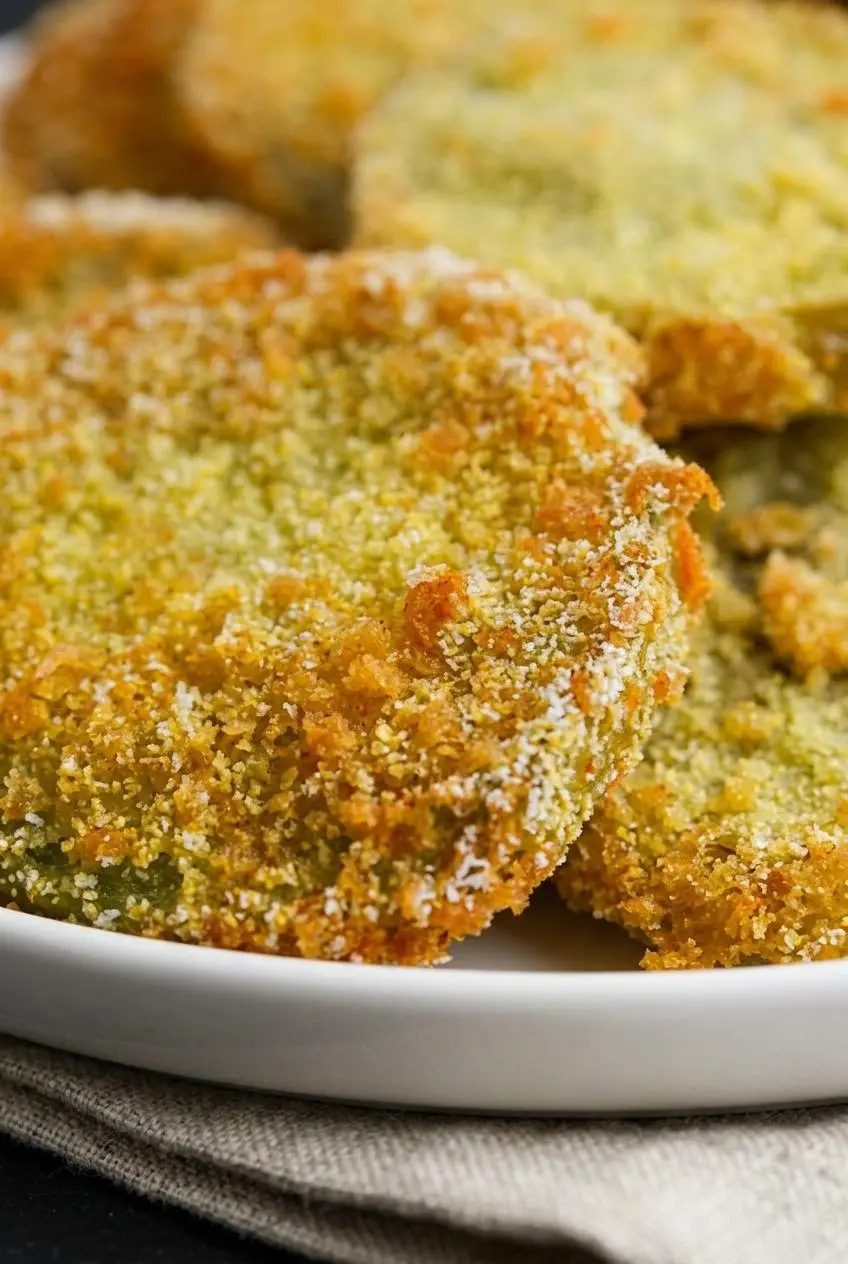
This is the part that saves the recipe. If the breading slips off, the usual cause is moisture.
- Dry the tomato slices well before seasoning and dredging. Surface moisture blocks the flour from sticking properly.
- Follow the flour, egg, then crumb order exactly. Skipping the flour often leads to bare spots and peeling crust.
- Let the breaded slices rest on the baking sheet for a few minutes before frying. That short pause helps the coating hydrate and cling more firmly.
- Lower the slices gently into the oil instead of dropping them. Rough handling can knock the crust loose before it sets.
- Do not move the slices too early. Once the first side browns and releases, the crust is much less likely to tear.
Moisture control matters with other summer vegetables too, which is why pan fried zucchini also benefits from thorough drying before dredging.
Common Frying Mistakes and Troubleshooting
Most fried green tomato problems are easy to fix once you know what caused them.
- The coating falls off in the pan. The slices were probably too wet, or they went into the oil before the dredge had time to settle. Pat dry, dredge in clear layers, and rest the breaded slices briefly before frying.
- The outside browns too fast. The heat is likely a bit high. Lower it slightly so the crust can color at the same pace the tomato softens.
- The tomatoes turn greasy. The oil is too cool or the pan is overcrowded. Keep the oil between 350°F and 375°F and fry in batches so the temperature stays up.
- The slices go limp. They may have been cut too thin or drained poorly. Stick with 1/4 inch slices and let them drain where air can circulate.
- The flavor seems flat. Season the tomatoes before dredging and do not skip the paprika. The aroma should get warmer and toastier as the crust fries, which is a good sign the seasoning is blooming in the oil.
Many home cooks wonder what the biggest mistakes are. The main ones are slicing too thin, frying cold tomatoes, and letting the oil temperature dip, all of which lead to soggy or greasy results.
Easy Dietary Substitutions and Cooking Alternatives
These changes are optional, and the classic skillet version remains the main recipe.
Gluten-Free Fried Green Tomatoes
For a gluten-free version, swap the all-purpose flour for a 1:1 gluten-free baking flour and use certified gluten-free breadcrumbs in place of standard panko. You can also lean a little more on cornmeal for crunch if you prefer a more traditional texture.
The result is still crisp, though the coating may be slightly more delicate depending on the flour blend. Press the crumb layer on gently and let the dredged slices rest before frying so it has time to adhere.
Air Fryer Fried Green Tomatoes
If you want less stovetop cleanup, the air fryer is a good optional path. Preheat the air fryer to 375°F, lightly spray the breaded tomato slices with cooking oil, then cook until golden brown, flipping halfway through.
The texture is lighter and a little drier than pan frying, but still very satisfying. This method works best when the slices are well coated and arranged in a single layer so hot air can circulate.
Classic Southern Serving Ideas
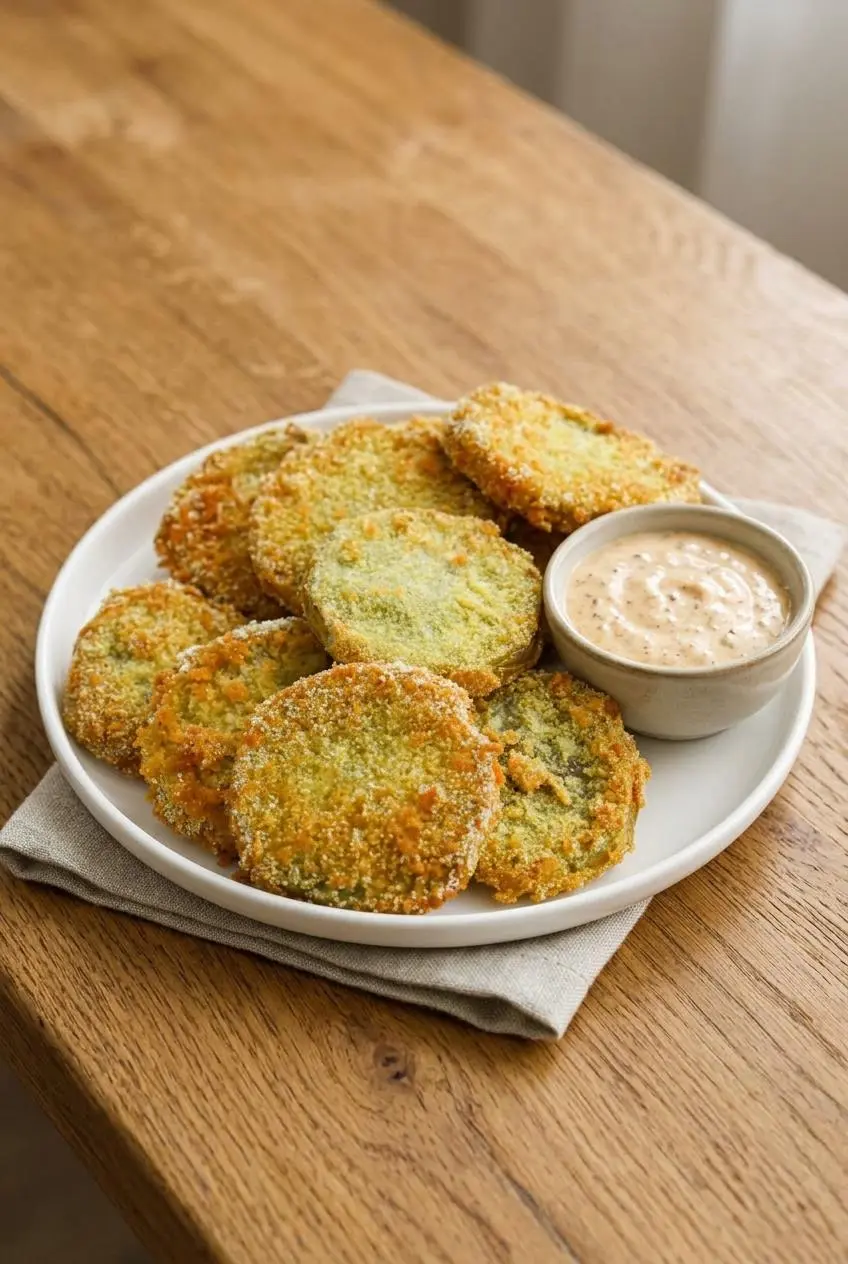
Fried green tomatoes are easy to serve as a snack, starter, or part of a bigger Southern-style meal.
- Serve them hot with a zesty Cajun remoulade, comeback sauce, or buttermilk ranch for dipping.
- Layer them into a BLT with crisp bacon and butter lettuce for a sandwich with extra crunch and tang.
- Pair them with pimento cheese for a rich, sharp contrast that feels right at home on a brunch table.
- Use them as a base for eggs Benedict if you want a savory Southern twist with plenty of texture.
- Add them alongside southern fried apples for a sweet-savory breakfast or brunch spread.
Storing and Reheating
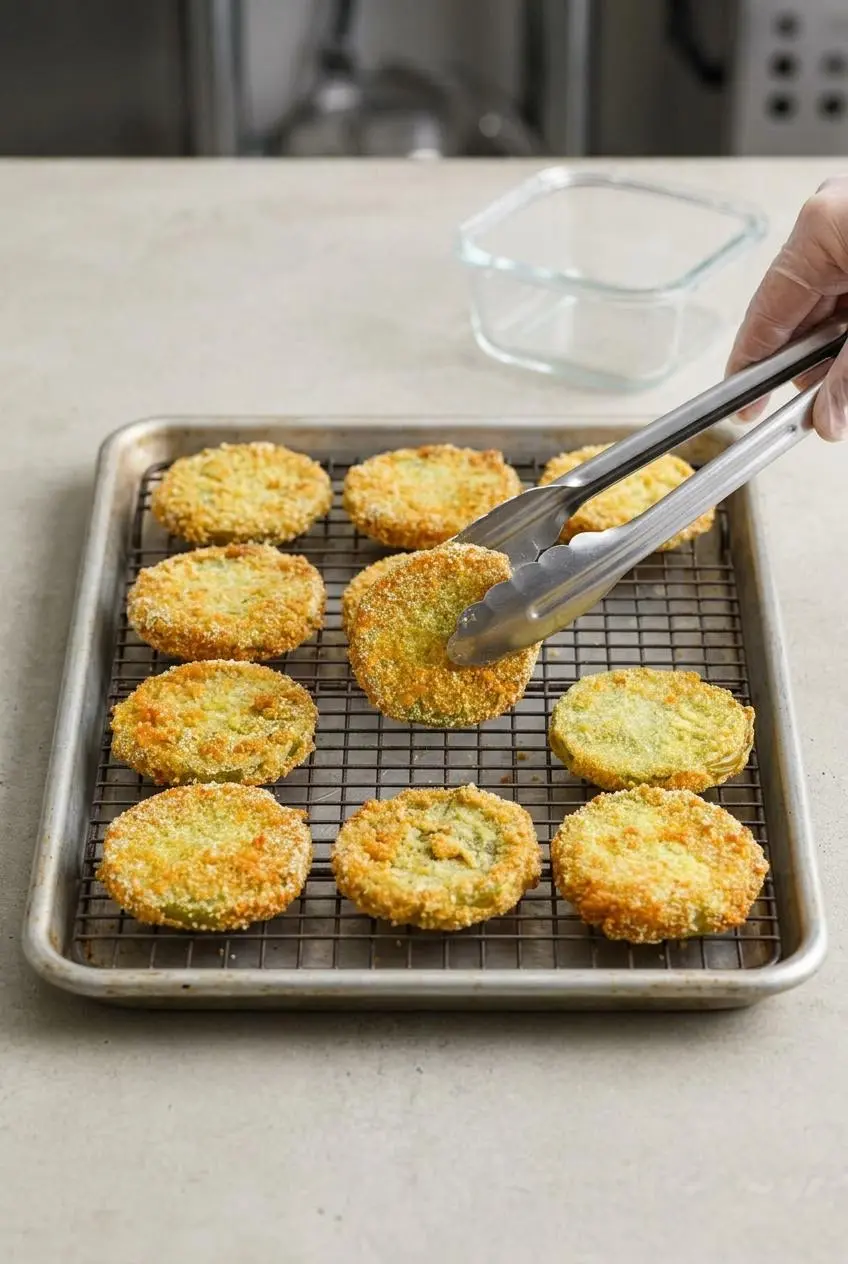
Fried green tomatoes are best right after cooking, when the crust is at its loudest and crunchiest. If you have leftovers, let them cool, then refrigerate them in an airtight container. Because this recipe includes eggs, keep chilled, and if you use a dairy-based dip alongside it, store that separately and keep it properly refrigerated below 40°F as noted for refrigerating milk and dairy products at or below 40°F.
To bring the crust back, reheat the slices in the oven or air fryer until they are hot and crisp again. A microwave will soften the coating quickly, so it is better avoided if texture is the priority.
If you know you will be serving them a bit later the same day, the best move is often to keep fresh batches in that low oven from the recipe rather than chilling and reheating them.
Conclusion
Fried green tomatoes are one of those dishes that feel special with very little fuss, especially when the crust stays crisp and the center keeps that bright tangy bite. The key is simple: dry the slices well, let the coating rest, and keep the oil hot enough to fry instead of soak.
Once you get that rhythm down, this recipe is fast, reliable, and easy to serve with all kinds of Southern favorites. Make them hot, make them crisp, and do not wait too long to eat them.
Frequently Asked Questions
What are common mistakes when frying green tomatoes?
Slicing them too thin, which makes them fragile and harder to fry evenly. Starting with cold tomatoes, which can pull down the oil temperature fast. Letting the oil run too cool, which leads to soggy, greasy breading. Overcrowding the pan, which traps steam and softens the crust.
What is the best thing to fry green tomatoes in?
A heavy cast iron skillet is the top choice because it holds heat evenly. Use a neutral oil suited to frying, such as canola, vegetable, or peanut oil. A steady skillet matters more than a fancy setup here.
Why are my green tomatoes so hard?
Green tomatoes are naturally firm because they are unripened. That firmness is actually useful because it helps the slices keep their shape. Once fried, the center should soften while still staying intact.
How do you take the bitterness out of fried green tomatoes?
Salt the slices before dredging so they start seasoning early. Pat them dry well after seasoning so the coating still sticks properly. Balance the tartness with smoked paprika and, if you like, the optional garlic powder, onion powder, and cayenne.
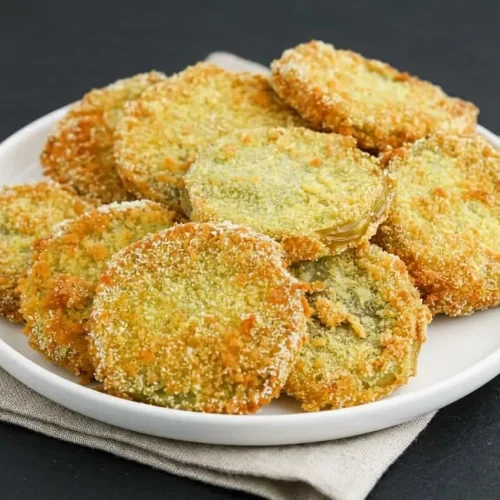
Fried Green Tomatoes Recipe

Equipment
- Frying pan
- Shallow bowls
- Baking Sheet
- Wire rack
Ingredients
- 3 fresh green tomatoes (cut into 1/4 inch slices and room temperature)
- Seasoned salt and pepper to taste
- ½ cup all-purpose flour
- 2 large eggs (beaten with 1 tablespoon of hot sauce OR water)
- ½ cup yellow cornmeal
- ½ cup panko crumbs (or plain bread crumbs)
- 1/2 teaspoon smoked paprika
- 1/2 teaspoon garlic powder (optional)
- 1/2 teaspoon onion powder (optional)
- 1/4 teaspoon lemon pepper (optional)
- a pinch of cayenne (optional)
- oil for frying
Instructions
- Liberally season green tomato slices with salt and pepper on both sides.
- Add flour and eggs to two separate small shallow bowls.
- Combine cornmeal, panko crumbs, and spices into another small shallow bowl and whisk together.
- Begin by dipping each seasoned tomato slice into flour coating on both sides.
- Next add floured tomato slice to eggs coating on both sides.
- Lastly dip into crumb mixture and set aside finished slice on baking sheet.
- Repeat dredging process, starting with flour, until all slices are coated.
- Heat oil in a frying pan over medium high heat to 350°F to 375°F ( 175°C to 190°C).
- Add dredged tomato slices to the pan and be careful not to overcrowd it. Fry tomato slices on both sides until golden brown and drain on paper towels or on a wire rack over a baking sheet lined with paper towels.
- Serve warm. If you aren’t serving immediately, add the tomatoes to a preheated oven around 250 to stay crisp and delish.