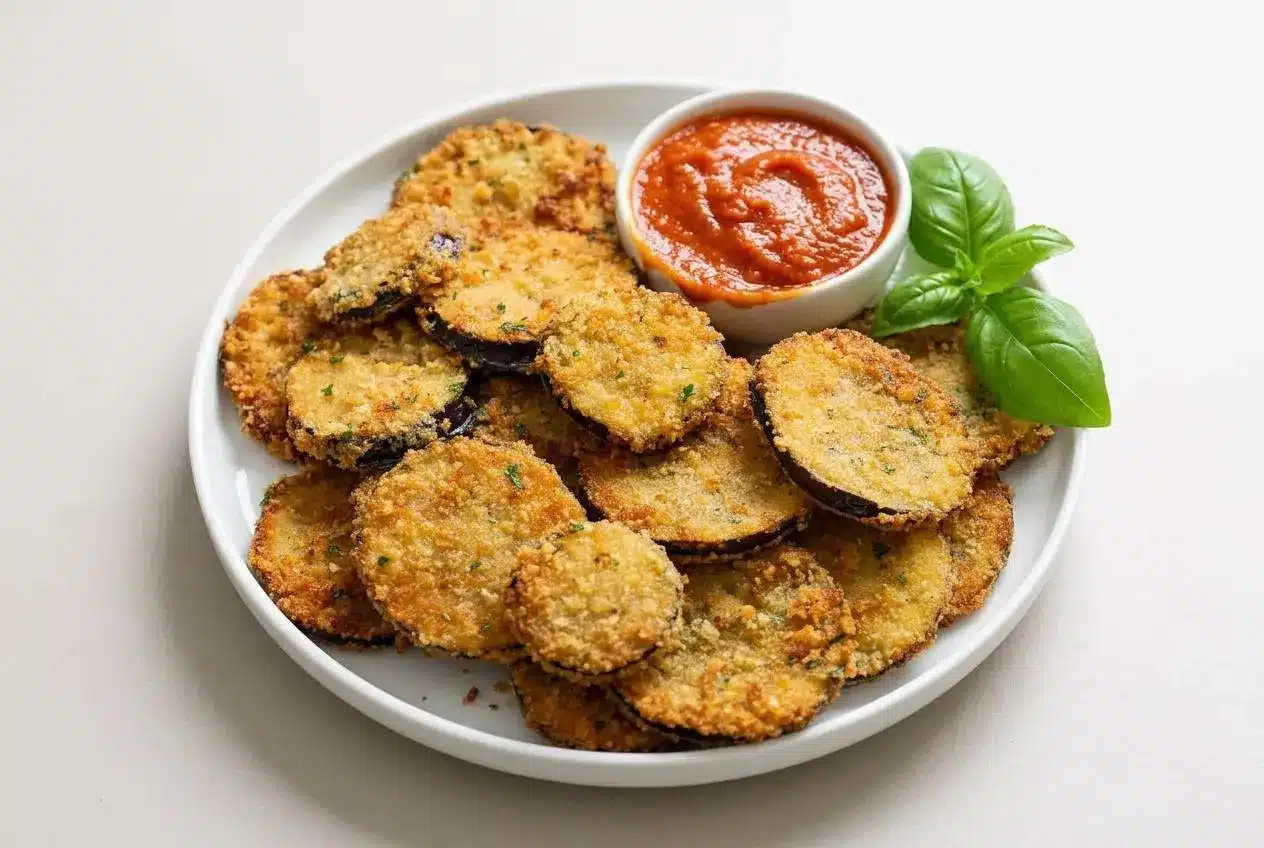
This Fried Eggplant turns out crispy and golden outside, tender inside, and much less likely to go soggy if you salt it first, dry it well, and fry it in properly hot oil.
It’s a classic breaded eggplant recipe with a light crunch from Panko, savory depth from Parmesan, and just enough seasoning to keep every bite interesting.
If fried eggplant has ever come out limp, oily, or a little bitter, this version fixes those problems with clear cues you can actually use. The salting step changes everything.
Set up your breading bowls and cooling rack before the oil heats so frying feels calm instead of frantic.
Why You Must Salt Eggplant Before Frying
This is the step that makes the biggest difference. Salting draws moisture out of the eggplant through osmosis, which is just a simple way of saying the salt pulls water to the surface.
That surface moisture often carries some of the bitter taste with it, especially in larger or more mature eggplants. Once the slices sit for 20 to 30 minutes, you’ll notice little beads of moisture or a damp sheen on top. That “sweat” is your sign that the salt is doing its job.
Less moisture means the slices fry instead of steam. That gives you a crisper crust, a less watery center, and breading that holds on better in the pan.
For this recipe, treat salting as part of the method, not an optional extra. If you skip it, the eggplant is much more likely to taste bitter or turn soft before the coating has a chance to get deeply golden.
Ingredients for Crispy Fried Eggplant
Each ingredient pulls its weight here, from building crunch and structure to adding savory flavor, tenderness, and a little brightness in the coating.
Eggplant
- 2 small/medium eggplants (1 ½ lbs.)
- 1 teaspoon salt
Flour Mixture
- ½ cup all-purpose flour
- ½ teaspoon EACH: onion powder, paprika
Egg Mixture
- 3 large eggs (whisked well)
- 1 ½ teaspoons Dijon mustard
- 1-2 tablespoons heavy cream (optional)
Breadcrumb Mixture
- 2 cups Panko breadcrumbs
- 1 cup grated parmesan cheese
- 3 tablespoons freshly chopped parsley
- ¾ teaspoon garlic salt
For Frying
- Vegetable oil (enough to cover the slices by half.)
Panko gives the coating its airy crunch, while Parmesan helps the crust brown and adds that salty, savory edge. Dijon sharpens the egg mixture without making it taste mustardy, and the cream, if using, softens the egg wash slightly so it coats more evenly.
I like to grate the Parmesan fresh when possible because it melts into the crumbs more smoothly and gives the coating better flavor.
How to Make Fried Eggplant
Once your breading station is ready, the process moves quickly. You’re looking for a lively sizzle when the slices hit the oil and a deep golden brown crust before they come out.
- Cut the eggplant into ¼-inch rounds and keep the slices no thinner than that.
The pieces should look even and sturdy so they hold their shape during breading and frying. - Sprinkle the slices with salt and place them in a colander while you prepare the remaining ingredients.
After 20 to 30 minutes, the surfaces should look damp and slightly glossy from the moisture being drawn out. - Set up three shallow bowls for the coating by mixing the flour ingredients in one, the egg mixture in another, and the breadcrumb mixture in the third.
Having the whole station ready before frying keeps the coating neat and helps you work without scrambling once the oil is hot. - Dry each eggplant slice thoroughly between paper towels as you bread it.
The slices should feel dry to the touch, which helps the coating stick and crisp instead of sliding off. - Coat a slice fully in the flour mixture.
A light, even flour layer gives the egg mixture something to grab onto. - Dip the floured slice into the egg mixture and let the extra drip off before moving on.
You want a thin, even coating here because too much egg can soak through and soften the crust. - Press the slice into the breadcrumb mixture, turning it a few times so both sides are well covered.
The crumbs should cling all over the surface with no wet patches showing through. - Heat vegetable oil in a skillet over medium-high heat to 350 °F, then fry the eggplant in batches for 2 to 3 minutes per side.
The oil should look hot and shimmering, and the eggplant should sound lively when it goes in, not faint, as the coating turns deep golden brown. - Lift the slices out with a slotted spatula and place them on wire racks set over a baking sheet if you can.
Air should circulate underneath so the bottoms stay crisp instead of trapping steam. - Continue with the remaining slices, adding more oil as needed and adjusting the heat if the pan gets too hot.
Serve while the crust is still crisp and the center is tender.
Tips for Perfectly Crispy Eggplant Every Time
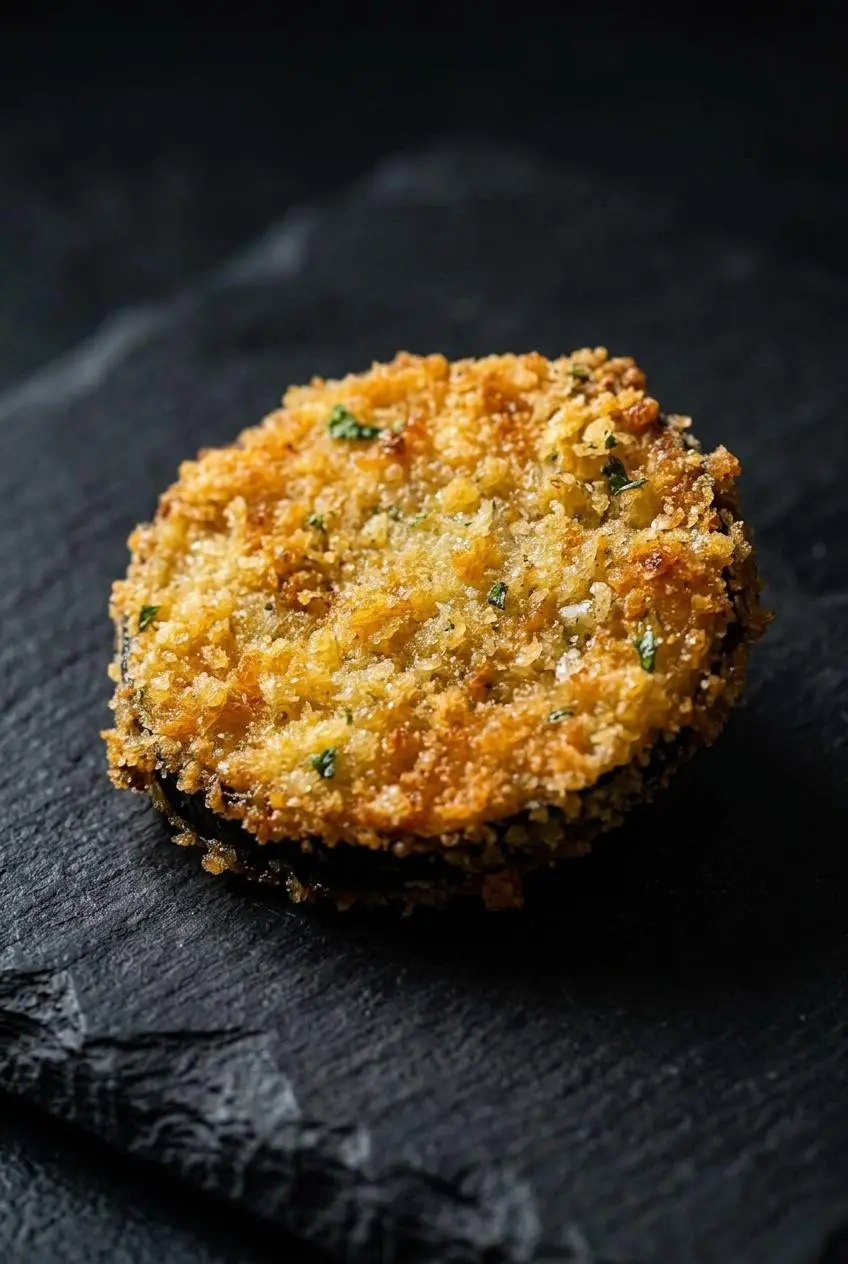
Good fried eggplant is mostly about moisture control and oil temperature. These are the habits that prevent greasy coating, weak browning, and soggy bottoms.
- Keep the oil between 350 and 375 °F. If it drops too low, the coating absorbs oil before it crisps. A thermometer helps a lot here.
- Pat the salted slices completely dry. Any lingering moisture makes crisping harder and can cause the breading to slip.
- Fry in batches. Crowding the skillet cools the oil fast and traps steam around the slices.
- Cool on a wire rack. This keeps air moving around the eggplant so the underside stays crisp instead of turning damp.
- Choose smaller, firm eggplants. They usually have tighter flesh, fewer seeds, and a cleaner flavor than very large ones.
These same crunchy coating habits also work beautifully in crispy Fried Zucchini if you want another easy frying project.
A Simple Flavor Boost for the Breading
If you want a little smoky heat, stir 1 teaspoon of smoked paprika and 1/4 teaspoon of cayenne pepper into the breadcrumb mixture. It stays subtle, but it gives the crust a warmer, deeper flavor.
A Guide to the Crispiest Coatings
If you’ve wondered why one batch comes out light and craggy while another feels thinner and snappier, the coating choice is usually the reason. Here’s the quick comparison.
| Coating | Texture | Best For |
|---|---|---|
| All-purpose flour | Light coating with a classic, softer crunch | A simple dredge or as the first layer before egg wash |
| Panko breadcrumbs | Airy, crisp, and extra crunchy | The main recipe here and the best choice for a breaded crust |
| Cornstarch | Very delicate, shatteringly crisp finish | Mixing into the flour or using for a thinner crust with extra snap |
For this recipe, Panko gives the most crowd-pleasing result. Flour is important too because it helps the egg wash stick evenly. Cornstarch is a nice optional tweak if you want a thinner, cracklier crust, but it changes the texture rather than improving every version automatically.
Alternative Cooking Methods
If you want less oil, you’ve got options. The texture won’t be exactly the same as pan-fried eggplant, but each method still gives you tender eggplant with a nicely browned coating.
Baked Eggplant Slices
Bread the slices the same way, then arrange them on a wire rack set over a baking sheet. Bake at 400 °F for about 20 to 25 minutes, flipping halfway, until the coating is golden and the centers are tender. A light spray of oil helps the crumbs brown more evenly.
If baked eggplant is your usual lane, Baked Eggplant Fries are another great option with the same ingredient family and plenty of crunch.
Air Fryer Eggplant Slices
Arrange the breaded slices in a single layer and spray them lightly with oil. Cook at 375 °F for about 10 to 15 minutes, flipping halfway, until crisp on the outside and tender inside. Work in batches so the air can circulate well around each slice.
Low-Oil Pan-Steamed Method
For a softer, lighter option, skip the full breading and use floured slices instead. Sear them in a lightly oiled skillet, then add a small splash of water and cover the pan briefly so the eggplant steams until tender. This method gives you creamy, silky eggplant rather than a crunchy crust.
If you need a vegan version, this lower-oil style is an easy place to start. You can also make the main breaded version vegan by skipping the Parmesan or using a plant-based alternative and replacing the egg mixture with plant-based milk or an egg replacer. The coating will be a little different, but it still works.
Troubleshooting Common Problems
When fried eggplant goes wrong, the fix is usually pretty simple. This table points to the most common issue and the fastest way to correct it next time.
| Problem | Likely Cause | Solution |
|---|---|---|
| Soggy or oily eggplant | The oil was too cool or the pan was overcrowded | Keep the oil in the 350 to 375 °F range and fry in smaller batches |
| Bitter taste | The salting step was skipped or rushed | Salt the slices long enough to draw out moisture, then dry them well |
| Breading falls off | The slices were still damp or the egg layer was too heavy | Pat the eggplant very dry and let excess egg drip off before breading |
| Pale crust | The oil was not hot enough or the coating was too wet | Wait for shimmering oil and keep the breading layers thin and even |
| Eggplant is browned but not tender | The slices were cut too thick | Stick close to ¼-inch slices so the center softens before the crust overcooks |
Serving Suggestions
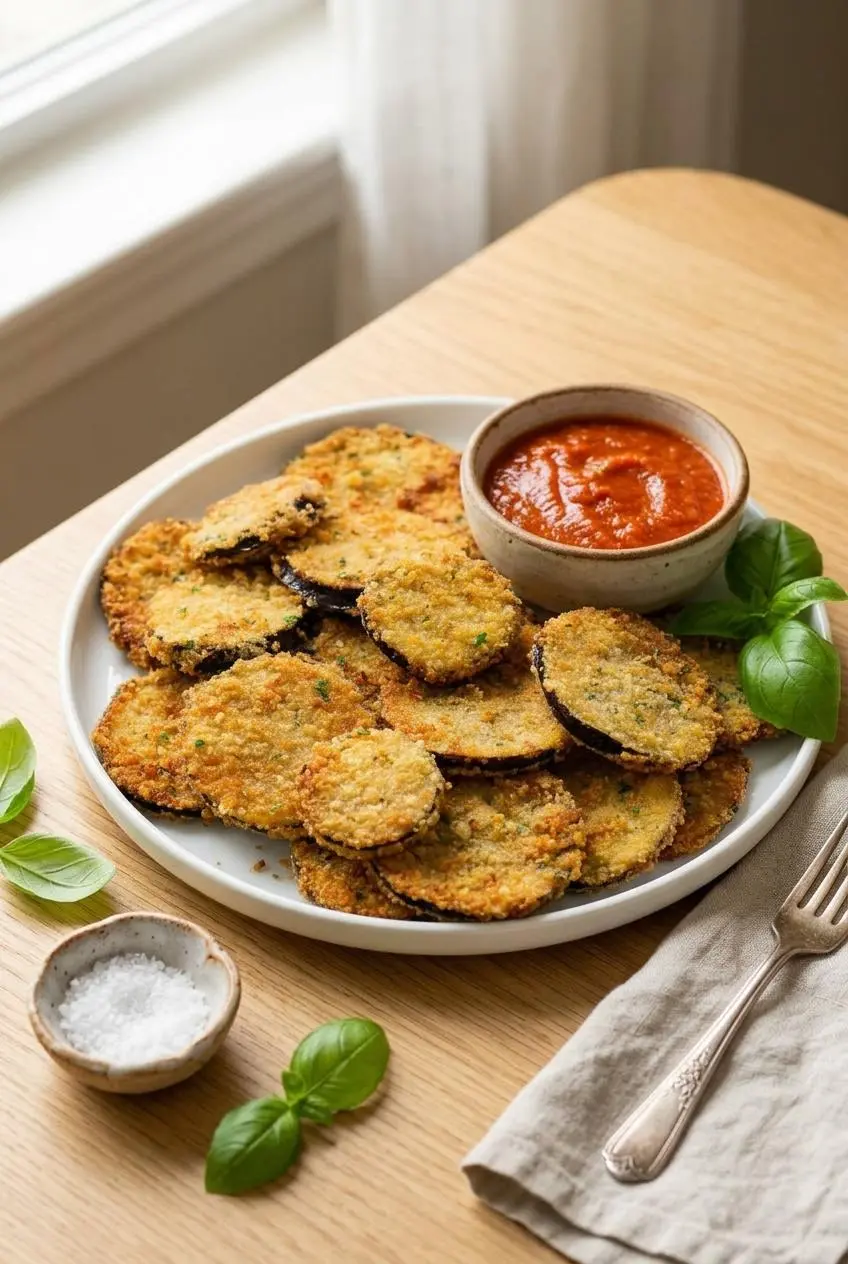
Fried eggplant is at its best while the coating is fresh and crisp, so think of it as something to serve warm and a little proudly.
- Serve it as an appetizer with warm marinara or tzatziki for dipping.
- Finish a platter with lemon wedges and chopped parsley for a brighter, lighter feel.
- Tuck slices into sandwiches or wraps with tomatoes and greens.
- Layer the slices into an Eggplant Parmesan when you want to turn them into a full dinner.
- Cut or stack them over arugula with shaved Parmesan for a salad that eats like a proper meal.
If you want a different shape, you can also cut the eggplant into cubes and fry them for tossing with tomatoes and basil. That version is less about a neat crust and more about golden edges and a soft center, which works especially well as a side dish.
Storage and Reheating
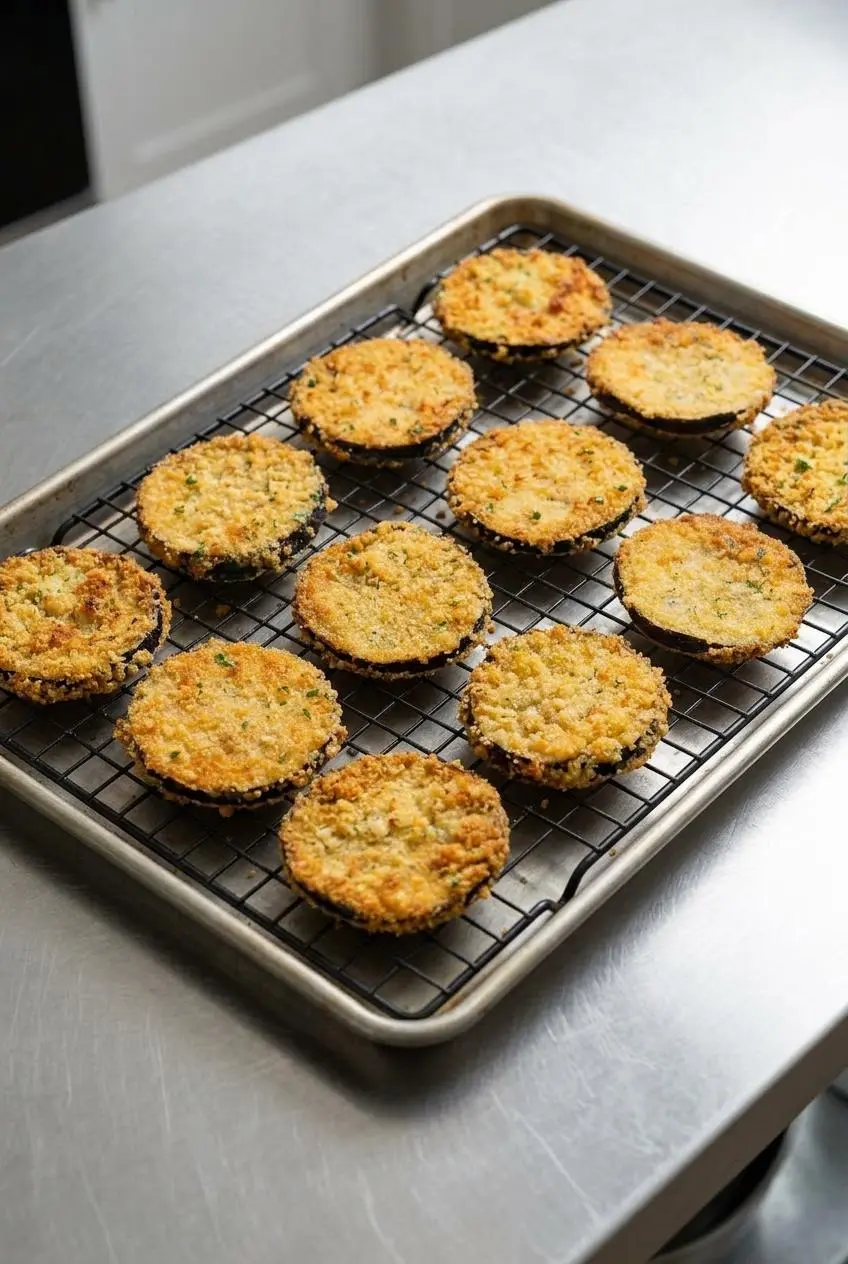
Fried eggplant is crispiest right after cooking, but leftovers can still be worth keeping if you cool them first and store them well. Once refrigerated, leftovers can be kept for 3 to 4 days for food safety, as long as they’re sealed and chilled promptly for 3 to 4 days in the refrigerator.
For the best texture, reheat the slices in the oven or air fryer until hot and re-crisped. Skip the microwave if you can, because it softens the coating fast.
If you want to get ahead, you can salt the eggplant, mix the breading bowls, and set up your pan and rack in advance. Fry just before serving for the crunchiest result.
Because this recipe uses eggs in the coating, keep any uncooked breaded slices chilled and handle them with the same care you would give other egg-based mixtures, including prompt refrigeration and thorough cooking during frying, in line with safe handling and cooking for shell eggs.
Conclusion
If you want Fried Eggplant that stays crisp instead of going limp, the winning combination is simple: salt it, dry it well, bread it evenly, and fry it in hot oil.
Once you know what the slices should look, sound, and feel like at each stage, this recipe gets a lot easier. Start with that salting step, and the rest falls into place.
Frequently Asked Questions
Do You Have to Peel Eggplant Before Frying?
No. The skin is edible and helps the slices keep their shape in the pan. If the eggplant is very large or older, the skin can be tougher. In that case, peeling is really about texture preference.
How Do You Keep Fried Eggplant Crispy?
Salt the slices first so they release excess moisture. Dry them well before breading. Fry in properly hot oil, work in batches, and cool the finished slices on a wire rack instead of letting them steam on a flat plate.
Can I Make Fried Eggplant Ahead of Time?
It’s best served fresh, especially if crispness matters most. Reheating in the oven or air fryer gives a much better texture than microwaving. You can also prep parts ahead by salting the eggplant and setting up the breading station before it’s time to fry.
What’s the Best Oil to Use for Frying Eggplant?
Use a neutral oil with a high smoke point. Vegetable oil works well here. Canola or peanut oil also work nicely because they stay neutral in flavor and handle frying heat well.
What Is the Water-Dipping Method for Frying Eggplant?
It’s a technique where floured eggplant slices are briefly dipped in water before frying. The quick burst of steam helps create a crisp outer layer. It’s interesting, but the three-step flour, egg, and breadcrumb coating in this recipe is easier for most home cooks to control.
Can I Make This Recipe Vegan?
Yes. Skip the Parmesan or use a plant-based substitute, and replace the egg mixture with plant-based milk or an egg replacer. The coating will be a bit different and usually less rich, but you can still get good color and a nice crisp edge.

Fried Eggplant

Equipment
- Colander
- Slotted Spatula
- Kitchen Tongs
- Wire Cooling Racks
- Large baking sheet
- Box Cheese Grater
- 12-inch Cast Iron Skillet or Enamel Cast Iron skillet
Ingredients
Eggplant
- 2 small/medium eggplants (1 ½ lbs.)
- 1 teaspoon salt
Flour Mixture
- ½ cup all-purpose flour
- ½ teaspoon EACH: onion powder, paprika
Egg Mixture
- 3 large eggs (whisked well)
- 1 ½ teaspoons Dijon mustard
- 1-2 tablespoons heavy cream (optional)
Breadcrumb Mixture
- 2 cups Panko breadcrumbs
- 1 cup grated parmesan cheese
- 3 tablespoons freshly chopped parsley
- ¾ teaspoon garlic salt
For Frying
- Vegetable oil (enough to cover the slices by half.)
Instructions
- Cut the eggplant into ¼-inch rounds and keep the slices no thinner than that. The pieces should look even and sturdy so they hold their shape during breading and frying.
- Sprinkle the slices with salt and place them in a colander while you prepare the remaining ingredients. After 20 to 30 minutes, the surfaces should look damp and slightly glossy from the moisture being drawn out.
- Set up three shallow bowls for the coating by mixing the flour ingredients in one, the egg mixture in another, and the breadcrumb mixture in the third. Having the whole station ready before frying keeps the coating neat and helps you work without scrambling once the oil is hot.
- Dry each eggplant slice thoroughly between paper towels as you bread it. The slices should feel dry to the touch, which helps the coating stick and crisp instead of sliding off.
- Coat a slice fully in the flour mixture. A light, even flour layer gives the egg mixture something to grab onto.
- Dip the floured slice into the egg mixture and let the extra drip off before moving on. You want a thin, even coating here because too much egg can soak through and soften the crust.
- Press the slice into the breadcrumb mixture, turning it a few times so both sides are well covered. The crumbs should cling all over the surface with no wet patches showing through.
- Heat vegetable oil in a skillet over medium-high heat to 350 °F, then fry the eggplant in batches for 2 to 3 minutes per side. The oil should look hot and shimmering, and the eggplant should sound lively when it goes in, not faint, as the coating turns deep golden brown.
- Lift the slices out with a slotted spatula and place them on wire racks set over a baking sheet if you can. Air should circulate underneath so the bottoms stay crisp instead of trapping steam.
- Continue with the remaining slices, adding more oil as needed and adjusting the heat if the pan gets too hot. Serve while the crust is still crisp and the center is tender.