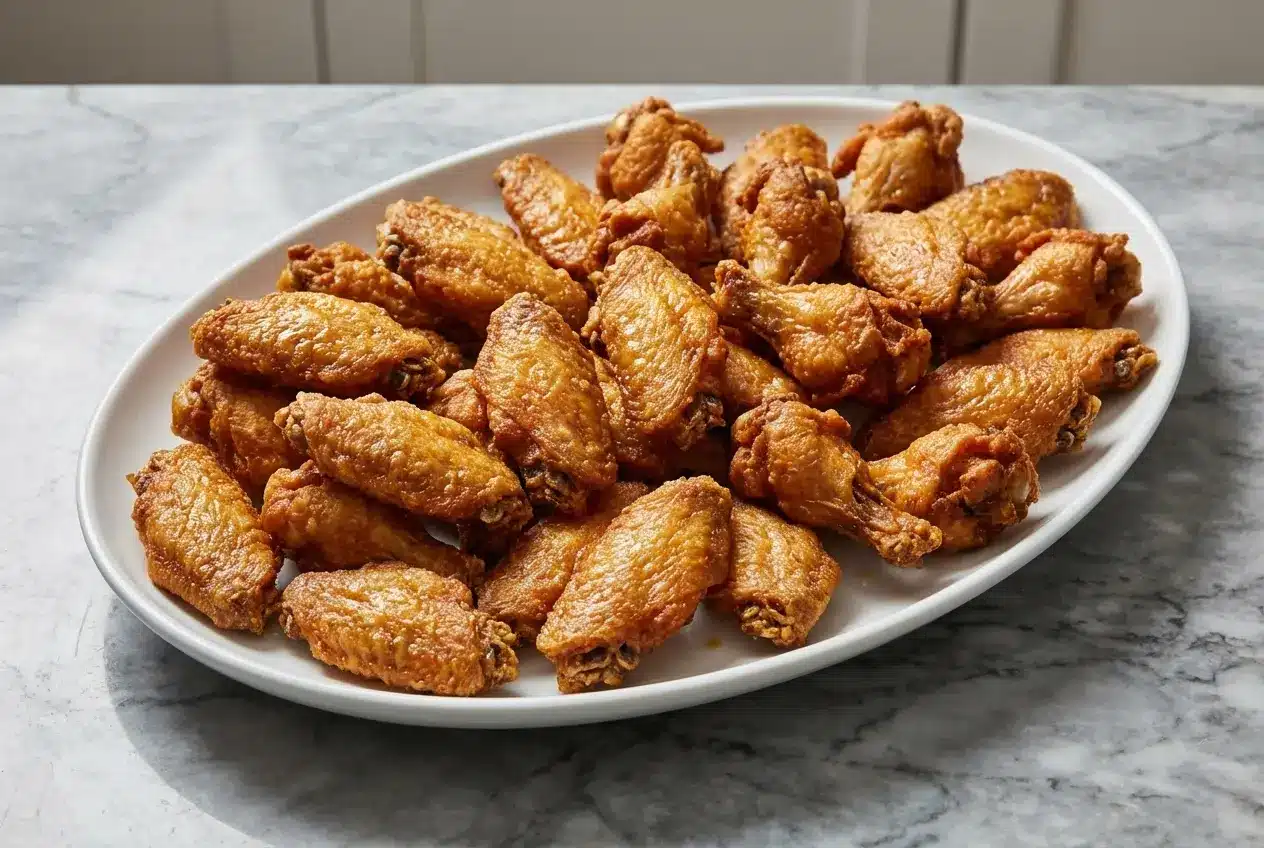
There is something about a platter of hot wings hitting the table that turns an ordinary night into a little event. In my kitchen, these fried chicken wings are the kind people hover around, stealing one before I can even set out the napkins.
This version is for anyone chasing that loud, brittle crunch without ending up with greasy, heavy coating. The batter fries up light, the meat stays juicy, and the method is simple enough for game day, a weekend cookout, or a comfort-food dinner when only crispy chicken wings will do.
Why You’ll Love These Crispy Wings
That real crackly crunch: These wings don’t wear a thick, bready coat. They come out with a thin, shattering crust that sounds crisp when you bite in, while the inside stays tender and juicy.
The secret twist: In my kitchen, I love replacing a small portion of the liquid in a wet batter with vodka because it helps create a lighter, blistered finish. It cooks off in the hot oil, and what you’re left with is an extra-crispy shell that feels less greasy on the palate.
Double-fry magic: The first fry cooks the wings through, and the second fry builds that deep golden exterior we all want. It is the same smart logic that makes Korean fried chicken so addictive.
Crispy even after sauce: One of the best things about this method is how well the crust holds up. Whether you toss them in Buffalo sauce or serve them plain, they stay crunchy longer than most homemade party wings.
Ingredients and Substitutions
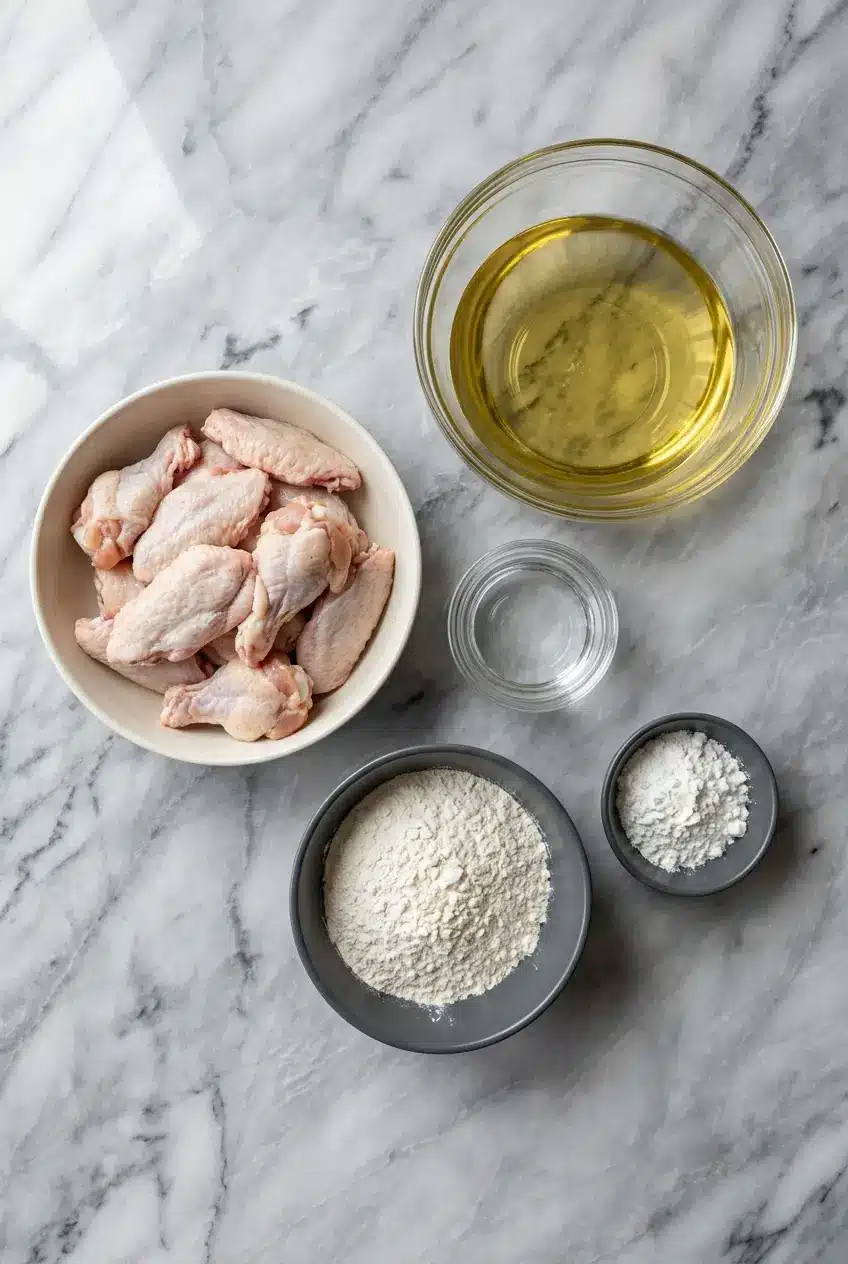
This is a short, hardworking ingredient list. Each piece plays a clear role, from building a light crust to helping the wings fry up crisp and golden.
Ingredients
- 3 pounds chicken wings
- 1½ cups water
- 1 cup all-purpose flour
- 3 tablespoons cornstarch
- 2 quarts vegetable oil for frying
Ingredient Notes & Substitutions
Chicken wings: You can buy whole wings and split them yourself into flats and drumettes, or save time and grab party wings that are already separated. If I am cooking for a crowd, party wings are always the easiest choice, and I usually save the tips for stock instead of tossing them.
Vodka: The recipe card below follows the core ingredient list exactly, but if you want the lightest, crispiest batter, I strongly recommend swapping 1/4 cup of the water for 1/4 cup of vodka when you mix the batter. It does not leave a boozy flavor, it cooks off in the oil, and it helps create that delicate, blistered crust; cold club soda or seltzer can stand in if you prefer, though the texture will not be quite as airy.
Frying oil: A neutral oil with a high smoke point is the sweet spot here. Vegetable oil works beautifully, and canola or peanut oil are also great choices, while olive oil is better left for sautéing than deep frying because its flavor and smoke point are not ideal for this job.
Cornstarch: This little scoop makes a big difference. Mixed with all-purpose flour, it keeps the coating lighter and more brittle, which means better crunch and less of that dense, chewy fried crust.
How to Make Fried Chicken Wings
Prep the Wings and Batter
- Set a wire rack inside a rimmed baking sheet and keep it nearby for draining. If your wings are whole, cut them at the joints into flats and drumettes, then discard the tips or tuck them away for stock; if you plan to serve the wings without sauce, toss them now with 1 teaspoon of table salt.
- In a large bowl, whisk together 1½ cups water, 1 cup all-purpose flour, and 3 tablespoons cornstarch until the batter is completely smooth. It should look like a thin pancake batter with no dry pockets, and if you want the extra-light finish, replace 1/4 cup of that water with 1/4 cup vodka before whisking.
- Pour 2 quarts vegetable oil into a Dutch oven or deep fryer and heat it over medium-high to 350°F. An instant-read thermometer matters here because steady oil temperature is the difference between crisp wings and oily ones.
The First Fry
- Add half of the wings to the batter and turn them until fully coated. Lift them out one at a time with tongs, let the extra batter drip back into the bowl, then lower them carefully into the hot oil.
- Raise the heat to high and fry for about 7 minutes, stirring occasionally so the wings do not stick together. At this stage, the coating should turn light golden and begin to crisp, with a lively sizzle all around the pot.
- Move the first batch to the prepared wire rack so excess oil can drain away without softening the crust.
Rest and Double Fry for Maximum Crunch
- Bring the oil back to 350°F and repeat the same process with the remaining wings. Once the second batch comes out, lower the heat to medium and let those wings rest for 5 minutes, which gives the coating a chance to settle before the final fry.
- Heat the oil to 375°F, then carefully return all the wings to the pot. Fry for about 7 more minutes, stirring now and then, until the exterior turns deep golden brown and exceptionally crisp, and the bubbling sound becomes a little sharper and quieter as moisture cooks off.
Drain, Sauce, and Serve
Set the finished wings back on the wire rack and let them stand for 2 minutes so the coating stays crisp instead of steaming. Toss them with your favorite sauce while they are still hot, then serve right away when the crust is at its absolute best.
The Science Behind the Perfect Crunch
The power of vodka: A little vodka in the batter changes the texture in a big way. Because it evaporates faster than water, it creates tiny bubbles and a more delicate, blistered crust, while also limiting gluten development so the coating stays crisp instead of chewy.
The magic of the double fry: The first fry at 350°F cooks the wings through and starts setting the crust. The second fry at 375°F is what drives off lingering moisture and locks in that deep, audible crunch that lasts longer on the plate.
Cornstarch is the quiet hero: Flour gives the batter structure, but cornstarch keeps it from turning heavy. Together they create a coating that is light, crisp, and less greasy than flour alone.
Dryness matters more than people think: Even with a wet batter, the wings should not be dripping with surface moisture before they go in. Water creates steam, and steam is the enemy of crispy chicken wings because it softens the crust before it has a chance to set.
Coating Your Wings: A Guide to Texture
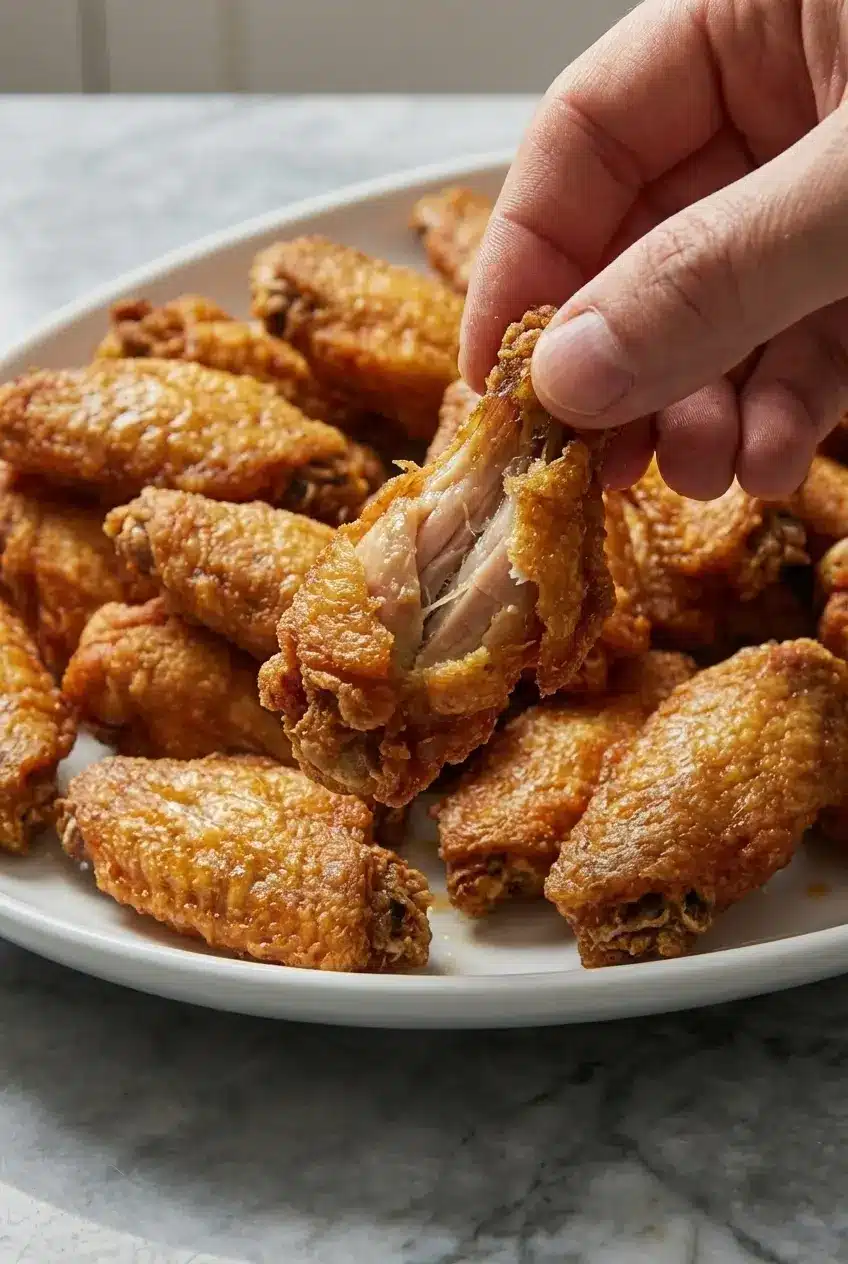
Wet batter, the method used here: This gives you a distinct shell around the wing, thin but dramatic, with that shattery crunch people usually associate with the very best bar wings. If you want a crisp coating that stays separate from the skin, this is the lane to choose.
Classic dry dredging: A Southern fried chicken style dredge usually starts with an egg wash or buttermilk and finishes with seasoned flour and cornstarch. The result is a rougher, craggier crust that hugs the chicken more closely and eats a little heartier than a wet batter.
Naked fried wings: If you want no coating at all, pat the wings very dry, season them well, and fry them as is. You get pure crispy skin, a cleaner chicken flavor, and a great option for anyone avoiding flour while still craving that fried finish.
Essential Homemade Wing Sauces
Classic Buffalo Sauce
For a true Buffalo sauce, melt 4 tablespoons butter and whisk in 1/2 cup cayenne pepper hot sauce, 1 teaspoon vinegar, and a small pinch of garlic powder. It should taste tangy, buttery, and sharp enough to wake up the whole platter without drowning the crunch.
I like to toss the wings while they are still piping hot so the sauce clings in a glossy layer instead of pooling in the bowl. Serve these with celery sticks and either ranch or blue cheese dressing if you want the full classic spread.
Tangy Carolina Gold BBQ Sauce
Whisk together 1/2 cup yellow mustard, 2 tablespoons honey or brown sugar, 2 tablespoons apple cider vinegar, 1/2 teaspoon paprika, and a pinch of cayenne. The flavor lands in that sweet-tangy-savory pocket that makes fried wings disappear fast.
This sauce is especially good with pickles on the side because the acidity cuts through the richness of the fried coating. If your crowd likes barbecue flavors but wants something brighter than a tomato-based sauce, Carolina Gold sauce is a fantastic choice.
Sweet & Savory Teriyaki Glaze
Combine 1/3 cup soy sauce, 1/4 cup mirin, 2 tablespoons sake, 2 tablespoons sugar, 1 teaspoon grated ginger, and 1 teaspoon grated garlic in a small saucepan. Simmer gently until it thickens into a glossy glaze that coats the back of a spoon, then toss it with the hot wings and finish with sesame seeds and sliced green onions.
If that sweet-savory profile is your thing, the same flavors shine in these teriyaki chicken skewers, which make another strong addition to a casual appetizer spread. I especially like serving both when I want one platter with heat and another with something a little stickier and more crowd-friendly.
Pro Tips & Troubleshooting
Expert Tips for Flawless Wings
- Brine the wings for about 4 hours in a simple salt-sugar-water brine if you want especially juicy meat and deeper seasoning.
- Pat the wings very dry before battering. Even a little extra moisture can interfere with how well the coating grabs on.
- Let battered wings sit briefly before frying if you want the coating to cling better and fry up a little more evenly.
- Fry in batches and never crowd the pot, because crowded wings drop the oil temperature fast.
- Use an instant-read thermometer the whole way through. It is the best tool for keeping 350°F for the first fry and 375°F for the second.
Common Mistakes to Avoid
- Soggy wings: This usually means the oil was too cool or the pot was overcrowded, so the wings steamed instead of fried.
- Coating falling off: This often happens when the wings were not dry enough before battering or when they were jostled too aggressively in the oil.
- Greasy texture: Batter absorbs oil when the frying temperature is too low, so keep a close eye on the thermometer.
- Saucing at the wrong time: Tossing cold wings in sauce softens the crust without helping the flavor. Sauce them while they are still hot from the fryer.
Serving, Storing, and Reheating
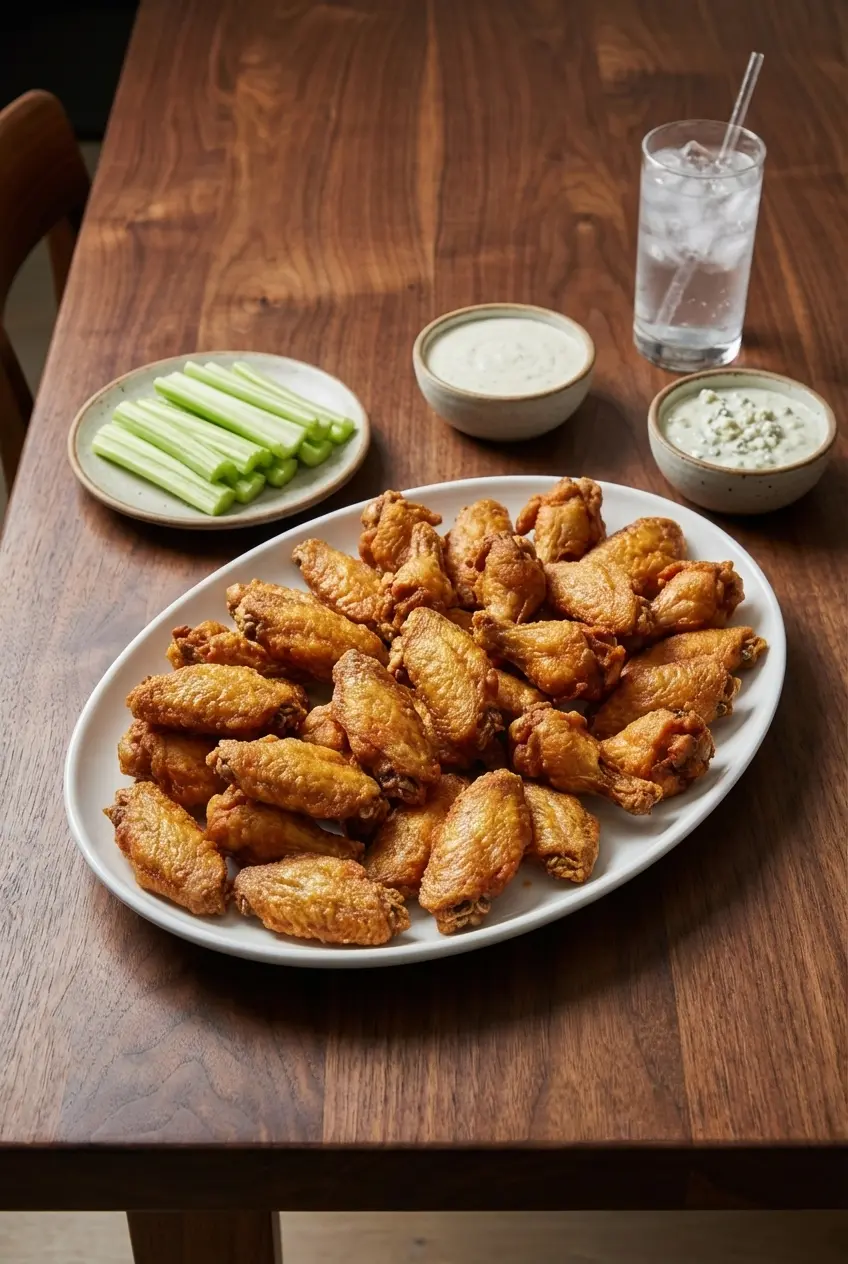
Serving Suggestions
These fried chicken wings are right at home with celery sticks, ranch, or blue cheese, especially if you are going the Buffalo route. For Carolina Gold wings, I love adding pickles on the side because that sharp bite balances the richness beautifully.
If you want to turn them into a full comfort-food dinner, a pan of Southern baked mac makes the plate feel downright celebratory. French fries, collard greens, or a simple slaw also fit naturally beside a batch of hot, crispy wings.
For a game day appetizer spread, I usually pair wings with one creamy dip and one extra finger food so the table feels generous without much fuss. A warm bowl of jalapeño corn dip and a tray of homemade potstickers round things out nicely and give everyone something to nibble between rounds of wings.
Storing and Reheating Leftovers
Store leftover wings in an airtight container in the refrigerator for up to 3 to 4 days. If possible, keep them unsauced until serving, because that gives you the best shot at bringing the crust back to life.
The best air fryer reheating method is 375°F for 3 to 5 minutes, just until the wings are hot and the exterior crisps up again. It is the closest thing to that fresh-from-the-fryer texture.
If you do not have an air fryer, use a 400°F oven and set the wings on a wire rack over a sheet pan for 5 to 10 minutes. That airflow helps the coating re-crisp instead of trapping steam underneath.
The microwave is the one method I would skip completely. It heats the meat, yes, but it also turns that once-crunchy coating soft and limp in a hurry.
Extra Crispy Fried Chicken Wings

Equipment
- Wire rack
- Rimmed baking sheet
- large bowl
- Whisk
- Dutch oven or deep fryer
- Instant-read thermometer
- Tongs
Ingredients
- 3 pounds chicken wings
- 1½ cups water
- 1 cup all-purpose flour
- 3 tablespoons cornstarch
- 2 quarts vegetable oil for frying
Instructions
Prep the Wings and Batter
- Set a wire rack inside a rimmed baking sheet. If your wings are whole, cut them at the joints into flats and drumettes. If you plan to serve the wings without sauce, toss them with 1 teaspoon of salt.
- In a large bowl, whisk together the water, all-purpose flour, and cornstarch until the batter is completely smooth, like a thin pancake batter.
- Pour the vegetable oil into a Dutch oven or deep fryer and heat it over medium-high to 350°F. Use an instant-read thermometer to ensure the temperature is accurate and steady.
The First Fry
- Add half of the wings to the batter and turn until fully coated. Lift them out one at a time, letting the excess batter drip back into the bowl.
- Carefully lower the battered wings into the hot oil. Raise the heat to high and fry for about 7 minutes, stirring occasionally to prevent sticking, until the coating is light golden and crisp.
- Move the first batch of wings to the prepared wire rack to drain.
Rest and Double Fry
- Bring the oil back to 350°F and repeat the battering and frying process with the remaining wings, placing them on the wire rack when done.
- Let all the fried wings rest for 5 minutes.
- Increase the oil temperature to 375°F. Carefully return all the wings to the pot and fry for about 7 more minutes, stirring occasionally, until they are deep golden brown and exceptionally crisp.
Drain, Sauce, and Serve
- Set the finished wings back on the wire rack and let them stand for 2 minutes to allow the coating to set.
- If using a sauce, toss the wings while they are still hot. Serve immediately for the best crispy texture.
Notes
Nutrition
Conclusion
When you want fried chicken wings that actually live up to the promise of crisp, this method delivers. Between the light batter, the double fry, and that clever vodka swap for part of the liquid, the result is a crust that crackles and a center that stays juicy.
Once you hear that first crunchy bite, you will know it was worth heating the oil. Pick your favorite sauce, play with the serving style, and get ready to make these a regular part of your game day rotation.
Frequently Asked Questions About Fried Chicken Wings
What is the secret to getting extra-crispy fried chicken wings?
What is the best temperature to fry chicken wings at?
Should I brine my wings before frying?
How do I prevent the breading from falling off my chicken wings?
What are the best homemade sauces for fried chicken wings?
What is the best way to reheat fried chicken wings to make them crispy again?