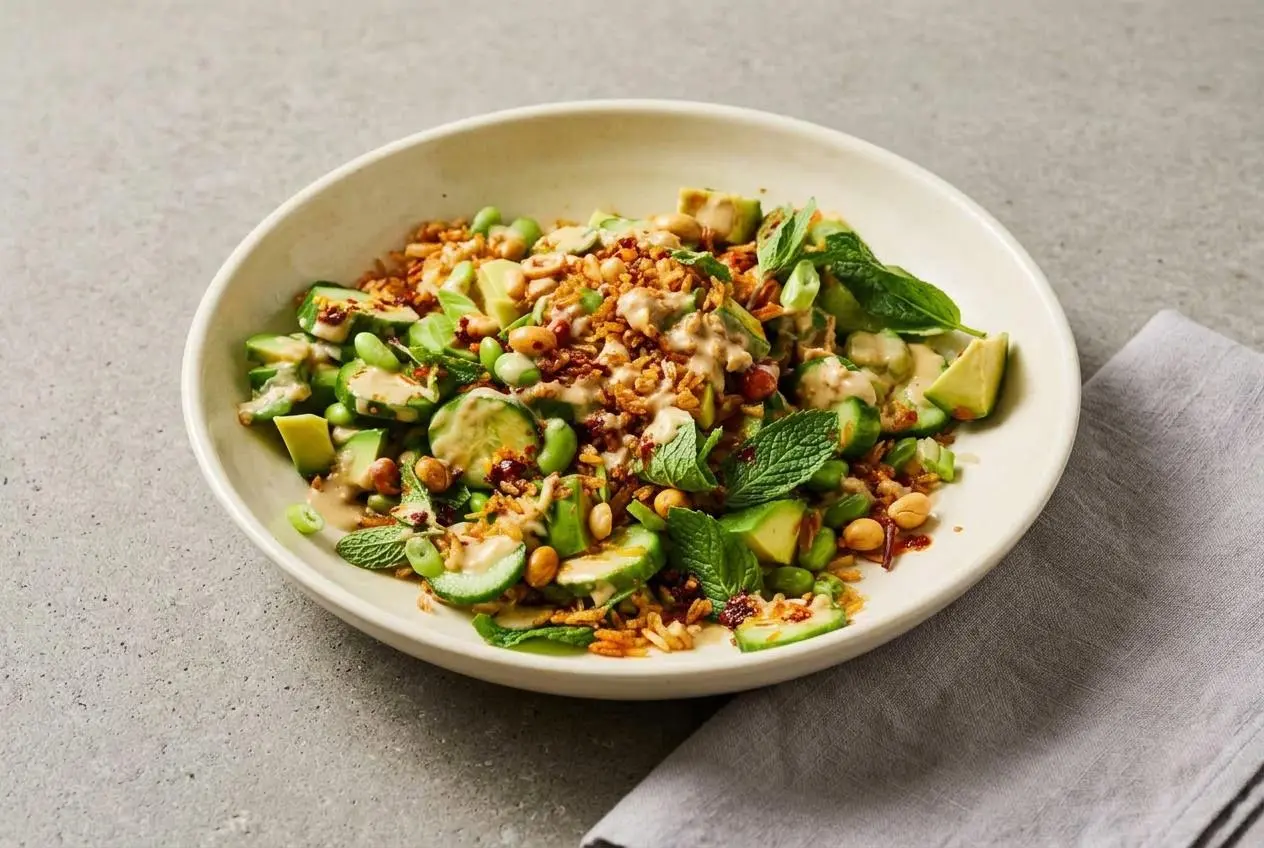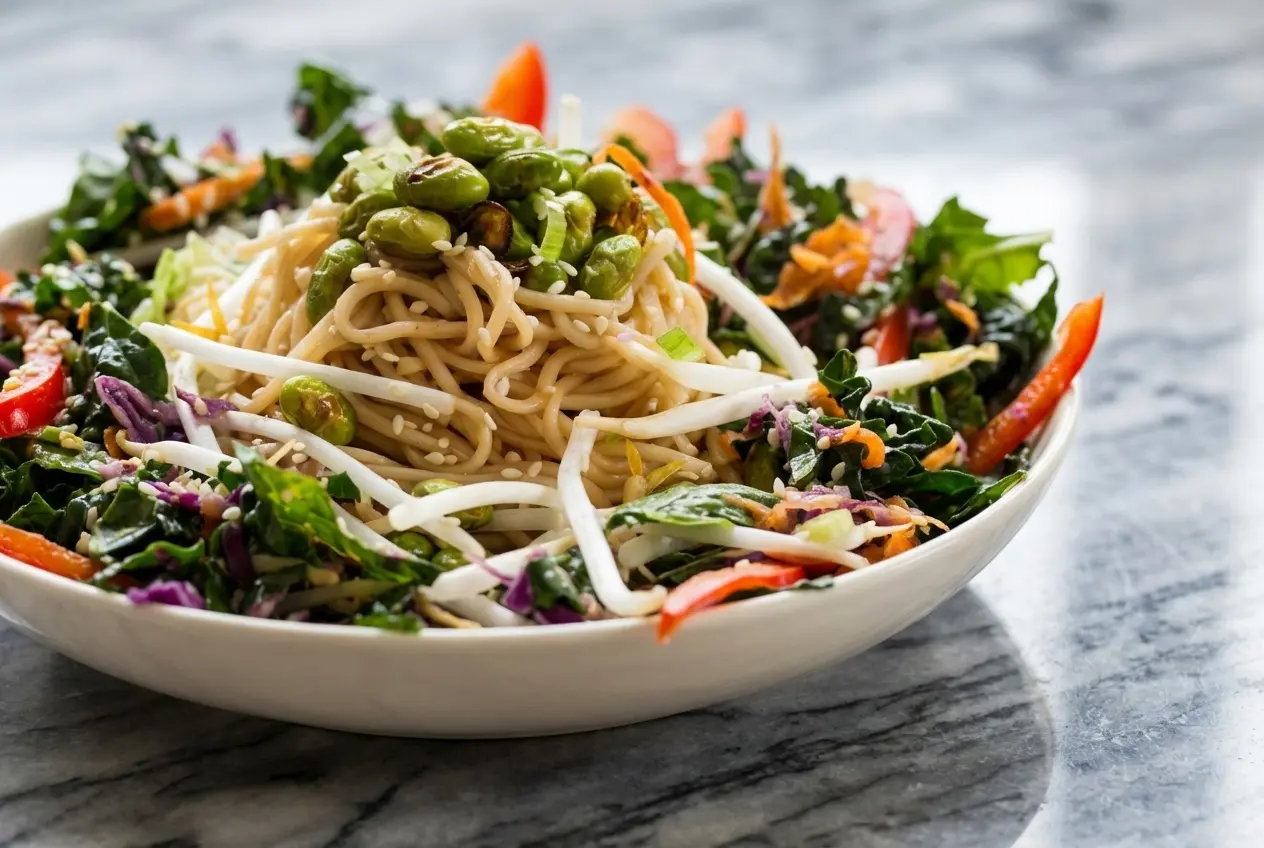
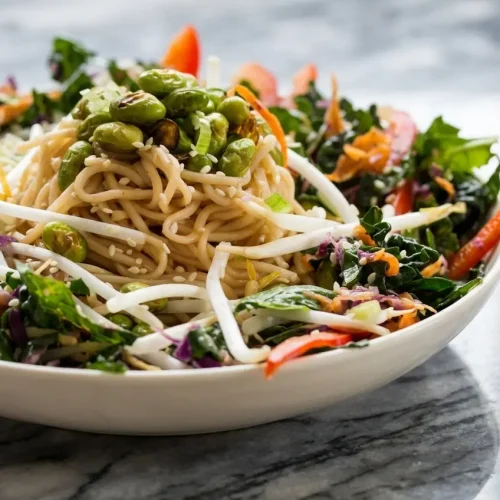
When the weather turns sticky and hot, this edamame rice noodle salad is the kind of lunch I crave most. It is cool, crisp, deeply savory, and sturdy enough to pack for work without feeling like an afterthought by noon.
What makes this bowl special is the contrast, silky rice noodles, smoky blistered edamame, and a sweet ginger miso dressing that wakes everything up. I’ll walk you through the little tricks that keep the noodles springy instead of gummy, so you end up with a vibrant plant-based protein bowl every time.
Why You’ll Love This Recipe
Big flavor, little fuss: In my kitchen, this salad earns a regular spot because it tastes layered and restaurant-worthy without asking for a long ingredient prep day. The miso paste, rice vinegar, and sesame oil do a lot of heavy lifting fast.
The secret twist: Blistering shelled edamame in a hot skillet gives those bright green beans a toasty, savory edge that plain steamed mukimame just cannot match. That little bit of char adds the kind of depth that makes a cold salad feel satisfying.
Smacked cucumber magic: When I smack cucumber before chopping it, the jagged edges soak up dressing beautifully instead of letting it slide off. It stays crisp, refreshing, and far less watery than neatly sliced cucumber.
Meal prep that actually holds up: You get crunch from julienned vegetables, chew from rice noodles, and a sweet-salty finish that keeps every bite interesting. It is one of those vegan meal prep lunches that still tastes lively on day two.
Ingredients and Substitutions
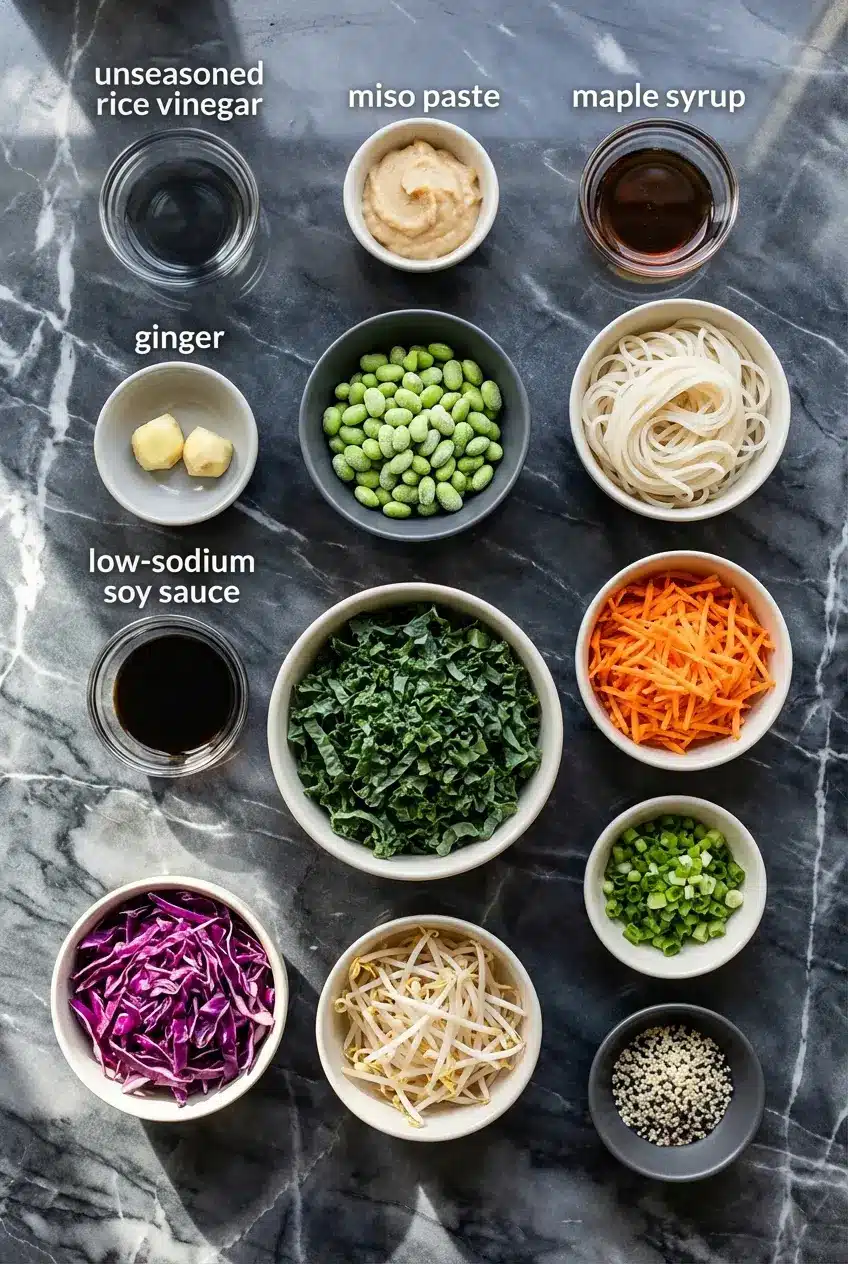
A good noodle salad lives and dies by contrast, bright dressing, chewy noodles, and plenty of crisp vegetables. These ingredients build that balance without making the bowl feel heavy.
Ingredients
sweet ginger soy dressing:
- 1/4 C sunflower oil
- 3 tablespoon unseasoned rice vinegar
- 3 tablespoon water
- 2 tablespoon sesame oil
- 2 tablespoon miso paste
- 1 tablespoon maple syrup (or agave nectar or brown rice syrup)
- 2 to 3 knobs of peeled ginger
asian noodle salad:
- 1 C frozen shelled edamame
- 1/2 teaspoon sesame oil
- 1/2 lbs 225 g chow mein noodles or rice noodles
- 1 tablespoon vegetable oil
- 1 tablespoon + 1/2 teaspoon low-sodium soy sauce or tamari
- 10 C lacinato kale, finely chopped into ribbons/shreds
- 1 C shredded carrot
- 1 C shredded purple cabbage
- 1 red pepper, julienned
- 1 C bean sprouts
- 1/3 C finely chopped green onion
- 1/4 C sesame seeds
Ingredient Notes & Substitutions
English cucumber: The core recipe is complete as written, but I highly recommend adding 1 large English cucumber, smashed and roughly chopped. That smacked cucumber technique gives you craggy pieces that grab onto the ginger miso dressing and add a cool, juicy crunch without flooding the bowl.
Miso paste: White or mellow miso is my favorite here because it blends smoothly into the dressing and keeps the flavor balanced. If you need a gluten-free noodle salad, choose a certified gluten-free miso paste made without barley, since not every tub on the shelf is automatically safe.
Tamari: If you are avoiding gluten, tamari is the better choice over standard soy sauce. It keeps the dressing rich and savory while making the whole bowl easier to adapt for gluten-free eating.
Rice noodles: Standard rice noodles work beautifully, but chow mein noodles can also carry the dressing well if that is what you have on hand. For the lightest, springiest texture in a cold salad, I usually reach for rice noodles.
Extra plant-based protein: For a heartier lunch, baked tempeh or crispy pan-fried tofu folds into this salad naturally. Either one turns the bowl from a side into a seriously filling dinner.
Fresh herbs: Mint and cilantro brighten everything up and push the flavor in a fresh, Vietnamese-inspired direction. I like adding a handful right before serving so their aroma stays vivid.
How to Make edamame rice noodle salad
Blend the dressing and cook the noodles
- Add the sunflower oil, rice vinegar, water, sesame oil, miso paste, maple syrup, and peeled ginger to a blender. Blend until the dressing looks completely smooth and creamy, with no fibrous bits of ginger left, then chill it in the fridge while you prep the rest.
- Bring a pot of water to a boil and cook the noodles for 3 minutes, or according to the package directions if your noodles call for a slightly different timing. Drain them right away, then rinse under cool running water to stop the cooking and wash away excess surface starch.
Blister the edamame and fry the noodles
- Set a cast-iron pan over medium-high heat and add 1/2 teaspoon sesame oil along with 1/2 teaspoon soy sauce or tamari. Add the frozen shelled edamame and cook for 4 to 5 minutes, stirring now and then, until the beans pick up toasted brown spots, smell nutty, and still keep some bright green color.
- Transfer the edamame out of the pan, then keep the pan over medium heat. Add the cooked noodles with 1 tablespoon vegetable oil and 1 tablespoon soy sauce or tamari, and toss for 2 to 3 minutes until they look glossy, loosen up, and lightly fry rather than steam.
Prep the vegetables
- If you are using the recommended cucumber, place it on the board and gently smack it with the flat side of a knife until it splits and cracks. Chop it into rough, jagged pieces so the dressing can settle into all those uneven edges.
- In a large bowl, combine the kale, shredded carrot, purple cabbage, and green onion, and add the smacked cucumber if using. Toss with 2 to 3 tablespoons of the dressing, coating the greens lightly, and only dress the portion you plan to eat right away.
Assemble and serve
Divide the dressed greens among serving bowls, then pile on the noodles, blistered edamame, julienned red pepper, bean sprouts, and sesame seeds. Finish with another light drizzle of dressing if you like, and serve while the vegetables are crisp and the sesame aroma is still fresh.
Chef’s Tips for Perfection
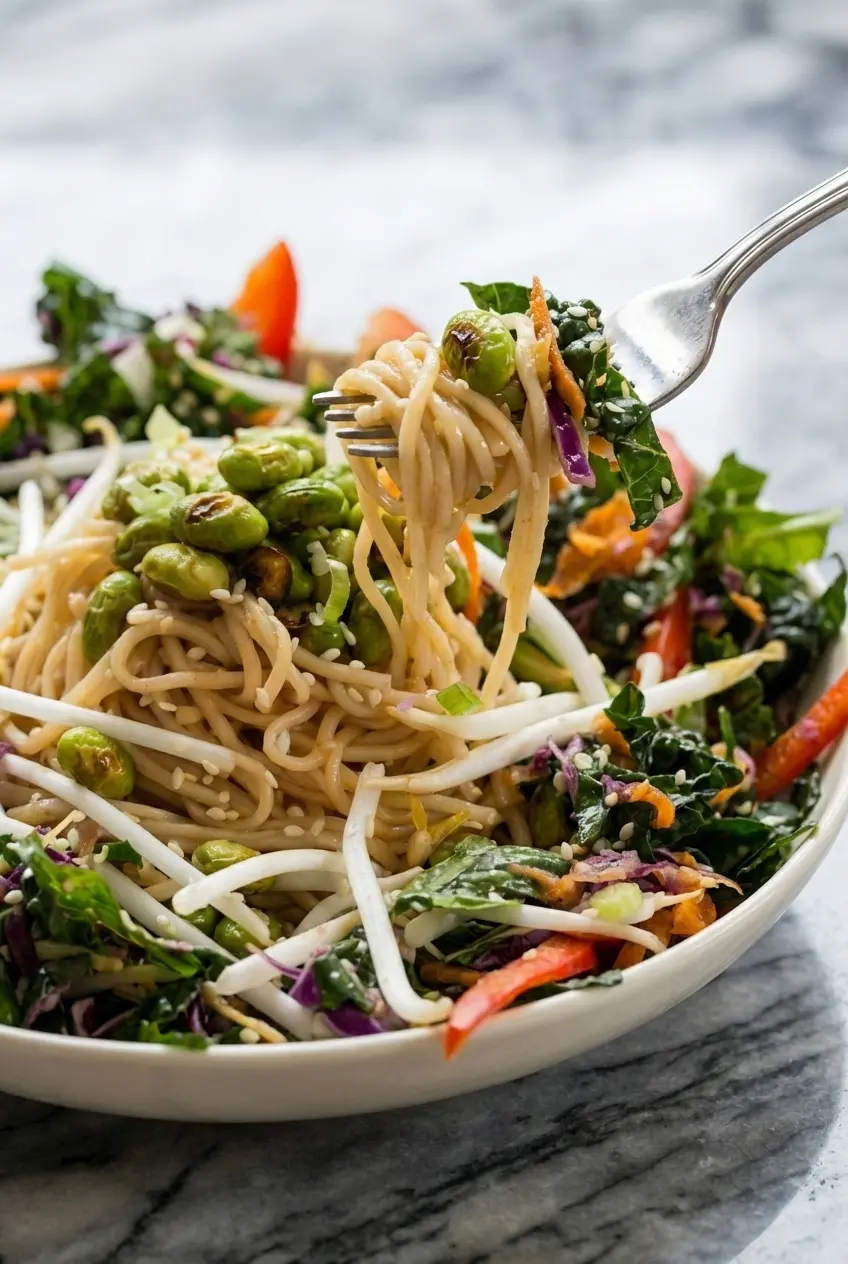
The magic of blistered edamame is all about high, direct heat. When frozen mukimame hits a hot cast-iron skillet, moisture on the surface evaporates quickly and the outside browns before the inside dries out, which gives you a charred, savory bite and keeps the centers tender.
That browned edge matters for flavor, but so does nutrition and satiety. Edamame also brings real staying power to this salad, and the complete protein profile of edamame is one reason this bowl feels substantial enough for lunch rather than just leafy.
The quick noodle fry is not a random extra step, it is insurance. A brief toss in oil and tamari helps coat the rice noodles, locks down some of that surface starch, and creates a barrier so they do not drink up too much dressing and turn mushy in the fridge.
Mastering Rice Noodle Preparation
Not all rice noodles behave the same way, and that is where many cold noodle salads go sideways. Thin vermicelli cooks much faster than wider rice noodles, so if I am using vermicelli, I usually soak it in warm water for 10 minutes instead of boiling it to keep the strands from going soft and limp.
For standard rice ribbons, a short boil works better because they need that extra heat to soften evenly. No matter the width, the most important move comes right after draining, rinse the noodles under cool running water to stop the carryover cooking and wash off extra starch before the strands glue themselves together.
If you enjoy experimenting with texture, this same idea shows up across lots of noodle dishes, where shape and thickness decide whether a noodle should be boiled, soaked, or quickly finished in a pan. With rice noodles especially, a little attention up front gives you that clean, springy bite that makes a salad feel polished.
Building a Truly Gluten-Free Miso Dressing
Rice noodles are naturally a smart starting point for a gluten-free noodle salad, but the dressing is where you need to pay close attention. For this recipe, use tamari instead of standard soy sauce and choose a certified gluten-free miso paste, ideally soy- or chickpea-based, while avoiding barley miso.
I always tell friends to read the miso label twice because the word “miso” alone does not guarantee anything. Once you pair the right miso paste with tamari, the dressing keeps all its savory depth and still tastes every bit as lush and balanced as the original version.
Pro Tips & Troubleshooting
Pro Tips
- Toast the sesame seeds, or even a handful of cashews, in a dry skillet for 3 to 5 minutes before adding them. You will smell their oils bloom, and that extra nutty flavor makes the salad taste fuller.
- If you like heat, blend a tablespoon of chili garlic sauce or sambal oelek into the dressing. The spicy edge plays especially well with the sweet ginger and miso.
- A small splash of oil on the noodles right after rinsing can help keep them loose for meal prep. I find this especially helpful when the salad is heading to the fridge for a few days.
Common Mistakes to Avoid
- Dressing the entire batch at once. That is the fastest way to end up with soggy kale, wilted vegetables, and noodles that lose their pleasant chew.
- Overcooking the rice noodles. They should be just tender, because they continue softening a little once they sit with dressing.
- Using frozen edamame straight from the bag without blistering or properly cooking it first. The excess moisture dulls the texture and waters down the salad instead of giving you those tasty browned edges.
Serving & Storage
Serving Ideas
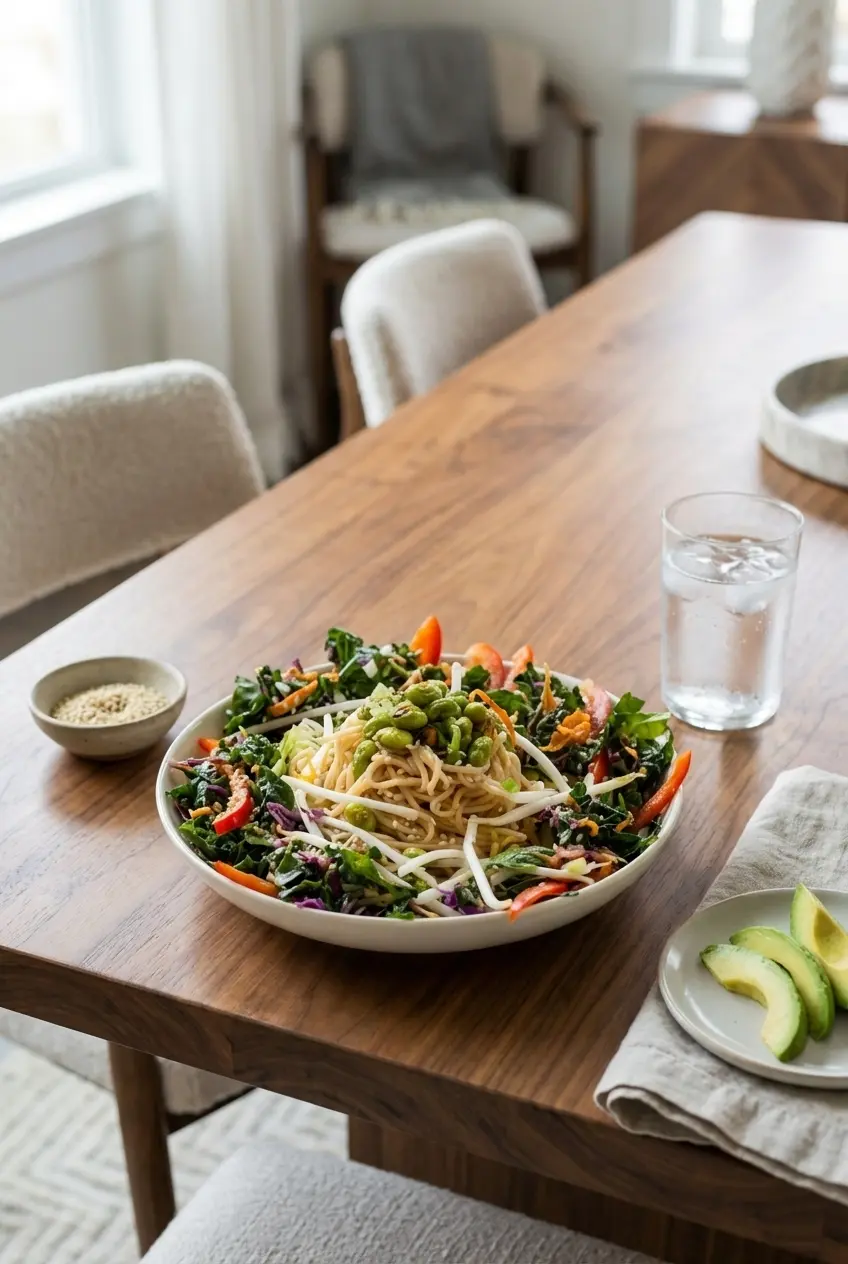
This salad is fantastic served chilled, especially on hot afternoons when you want something crisp and refreshing. I love finishing it with crushed nori, avocado slices, and an extra spoonful of dressing right before it hits the table.
For a fuller spread, it pairs beautifully with roasted kabocha squash or crispy vegetable spring rolls. If you like bold, punchy sides, a bright kimchi salad brings a spicy contrast, while other fresh cucumber salads echo the cool crunch that makes this bowl so satisfying.
Storage & Make-Ahead Guidance
For the best vegan meal prep results, store the chopped vegetables, cooked noodles, and dressing in completely separate airtight containers. The undressed kale mixture holds well for the week, and the sweet ginger soy dressing stays fresh in the fridge for 4 to 5 days.
The noodles are best within about 3 to 4 days, especially if they were rinsed well and lightly coated after cooking. If they firm up in the fridge, a quick toss with a little dressing or a teaspoon of water helps loosen them before serving.
I do not recommend freezing this salad once assembled because the vegetables lose their snap and the rice noodles turn brittle, then mushy. Packed separately, though, it is one of the easiest work lunches to keep fresh and craveable.
Vibrant Edamame Rice Noodle Salad

Equipment
- Blender
- Cast Iron Skillet
- Large Mixing Bowl
Ingredients
sweet ginger soy dressing:
- 1/4 C sunflower oil
- 3 tablespoon unseasoned rice vinegar
- 3 tablespoon water
- 2 tablespoon sesame oil
- 2 tablespoon miso paste
- 1 tablespoon maple syrup (or agave nectar or brown rice syrup)
- 2 to 3 knobs peeled ginger
asian noodle salad:
- 1 C frozen shelled edamame
- 1/2 teaspoon sesame oil
- 1/2 lbs 225 g chow mein noodles or rice noodles
- 1 tablespoon vegetable oil
- 1 tablespoon + 1/2 teaspoon low-sodium soy sauce or tamari
- 10 C lacinato kale, finely chopped into ribbons/shreds
- 1 C shredded carrot
- 1 C shredded purple cabbage
- 1 red pepper, julienned
- 1 C bean sprouts
- 1/3 C finely chopped green onion
- 1/4 C sesame seeds
Instructions
Blend the dressing and cook the noodles
- Combine the sunflower oil, rice vinegar, water, sesame oil, miso paste, maple syrup, and peeled ginger in a blender. Process until the dressing is completely smooth and creamy, then refrigerate until ready to use.
- Bring a large pot of water to a boil. Cook the rice noodles for 3 minutes, then drain immediately and rinse under cold running water to remove excess starch and stop the cooking process.
Blister the edamame and fry the noodles
- Heat a cast-iron skillet over medium-high heat with 1/2 teaspoon sesame oil and 1/2 teaspoon soy sauce. Add the frozen edamame and cook for 4 to 5 minutes, stirring occasionally, until the beans are nutty and blistered with dark brown spots.
- Remove the edamame from the pan. In the same skillet over medium heat, add the cooked noodles with 1 tablespoon vegetable oil and 1 tablespoon soy sauce. Toss for 2 to 3 minutes until the noodles are glossy and lightly fried.
Prep the vegetables
- Smack a cucumber with the flat side of a knife until it cracks, then chop it into jagged pieces. These rough edges will help the dressing cling to the cucumber better.
- In a large mixing bowl, combine the kale ribbons, shredded carrots, purple cabbage, green onions, and the smacked cucumber. Toss with 2 to 3 tablespoons of the prepared ginger miso dressing.
Assemble and serve
- Distribute the dressed greens among serving bowls. Top each bowl with a portion of the fried noodles, blistered edamame, julienned red pepper, bean sprouts, and sesame seeds. Drizzle with more dressing if desired and serve immediately.
Notes
Conclusion
This edamame rice noodle salad proves that a simple cold lunch can still have real depth. The blistered edamame, springy noodles, and savory ginger miso dressing turn everyday ingredients into something bright, smoky, and seriously craveable.
If you give it a try, make it your own with smacked cucumber, fresh herbs, or a little extra heat. I’d love to hear how it turned out in your kitchen, especially if it earns a spot in your weekly meal prep.
Frequently Asked Questions
How do I prevent my rice noodles from clumping together in the fridge?
Can I prepare this edamame noodle salad in advance?
Is this recipe gluten-free and vegan?
Do I need to cook the edamame, or can I just thaw it?
What is the best way to store leftover ginger miso dressing?
Can I use lo mein or soba noodles instead of rice noodles?