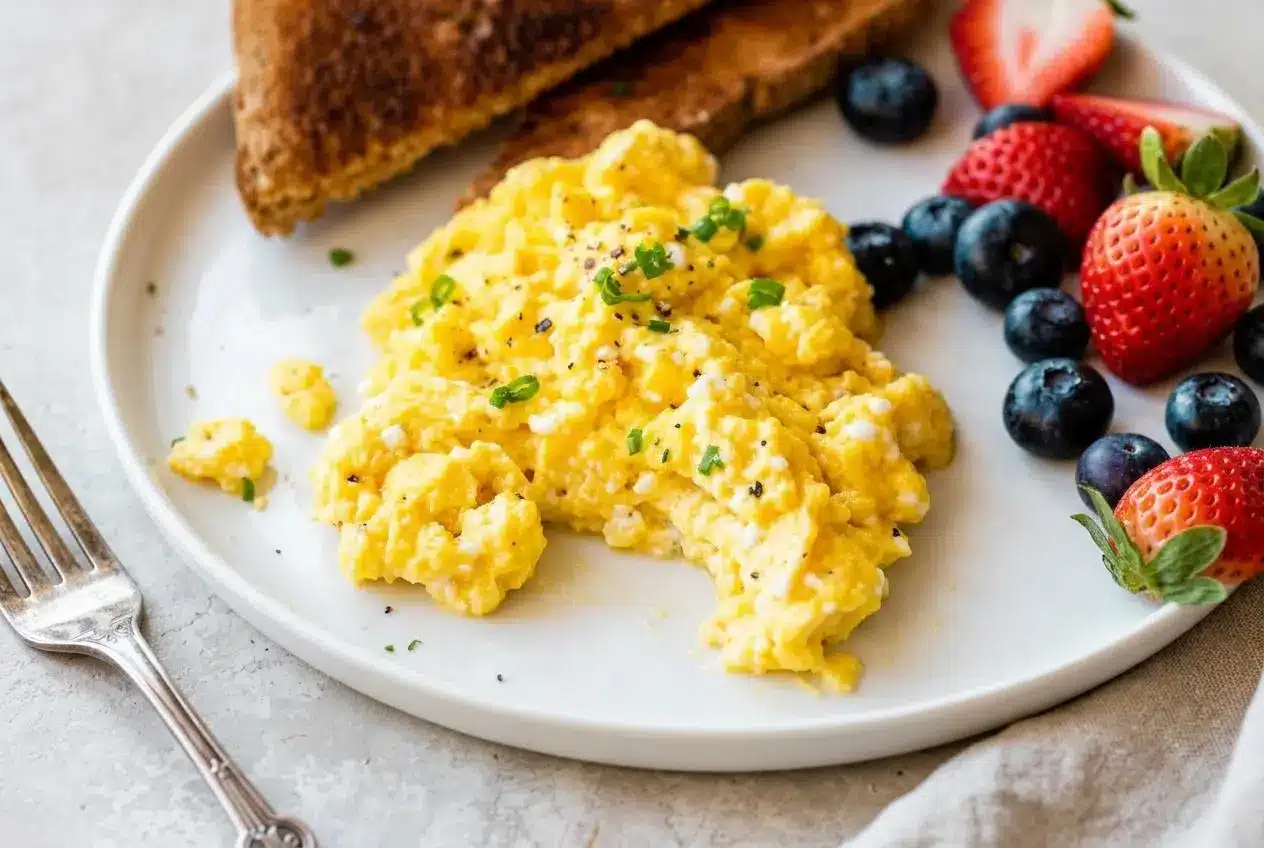
Whisk cottage cheese into eggs, then cook gently in a greased nonstick skillet for soft, creamy curds that are set but still glossy.
This cottage cheese scrambled eggs recipe turns two familiar breakfast ingredients into fluffy, savory eggs with a richer texture and about 17.5 g of protein per serving.
The cottage cheese softens into the eggs as they cook, so the flavor stays mild while the curds become tender and creamy. The low-heat finish makes all the difference.
Use a silicone or rubber spatula and sweep slowly, rather than chopping through the eggs, for soft folds instead of tiny dry bits.
Why Cottage Cheese Improves Scrambled Eggs
Cottage cheese gives scrambled eggs a creamy, almost custardy feel without requiring cream. Its milk proteins and soft curds hold moisture among the egg ribbons, which helps prevent the eggs from tightening into dry sheets as they cook.
The result is noticeably more substantial than classic scrambled eggs, while still tasting like a familiar skillet breakfast. The cottage cheese flavor fades into the cooked eggs, leaving a gentle dairy richness rather than a sharp tang.
This is a useful breakfast when you want protein from regular foods instead of powders. One serving provides 17.5 g of protein based on the listed ingredients, with a warm, filling texture that works well for a quick weekday plate.
Key Ingredients and the Ideal Egg-to-Cheese Ratio
Eggs create the tender structure, cottage cheese adds creamy moisture and richness, salt sharpens the flavor, pepper brings gentle warmth, and oil spray helps the curds release cleanly from the skillet.
- 4 large eggs
- 1/2 cup 2% cottage cheese (I like Good Culture)
- 1/8 teaspoon kosher salt
- fresh ground black pepper
- olive oil spray
The working ratio is 1/4 cup cottage cheese for every 2 large eggs. It gives the eggs enough dairy richness to stay fluffy without overwhelming their structure. Cottage cheese with small curds blends more evenly through the eggs, while larger curds leave more distinct creamy pockets.
I drain cottage cheese briefly in a small sieve when the container has a visible layer of whey on top, because that extra liquid can loosen the finished curds.
For an optional extra-protein egg-white blend, replace 2 whole eggs with 1/2 cup liquid egg whites while keeping the cottage cheese ratio in mind. Egg whites add more moisture and can weep more easily, so keep the burner slightly lower and fold gently until just set.
Choosing Between 2%, 4%, and Fat-Free Cottage Cheese
Two-percent cottage cheese gives a balanced result: creamy enough for tender curds, yet light enough that the eggs still taste bright. The listed 2% version is especially reliable for a quick stovetop scramble.
Four-percent cottage cheese makes the most velvety eggs because the extra milkfat lends a fuller texture. Fat-free cottage cheese can work, but it often carries more loose moisture. Drain it first if it looks wet, and stay patient with low heat to avoid a watery skillet.
Single-Serving vs. Family Batch Measurements
For one serving, use 2 large eggs with 1/4 cup cottage cheese. For the full two-serving recipe, use 4 large eggs with 1/2 cup cottage cheese. For a four-person brunch, scale to 8 eggs and 1 cup cottage cheese.
As the batch grows, use a wider skillet so the egg mixture forms a shallow layer and cooks evenly. Crowding a small pan makes the center linger too long over heat while the edges overcook.
How to Make Cottage Cheese Scrambled Eggs
- Beat the eggs, cottage cheese, kosher salt, and black pepper in a medium bowl with a fork until the mixture looks evenly combined.
Leave the cottage cheese curds visible for a rustic scramble, or whisk a little longer for a more even texture. - Warm a medium nonstick skillet over medium-low heat, then coat it with olive oil spray before adding the egg mixture.
The pan should feel warm and ready without smoking or browning the eggs on contact. - Let the bottom begin to set, then use a rubber spatula to draw the eggs from the outer edge toward the center in slow, broad sweeps for 1 1/2 to 2 minutes.
Stop when the curds are softly folded, mostly set, and still have a light glossy sheen. - Take the skillet off the burner and transfer the eggs to plates.
Residual heat finishes the last soft spots while keeping the curds tender.
For a fast single-serving scramble, use an 8-inch nonstick skillet and follow this quick check:
- Whisk 2 eggs with 1/4 cup cottage cheese and seasonings.
- Keep the skillet at medium-low heat and coat it with oil spray.
- Push the setting egg inward with slow spatula sweeps instead of constant stirring.
- Remove the pan while the eggs still look faintly glossy, usually in under 3 minutes.
How to Avoid Watery Eggs and Curd Separation
Liquid pooling around the eggs usually comes from heat that is too high or cottage cheese that is unusually wet. Intense heat makes the milk proteins tighten quickly and squeeze out their liquid, which is why whey separation can turn a creamy scramble into a watery one.
- Watery liquid in the skillet: Lower the burner to medium-low. Give the eggs time to form soft folds instead of forcing them to cook fast.
- Wet cottage cheese straight from the container: Spoon it into a small sieve and let excess whey drain before whisking it with the eggs.
- Rubbery, dry curds: Pull the skillet off the heat when the eggs are almost set. Eggs continue cooking from the warmth of the pan.
- Small, tough crumbles: Use broad, gentle folds with the spatula. Aggressive stirring breaks the curds apart and encourages overcooking.
- Flat flavor: Taste after cooking and add a little more black pepper if needed. Cottage cheese varies in saltiness from brand to brand.
Do not leave the eggs sitting in the hot skillet after they are done. That lingering heat is enough to tighten the egg proteins and release moisture after the scramble has already looked perfect.
Texture Options: Rustic Curds vs. Smooth Blended
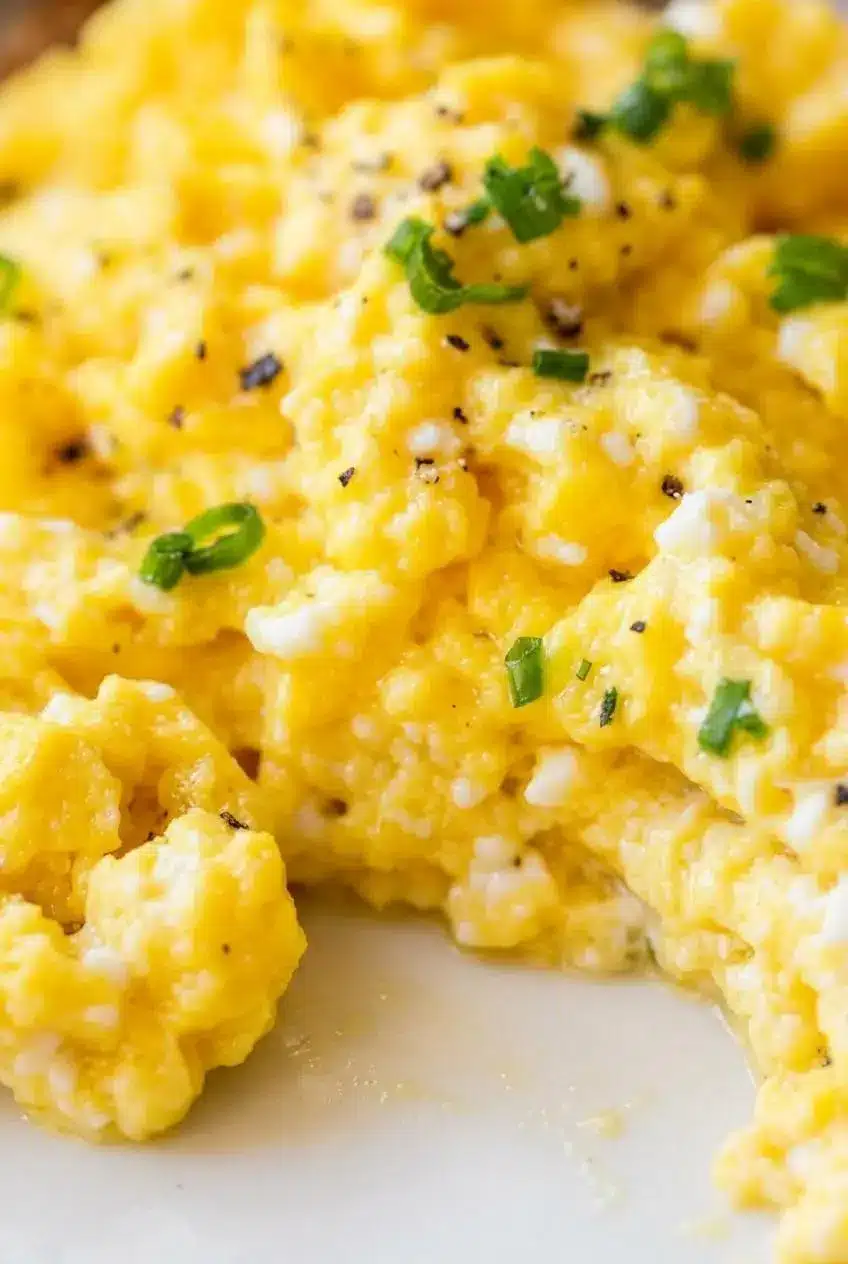
You can choose between visible cottage cheese curds and a fully smooth egg mixture before the skillet ever heats up. Both styles cook in about the same amount of time, so the choice comes down to the texture you enjoy most.
The Rustic Fork-Whisked Technique
Whisk the mixture with a fork just until the eggs, cottage cheese, salt, and pepper come together. Some curds will remain intact, then soften into creamy pockets surrounded by golden egg ribbons as they cook.
This is the best option if you like a traditional scramble with varied texture. The folds stay light, tender, and pleasantly marbled rather than completely uniform.
The Immersion Blender Velvety Method
If visible curds are not your thing, blend the eggs, cottage cheese, and seasonings for about 15 seconds with an immersion blender or standard blender before cooking. Blend only until smooth and lightly aerated, not until the mixture becomes a loose froth.
The blended mixture cooks into soft, uniform folds with a velvety finish and no noticeable cottage cheese lumps. It has a similar smoothness to cottage cheese egg bites, but with the quick, tender character of stovetop scrambled eggs.
Flavor Add-Ins, Mix-Ins, and Serving Suggestions
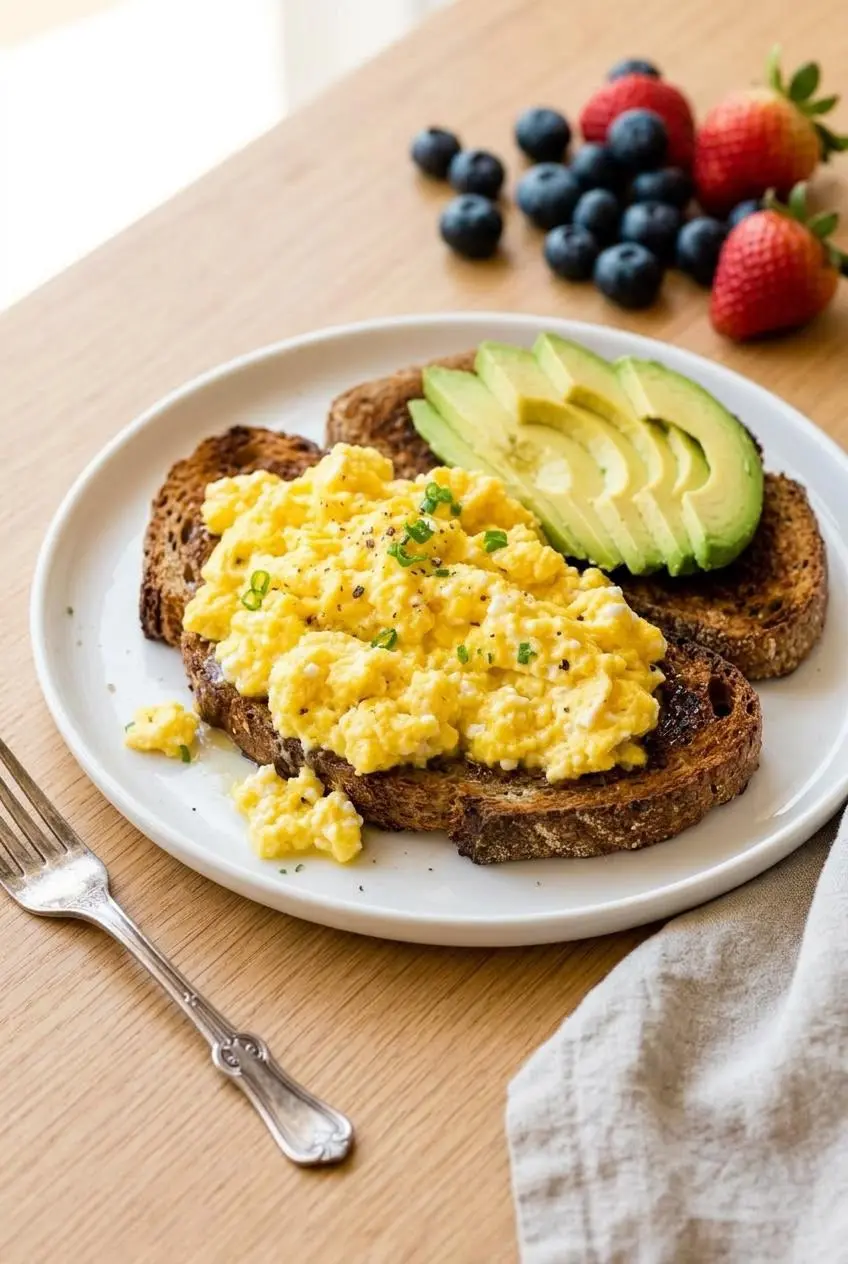
Keep the core scramble as written, then use optional add-ins when you want a different mood on the plate. Choose additions that bring flavor without adding a puddle of moisture to the pan.
For a bright finish, whisk finely snipped chives and freshly grated lemon zest into the raw egg mixture. The herbs add freshness, while the zest cuts through the cottage cheese richness with a clean citrus aroma.
Fresh Herbs and Mediterranean Additions
- Chives, dill, or parsley: Stir them into the egg mixture for fresh flavor that does not change the curd texture.
- Sun-dried tomatoes: Fold them in near the end for concentrated savory sweetness and chew.
- Pecorino or feta: Add a small sprinkle for a salty, Mediterranean-style finish, then adjust the salt carefully.
- Baby spinach or mushrooms: Sauté them separately first, then fold them into the setting eggs. Raw vegetables release water as they heat and can make the scramble loose.
- Red pepper flakes: Add a pinch for gentle heat without changing the moisture level.
Balanced Breakfast Pairings and Burrito Ideas
Spoon the eggs over toasted sourdough with ripe avocado slices and flaky sea salt for a satisfying breakfast. For a more substantial morning sandwich, pile them onto toasted cottage cheese bagels.
For a portable option, roll the warm eggs into a whole-wheat tortilla with black beans and salsa. The creamy curds act like a built-in filling, so the wrap stays flavorful without a heavy sauce.
Storage and Gentle Reheating
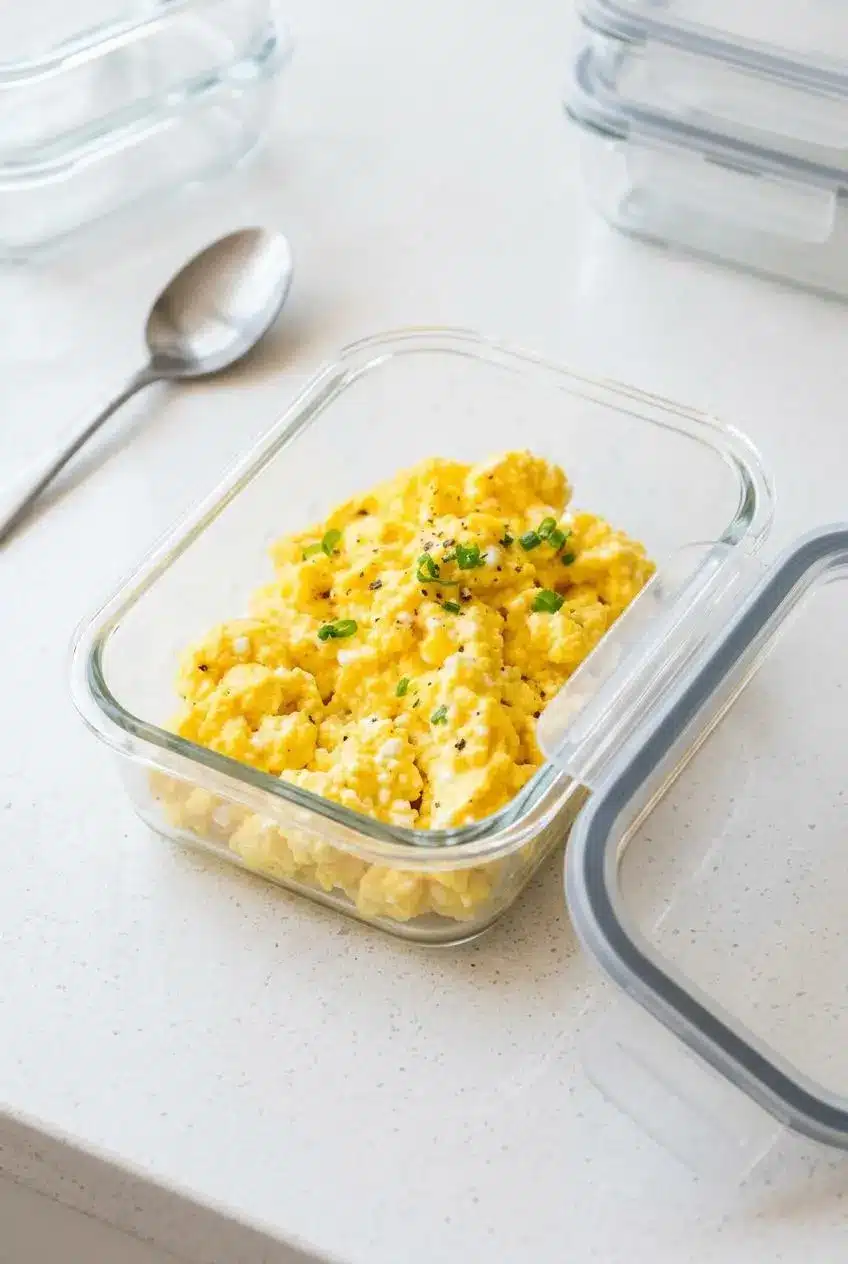
These eggs are at their best straight from the pan, but leftovers can be cooled promptly, covered in an airtight container, and kept chilled. Reheat only the portion you plan to eat so the remaining eggs stay in better condition.
Warm leftovers gently in a nonstick skillet over low heat with a small splash of water or a little butter. A microwave also works when used at reduced power in brief bursts, stirring between bursts until the eggs are warmed through. High heat makes reheated eggs turn firm and rubbery very quickly.
Conclusion
Cottage cheese gives scrambled eggs a creamy lift, tender folds, and a meaningful protein boost without making breakfast complicated. The dependable ratio is 1/4 cup cottage cheese for every 2 large eggs.
Keep the heat medium-low, fold slowly, and pull the pan while the curds still shine slightly. For a weekend brunch upgrade, try chives and lemon zest for a fresh, savory finish.
Frequently Asked Questions
How Much Cottage Cheese Do You Add to 2 Eggs?
Use 1/4 cup cottage cheese for 2 large eggs. This proportion keeps the scramble rich and fluffy while helping the eggs hold their soft structure.
Why Are My Cottage Cheese Scrambled Eggs Watery?
High heat is usually the cause. It makes the cottage cheese proteins tighten and release whey, so keep the skillet at medium-low heat and remove it while the eggs are still slightly glossy. If the cottage cheese looks especially wet before cooking, drain the loose whey in a small sieve first.
Can You Taste the Cottage Cheese in the Eggs?
The cottage cheese taste becomes much milder once cooked. It mainly contributes creamy, rich texture, while the finished eggs still taste like savory scrambled eggs.
Can You Blend the Eggs and Cottage Cheese First?
Yes. Blend the eggs, cottage cheese, and seasonings briefly for a smooth, velvety scramble with no visible curds. This option is especially helpful if you prefer a uniform texture.
Can You Meal Prep or Reheat Cottage Cheese Scrambled Eggs?
Fresh eggs have the softest texture, but you can save leftovers in an airtight container in the refrigerator and reheat them gently. Use low skillet heat or reduced microwave power to avoid firm, rubbery curds.
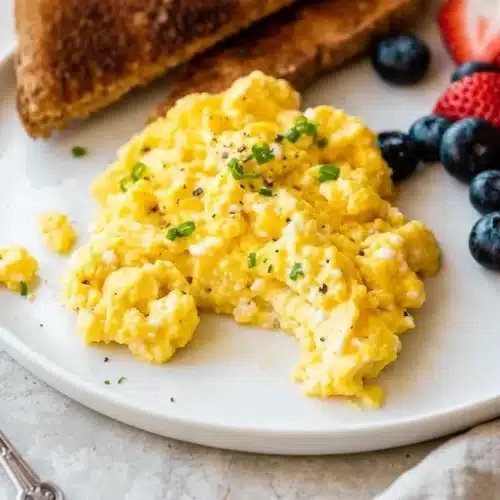
Cottage Cheese Scrambled Eggs Recipe

Equipment
- Medium nonstick skillet
- Rubber spatula
Ingredients
- 4 large eggs
- 1/2 cup 2% cottage cheese (I like Good Culture)
- 1/8 teaspoon kosher salt
- fresh ground black pepper
- olive oil spray
Instructions
- Beat the eggs, cottage cheese, kosher salt, and black pepper in a medium bowl with a fork until the mixture looks evenly combined. Leave the cottage cheese curds visible for a rustic scramble, or whisk a little longer for a more even texture.
- Warm a medium nonstick skillet over medium-low heat, then coat it with olive oil spray before adding the egg mixture. The pan should feel warm and ready without smoking or browning the eggs on contact.
- Let the bottom begin to set, then use a rubber spatula to draw the eggs from the outer edge toward the center in slow, broad sweeps for 1 1/2 to 2 minutes. Stop when the curds are softly folded, mostly set, and still have a light glossy sheen.
- Take the skillet off the burner and transfer the eggs to plates. Residual heat finishes the last soft spots while keeping the curds tender.