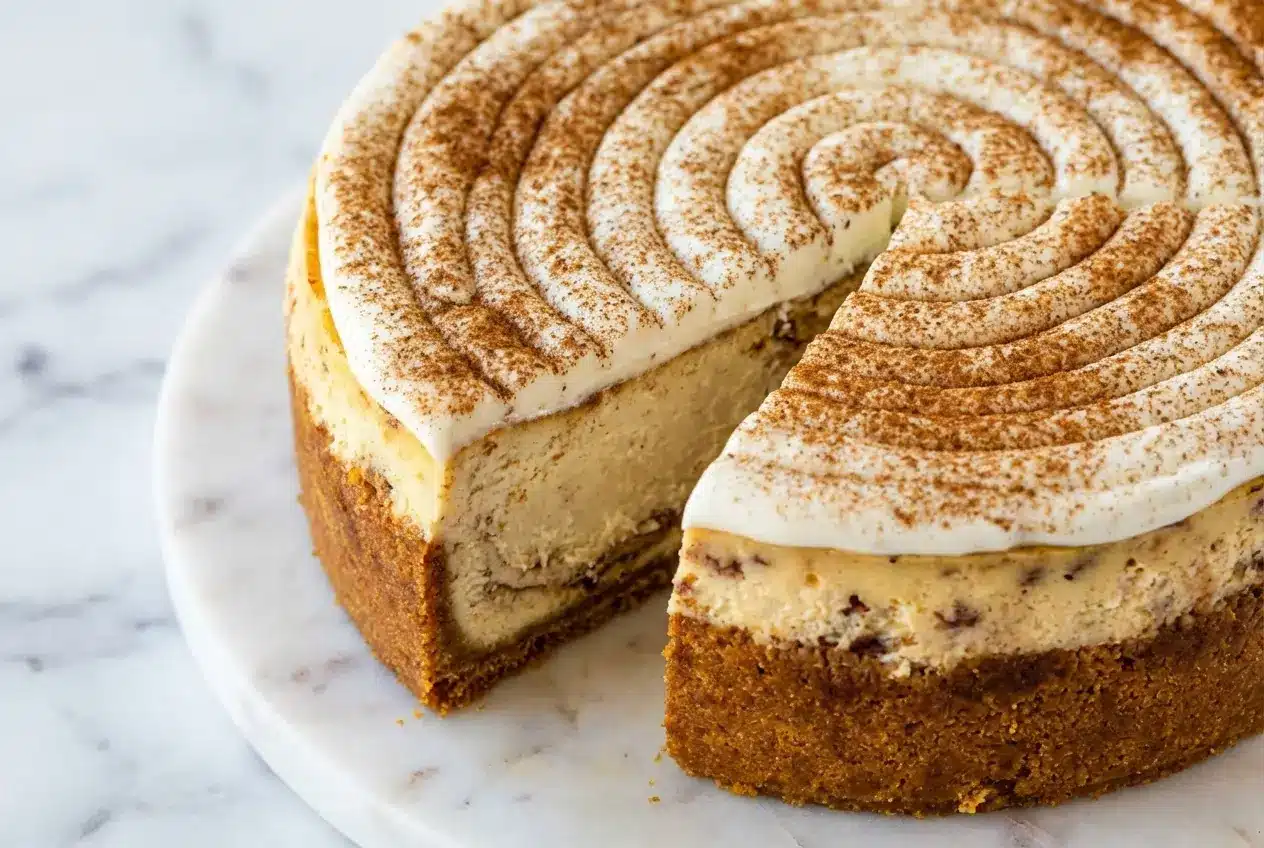
There is something wildly comforting about pulling a dessert from the fridge that smells like Sunday morning pastries and looks like it came from a bakery case. This Cinnamon Roll Cheesecake brings together the gooey warmth of a cinnamon roll and the cool, velvety richness of classic cheesecake in one showstopping slice.
If cheesecakes have ever felt a little intimidating, this one is a friendly place to start. In my kitchen, this method turns out a creamy, crack-free result with straightforward steps, a browned butter graham cracker crust, and a warmly spiced swirl that makes every bite feel extra special.
Why You’ll Love This Recipe
Bakery flavor at home: Browned butter in both the Graham cracker crust and the brown sugar cinnamon swirl gives this cheesecake those deep, toasty notes that remind me of the caramelized corners of fresh cinnamon buns.
The secret twist: A tiny pinch of cardamom in the swirl does not make the dessert taste floral or overpowering. It simply makes the cinnamon taste warmer, rounder, and more layered, the same way great sourdough cinnamon rolls have that irresistible bakery aroma.
Dreamy texture: The filling bakes up ultra-creamy and rich, with just enough sour cream to keep the batter smooth and balanced instead of heavy.
A reliable method: I love this recipe because the steps are simple and practical, even if you are new to Baking with a Springform pan and Water bath. Once you follow the layering and cooling method, the cheesecake practically sets itself up for success.
Ingredients and Substitutions
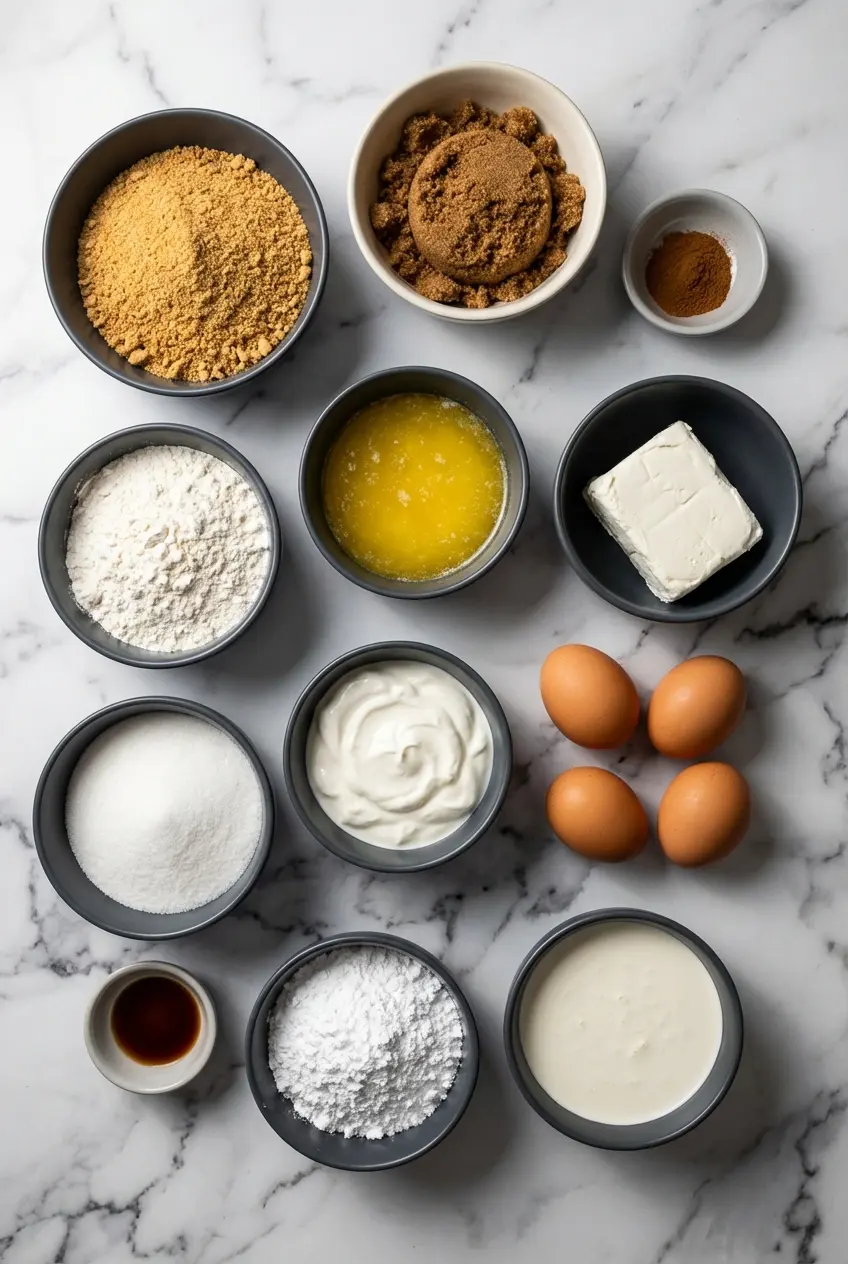
Each part of this cheesecake has a job to do, from the buttery crust to the fluffy frosting on top, and together they build that cozy cinnamon roll flavor.
Ingredients
Graham Cracker Crust:
- 1 1/2 cups graham cracker crumbs 180 grams, or digestive biscuits
- 1/4 cup brown sugar 55 grams
- 1/2 tsp cinnamon
- 6 tbsp unsalted butter melted, 85 grams
Cinnamon Roll Swirl:
- 1 cup brown sugar 220 grams
- 1/3 cup all-purpose flour 39 grams
- 1 tbsp ground cinnamon
- 1/3 cup unsalted butter melted, 76 grams
Cheesecake batter:
- 907 grams cream cheese softened 4 packages of 8 oz.
- 1 cup brown sugar 220 grams
- 1/4 cup granulated sugar 50 grams
- 1/2 cup sour cream 120 grams
- 4 large eggs room temp
- 1 tbsp vanilla extract
- 1/2 tsp salt
Cream Cheese Frosting:
- 6 tbsp cream cheese 85 grams
- 1 cup powdered sugar 125 grams
- 1 tsp vanilla extract
- 1 cup heavy whipping cream 240 ml
- 1-2 tsp cinnamon powder
Ingredient Notes & Substitutions
Room temperature cream cheese: This is non-negotiable if you want a silky cheesecake batter without lumps. Cold cream cheese stays stubborn and grainy, while softened blocks blend into a smooth, creamy base in the full 3 minutes of mixing.
Heavy whipping cream: Use true heavy whipping cream, not half-and-half or coffee cream, so the frosting whips to stiff peaks and folds into a stable, pipeable topping. That rich fat content is what gives the frosting its cloudlike body.
Graham crackers: Classic graham crackers give you that familiar cheesecake flavor, but I have also made this with crushed Cinnamon Toast Crunch and with Biscoff cookies when I wanted a stronger cinnamon cookie note. Both options make the crust taste even more like the edges of a baked cinnamon roll.
Gluten-free swaps: If you need a gluten-free version, use gluten-free graham-style crackers for the crust and replace the flour in the swirl with a 1:1 gluten-free baking blend. The texture stays beautifully close to the original when the measurements stay the same.
Sour cream: Full-fat sour cream gives the batter a softer, tangier finish and keeps the cheesecake from tasting flat. I would not skip it here, because it helps balance the sweetness of the brown sugar cinnamon swirl.
How to Make Cinnamon Roll Cheesecake
Build the crust and swirl
- Start by heating the oven to 325ºF so it is fully ready when the crust is mixed. A properly preheated oven helps the crust set evenly from the start.
- Pulse the graham crackers in a food processor until you have very fine crumbs, almost like damp sand once mixed. Stir in the brown sugar and cinnamon, then add the melted browned butter and mix with a spatula until every crumb looks evenly moistened and smells nutty and toasty.
- Press the crust mixture firmly into the bottom of an 8-inch or 9-inch cheesecake pan. If you are using an 8-inch Springform pan, make sure it is deep enough to hold all the layers, then bake the crust for 10 minutes and let it cool completely.
- For the swirl, combine the brown sugar, flour, cinnamon, and a pinch of cardamom in a bowl. Stir in the melted browned butter until the mixture forms soft, buttery crumbs, then set it aside while you prepare the filling.
Mix the cheesecake batter
- Lightly grease the sides of the cheesecake pan so the filling can rise and settle more smoothly as it bakes and cools.
- Beat the softened cream cheese for 3 minutes at medium speed until it looks creamy and completely smooth. Add the brown sugar and granulated sugar, then beat for 2 minutes more, scrape the bowl well, and mix another 30 seconds so no dense patches are hiding at the bottom.
- Blend in the sour cream until the batter looks glossy and unified. Scrape the bowl again, because small cream cheese lumps love to cling to the sides.
- Add the eggs one at a time, mixing on low speed only until each one disappears into the batter. This low-and-slow step matters, because Overmixing after the eggs go in can trap extra air and lead to cracks later.
- Mix in the vanilla and salt just briefly. At this point, the batter should look silky, thick, and pourable, not fluffy.
Layer, bake, and chill
- Pour 1/3 of the batter over the cooled crust, then scatter 1/3 of the swirl mixture over the top. I like to crumble it with my fingers as I go, which prevents heavy clumps from sinking and gives you prettier ribbons through each slice.
- Repeat with another 1/3 of the batter and another 1/3 of the swirl, then finish with the remaining batter and the final swirl on top. Gently nudge a little batter over the top crumbs with a spatula, which helps shield the surface and reduces the chance of cracking.
- Wrap the bottom of the pan securely with several layers of foil. Set the cheesecake pan inside a larger roasting pan, then pour hot water into the roasting pan to create a Water bath.
- Bake at 325ºF for 60 to 75 minutes. The edges should look set, while the center still has a slight Jell-O-like wobble when you gently shake the pan.
- Turn off the oven and leave the cheesecake inside for 1 hour so it can settle gradually. After that, transfer it to the refrigerator and chill for at least 6 hours, until fully cold and easy to slice cleanly.
Finish with the frosting
- Beat the cream cheese for about 1 minute until smooth, then add the powdered sugar and mix for another minute. Stir in the vanilla and set that mixture aside.
- In a separate bowl, whip the heavy whipping cream for about 3 minutes, until it holds stiff peaks. Fold the whipped cream gently into the cream cheese mixture with a spatula so the frosting stays airy and light.
- Spoon the frosting into a piping bag fitted with a round tip and pipe swirls over the chilled cheesecake. Finish with a dusting of cinnamon powder for that final cinnamon roll look.
Baking Secrets for a Perfect Texture
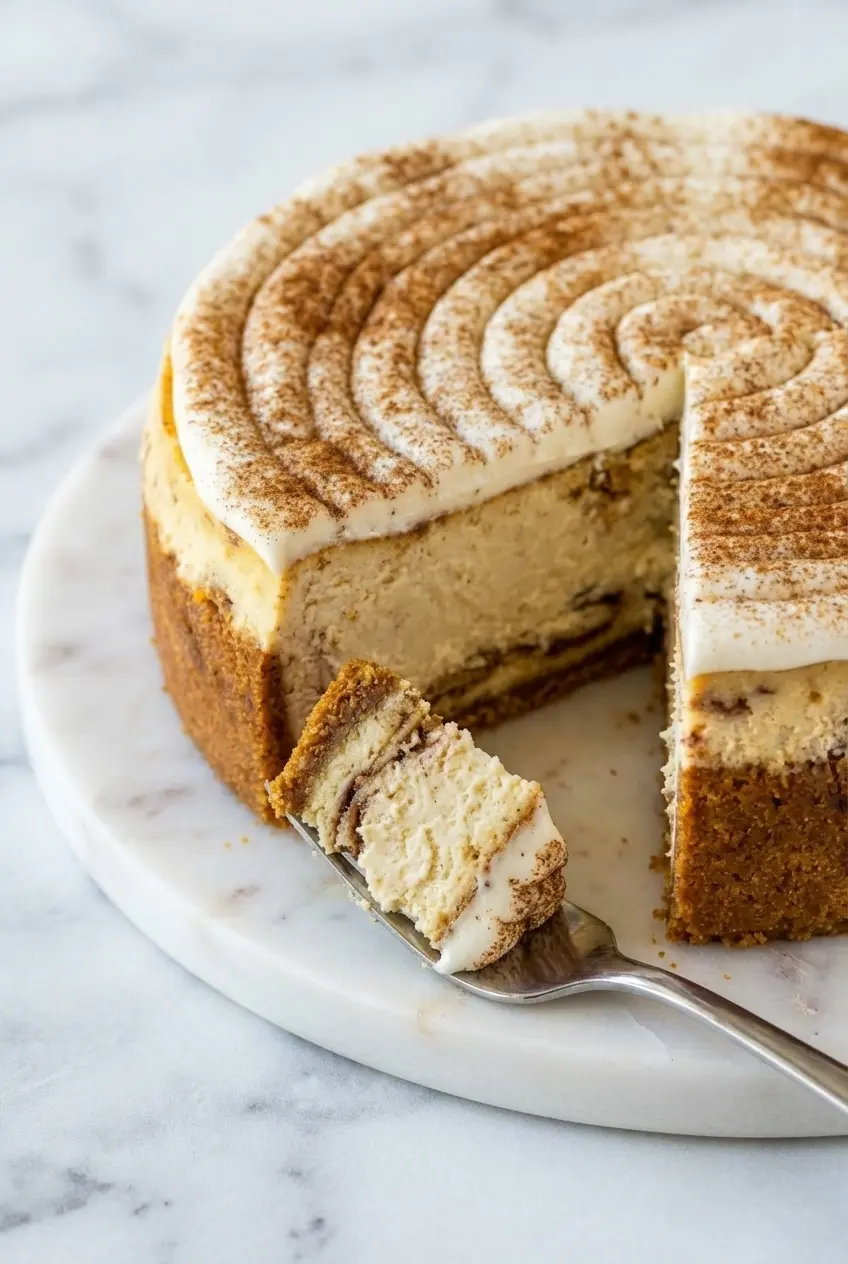
A leak-proof Springform pan is the first big win. I either wrap the outside with heavy-duty, extra-wide aluminum foil in a few tight layers or slip the pan into a silicone slow-cooker liner before placing it in the roasting pan, because even a small drip can make the crust soggy.
For neat slices, use a long sharp knife dipped under hot water, then wipe it completely dry before every cut. That little pause between slices keeps the brown sugar cinnamon swirl defined instead of dragging streaks across the creamy filling.
If the top cracks anyway, do not let it ruin the moment. A thick, piped cream cheese frosting covers little imperfections beautifully, and once the cinnamon dusting goes on, it looks intentional and bakery-polished.
The Science of the Water Bath and Slow Cooling
A water bath is one of those cheesecake steps that feels fussy until you see what it does. The hot water around the pan creates a humid environment, which softens the oven heat and protects the dairy-rich batter from baking too aggressively at the edges while the center is still setting.
That matters because cheesecake is really a delicate custard held together by cream cheese, eggs, and gentle Baking. Without the Water bath, the outside often turns rubbery before the middle is done, and that uneven structure is what causes sinking and surface cracks.
Slow cooling is the second half of the same idea. When a hot cheesecake is pulled straight into a cooler room, the sudden drop makes it contract too fast, and that dramatic shift is one of the most common reasons a beautiful top splits open.
Leaving the cheesecake in the turned-off oven for 1 hour lets the structure finish settling in a gradual way. In my kitchen, this simple pause makes the texture silkier, the top flatter, and the final slice much more polished.
Pro Tips & Troubleshooting
Pro Tips
- Use room temperature ingredients from the start, especially the cream cheese, sour cream, and eggs. Smooth batter begins with ingredients that blend easily, not with extra mixing force.
- Once the eggs are added, mix on low speed and only until combined. Too much air in the batter makes the cheesecake puff in the oven and crack as it cools.
- Break up the swirl mixture with your fingers as you layer it. Fine, crumbly pieces stay suspended more evenly than dense chunks, which can sink toward the bottom.
- An 8-inch pan gives you a taller, more dramatic dessert, while a 9-inch pan bakes a little wider and slightly shallower. Either works, but the 8-inch pan needs to be deep.
Common Mistakes to Avoid
- Skipping the water bath is the fastest way to end up with rubbery edges and a center that sinks as it cools.
- Pulling the cheesecake from the oven the moment Baking time ends can shock the structure. That 1-hour rest in the switched-off oven is part of the recipe, not an optional extra.
- Baking until the center is completely firm usually means it has gone too far. The best cue is a gentle Jell-O jiggle in the middle while the outer ring looks set.
- Using cold ingredients can leave tiny lumps throughout the batter. No amount of late mixing fixes that as neatly as proper softening does at the beginning.
Serving & Storage
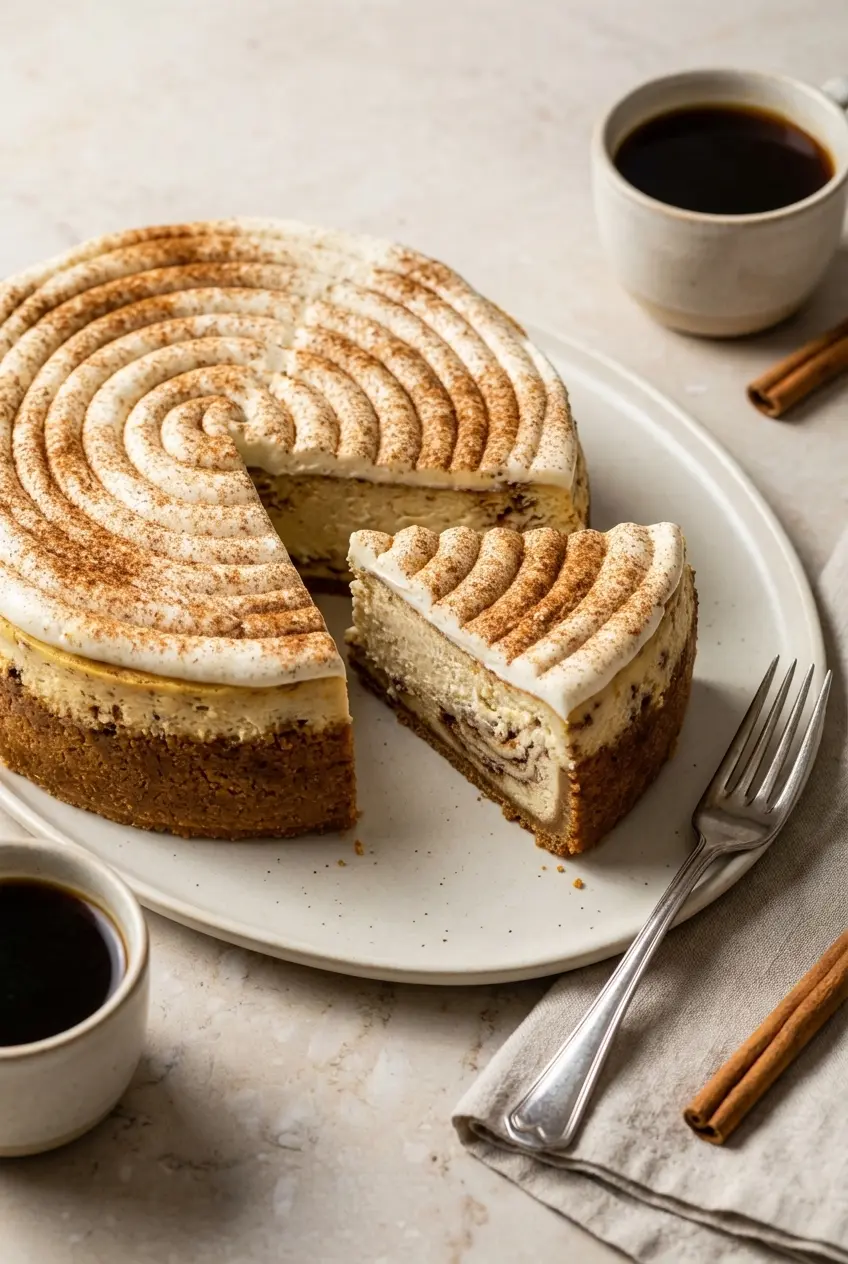
Serving Ideas
For the creamiest texture, let each chilled slice sit at room temperature for about 15 minutes before serving. That short rest softens the filling just enough for the browned butter, cinnamon, and cardamom to come through more clearly.
A drizzle of warm caramel sauce is always welcome here, but I also love serving it with a spoonful of homemade cinnamon pancake syrup when I want the cinnamon roll vibe to really shine. A little extra icing on the plate never hurts either.
If you want a party-friendly version, this recipe works beautifully as mini cheesecakes in a muffin tin. Bake them for 20 to 25 minutes, and look for that same slight wobble in the center before cooling them gently.
Storage & Make-Ahead
Store leftover cheesecake in the refrigerator, loosely covered once it is fully chilled. Covering it too tightly while still a little warm can trap condensation and leave moisture on the surface.
You can make this dessert a day or two ahead, and honestly, I think it slices even better on day two. The flavors settle, the swirl firms up, and the whole cheesecake tastes a little more cohesive.
To freeze, wrap the whole cheesecake or individual slices tightly in plastic wrap and then foil. Thaw overnight in the refrigerator, not on the counter, so the texture stays smooth and the frosting holds its shape.
Cinnamon Roll Cheesecake

Equipment
- 8-inch or 9-inch Springform pan
- Food processor
- Roasting pan
- Electric Mixer
- Piping bag and round tip
Ingredients
Graham Cracker Crust:
- 1 1/2 cups graham cracker crumbs 180 grams, or digestive biscuits
- 1/4 cup brown sugar 55 grams
- 1/2 tsp cinnamon
- 6 tbsp unsalted butter melted, 85 grams
Cinnamon Roll Swirl:
- 1 cup brown sugar 220 grams
- 1/3 cup all-purpose flour 39 grams
- 1 tbsp ground cinnamon
- 1/3 tbsp unsalted butter melted, 76 grams
Cheesecake batter:
- 907 grams cream cheese softened 4 packages of 8 oz.
- 1 cup brown sugar 220 grams
- 1/4 cup granulated sugar 50 grams
- 1/2 cup sour cream 120 grams
- 4 large eggs room temp
- 1 tbsp vanilla extract
- 1/2 tsp salt
Cream Cheese Frosting:
- 6 tbsp cream cheese 85 grams
- 1 cup powdered sugar 125 grams
- 1 tsp vanilla extract
- 1 cup heavy whipping cream 240 ml
- 1-2 tsp cinnamon powder
Instructions
Build the crust and swirl
- Preheat your oven to 325ºF (163ºC). Pulse the graham crackers in a food processor into fine crumbs, then stir in the brown sugar, cinnamon, and melted browned butter until evenly moistened. Press the mixture firmly into the bottom of a deep 8-inch or 9-inch springform pan and bake for 10 minutes, then set aside to cool completely.
- Prepare the swirl by combining brown sugar, flour, cinnamon, and a pinch of cardamom. Stir in the melted browned butter until soft crumbs form, then set aside.
Mix the cheesecake batter
- Lightly grease the sides of the springform pan. In a large bowl, beat the softened cream cheese at medium speed for 3 minutes until perfectly smooth. Add the brown and granulated sugars and beat for another 2 minutes, scraping the bowl thoroughly.
- Blend in the sour cream until the batter is glossy. Add the eggs one at a time, mixing on low speed only until just incorporated to avoid trapping air. Briefly mix in the vanilla and salt until the batter is silky.
Layer, bake, and chill
- Pour one-third of the batter over the crust, then scatter one-third of the cinnamon swirl mixture on top. Repeat this layering twice more, ending with the swirl. Use a spatula to gently nudge a little batter over the top crumbs.
- Securely wrap the bottom of the pan with foil and place it in a roasting pan. Pour hot water into the roasting pan to create a water bath. Bake for 60 to 75 minutes until the edges are set and the center has a slight wobble.
- Turn off the oven and let the cheesecake rest inside for 1 hour. Remove and refrigerate for at least 6 hours (or overnight) until fully chilled and firm.
Finish with the frosting
- Beat the cream cheese and powdered sugar with vanilla until smooth. In a separate bowl, whip the heavy cream to stiff peaks, then gently fold it into the cream cheese mixture.
- Pipe the frosting swirls onto the chilled cheesecake and finish with a light dusting of cinnamon powder before serving.
Notes
Conclusion
This cheesecake has all the comfort of a cinnamon roll and all the elegance of a classic bakery dessert, with browned butter and a whisper of cardamom giving it a deeper, warmer finish. It is the kind of dessert that feels special without asking for complicated techniques.
I hope you enjoy every part of the process, from the nutty crust to the final cinnamon dusting on top. And if this style of celebration dessert is your thing, a strawberry crunch cheesecake makes a fun next bake for the same crowd-pleasing, bakery-style effect.
Frequently Asked Questions
How can I tell when the cheesecake is done baking?
Do I really need to use a water bath?
How do I prevent my cheesecake from cracking?
Can I freeze cinnamon roll cheesecake?
How far in advance can I make this dessert?
Can I use light cream cheese instead of full fat?