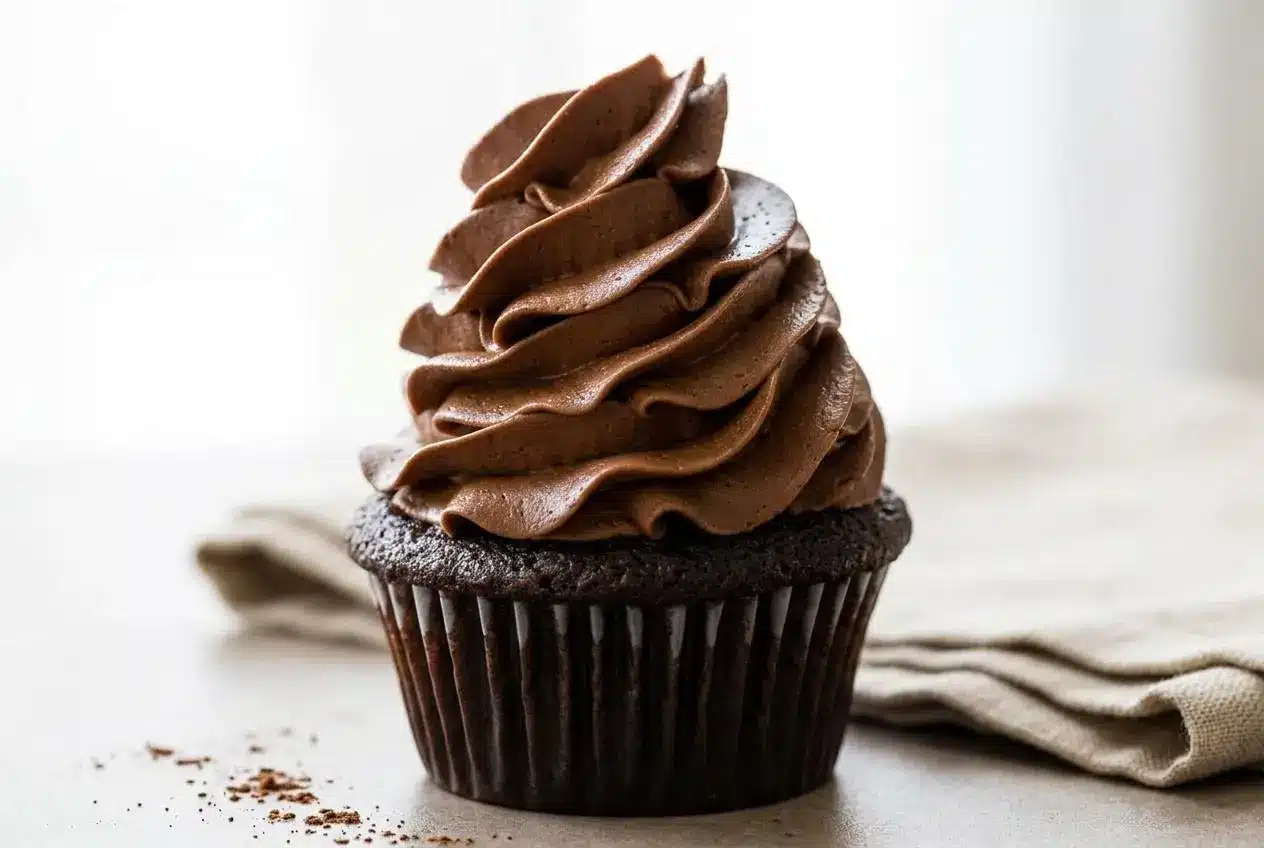
This chocolate frosting recipe makes a rich, silky buttercream in about 6 minutes. Beat softened butter until fluffy, add cocoa, confectioners sugar, cream, vanilla, and salt, then whip until smooth and light for cakes or cupcakes.
This is a classic American buttercream with deep chocolate flavor and a soft, pipeable texture. It uses cocoa powder, so you get big chocolate payoff without melting chocolate first.
It’s quick, reliable, and easy to adjust if you want it thicker, lighter, or a little less sweet. The key trick is simple and makes a huge difference.
Use butter that feels cool but yields slightly when pressed so the frosting whips up fluffy instead of dense or greasy.
Why This Is the Only Chocolate Frosting Recipe You’ll Need
If you want a frosting that’s fast, rich, and dependable, this one checks every box. It’s ready in about 6 minutes, uses familiar baking ingredients, and turns out fluffy instead of heavy when you whip the butter for a full 3 minutes before adding the rest. That first step builds the light texture and helps the finished frosting stay smooth, creamy, and easy to spread or pipe.
Key Ingredients for Perfect Chocolate Frosting
Each ingredient has a real job here, from building structure and fluffiness to adding chocolate depth, smooth texture, and balanced sweetness.
- 1 cup unsalted butter (softened)
- 3 cups confectioners sugar
- 1/2 cup unsweetened natural cocoa powder
- 3 to 4 Tbsp heavy whipping cream (plus more to thin the frosting)
- 2 tsp pure vanilla extract
- 1/4 tsp salt
Softened butter is the base of the whole frosting. When you beat it long enough, it becomes creamy and lighter in color, which traps air and gives the frosting that fluffy buttercream texture instead of a dense, pasty one.
Confectioners sugar sweetens the frosting and helps it hold its shape. Cocoa powder brings the chocolate flavor, and natural cocoa gives you a classic taste. If you want a darker color and a deeper, smoother chocolate note, Dutch-process cocoa works well as an optional swap, though it will shift the flavor slightly from the original version.
Heavy whipping cream loosens the frosting while keeping it rich. Milk works in a pinch, but cream gives a fuller mouthfeel and usually makes the frosting silkier. Vanilla rounds out the chocolate, and salt keeps the sweetness from tasting flat.
I like using full-fat block butter here because it whips up with better structure and gives cleaner piping edges.
How to Make Chocolate Frosting Step-by-Step
The method is short, but each stage matters. You’re building air first, then blending in the chocolate and sugar gently, then whipping everything until the frosting changes from thick and heavy to light and fluffy.
- Beat the softened butter with a handheld mixer or a stand mixer fitted with the whisk attachment on high speed for about 3 minutes.
The butter should look creamy, smooth, and noticeably lighter in color, and scraping the bowl helps it whip evenly. - Add the confectioners sugar, cocoa powder, 3 Tbsp heavy cream, vanilla extract, and salt to the bowl.
Start gently so the dry ingredients stay in the bowl instead of creating a powdered sugar cloud across the counter. - Mix on low speed until the sugar is mostly absorbed, then raise the speed to medium-high and beat for 3 minutes, scraping the bowl several times as you go.
The frosting should turn evenly chocolatey, lose any streaks, and become light and fluffy; add the remaining tablespoon of cream only if it needs loosening.
Essential Tips for Frosting Success
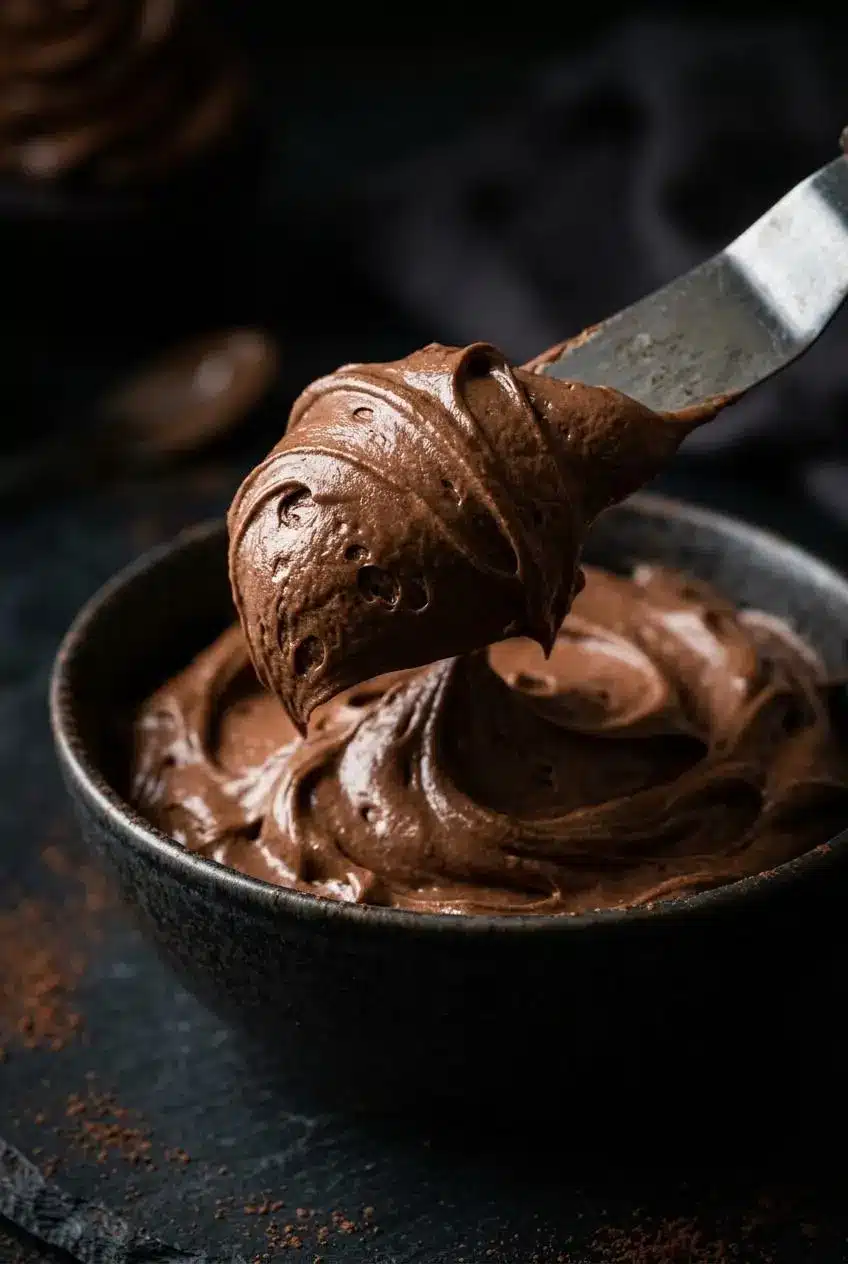
Small details make buttercream behave. These tips help you get a bakery-style result with smoother texture, better flavor, and fewer mid-mixing surprises.
The Secret to Fluffy Frosting: Perfectly Softened Butter
Softened butter should give a little when you press it, but it should still feel cool. That texture lets it trap air when whipped.
If the butter is too cold, the frosting can stay lumpy with tiny butter flecks. If it’s too warm or partly melted, the frosting can look greasy, loose, or slightly separated. Room-temperature butter is the sweet spot for a frosting that feels airy instead of heavy.
Tips for a Richer, Less Sweet Frosting
If chocolate buttercream sometimes tastes too sugary to you, there are easy ways to shift the balance. Dutch-process cocoa adds a darker, rounder chocolate flavor, and heavy cream makes the frosting taste more luxurious than milk would.
A pinch of salt matters more than people think. For even deeper flavor, stir in a little instant espresso powder as an optional boost. It won’t make the frosting taste like coffee, but it can make the chocolate taste fuller and less one-note.
More Pro Tips
- Scrape the bowl: Stop a few times to scrape the sides and bottom so you don’t end up with pale butter streaks or hidden pockets of cocoa.
- Sift if clumpy: If the confectioners sugar or cocoa powder looks lumpy, sifting helps. It’s not mandatory, but it does make the frosting smoother faster.
- Adjust slowly: If the frosting is too thick, add cream 1 tsp at a time. If it gets too loose, add more confectioners sugar 1 Tbsp at a time.
- Whip long enough: Don’t stop as soon as the ingredients combine. Those extra minutes are what change the texture from a thick paste to a fluffy frosting.
- For piping stability: A small amount of honey can help the frosting hold swirls a little better without changing the flavor much.
Troubleshooting Common Frosting Problems
Most frosting problems look dramatic and fix easily. The table below helps you match what you see in the bowl with the most likely cause and the fastest fix.
| Problem | What Caused It | How to Fix It |
|---|---|---|
| Grainy or gritty texture | Undissolved confectioners sugar or older, clumpy sugar | Let the frosting rest briefly, then whip again until smoother. Next time, use fresh sugar and sift it if it looks lumpy. |
| Curdled, broken, or soupy frosting | Butter was too warm or the cream went in too quickly | Chill the bowl until the frosting firms slightly, then re-whip on low and gradually increase the speed. |
| Lumpy frosting with butter flecks | Butter was too cold when mixing started | Let the bowl sit at room temperature until the butter softens a bit more, then whip again until smooth. |
| Too sweet | Classic American buttercream naturally leans sweet | Add a pinch of salt or a little instant espresso powder to deepen the chocolate flavor and balance the sweetness. |
| Too thick | Not enough liquid or extra dry ingredients packed into the measuring cup | Add heavy cream a little at a time until the frosting spreads or pipes the way you want. |
| Too thin | Too much liquid or overly warm butter | Mix in more confectioners sugar a little at a time, or let the frosting cool slightly before whipping again. |
Recipe Variations: Beyond the Basics
The classic version is the everyday go-to, but it also opens the door to a few useful variations. Think of these as optional paths when you want a fudgier finish, a tangier flavor, or a dairy-free batch.
| Variation | What to Change | Best For |
|---|---|---|
| Cocoa powder frosting | Use the recipe as written with cocoa powder | Fluffy swirls, classic buttercream texture, quick mixing |
| Melted chocolate frosting | Swap the cocoa for melted and cooled chocolate | Fudgier texture and a denser, richer finish |
| Microwave frosting | Melt chocolate chips, butter, and liquid together for a fast shortcut | Glaze-style frosting when time is tight |
| Cream cheese frosting | Beat softened block cream cheese into the butter | Tangier frosting for rich cakes and cupcakes |
| Dairy-free frosting | Use vegan butter sticks and a plant-based milk | A non-dairy option with similar mixing method |
For Fudgy Flavor: Melted Chocolate Frosting
If you prefer a thicker, fudgier frosting, replace the cocoa powder with about 6 to 8 ounces of semi-sweet or dark chocolate that has been melted and cooled. This version usually tastes a little less powdery and more chocolate-forward, but it won’t whip up quite as airy. It lands somewhere between buttercream and ganache.
For Speed: 1-Minute Microwave Frosting
This option is great when you need something fast or don’t want to pull out the mixer. Melt chocolate chips with butter and a little liquid in short bursts in the microwave, then stir until smooth. The result is thinner and shinier than buttercream, more like a quick frosting or glaze than a fluffy cupcake swirl.
For a Tangy Twist: Chocolate Cream Cheese Frosting
For a frosting that tastes less sweet and a little tangy, beat 4 to 8 ounces of softened full-fat block cream cheese into the butter before adding the rest of the ingredients. The texture stays creamy, but the flavor gets sharper and richer, which is especially good on dark chocolate cakes or red velvet style bakes.
Dairy-Free & Vegan Chocolate Frosting
Use vegan butter sticks rather than soft tub-style spreads if you want the frosting to hold its shape better. Swap the heavy cream for almond, soy, or oat milk, adding it gradually since plant-based milks can thin the frosting a bit faster.
Ways to Use Your Homemade Chocolate Frosting
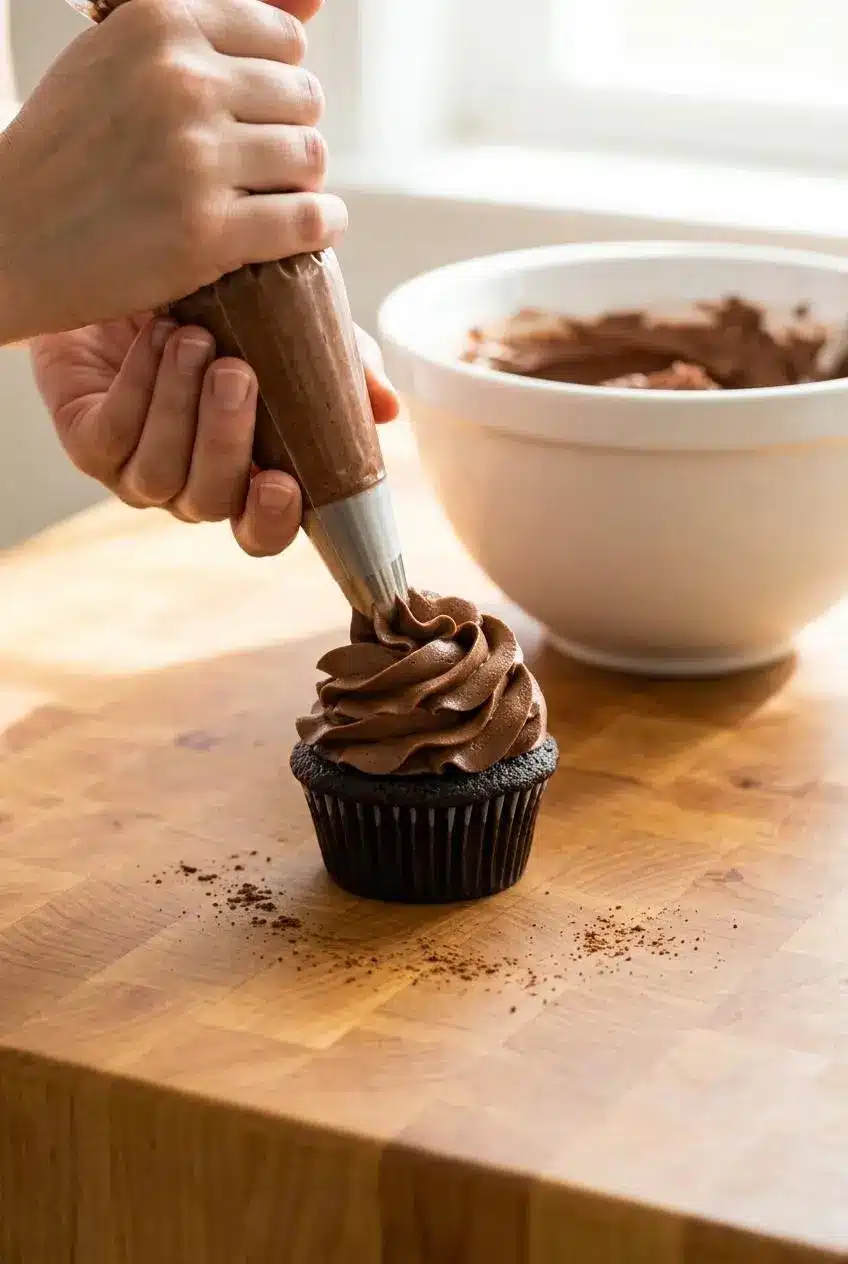
This frosting does more than top cupcakes. It’s flexible enough for casual bakes, layered desserts, and a few snacky uses that disappear fast.
- Spread it over a classic chocolate cake for the most classic pairing.
- Pipe generous swirls onto cupcakes or even double chocolate muffins for a dessert-style finish.
- Use it as a filling for sandwich cookies, whoopie pies, or as a filling for a Swiss roll.
- Spread a soft layer over brownies or a sheet cake.
- Serve a small bowl of it as a dip for strawberries, pretzels, or crisp cookies.
Frosting Yield Guide: How Much to Make
This recipe makes about 2.25 cups, so scaling matters if you’re frosting more than a dozen cupcakes or covering a full cake generously.
| Baked Good | Coverage | Recipe Amount |
|---|---|---|
| 12 cupcakes | Generous piping | 1x recipe |
| 24 cupcakes | Standard swirl | 1.5x recipe |
| 8-inch or 9-inch 2-layer cake | Fill and frost | 1.5x recipe |
| 9×13 inch sheet cake | Generous layer | 2x recipe |
A Baker’s Guide to Storing Frosting
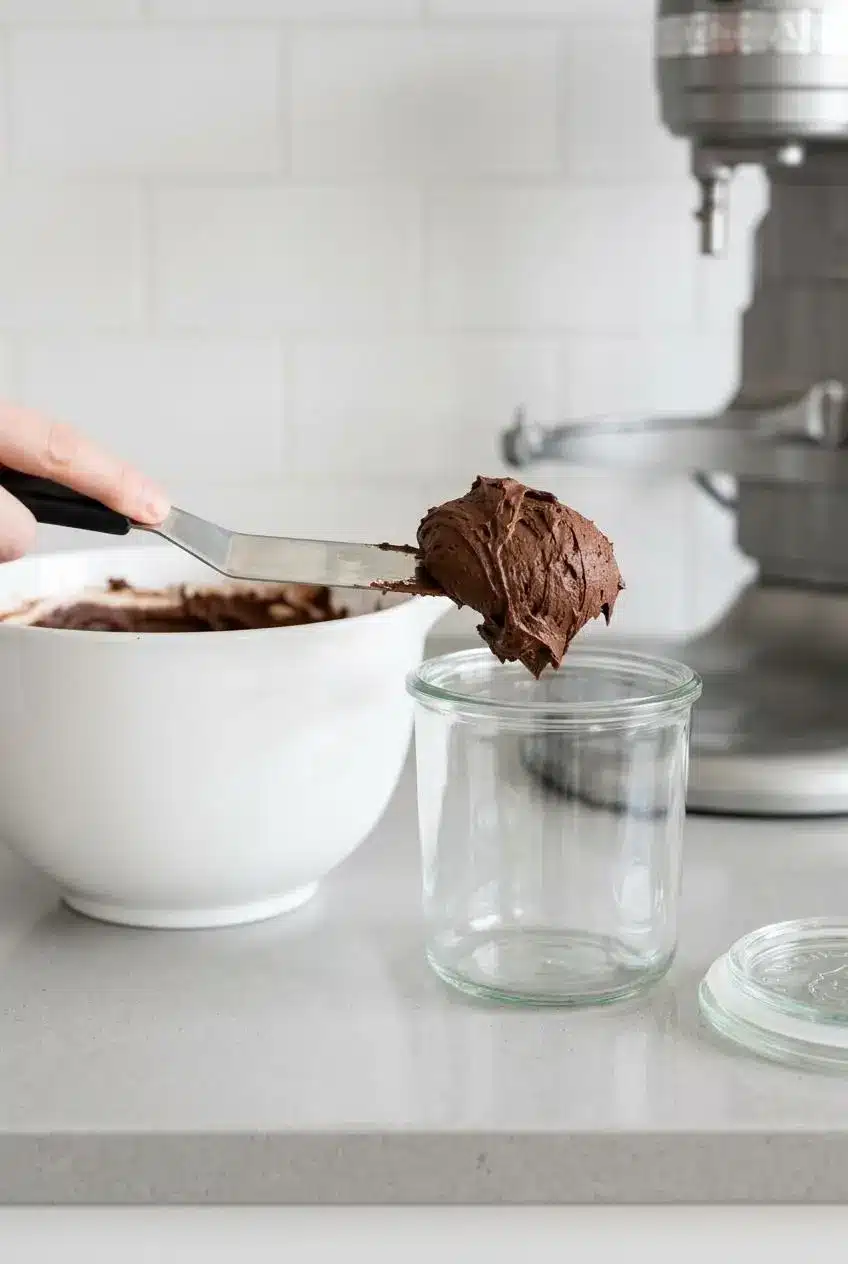
You can make this frosting ahead if needed, but texture matters. Store it in an airtight container and keep it cool if your kitchen runs warm. For the best spreadable texture, avoid leaving it out too long and keep air away from the surface so it doesn’t crust.
Room Temperature and Refrigeration
If you plan to use the frosting soon, keep it tightly covered at a cool room temperature. For longer holding, refrigerate it in a sealed container so it stays protected from drying out and picking up fridge odors.
How to Keep Frosting in Good Shape
Cold frosting firms up and loses that airy texture, so don’t try to spread it straight from the refrigerator. Let it warm until it softens, then stir or beat it again to bring back a smoother, lighter consistency.
The Crucial Step: Re-Whipping
Re-whipping is what brings frosting back to life. Once it has warmed enough to soften, beat it briefly with a mixer until it looks fluffy again and the texture turns creamy instead of stiff or dull.
Conclusion
This frosting delivers exactly what most home bakers want: rich chocolate flavor, a fluffy texture, and a method that doesn’t drag on. It’s a dependable buttercream for cupcakes, layer cakes, brownies, and more.
If you want to nudge it into deeper chocolate territory, that little espresso powder trick is worth trying. Once you see how light it gets after a full whip, it’s hard to go back.
Frequently Asked Questions
Can I make chocolate frosting without a mixer?
Yes, you can. Start with very soft butter, whisk it until creamy, then switch to a sturdy spatula as you work in the remaining ingredients. It takes more effort, and the frosting will usually be a bit denser than one made with a hand mixer or stand mixer.
Why Is My Frosting Grainy and How Do I Fix It?
Graininess usually means the sugar hasn’t fully blended in. Use confectioners sugar, not granulated sugar, and sift it first if it looks clumpy. If the frosting already feels gritty, let it sit briefly at room temperature, then whip it again until smoother.
How Do You Make Chocolate Frosting Taste Richer and Less Sweet?
Use Dutch-process cocoa for a darker chocolate flavor and heavy cream for a richer finish. A pinch of salt helps immediately, and a little instant espresso powder can deepen the chocolate without making the frosting taste like coffee.
How Much Frosting Do I Need for a Cake?
This batch makes about 2.25 cups. That’s enough to generously frost 12 cupcakes or to fill and lightly frost a two-layer 8-inch cake. If you’re working on a larger cake or want thicker swirls, use the yield guide above to scale up.
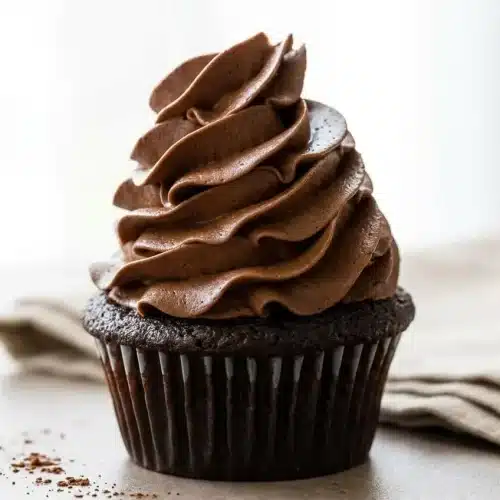
Chocolate Frosting Recipe

Equipment
- Handheld mixer or stand mixer
Ingredients
- 1 cup unsalted butter, softened
- 3 cups confectioners sugar
- 1/2 cup unsweetened natural cocoa powder
- 3-4 Tbsp heavy whipping cream plus more to thin the frosting
- 2 tsp pure vanilla extract
- 1/4 tsp salt
Instructions
- Beat the softened butter with a handheld mixer or a stand mixer fitted with the whisk attachment on high speed for about 3 minutes. The butter should look creamy, smooth, and noticeably lighter in color, and scraping the bowl helps it whip evenly.
- Add the confectioners sugar, cocoa powder, 3 Tbsp heavy cream, vanilla extract, and salt to the bowl. Start gently so the dry ingredients stay in the bowl instead of creating a powdered sugar cloud across the counter.
- Mix on low speed until the sugar is mostly absorbed, then raise the speed to medium-high and beat for 3 minutes, scraping the bowl several times as you go. The frosting should turn evenly chocolatey, lose any streaks, and become light and fluffy; add the remaining tablespoon of cream only if it needs loosening.