Skip to content
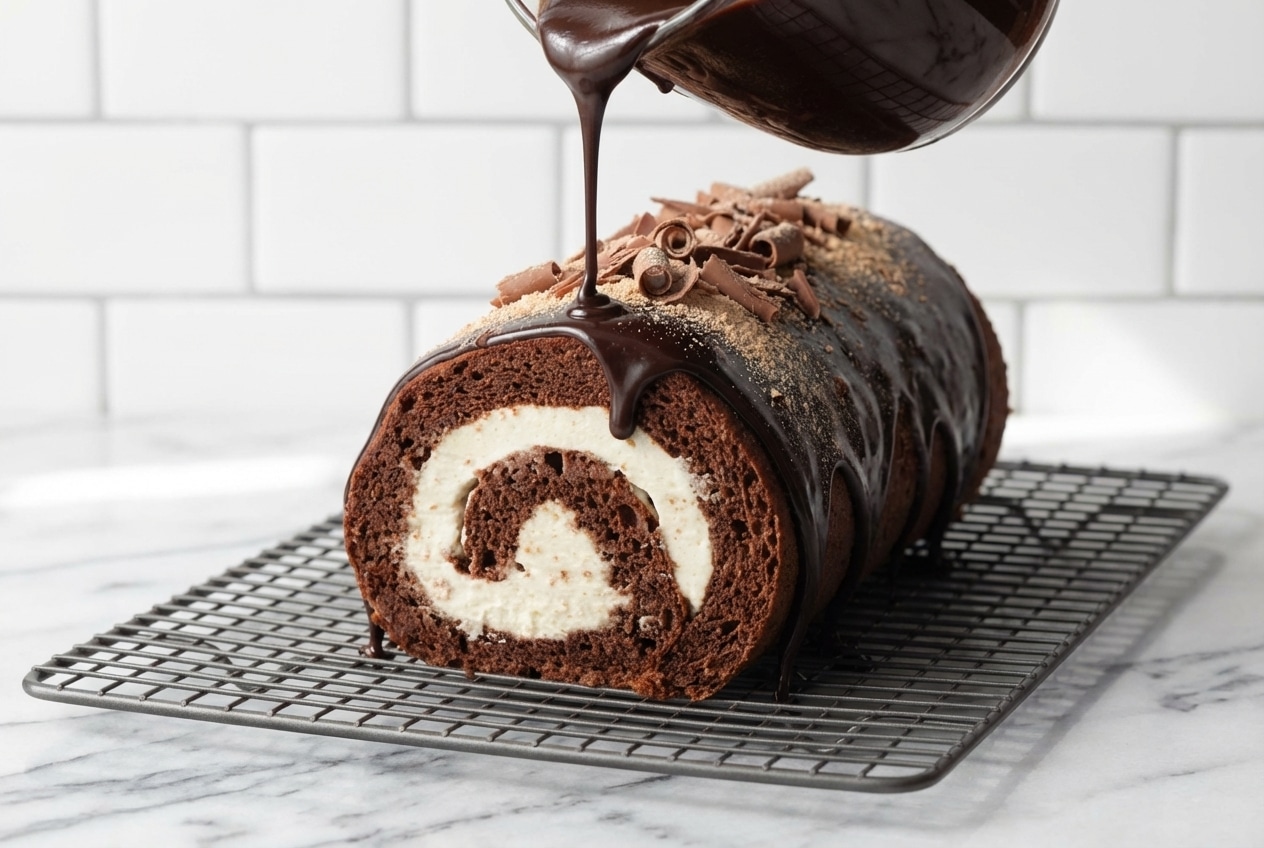
There’s something downright nostalgic about a bakery-style chocolate swiss roll, that shiny spiral peek, the cocoa perfume, the promise of cream in every bite. In my kitchen, this is the dessert I pull out when I want applause without a fussy layer cake.
If rolling cake makes you nervous, you’re in the right place. This method is built to be forgiving, with a tender sponge that learns its shape while warm, plus a silky mascarpone Chantilly that slices clean and looks professionally finished on any dessert table.
Why You’ll Love This Recipe
The Malted Milk Magic: I discovered that swapping a little caster sugar for malted milk powder gives a malt shop warmth that makes Dutch-processed cocoa taste deeper, rounder, and less one-note.
Flexible Sponge, Fewer Cracks: The crumb turns more pliable, so the parchment paper roll holds a smoother curve and the cake bends instead of snapping.
Elegant, Balanced Flavor: You get bold chocolate with a mocha whisper, then that light, stabilized mascarpone cloud that keeps the whole bite from feeling heavy.
A Clear, Repeatable System: Once you understand stiff peaks and the ribbon stage, this becomes muscle memory, and your jelly roll pan stops feeling intimidating.
Ingredients and Substitutions

These ingredients are all about structure and softness, a cocoa sponge that stays elastic, a cream that won’t weep, and a glossy ganache glaze that hides no sins because you won’t need it to.
Ingredients
Chocolate Swiss Roll:
- 75 g all-purpose flour
- 24 g Dutch processed cocoa powder + extra for dusting
- 1 tsp baking powder
- 1/4 tsp fine salt
- 10 g instant coffee powder
- 4 large eggs, 55g each, divided
- 140 g caster, superfine sugar, divided in half
- 55 g unsalted butter, melted
- 7 g vanilla extract
Chantilly Cream:
- 250 g heavy cream, cold
- 50 g powdered sugar, sifted
- 7 g vanilla bean paste or vanilla extract
- 250 g mascarpone, cold
Chocolate Sauce:
- 340 g dark chocolate
- 60 g unsalted butter
- 20 g brown sugar
- 250 g heavy cream
Ingredient Notes & Substitutions
Dutch-processed cocoa: This recipe is built around Dutch-processed cocoa because its lower acidity plays nicer with baking powder, giving a steadier rise and a more flexible sponge for rolling.
Caster, superfine sugar: Superfine dissolves fast, so your yolks hit the ribbon stage sooner and your meringue turns glossy without gritty crystals, which matters when you want that smooth, tight spiral.
Malted milk twist: The note in the sugar ingredient is your roadmap, and when I use that swap the cake tastes like toasted dairy and cocoa, plus the crumb feels more tender under the knife.
Mascarpone stabilization: Mascarpone is the quiet hero here, it keeps Chantilly cream plush and sliceable instead of slumping or weeping after a night in the fridge.
Gluten-free idea: A reliable 1:1 gluten-free baking flour can work, but be gentle during the folding technique, because gluten-free batters deflate more easily and can bake up slightly drier.
How to Make chocolate swiss roll
Preparing the Foundation
- Heat the oven to 170C / 340F (fan off), 150C / 300F (fan on). Use a jelly roll pan measuring 37 x 24cm / 10 x 15-inches and 3cm / 1-inch in height.
- Spray the bottom only with oil spray, then line with baking paper and set aside. That little bit of grease under the parchment paper is the secret that keeps it from sliding when you spread the batter.
- In a medium bowl, sieve together the flour, cocoa powder, baking powder and salt. Add the instant coffee powder and whisk, you’ll smell that bakery-mocha vibe immediately.
The Science of the Sponge
- In a large bowl, beat the egg whites on medium speed until soft peaks form, about 1 minute. Slowly add half (70g) of the caster sugar, about 1 tbsp at a time, then beat on high until thick, glossy, and at stiff peaks, about 2–3 minutes.
- In another bowl, whip the egg yolks with the remaining 1/3 cup (70g) sugar and vanilla extract on high speed for 5 minutes, until pale, thick, and it falls in a ribbon that sits for a moment before melting back in.
- Fold half the meringue into the yolks with a spatula until mostly combined, then fold in the rest gently until the batter looks uniform and airy.
- Sift the dry mix a second time over the batter, then fold softly just until combined. Drizzle in the melted, cooled butter and fold until you don’t see shiny butter streaks.
Precision Baking & The Warm Roll
- Spread the batter evenly in the prepared tray, taking your time to reach the corners without pressing out the air.
- Bake for 10 minutes, the kitchen should smell like warm cocoa and toasted sweetness.
- Run a knife around the edges to loosen, dust the top with about 2 tbsp cocoa powder, then cover with baking paper and a large board. Flip, remove the tray, and peel the paper from the bottom.
- While warm, roll the sponge tightly with the baking paper from the narrow end, then leave it to cool completely at room temperature. This “rolling memory” is what keeps a chocolate swiss roll from cracking later.
Filling and Glazing
- For the Chantilly, whip the heavy cream, powdered sugar, vanilla, and mascarpone in a glass or metal bowl until stiff peaks form, about 3–4 minutes.
- For the chocolate sauce, microwave all sauce ingredients in a microwave-safe bowl in 20-second bursts, stirring well between each, until smooth.
- Unroll the cooled cake gently, leaving the baking paper underneath. Spread the cream evenly, leaving about an inch gap on one end, then roll back up from the end with the gap, tight but unhurried.
- Wrap in plastic wrap and chill for one hour or overnight. Then unwrap, place on a cooling rack set over a tray, drizzle on the ganache glaze to cover, let it set, slice, and serve.
Secrets for a Flawless Swiss Roll

The real “no-crack” target is doneness, not bravado. In my kitchen, the sponge behaves best when it hits an internal temperature of 190°F (88°C), because anything hotter tends to dry the crumb and invite splitting.
Dutch-processed cocoa matters for more than taste. Its neutral pH reduces unpredictable lift with baking powder, so the cake rises evenly and stays more elastic when you roll it.
Moisture retention is the quiet insurance policy. Rolling while warm with parchment paper traps a little steam, and that gentle humidity keeps the sponge supple as it cools.
Pro Tips & Troubleshooting
Pro Tips
- Let the eggs come to room temperature, they whip taller and faster, giving you a lighter sponge.
- Respect the double sifting, once to blend, once to fold, it prevents cocoa pockets and reduces overmixing.
- Watch for the ribbon stage in the yolks, a thick trail that lingers about 3 seconds.
- Use a spatula for the folding technique, a whisk pops the bubbles you worked for.
- A gentle spring-back test helps, the sponge should feel like a soft pillow and recover quickly.
Common Mistakes to Avoid
- Overbaking by even 2 minutes, the cake turns brittle and cracks no matter how careful you are.
- Spreading batter aggressively, it can deflate the foam, so the cake bakes rubbery instead of airy.
- Skipping the warm roll, cooling flat almost guarantees a stubborn crack when you unroll.
- Cold cream in ganache, it can seize the chocolate and turn grainy instead of glossy.
If you love the chocolate-and-cream vibe but want zero baking stress, the chocolate eclair cake gives that same cozy payoff. It’s especially handy when you need a make-ahead dessert that slices clean.
Serving & Storage
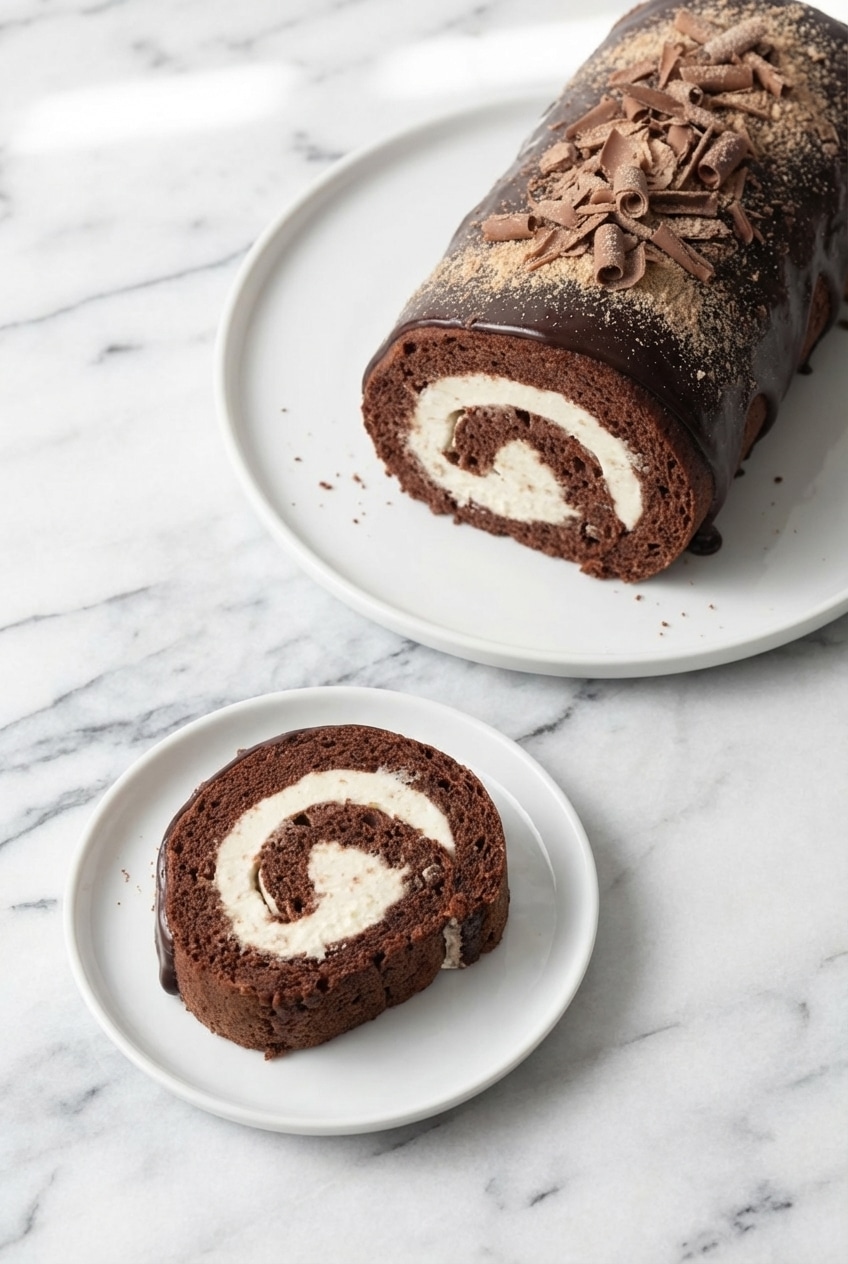
Elegant Serving Ideas
Fresh raspberries are my favorite contrast, that tart pop cuts through the ganache glaze and makes each bite feel lighter. If strawberries are more your thing, the strawberries and cream pairing shows how well fruit and dairy can play together.
For holidays, a dusting of cocoa mixed with a tiny pinch of gold luster dust looks like a bakery window moment. Serve chilled for the cleanest spiral and the neatest slices.
For a sharp cut, warm a knife under hot water, wipe dry, then slice in confident strokes. The mascarpone stabilization helps, but a hot knife makes it look professionally plated.
Storage & Make-Ahead
This roll keeps well in the fridge for up to 3 days, and it actually slices even better on day two. Keep it wrapped so the sponge doesn’t pick up fridge odors.
For food safety, cream-filled cakes should not sit out more than 2 hours, especially in warm rooms. If you’re serving at a party, I like to bring it out chilled, slice quickly, and return the platter to the fridge between rounds.
Chocolate Swiss Roll Recipe

Equipment
- Jelly roll pan (37 x 24cm)
- Baking paper
- Mixing Bowls
- Electric Mixer
- Fine-Mesh Sieve
- Spatula
Ingredients
Chocolate Swiss Roll:
- 75 g all-purpose flour
- 24 g Dutch processed cocoa powder + extra for dusting
- 1 tsp baking powder
- 1/4 tsp fine salt
- 10 g instant coffee powder
- 4 large eggs 55g each, divided
- 140 g caster, superfine sugar divided in half
- 55 g unsalted butter melted
- 7 g vanilla extract
Chantilly Cream:
- 250 g heavy cream cold
- 50 g powdered sugar sifted
- 7 g vanilla bean paste or vanilla extract
- 250 g mascarpone cold
Chocolate Sauce:
- 340 g dark chocolate
- 60 g unsalted butter
- 20 g brown sugar
- 250 g heavy cream
Instructions
Preparing the Foundation
- Heat the oven to 170C / 340F (fan off) or 150C / 300F (fan on). Prepare a 37 x 24cm jelly roll pan by spraying the bottom with oil and lining it with baking paper.
- In a medium bowl, sieve together the flour, cocoa powder, baking powder, and salt. Whisk in the instant coffee powder until well combined.
The Science of the Sponge
- In a large bowl, beat the egg whites to soft peaks. Gradually add 70g of caster sugar, one tablespoon at a time, and beat on high until thick, glossy, and at stiff peaks.
- In another bowl, whip the egg yolks with the remaining 70g of caster sugar and vanilla extract on high for 5 minutes until it reaches the pale, thick ribbon stage.
- Gently fold half of the meringue into the yolks with a spatula, then fold in the remaining meringue until the mixture is uniform and airy.
- Sift the dry ingredients a second time over the egg mixture and fold softly. Drizzle in the melted, cooled butter and fold just until no streaks remain.
Precision Baking & The Warm Roll
- Spread the batter evenly into the corners of the prepared pan. Bake for 10 to 15 minutes until the sponge is set and aromatic.
- Loosen the edges with a knife and dust the top with cocoa powder. Flip the cake onto a large board covered with fresh baking paper and peel off the original parchment.
- While still warm, roll the sponge tightly from the narrow end with the baking paper inside. Leave it to cool completely at room temperature to set the memory of the shape.
Filling and Glazing
- Whip the heavy cream, powdered sugar, vanilla, and mascarpone together until stiff peaks form, about 3 to 4 minutes.
- Prepare the chocolate sauce by microwaving the chocolate, butter, brown sugar, and cream in 20-second bursts, stirring until glossy and smooth.
- Unroll the cooled cake and spread the Chantilly cream evenly, leaving an inch gap at one end. Roll the cake back up tightly and wrap in plastic wrap. Chill for at least 1 hour.
- Unwrap the chilled roll and place it on a rack. Drizzle the ganache glaze over the top, let it set, then slice and serve.
Notes
Nutrition
Final Thoughts
The payoff here is that perfect spiral, soft sponge, glossy chocolate, and a cream filling that holds its shape. Once you bake with the malted milk twist and aim for that 190°F sweet spot, you’ll feel a step ahead of most home bakers.
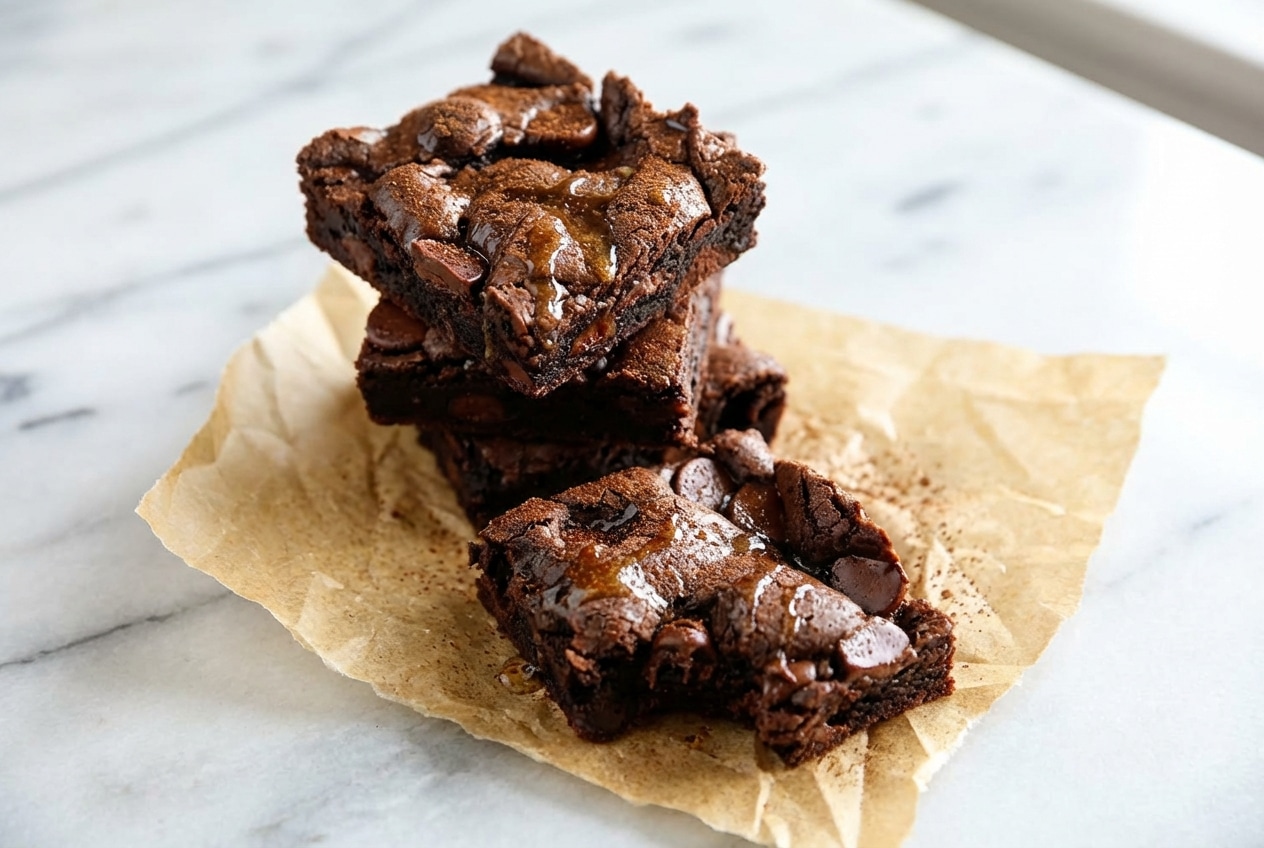
If you want to lean into the nostalgia even more, something like cosmic brownies hits a similar old-school dessert-table joy. In my house, both disappear faster than I can brew coffee.
Frequently Asked Questions
What is the best way to prevent cracks in a Swiss roll?
Roll it while it’s warm, and let it cool fully in that rolled shape so the crumb develops “memory.” Also avoid overbaking, a dry sponge is the fastest path to cracks.
Can I substitute butter for oil in the sponge cake?
This sponge uses melted butter for flavor and a finer, more bakery-like bite. Oil can make cakes moist, but it doesn’t give the same chocolate-forward richness this roll is built around.
How do I fix a Swiss roll that has already cracked?
Use the ganache glaze like a tailor, spread a little into cracks and let it set to “patch.” If it’s badly cracked, cube it and layer with cream and sauce into a quick trifle.
Do I have to roll it while it’s hot?
Yes, warm rolling is non-negotiable for a clean spiral. Cooling it flat makes the sponge set in a flat position, and unrolling later becomes a fight.
What is the difference between a Swiss roll and a Roulade?
In everyday baking, they’re close cousins, both are rolled sponge cakes. “Roulade” is often used more broadly, while “Swiss roll” usually signals that classic tight spiral and a bakery-style presentation, like this chocolate version.
Can I use a regular 13×9 baking pan?
You can, but thickness changes and so does baking behavior. The jelly roll pan size keeps the sponge thin enough to roll without stress, and it bakes evenly in the short 10-minute window.
How do I prevent the skin of the cake from peeling off on the towel?
Use parchment paper for the warm roll, and dust cocoa lightly before flipping so the surface doesn’t stick. Peeling is usually a sign of sticking plus overbaking.
Can I make this gluten-free?
A 1:1 gluten-free flour can work, but fold extra gently and watch the bake closely, because gluten-free sponges can dry faster. The warm roll and careful timing become even more important.
How long can the cake stay at room temperature with cream filling?
Keep it out no longer than 2 hours, then return it to the fridge. For parties, I slice what I need and chill the rest between servings.
Why does my Swiss roll crack when I unroll it?
Most often it’s either overbaked sponge or it wasn’t rolled warm. A cake that’s baked too long loses flexibility, and a cake cooled flat resists reshaping no matter how careful you are.
Is there an easier chocolate cake alternative for a crowd?
If you want something ultra-moist and scoopable, a chocolate poke cake is a crowd-pleaser with far less rolling technique. It’s a different texture, but it scratches that same chocolate itch.