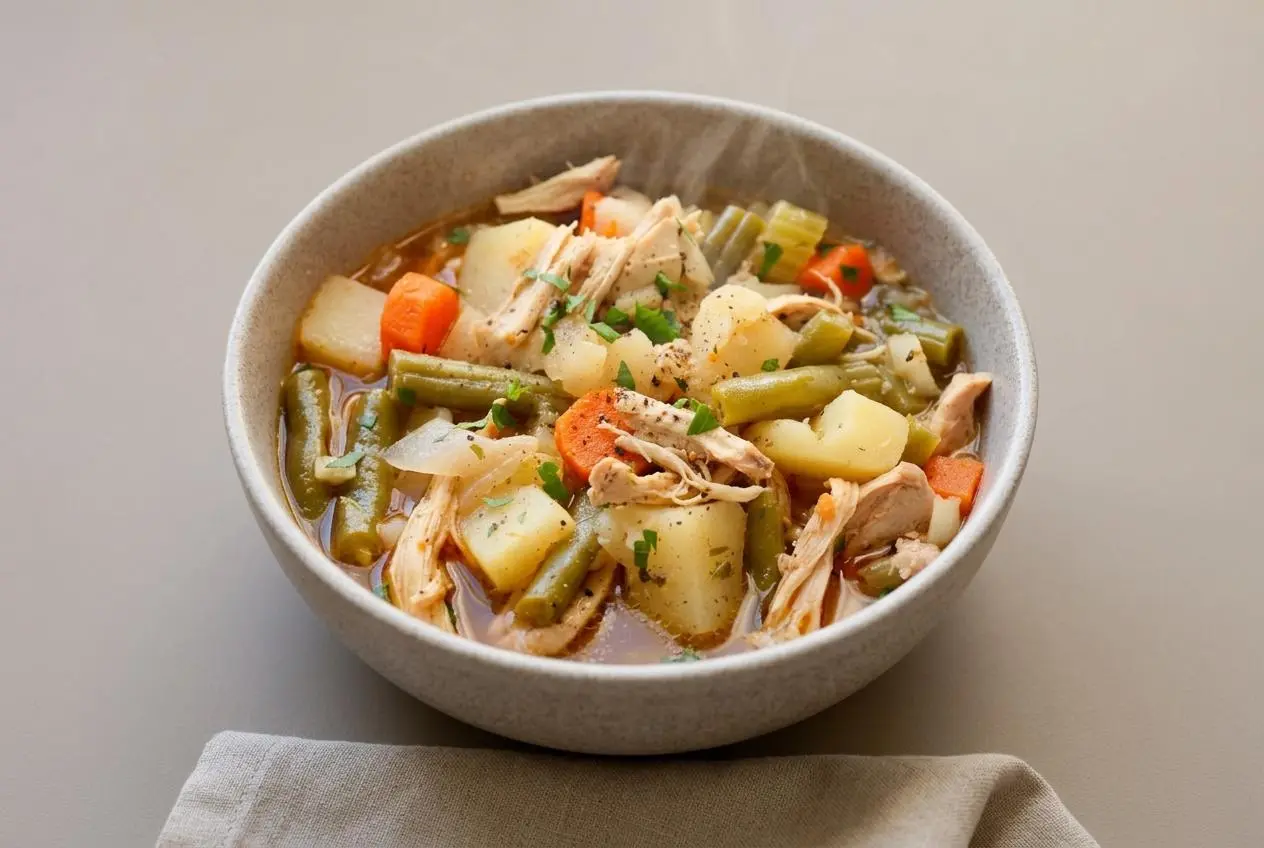
Chickpea Soup turns creamy without dairy by blending one can of chickpeas with plant-based milk, miso, lemon, and nutritional yeast, then stirring it into the pot. The result is bright, hearty, and easy enough for a weeknight.
This is a lemony, savory soup built from pantry staples plus a few fresh ingredients that really wake it up. Rice gives the broth more body, dill keeps it fresh, and the chickpea puree makes every spoonful feel rich.
You’ll like this one because it’s practical. One pot, familiar ingredients, no fussy techniques, and the finish tastes way fancier than the effort suggests. The last-minute lemon is the magic part.
Chop the onion and carrots fairly small so they soften in the full 10 minutes and melt into the soup instead of staying chunky.
Ingredients
Everything here has a job, and the ingredient list is short enough to keep weeknight cooking sane.
- ⅓ cup (65 to 70g) long-grain white rice
- ¼ cup (56g) extra virgin olive oil
- 4 medium carrots, scrubbed and finely chopped
- 1 large yellow onion finely chopped
- Kosher salt and freshly cracked black pepper
- 2 (15-ounce / 425g) cans chickpeas, divided
- ¾ cup (12g) fresh dill (no thick stems), chopped and divided
- 5 cloves garlic, finely chopped
- 2 tablespoons tomato paste
- 2 teaspoons dried oregano
- ½ teaspoon ground coriander
- ½ teaspoon ground turmeric
- ¼ to ½ teaspoon red pepper flakes
- 4 cups (960 mL) vegetable broth
- 3 ounces (85g) baby spinach or baby kale
- ½ cup (120 mL) creamy unsweetened plant-based milk, such as full-fat oat milk or canned “lite” coconut milk
- 1 large lemon zested + 3 to 4 tablespoons lemon juice, divided
- ¼ cup (20g) nutritional yeast
- 1 tablespoon white miso
I personally like to strip the dill fronds from the thicker stems before chopping, because woody stem bits can make a soft soup feel rough. And for the miso, white miso is the one to use here since it stays mellow and blends in without taking over.
Why miso, nutritional yeast, and lemon matter here
These three ingredients are the quiet overachievers. Miso and nutritional yeast add savory depth, so the soup tastes fuller and more rounded even though it stays dairy-free. Lemon keeps the finish bright, especially when you stir in the final splash off the heat so it stays fresh instead of dull.
How to Make Chickpea Soup
- I start by rinsing the rice in a fine-mesh sieve until the water looks almost clear, then I let it drain well.
That quick rinse removes excess surface starch, so the rice cooks into the soup without turning gummy. - Next, I drain and rinse both cans of chickpeas, setting one can aside for the pot and putting the other into a food processor or small blender for the puree later.
Keeping one batch whole and one batch for blending is what gives the soup both body and texture. - In a large saucepan or Dutch oven, I heat the olive oil over medium-high heat until it shimmers, then add the carrots and onion with a few pinches of salt and cook for about 10 minutes, stirring now and then.
I wait until the onions look translucent and the carrots are lightly browned at the edges, because that deeper sweetness really matters here. - I stir in the garlic and cook it for 2 minutes, stirring frequently, then add the tomato paste, oregano, coriander, turmeric, and red pepper flakes and keep everything moving for 1 to 2 minutes.
You’ll know this part is ready when the tomato paste turns a darker brick red and the spices smell deeply fragrant. If anything starts catching, I lower the heat and loosen the pot with a splash of broth. - I add the rinsed rice and toss it in the aromatics and oil for 1 minute, then stir in the whole can of chickpeas, ¼ teaspoon kosher salt, and black pepper to taste.
Once everything is coated, I pour in the vegetable broth, add half of the chopped dill, and bring the pot to a boil. - As soon as it boils, I lower the heat to keep the soup at a gentle simmer, cover the pan, and cook for 15 minutes, stirring once or twice.
The rice should be soft by the end, and the broth will already start looking a little heartier. - While the soup simmers, I roughly chop the spinach and make the puree.
This is the perfect little overlap in the recipe, and it keeps the whole thing moving without feeling rushed.
Chickpea Puree
- I add the reserved chickpeas to the food processor or blender with the plant-based milk, lemon zest, 2 tablespoons lemon juice, nutritional yeast, white miso, 1 teaspoon kosher salt, and pepper to taste, then blend until creamy, scraping down the sides as needed.
I look for a smooth, thick texture, almost like a loose hummus. Give it a taste here and adjust with a bit more salt or lemon juice if it needs a lift.
- I stir the chickpea puree into the soup, then add the chopped spinach and let everything simmer for 1 to 2 minutes.
The soup thickens quickly at this stage, and the greens only need enough time to soften and turn tender. - Once the heat is off, I stir in the remaining dill and 1 tablespoon of lemon juice, then taste and adjust with more salt, pepper, or lemon juice if needed before ladling it into bowls.
A drizzle of good olive oil on top makes the whole bowl taste rounder and richer. Honestly, don’t skip it if you can help it.
A crisp garlic finish for more texture
If you want a little crunch and a warmer finish, top each bowl with a spoonful of garlic chili oil right before serving. It gives the creamy soup some contrast and adds those golden, toasty bits that make a soft bowl of soup way more exciting.
Why this soup gets creamy without dairy

The creaminess comes from technique, not heavy cream. Pureeing one can of chickpeas with plant-based milk creates a thick, silky base that blends right into the broth and makes it feel rich without weighing it down.
The rice helps too. As it simmers, it gives the soup a heartier texture and helps the broth feel more substantial, so the final bowl lands somewhere between brothy and velvety. I love this same idea in other vegetable soups too, especially creamy roasted cauliflower soup, where pureed ingredients do the heavy lifting.
Then there’s the lemon. Adding part of it to the puree gives you a soft citrus note throughout, but stirring in the last spoonful off the heat keeps the flavor lively and fresh. That’s why the soup tastes bright instead of flat.
If the flavor feels flat or the texture is off
A lot of home cooks run into the same few issues with bean soups, and most of them are easy to fix once you know what went wrong.
| Problem | Likely cause | Fix |
|---|---|---|
| Bland soup | Needs more salt, lemon, or a stronger finish | Taste after cooking and add salt, pepper, or another squeeze of lemon. A drizzle of olive oil helps too. |
| Soup too thin | The puree is loose or the soup needs a little more simmering | Simmer briefly after adding the puree until it thickens and the greens wilt. |
| Soup too thick | Rice keeps absorbing liquid as it sits | Loosen it with a splash of broth or water when reheating or serving. |
| Grainy puree | Chickpeas were not blended long enough | Blend until fully smooth, scraping down the sides as needed. |
| Bitter taste from garlic or spices | Garlic, tomato paste, or spices cooked too hard | Lower the heat next time and deglaze with a splash of broth if the pot starts to catch. |
Canned or dried chickpeas, what changes in the pot
If speed matters, canned chickpeas are the easy win. They’re ready to rinse and use, which keeps this soup firmly in weeknight territory. They also blend smoothly for the puree, especially when paired with the milk and miso.
Dried chickpeas can absolutely work, and they often give you a slightly creamier interior and deeper chickpea flavor. But they need to be fully cooked before you start this recipe. Don’t swap them in straight from a soak and hope for the best. That road leads to crunchy disappointment.
| Type | Time | Texture | Flavor | Cost |
|---|---|---|---|---|
| Canned chickpeas | Fastest | Soft and convenient | Mild | Usually higher per batch |
| Dried chickpeas | More prep | Can be creamier if cooked very tender | A little deeper | Usually lower per batch |
If you use dried, cook them until very tender first, then use them in the same places the recipe uses canned chickpeas. The main cooking flow stays the same.
Ways to change the flavor without changing the method
This soup is flexible, which is handy when your fridge is giving “use me now” energy.
Mediterranean: Lean into the oregano, dill, and lemony side of the soup. Baby kale works especially well here, and a generous olive oil finish makes the bowl feel a little more rustic.
Spicy: Use the upper end of the red pepper flakes and finish with that garlic chili oil topping. You’ll get more warmth without changing the creamy base.
Extra vegetable packed: Add the kind of vegetables that fit the same cooking rhythm, like finely chopped celery, bell pepper, or mushrooms with the onion and carrots. Keep the changes optional and follow the same method. If chickpeas are your thing, Hearty Chickpea Curry is another great way to build a dinner around them.
What to serve with Chickpea Soup for a full meal
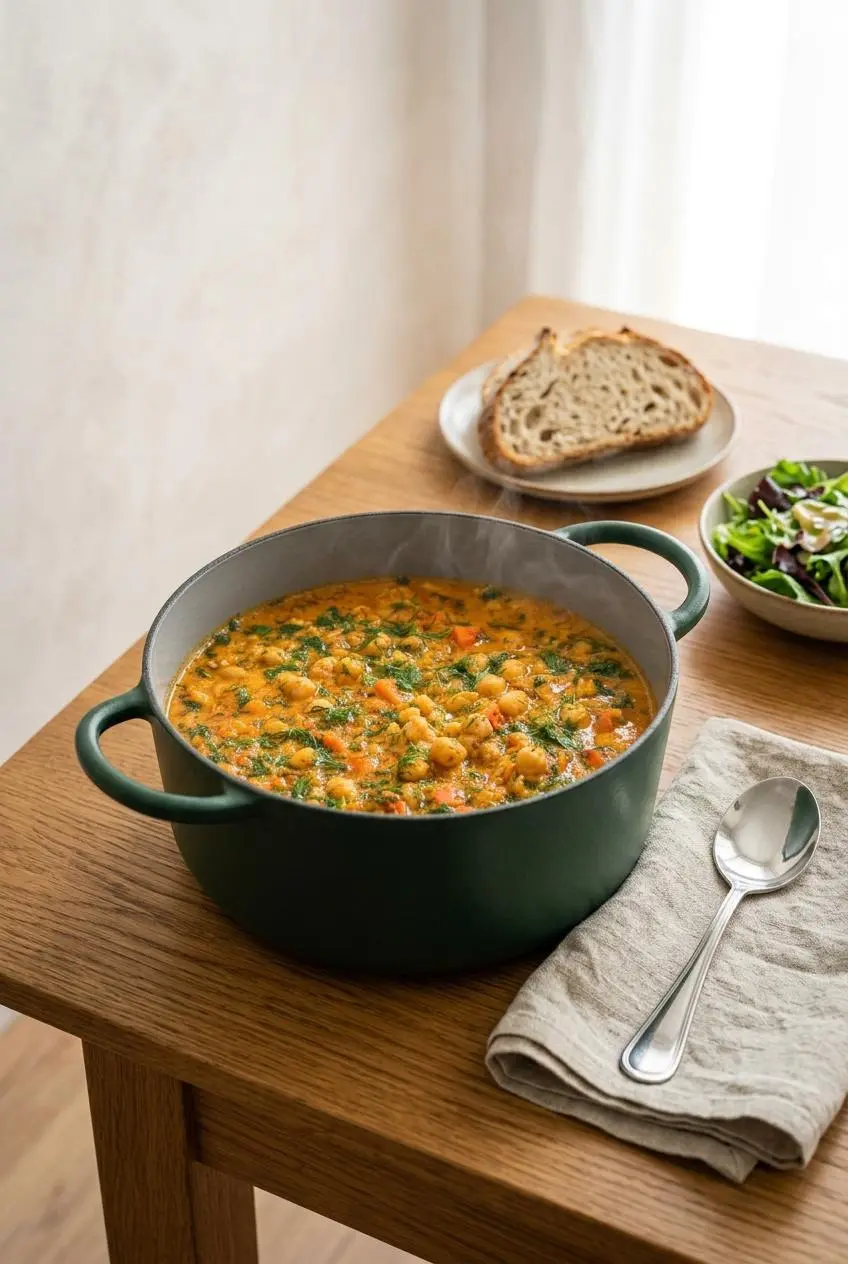
This soup can be dinner on its own, but a few simple sides make it feel complete.
For something cozy, serve it with crusty bread, warm pita, or focaccia for dipping. That soft, lemony broth loves a good swipe of bread.
If you want contrast, add a simple green salad, a Mediterranean chopped salad, or tabbouleh. The fresh crunch balances the creamy texture nicely.
And if you’re feeding people who want a little more texture, top the bowls with roasted chickpeas, croutons, or toasted nuts and seeds. A soup-and-salad night more your style? Save classic Minestrone Soup for another cozy dinner.
How to store, freeze, and reheat it so it still tastes fresh
This soup is a good make-ahead option because the flavor settles in nicely after it sits. Let it cool, portion it into sealed containers, and keep in mind that it will thicken as the rice continues to absorb liquid.
When you reheat it, warm it gently on the stove or in the microwave and stir in a splash of broth or water if it looks too thick. I usually add the liquid first, then stir well, because the puree can cling to the bottom a bit once chilled.
For freezing, use portions so it’s easier to thaw only what you need. Texture can change a little after freezing and thawing, but a good stir and a splash of broth usually bring it back. For general food safety guidance around leftovers and storage, check this trusted source.

Chickpea Soup

Equipment
- Fine-Mesh Sieve
- Large Saucepan or Dutch Oven
- food processor or small blender
Ingredients
- ⅓ cup (65 to 70g) long-grain white rice
- ¼ cup (56g) extra virgin olive oil
- 4 medium carrots, scrubbed and finely chopped
- 1 large yellow onion finely chopped
- Kosher salt and freshly cracked black pepper
- 2 (15-ounce / 425g) cans chickpeas, divided
- ¾ cup (12g) fresh dill (no thick stems), chopped and divided
- 5 cloves garlic, finely chopped
- 2 tablespoons tomato paste
- 2 teaspoons dried oregano
- ½ teaspoon ground coriander
- ½ teaspoon ground turmeric
- ¼ to ½ teaspoon red pepper flakes
- 4 cups (960 mL) vegetable broth
- 3 ounces (85g) baby spinach or baby kale
- ½ cup (120 mL) creamy unsweetened plant-based milk, such as full-fat oat milk or canned “lite” coconut milk
- 1 large lemon zested + 3 to 4 tablespoons lemon juice, divided
- ¼ cup (20g) nutritional yeast
- 1 tablespoon white miso
Instructions
- I start by rinsing the rice in a fine-mesh sieve until the water looks almost clear, then I let it drain well. That quick rinse removes excess surface starch, so the rice cooks into the soup without turning gummy.
- Next, I drain and rinse both cans of chickpeas, setting one can aside for the pot and putting the other into a food processor or small blender for the puree later. Keeping one batch whole and one batch for blending is what gives the soup both body and texture.
- In a large saucepan or Dutch oven, I heat the olive oil over medium-high heat until it shimmers, then add the carrots and onion with a few pinches of salt and cook for about 10 minutes, stirring now and then. I wait until the onions look translucent and the carrots are lightly browned at the edges, because that deeper sweetness really matters here.
- I stir in the garlic and cook it for 2 minutes, stirring frequently, then add the tomato paste, oregano, coriander, turmeric, and red pepper flakes and keep everything moving for 1 to 2 minutes. You’ll know this part is ready when the tomato paste turns a darker brick red and the spices smell deeply fragrant. If anything starts catching, I lower the heat and loosen the pot with a splash of broth.
- I add the rinsed rice and toss it in the aromatics and oil for 1 minute, then stir in the whole can of chickpeas, ¼ teaspoon kosher salt, and black pepper to taste. Once everything is coated, I pour in the vegetable broth, add half of the chopped dill, and bring the pot to a boil.
- As soon as it boils, I lower the heat to keep the soup at a gentle simmer, cover the pan, and cook for 15 minutes, stirring once or twice. The rice should be soft by the end, and the broth will already start looking a little heartier.
- While the soup simmers, I roughly chop the spinach and make the puree. This is the perfect little overlap in the recipe, and it keeps the whole thing moving without feeling rushed.
Chickpea Puree
- I add the reserved chickpeas to the food processor or blender with the plant-based milk, lemon zest, 2 tablespoons lemon juice, nutritional yeast, white miso, 1 teaspoon kosher salt, and pepper to taste, then blend until creamy, scraping down the sides as needed. I look for a smooth, thick texture, almost like a loose hummus. Give it a taste here and adjust with a bit more salt or lemon juice if it needs a lift.
- I stir the chickpea puree into the soup, then add the chopped spinach and let everything simmer for 1 to 2 minutes. The soup thickens quickly at this stage, and the greens only need enough time to soften and turn tender.
- Once the heat is off, I stir in the remaining dill and 1 tablespoon of lemon juice, then taste and adjust with more salt, pepper, or lemon juice if needed before ladling it into bowls. A drizzle of good olive oil on top makes the whole bowl taste rounder and richer. Honestly, don’t skip it if you can help it.
Notes
Nutrition
Conclusion
This is the kind of soup that feels generous without being complicated. You get creamy texture, bright lemon, plenty of savory depth, and an easy one-pot method that fits real life.
If you remember one thing, make it this: add that final lemon off the heat. It keeps the whole pot lively, and a spoonful of garlic chili oil on top is a very good bonus.
FAQ
How do you make chickpea soup creamy without dairy?
Blend part of the chickpeas until smooth with the plant-based milk, then stir that puree into the soup. It adds body and richness, while miso and nutritional yeast deepen the flavor so the soup still tastes full and savory.
Can I use dried chickpeas instead of canned, and how do I adjust the recipe?
Yes, but cook the dried chickpeas fully before using them here. Once they’re tender, use them in the same places as the canned chickpeas without changing the main recipe steps.
What’s the best way to store and reheat leftover chickpea soup?
Cool the soup, transfer it to a sealed container, and reheat it gently when you’re ready to eat. The flavor often gets even better the next day, and a splash of broth or water helps if it thickens.
Does this soup freeze well?
Yes, especially if you freeze it in individual portions. After thawing, the soup may seem thicker, so stir it well and loosen it with broth or water as it reheats.
What can I serve with chickpea soup to make it a complete meal?
Bread or pita is the easiest partner for dipping. Add a crisp salad for freshness, and finish the soup with crunchy toppings like croutons, roasted chickpeas, or toasted seeds if you want more texture.
How can I add more flavor to my chickpea soup?
Taste it at the end and adjust the salt and lemon first. Fresh dill and a drizzle of olive oil help a lot, and extra red pepper flakes or the garlic chili oil topping will give it more punch fast.