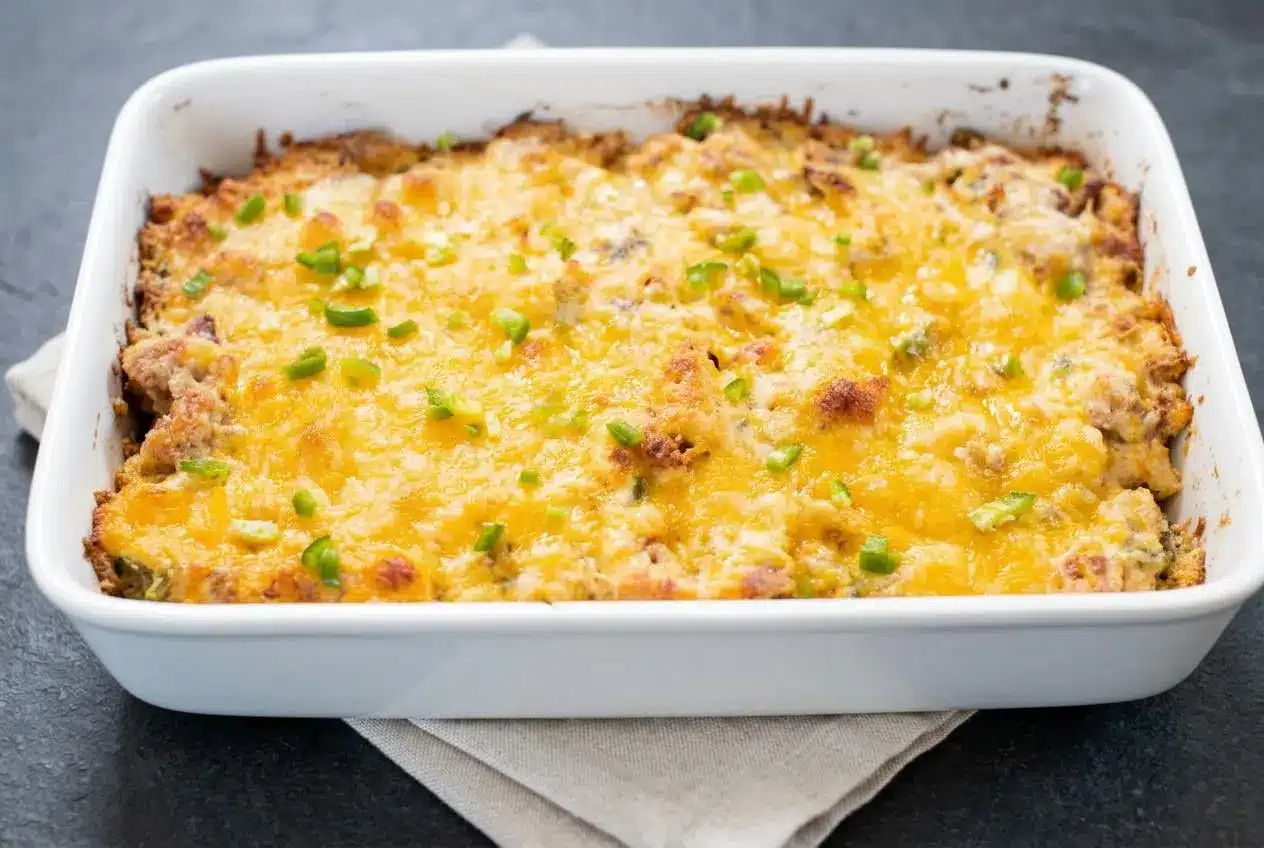
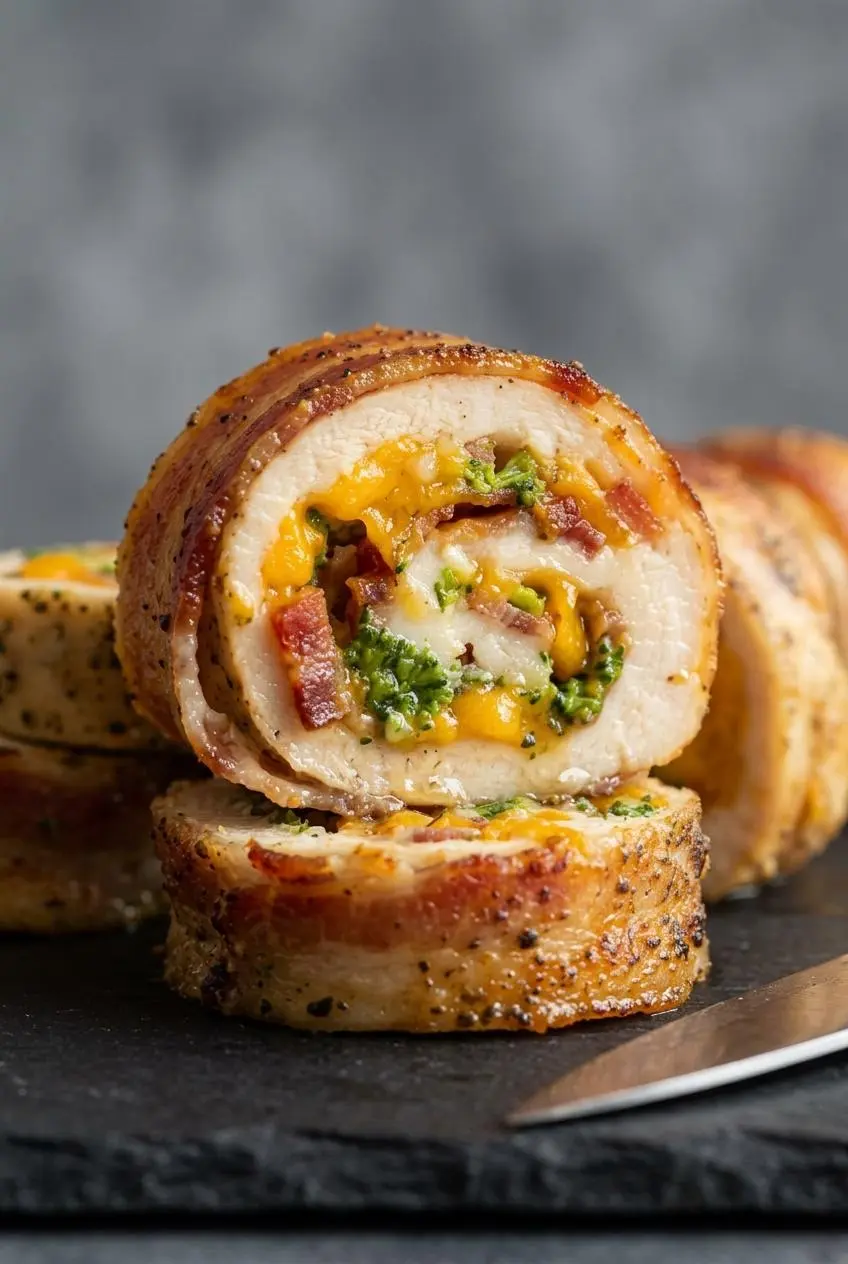
Chicken Roulade is a stuffed chicken breast rolled with broccoli, cheddar, and bacon, then seared and baked until juicy, golden, and sliceable enough for a dinner that looks fancy without being fussy.
Chicken Roulade sounds restauranty, but it is really a smart stuffed chicken dinner built from a few familiar ingredients. You roll thin chicken around a cheesy broccoli and bacon filling, give it a quick sear, then finish it in the oven.
What I love most here is the contrast: crisp bacon, melty cheddar, tender chicken, and those neat swirled slices on the plate. It feels like a little dinner party magic.
Before you start, have your twine cut and your filling ready so the rolling goes smoothly and the chicken stays cold and easier to handle.
Ingredients
This ingredient list is short, which means each piece pulls its weight. Bacon brings smoky flavor and useful drippings, while finely chopped broccoli and shredded cheese make a filling that rolls more neatly than chunky add-ins.
- 4 strips bacon, drippings reserved
- 2 large boneless/skinless chicken breasts, or 4 small
- Salt/Pepper, to taste
- 1 teaspoon Italian seasoning
- ¼ teaspoon EACH: garlic powder, paprika
- ¼ cup flour, optional
- 1 cup broccoli, steamed and finely diced
- 1 ¼ cups cheddar cheese, shredded
- 2 tablespoons Parmesan cheese, grated
What makes the filling stay inside better
The biggest trick is keeping the filling fine-textured and centered. Finely diced broccoli settles into the cheese instead of poking through the chicken, and shredded cheddar melts into the filling rather than acting like little blocks that push the roll open.
I also try not to get greedy with the stuffing. A restrained amount rolls up far more cleanly, while overfilling is one of the main reasons the center leaks during cooking. Sharp cheddar works especially well here because you get strong flavor without needing a mountain of it.
How to Make Chicken Roulade
This method works because it builds flavor in layers: crisp the bacon, prep the filling, roll tightly, sear for color, then bake until the center is cooked through.
- I start by heating the oven to 375° F so it is ready as soon as the chicken is rolled and seared.
Getting the oven hot first keeps the process calm later, and that always helps with a recipe that has a few moving parts.
- I cook the bacon slowly over low heat until it turns crisp, then I save the drippings and set them aside. Once the bacon cools, I chop it roughly. At the same time, I steam or boil the broccoli for 5-7 minutes until it reaches the doneness I want, then dice it very finely.
I like to take my time with the bacon here because slow cooking gives you better crispness and cleaner drippings. For the broccoli, small pieces matter more than perfect tenderness.
- I cut the chicken in half lengthwise to make 2 thinner pieces, cover it with saran wrap, and gently pound it to an even ¼-inch thickness.
Gentle taps work better than wild swinging. The chicken should feel pliable and even from edge to edge, not ragged or torn.
- I place each piece so the smoothest side is facing down before I fill and roll it.
This little detail gives the outside of the finished roulade a cleaner look, which really shows once you slice it.
- I spread the cheeses across the middle of the chicken first, then add the broccoli, then the chopped bacon.
Keeping the filling in the center instead of all the way to the edges makes the roll much easier to close. Trust me, this is where restraint pays off.
- With the narrow side facing me, I roll the chicken upward slowly and tuck the filling in as I go, then set each roll seam-side-down.
If a little cheese tries to escape, I nudge it back in and keep going. Slow and steady wins this one.
- I season the outside with salt, pepper, Italian seasoning, garlic powder, and paprika. If I want extra browning and a little insurance against sticking, I add the optional flour.
The flour is not mandatory, but it does help create a deeper golden finish in the skillet.
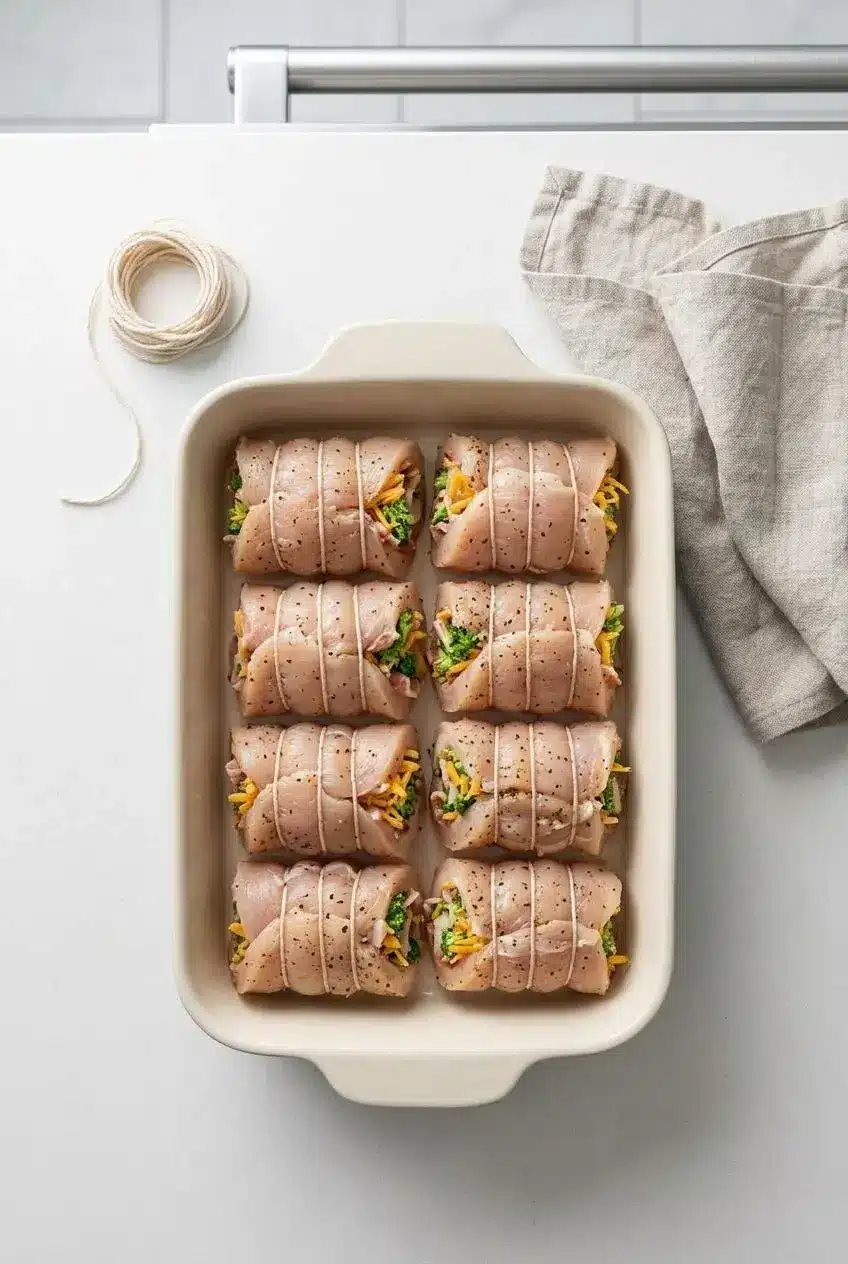
- I tie the rolls with kitchen twine so they hold their shape in the pan and oven.
I like a firm tie, not a strangled one. You want support, not chicken corsets.
- I heat 1 tablespoon of the reserved bacon drippings in a large skillet over medium-high heat.
If I need to, I use olive oil instead, or a mix of both. What matters most is getting the pan hot enough for a confident sizzle.
- I sear the chicken on all sides for about 4-5 minutes total, just until a golden crust forms. The center will still be uncooked at this stage.
I look for real color here, not a pale beige shrug. That browned exterior adds a lot of flavor and makes the final dish look polished.
- I move the chicken to a lightly greased baking dish, keep it seam-side-down, cover it, and bake it for 15 minutes.
Covering first gives the inside a head start so the filling gets hot without the outside drying out too early.
- I remove the cover and bake for 15 more minutes.
This second stretch in the oven helps the outside finish nicely while the chicken cooks through.
- I take the roulades out and let them rest for 5-8 minutes before slicing, and I check that the thickest part has reached 165° F before serving.
That short rest makes a big difference. Slice too soon and the juices run everywhere instead of staying in the chicken where you want them.
A quick pan sauce from the searing skillet
If you want a simple finish, use the browned bits left in the skillet after searing. Pour in a splash of white wine or chicken stock and scrape the pan with a spoon to loosen all that savory goodness.
Then swirl in a little butter and a squeeze of lemon juice over low heat until the sauce looks glossy and lightly thickened. Spoon it over the sliced roulade right before serving. It is completely optional, but I personally love how it wakes up the bacon and cheddar filling.
How to pound and roll the chicken without tearing it
This is the part that makes home cooks nervous, but it is easier than it looks once you know what to aim for. The goal is thin, even, flexible chicken, not paper-thin edges with a crater in the middle.
First, cut each breast lengthwise so you get thinner pieces before you ever reach for the mallet. Then cover the chicken before pounding. That keeps things neater and helps the surface stay intact. I use gentle, even taps instead of force. If you whack it like you are mad at it, it will tear.
Stop when the chicken reaches an even ¼-inch thickness. Look at the edges and center together. If one area is much thicker, it will be harder to roll and it may cook unevenly later. And when you are ready to fill, keep the smoother side facing down so the outside of the finished roll looks cleaner.
A lot of home cooks ask if they need to butterfly a huge breast perfectly. Honestly, no. You just need thinner, even pieces that can wrap around the filling without fighting you.
How to keep Chicken Roulade from falling apart
If your roll wants to spring open, the usual culprits are too much filling or not enough support. This recipe uses kitchen twine, and in my experience that gives the most reliable hold.
Start by keeping the filling centered and modest. Then roll from the narrow side and tuck as you go so the filling stays packed in the middle. Once rolled, set the chicken seam-side-down right away. That alone helps more than people expect.
Tie the roulade firmly with kitchen twine so it keeps its shape in the skillet. Toothpicks can work in a pinch, but they hold small points rather than the whole roll. A bacon wrap can also help secure the outside, though it changes the look and texture. For this version, twine is the cleanest and most dependable choice.
The best part? Once the sear sets the outside, the roulade usually behaves much better for the rest of cooking.
Why the filling leaks, dries out, or cooks unevenly
Most Chicken Roulade problems come down to a few fixable details. Here is the quick save-me-from-a-mess version.
| Problem | Likely cause | What to do |
|---|---|---|
| Filling leaks out | The chicken was overstuffed or loosely rolled | Keep the filling centered, use a lighter hand, and tuck as you roll before tying with twine |
| Chicken turns dry | It cooked too long or was sliced too soon | Pull it once the thickest part is done, then let it rest before cutting |
| One side cooks faster | The chicken was not pounded evenly | Aim for the same ¼-inch thickness across the whole piece before filling |
| Outside looks pale | The pan was not hot enough or the sear was rushed | Use a properly heated skillet and sear until the crust is clearly golden |
I also find that resting is one of the easiest fixes for a better final texture. It gives the juices time to settle, and your slices stay neater instead of sliding apart on the cutting board.
Best sides and plating ideas for a dinner worthy finish
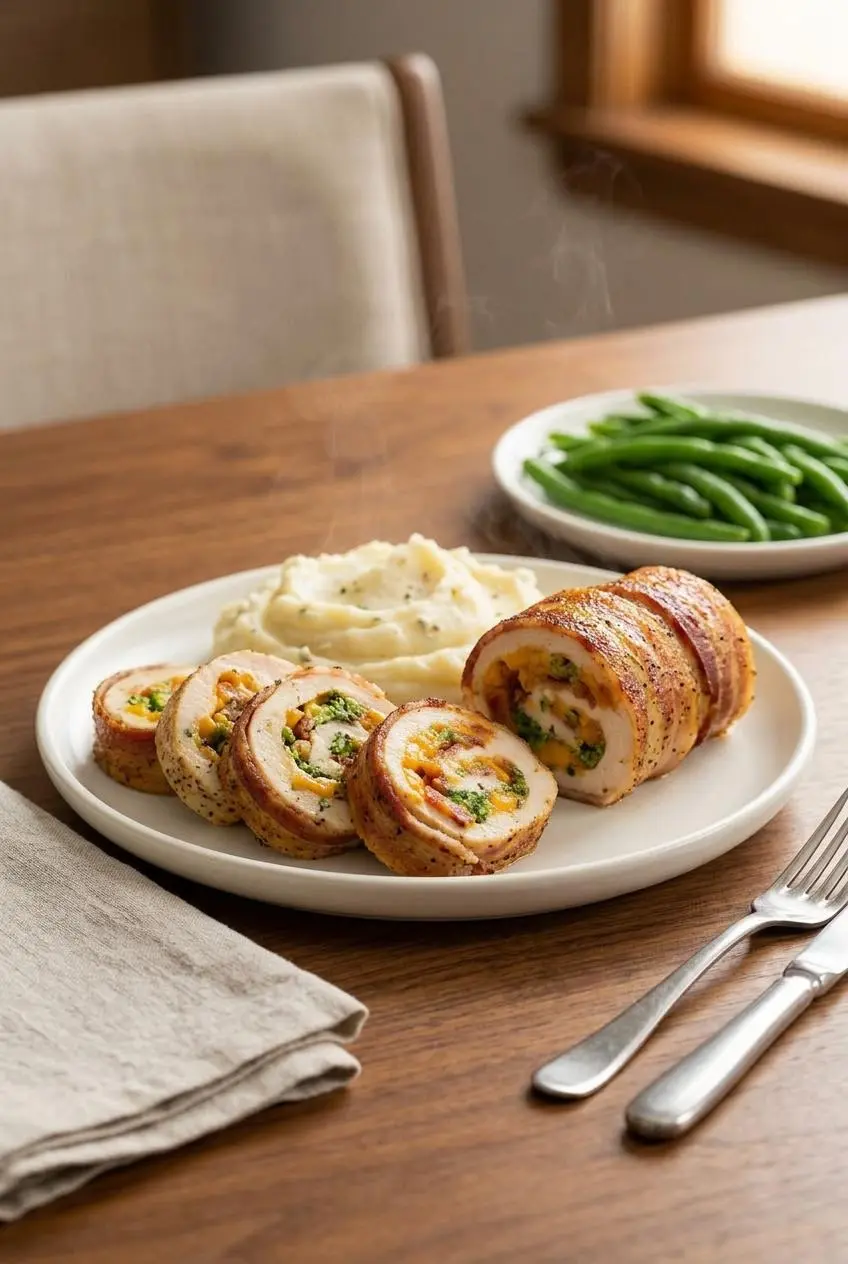
This dish already looks elegant, so the sides can stay simple. Mashed potatoes and green beans are a natural match and fit the cozy, savory vibe of the roulade.
If you want a slightly lighter plate, roasted asparagus or a crisp green salad work beautifully. The chicken is rich from the bacon and cheese, so fresh vegetables balance it nicely. A spoonful of pan sauce over mashed potatoes is also a very good life choice.
For plating, let the chicken rest first, then slice it into rounds so the spiral filling shows. Arrange the slices slightly overlapping on a platter or plate, and spoon any juices or optional sauce over the top right before serving. That little overlap makes dinner look polished with almost no extra effort.
Make ahead, scale up, and save leftovers the smart way
If you are cooking for guests, this is a great dish to prep in stages. You can assemble and tie the roulades ahead, keep them chilled, and then sear and bake closer to serving so the texture stays at its best.
Scaling up is straightforward because the method does not change. Just work in batches when searing so the skillet stays hot and the chicken browns instead of steaming. Crowding the pan is the fast lane to disappointment.
For leftovers, cool the chicken before storing it in a covered container. Reheat gently, ideally with a splash of broth or a spoonful of sauce to help keep the meat moist. If you plan to freeze it, keep the guidance general: wrap it well and thaw it safely before reheating or cooking, since texture can vary depending on whether it was frozen raw or cooked.

Chicken Roulade

Equipment
- Meat Mallet
- 8-inch Chef’s Knife
- Cutting Boards
- 7-inch Baking Dish
- Meat Thermometer
Ingredients
- 4 strips bacon drippings reserved
- 2 large boneless/skinless chicken breasts or 4 small
- Salt/Pepper to taste
- 1 teaspoon Italian seasoning
- ¼ teaspoon garlic powder, paprika EACH
- ¼ cup flour optional
- 1 cup broccoli steamed and finely diced
- 1 ¼ cups cheddar cheese shredded
- 2 tablespoons Parmesan cheese grated
Instructions
- I start by heating the oven to 375° F so it is ready as soon as the chicken is rolled and seared.
Getting the oven hot first keeps the process calm later, and that always helps with a recipe that has a few moving parts. - I cook the bacon slowly over low heat until it turns crisp, then I save the drippings and set them aside. Once the bacon cools, I chop it roughly. At the same time, I steam or boil the broccoli for 5-7 minutes until it reaches the doneness I want, then dice it very finely.
I like to take my time with the bacon here because slow cooking gives you better crispness and cleaner drippings. For the broccoli, small pieces matter more than perfect tenderness. - I cut the chicken in half lengthwise to make 2 thinner pieces, cover it with saran wrap, and gently pound it to an even ¼-inch thickness.
Gentle taps work better than wild swinging. The chicken should feel pliable and even from edge to edge, not ragged or torn. - I place each piece so the smoothest side is facing down before I fill and roll it.
This little detail gives the outside of the finished roulade a cleaner look, which really shows once you slice it. - I spread the cheeses across the middle of the chicken first, then add the broccoli, then the chopped bacon.
Keeping the filling in the center instead of all the way to the edges makes the roll much easier to close. Trust me, this is where restraint pays off. - With the narrow side facing me, I roll the chicken upward slowly and tuck the filling in as I go, then set each roll seam-side-down.
If a little cheese tries to escape, I nudge it back in and keep going. Slow and steady wins this one. - I season the outside with salt, pepper, Italian seasoning, garlic powder, and paprika. If I want extra browning and a little insurance against sticking, I add the optional flour.
The flour is not mandatory, but it does help create a deeper golden finish in the skillet. - I tie the rolls with kitchen twine so they hold their shape in the pan and oven.
I like a firm tie, not a strangled one. You want support, not chicken corsets. - I heat 1 tablespoon of the reserved bacon drippings in a large skillet over medium-high heat.
If I need to, I use olive oil instead, or a mix of both. What matters most is getting the pan hot enough for a confident sizzle. - I sear the chicken on all sides for about 4-5 minutes total, just until a golden crust forms. The center will still be uncooked at this stage.
I look for real color here, not a pale beige shrug. That browned exterior adds a lot of flavor and makes the final dish look polished. - I move the chicken to a lightly greased baking dish, keep it seam-side-down, cover it, and bake it for 15 minutes.
Covering first gives the inside a head start so the filling gets hot without the outside drying out too early. - I remove the cover and bake for 15 more minutes.
This second stretch in the oven helps the outside finish nicely while the chicken cooks through. - I take the roulades out and let them rest for 5-8 minutes before slicing, and I check that the thickest part has reached 165° F before serving.
That short rest makes a big difference. Slice too soon and the juices run everywhere instead of staying in the chicken where you want them.
Notes
Conclusion
This chicken roulade works because it gives you a lot of payoff from a simple method: juicy chicken, a cheesy broccoli and bacon center, and a golden seared outside that looks far fancier than the effort suggests.
If you remember two things, keep the chicken evenly pounded and do not overfill it. Add the quick pan sauce if you want a little extra flourish, and dinner will feel downright special.
FAQ
What is the best way to roll chicken roulade so it stays together?
Pound the chicken to an even ¼-inch thickness, keep the filling centered and not overpacked, then roll tightly from the narrow side. Tie it with kitchen twine and place it seam-side-down so it holds its shape as it cooks.
What sauce is best to serve with chicken roulade?
A quick pan sauce from the searing skillet is the easiest match for this recipe. Deglaze with white wine or chicken stock, then finish with butter and lemon juice. If you prefer something richer, a creamy Dijon or mushroom-style sauce also works well.
Can I prepare chicken roulade ahead of time?
Yes. Assemble the rolls ahead and keep them tied so they hold their shape, then sear and bake closer to serving for the best texture. After cooking, let them rest before slicing so the juices stay in the chicken.
How do I know when my chicken roulade is fully cooked?
Check the thickest part with a meat thermometer. You want it to reach 165° F, and the center should no longer look raw. A short rest after baking helps keep the chicken juicy when you slice it.
What are some classic stuffing variations for chicken roulade?
Spinach and cheese is a classic option, and prosciutto with mozzarella is another favorite. For a Mediterranean feel, try feta with roasted peppers. If you want something richer, mushroom with herb cheese makes a great filling. The rolling technique is similar to other stuffed chicken dishes, including classic Chicken Cordon Bleu.
How do I store and reheat leftover chicken roulade without drying it out?
Let leftovers cool, then store slices or whole pieces in a covered container in the refrigerator. Reheat gently so the chicken does not dry out, and add a splash of broth or a little sauce if it needs help coming back to life.