On the first truly chilly evening of the season, my kitchen always seems to ask for soup. Not a thin, polite soup, but something velvety, savory, and spoon-coating enough to make dinner feel settled.
This cauliflower and potato soup is exactly that kind of comfort food. Roasted vegetables bring the deep flavor, potatoes give it body without cream, and a small chef’s trick gives every bowl the kind of rich finish you remember.
Why You’ll Love This Recipe
Deep Roasted Flavor: I discovered that this soup gets its backbone from roasted vegetables, not from a long list of add-ins. The cauliflower turns nutty at the edges, the potatoes become golden and cozy, and the roasted garlic softens into something sweet and mellow.
The Secret Twist: A spoonful of white miso paste blended into the soup gives it that savory, restaurant-style depth that salt alone cannot deliver. It makes this creamy soup taste rounded, rich, and quietly complex.
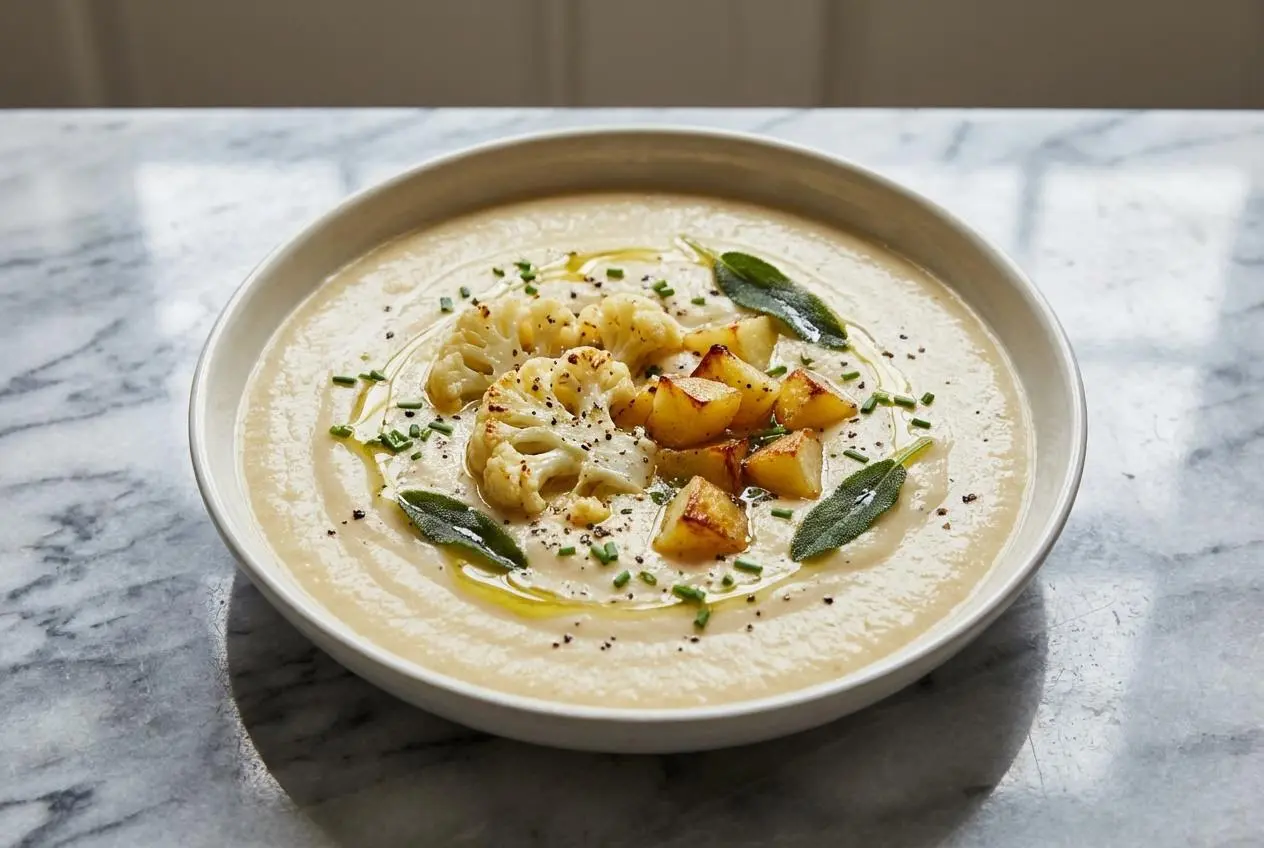
A Gorgeous Finish: In my kitchen, brown butter and crispy sage are the little black dress of winter soup garnishes. The butter smells nutty, the sage crackles, and together they turn a simple bowl into something dinner-party worthy.
Creamy Without Cream: Yukon Gold-style yellow potatoes bring natural body, so the soup blends into a silky texture without needing dairy. It is the kind of healthy soup recipe that still feels generous and satisfying.
Easy Sheet Pan Method: Most of the flavor work happens in the oven on one pan. That means less stirring, less fuss, and fewer dishes after dinner.
Ingredients and Substitutions
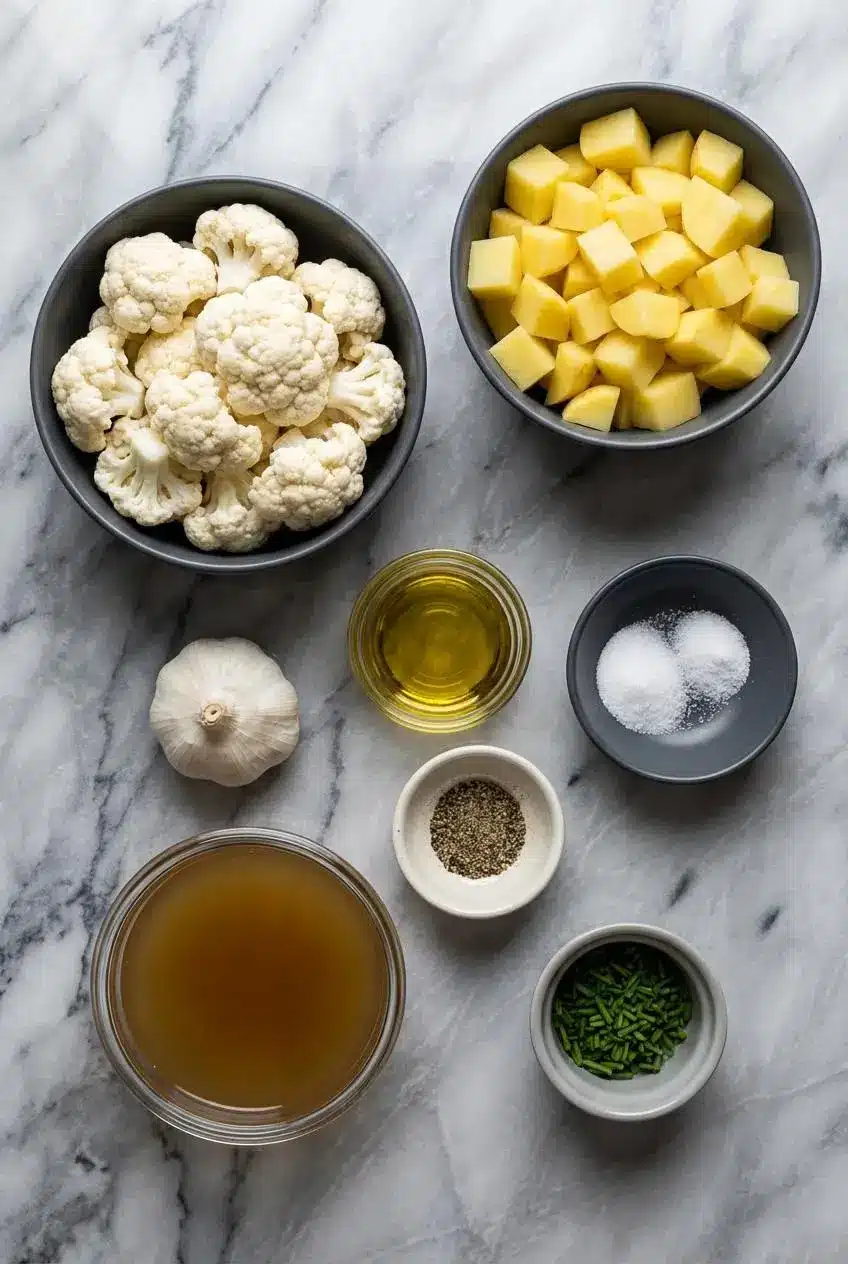
These are humble, everyday ingredients, but roasting and blending turn them into something plush and deeply savory. The potatoes bring body, the cauliflower brings sweetness, and the garlic ties it all together.
Ingredients
- 1 head of cauliflower cut into florets
- 4 cups yellow potatoes, diced
- 1 head of garlic
- Olive oil
- 2 teaspoons of salt divided
- 1 teaspoon black pepper
- 3 cups vegetable broth
- Chopped chives for serving
Ingredient Notes & Substitutions
Potatoes: Yukon Gold potatoes are my first choice because they have a buttery flavor and blend into a naturally velvety texture. Russet potatoes also work, but if they are over-blended, the soup can lean slightly grainy or gummy.
Miso Paste: White miso, also called shiro miso, is mild, slightly sweet, and beautifully savory. If you cannot find it, a tiny splash of soy sauce can add some depth, but miso gives the smoothest, roundest flavor.
Broth: Vegetable broth keeps the soup plant-based and lets the roasted cauliflower shine. If you are not cooking vegetarian, chicken broth gives the soup a slightly richer, more savory backbone.
Vegan Option: The soup base is naturally vegan when made with vegetable broth. For the garnish, use a good vegan butter for the sage finish, or skip the butter and drizzle each bowl with a little truffle oil or peppery olive oil.
Fresh Herbs: Chives add a clean, oniony snap that wakes up the creamy soup. If you are using sage for the brown butter garnish, fresh leaves are best because they crisp beautifully and release a woodsy aroma.
How to make cauliflower and potato soup
Prep the Sheet Pan
- Heat the oven to 400°F (200°C). Give it time to fully preheat so the vegetables start roasting right away instead of steaming.
- Line a large sheet pan with parchment paper. This keeps the potatoes from sticking and makes cleanup blissfully easy.
- Spread the cauliflower florets and diced potatoes across the pan in a single layer. Drizzle with 2 to 3 tablespoons olive oil, then toss until the pieces look lightly glossy.
- Sprinkle the vegetables with 1 teaspoon of the salt. Try to season evenly so every spoonful later has flavor from the inside out.
Roast the Vegetables and Garlic
- Slice the top off the head of garlic just enough to expose the cloves. Rub or drizzle the cut side with olive oil so the garlic roasts into a soft, sweet paste instead of drying out.
- Set the garlic on the sheet pan with the cauliflower and potatoes. If your garlic head is loose or small, wrapping it loosely in foil helps protect it while it softens.
- Roast for 35 to 40 minutes, stirring the vegetables halfway through. They should be fork-tender with lightly golden, caramelized edges and a warm, nutty smell coming from the pan.
Blend Until Silky
- Let the roasted vegetables cool slightly so the steam settles. Transfer the cauliflower and potatoes to a blender, setting aside about 1/3 cup of the smaller roasted pieces for topping the soup.
- Squeeze half of the roasted garlic cloves into the blender. They should slide out soft and golden, almost like a spread.
- Add the vegetable broth and 1 tablespoon white miso paste, then blend until the soup looks smooth, creamy, and completely unified. If you are using an immersion blender, place everything in the pot instead and blend there, keeping the blade submerged.
Warm, Season, and Serve
- Pour the blended soup into a large pot or Dutch oven and set it over medium heat. Let it warm gently, stirring now and then so the bottom stays smooth and does not catch.
- Stir in the remaining 1 teaspoon salt and the black pepper. Taste carefully here, because some broths are saltier than others, and adjust until the flavor feels full and savory.
- For the brown butter sage finish, melt unsalted butter in a small skillet over medium heat, then add fresh sage leaves. Swirl the pan until the butter foams, turns light brown, and smells nutty, then remove it from the heat before it darkens too much.
- Ladle the hot soup into bowls. Finish with the reserved roasted potatoes and cauliflower, a drizzle of olive oil or brown butter, black pepper, chopped chives, and crispy sage leaves if using.
Chef’s Secrets for the Perfect Creamy Soup
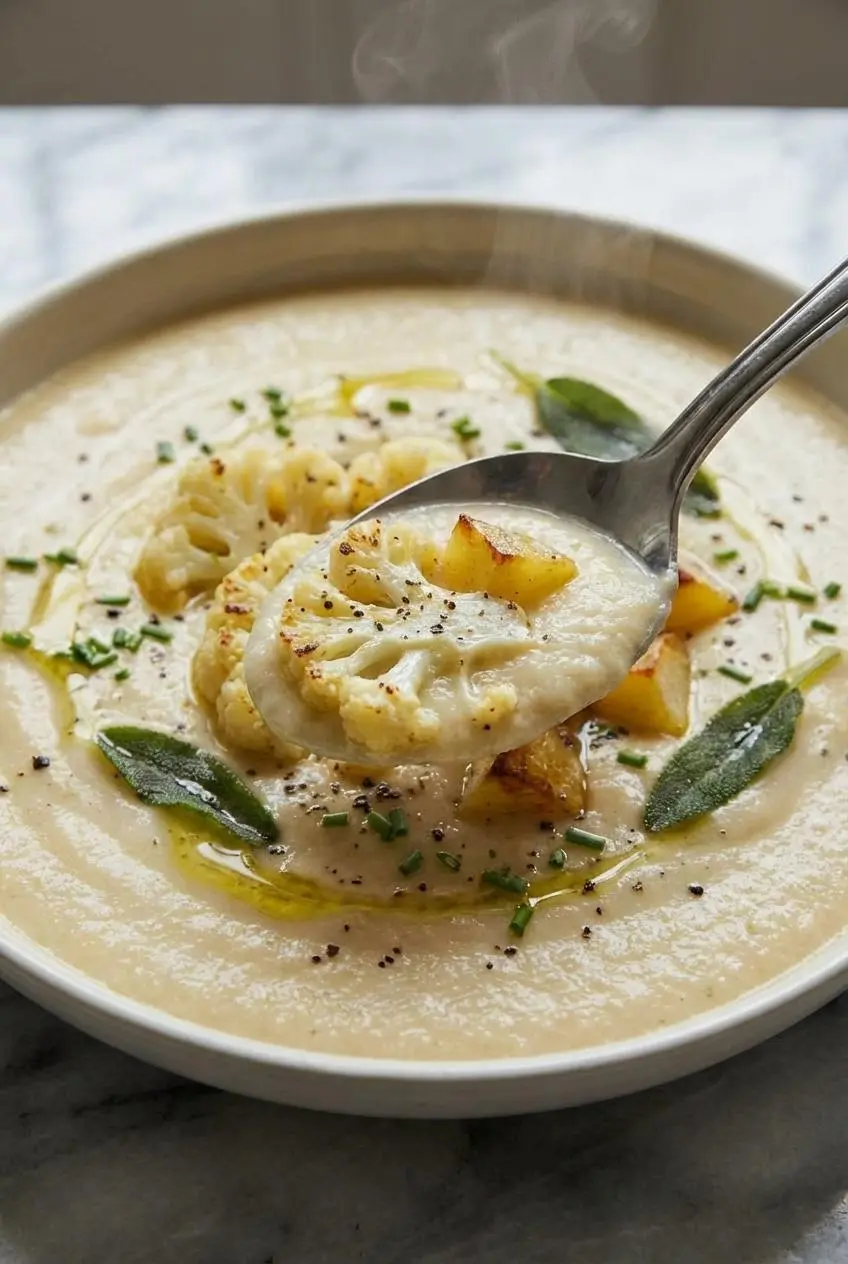
Roasting is not just a cooking step, it is the flavor engine of this recipe. When the cauliflower and potatoes brown at the edges, the Maillard reaction helps create the savory, toasted notes that make the soup taste layered rather than flat.
Caramelization also matters here, especially with cauliflower and garlic. Those naturally sweet edges soften the earthy flavor of the vegetables and make the finished soup feel rounder, even before you add any garnish.
Miso is my little umami insurance policy. Umami is that deep savory taste that makes food feel satisfying, and white miso brings it gently, without overpowering the roasted garlic or the vegetable broth.
Hot soup needs respect when it goes into a blender. Let it cool for 5 to 10 minutes, work in batches, fill the blender no more than halfway, remove the small center cap, and cover the opening with a folded kitchen towel so steam can escape safely.
If you are using an immersion blender, keep the blade fully under the surface before turning it on. That small habit saves your stovetop, your shirt, and your hands from splatters.
A Chef’s Guide to Choosing Your Ingredients
On Cauliflower
Choose a cauliflower head that feels heavy for its size, with tight creamy-white florets and no brown spots. The leaves should look fresh and green, which is usually a good clue that the head has not been sitting around too long.
Pre-cut florets are convenient on a busy weeknight, but a whole head is often fresher and more budget-friendly. If you love the deeper side of cauliflower flavor, a bowl of classic roasted cauliflower soup shows just how far this vegetable can go when the oven does the heavy lifting.
Frozen cauliflower can work in a pinch, especially if you simmer it instead of roasting, but it will not brown as well because it releases more moisture. For a totally different cauliflower mood, our sticky sesame cauliflower leans crisp, saucy, and bold, which makes it a fun appetizer when soup is not the main event.
The Great Potato Debate: Starchy vs. Waxy
Potatoes behave differently depending on their starch level, and that choice changes the texture of your soup. The basic Starchy vs. Waxy difference comes down to how potatoes hold together, absorb liquid, and break down when cooked.
Waxy potatoes, such as Red Bliss, usually hold their shape and stay firm. Yukon Gold potatoes are the happy exception for soup because they are waxy enough to avoid gluey texture but buttery enough to blend into a dense, creamy finish.
Starchy potatoes, such as Russets and Idaho potatoes, fall apart more easily and absorb liquid quickly. They are wonderful for crisping, which is why Russets are right at home in garlic parmesan potato wedges, but in a blended soup they can turn slightly grainy if pushed too hard.
Broth Basics
Because broth is the main liquid, it has a real say in the final flavor. I prefer low-sodium vegetable broth so I can control the seasoning at the end instead of being boxed in by a salty base.
Vegetable broth keeps the soup light and lets the roasted vegetables take center stage. Chicken broth is delicious too, giving the pot a deeper savory tone if you are not keeping the recipe vegetarian.
Pro Tips & Troubleshooting
Pro Tips
- In a hurry? You can skip the roasting and simmer the raw cauliflower, potatoes, and garlic in the broth until tender, then blend. The flavor will be softer and less toasty, but still comforting.
- Use the leftover roasted garlic. The unused half of the head is gorgeous spread on toast, stirred into mashed potatoes, or whisked into vinaigrette.
- Add extra richness if you like. For a non-vegan version, stir in a splash of heavy cream or a spoonful of crème fraîche at the very end.
- Save texture for the bowl. Reserving a few roasted florets and potato pieces gives each serving a little bite, which keeps a creamy soup from feeling one-note.
Common Mistakes to Avoid
- Soup is too thick? Whisk in a little warm vegetable broth or hot water until it loosens to the texture you like.
- Soup is too thin? Simmer it gently with the lid off for 10 to 15 minutes, stirring occasionally, so some of the liquid evaporates.
- Soup tastes bland? Always season after blending, because texture changes how flavor lands on the tongue. Add more salt first, then brighten with a tiny squeeze of lemon juice or deepen with a little more miso paste.
- Vegetables look pale? They may need a few more minutes in the oven. Golden edges mean more flavor, while pale vegetables give a milder soup.
- Blender feels too full? Stop and work in batches. Hot liquid expands with steam, and overfilling a blender is one of the easiest kitchen accidents to avoid.
Serving and Storage
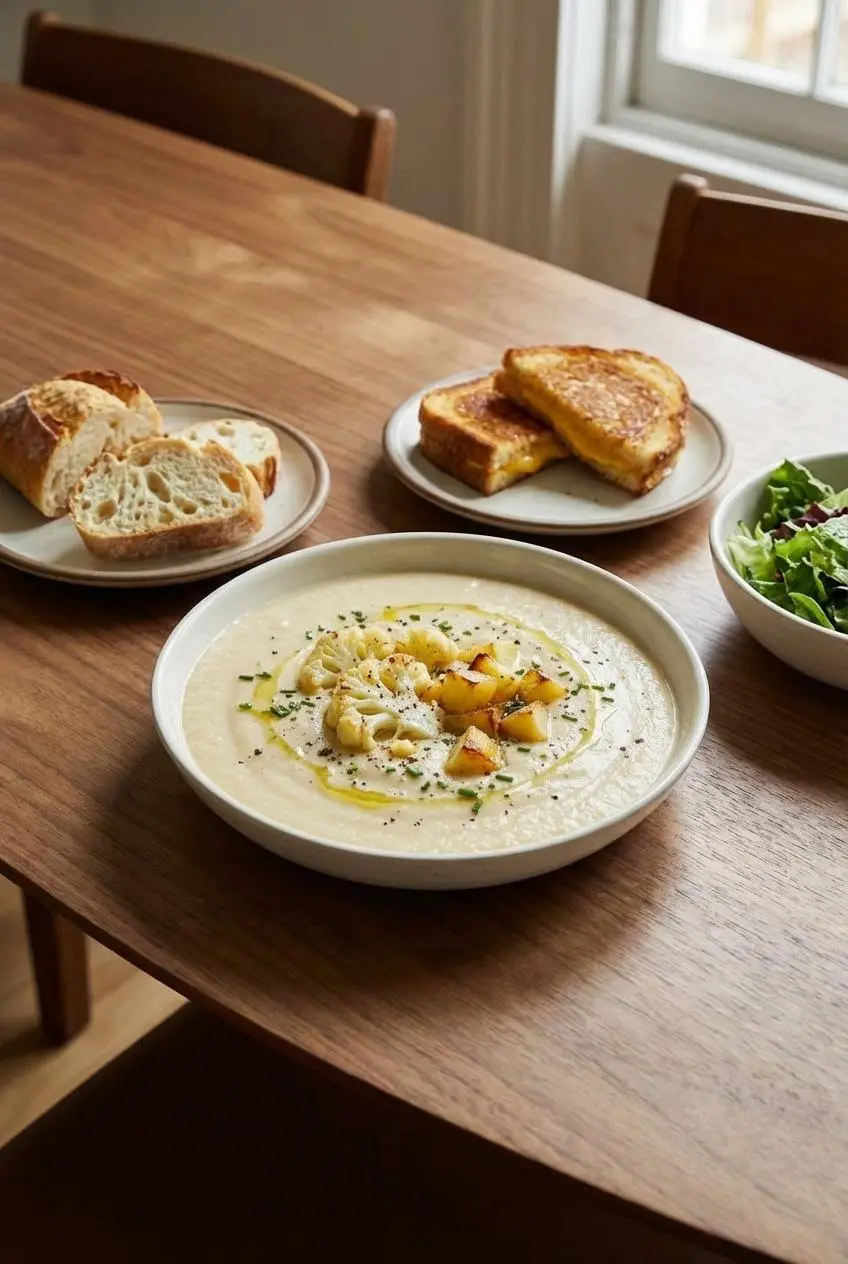
Serving Ideas
The brown butter, crispy sage, roasted vegetable pieces, and chives make this soup feel polished, but you can play with toppings depending on the night. Crunchy croutons, extra black pepper, a swirl of pesto, shredded sharp cheddar, or parmesan all work beautifully if they fit your table.
For dinner, I love this with a crusty baguette, a gooey grilled cheese sandwich, or a crisp side salad with a punchy vinaigrette. If your family loves cozy bowls when the weather turns, a pot of hearty beef chili brings that same cold-night comfort in a bolder, meatier direction.
Storage and Make-Ahead Instructions
To store leftovers, let the soup cool completely, then transfer it to an airtight container. It will keep in the refrigerator for up to 4 days, and the flavor often tastes even deeper the next day.
To freeze, pour cooled soup into freezer-safe containers or bags, leaving a little space at the top for expansion. Freeze for up to 3 months, and keep delicate garnishes like sage and chives separate for the best texture.
To reheat, warm the soup gently on the stove over medium-low heat, stirring occasionally. Avoid a hard boil, and if reheating from frozen, thaw it overnight in the refrigerator first, then whisk well to bring back the creamy texture.

Roasted Cauliflower And Potato Soup

Equipment
- Large sheet pan
- Parchment Paper
- Blender or immersion blender
- Large pot or Dutch oven
- Small skillet (for garnish)
Ingredients
- 1 head of cauliflower, cut into florets
- 4 cups yellow potatoes, diced
- 1 head of garlic
- Olive oil for drizzling
- 2 teaspoons salt, divided
- 1 teaspoon black pepper
- 3 cups vegetable broth
- Chopped chives, for serving
Instructions
Prep the Sheet Pan
- Preheat the oven to 400°F (200°C). Line a large sheet pan with parchment paper for easy cleanup.
- Spread the cauliflower florets and diced potatoes across the pan in a single layer. Drizzle with olive oil (about 2-3 tablespoons) and toss until everything is lightly coated.
- Sprinkle the vegetables evenly with 1 teaspoon of the salt.
Roast the Vegetables and Garlic
- Slice the top off the head of garlic to expose the cloves. Drizzle the cut side with a little olive oil and place it on the sheet pan with the other vegetables.
- Roast for 35 to 40 minutes, stirring the vegetables halfway through. The vegetables are ready when they are fork-tender and have golden, caramelized edges.
Blend Until Silky
- Let the roasted vegetables cool slightly. Transfer the cauliflower and potatoes to a blender. For a nice garnish, set aside about 1/3 cup of the smaller roasted pieces.
- Squeeze about half of the soft, roasted garlic cloves into the blender. Add the vegetable broth and 1 tablespoon of white miso paste (see notes).
- Blend until the soup is completely smooth and creamy. If using an immersion blender, add all ingredients to your pot and blend there.
Warm, Season, and Serve
- Pour the blended soup into a large pot over medium heat. Warm gently, stirring occasionally.
- Stir in the remaining 1 teaspoon of salt and the black pepper. Taste the soup and adjust seasoning as needed.
- Ladle the hot soup into bowls. Garnish with the reserved roasted vegetables, a sprinkle of chopped chives, and fresh black pepper. For an extra special finish, top with a drizzle of brown butter and crispy sage leaves.
Notes
Nutrition
Conclusion
This roasted cauliflower and potato soup is simple enough for a weeknight, but the white miso and brown butter sage finish make it feel special. It is creamy, savory, and deeply comforting without leaning on heavy cream.
Start with the recipe as written, then make it yours with a different garnish, a splash of cream, or an extra spoonful of miso. The secret to the perfect bite is tasting at the end and letting the roasted vegetables shine.
Frequently Asked Questions
How do you make cauliflower and potato soup creamy without cream?
Do I have to roast the vegetables for this soup?
What are the best toppings and garnishes for cauliflower potato soup?
Can I make this soup ahead of time? How do I store and reheat it?
Is this recipe vegan and gluten-free?
What is the best way to blend this soup smoothly?