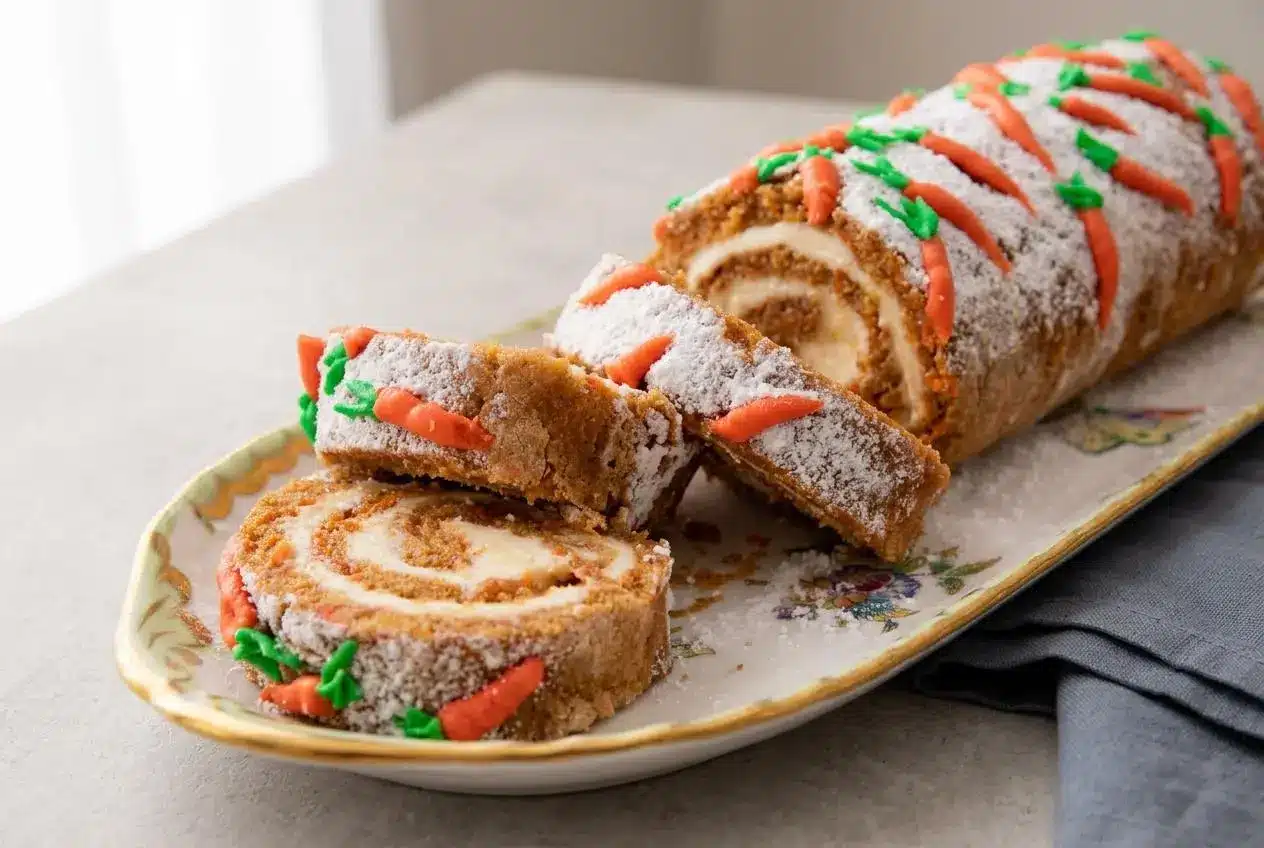
A Carrot Cake Roll is a moist spiced carrot sponge cake rolled with sweet cream cheese filling. For a crack-free result, roll the cake while it’s still hot, let it cool in shape, then fill, reroll, and chill before slicing.
Carrot Cake Roll brings together warm cinnamon spice, tender shredded carrots, and a cool, velvety cream cheese swirl in every slice. It looks impressive, but the method is much more manageable than it first appears.
The best part is the moment the cake comes out of the oven and the kitchen smells earthy, sweet, and warmly spiced. The hot-roll trick makes all the difference.
Grate the carrots fresh and have your towel or parchment ready before the cake comes out of the oven.
What Is a Carrot Cake Roll
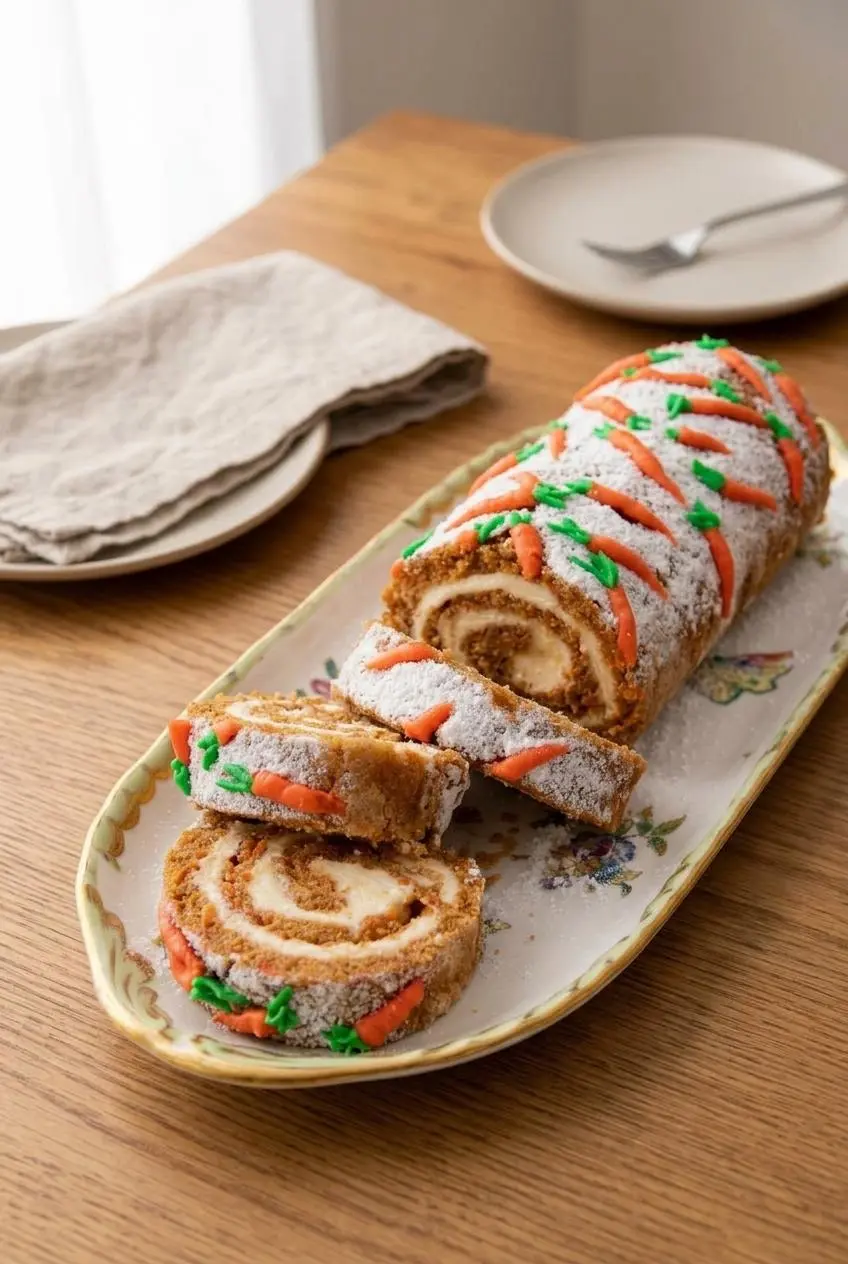
This dessert is a thin carrot sponge baked in a jelly roll pan, rolled while warm, then filled with cream cheese frosting and rolled again into neat pinwheels. You get the flavor of carrot cake in a lighter, more elegant format.
It’s especially nice for spring gatherings, Easter dessert tables, or any dinner where you want something a little festive without making a layer cake. If you love the flavor of a classic carrot cake, this version gives you the same cozy spice profile with a softer, swirled finish.
The contrast is what makes it work. The sponge is gently springy and warmly spiced, while the filling is cool, sweet, and smooth enough to melt into every turn of the roll.
Essential Ingredients for a Flexible Cake Roll
Each ingredient here has a job, from building a sponge that bends easily to creating a filling with enough body to hold a clean swirl.
For the cake
- 3/4 cup all-purpose flour (90g)
- 2 teaspoons ground cinnamon
- 1/2 teaspoon salt
- 1 teaspoon baking powder
- 1/4 teaspoon ground ginger
- 1/4 teaspoon ground nutmeg
- 3 eggs
- 2/3 cup granulated sugar
- 2 tablespoons vegetable oil
- 2 teaspoons vanilla extract
- 2 cups shredded carrots about 2-3 medium carrots (200g)
- powdered sugar for rolling
- Food coloring optional
For the frosting
- 8 ounces cream cheese 1 package at room temperature
- 3 cups powdered sugar sifted (360g)
- 1/2 cup butter room temperature (113g)
- 1 tsp vanilla extract (5ml)
- 1 tsp lemon extract (5ml)
Flour gives the sponge enough structure to lift and hold its shape, but not so much that it turns stiff. Cinnamon leads the spice profile, while ginger and nutmeg round it out with warmth and a little depth. Granulated sugar helps the cake stay moist and tender after baking.
The small amount of vegetable oil matters more than it looks like it should. It keeps the sponge soft and pliable, which is exactly what you want when you’re asking a thin cake to bend tightly without splitting.
In the filling, room temperature cream cheese and butter are the key to a smooth spread. Cold dairy leaves lumps, and overly soft frosting can slide right out of the spiral.
I always grate whole carrots on the fine side of a box grater for this cake. The texture disappears into the batter, and the sponge stays noticeably moister.
Why Freshly Grated Carrots Are Non-Negotiable
Fresh carrots bring moisture directly into the batter, and that moisture helps the sponge stay tender enough to roll. They also soften more evenly during baking, so the cake feels supple instead of coarse.
Pre-shredded carrots are usually too dry and thick for a cake roll. They’re often woody at the edges, and they do not melt into the sponge the same way. That can leave the cake rougher, drier, and more likely to crack when you roll it.
Use whole fresh carrots and grate them by hand. A fine box grater gives you short, delicate shreds that distribute evenly and keep the cake flexible from edge to edge.
Whipping Eggs for the Perfect Cake Roll Rise
Beating the eggs with the sugar for a full 5 minutes builds the air that gives this sponge its lift. That aeration is not just about height. It also creates a lighter, more elastic crumb that can bend instead of breaking.
When the mixture is ready, it should look paler, smoother, and slightly thicker than when you started. That extra volume helps the cake bake up with a soft bounce, which is exactly the texture you want before the first roll.
How to Bake and Roll Your Sponge
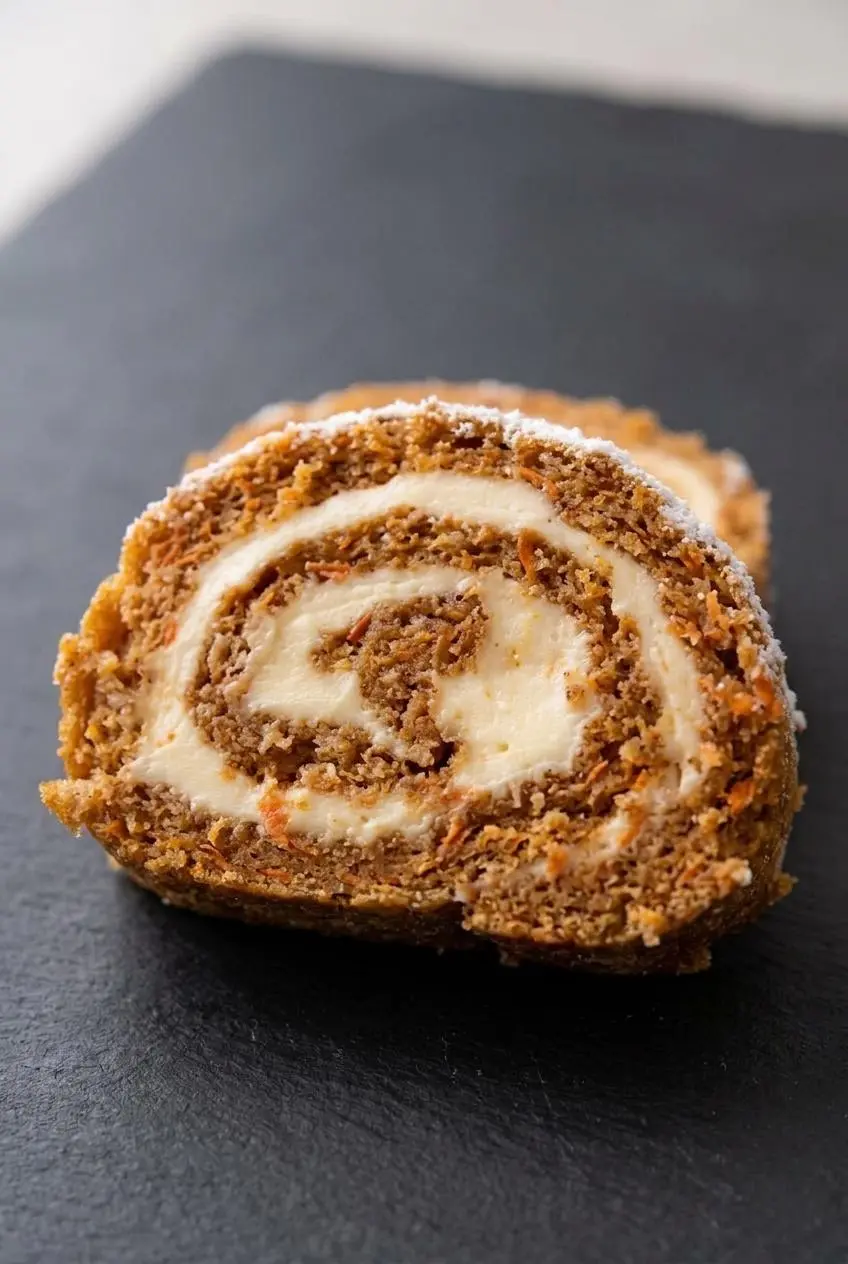
This is the part that makes most people nervous, but it’s very straightforward once you know the order. Bake just until the center springs back, then roll while the cake is still steaming hot so the sponge sets in a curved shape instead of fighting you later.
- Heat the oven to 375F and line a 10×15 inch jelly roll sheet or quarter sheet pan with parchment paper, leaving about 1 extra inch over the sides for lifting.
The overhang acts like handles later, and having the pan ready keeps the batter from sitting too long. - Sift the flour, salt, cinnamon, baking powder, ginger, and nutmeg into a medium bowl, then whisk to combine.
This spreads the leavening and spices evenly so the sponge bakes with a uniform texture and flavor. - Beat the eggs, vanilla, and granulated sugar together in a large bowl until the mixture looks lighter in color and smooth.
After several minutes, it should appear airy and slightly thickened, which helps the cake rise with a flexible crumb. - Stir in the shredded carrots until evenly distributed.
The batter should still look loose, with the carrot shreds suspended throughout rather than clumped at the bottom. - Fold the dry ingredients into the wet mixture just until combined.
Stop as soon as you no longer see dry streaks so the batter keeps as much air as possible. - Spread the batter into the prepared pan with a spatula or offset spatula and bake for 13 to 15 minutes at 375F.
The batter will seem thin, and the cake is done when the center springs back with a bouncy, springy resistance and the spice aroma fills the kitchen. - While the cake bakes, dust a thin kitchen towel well with powdered sugar, then turn the hot cake out onto it as soon as it leaves the oven.
A generous sugar coating helps prevent sticking when the soft surface meets the towel. - Peel off the parchment and roll the cake up tightly in the towel while it is still very hot, then set it on a wire rack to cool completely.
The warm sponge should bend with gentle resistance rather than tearing, which means the roll is snug enough without being forced. - Beat the butter and cream cheese together in a stand mixer with a whisk attachment, or use a large bowl with a hand mixer, then add the vanilla and powdered sugar and beat until fluffy and pale.
The frosting should look smooth and spreadable, and reserve about 1/4 cup for the buttercream carrots. - Carefully unroll the cooled cake and spread the frosting over the surface, leaving about 1/2 inch bare on the two long sides and on the short outer edge.
That border gives the filling space to move so it stays inside the roll instead of squeezing out. - Roll the cake back up, wrap it in plastic, and refrigerate for at least an hour.
Chilling firms the swirl so the slices hold their shape instead of smearing. - Split the reserved frosting into two portions, tint one green and one orange with the food coloring, then transfer them to piping bags and snip the tips.
The colors should be vivid enough to show clearly against the powdered sugar finish. - Dust the chilled roll with powdered sugar and pipe small carrot shapes over the top and sides.
The surface should be cold and dry enough that the decoration sits neatly instead of sliding. - Slice with a sharp serrated knife and serve.
Clean cuts will reveal distinct cream cheese spirals with minimal dragging through the filling.
The Kitchen Towel Rolling Method
This is the classic method, and it works beautifully when you move quickly. Dust a thin towel generously with powdered sugar before the cake finishes baking. As soon as the sponge comes out, invert it onto the towel, peel off the parchment, and roll it up within about 1 minute.
The sugar creates a dry barrier so the surface does not glue itself to the cloth. Roll snugly, not aggressively. You should feel light resistance from the warm sponge, almost springy, but it should still curl without protest. If it feels stiff, the cake likely baked a touch too long or sat too long before rolling.
This method gives a very round, even shape. It is especially helpful if you like a tight spiral and don’t mind a lightly powdered exterior.
The Parchment Paper Rolling Alternative
If you want less mess, you can use the parchment instead of a towel. After baking, lift the cake out with the overhanging paper, invert if needed, and roll the warm sponge directly in fresh parchment or in its baking parchment once the top surface is released cleanly.
This approach cuts down on sugar dust and avoids towel fibers. It also makes cleanup easier. Let the rolled cake cool before unrolling gently. If the cake still feels warm in the center when you touch the outside of the roll, give it more time so the frosting won’t melt on contact.
Parchment tends to trap less surface moisture than a heavy towel, which helps reduce stickiness and condensation. The towel method shapes a slightly tighter roll, while parchment is the easier low-fuss option.
Troubleshooting Common Cake Roll Pitfalls
If your first attempt looks a little imperfect, don’t worry. Cake rolls are forgiving, and most problems can be fixed without changing the flavor or starting over.
- Cracked sponge: Minor cracks usually mean the cake baked a bit too long or cooled too much before the first roll. Spread frosting right into the crack, reroll firmly but gently, then wrap the roll in plastic so it holds together while chilling.
- Torn edge during unrolling: This often happens at the starting edge where the curve is tightest. Position that side toward the center when rerolling, and use the filling like edible spackle. Once sliced, small repairs nearly disappear.
- Filling oozing from the ends: Too much frosting or frosting spread all the way to the border is usually the cause. Leave that clear 1/2 inch edge on the long sides and the outside short side so the filling has somewhere to settle.
- Sticky towel situation: If the cake clings to the towel, dust the exposed spots with a little more powdered sugar and peel slowly instead of tugging. A light stick can usually be rescued, especially if the cake was sugared well before rolling.
- Dense or tight sponge: Under-whipped eggs are often the culprit. The egg and sugar mixture needs enough beating time to trap air, or the cake will bake flatter and bend less willingly.
- Dry cake that cracks fast: This usually comes from overbaking. Pull the sponge as soon as the center springs back when lightly pressed. It should feel soft and bouncy, not firm or crisp at the edges.
- Loose frosting that slides: Cream cheese and butter that are too warm can make the filling too soft. If it feels slack, chill it briefly before spreading so it stays in place during the final roll.
Delicious Recipe Variations
Once you’ve made the classic version, these optional twists fit naturally with the same spice base and cream cheese filling.
- Nutty Crunch: Fold toasted chopped pecans or walnuts into the filling before rolling for a little texture in each slice.
- Pineapple and Raisin Boost: Finely drained crushed pineapple or plump raisins can be folded into the wet batter before the dry ingredients. If you enjoy that flavor combination, this style is close to a carrot pineapple cake in rolled form.
- The Orange Zest Enhancement: A little fresh orange zest and a splash of orange juice in the filling brightens the frosting and cuts through the richness nicely.
If rolling a warm sponge feels like a project for another day, carrot cake bars give you a more relaxed path to the same cozy flavor profile.
Make-Ahead, Storage, and Freezing Tips
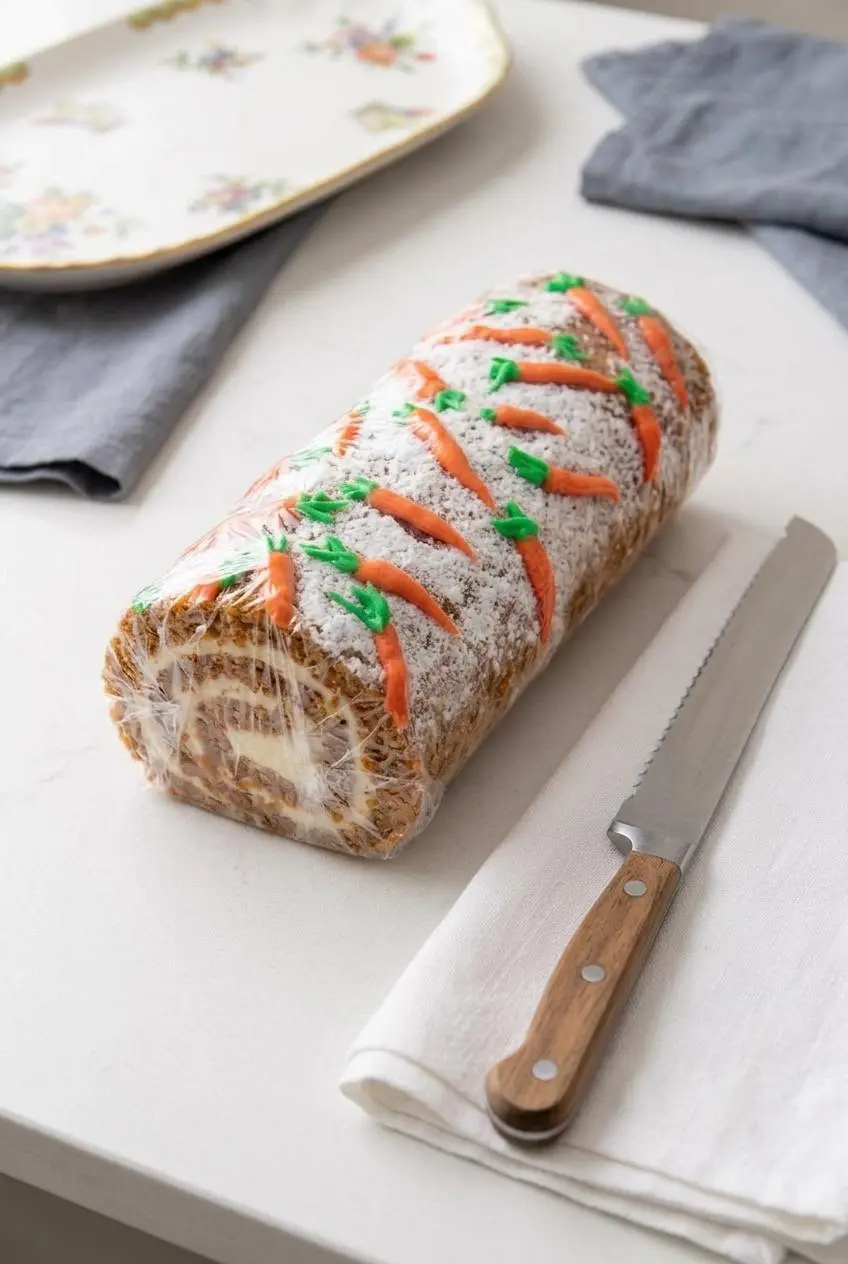
This dessert is well suited to advance prep because the chilled filling helps the spiral set up neatly. Keep the finished roll tightly wrapped in plastic so it stays moist and does not pick up fridge odors.
You can assemble the cake roll, wrap it well, and refrigerate it for up to 3 days before serving. Because the filling contains dairy, keep it chilled, and for U.S. kitchens it helps to follow refrigerator temperatures of 40 °F or below.
The fully assembled roll can also be wrapped tightly in plastic wrap, then a layer of foil, and frozen for up to 3 months. Thaw it in the refrigerator so the filling softens gradually and the sponge stays tidy enough to slice cleanly.
The Freezer Trick for Flawless Slices
If you want especially sharp swirls, chill the roll until very firm or freeze it for 30 to 60 minutes before slicing. That brief firming time makes the cream cheese filling less likely to ooze at the cut edges.
Use a serrated knife dipped in hot water, dry it, then slice with a gentle sawing motion. Wipe the blade clean between cuts. It’s a tiny step, but it makes the pinwheels look bakery-neat instead of squished.
Conclusion
This cake brings together everything people love about carrot cake in a dessert that feels a little more polished on the plate. The sponge stays tender, the cream cheese swirl stays velvety, and the slices look great with very little fuss once you know the rhythm.
If you remember one rule, make it this one: roll the sponge while it’s still hot. That single move gives you the best shot at smooth spirals and minimal cracks.
Frequently Asked Questions
How do I roll the cake without breaking it?
Roll it immediately while it is still hot from the oven. Use a towel dusted well with powdered sugar or use parchment for a lower-mess option. Roll snugly, but do not press so hard that the sponge compresses. If you wait until the cake cools first, it is much more likely to crack.
Can I prepare this carrot cake roll in advance?
Yes, it works well as a make-ahead dessert. Assemble the roll, wrap it tightly in plastic, and refrigerate it for up to 3 days. Chilling also improves slicing because the filling firms up.
Can it be frozen?
Yes, the fully assembled roll can be frozen for up to 3 months. Wrap it tightly in plastic wrap first, then foil, to protect the sponge and filling. Thaw it in the refrigerator before slicing for the neatest texture.
What is the best way to slice a cake roll cleanly?
Chill the roll for at least an hour before cutting. For extra-clean slices, firm it further in the freezer for 30 to 60 minutes. Use a sharp serrated knife dipped in hot water and wipe the blade between slices.

Carrot Cake Roll

Equipment
- 10×15 inch jelly roll sheet pan
- Parchment Paper
- Sifter
- Stand Mixer or Hand Mixer
- Piping bags
Ingredients
For the cake
- 3/4 cup all-purpose flour (90g)
- 2 teaspoons ground cinnamon
- 1/2 teaspoon salt
- 1 teaspoon baking powder
- 1/4 teaspoon ground ginger
- 1/4 teaspoon ground nutmeg
- 3 eggs
- 2/3 cup granulated sugar
- 2 tablespoons vegetable oil
- 2 teaspoons vanilla extract
- 2 cups shredded carrots about 2-3 medium carrots (200g)
- powdered sugar for rolling
- Food coloring optional
For the frosting
- 8 ounces cream cheese 1 package at room temperature
- 3 cups powdered sugar sifted (360g)
- 1/2 cup butter room temperature (113g)
- 1 tsp vanilla extract (5ml)
- 1 tsp lemon extract (5ml)
Instructions
- Preheat oven to 375F and line a 10×15 inch jelly roll sheet or quarter sheet pan with parchment paper. Cut the paper so it has an extra inch on the sides, you will use this excess paper to pull the cake out of the pan after baking.
- Sift the flour, salt, spices, and baking powder into a medium bowl then whisk together and set aside.
- Combine eggs, vanilla, and granulated sugar in a large bowl then whisk or beat until lighter in color and smooth.
- Add the grated carrots and mix until incorporated.
- Pour the dry mixture into the wet then fold in until just combined.
- Transfer the batter into your prepared baking sheet and use a spatula or offset spatula to smooth out. The batter will be quite thin after it is smoothed out but that is as it should be. Bake for 13-15 minutes at 375F. The cake is done when the center springs back when pressed lightly.
- While the cake bakes prepare your thin kitchen towel by dusting it with powdered sugar. When the cake is done lift it out of the pan and invert onto the sugared cloth.
- Peel back the parchment paper and roll tightly then place the rolled cake on a wire rack to cool completely.
- Make the cream cheese frosting by creaming the butter and cream cheese in a stand mixer fitted with a whisk attachment or large bowl if using a hand mixer. Add the vanilla and powdered sugar then beat until fluffy, smooth, and light in color. Reserve about 1/4 cup of frosting for the buttercream carrots.
- Unroll the cake on your counter then spread the frosting leaving about half an inch unfrosted on the two long sides as well as the short side that will be on the outside after rolling.
- Roll the cake back up then wrap in plastic and refrigerate for at least an hour so the frosting can set up.
- Divide the reserved buttercream into two batches, color one green and the other orange then transfer to piping bags and snip the tips off.
- Once the cake is chilled, dust with powdered sugar and pipe little carrots on the top and sides using the orange and green frostings.
- Cut into slices using a sharp serrated knife and enjoy.