To make cabbage soup, soften the onion, carrot, and celery in olive oil, add vinegar, tomatoes, broth, beans, potatoes, cabbage, and thyme, then simmer gently until the vegetables are tender and the broth tastes bright.
Cabbage soup is the kind of pot you put on the stove when you want something warm, savory, and full of vegetables that actually tastes satisfying. The fire-roasted tomatoes, white beans, and potatoes make it hearty enough for dinner without feeling heavy.
What makes this one work is balance. A slow sauté builds sweetness, and the vinegar keeps the broth from tasting dull or overly cabbage-forward. That little shift changes everything.
Keep the heat at a gentle simmer, not a hard boil, so the cabbage turns tender and translucent instead of slumping into mush.
Essential Ingredients Explained
Each ingredient here pulls its weight, building sweetness, body, color, and brightness so the soup tastes rounded instead of watery.
- 2 tablespoons extra-virgin olive oil
- 2 carrots, chopped
- 1 medium yellow onion, diced
- 1 celery rib, diced
- 3/4 teaspoon sea salt
- Freshly ground black pepper
- 2 tablespoons white wine vinegar
- 2 (14.5-ounce) cans fire-roasted diced tomatoes
- 4 cups vegetable broth
- 1 (15.5-ounce) can cooked white beans, drained and rinsed
- 4 garlic cloves, grated
- 2 Yukon Gold potatoes, diced
- 1 small green cabbage, about 1 pound (9 cups chopped)
- 1 teaspoon dried thyme
- Fresh parsley, for garnish
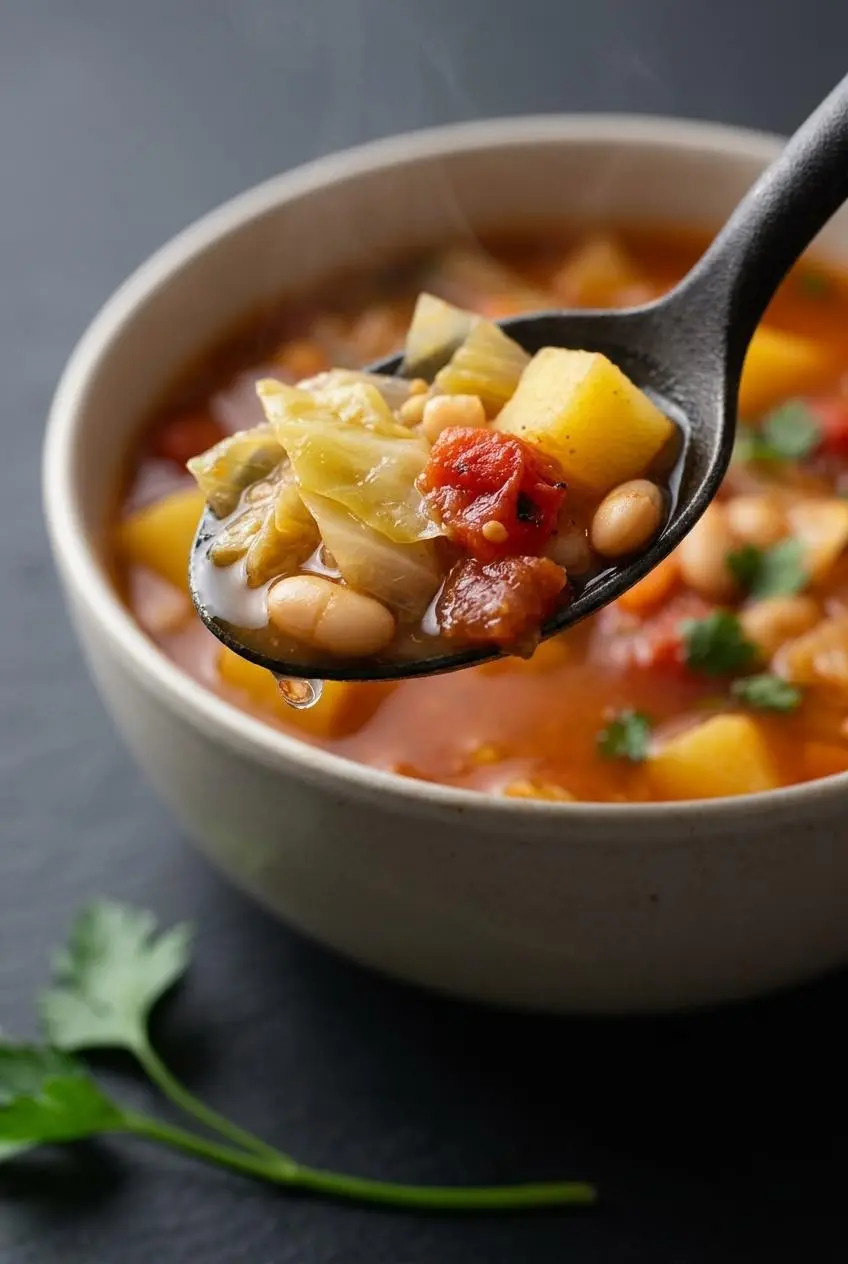
Green cabbage is the backbone of the soup. It brings bulk, gentle sweetness, and plenty of texture, but it needs careful cooking so it stays tender and bright rather than grayish-brown and limp.
Yukon Gold potatoes are especially useful here because they soften nicely while still holding their shape in the broth. Test them with a fork near the end of cooking. You want them tender all the way through, not crumbling apart into the pot.
Vegetable broth ties everything together, and a low-sodium version gives you much better control over the final seasoning. Since the tomatoes, beans, and cabbage all bring their own flavor, starting with a less salty broth makes it easier to build a savory soup without overshooting.
The mirepoix of onion, carrot, and celery lays down the sweet base that keeps the cabbage from tasting harsh. Fire-roasted tomatoes add deeper flavor and a little smokiness, while white beans give the soup body and make it more filling.
White wine vinegar matters more than it may seem. It wakes up the broth, cuts through the earthy notes, and helps balance the sweetness of the cooked vegetables. Fresh parsley at the end gives the whole pot a cleaner finish.
I like to shred or chop the cabbage into bite-size pieces rather than big ribbons, because it cooks more evenly and is easier to eat straight from the bowl.
Low Cost and High Nutrition Substitutions
If you need to work with what you have, this soup is flexible as long as the main balance stays the same.
- Swap the white beans for another mild cooked bean if needed. The soup will still keep its hearty, satisfying feel.
- If you want a lighter vegetable-and-bean style to compare, classic minestrone soup follows a similar build with different vegetables and herbs.
- Savoy cabbage is a good substitute when you want a softer, more delicate texture. Napa cabbage also works for a gentler finish, but it softens faster, so keep an eye on the pot.
- If sodium is a concern, stick with low-sodium broth and season at the end. That gives you much more control than trying to correct an overly salty pot later.
How to Make Cabbage Soup Step by Step
The method is straightforward, but the order matters because each stage builds flavor and protects the texture of the vegetables.
- Warm the olive oil in a large pot over medium heat, then add the carrots, onion, celery, salt, and several grinds of black pepper; cook for 8 minutes, stirring now and then.
The vegetables should look soft and glossy by the end, and the onion should be translucent rather than browned. - Pour in the vinegar and stir it through the hot vegetables, then add the tomatoes, broth, beans, garlic, potatoes, cabbage, and thyme; cover and simmer on low for 20 to 30 minutes.
You’ll notice a sweet and slightly tangy aroma as the vinegar hits the pot, and the soup is ready when the cabbage looks tender and lightly translucent and the potatoes yield easily to a fork without falling apart. - Taste the broth, adjust the seasoning as needed, then ladle the soup into bowls and finish with fresh parsley.
The final soup should taste savory and bright, with tender vegetables and a broth that feels lively rather than flat.
The first step does more than soften vegetables. That full 8-minute sauté creates natural sweetness in the mirepoix, which is what keeps the finished soup from tasting thin or sharp. Rushing this part often leads to broth that tastes watery later.
Adding the vinegar before the rest of the liquid ingredients is a smart move because it quickly loosens the flavorful bits in the pot and balances the earthy cabbage notes right away. Once the tomatoes, broth, beans, garlic, potatoes, cabbage, and thyme go in, keep the heat calm and steady. A low simmer tenderizes the cabbage without pushing it into that overcooked sulfur zone.
As the soup cooks, watch the cabbage more than the clock. It should soften and turn translucent while still looking green and fresh. If it goes too long, the leaves lose their structure, the broth gets muddier, and the aroma shifts from comforting to a bit too assertive.
The Digestion and Science of Cooking Cabbage
Cabbage belongs to the brassica family, and it naturally contains sulfur compounds. That is completely normal, but those compounds become much more noticeable when cabbage is cooked too long or boiled too hard.
If you have ever wondered why a pot of cabbage soup can smell sweet one minute and a little too funky the next, this is usually the reason. Gentle simmering keeps those flavors in check. Hard boiling speeds up breakdown and can leave both the broth and the kitchen smelling stronger than you wanted.
The easiest fix is simple. Keep the soup at a low simmer, and stop cooking once the cabbage is tender. In this recipe, that means checking the pot in the earlier part of the 20 to 30 minute simmering window instead of wandering off and forgetting about it.
Some people also find cabbage easier to eat when it is cooked until just tender rather than taken far past that point. Optional warming additions like ginger can help soften the overall flavor profile, and they pair especially well with the sweetness of onion, carrot, and tomato.
If you are prepping the cabbage ahead, rinse it well and handle it cleanly. Safe washing and handling habits for fresh produce help reduce the risk of contamination, as outlined in safe washing and handling practices for fresh-cut vegetables.
Flavor Customizations and Variations
This soup is very adaptable, but the best changes are the ones that keep its cozy broth balanced. A small splash of acid at the end, such as lemon juice or a little more vinegar, can brighten the whole pot if it tastes heavy.
If you are curious about the older ultra-light version tied to diet trends, cabbage soup diet recipes usually skip the beans and potatoes and lean much harder into a brothy, minimalist style. This version is more satisfying and tastes like dinner.
Ginger and Turmeric Golden Cabbage Soup
For a warmer, spiced version, stir in freshly grated ginger and a pinch of ground turmeric during the last 5 minutes of cooking. Ginger softens the sweet and sulfurous edge of cabbage, while turmeric gives the broth an earthy warmth and a gentle golden color.
This variation works especially well if you want the soup to feel lighter and more aromatic. If you use it, finish with a little lemon juice instead of extra vinegar for a brighter citrus note.
Hearty Sausage and White Bean Cabbage Soup
If you want to turn the soup into a fuller meal, add cooked lean ground beef, shredded chicken, or sliced Italian sausage during the last 10 minutes of simmering. Because the protein is already cooked, it only needs time to warm through and share its flavor with the broth.
Sausage gives the boldest result and pairs especially well with the potatoes and cabbage. If that sounds like your lane, kielbasa potato soup is another cozy direction to try. For a thicker, meatier cabbage dinner, cabbage roll soup leans into that hearty comfort-food feel.
Troubleshooting and Texture Tips
Most cabbage soup problems come down to heat, seasoning, or timing. The good news is that each one is easy to fix once you know what caused it.
- If the soup smells too strong, the cabbage likely cooked too long. Keep the simmer gentle and start checking for tenderness before the end of the cooking window.
- If the broth tastes flat, it usually needs either more salt or a bright finish. A small splash of lemon juice or vinegar at the end often wakes everything up fast.
- If the soup feels watery, the vegetables may not have sautéed long enough at the start. Let the mirepoix get very soft before adding the liquid so the base tastes naturally sweeter and deeper.
- If the soup tastes too salty, avoid dumping in lots of plain water, which can thin the texture. Adding more unsalted broth, extra cabbage, or a few more potatoes during reheating helps soften the salt while keeping body in the soup.
- If the cabbage turns mushy after reheating, the soup was likely cooked a bit too far the first time. Aim for just-tender cabbage in the original pot so it can handle a second round of heat.
- If the potatoes seem grainy after thawing, that is a texture change that can happen in soups with potatoes. Smaller dice hold up better than large chunks.
The biggest flavor saver is acid. Cabbage, beans, and potatoes all mellow the broth as they cook, so the soup can lose definition even when it is seasoned. A bright finish pulls the flavors back into focus.
Achieving the Perfect Broth Thickness
This soup should have a rich, spoonable broth, not a heavy stew and not a thin vegetable water situation.
- Let the mirepoix cook fully at the beginning. Soft, well-sweated vegetables naturally enrich the broth.
- Use the starch from the potatoes and the beans to your advantage. As they simmer, they lightly thicken the liquid without needing flour or cream.
- If you want a little more body, lightly press a few beans and potato pieces against the side of the pot near the end. That releases starch into the broth without changing the character of the soup.
- Keep the pot covered while it simmers on low so the vegetables soften evenly and the broth stays concentrated.
Storing Freezing and Reheating Guidelines
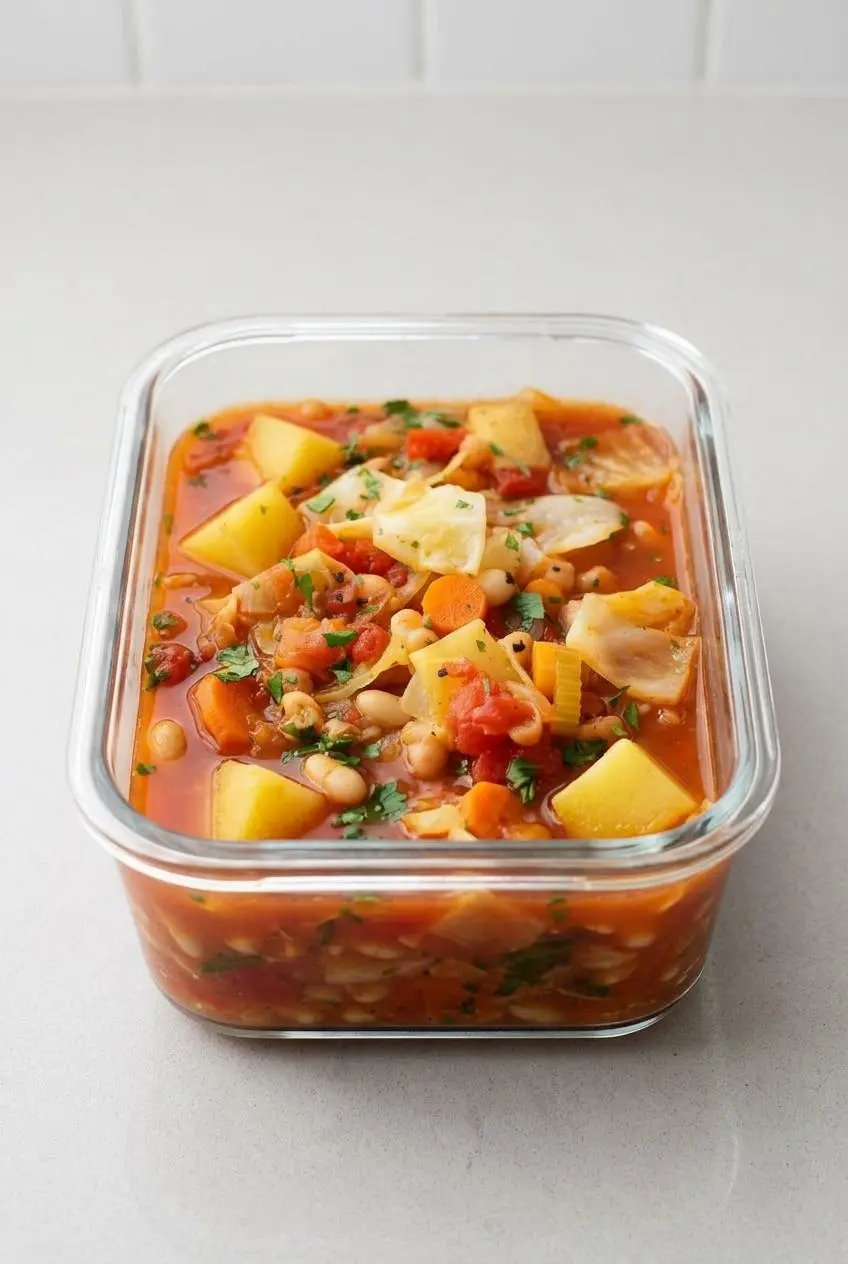
This soup works well for meal prep, but texture stays better when you cool and pack it with a little care.
Let the soup cool promptly before sealing it up. Dividing it into shallow containers helps it lose heat faster, and once chilled it should be kept at 40 °F or below; leftover soups and stews keep best for 3 to 4 days in the refrigerator or 2 to 3 months in the freezer, as explained in storage guidance for leftover soups and stews.
If you plan to freeze it, do not put the soup away while it is still hot. Use airtight containers, leave a little room for expansion, and cool it first so you protect both food quality and freezer texture.
Potato-based soups can change slightly after freezing, and the potatoes may seem a little grainy once thawed. Dicing the potatoes small helps, and thawing the soup overnight in the refrigerator keeps the texture more even than rushing it on the counter.
Safe Reheating Practices
For the stovetop, reheat the soup over medium-low heat and stir now and then until it is hot throughout. A gentle reheat keeps the cabbage tender and helps the potatoes stay intact.
For the microwave, use a microwave-safe bowl, cover it loosely, and heat in shorter bursts with stirring in between. That prevents hot spots and gives you a better chance of keeping the vegetables from going soft and ragged.
If the broth tastes muted after chilling, add a squeeze of lemon juice or a tiny splash of vinegar just before serving. Cold storage tends to dull flavors a bit, so that fresh finish brings the soup back to life.
What to Serve with Cabbage Soup

This soup is satisfying on its own, but it gets even better when you give it something crisp or cheesy on the side.
- Serve it piping hot with a thick slice of toasted crusty sourdough bread for dipping.
- Pair it with a sharp cheddar grilled cheese sandwich for a classic cozy lunch.
- If you are serving a crowd, put out chopped parsley and black pepper at the table so everyone can brighten their own bowl.
Conclusion
This is a deeply comforting soup that gets its best flavor from patient sautéing, a gentle simmer, and the right bright finish. The combination of cabbage, beans, potatoes, and tomatoes makes it filling without losing that brothy, vegetable-forward feel.
The main trick is simple: do not overcook the cabbage. Catch it when it is tender, translucent, and still lively, and the whole pot tastes cleaner, sweeter, and much more inviting.
Frequently Asked Questions
What is the best way to prevent cabbage soup from smelling bad?
Avoid simmering the cabbage for longer than 30 minutes. Keep the soup at a gentle simmer instead of boiling it hard. Stop cooking when the cabbage is tender and translucent, not dull and collapsing. Building a sweet base with slowly cooked onion, carrot, and celery also helps the aroma stay balanced.
Can I use red cabbage instead of green cabbage for soup?
It is better to stick with green cabbage for this recipe. Red cabbage has a stronger peppery flavor that can take over the broth. Its color also bleeds into the soup and can turn the pot a grayish purple. If you want a gentler change, Savoy or Napa cabbage are better alternatives.
How can I make my cabbage soup taste more flavorful?
Cook the onion, carrot, and celery slowly until very soft so they build natural sweetness. Use the fire-roasted tomatoes for deeper savory flavor. Finish the soup with a splash of vinegar or lemon juice if the broth tastes flat. Taste and adjust the salt at the end, because potatoes and beans can soften the seasoning.
Is it safe to freeze cabbage soup with potatoes?
Yes, you can freeze it once the soup has cooled. Potatoes may become slightly grainy after thawing, so smaller dice tend to hold up better. Use airtight freezer containers and leave a little space for expansion. For the smoothest texture, thaw the soup overnight in the refrigerator before reheating.

Cabbage Soup

Equipment
- Dutch oven
Ingredients
- 2 tablespoons extra-virgin olive oil
- 2 carrots chopped
- 1 medium yellow onion diced
- 1 rib celery diced
- 3/4 teaspoon sea salt
- Freshly ground black pepper
- 2 tablespoons white wine vinegar
- 2 cans fire-roasted diced tomatoes 14.5-ounce each
- 4 cups vegetable broth
- 1 can cooked white beans 15.5-ounce, drained and rinsed
- 4 cloves garlic grated
- 2 Yukon Gold potatoes diced
- 1 small green cabbage about 1 pound, 9 cups chopped
- 1 teaspoon dried thyme
- Fresh parsley for garnish
Instructions
- Heat the olive oil in a large pot over medium heat. Add the carrots, onion, celery, salt, and several grinds of pepper and cook, stirring occasionally, for 8 minutes.
- Add the vinegar, stir, and then add the tomatoes, broth, beans, garlic, potatoes, cabbage, and thyme. Cover and simmer for 20 to 30 minutes, or until the potatoes and cabbage are tender.
- Season to taste, garnish with fresh parsley, and serve.