Some pasta nights are just meant to feel a little luxurious, and this burrata pasta recipe is exactly that kind of dinner. In my kitchen, it is the meal I make when I want something cozy and deeply satisfying, but still bright enough to keep you going back for one more forkful.
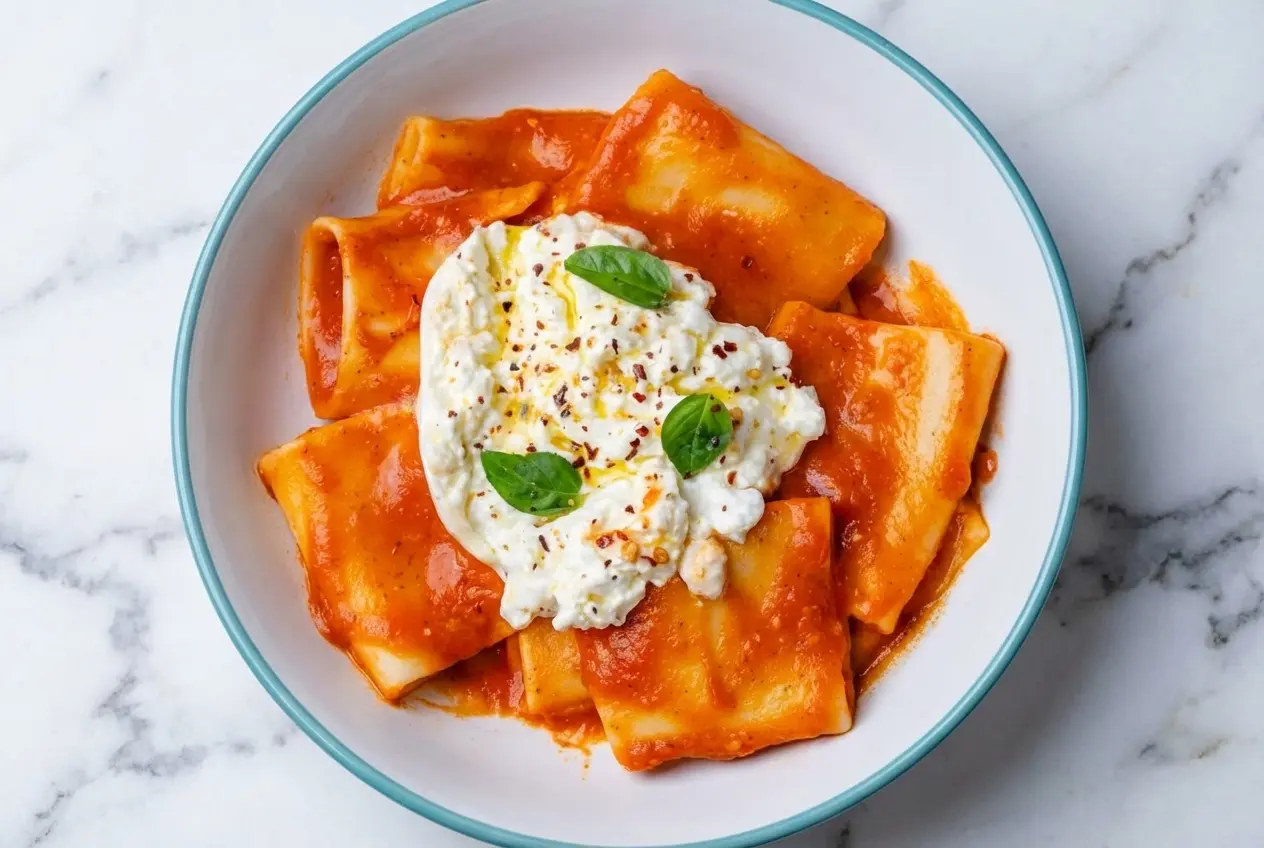
You get a silky tomato sauce, tender al dente pasta, and that dreamy ball of burrata cheese split open right at the table. The finishing touch, crispy lemon-garlic pangrattato, brings the crunch and freshness that turns a rich Italian pasta dish into something truly memorable.
Why You’ll Love This Recipe
Pure comfort: This bowl is rich, creamy, vibrant, silky, and deeply comforting, the kind of dinner that feels restaurant-worthy without asking much from the cook.
The secret twist: In my kitchen, the lemon-garlic pangrattato is what makes this dish sing. Those toasted Italian breadcrumbs add crunch and a hit of citrus that cuts through the richness of the burrata cheese beautifully.
Balanced flavor: Burrata and tomato are a natural match, but texture is what keeps every bite exciting. Between the smooth marinara sauce, the soft stracciatella center, and the crisp topping, the contrast is irresistible.
Weeknight-friendly elegance: Even though it feels special enough for company, the method is straightforward and reliable. A few good ingredients, especially Parmigiano Reggiano and extra virgin olive oil, do most of the heavy lifting.
Ingredients and Substitutions
This recipe leans on a short list of Italian staples, which is why quality matters. Each ingredient has a clear job, from the creamy burrata to the bright basil and crisp pangrattato topping.
Ingredients
- 1 ball fresh burrata cheese
- 13oz / 360g pasta
- 30oz / 800g canned peeled tomatoes
- 1.5oz / 40g freshly grated Parmigiano Reggiano cheese
- 2 large garlic cloves
- 1/2 handful fresh basil leaves
- 1 tablespoon extra virgin olive oil
- Salt and pepper
- Extra virgin olive oil, fresh basil leaves, and red pepper flakes for garnish
Ingredient Notes & Substitutions
Pasta shape: Tubular shapes are the best fit here. Paccheri, rigatoni, and mezze maniche catch the silky sauce inside each piece, so you get tomato, cheese, and creaminess in every bite.
Canned peeled tomatoes: A good can of tomatoes builds the whole marinara sauce, so this is not the place to go bargain-basement. Look for peeled whole tomatoes with a clean, sweet flavor and enough body to blend into a smooth sauce.
Burrata cheese: Burrata is the star, so buy the freshest one you can find and let it come to room temperature before serving. If it goes onto the pasta ice cold, the creamy center will not melt into the sauce the way it should.
Parmigiano Reggiano: Freshly grated cheese melts more smoothly into the sauce than the pre-shredded kind. It helps create that glossy emulsion and adds the savory depth that keeps the tomato sauce from tasting flat.
Pangrattato twist: For the crispy topping, use Italian breadcrumbs, fresh lemon zest, a little garlic, and olive oil. It is a small extra step, but it gives the dish the crunch and brightness that rich pasta always needs.
Easy variations: If you want to change the mood of the dish, caramelized sweet onions bring a gentle sweetness, spicy Italian sausage makes it heartier, and Calabrian chili paste gives it an arrabbiata-style kick.
How to Make burrata pasta recipe
Prep the Burrata and Start the Sauce
- Set the burrata in a bowl and leave it out while you cook, so it has time to lose its chill. I like to give it 30 to 60 minutes when possible, because room temperature burrata opens into a much creamier finish.
- Place a large saucepan or pot over medium heat, add the olive oil and whole garlic cloves, and cook them for a few minutes until they turn lightly golden and smell sweet and fragrant. Keep a close eye here, because garlic that gets too dark will taste bitter in the finished sauce.
- Add the canned peeled tomatoes, then gently break them up with a wooden spoon so they start to melt into the oil and garlic. Pour a cup of water into the empty tomato can, swirl it around to catch every bit of tomato, and add that to the pot as well.
Simmer and Blend the Marinara
- Season generously with salt and pepper, tear in the basil leaves, cover with a lid, and let the sauce simmer for 20 minutes over low to medium heat. You want a gentle bubble, not a hard boil, so the flavors turn mellow and the kitchen starts to smell like a proper Sunday sauce.
- Let the sauce cool slightly, then blend it until completely smooth with an immersion blender or a standard blender, and return it to the pot. This step gives you that velvety texture that helps the burrata and Parmigiano Reggiano melt in naturally.
Cook the Pasta and Make the Pangrattato
- Bring a large pot of well-salted water to a boil and cook the pasta until al dente, stopping 2 minutes before the package directions say it is done. The pasta should still have a little bite, because it will finish in the sauce.
- While the pasta cooks, toast Italian breadcrumbs in a separate skillet with a little olive oil, minced garlic, and fresh lemon zest until crisp and golden. Stir often until the crumbs smell nutty and bright, then pull them off the heat before the garlic darkens too much.
Bring Everything Together
- Drain the pasta, but save some of the starchy pasta water first. Add the pasta to the blended tomato sauce with the grated parmesan and a splash of pasta water, then stir until the sauce turns glossy and clings to each piece, adding a little more water if needed.
- Take the pan off the heat, place the burrata right in the center of the pasta, and carefully cut it open so the creamy stracciatella spills into the hot sauce. Finish with a drizzle of extra virgin olive oil, fresh basil leaves, red pepper flakes, and a generous shower of the crispy lemon-garlic pangrattato.
Secrets for Perfection
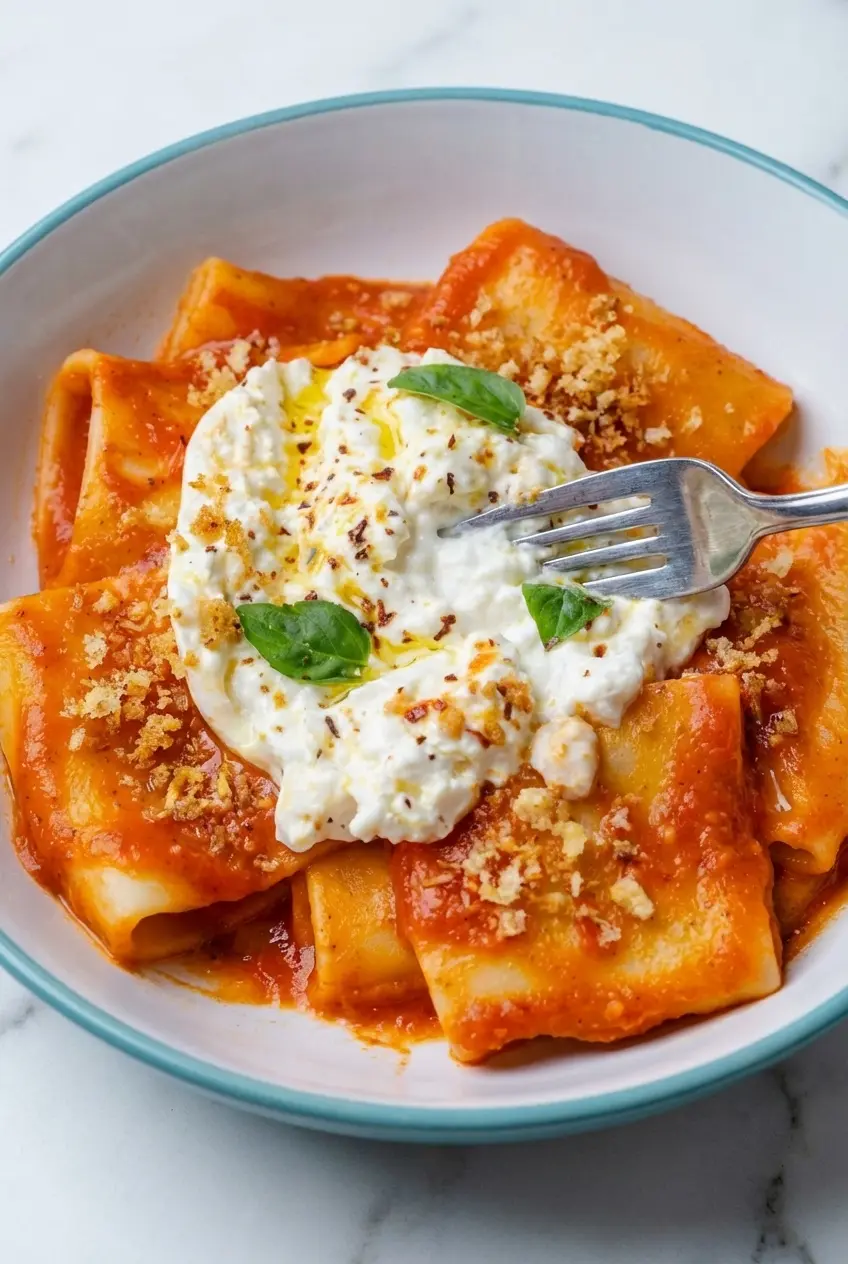
The difference between a heavy sauce and a silky one usually comes down to the emulsion. Start with a small splash of starchy pasta water when you add the pasta and Parmigiano Reggiano, then toss well before adding more, and keep at least 1/2 cup total in reserve so you can loosen the sauce gradually instead of flooding it.
I use the same idea when making pasta carbonara, where the sauce turns creamy because starch, fat, and cheese bind together in the right proportions. Here, that same technique helps the marinara sauce coat the pasta beautifully without turning thin or watery.
Burrata works best when it is treated gently. Tear it open right before serving, while the pasta is hot but the pan is off the heat, so the cream and stracciatella mingle with the sauce instead of breaking apart from too much direct heat.
Temperature matters more than people think. Taking the burrata out 30 to 60 minutes before serving keeps the center lush and soft, so it melts into the warm pasta naturally rather than sitting on top like a cold, firm lump.
Burrata vs. Fresh Mozzarella: Understanding the Difference
Burrata cheese is not just another fresh mozzarella. It starts with a shell of mozzarella, but inside is a rich filling of stracciatella and cream, which is what gives this pasta its signature melt-in-the-mouth finish.
Fresh mozzarella is delicious, but it is firmer, springier, and much less creamy in the center. If you swap it in, you will still have a good pasta dinner, but you will lose the luxurious texture that makes a true burrata pasta recipe feel so special.
That creamy center is exactly why burrata should be torn open at the end instead of cooked into the pan. If you happen to buy an extra ball, its delicate texture also shines in a simple burrata appetizer, where olive oil and salt are enough to let it speak for itself.
There is real craftsmanship behind the cheese as well. Research discussing the unique characteristics of burrata helps explain why it behaves differently from other fresh cheeses, especially in terms of structure, moisture, and that luxurious creamy core.
Pro Tips & Troubleshooting
Pro Tips
- Take the burrata out of the fridge 30 to 60 minutes before serving so the center is creamy and ready to mingle with the warm sauce.
- Always save at least 1/2 cup of starchy pasta water, even if you think you will not need it. A little at a time is the easiest way to build a smooth emulsion.
- Choose paccheri, rigatoni, or another tubular pasta shape so the marinara sauce and melted burrata tuck into the pasta instead of sliding off.
- Blend the tomato sauce after simmering for a smoother, more elegant finish that coats the pasta evenly.
Common Mistakes to Avoid
- Do not heat or cook the burrata in the pan. High heat can cause the creamy center to separate and lose its delicate texture.
- Do not skip salting the pasta water, because bland pasta will dull the flavor of the whole dish no matter how good the sauce is.
- Do not brown the garlic too aggressively at the start. Light golden and fragrant is perfect, while dark brown will make the marinara sauce taste bitter.
- Do not pour in too much pasta water at once. Add a splash, toss, and judge the texture before adding more.
Serving & Storage
Serving Ideas
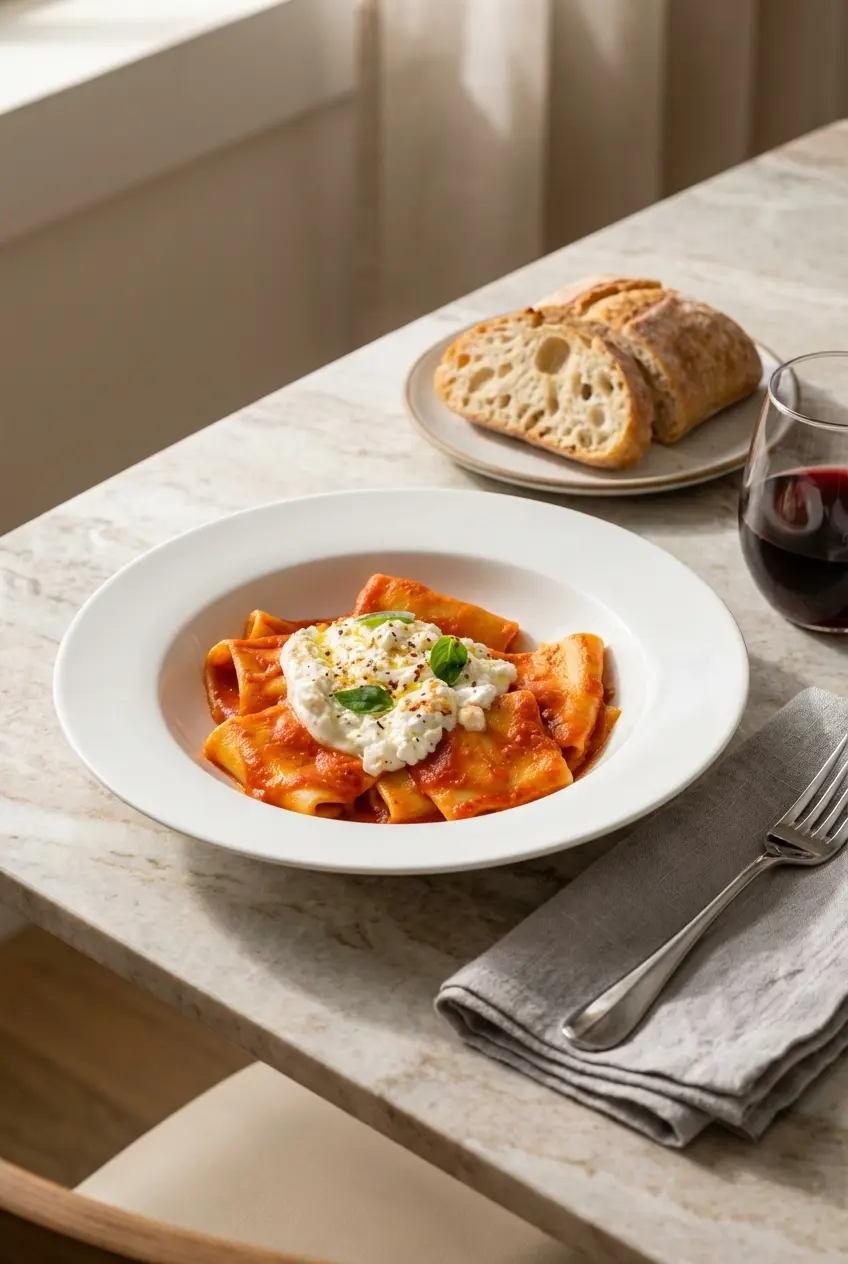
I love serving this family-style in a wide, warm bowl with the burrata in the center so everyone can scoop up some of that creamy middle. A final drizzle of peppery extra virgin olive oil and a few torn basil leaves make it feel effortlessly beautiful.
Crusty ciabatta or garlic bread is perfect alongside, because the bottom of the bowl always ends up with a little tomato-and-cream treasure worth wiping up. For a full spread, a crisp vegetable side like baked eggplant fries brings a nice contrast to the softness of the pasta.
Storage & Reheating
Leftovers need a little care. Burrata does not reheat well in the microwave, because the delicate cheese can turn rubbery and the creamy center loses that soft, luxurious texture.
If possible, store the pasta and sauce in the fridge and add fresh burrata only when serving. If the burrata has already been mixed in, the leftovers will still taste good, but the texture will be less silky the next day.
To reheat, warm the pasta gently on the stovetop with a small splash of water until loosened and heated through. Low heat is your friend here, because it brings the sauce back to life without tightening the cheese or drying out the pasta.
Easy Burrata Pasta Recipe

Equipment
- Large saucepan
- Large Pot
- Immersion Blender
- Skillet
Ingredients
- 1 ball fresh burrata cheese
- 13 oz / 360g pasta
- 30 oz / 800g canned peeled tomatoes
- 1.5 oz / 40g freshly grated Parmigiano Reggiano cheese
- 2 large garlic cloves
- 1/2 handful fresh basil leaves
- 1 tablespoon extra virgin olive oil
- Salt and pepper
- Extra virgin olive oil, fresh basil leaves, and red pepper flakes for garnish
Instructions
Prep the Burrata and Start the Sauce
- Set the burrata in a bowl and leave it out while you cook, so it has time to lose its chill. I like to give it 30 to 60 minutes when possible, because room temperature burrata opens into a much creamier finish.
- Place a large saucepan or pot over medium heat, add the olive oil and whole garlic cloves, and cook them for a few minutes until they turn lightly golden and smell sweet and fragrant. Keep a close eye here, because garlic that gets too dark will taste bitter in the finished sauce.
- Add the canned peeled tomatoes, then gently break them up with a wooden spoon so they start to melt into the oil and garlic. Pour a cup of water into the empty tomato can, swirl it around to catch every bit of tomato, and add that to the pot as well.
Simmer and Blend the Marinara
- Season generously with salt and pepper, tear in the basil leaves, cover with a lid, and let the sauce simmer for 20 minutes over low to medium heat. You want a gentle bubble, not a hard boil, so the flavors turn mellow and the kitchen starts to smell like a proper Sunday sauce.
- Let the sauce cool slightly, then blend it until completely smooth with an immersion blender or a standard blender, and return it to the pot. This step gives you that velvety texture that helps the burrata and Parmigiano Reggiano melt in naturally.
Cook the Pasta and Make the Pangrattato
- Bring a large pot of well-salted water to a boil and cook the pasta until al dente, stopping 2 minutes before the package directions say it is done. The pasta should still have a little bite, because it will finish in the sauce.
- While the pasta cooks, toast Italian breadcrumbs in a separate skillet with a little olive oil, minced garlic, and fresh lemon zest until crisp and golden. Stir often until the crumbs smell nutty and bright, then pull them off the heat before the garlic darkens too much.
Bring Everything Together
- Drain the pasta, but save some of the starchy pasta water first. Add the pasta to the blended tomato sauce with the grated parmesan and a splash of pasta water, then stir until the sauce turns glossy and clings to each piece, adding a little more water if needed.
- Take the pan off the heat, place the burrata right in the center of the pasta, and carefully cut it open so the creamy stracciatella spills into the hot sauce. Finish with a drizzle of extra virgin olive oil, fresh basil leaves, red pepper flakes, and a generous shower of the crispy lemon-garlic pangrattato.
Notes
Nutrition
Conclusion
This is the kind of pasta I come back to whenever I want something cozy, impressive, and unfussy all at once. The combination of silky tomato sauce, creamy burrata, and crisp lemon-garlic pangrattato gives every bite richness, brightness, and crunch.
If you make this burrata pasta recipe, do not be afraid to put your own spin on it with a little chili, sausage, or sweet onion. Once you taste that contrast between the cool creamy center and the warm pasta underneath, you will understand why this dish disappears so fast.