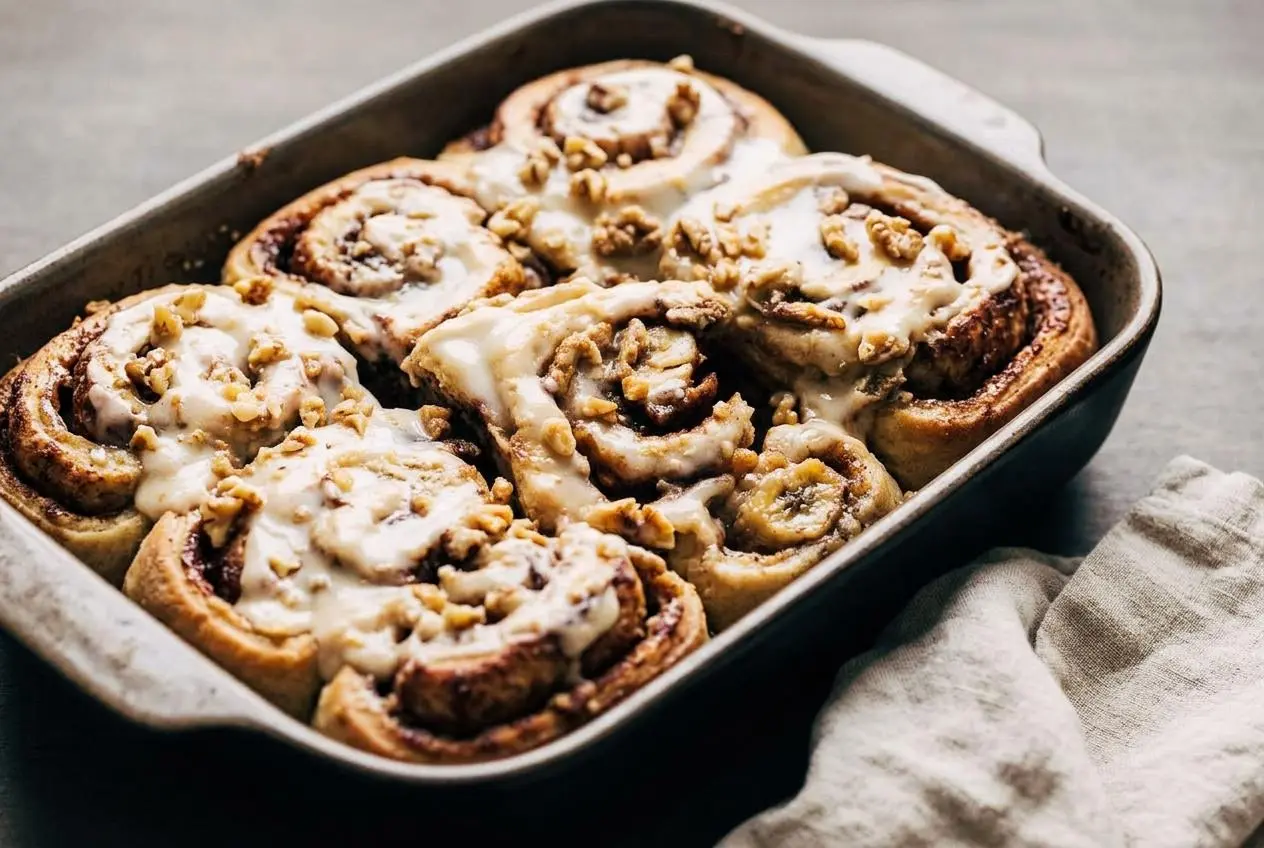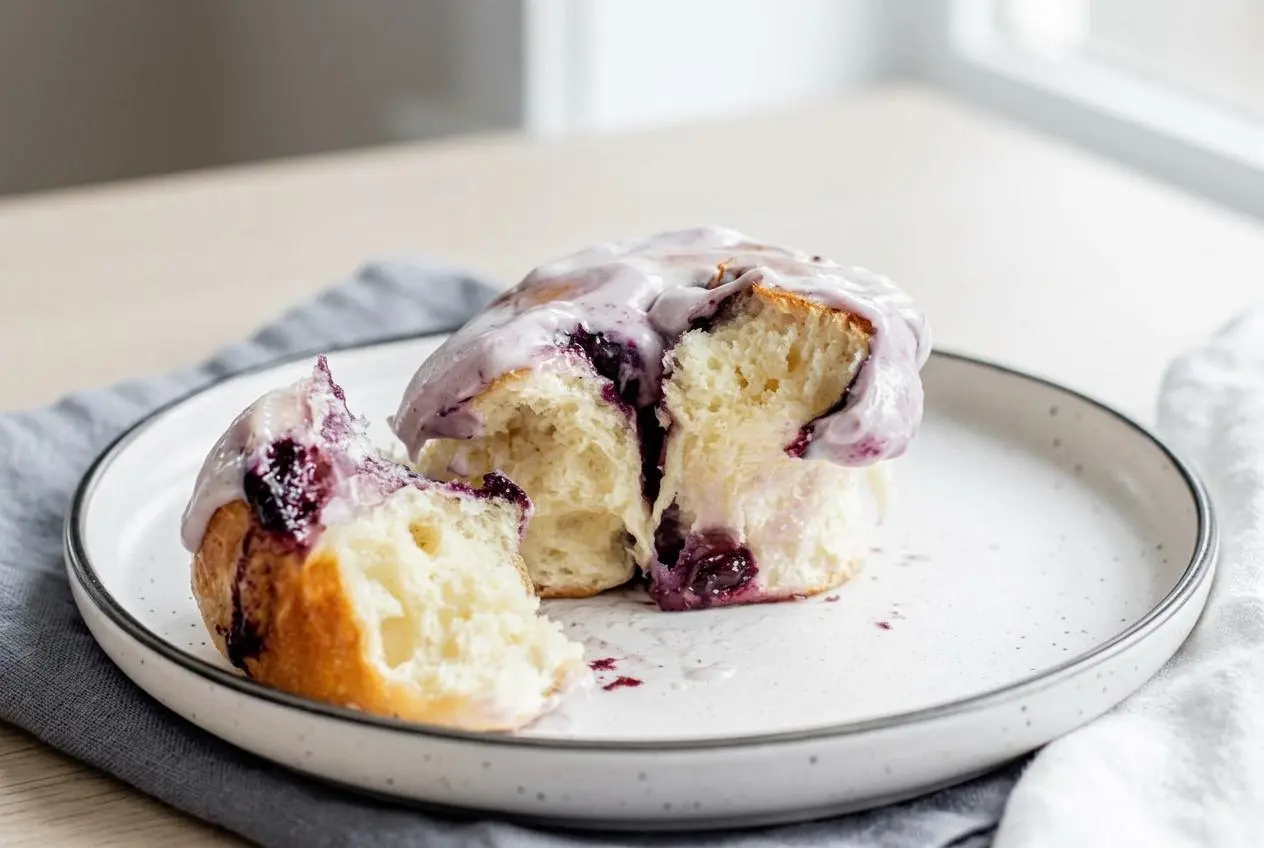
Blueberry cinnamon rolls are soft yeast rolls filled with a thick blueberry mixture, baked until golden, and finished with cream cheese frosting for a sweet, bright breakfast bake.
Blueberry Cinnamon Rolls are what happens when classic cinnamon roll texture meets juicy berry flavor and a little citrus lift. The dough stays tender, the filling turns jammy, and the frosting gets pretty streaks of purple.
As they bake, the kitchen smells like sweet yeast, warm butter, and bubbling fruit. The trick that keeps them fluffy is simple, but it matters.
Warm the milk gently to 95 to 104°F or 35 to 40°C so the yeast wakes up without getting overheated.
Why These Blueberry Cinnamon Rolls Work
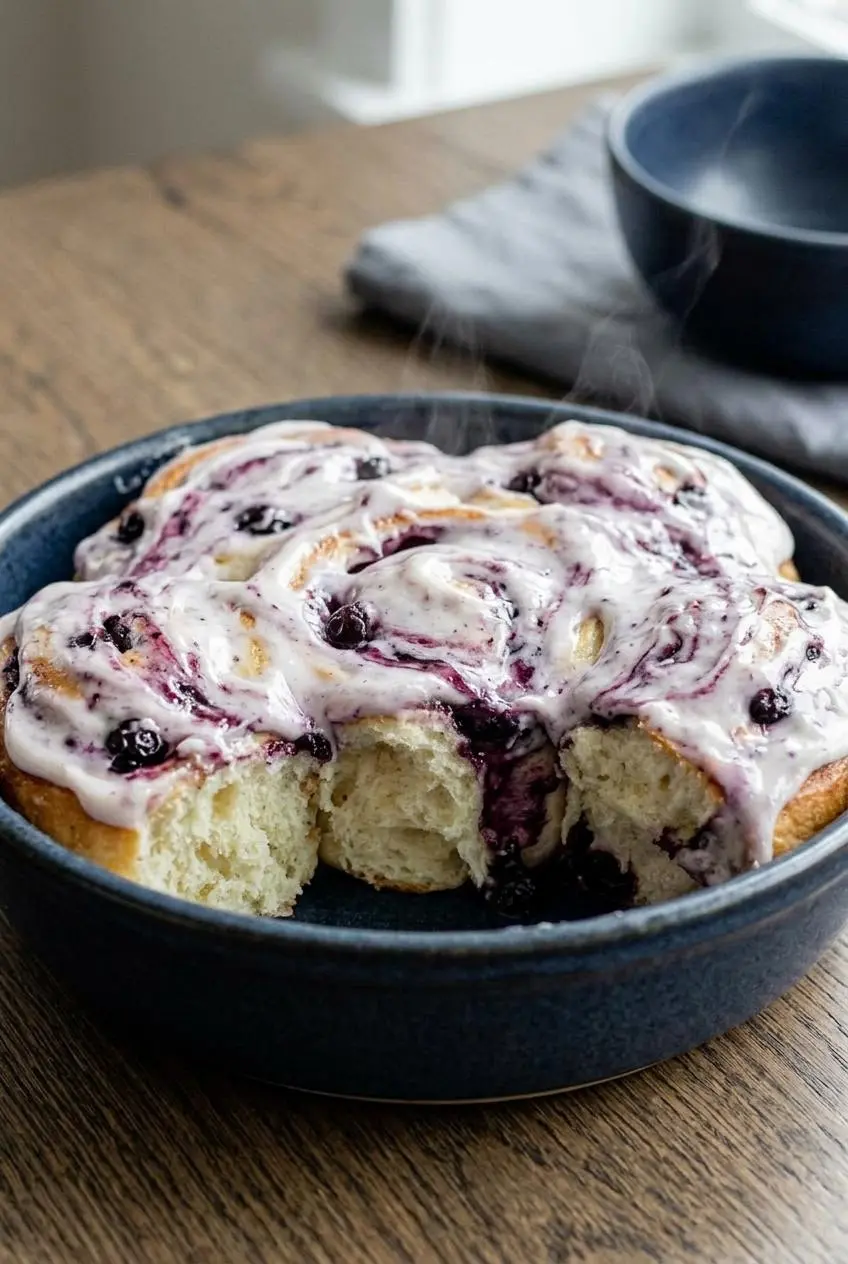
These rolls work because each part supports the next. The enriched dough stays soft from milk, eggs, and butter, while the blueberry filling is cooked until thick enough to sit between the layers instead of flooding them.
Cinnamon gives warmth, and the lemon keeps the berry flavor from tasting flat or overly sweet. If you add a tiny pinch of cardamom to the filling as an optional flavor tweak, it bridges the cinnamon and blueberries beautifully without changing the character of the recipe.
When the rolls are baked just right, the tops turn deep golden, the centers feel springy instead of wet, and the whole pan smells lightly buttery and sweet in that unmistakable fresh yeast way.
Essential Ingredients and Their Roles
Each ingredient earns its place here, building a dough with lift, a filling with body, and a frosting with tang, color, and balance.
Official Ingredient List
Dough
- 240g (1 cup) whole milk
- 2 ¼ teaspoons instant or active dry yeast
- 50g (¼ cup) granulated sugar
- 530g (4 ¼ cups) all-purpose flour plus more for dusting
- 2 large eggs
- 1 teaspoon salt
- 85g (6 Tablespoons) unsalted butter, softened to room temperature
Blueberry Filling
- 300g (10.5oz) blueberries, fresh or frozen
- 50g (¼ cup) granulated sugar
- 1 ½ Tablespoon cornstarch
- 1 Tablespoon lemon juice
- 2 teaspoons finely grated Lemon zest
- 3/4 teaspoon ground cinnamon
- Pinch of salt
Frosting
- 113g (4oz) cream cheese, softened to room temperature
- 30g (2 Tablespoons) unsalted butter, softened to room temperature
- 180g ( 1 ½ cups) confectioners sugar
- ½ teaspoon vanilla extract or paste
- Pinch of salt
- 2 Tablespoons blueberry filling
The milk hydrates the dough and helps it stay tender. Eggs add richness and structure, while softened butter makes the crumb plush instead of dry. Room-temperature eggs and butter mix into the dough more smoothly, which helps the fat distribute evenly instead of fighting the yeast with cold spots.
The blueberry filling depends on cornstarch for body. As it cooks, the starch thickens the fruit juices into a glossy compote that can be spread without soaking the dough. Lemon juice and zest sharpen the berry flavor and cut through the sweetness of both the filling and frosting.
I always zest the lemon before juicing it, because a firm whole lemon is much easier to handle and you get cleaner, fluffier zest.
The Dough Base: Bread Flour vs All-Purpose
This recipe uses all-purpose flour, and it works very well for soft, tender rolls. It gives enough structure for shaping while keeping the crumb delicate.
If you want a slightly loftier, chewier roll, bread flour is a good swap. Its higher protein content develops stronger gluten, which helps the dough trap more gas during proofing and stand up better to a moist filling. That can be especially useful with fruit compotes.
All-purpose flour gives a softer bite. Bread flour gives a bit more chew and height. Either can work, but bread flour is usually the stronger choice when you want extra structure.
The Perfect Filling: Wild Blueberries vs Standard Blueberries
The best filling berry is the one that cooks down thickly without making a puddle. Smaller wild blueberries usually do that better than large cultivated berries because they distribute more evenly through the layers and release less messy bursts of juice as you roll and slice.
Standard blueberries are larger and can create wetter pockets, especially if they are very ripe. They still work, but the compote often needs close attention on the stove so it reduces enough before cooling.
That same cooked-down berry texture is part of what makes a classic blueberry cobbler taste full and jammy, and the same idea matters here. For the cleanest swirl, use berries that break down into a thick, spreadable filling instead of a loose sauce.
If you use fresh berries, rinse and dry them well. Good produce handling matters anytime fresh fruit is going into the kitchen, and safe washing and handling practices for fresh fruits and vegetables help reduce avoidable mess and contamination risks.
How to Make Blueberry Cinnamon Rolls
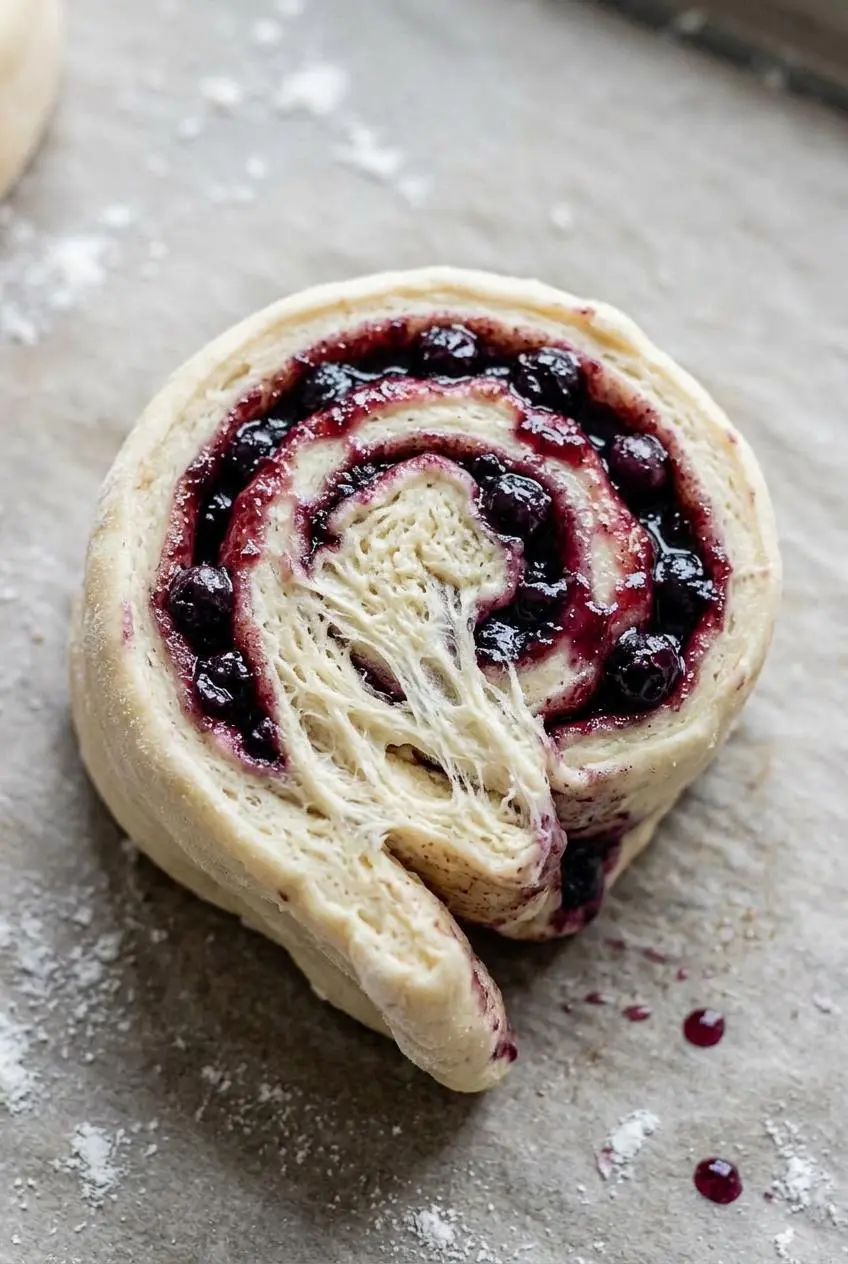
Success here comes down to three things: active yeast, a smooth elastic dough, and a blueberry filling that is fully cooled before it ever touches the rolled dough.
Official Baking Steps
The dough
- Warm the milk in a small saucepan to 95 to 104°F or 35 to 40°C, pour it into the stand mixer bowl, and sprinkle in the yeast and sugar.
If you are using active dry yeast, wait 5 to 10 minutes for a foamy top before moving on, while instant yeast can go straight to mixing. - Add the flour, salt, and eggs, then mix with the dough hook on low speed until a thick dough comes together.
The mixture should look rough but cohesive, with no dry flour pockets sitting at the bottom. - Add the softened butter a few cubes at a time and continue mixing on medium speed for around 10 minutes.
The dough is ready when it looks smooth, feels supple, and pulls cleanly from the sides of the bowl.
Kneading by hand
- For hand kneading, stir the dough with a wooden spoon until shaggy, then turn it out onto a lightly floured surface and work in the butter gradually.
The dough will look messy at first, then become smoother and less sticky as the butter fully absorbs. - Knead for around 10 minutes, pausing briefly if the dough tightens too much.
It should feel elastic and soft, and when pressed lightly, it should slowly bounce back.
First rise
- Shape the dough into a ball and place it in a lightly greased large bowl, then cover it with plastic wrap or a damp dish towel.
A smooth surface helps it rise evenly and keeps the top from drying out. - Set the bowl in a warm place and let the dough rise until doubled, about 1 to 1 ½ hours.
In a cold kitchen, a turned-off oven with a mug of boiled water nearby creates a gentle proofing spot. - For a make-ahead option, cover the dough tightly and refrigerate it for up to 16 hours.
The chilled dough will rise more slowly and firm up, which can make shaping easier later.
The blueberry filling
- Make the filling while the dough rises so it has time to cool completely before shaping.
This timing matters because warm compote will soften the dough and melt the butter into the layers. - Combine the blueberries, cornstarch, sugar, cinnamon, lemon juice, lemon zest, and salt in a saucepan over low heat and stir as the berries start to break down.
The fruit should soften gradually and release juice without scorching on the bottom. - Raise the heat to medium once the berries have opened up, then boil the mixture for 4 to 5 minutes, stirring the whole time.
It should thicken to a jelly-like consistency that coats the back of a spoon and leaves a clean trail when you drag a spoon across the pan. - Transfer the thick compote to a bowl, cool it to room temperature, then cover and chill it in the fridge until needed.
Cold filling spreads more neatly and helps the dough keep its shape during rolling and slicing.
Shaping
- Grease or line a 9×13-inch baking dish with parchment paper.
A prepared pan makes the soft rolls easier to lift and keeps sticky berry juices from catching on the bottom. - Deflate the risen dough, turn it onto a lightly floured surface, and dust the top with a little flour.
The dough should feel airy and pillowy, not dense or hard. - If the dough was refrigerated, let it sit at room temperature for 10 minutes before rolling.
This short rest takes the chill off so the dough bends instead of cracking. - Roll the dough into a rectangle about 12×16 inches or 30×40 cm.
A fairly even rectangle helps the rolls bake at the same rate and keeps the center pieces from getting oversized. - Spread the cold blueberry filling over the dough, reserving 2 Tablespoons for the frosting, and leave a 1-inch border around the edges.
The filling should sit in a thick layer rather than run, which keeps the log tighter and cleaner. - Roll the dough up from the long side into a log and cut it into 12 equal pieces with unflavored dental floss or a serrated knife.
The log should stay round and compact instead of flattening under pressure. - Arrange the rolls in the prepared pan, cover, and let them rise again in a warm place until doubled in size.
They should look puffy and lightly touching before they go into the oven.
Baking
- Preheat the oven to 350°F /180°C.
This temperature gives the centers time to bake through before the tops darken too fast. - Bake the rolls for 25 to 28 minutes until the tops are deep golden brown, covering loosely with foil if they color too quickly.
The center rolls should feel set and springy when lightly pressed, not wet or doughy.
Frosting
- Beat the cream cheese and butter together while the rolls bake until fully smooth and creamy.
There should be no dense lumps left before the sugar goes in. - Add the confectioners sugar, vanilla, and salt, mixing first on low and then on high until fluffy.
The frosting should turn light, spreadable, and evenly blended. - Swirl in the reserved blueberry filling without fully mixing it smooth.
Leaving streaks gives the frosting a rippled berry look and a little pop of fruit flavor in each bite. - Cool the baked rolls for 20 minutes, then spread the frosting over the warm buns.
The frosting should soften over the tops without sliding off completely.
Secrets to Perfect Slicing and Baking
This is the section that saves you from lopsided rolls and leaking filling. A clean slice starts before the knife or floss ever touches the dough.
First, chill the blueberry compote well. If the filling is warm, it melts the butter in the dough and makes the rolled log slippery and weak. That leads to squished spirals, torn dough, and purple streaks everywhere except where you want them.
For the neatest cuts, slide a long piece of unflavored dental floss under the log, cross the ends over the top, and pull tight in one quick motion. The floss cuts straight down without pressing the log flat, which is why the spirals stay round. A serrated knife works too, but use a light sawing motion and avoid pressing hard.
Bake at 350°F because sweet enriched dough browns quickly. That moderate heat gives the center rolls time to set while the outer ones get golden instead of overly dark.
Using the Tangzhong Method for Soft Bread
If you like especially plush rolls, the Tangzhong method is worth knowing. It involves cooking a small portion of the flour and liquid into a paste before making the dough, which gelatinizes the starch and helps the dough hold onto moisture longer.
That technique is optional here, not part of the main recipe, but it can give you an even softer crumb and slower staling. It is especially handy if you want the rolls to stay tender well past breakfast.
Why Bakers Pour Heavy Cream Over Cinnamon Rolls
Some bakers pour a splash of warm heavy cream over proofed rolls right before baking for an extra gooey bottom. The cream seeps into the spaces around the dough, adds moisture, and helps create a soft, rich layer under the spirals.
It is an optional move, not required for this recipe. If you try it, use just a light splash so the rolls stay plush rather than waterlogged.
Troubleshooting Dense or Soggy Rolls
Most cinnamon roll problems come from temperature, dough development, or filling texture. The fixes are straightforward once you know what to look for.
- The dough is not rising. The milk may have been too hot, too cool, or the room may be chilly. Check that the yeast turns foamy when active dry yeast is used, then move the bowl to a warmer spot such as a turned-off oven with a mug of hot water nearby.
- The dough feels tough instead of soft. It may need more kneading to fully develop, or it may have been worked too aggressively after it was already smooth. Stop when the dough is elastic, supple, and pulling cleanly from the bowl or counter.
- The filling is too runny. Return it to the stove and cook it a little longer, or stir in a small cornstarch slurry and simmer briefly until it thickens. You want a spoon trail to stay visible for a moment on the bottom of the pan.
- The rolls leak while slicing. The compote was likely too warm or too loose. Chill it fully, leave that 1-inch border, and use dental floss so the log is cut cleanly instead of squeezed.
- The center rolls stay gooey. The pan may be crowded, the rolls may have been cut unevenly, or the oven may run cool. Roll the dough to the stated size, divide into 12 even pieces, and tent loosely with foil if the tops brown before the middle finishes baking.
- The bottoms turn soggy. Too much liquid in the berry layer is usually the culprit. Thick compote matters more here than extra filling, so resist the urge to spread every last drop of juice into the dough.
Bright Flavor Customizations
These variations keep the base recipe intact while letting you nudge the flavor in a different direction.
Zesty Lemon Blueberry Twist
If you want a brighter finish, add extra lemon zest to the cream cheese frosting. Citrus oil lifts the aroma and helps cut through the sweetness and richness, which makes the blueberry flavor taste clearer.
The lemon and berry pairing works for good reason across all kinds of bakes, including lemon blueberry cake. Here, that same brightness keeps the frosting from feeling heavy.
Alternative Glaze Flavors: Maple vs Cream Cheese
Cream cheese frosting gives the sharpest contrast to the sweet dough and fruit filling. It is tangy, rich, and classic with berries.
If you prefer a warmer flavor, a maple glaze can lean the rolls in a cozier direction. Maple softens the citrus edge and pairs nicely with cinnamon, while cream cheese keeps the overall bite brighter and less sweet. If you are serving a mixed crowd, cream cheese is usually the more balanced pick.
Shortcut Cinnamon Roll Casserole Variation
Need a quicker breakfast route? Use canned cinnamon rolls in a baking dish, scatter in blueberries, and spoon a thick berry mixture over the top before baking. Keep the fruit layer fairly thick so it does not pool under the dough.
This version is more like a breakfast bake than a classic rolled yeast dough recipe, but it scratches the same itch when time is tight.
Storage, Freezing, and Reheating Guide
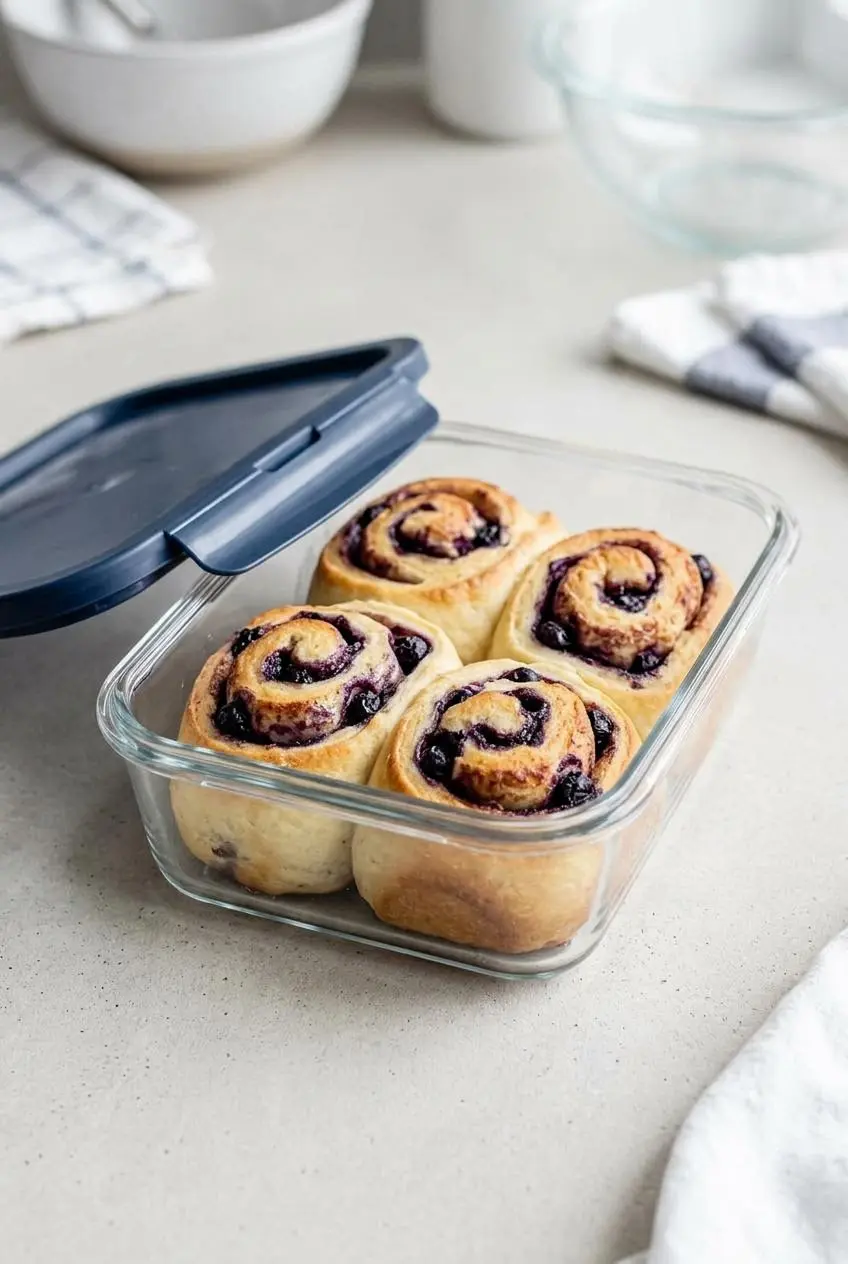
Because these rolls are frosted with cream cheese, they are best kept chilled once fully cooled. For the best texture, store them covered so the dough does not dry out and the frosting does not absorb fridge odors.
If you plan to serve them the same day, leave the frosting off until the rolls have cooled slightly and serve while still a little warm. For longer holding, refrigerate the pan or transfer the rolls to an airtight container.
Planning Ahead: How to Prep the Night Before
You have two solid make-ahead options here. The official method allows the dough to be refrigerated for up to 16 hours during the first rise, which is great when you want to shape in the morning.
You can also shape the rolls, cover the pan, and refrigerate them for up to 16 hours before baking. In the morning, let the chilled pan sit at room temperature until the rolls look puffy again, then bake as usual.
If you want a deeper look at timing and proofing patterns for overnight cinnamon rolls, the process is very similar.
Freezing Unbaked Rolls for Later
You can freeze these before baking because the recipe data supports that workflow. After shaping and cutting, place the rolls in the pan or on a tray, wrap them well, and freeze until needed.
Thaw them overnight in the refrigerator, then let them finish their final rise in a warm spot before baking. The rolls should look expanded and airy before they go into the oven, not tight and cold in the center.
Reheating Leftover Rolls to Keep Them Soft
To reheat, warm individual rolls briefly in the microwave or cover the pan and use a low oven until the centers are soft again. A little cover helps trap moisture so the dough stays tender instead of drying out.
If the frosting has firmed up in the fridge, let the rolls sit out for a bit before reheating so the topping softens more evenly. Gentle heat works better than blasting them.
Conclusion
These rolls are worth the little extra care because the payoff is huge: soft dough, thick berry swirls, and tangy frosting that balances the sweetness.
Keep the yeast in the right temperature range and cool the filling completely before spreading it. Those two details make the whole recipe behave better, and breakfast tastes a whole lot softer because of it.
Frequently Asked Questions
Can I use store-bought blueberry jam instead of making the filling?
Yes, but it works best if the jam is thick and low in moisture. Loose jam tends to leak during slicing and can leave the inner rolls soggy. If your jam looks thin, simmer it briefly to reduce it, then cool it completely before spreading.
Why didn’t my cinnamon rolls rise?
The milk may have been too hot and weakened the yeast, or too cool and slowed it down. A cold kitchen can also stall proofing, even when the dough is mixed correctly. Look for foam when using active dry yeast, and proof the dough somewhere gently warm until it truly doubles.
Can I use bread flour instead of all-purpose flour?
Yes, bread flour works very well here. It has more protein, so the dough develops stronger gluten and usually bakes up a little taller and chewier. That extra structure can be especially helpful when the filling is fruity and moist.
How do I freeze these rolls before baking?
Shape and slice the rolls first, then arrange them in the pan or on a tray. Wrap them tightly before freezing so the dough does not dry out. Thaw them overnight in the refrigerator, then let them complete their final rise before baking.
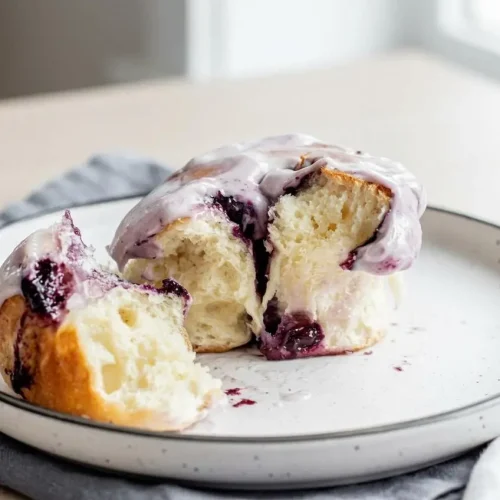
Blueberry Cinnamon Rolls

Equipment
- Stand mixer
- Dough hook attachment
- Small saucepan
- 9×13-inch baking dish
- Rolling Pin
- Dental floss or serrated knife
- Offset spatula
Ingredients
Dough
- 240 g whole milk 1 cup
- 2 1/4 teaspoons instant or active dry yeast
- 50 g granulated sugar 1/4 cup
- 530 g all-purpose flour plus more for dusting 4 1/4 cups
- 2 large eggs
- 1 teaspoon salt
- 85 g unsalted butter, softened to room temperature 6 Tablespoons
Blueberry Filling
- 300 g blueberries, fresh or frozen 10.5oz
- 50 g granulated sugar 1/4 cup
- 1 1/2 Tablespoon cornstarch
- 1 Tablespoon lemon juice
- 2 teaspoons finely grated Lemon zest
- 3/4 teaspoon ground cinnamon
- Pinch of salt
Frosting
- 113 g cream cheese, softened to room temperature 4oz
- 30 g unsalted butter, softened to room temperature 2 Tablespoons
- 180 g confectioners sugar 1 1/2 cups
- 1/2 teaspoon vanilla extract or paste
- Pinch of salt
- 2 Tablespoons blueberry filling
Instructions
The dough
- In a small saucepan, warm the milk to around 95-104°F / 35-40°C and pour it into the bowl of a stand mixer. Sprinkle yeast and sugar over the milk. If using active dry yeast, let this sit for around 5-10 minutes until it becomes foamy; if using instant yeast, this step can be skipped.
- Add the flour, salt, and eggs to the milk mixture. Fit the stand mixer with a dough hook attachment and mix on low speed until a thick dough forms.
- Add in the softened butter, a few cubes at a time, and keep mixing on medium speed for around 10 minutes until the sweet roll dough pulls cleanly from the sides of the bowl and is soft and strong.
Kneading by hand
- Alternatively, knead the dough by hand. Use a wooden spoon and mix the dough until it forms a shaggy ball. Pull it onto a floured surface and knead in the butter, a few cubes at a time. Knead by hand for around 10 minutes until it becomes an elastic and smooth dough. If you need a break, take it. The dough responds well to resting time.
First rise
- Once kneaded, form the dough into a dough ball. Transfer the dough to a lightly greased large bowl and cover it with plastic wrap or a damp dish towel.
- Let the dough rise in a warm place until doubled in size, around 1 to 1 ½ hours. The total time will depend on your room temperature. If your room is cold, you can create a warm spot for rising by placing the dough in a turned-off oven next to a mug of boiled water.
- The dough can be covered tightly and refrigerated for up to 16 hours if you make overnight blueberry cinnamon rolls.
The blueberry filling
- While the dough rises, make the filling so it has time to chill before using it.
- Add the blueberries, cornstarch, sugar, cinnamon, lemon juice, lemon zest, and salt to a saucepan over low heat. Keep stirring until they begin to break down.
- Once they have broken down and released their juices, turn the stove to medium heat and let the mixture boil, stirring for around 4-5 minutes. As the mixture boils, it will thicken and become jelly-like. Make sure to keep stirring so it doesn’t burn.
- Once thick, remove it from the heat, scrape it into a bowl, and let it cool to room temperature. Cover it and place it in the fridge until it’s needed.
Shaping
- Grease or line a 9×13-inch baking dish with parchment paper.
- Punch down the risen dough, then pull it from the bowl onto a lightly floured surface. Dust the top of the dough with some flour.
- If the dough has come from the fridge, it will be very stiff. Let it warm up to room temperature for 10 minutes before rolling.
- Use a rolling pin to roll the dough into a large rectangle measuring around 12×16 inches (30cmx40cm).
- Dollop the cold blueberry mixture over the dough, but keep aside two tablespoons for the frosting. An offset spatula spreads the blueberries out, leaving a 1-inch border.
- Carefully roll the dough up from the longest side into a log. Cut the log into 12 equal pieces using unflavored dental floss or a serrated knife.
- Place the rolls into the prepared pan. Cover the pan and let the rolls rise in a warm spot until doubled in size.
Baking
- Preheat the oven to 350°F /180°C.
- Bake the rolls in the oven for around 25-28 minutes until deep golden brown. If they are browning too fast, you can cover the top of the rolls loosely with aluminum foil.
Frosting
- While the rolls are baking, make the frosting. In a large bowl, using a handheld or stand mixer fitted with a whisk or paddle attachment, beat the cream cheese and butter together on high speed until smooth and creamy.
- Add in the confectioners sugar, vanilla, and salt. Beat on low speed to incorporate the powdered sugar, then switch to high and beat until creamy.
- Dollop in the reserved blueberry filling and swirl it in to create some streaks.
- Let the baked buns cool for 20 minutes, then spread on the frosting.