Make tall, flaky biscuits by keeping the butter and buttermilk very cold, folding in flour-coated frozen blueberries, and cutting straight down without twisting. Finish the warm biscuits with a buttery vanilla glaze.
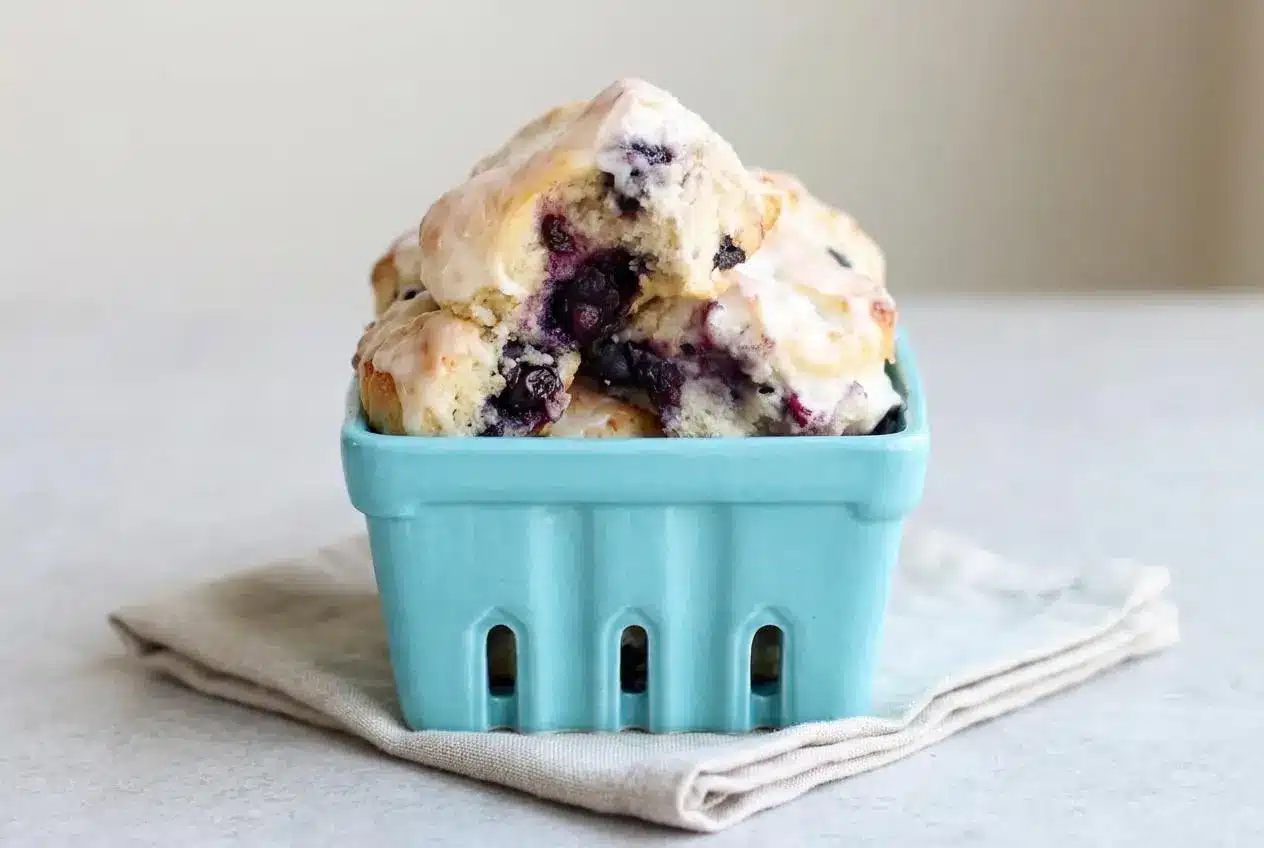
These blueberry biscuits are sweet, buttery breakfast biscuits with a soft center, crisp golden edges, and bright pockets of fruit. The high oven heat and layered dough create a bakery-style rise.
The glaze settles into the warm tops while the berries stay juicy instead of turning the dough purple. That first warm bite is the goal.
Set the butter in the freezer before starting, and keep the frozen blueberries in the freezer until the moment they go into the dough.
Essential Ingredients for Flaky Biscuits
Every ingredient contributes something useful here: flour builds structure, cold fats create layers, buttermilk keeps the crumb tender, and blueberries bring juicy sweetness beneath the vanilla glaze.
Biscuits
- 2 cups all-purpose flour (sifted)
- ½ cup granulated sugar
- 1 tablespoon baking powder
- 1 teaspoon salt
- ¼ cup butter-flavored shortening
- ¼ cup unsalted butter
- 1 cup cold buttermilk
- ½ teaspoon vanilla extract
- ¾ cup frozen blueberries
- 1 teaspoon flour
- 1-2 teaspoons half and half
- 1-2 tablespoons melted butter
Glaze
- 1 cup powdered sugar
- 2 tablespoons half and half
- 1 tablespoon unsalted butter, melted
- ¼ teaspoon vanilla extract
- salt, pinch
Cold fat is the engine behind flaky biscuits. The shortening cuts into the flour for tenderness, while grated frozen butter leaves distinct pieces that steam and separate the dough into layers. Keep both as cold as possible.
Buttermilk adds moisture and a gentle tang, while its acidity helps create a soft crumb. If you enjoy learning the foundations of homemade buttermilk biscuits, this dough follows the same cold-ingredient mindset with a sweeter finish.
Frozen blueberries are easier to fold in because they stay firm and release less juice while you work. Tossing them with the teaspoon of flour helps absorb surface moisture and gives the berries a light coating before they meet the dough.
I grate the butter while it is still firm from the freezer, then toss the shreds through the flour right away so they do not clump or soften in my hands.
How to Make Blueberry Biscuits
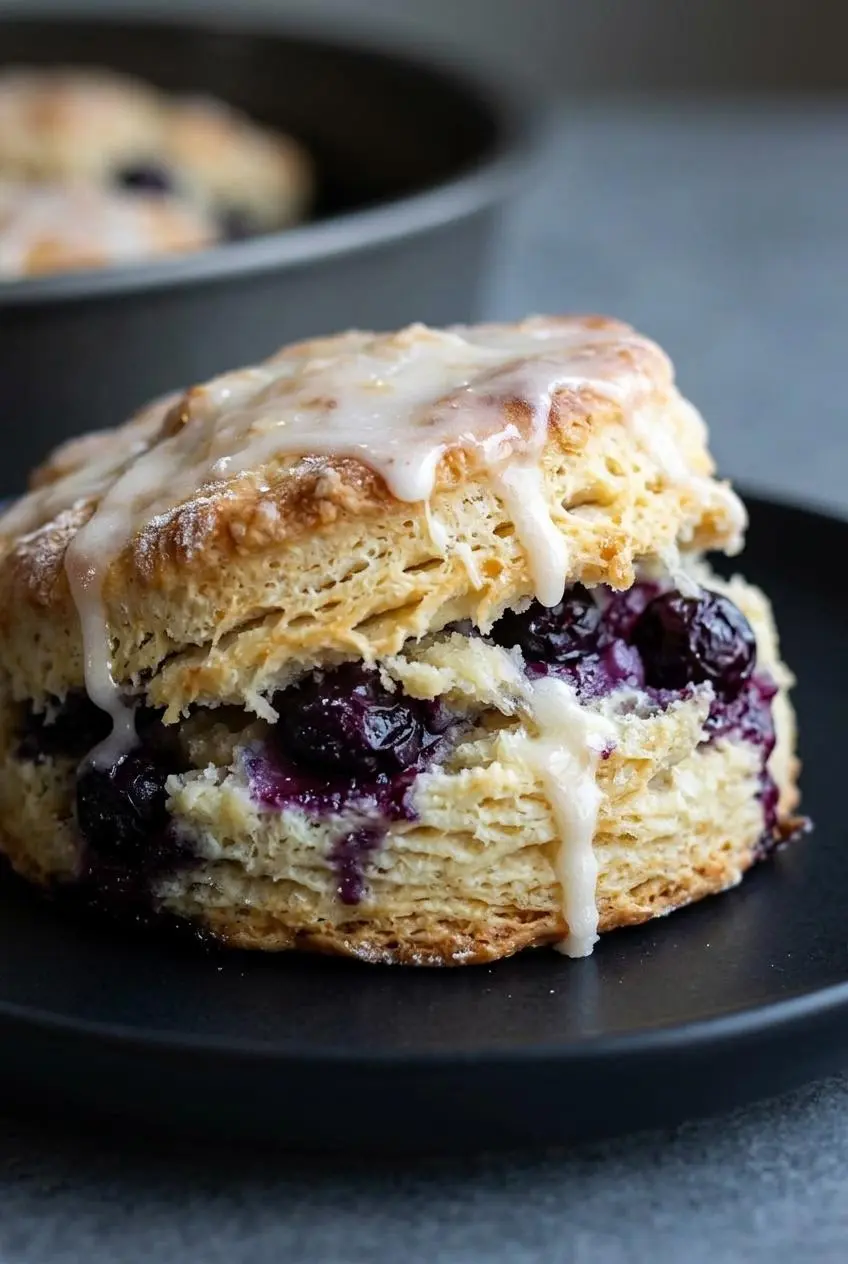
Work steadily but gently. The dough should come together in a soft, slightly shaggy mass, and the folded layers should remain visible rather than becoming smooth like bread dough.
- Heat the oven to 450 °F and lightly grease the bottom of a dark 9-inch round cake pan with shortening.
Keep the pan ready nearby so the shaped biscuits can go straight in without warming on the counter. - Whisk the sifted flour, sugar, baking powder, and salt together in a large bowl.
The dry mixture should look evenly blended with no visible pockets of baking powder. - Work the butter-flavored shortening into the flour with a pastry cutter.
Stop when the mixture has coarse, large crumbs rather than a sandy texture. - Grate the frozen unsalted butter over the bowl, pausing to toss it through the flour with a rubber spatula.
Each butter shred should look dusted in flour, which helps preserve separate flaky layers. - Stir the vanilla extract into the cold buttermilk, then pour the liquid over the flour mixture.
The cold liquid should begin forming damp clumps around the butter pieces. - Use the rubber spatula to bring the mixture together into dough.
Stop once no large patches of loose flour remain, even if the dough looks rough. - Dust a flat work surface with about 1-2 tablespoons of flour and turn out the dough.
Use only enough flour to prevent sticking because excess flour can make the biscuits dry. - Gather the dough into a soft ball, then flatten and fold it 2-3 times.
Each fold creates layers, and the dough should feel pliable rather than stiff or heavily kneaded. - Pat the dough into a 1-inch-thick rectangle and set it aside briefly.
Keep the edges as even as possible so the finished biscuits bake at a similar height. - Toss the frozen blueberries with the 1 teaspoon flour in a small bowl.
The berries should have a light floury coating and remain completely frozen. - Press the blueberries gently across the surface of the dough.
Distribute them broadly so each biscuit has fruit without crushing the berries. - Fold the dough in half over the berries, then press it back into a rectangle on the floured surface.
A few berries may escape, so tuck them back into the dough instead of pressing hard. - Repeat the fold-and-press motion two more times.
The dough will look a little messy, but the blueberries should stay mostly intact and the layers should remain visible. - Pat the dough one last time into a 1-inch-thick rectangle.
Avoid rolling it thin, which would reduce the height of the biscuits. - Flour a 3-inch cutter and cut 8 biscuits, flouring the cutter again as needed.
Press straight down and lift straight up without twisting so the edges remain open for a better rise. - Arrange the biscuits in the prepared pan with their sides touching.
Touching biscuits support one another as they rise and create soft, tall sides. - Brush the tops lightly and evenly with the 1-2 teaspoons half and half.
The surface should look barely moistened, not saturated. - Bake on the middle rack for 20 minutes.
The biscuits are ready when the tops are golden brown and the kitchen smells buttery and sweet. - Brush the hot biscuits generously with the 1-2 tablespoons melted butter.
The butter should melt into the tops and give them a glossy finish. - Combine the powdered sugar, 1 tablespoon melted butter, and 2 tablespoons half and half while the biscuits cool.
Stir until the glaze is smooth, adding more half and half if you prefer a thinner consistency. - Stir the vanilla extract and a pinch of salt into the glaze.
The salt should sharpen the vanilla flavor without making the glaze taste salty. - Brush or drizzle glaze over the hot biscuits and let it set.
Once the first layer firms, add more glaze if desired for a thicker white finish. - Serve the biscuits warm or at room temperature.
The centers should be fluffy, the berries juicy, and the glaze lightly set on top.
Tips and Troubleshooting
Blueberry biscuit dough is meant to be a little untidy. Treat it gently, and the finished texture will reward you with soft layers instead of dense, purple-streaked dough.
- The dough feels wet and sticky: Keep the berries frozen and use a lightly floured surface. Add flour sparingly while handling the dough, since too much flour makes the crumb dry.
- The dough feels dry or crumbly: Avoid prolonged kneading. Bring the dough together with gentle presses and folds so the buttermilk can hydrate the flour without developing toughness.
- Blueberries are bleeding: This usually happens when berries thaw or get crushed. Fold them in while frozen, use the flour coating, and press rather than aggressively knead.
- The biscuits turned out flat: Warm butter cannot create strong layers, and twisting the cutter seals the edges. Keep the dough cold and press the cutter straight down every time.
- The biscuits seem tough: Overworking the dough is the common culprit. Stop as soon as it forms a workable mass, even if it does not look perfectly smooth.
- The glaze is too thick: Stir in a little more half and half until it drizzles easily. For a more opaque coating, let the first layer set before adding another.
Blueberry Biscuit Variations
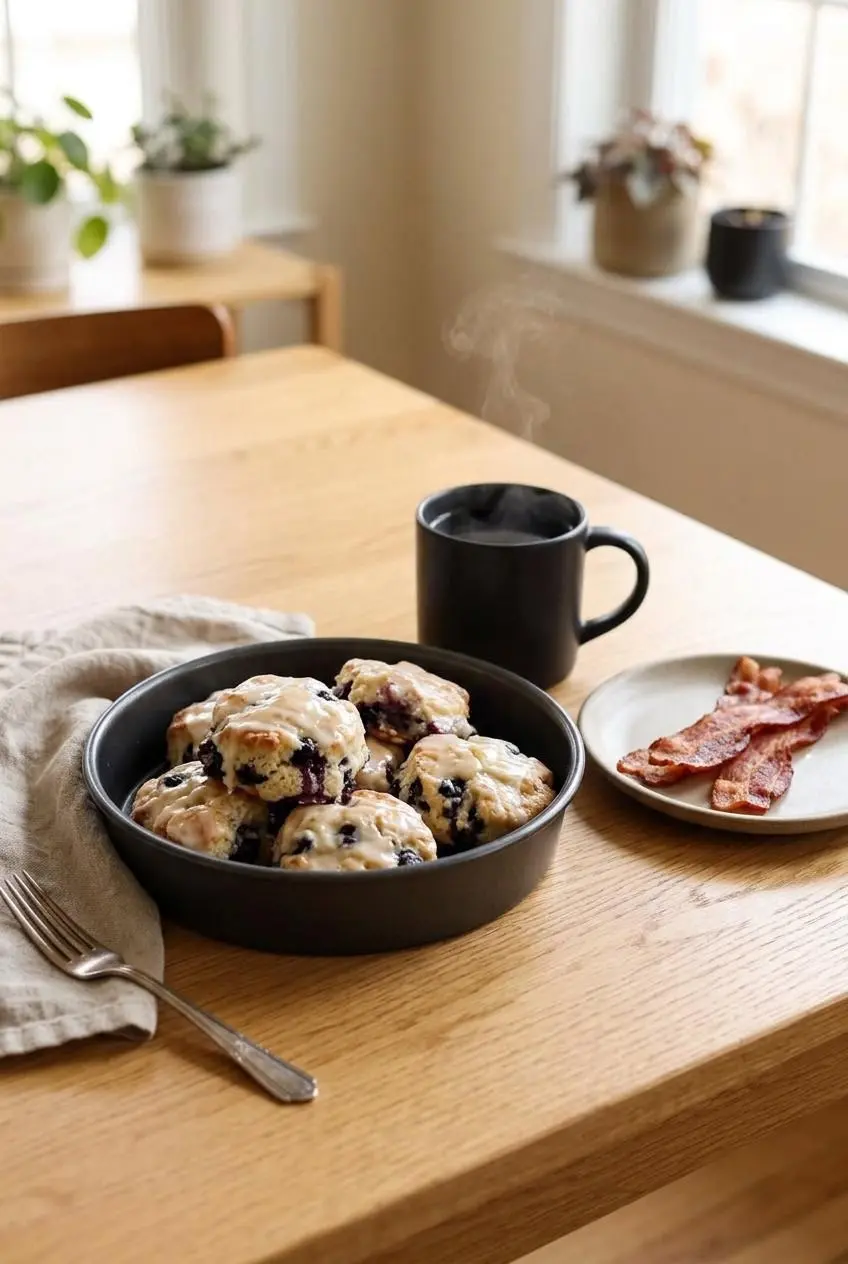
The classic version has a sweet Southern-style feel, but small optional changes can shift the flavor or streamline the shaping without changing the main method.
- Lemon blueberry: Add fresh lemon zest to the dough and glaze for a brighter citrus edge. The flavor pairing is especially good if you also enjoy lemon blueberry cake.
- Extra glaze: Keep the glaze slightly thicker and apply it in layers for a more pronounced sweet finish.
- Breakfast pairing: Serve warm biscuits beside bacon or sausage to balance their vanilla sweetness, with coffee or tea alongside.
Drop Biscuit Method
Drop biscuits are a useful faster option when you want the flavor but do not want to roll and cut dough.
- Cut biscuits: Folding and cutting produce defined layers, taller sides, and a more classic bakery-style shape.
- Drop biscuits: Scoop rough portions of dough onto the pan instead of patting and cutting. They bake into a more rustic shape with less layering.
- Best use: Choose cut biscuits when flaky height matters most, and choose drop biscuits for a relaxed morning when speed matters more than uniform rounds.
Quick Baking Mix Shortcut
A baking mix can speed up breakfast prep, but follow the mix package directions for the dough proportions rather than adding this scratch formula to it. Fold in frozen, flour-coated blueberries gently and use the vanilla glaze if you want the same sweet finish. Scratch dough generally gives you more control over cold fat and flaky layers.
Make-Ahead and Storage
For the best rise, shape and bake this dough promptly while the butter is cold. If you need to get organized, measure the dry ingredients and prepare the glaze ingredients separately, then keep the cold ingredients chilled until it is time to mix.
Let glazed biscuits cool before placing them in an airtight container so trapped steam does not soften the tops. Because the glaze contains dairy, refrigerate leftovers if they will not be served promptly, keeping them at 40 °F or below within two hours as described in refrigeration guidance for perishable foods.
To refresh a leftover biscuit, warm it briefly until the center is soft and the glaze loosens slightly. Heat only the portion you plan to eat, since repeated warming can dry the crumb and dull the blueberry flavor.
Conclusion
These biscuits bring together a tender buttermilk crumb, juicy berries, crisp golden tops, and a warm vanilla glaze in every bite.
Keep the butter cold, fold instead of kneading hard, and never twist the cutter. Warm biscuits with a fresh drizzle of glaze make a very good morning.
Frequently Asked Questions
Can I Use Fresh Blueberries Instead of Frozen?
Yes, but freeze fresh blueberries for 30 minutes first so they are firmer when folded into the dough. Fresh berries burst more easily and can tint the dough purple if they soften too much. Toss them with the flour before adding them, just as you would with frozen berries.
Why Did My Biscuits Turn Out Flat?
The butter may have softened before baking, which prevents it from creating distinct flaky layers. Twisting the cutter pinches the dough edges shut and limits upward rise. Use cold dough, a floured cutter, and a straight downward press for taller biscuits.
Can I Make the Dough Ahead of Time and Freeze It?
This method is designed to bake soon after the dough is shaped, while the butter is at its coldest. The provided method does not include tested freezer directions, so it is better not to rely on freezing the cut dough for this version. For advance prep, measure the dry ingredients and keep the butter, buttermilk, and blueberries chilled until mixing time.
What Can I Use If I Don’t Have Buttermilk?
Make a substitute by adding 1 tablespoon of white vinegar or lemon juice to a measuring cup. Fill the cup to the 1-cup mark with regular milk, then let it sit for 5 minutes before using. The mixture will look slightly curdled, which is expected and helps mimic buttermilk’s tang.
Blueberry Biscuits

Equipment
- 9-inch Round Cake Pan
- Pastry Cutter
- Rubber spatula
- 3-inch cutter
- Pastry brush
Ingredients
Biscuits
- 2 cups all-purpose flour (sifted)
- ½ cup granulated sugar
- 1 tablespoon baking powder
- 1 teaspoon salt
- ¼ cup butter-flavored shortening
- ¼ cup unsalted butter
- 1 cup cold buttermilk
- ½ teaspoon vanilla extract
- ¾ cup frozen blueberries
- 1 teaspoon flour
- 1-2 teaspoons half and half
- 1-2 tablespoons melted butter
Glaze
- 1 cup powdered sugar
- 2 tablespoons half and half
- 1 tablespoon unsalted butter melted
- ¼ teaspoon vanilla extract
- 1 pinch salt
Instructions
- Heat the oven to 450 °F and lightly grease the bottom of a dark 9-inch round cake pan with shortening. Keep the pan ready nearby so the shaped biscuits can go straight in without warming on the counter.
- Whisk the sifted flour, sugar, baking powder, and salt together in a large bowl. The dry mixture should look evenly blended with no visible pockets of baking powder.
- Work the butter-flavored shortening into the flour with a pastry cutter. Stop when the mixture has coarse, large crumbs rather than a sandy texture.
- Grate the frozen unsalted butter over the bowl, pausing to toss it through the flour with a rubber spatula. Each butter shred should look dusted in flour, which helps preserve separate flaky layers.
- Stir the vanilla extract into the cold buttermilk, then pour the liquid over the flour mixture. The cold liquid should begin forming damp clumps around the butter pieces.
- Use the rubber spatula to bring the mixture together into dough. Stop once no large patches of loose flour remain, even if the dough looks rough.
- Dust a flat work surface with about 1-2 tablespoons of flour and turn out the dough. Use only enough flour to prevent sticking because excess flour can make the biscuits dry.
- Gather the dough into a soft ball, then flatten and fold it 2-3 times. Each fold creates layers, and the dough should feel pliable rather than stiff or heavily kneaded.
- Pat the dough into a 1-inch-thick rectangle and set it aside briefly. Keep the edges as even as possible so the finished biscuits bake at a similar height.
- Toss the frozen blueberries with the 1 teaspoon flour in a small bowl. The berries should have a light floury coating and remain completely frozen.
- Press the blueberries gently across the surface of the dough. Distribute them broadly so each biscuit has fruit without crushing the berries.
- Fold the dough in half over the berries, then press it back into a rectangle on the floured surface. A few berries may escape, so tuck them back into the dough instead of pressing hard.
- Repeat the fold-and-press motion two more times. The dough will look a little messy, but the blueberries should stay mostly intact and the layers should remain visible.
- Pat the dough one last time into a 1-inch-thick rectangle. Avoid rolling it thin, which would reduce the height of the biscuits.
- Flour a 3-inch cutter and cut 8 biscuits, flouring the cutter again as needed. Press straight down and lift straight up without twisting so the edges remain open for a better rise.
- Arrange the biscuits in the prepared pan with their sides touching. Touching biscuits support one another as they rise and create soft, tall sides.
- Brush the tops lightly and evenly with the 1-2 teaspoons half and half. The surface should look barely moistened, not saturated.
- Bake on the middle rack for 20 minutes. The biscuits are ready when the tops are golden brown and the kitchen smells buttery and sweet.
- Brush the hot biscuits generously with the 1-2 tablespoons melted butter. The butter should melt into the tops and give them a glossy finish.
- Combine the powdered sugar, 1 tablespoon melted butter, and 2 tablespoons half and half while the biscuits cool. Stir until the glaze is smooth, adding more half and half if you prefer a thinner consistency.
- Stir the vanilla extract and a pinch of salt into the glaze. The salt should sharpen the vanilla flavor without making the glaze taste salty.
- Brush or drizzle glaze over the hot biscuits and let it set. Once the first layer firms, add more glaze if desired for a thicker white finish.
- Serve the biscuits warm or at room temperature. The centers should be fluffy, the berries juicy, and the glaze lightly set on top.