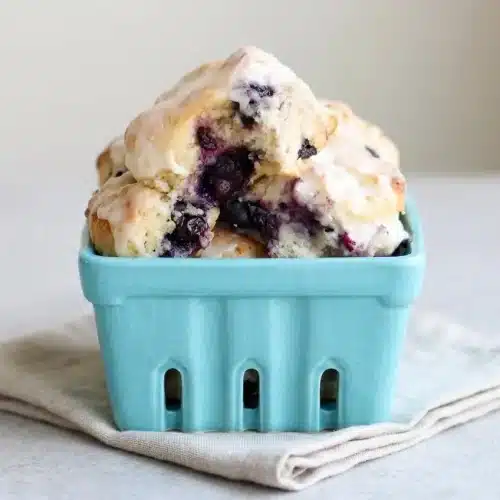
Blueberry Biscuits

Bake tall, flaky blueberry biscuits with cold butter, frozen berries, and a sweet vanilla glaze. This simple fold-and-press method creates a tender buttermilk crumb with crisp golden edges perfect for breakfast.
Equipment
- 9-inch Round Cake Pan
- Pastry Cutter
- Rubber spatula
- 3-inch cutter
- Pastry brush
Ingredients
Biscuits
- 2 cups all-purpose flour (sifted)
- ½ cup granulated sugar
- 1 tablespoon baking powder
- 1 teaspoon salt
- ¼ cup butter-flavored shortening
- ¼ cup unsalted butter
- 1 cup cold buttermilk
- ½ teaspoon vanilla extract
- ¾ cup frozen blueberries
- 1 teaspoon flour
- 1-2 teaspoons half and half
- 1-2 tablespoons melted butter
Glaze
- 1 cup powdered sugar
- 2 tablespoons half and half
- 1 tablespoon unsalted butter melted
- ¼ teaspoon vanilla extract
- 1 pinch salt
Instructions
- Heat the oven to 450 °F and lightly grease the bottom of a dark 9-inch round cake pan with shortening. Keep the pan ready nearby so the shaped biscuits can go straight in without warming on the counter.
- Whisk the sifted flour, sugar, baking powder, and salt together in a large bowl. The dry mixture should look evenly blended with no visible pockets of baking powder.
- Work the butter-flavored shortening into the flour with a pastry cutter. Stop when the mixture has coarse, large crumbs rather than a sandy texture.
- Grate the frozen unsalted butter over the bowl, pausing to toss it through the flour with a rubber spatula. Each butter shred should look dusted in flour, which helps preserve separate flaky layers.
- Stir the vanilla extract into the cold buttermilk, then pour the liquid over the flour mixture. The cold liquid should begin forming damp clumps around the butter pieces.
- Use the rubber spatula to bring the mixture together into dough. Stop once no large patches of loose flour remain, even if the dough looks rough.
- Dust a flat work surface with about 1-2 tablespoons of flour and turn out the dough. Use only enough flour to prevent sticking because excess flour can make the biscuits dry.
- Gather the dough into a soft ball, then flatten and fold it 2-3 times. Each fold creates layers, and the dough should feel pliable rather than stiff or heavily kneaded.
- Pat the dough into a 1-inch-thick rectangle and set it aside briefly. Keep the edges as even as possible so the finished biscuits bake at a similar height.
- Toss the frozen blueberries with the 1 teaspoon flour in a small bowl. The berries should have a light floury coating and remain completely frozen.
- Press the blueberries gently across the surface of the dough. Distribute them broadly so each biscuit has fruit without crushing the berries.
- Fold the dough in half over the berries, then press it back into a rectangle on the floured surface. A few berries may escape, so tuck them back into the dough instead of pressing hard.
- Repeat the fold-and-press motion two more times. The dough will look a little messy, but the blueberries should stay mostly intact and the layers should remain visible.
- Pat the dough one last time into a 1-inch-thick rectangle. Avoid rolling it thin, which would reduce the height of the biscuits.
- Flour a 3-inch cutter and cut 8 biscuits, flouring the cutter again as needed. Press straight down and lift straight up without twisting so the edges remain open for a better rise.
- Arrange the biscuits in the prepared pan with their sides touching. Touching biscuits support one another as they rise and create soft, tall sides.
- Brush the tops lightly and evenly with the 1-2 teaspoons half and half. The surface should look barely moistened, not saturated.
- Bake on the middle rack for 20 minutes. The biscuits are ready when the tops are golden brown and the kitchen smells buttery and sweet.
- Brush the hot biscuits generously with the 1-2 tablespoons melted butter. The butter should melt into the tops and give them a glossy finish.
- Combine the powdered sugar, 1 tablespoon melted butter, and 2 tablespoons half and half while the biscuits cool. Stir until the glaze is smooth, adding more half and half if you prefer a thinner consistency.
- Stir the vanilla extract and a pinch of salt into the glaze. The salt should sharpen the vanilla flavor without making the glaze taste salty.
- Brush or drizzle glaze over the hot biscuits and let it set. Once the first layer firms, add more glaze if desired for a thicker white finish.
- Serve the biscuits warm or at room temperature. The centers should be fluffy, the berries juicy, and the glaze lightly set on top.
Notes
Ingredient tip: Toss the frozen blueberries with a teaspoon of flour before folding them into the dough. This creates a light coating that absorbs surface moisture and prevents the berries from bleeding and turning the dough purple.
Biscuit cutting: Always press the cutter straight down and lift it straight up. Twisting the cutter seals the edges of the dough, which limits upward rise and creates flat biscuits.
Storage: Let the glazed biscuits cool completely before placing them in an airtight container so trapped steam does not soften the tops. Because the glaze contains dairy, refrigerate leftovers if they are not going to be served within two hours.
Nutrition information is an estimate based on common ingredients and serving sizes. Values may vary depending on brands, portions, and substitutions.