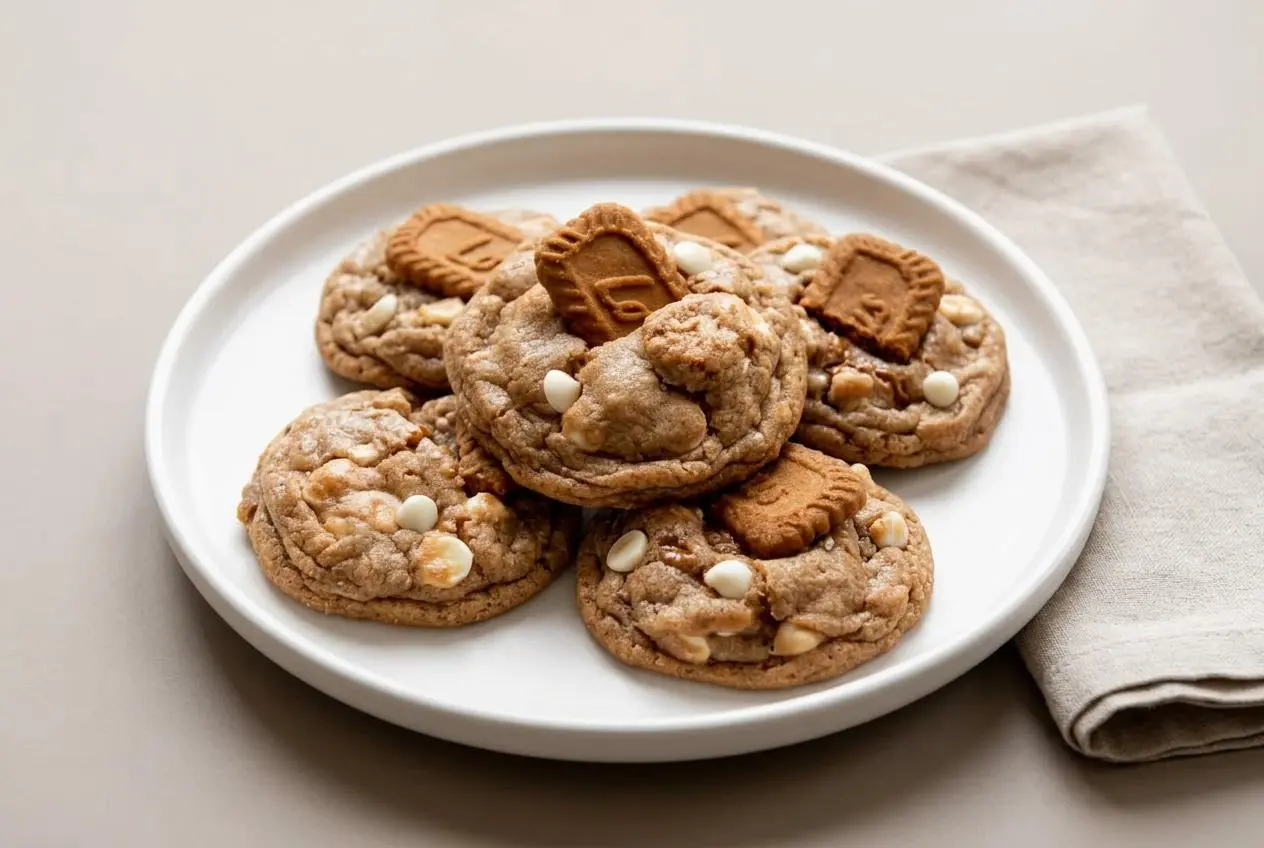
This biscoff cookie recipe makes thick, bakery-style cookies packed with cookie butter, crushed Biscoff biscuits, and white chocolate. Cold cubed butter keeps the dough sturdy enough to bake right away without a required chilling step.
The kitchen starts to smell like cinnamon, caramelized brown sugar, and warm butter as these cookies bake. Each one has crisp edges, a soft center, and plenty of biscuit crunch.
Use cool baking sheets for every batch so the dough starts baking at the right pace.
Understanding the Signature Biscoff Flavor Profile
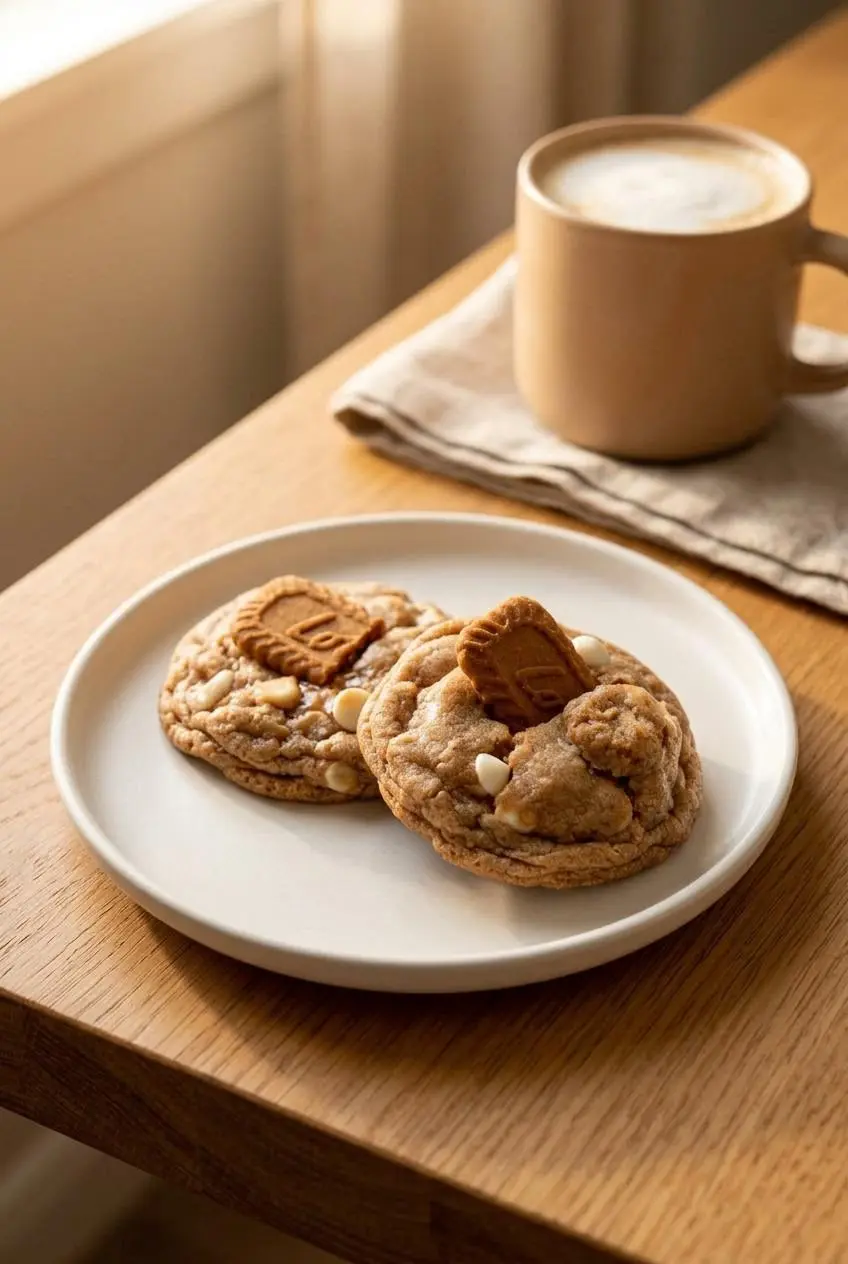
Biscoff has a warm, caramelized flavor that lands somewhere between toasted brown sugar, cinnamon, and gently spiced shortbread. It is sweet but not heavy with molasses, which gives it a lighter, more buttery character than traditional gingerbread.
Cookie butter spread brings concentrated speculoos spice and smooth richness, while crushed biscuits add a toastier, slightly sandy crunch. Together, they create layers of flavor rather than a one-note sweet cookie. For a cozy pairing, serve a warm cookie with a cookie butter latte.
Classic Belgian Speculoos vs Modern Biscoff Drop Cookies
Traditional Belgian speculoos biscuits are thin, crisp cookies, often rolled and cut before baking. Their firm texture makes them especially good for dunking into coffee or tea.
These Biscoff drop cookies take the same caramelized spice profile in a softer direction. They bake thick with a chewy center, lightly crisp edges, creamy white chocolate, and chunky pieces of biscuit throughout. Think of them as the bakery-cookie cousin of crisp speculoos.
- Classic speculoos: thin, crunchy, dry enough for dunking, and centered on warm spice.
- Biscoff drop cookies: thick, chewy, buttery, and layered with cookie butter and biscuit pieces.
- Gingerbread: usually has a stronger molasses and ginger presence, while Biscoff leans more toward cinnamon and caramelized sugar.
The Magic of Cookie Butter Spread in Baking
Cookie butter blends crushed spiced biscuits into a creamy spread, so it brings both flavor and fat to the dough. Mixing it in after the eggs and vanilla helps distribute that richness evenly through the batter.
The spread also gives the cookies their signature caramelized warmth without requiring extra spices. The dough should look thick and plush after it is mixed, with enough body to hold the white chocolate chips and biscuit chunks in place.
Essential Ingredients for Biscoff Cookies
Each ingredient supports the cookie’s caramelized flavor, chewy structure, soft crumb, and crunchy biscuit contrast, from the cold butter and sugars to the cookie butter, cornstarch, and white chocolate.
- 32 Biscoff cookies (divided)
- 1 cup salted butter (cold, cubed (227g))
- 1 cup light brown sugar (packed (200g))
- 1/2 cup granulated sugar ((100g))
- 2 large eggs
- 2 teaspoons vanilla extract
- 1 cup Biscoff cookie butter ((250g) + extra for stuffing, if desired)
- 2 3/4 cups all-purpose flour (scooped and leveled (387g))
- 2 teaspoons cornstarch
- 1 teaspoon baking soda
- 1/2 teaspoon baking powder
- 1/2 teaspoon salt
- 1 1/2 cups white chocolate chips (+ extra for decorating)
Cold butter slows spreading, while brown sugar holds moisture for a chewier bite. Fine cookie crumbs deepen the speculoos flavor, chunky biscuits provide texture, and white chocolate adds creamy sweetness against the warm spice.
I keep the butter in firm, small cubes until the mixer starts because soft butter can turn this thick dough loose and greasy before it reaches the oven.
Why Cold Butter Outperforms Softened Butter
Cold butter may resist the mixer at first, but that resistance is useful. As it creams with the sugars, it forms a thick, pale mixture with a soft matte sheen instead of a loose, shiny paste.
Some solid butter remains in the dough, which helps the cookies hold their height as the heat reaches the pan. Warm or melted butter melts too quickly, encouraging wide, thin cookies. Starting cold gives you a no-chill dough that still bakes with a thick center.
Cornstarch and Crumb Synergy for Softness
The cornstarch works with the flour to keep the crumb tender rather than bready. It softens the texture of the flour mixture, while the finely crushed Biscoff cookies absorb moisture and bring their own caramelized biscuit flavor.
Use fine crumbs for the portion mixed into the dough. Larger shards belong in the final mix-in stage, where they create little crisp pockets instead of disappearing into the dough.
Step-by-Step Guide to Bakery-Style Biscoff Cookies
These cookies move quickly once the dough is mixed, so set out parchment-lined baking sheets before you begin. Bake on a center rack for even heat and rotate the sheets only if your oven has noticeable hot spots.
- Heat the oven to 375°F and line two baking sheets with parchment paper or silicon baking mats.
Position the sheets so the dough bakes on a cool, lined surface rather than directly on hot metal. - Pulse 16 Biscoff cookies in a food processor or blender until finely ground, then set the crumbs aside; break 8 more cookies into rough chunks and reserve the final 8 for topping.
The fine crumbs should resemble coarse flour, while the chunks should stay visibly uneven for texture. - Beat the cold cubed butter with the brown sugar and granulated sugar in a large bowl for 3 to 4 minutes.
Stop when the mixture looks pale, thick, and matte rather than slick or melted. - Beat in the eggs and vanilla, scraping the bowl’s sides and bottom so no butter-sugar mixture is left behind.
The mixture should become smoother and more cohesive after the eggs are fully incorporated. - Mix in the Biscoff cookie butter until it is evenly blended through the dough.
The dough will take on a warm tan color and a strong caramelized spice aroma. - Add the flour, reserved fine cookie crumbs, cornstarch, baking soda, baking powder, and salt, then mix on medium-low only until the dry streaks disappear.
Stop promptly once combined to keep the finished cookies soft and tender. - Fold in the broken Biscoff cookie pieces and white chocolate chips.
The add-ins should look evenly scattered through a thick dough that holds its shape on the spoon. - Portion the dough with a large 1/4 cup cookie scoop and place the balls a few inches apart on the prepared sheets; gently roll them between your hands if desired.
Even portions and open spacing help the cookies bake into similarly thick rounds. - Bake for 8 to 10 minutes until the edges are set and the centers remain slightly underbaked.
Pull them when the tops show gentle cracks and the middle still looks pale and puffy. - Press half of a reserved Biscoff cookie and a few extra white chocolate chips into each hot cookie, then leave them on the baking sheets for 10 minutes before moving them to a wire rack.
The centers finish setting on the sheet while staying soft and chewy.
Critical Tips to Prevent Overspreading and Dry Cookies
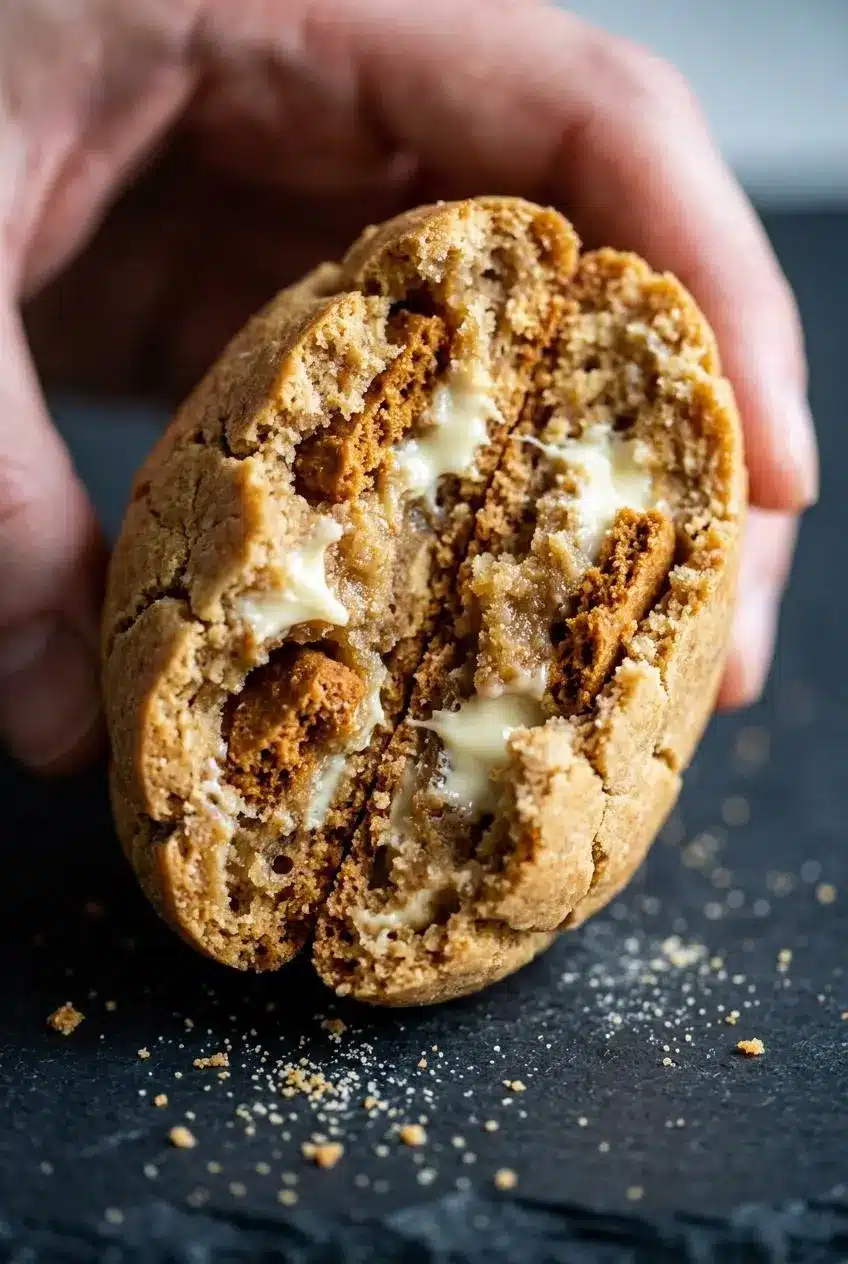
Thick cookie butter dough is forgiving when the butter stays cold and the flour is measured accurately. If a batch goes flat or dry, the problem usually starts before the cookies enter the oven.
- Cookies spread into puddles: The butter was too warm, the dough sat in a hot kitchen, or the baking sheet was still warm from the previous batch. Use cool pans and refrigerate the shaped dough briefly if the dough feels soft.
- Cookies are dense or cakey: Flour was likely packed into the measuring cup. Spoon flour into the cup, level it with a straight edge, and avoid tapping or pressing it down.
- Cookies are dry: They baked until fully firm in the oven. Remove them while the centers still look slightly underdone so carryover heat can finish the job.
- Cookies lose their round shape: Place a round cookie cutter or wide drinking glass around each warm cookie and gently swirl it in a circle. The soft edges pull inward before they set.
Proper Flour Measuring and Temperature Control
The flour measurement affects both spread and texture. Scooping directly from the bag compresses flour into the cup, which can leave the cookies heavy and dry. Spoon it in lightly, then level the top without shaking the cup.
Warm rooms can soften cold butter faster than expected. If the shaped dough feels sticky or slumps instead of standing tall, let the dough balls rest in the refrigerator for 10 minutes before baking. They should feel firm enough to resist a light press.
The Cookie Swirl Technique for Clean Bakery Edges
Uneven edges are normal with chunky biscuit dough, and the swirl technique tidies them quickly. As soon as the cookies leave the oven, place a round cutter or wide glass around one cookie at a time.
Move it in a small circular motion without pressing down. The warm, soft perimeter gathers into a neater round, giving the cookies the polished look of bakery-style Crumbl cookies while keeping the center tall.
Irresistible Variations and Flavor Ideas
Keep the main dough exactly as written, then choose an optional finish when you want a different texture or a gooey center. These changes work best when you make one variation at a time.
How to Make Stuffed Biscoff Cookies With a Gooey Center
For a molten center, scoop tablespoon-sized dollops of cookie butter onto parchment and chill them until firm enough to handle. Flatten a portion of the prepared dough in your palm, place one firm dollop in the middle, and cover it with the dough.
Pinch and roll the seams closed so no cookie butter is exposed. Bake the stuffed cookies as directed, watching closely for the same set edges and soft centers. A complete seal matters because exposed filling can run onto the pan. The same enclosed-center approach also works well in stuffed Rolo cookies.
White Chocolate Chip and Crunchy Sea Salt Pairings
- Flaky sea salt: Add a light sprinkle right after baking for a savory edge that balances the sweet white chocolate and caramelized cookie butter.
- Crunchy cookie butter: Swap the creamy spread for a crunchy version if you prefer more biscuit bite throughout the soft dough.
- Browned butter flavor: Brown half the butter, chill it until solid again, then cream it with the remaining cold butter for deeper toasted-toffee notes.
- Cookie butter drizzle: Warm a little extra cookie butter just until pourable and drizzle it over cooled cookies for a glossy, spiced finish.
Storage and Freshness Tips
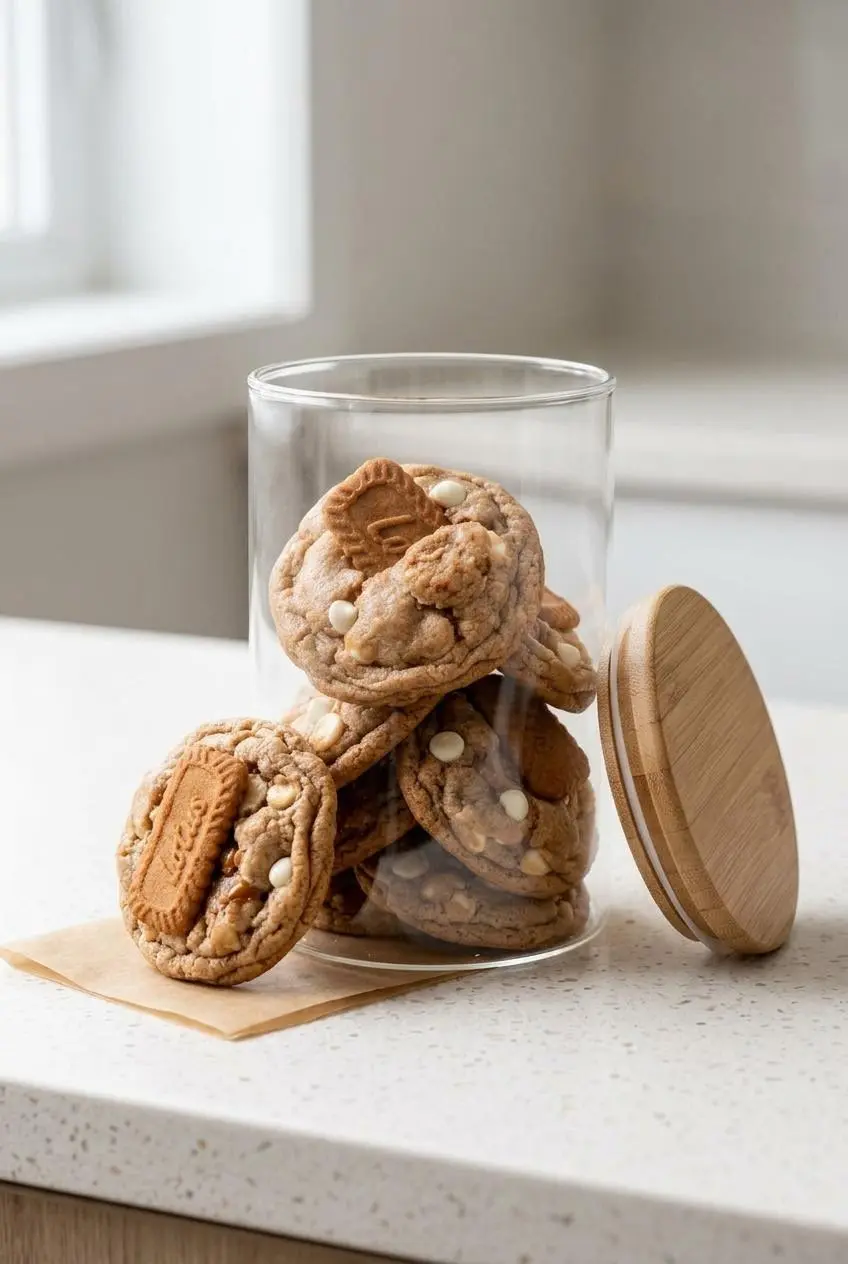
Let the cookies cool completely before storing them in an airtight container at room temperature. Keeping them away from humidity helps preserve their chewy centers and crisp biscuit pieces. Skip tasting the unbaked dough, then bake the cookies until the edges are set.
Avoid refrigerating baked cookies when possible because cold air can firm and dry the crumb. For a softer center after storage, warm one cookie briefly in the microwave and enjoy it while the white chocolate is soft again.
Preparing Dough for Later
If you need to pause before baking, keep the portioned dough cold on its lined sheet until it is ready for the oven. Cover it well so the dough does not pick up refrigerator odors or develop a dry surface.
For the best thick shape, bake the dough while it is still cool and firm. Cold dough gives the butter a slower start, helping the cookies retain their bakery-style height.
Reviving and Storing Baked Cookies
Store fully cooled cookies in a tightly sealed container with the decorative biscuit halves facing upward when possible. This prevents the toppings from catching on one another and keeps the cookies looking tidy.
Warm individual cookies gently rather than heating a full stack. A brief burst of heat softens the center and white chocolate without turning the biscuit topping soggy.
Conclusion
These thick Biscoff cookies bring together caramelized cookie butter, crunchy biscuit pieces, and creamy white chocolate in every bite. Cold butter, careful flour measuring, and a short bake keep the texture soft where it counts.
Pull the cookies when their centers still look tender, then let the hot pan finish the work. That small bit of patience makes every warm, spiced cookie especially rewarding.
Frequently Asked Questions
What Is the Actual Flavor Profile of a Biscoff Cookie?
Biscoff tastes caramelized, buttery, and warmly spiced. Cinnamon leads the flavor, supported by delicate speculoos spices and toasted brown sugar notes. It differs from gingerbread because it does not have the same strong molasses or fiery ginger character.
Do I Have to Chill This Cookie Dough Before Baking?
No. The dough is designed to bake without a required chilling step. Cold cubed butter helps the cookies stay thick as they bake. If the kitchen is especially warm and the dough feels soft, a brief refrigerator rest can help the dough hold its shape.
Why Did My Biscoff Cookies Spread Too Thin in the Oven?
Warm or softened butter can make the dough spread too quickly. Under-measured flour leaves the dough without enough structure. Placing dough on a warm baking sheet can start melting the butter before the cookies reach the oven. A hot kitchen can soften shaped dough, so keep it cold until baking.
Can I Freeze Biscoff Cookie Dough Balls?
This method focuses on baking the dough while it is cold and freshly mixed for the thickest result. If you need to hold portioned dough before baking, keep it covered and chilled until you are ready to use it. Bake on cool, parchment-lined sheets and watch for set edges with pale, soft centers.
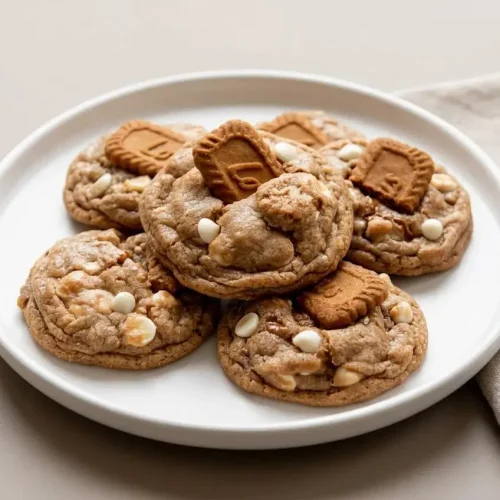
Biscoff Cookie Recipe

Equipment
- KitchenAid Tilt-Head Stand Mixer
- Baking Sheets
- Parchment Paper
Ingredients
- 32 Biscoff cookies (divided)
- 1 cup salted butter (cold, cubed (227g))
- 1 cup light brown sugar (packed (200g))
- 1/2 cup granulated sugar ((100g))
- 2 large eggs
- 2 teaspoons vanilla extract
- 1 cup Biscoff cookie butter ((250g) + extra for stuffing, if desired)
- 2 3/4 cups all-purpose flour (scooped and leveled (387g))
- 2 teaspoons cornstarch
- 1 teaspoon baking soda
- 1/2 teaspoon baking powder
- 1/2 teaspoon salt
- 1 1/2 cups white chocolate chips (+ extra for decorating)
Instructions
- Heat the oven to 375°F and line two baking sheets with parchment paper or silicon baking mats. Position the sheets so the dough bakes on a cool, lined surface rather than directly on hot metal.
- Pulse 16 Biscoff cookies in a food processor or blender until finely ground, then set the crumbs aside; break 8 more cookies into rough chunks and reserve the final 8 for topping. The fine crumbs should resemble coarse flour, while the chunks should stay visibly uneven for texture.
- Beat the cold cubed butter with the brown sugar and granulated sugar in a large bowl for 3 to 4 minutes. Stop when the mixture looks pale, thick, and matte rather than slick or melted.
- Beat in the eggs and vanilla, scraping the bowl’s sides and bottom so no butter-sugar mixture is left behind. The mixture should become smoother and more cohesive after the eggs are fully incorporated.
- Mix in the Biscoff cookie butter until it is evenly blended through the dough. The dough will take on a warm tan color and a strong caramelized spice aroma.
- Add the flour, reserved fine cookie crumbs, cornstarch, baking soda, baking powder, and salt, then mix on medium-low only until the dry streaks disappear. Stop promptly once combined to keep the finished cookies soft and tender.
- Fold in the broken Biscoff cookie pieces and white chocolate chips. The add-ins should look evenly scattered through a thick dough that holds its shape on the spoon.
- Portion the dough with a large 1/4 cup cookie scoop and place the balls a few inches apart on the prepared sheets; gently roll them between your hands if desired. Even portions and open spacing help the cookies bake into similarly thick rounds.
- Bake for 8 to 10 minutes until the edges are set and the centers remain slightly underbaked. Pull them when the tops show gentle cracks and the middle still looks pale and puffy.
- Press half of a reserved Biscoff cookie and a few extra white chocolate chips into each hot cookie, then leave them on the baking sheets for 10 minutes before moving them to a wire rack. The centers finish setting on the sheet while staying soft and chewy.