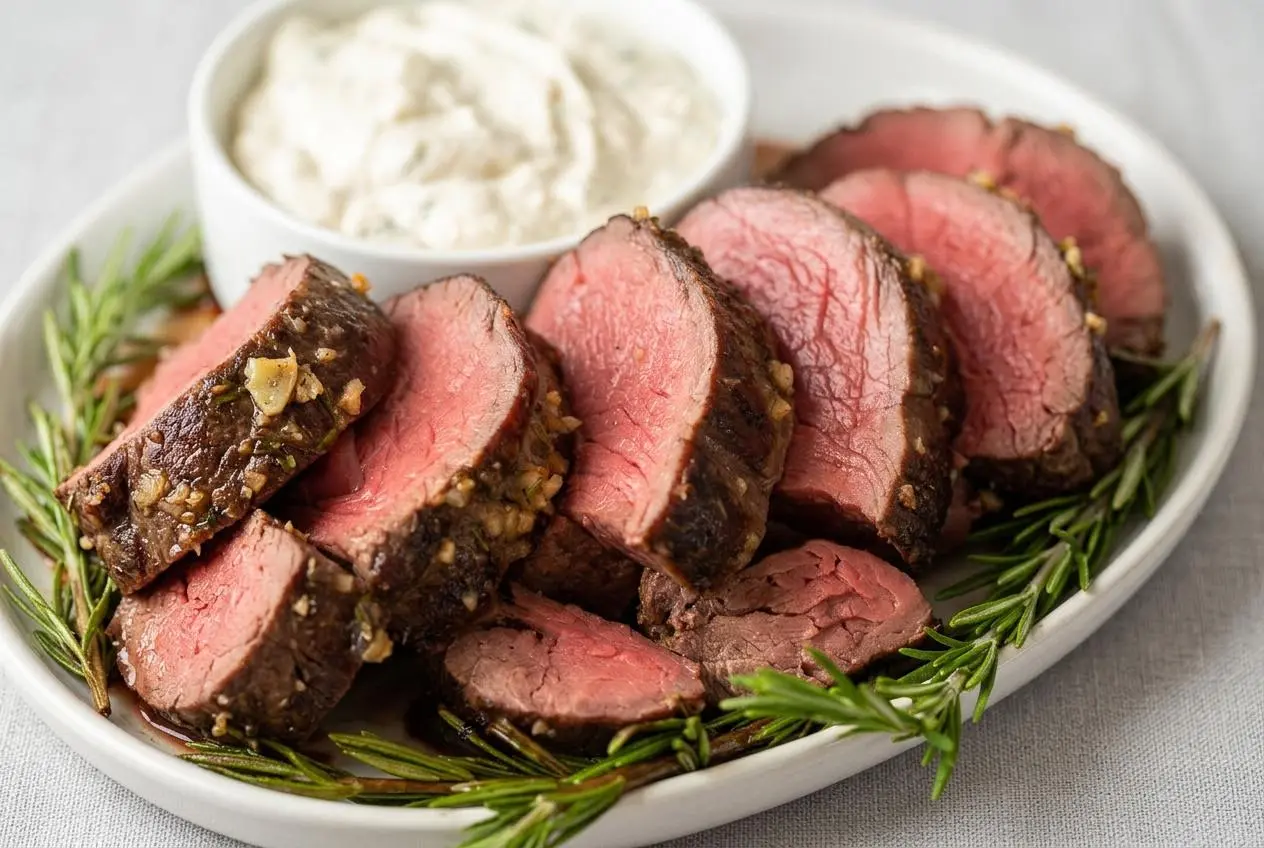
For a melt-in-your-mouth roast, this beef tenderloin recipe uses a hot skillet sear, garlic herb butter, and a probe thermometer to create a golden savory crust while keeping the center tender.
This beef tenderloin recipe is built for special dinners when you want impressive slices without guessing. Trim and tie the roast for even thickness, then let the skillet build the deep browned flavor before the oven finishes the job.
Herb butter melts over the warm beef as it roasts, filling the kitchen with a rich garlic-and-rosemary aroma. The thermometer does the stressful part.
Set out the probe thermometer before heating the skillet so it is ready the moment the beef goes into the oven.
Ingredients and Equipment for the Best Beef Tenderloin
Each ingredient supports the roast in a different way, from a deeply browned exterior and fragrant crust to rich flavor and a balanced finish.
- 4 to 5 lb. Beef tenderloin (trimmed, cut in two pieces and tied.)
- 1 tsp salt
- 1/2 tsp black pepper
- 2 tbsp avocado oil
- 4 tbsp butter (salted, softened)
- 2 tsp garlic (minced )
- 1 tsp horseradish (prepared or dijon mustard)
- 1 tsp rosemary (minced or thyme)
A center-cut tenderloin gives you the most uniform shape, while a whole tenderloin needs a little more trimming and tying. Salt seasons the meat, pepper adds a warm bite, and avocado oil handles the high skillet heat needed for a serious sear.
Softened butter carries the minced garlic and herbs across the roast. Prepared horseradish adds a sharp edge that keeps the butter from tasting heavy, while rosemary or thyme creates the familiar steakhouse aroma.
Use a large cast-iron skillet, butcher twine, a cutting board, and a reliable digital probe meat thermometer. A probe is far more useful than a minutes-per-pound estimate because tenderloins vary in thickness.
I look for butter that is soft enough to spread easily but not melted, so it stays on the browned beef instead of sliding into the pan all at once.
How to Roast Beef Tenderloin
This sear-and-roast approach gives the outside time to brown deeply while the oven gently brings the center to your preferred doneness. Keep the two tied pieces separate in the skillet if needed so each one can make full contact with the hot surface.
The Day Before Cooking (*optional)
- Trim the tenderloin if needed, divide it into two pieces, fold the narrow end under, and tie each piece with butcher twine.
The roast should look even in thickness, with no thin tail left exposed to overcook. - Coat the beef evenly with the salt and black pepper, then refrigerate it uncovered overnight, or for at least 10 hours.
The surface will look drier by cooking time, which helps it brown instead of steaming.
Day Of Cooking
- If you did not season ahead, tie and season the tenderloin now, then let it sit on the counter for about 2 hours after refrigeration.
Taking off the chill helps avoid a cold center and a thick gray band beneath the crust. - Heat the oven to 425°F.
Have the skillet, butter mixture, and thermometer ready before the beef begins searing. - Warm the avocado oil in a large cast-iron skillet over medium-high heat, then brown the tenderloin on every side for 3 to 5 minutes per side.
Turn when the surface is a deep golden brown and the skillet smells richly savory rather than sharply raw. - Mix the softened butter, garlic, horseradish, and herbs in a small dish, then spread it generously over the seared tenderloin and insert the probe thermometer.
The butter should soften over the hot beef and release a fragrant herbal aroma. - Move the skillet to the oven, or transfer the beef to a baking dish, and roast until the thermometer reaches your desired internal temperature, about 20 to 25 minutes.
Judge doneness by the probe, not the clock, since thickness changes the roasting pace. - Transfer the tenderloin to a cutting board and rest it for 15 to 20 minutes before cutting 1-inch slices.
A rested roast gives cleaner slices with far less flavorful juice pooling across the board.
How to Prepare Beef Tenderloin: Trimming, Tying, and Salting
Good prep makes this expensive cut easier to cook evenly. Take a few extra minutes here, especially if you bought a whole tenderloin rather than a neatly prepared center-cut section.
Trimming the Silverskin and Excess Fat
Silverskin is the shiny, pale connective membrane that stays tough even after roasting. Slide the tip of a sharp boning knife just under one edge, hold the loosened flap with a paper towel for grip, and glide the blade away from the meat in shallow strokes. Keep the blade angled slightly upward so you remove the membrane rather than carving away tender beef.
Remove loose excess fat and the side chain if it is still attached. The chain cooks differently from the center portion, so save it for another use rather than leaving it to tighten against the roast. Clean fat trimmings can be saved for homemade beef tallow.
Tucking and Tying for Even Thickness
The tapered tail cooks faster than the thick center. Fold that thin end underneath itself until it roughly matches the rest of the roast, then secure it with twine. Tie snugly at 1.5-inch intervals, without cinching so hard that the meat bulges between the ties.
The goal is a compact, even cylinder. That uniform shape means the outside browns at the same pace and the center reaches doneness more predictably.
Dry Brining for Maximum Flavor and Crust
Seasoning uncovered for 10 to 24 hours gives salt time to season beyond the surface while the exterior dries. That dry surface matters in cast iron, where moisture is the enemy of a dark crust.
If you need to cook the same day, season before the meat sits on the counter. The roast will still be flavorful, but the longer uncovered rest gives the skillet a better chance of producing that crisp, browned exterior.
Beef Tenderloin Doneness Temperatures and Timing Guide
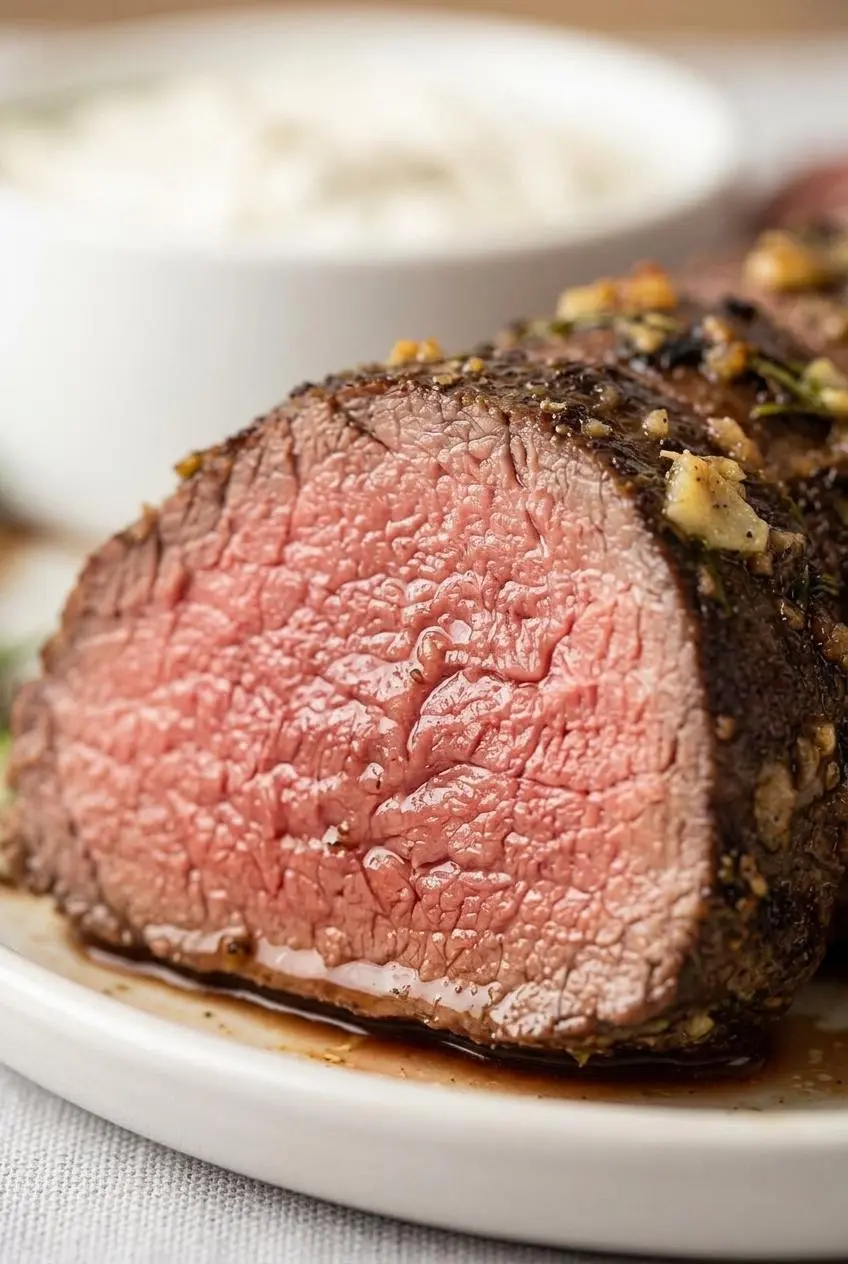
A digital probe thermometer is the most dependable way to protect tenderloin from overcooking. Pull temperatures are lower than final temperatures because the roast continues cooking while it rests.
- Rare: pull at 115 to 120°F. It rests to about 120 to 125°F.
- Medium-rare: pull at 120 to 125°F. It rests to about 130 to 135°F.
- Medium: pull at 130 to 135°F. It rests to about 140 to 145°F.
Expect the internal temperature to climb about 5 to 7 degrees during the 15 to 20 minute rest. For medium-rare, the center should feel lightly springy when pressed, rather than firm. Tenderloin is very lean, so pushing it beyond medium can leave it dry and chewy.
For food-safety handling, whole beef roasts are listed at 145°F with a 3-minute rest. Use a food thermometer and choose the final doneness that works for your household.
Common Mistakes to Avoid When Cooking Beef Tenderloin
- Skipping the silverskin: the tough membrane contracts as it cooks. Remove it before seasoning so every slice stays easy to chew.
- Leaving the roast uneven: an untucked tail reaches doneness long before the center. Fold it under and tie at regular intervals.
- Starting with refrigerator-cold beef: allow the roast about 2 hours on the counter before searing for a more evenly cooked center.
- Crowding the skillet: packed beef lowers the pan temperature and creates steam. Sear the two pieces with room around them.
- Trusting time alone: 20 to 25 minutes is a useful estimate, but roast thickness decides the true finish line. Follow the probe thermometer.
- Carving immediately: slicing too soon sends savory juices onto the board instead of keeping them in the meat. Give the roast its full rest.
Flavor Variations and Crust Ideas
Keep the main method intact, then change the finish when you want a different steakhouse direction. These are optional ideas, so they do not alter the ingredient list or core roasting method.
Classic Garlic Herb Butter Crust
Use the butter mixture as written for a rich, aromatic crust. For a greener herb profile, fold fresh minced parsley and finely chopped rosemary into the butter, or use roasted garlic for a sweeter, rounder garlic flavor. Spread it over the seared roast so the butter melts into the browned surface during roasting.
Dijon and Fresh Herb Crusted
For an herb and Dijon crust, brush the seared roast with a thin layer of coarse Dijon mustard and Worcestershire, then pat on fresh thyme and rosemary before roasting. The mustard gives the herbs something to cling to and adds tangy depth without covering the beef flavor.
Reverse-Sear Oven Method
For a slower, more even pink interior, roast the tied tenderloin at 225°F until the center reaches 115°F, then finish it with a high-heat cast-iron sear. This is an optional technique rather than part of the main method, and it works especially well for a thick, evenly shaped roast.
- Cracked peppercorn crust: press coarse crushed black peppercorns onto the exterior after searing for a bold au poivre-style bite.
- Thyme butter baste: add fresh thyme sprigs while basting with garlic butter for a more woodsy aroma.
- Alternative centerpiece: if you want a larger, more traditional roast with a different texture, try classic roast beef.
What to Serve with Beef Tenderloin
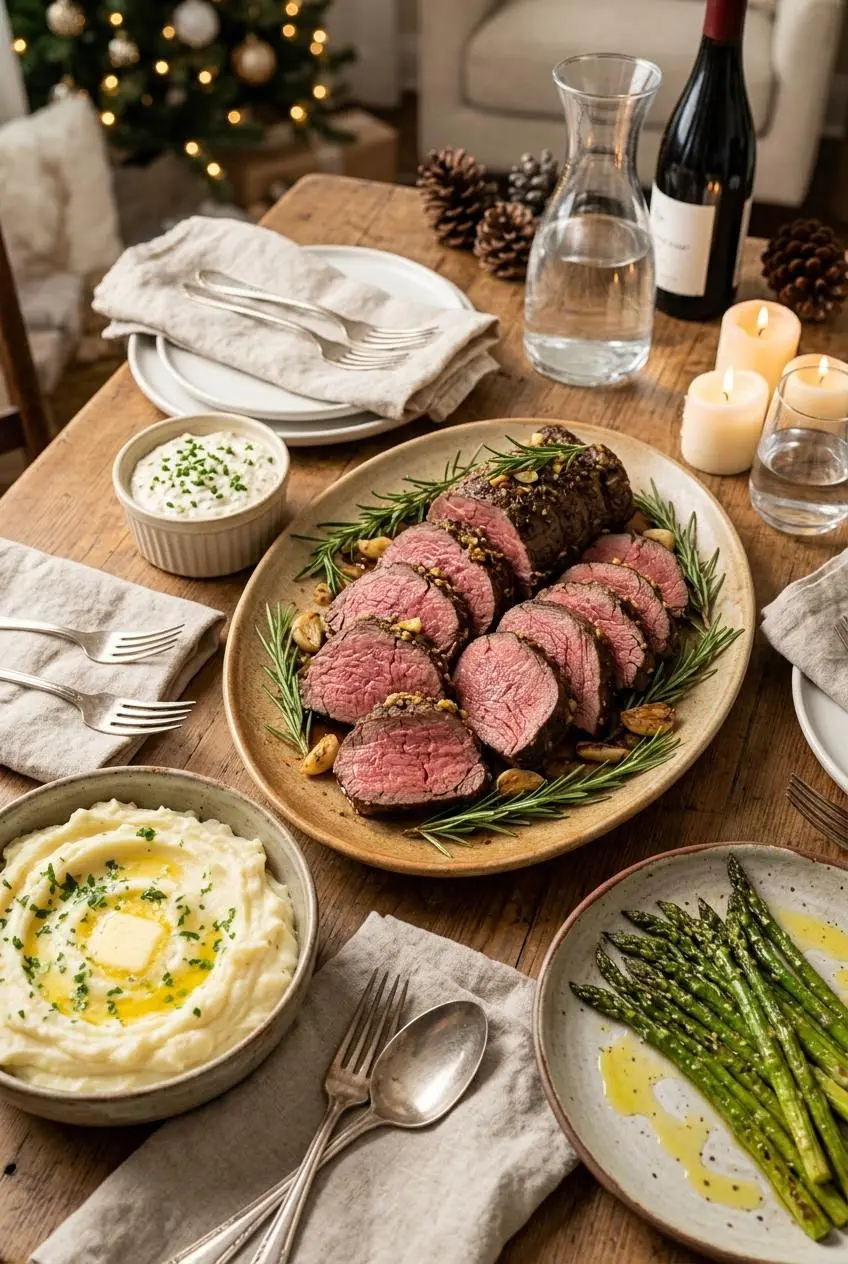
Because tenderloin is rich but delicate, pair it with sides that bring creaminess, fresh color, or a little brightness without overwhelming the beef.
Classic Creamy Horseradish Sauce
For a fast optional sauce, stir together sour cream, prepared horseradish, fresh chives, a splash of lemon juice, salt, and black pepper. The cool creaminess softens the heat of horseradish, while the lemon wakes up each rich slice of beef.
Best Potato and Vegetable Side Dishes
- Garlic mashed potatoes make a soft, savory base for the tenderloin and herb butter.
- Crispy roasted baby potatoes add contrast without competing with the roast.
- Sautéed green beans or roasted asparagus bring freshness and a clean vegetal bite.
- Creamed spinach gives the meal a classic steakhouse feel.
- A crisp green salad with shallot vinaigrette cuts through the richness and keeps the plate balanced.
Make-Ahead Instructions, Storage, and Reheating
Trim, tie, and season the tenderloin uncovered in the refrigerator up to 24 hours before cooking. This makes dinner-day prep calmer and gives the salt time to season the meat while drying the surface for better browning.
Store cooked leftovers in an airtight container in the refrigerator for 3 to 5 days. The same food-safety guidance also lists leftovers at 165°F when reheated, so warm portions cautiously and check them with a thermometer when safety is a concern.
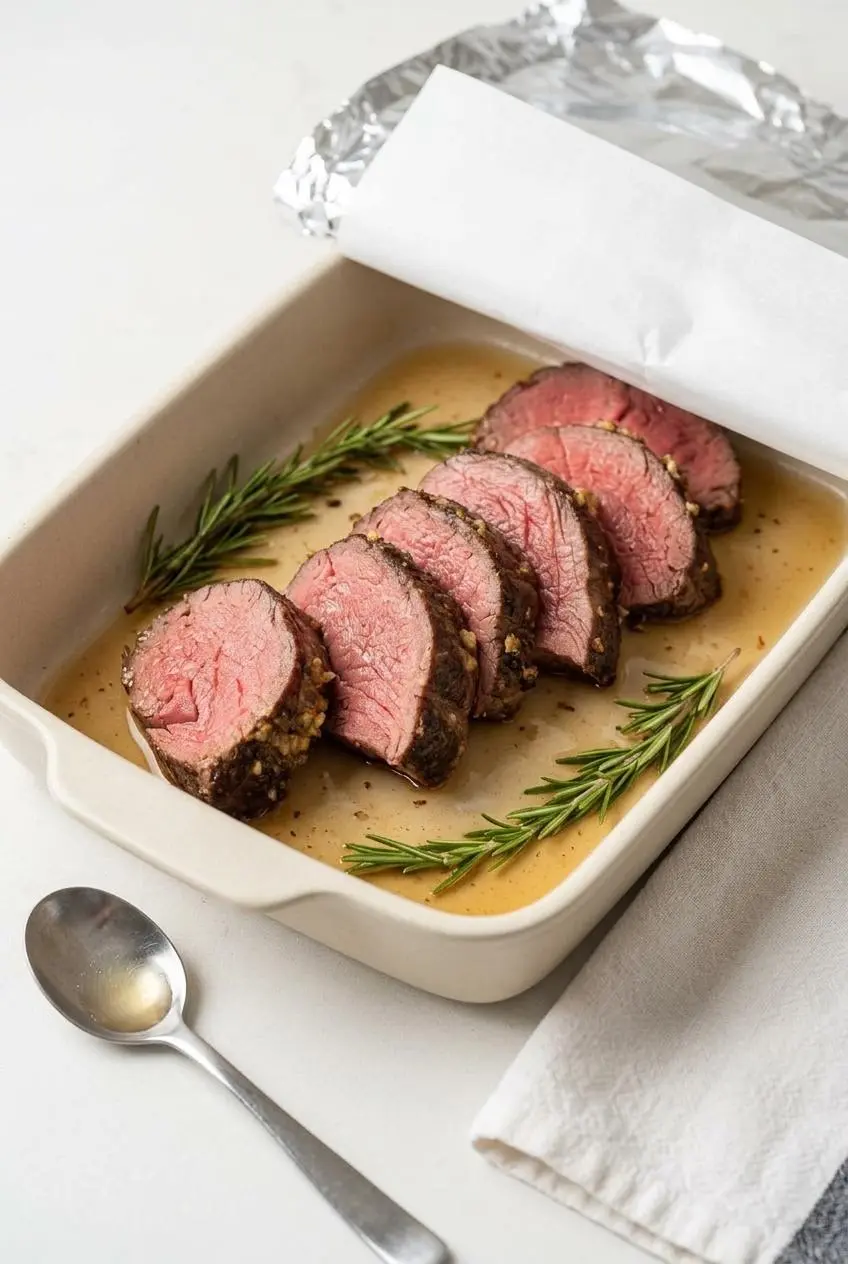
To preserve the tender texture, arrange sliced tenderloin in a baking dish with a splash of beef broth, cover tightly with foil, and warm it gently in a low oven until heated through. Avoid high-power microwaving, which can quickly turn the rosy center gray and firm.
Cold slices are also excellent in sandwiches or over a crisp salad. Add them after the other ingredients are ready so the beef stays tender rather than repeatedly warmed.
Conclusion
A great tenderloin comes down to even trimming, careful tying, a properly hot sear, and a probe thermometer that tells you when to stop cooking. The herb butter adds aroma and richness without hiding the flavor of the beef.
Rest the roast before carving, slice across the grain, and serve while the center is still beautifully tender. That pause is where the juicy slices happen.
Frequently Asked Questions
What Internal Temperature Should Beef Tenderloin Be Pulled From the Oven?
For medium-rare, pull the tenderloin at 120 to 125°F. During its 15 to 20 minute rest, the temperature usually rises 5 to 7 degrees. The final medium-rare temperature lands around 130 to 135°F.
Should You Sear Beef Tenderloin Before or After Roasting?
Sear before roasting for this method. A hot cast-iron skillet browns the exterior and creates a flavorful crust, then the herb butter can melt over the roast during the oven finish. The oven brings the center to temperature without needing to keep the beef in the skillet too long.
How Far in Advance Can You Prep and Season Beef Tenderloin?
You can trim, tie, and dry-brine the tenderloin with salt and pepper uncovered in the refrigerator up to 24 hours ahead. This gives the salt time to season the roast and dries the surface, which helps it brown more deeply in the skillet.
How Do You Reheat Leftover Beef Tenderloin Without Overcooking It?
Place sliced beef in a covered baking dish with a splash of beef broth and warm it gently in a low oven. Skip high-power microwaving when possible, since aggressive heat quickly overcooks tenderloin. Warm only the portion you plan to serve.
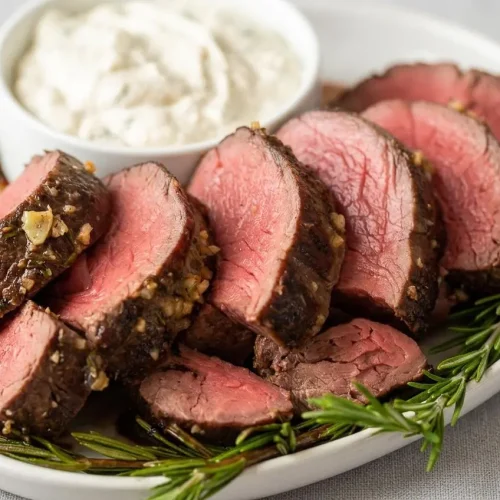
Beef Tenderloin Recipe

Equipment
- Large cast-iron skillet
- Butcher twine
- Probe meat thermometer
- Cutting board
Ingredients
- 4 to 5 lb. Beef tenderloin trimmed, cut in two pieces and tied.
- 1 tsp salt
- 1/2 tsp black pepper
- 2 tbsp avocado oil
- 4 tbsp butter salted, softened
- 2 tsp garlic minced
- 1 tsp horseradish prepared or dijon mustard
- 1 tsp rosemary minced or thyme
Instructions
The Day Before Cooking (*optional)
- Trim the tenderloin if needed, divide it into two pieces, fold the narrow end under, and tie each piece with butcher twine. The roast should look even in thickness, with no thin tail left exposed to overcook.
- Coat the beef evenly with the salt and black pepper, then refrigerate it uncovered overnight, or for at least 10 hours. The surface will look drier by cooking time, which helps it brown instead of steaming.
Day Of Cooking
- If you did not season ahead, tie and season the tenderloin now, then let it sit on the counter for about 2 hours after refrigeration. Taking off the chill helps avoid a cold center and a thick gray band beneath the crust.
- Heat the oven to 425°F. Have the skillet, butter mixture, and thermometer ready before the beef begins searing.
- Warm the avocado oil in a large cast-iron skillet over medium-high heat, then brown the tenderloin on every side for 3 to 5 minutes per side. Turn when the surface is a deep golden brown and the skillet smells richly savory rather than sharply raw.
- Mix the softened butter, garlic, horseradish, and herbs in a small dish, then spread it generously over the seared tenderloin and insert the probe thermometer. The butter should soften over the hot beef and release a fragrant herbal aroma.
- Move the skillet to the oven, or transfer the beef to a baking dish, and roast until the thermometer reaches your desired internal temperature, about 20 to 25 minutes. Judge doneness by the probe, not the clock, since thickness changes the roasting pace.
- Transfer the tenderloin to a cutting board and rest it for 15 to 20 minutes before cutting 1-inch slices. A rested roast gives cleaner slices with far less flavorful juice pooling across the board.