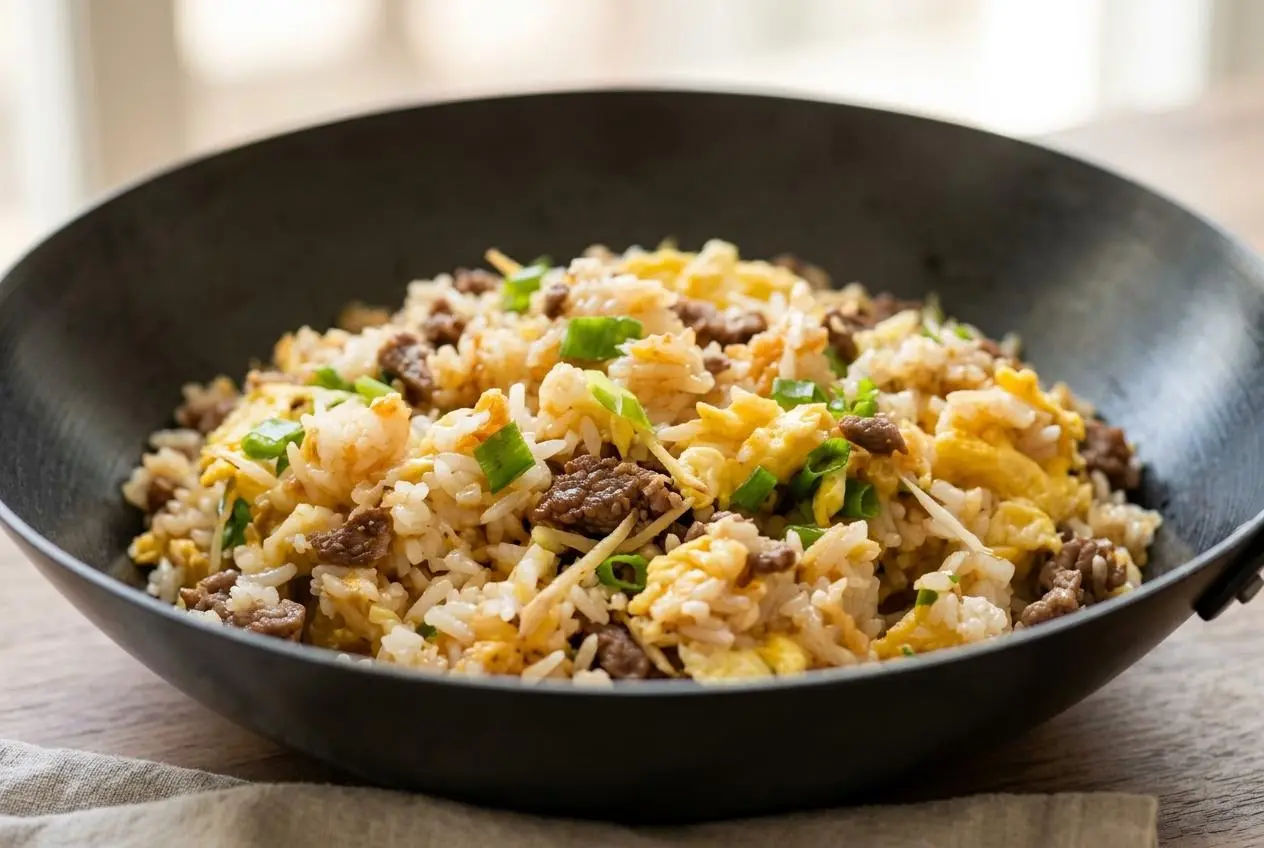
Beef Fried Rice comes out best with dry rice, quick-cooked beef, and high heat. This method gives you tender beef, fluffy grains, and that smoky savory finish without making dinner feel fussy.
Beef Fried Rice is a fast stir-fry built around jasmine rice, eggs, ginger, green onion, and a simple beef marinade that keeps every bite savory and balanced.
You get separate grains instead of mush, browned beef instead of gray bits, and a pan that does a lot of the flavor work for you. The last few minutes smell amazing.
Have everything chopped and measured before the wok gets hot, because once the rice hits the pan, things move fast.
Ingredients
This ingredient list is short, but each piece pulls its weight. I especially love jasmine rice here because it fries up fluffy instead of dense.
Main Ingredients
- 16 ounce white rice (Thai jasmine rice preferred)
- 16 ounce water (slightly less than 1 part water to 1 part rice)
- 8 ounce beef (minced)
- 1 ounce ginger (julienned)
- 2 piece green onion (diced)
- 3 eggs (beaten with 1/4 teaspoon salt)
Beef Marinade
- 1 tablespoon oyster sauce (Kikkoman®)
- 1 teaspoon light soy sauce (Kikkoman®)
- 0.25 teaspoon white pepper
- 1 teaspoon cooking wine (Kikkoman®)
- 1 teaspoon cornstarch
- 1 tablespoon water
Fried Rice Seasoning
- 1 dash white pepper (about 1/4 teaspoon)
- 1 dash salt (about 1/4 teaspoon)
- 2 teaspoon light soy sauce (Kikkoman®)
- 1 teaspoon dark soy sauce (Kikkoman® Tamari)
- 1 tablespoon sesame oil (Kikkoman®)
Why the rice and soy sauce matter so much here
The rice texture makes or breaks fried rice. Slightly drier jasmine rice stays in separate grains, so it toasts in the pan instead of clumping into soft patches. If the rice feels a little firm and loose before frying, that is exactly what you want.
Light soy sauce and dark soy sauce do different jobs. Light soy brings the salty, savory backbone. Dark soy adds deeper color and a rounder look to the rice without needing much. Together, they give you balanced flavor and that classic takeout-style brown sheen.
How to Make Beef Fried Rice
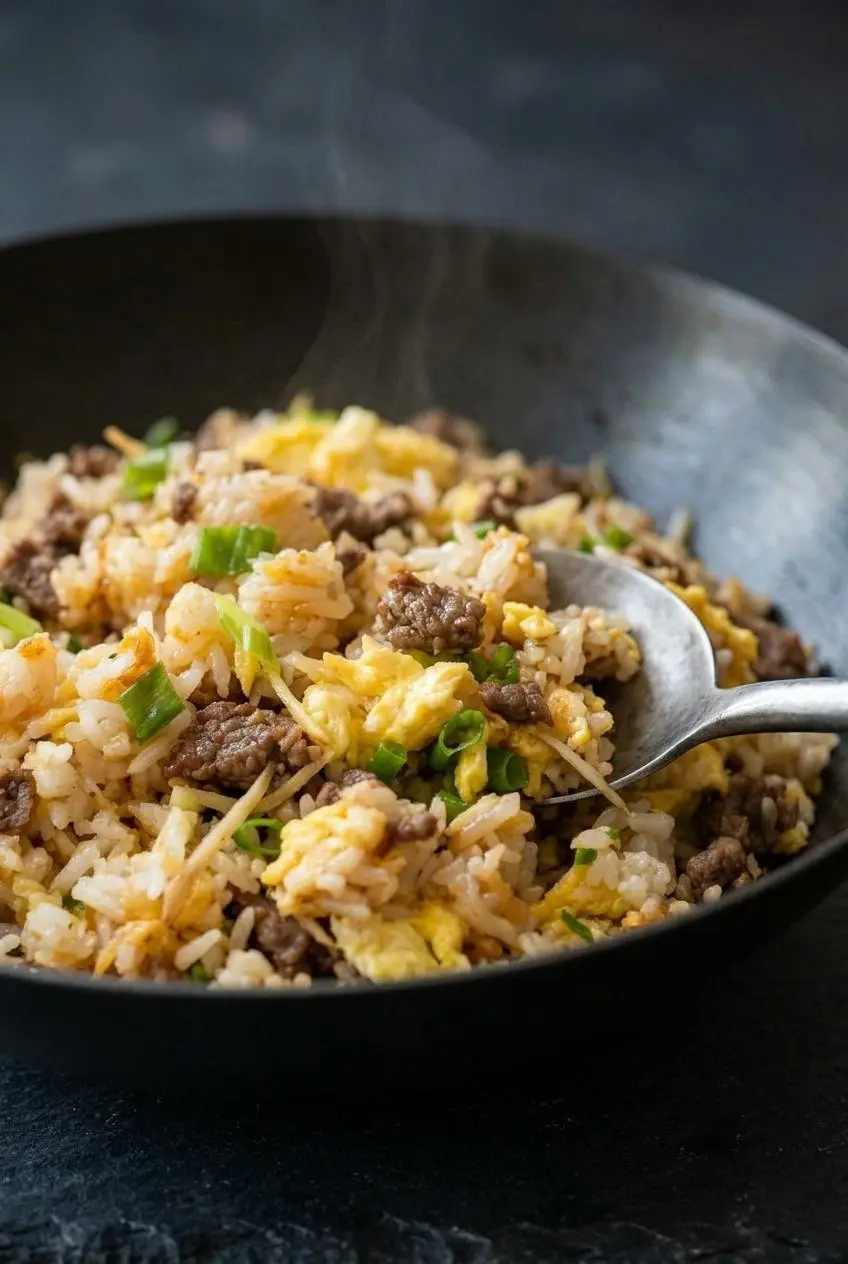
- If I’m starting with fresh rice, I wash the 16 ounce white rice and cook it with 16 ounce water in a rice cooker, using slightly less water than usual so the grains come out drier.
If I’m using leftover rice instead, I warm it in the microwave for about 60-90 seconds and break up the clumps before it ever gets near the wok. That little step saves a lot of frustration later. - I slice the 1 ounce ginger thin, then julienne it into fine strips, and I dice the 2 piece green onion, keeping them separate.
I crack the 3 eggs into a bowl but wait to beat them. Then I slice the 8 ounce beef against the grain into small pieces, cutting longer strips into shorter lengths if needed. I rinse the beef with cold water, drain it well, and squeeze out the extra moisture. After that, I mix together 1 tablespoon oyster sauce (Kikkoman®), 1 teaspoon light soy sauce (Kikkoman®), 0.25 teaspoon white pepper, 1 teaspoon cooking wine (Kikkoman®), 1 teaspoon cornstarch, and 1 tablespoon water, then work that marinade into the beef. It should look lightly coated, not soupy. - Once the rice is ready, I heat the wok on high and fluff the rice while it comes up to temperature.
I add 1/4 teaspoon salt to the eggs and beat them well. Then I swirl 1 tbsp oil around the hot wok, pour in the eggs, and stir constantly for about 20 seconds on high heat. I pull them out while they are nearly cooked but still moist, because they will finish later and stay tender that way. - I add another tbsp of oil to the wok and spread the beef out so as much of it as possible touches the hot surface.
I leave it alone for about 20 seconds to brown, flip it, and cook the second side for another 20 seconds. If it looks pale, I turn the heat up a touch. I stop when the beef is about 80% cooked, mostly done with a little pink still showing, then move it to a bowl so it does not overcook. - With the leftover oil still in the wok, I toss in the ginger and stir-fry it for 15-20 seconds until it smells sharp and fragrant.
Then I add the rice and spread it out. I drizzle about 1 tbsp oil around the edge of the wok to help prevent sticking, lower the heat, and let the bottom sit undisturbed for about 30 seconds so it can toast instead of steam. After that, I stir and loosen the rice, breaking it into individual grains and mixing in the ginger. I keep cooking for about 2 minutes, giving it several 15-second stretches without stirring so I can hear that satisfying crackle. Then I season with 1 dash white pepper (about 1/4 teaspoon), 1 dash salt (about 1/4 teaspoon), and 2 teaspoon light soy sauce (Kikkoman®), sprinkling and drizzling them around the rice instead of dumping them in one spot. If the rice starts sticking, I add about 1 tsp more oil around the perimeter. Finally, I add 1 teaspoon dark soy sauce (Kikkoman® Tamari), stir well, and cook for about 1 minute until the color looks even. - I return the beef and eggs to the wok and stir-fry everything together for about 30 seconds with quicker motions.
Once it smells deeply savory and looks well mixed, I drizzle over 1 tablespoon sesame oil (Kikkoman®), add the chopped green onion, and toss just until combined. Then I turn off the heat and serve right away. Honestly, this is the moment when it smells better than takeout.
A richer finish if you want a glossy takeout style look
If you like a shinier, richer finish, stir in a small knob of unsalted butter after the heat is off. It is completely optional, but it gives the rice a glossy look and a softer, rounder finish.
The secret to great fried rice starts with the rice
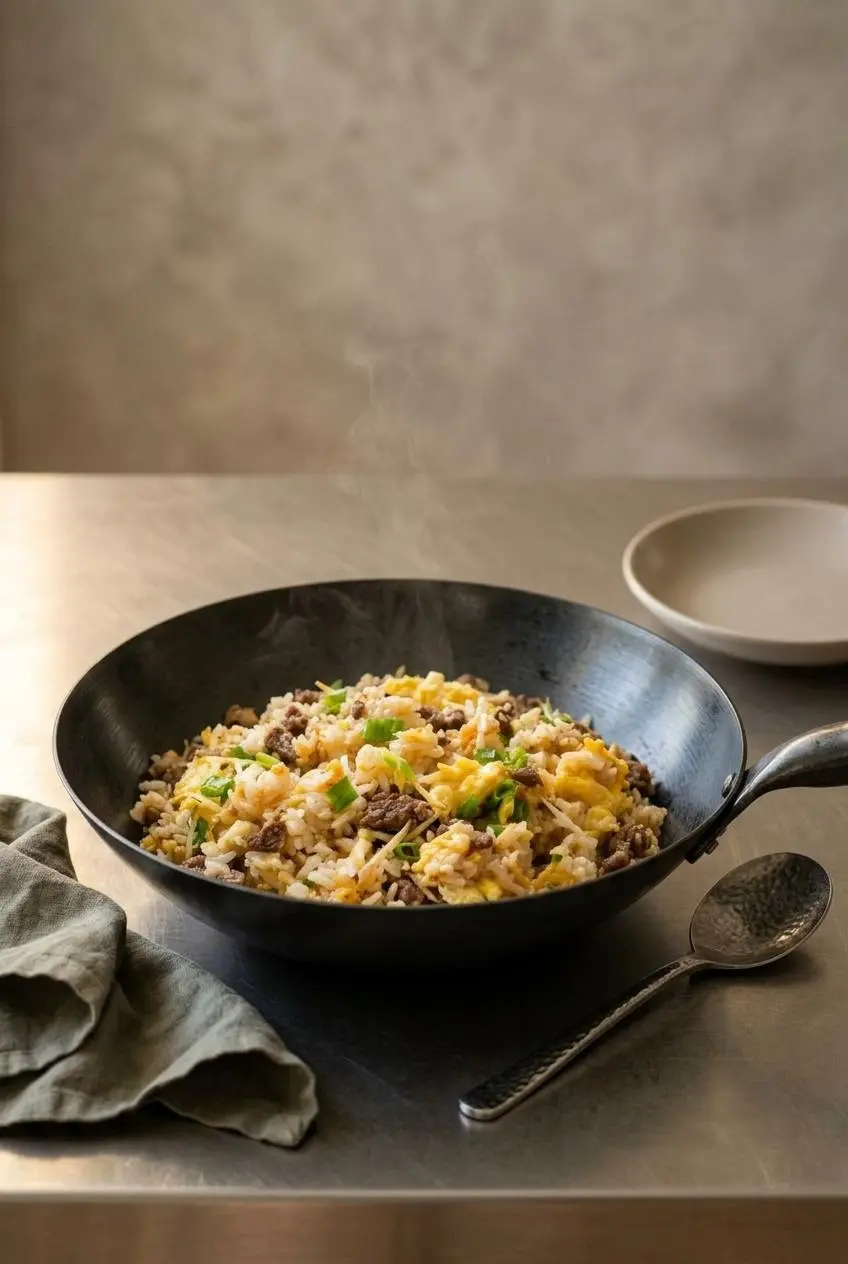
If you have ever wondered why restaurant fried rice stays fluffy, the answer is simple: drier rice fries better. Day-old rice has had time to cool and shed extra surface moisture, so the grains stay separate and soak up seasoning without turning gummy.
Leftover rice works beautifully here. Warm it just enough to loosen it, then break apart the clumps with your fingers or a spoon before it goes into the wok. Cold, solid chunks will season unevenly, and you will end up chasing lumps around the pan like they owe you money.
Fresh rice when you do not have leftovers
You can still make great fried rice with fresh rice. Use slightly less water, fluff it as soon as it is done, and let the steam escape so the grains dry out a bit before frying. That one move helps the rice stay distinct instead of sticky.
When I use fresh rice, I look for grains that feel light and separate rather than glossy and wet. If it still looks steamy and soft, give it a little breathing room before it hits the wok.
Which beef gives the best texture in the pan
The best beef depends on the texture you want and how quickly you want dinner on the table. This recipe works beautifully with thin-sliced steak, but it is also helpful to know how flank steak, sirloin steak, and ground beef compare.
| Beef option | Texture | Best for | What to know |
|---|---|---|---|
| Flank steak | Chewy in a good way when sliced right | Big beefy flavor | Slice thinly against the grain for the most tender bite |
| Sirloin steak | Tender and a little softer | An easy, reliable weeknight version | Browns well and feels a bit more forgiving in the pan |
| Ground beef | Crumbly and savory | Budget-friendly, very fast cooking | Great when you want convenience more than steak-like texture |
Flank steak gives you that classic stir-fry chew and deep beef flavor. Sirloin is usually a little more tender and easier for newer cooks to manage. Ground beef changes the texture of the dish, but it is a solid shortcut for busy nights, and if that is your style, you might also like this Korean Ground Beef Bowl.
How to keep beef tender instead of chewy
Three things matter most here: slicing against the grain, using the cornstarch marinade, and cooking the beef fast. Slicing against the grain shortens the muscle fibers, so the beef bites more cleanly instead of fighting back.
The marinade helps protect the surface and hold onto moisture during the quick sear. I also like the rinse-and-dry step in this method. It gives the beef a cleaner flavor and helps the marinade cling better once the extra moisture is squeezed out.
If you switch to ground beef, cook it through before adding it back at the end. For general doneness guidance, especially with ground beef, check this safe minimum internal temperature chart.
How to get wok hei at home, even without a wok
Wok hei is that lightly smoky, toasted flavor you get when rice hits a very hot pan and chars in tiny spots. It is not magic. It is heat, timing, and a little patience.
Even if you use a skillet instead of a wok, you can chase the same effect by preheating the pan well, cooking the eggs and beef separately, and giving the rice short undisturbed bursts so it can toast. You want to hear a sizzle and crackle, not a soft hiss of steam.
Keep the rice in contact with the hot surface, then stir, then let it sit again. That rhythm matters more than fancy tossing. If you love the same pan-fried rice technique in a meat-free version, Vegetable Fried Rice uses a very similar approach.
Why overcrowding ruins the texture
Too much food in the pan drops the heat fast. Then the rice steams, the beef turns gray before it browns, and the whole dish loses that dry, toasty edge that makes fried rice so good.
The signs are easy to spot: lots of moisture collecting in the pan, no crackling sound, and rice that looks glossy instead of lightly toasted. If that happens, cook in smaller batches so the pan can stay hot enough to sear instead of simmer.
When Beef Fried Rice tastes bland or turns mushy
A lot of home cooks run into the same few problems, and the fixes are usually simple. Here is the quick rescue guide I wish everyone had the first time they made fried rice.
| Problem | Likely cause | What helps |
|---|---|---|
| Bland flavor | The rice did not toast before seasoning | Give the rice time in the hot pan before adding sauces |
| Too salty | Sauce landed in one spot | Drizzle seasonings around the rice for even coverage |
| Clumpy rice | Cold lumps went into the wok | Warm and break up the rice first |
| Mushy texture | Rice was too wet or pan was crowded | Use drier rice and let it toast undisturbed |
| Tough beef | Slices were too thick or cooked too long | Slice against the grain and pull it at about 80% cooked |
Why the flavor falls flat
Fried rice tastes flat when the rice never gets a chance to fry on its own. That toasty step builds flavor before the soy sauce, salt, and pepper even go in.
Cooking the eggs and beef separately also matters more than it seems. Each ingredient gets its own texture, and the wok stays hot enough to brown instead of steam. Then the sesame oil goes in at the end, where its aroma actually survives. The best part? That final toss smells nutty, savory, and a little smoky all at once.
Make ahead plans that still keep the rice lively
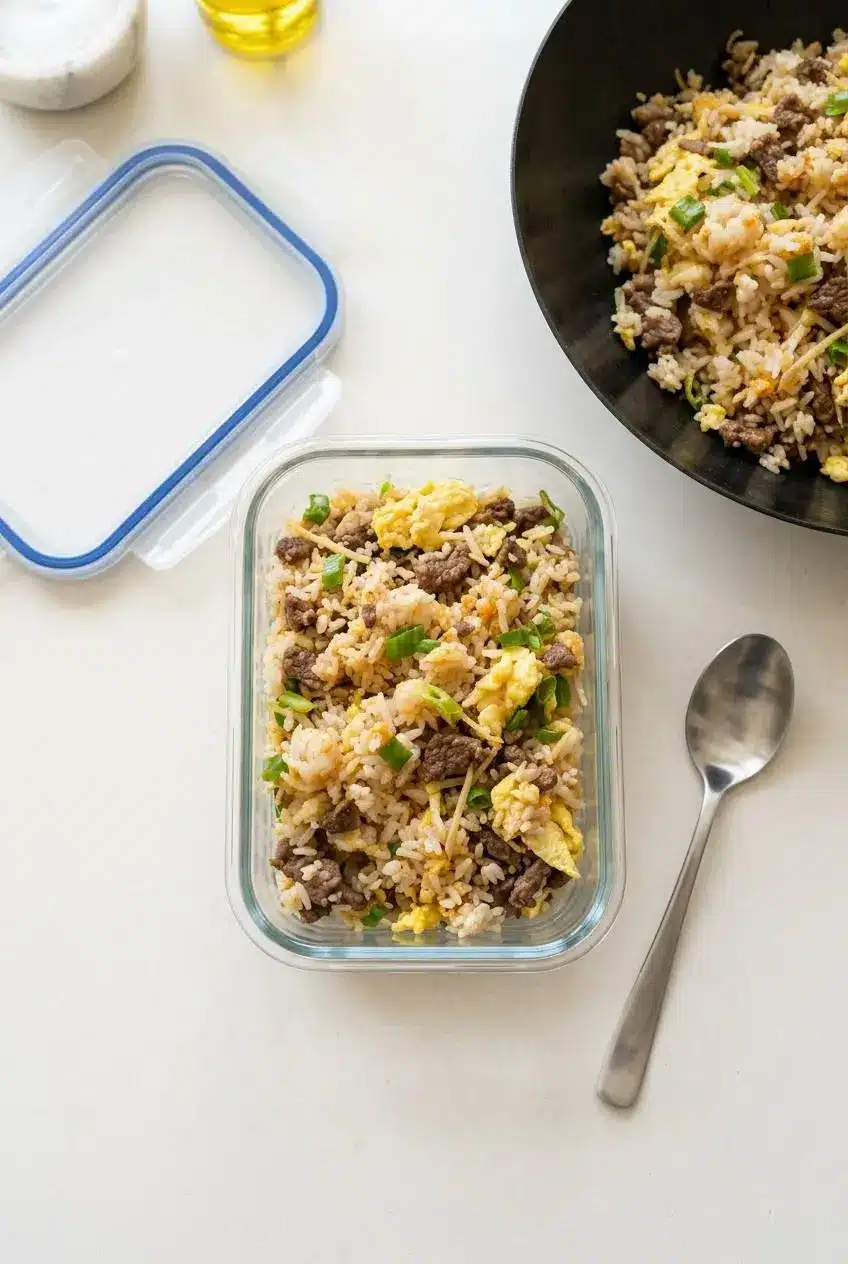
This dish is very make-ahead friendly when you think in components. Rice can be cooked ahead, and the ginger, green onion, and beef can be prepped before dinner so the final stir-fry stays quick.
If you are planning ahead, keep the rice loose rather than packed down hard in a container. A compact brick of rice is harder to break up later. I also prefer storing the cooked components separately when possible, because the rice keeps a better texture when it is not sitting under steam from hot beef and eggs.
For leftovers, cool them promptly, refrigerate, and reheat until steaming hot before serving. If you want to freeze portions, do it once the rice has fully cooled so the grains stay as separate as possible.
Best way to reheat without turning it dry
For fridge leftovers, I like a skillet over medium heat with a little oil. Break up the cold rice as it warms, and keep it moving once it loosens so the grains heat evenly.
For frozen leftovers, thawing partway in the fridge can make reheating easier, but you can also warm it gently in a pan and break it up as the ice releases. Avoid blasting it over high heat right away, because the outside dries out before the center catches up.
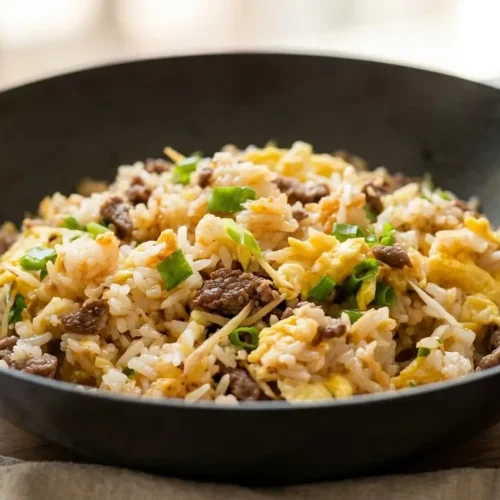
Beef Fried Rice

Equipment
- wok
- Rice Cooker
- bowl
- Spatula
- Microwave
Ingredients
Main Ingredients
- 16 ounce white rice Thai jasmine rice preferred
- 16 ounce water slightly less than 1 part water to 1 part rice
- 8 ounce beef minced
- 1 ounce ginger julienned
- 2 piece green onion diced
- 3 eggs beaten with 1/4 teaspoon salt
Beef Marinade
- 1 tablespoon oyster sauce Kikkoman®
- 1 teaspoon light soy sauce Kikkoman®
- 0.25 teaspoon white pepper
- 1 teaspoon cooking wine Kikkoman®
- 1 teaspoon cornstarch
- 1 tablespoon water
Fried Rice Seasoning
- 1 dash white pepper about 1/4 teaspoon
- 1 dash salt about 1/4 teaspoon
- 2 teaspoon light soy sauce Kikkoman®
- 1 teaspoon dark soy sauce Kikkoman® Tamari
- 1 tablespoon sesame oil Kikkoman®
Instructions
- If I’m starting with fresh rice, I wash the 16 ounce white rice and cook it with 16 ounce water in a rice cooker, using slightly less water than usual so the grains come out drier. If I’m using leftover rice instead, I warm it in the microwave for about 60-90 seconds and break up the clumps before it ever gets near the wok. That little step saves a lot of frustration later.
- I slice the 1 ounce ginger thin, then julienne it into fine strips, and I dice the 2 piece green onion, keeping them separate. I crack the 3 eggs into a bowl but wait to beat them. Then I slice the 8 ounce beef against the grain into small pieces, cutting longer strips into shorter lengths if needed. I rinse the beef with cold water, drain it well, and squeeze out the extra moisture. After that, I mix together 1 tablespoon oyster sauce (Kikkoman®), 1 teaspoon light soy sauce (Kikkoman®), 0.25 teaspoon white pepper, 1 teaspoon cooking wine (Kikkoman®), 1 teaspoon cornstarch, and 1 tablespoon water, then work that marinade into the beef. It should look lightly coated, not soupy.
- Once the rice is ready, I heat the wok on high and fluff the rice while it comes up to temperature. I add 1/4 teaspoon salt to the eggs and beat them well. Then I swirl 1 tbsp oil around the hot wok, pour in the eggs, and stir constantly for about 20 seconds on high heat. I pull them out while they are nearly cooked but still moist, because they will finish later and stay tender that way.
- I add another tbsp of oil to the wok and spread the beef out so as much of it as possible touches the hot surface. I leave it alone for about 20 seconds to brown, flip it, and cook the second side for another 20 seconds. If it looks pale, I turn the heat up a touch. I stop when the beef is about 80% cooked, mostly done with a little pink still showing, then move it to a bowl so it does not overcook.
- With the leftover oil still in the wok, I toss in the ginger and stir-fry it for 15-20 seconds until it smells sharp and fragrant. Then I add the rice and spread it out. I drizzle about 1 tbsp oil around the edge of the wok to help prevent sticking, lower the heat, and let the bottom sit undisturbed for about 30 seconds so it can toast instead of steam. After that, I stir and loosen the rice, breaking it into individual grains and mixing in the ginger. I keep cooking for about 2 minutes, giving it several 15-second stretches without stirring so I can hear that satisfying crackle. Then I season with 1 dash white pepper (about 1/4 teaspoon), 1 dash salt (about 1/4 teaspoon), and 2 teaspoon light soy sauce (Kikkoman®), sprinkling and drizzling them around the rice instead of dumping them in one spot. If the rice starts sticking, I add about 1 tsp more oil around the perimeter. Finally, I add 1 teaspoon dark soy sauce (Kikkoman® Tamari), stir well, and cook for about 1 minute until the color looks even.
- I return the beef and eggs to the wok and stir-fry everything together for about 30 seconds with quicker motions. Once it smells deeply savory and looks well mixed, I drizzle over 1 tablespoon sesame oil (Kikkoman®), add the chopped green onion, and toss just until combined. Then I turn off the heat and serve right away. Honestly, this is the moment when it smells better than takeout.
Notes
Conclusion
This is the kind of dinner that pays off fast: tender beef, fluffy rice, and smoky savory flavor in one pan. If you remember one thing, make it this: dry rice and a hot pan do most of the heavy lifting.
And if you want that glossy takeout look, the optional butter finish is a nice little extra. Serve it hot, trust your ears when the rice crackles, and you will be in very good shape.
FAQ
What is the best cut of beef for fried rice?
Flank steak and sirloin are both excellent. Flank has a beefier chew, sirloin tends to be a little more tender, and ground beef works well when you want a faster, budget-friendly option. Whatever you choose, slice thin pieces against the grain if you are using steak.
How do I get restaurant quality flavor and wok hei at home?
Preheat the wok or skillet well, cook the eggs and beef separately first, and let the rice sit in short undisturbed bursts so it toasts. Do not overcrowd the pan, or the rice will steam instead of picking up that smoky edge.
Why is my fried rice mushy, and how can I fix it?
The usual cause is wet, warm rice. Break up clumps before frying, use rice that feels a bit dry, and give it time to toast before adding the sauces. Once the rice is hot and loose, the seasoning spreads much more evenly.
What is the secret to tender, juicy beef in fried rice?
Slice the beef against the grain, coat it with the cornstarch marinade, and cook it quickly over high heat. Pull it from the pan before it is fully done, then return it at the end so it finishes without turning tough.
Can I make Beef Fried Rice ahead of time?
Yes. Leftover rice is actually ideal here, and you can prep the beef, ginger, and green onion ahead to make dinner faster. Reheat leftovers in a pan with a little oil for the best texture.
What is the difference between light and dark soy sauce, and do I need both?
Light soy sauce brings salt and savory flavor, while dark soy sauce mainly adds deeper color and a slightly richer look. They do different jobs, so using both gives the fried rice a more balanced result.