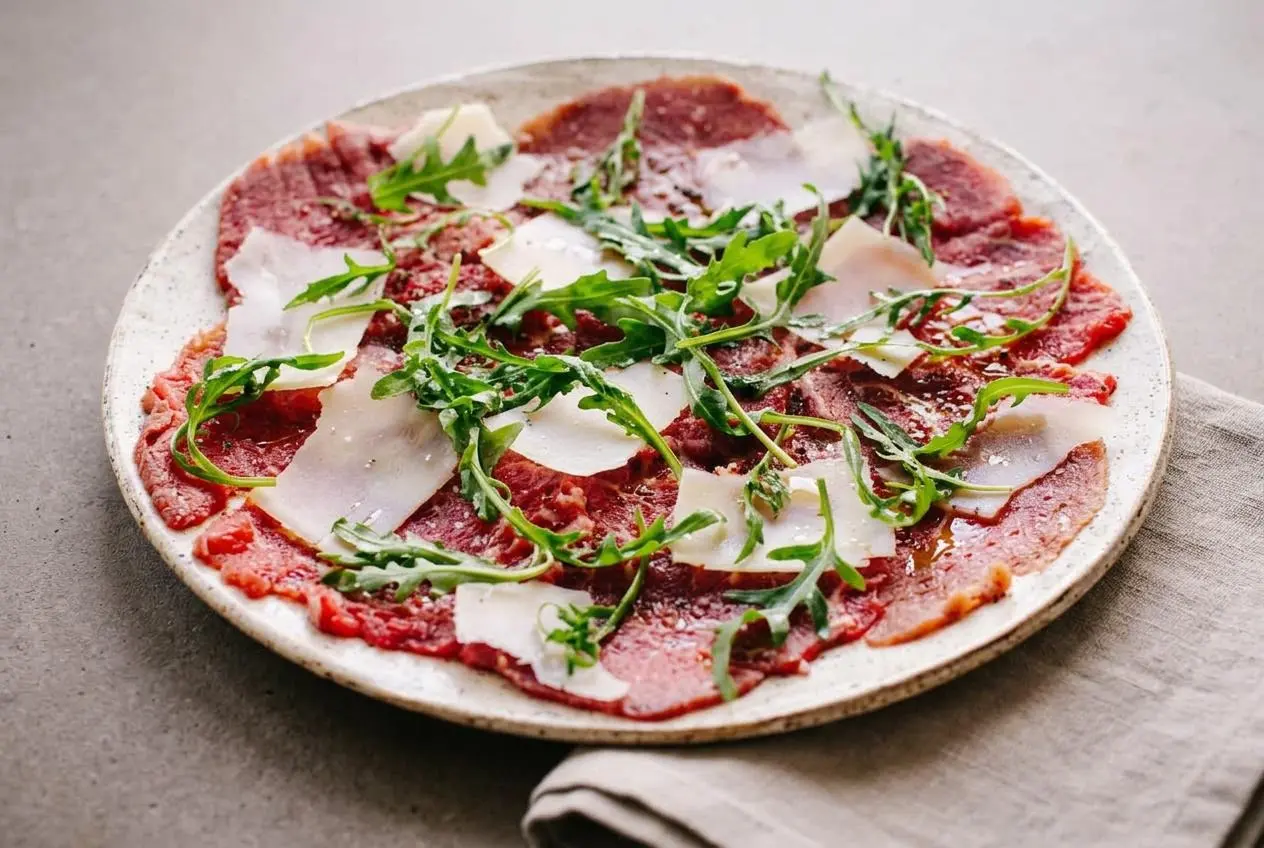
Beef carpaccio is an Italian appetizer of paper-thin raw beef tenderloin finished with olive oil, lemon juice, arugula, and shaved Parmesan.
Beef carpaccio feels luxurious because the chilled filet becomes silky and almost translucent, while peppery greens and salty cheese give every bite contrast.
The secret is keeping everything cold, then dressing at the last possible moment. That first lemony bite is worth the timing.
Set your serving plates in the freezer for 20 minutes before you begin so the delicate beef stays cold when it hits the plate.
Ingredients for Classic Beef Carpaccio
Each ingredient brings a distinct element: tender beef creates the base, lemon adds brightness, olive oil adds richness, and arugula and cheese bring peppery, savory balance.
- 8 oz Filet mignon beef tenderloin
- Flaky sea salt for sprinkling
- Freshly cracked black pepper
- 2 cups arugula
- 1 tablespoon freshly squeezed lemon juice plus more for squeezing over the beef
- 1 tablespoons extra virgin olive oil plus more for drizzling
- 2 oz Parmigiano Reggiano or Grana Padano cheese
Choose a center-cut piece of filet mignon with a tidy shape and little visible connective tissue. Its fine grain stays tender when eaten raw. Use fruity extra virgin olive oil, freshly cracked pepper, and a wedge of Parmigiano Reggiano or Grana Padano that can be shaved into wide, delicate shards.
Arugula should taste lively and peppery, not tired or wet. The lemon wakes up the greens and beef, while flaky salt gives small pops of seasoning rather than a heavy, salty finish.
I wrap the tenderloin snugly before chilling it so the meat holds a neat, round shape and produces cleaner slices.
How to Make Beef Carpaccio
- Chill the filet mignon in the freezer for 1 to 2 hours, stopping when it is firm but still yields slightly when pressed.
The beef should feel dense and semi-firm, not frozen solid. - Sharpen a long, very sharp knife, then cut the tenderloin across the grain into slices about ¼ to ⅛ inch thick.
Use one smooth forward stroke per cut rather than sawing, which can tear the fibers. - Sandwich each slice between two sheets of plastic wrap or parchment paper and flatten it with the smooth side of a meat mallet.
Tap gently until the beef spreads into a very thin round with a translucent sheen. - Peel back one sheet, support the beef with your palm, and lay it onto a chilled serving plate before removing the second sheet.
Handle each round lightly so it stays intact and smooth. - Continue until the beef covers two dinner plates or one extra-large platter, overlapping the slices slightly where needed.
A mostly even layer gives each serving the same tender texture. - Drizzle the beef with extra virgin olive oil, add a light squeeze of lemon juice, and season with flaky sea salt and freshly cracked black pepper.
The surface should glisten without sitting in a pool of dressing. - Use a vegetable peeler to shave long pieces of Parmigiano Reggiano or Grana Padano over the beef.
The cheese should fall in loose curls rather than thick, heavy strips. - Toss the arugula with 1 tablespoon lemon juice, 1 tablespoon olive oil, salt, and pepper, then scatter it over the beef and serve immediately.
The greens should stay crisp and smell peppery as the dressing coats them.
Selecting Beef and Food Safety Rules
Raw beef deserves careful handling from the butcher counter through plating. Buy the tenderloin shortly before serving, keep it refrigerated below 40 °F, and use a clean board, knife, hands, and work surface throughout preparation. Safe handling, chilling, and sanitation help reduce foodborne illness risk with raw beef preparations.
Pregnant individuals, young children, older adults, and anyone with a weakened immune system should take extra caution with raw or undercooked meat. Raw and undercooked meat can pose a greater foodborne illness risk for vulnerable groups, so choose a fully cooked alternative for those diners.
Choosing Center-Cut Tenderloin
Whole filet mignon or center-cut beef tenderloin is the right choice for carpaccio because it has a fine, even grain and very little gristle. Tougher cuts such as flank steak or sirloin can taste chewy even when sliced thinly.
Ask the butcher for a whole, center-cut tenderloin piece that has been kept properly chilled and was cut fresh. It also helps to ask when the beef arrived and whether the piece has been handled minimally. A whole muscle cut gives you an intact exterior to trim and a clean interior for slicing.
Carpaccio and classic beef tartare are both raw beef preparations, but their textures are quite different. Carpaccio is sliced and flattened into thin sheets, while tartare is finely chopped or diced and usually mixed with seasonings.
Optional Flash-Sear for Surface Safety
If completely raw beef makes you hesitant, briefly sear the whole tenderloin in a blazing-hot skillet for 30 seconds per side, then chill it before slicing. This optional approach cooks only the outer edge while leaving the center red and tender.
Use this as a flavor and texture variation, not as a guarantee of safety. Keep the beef cold after searing and handle it with the same clean-surface habits used for the raw version.
How to Slice Beef Paper-Thin
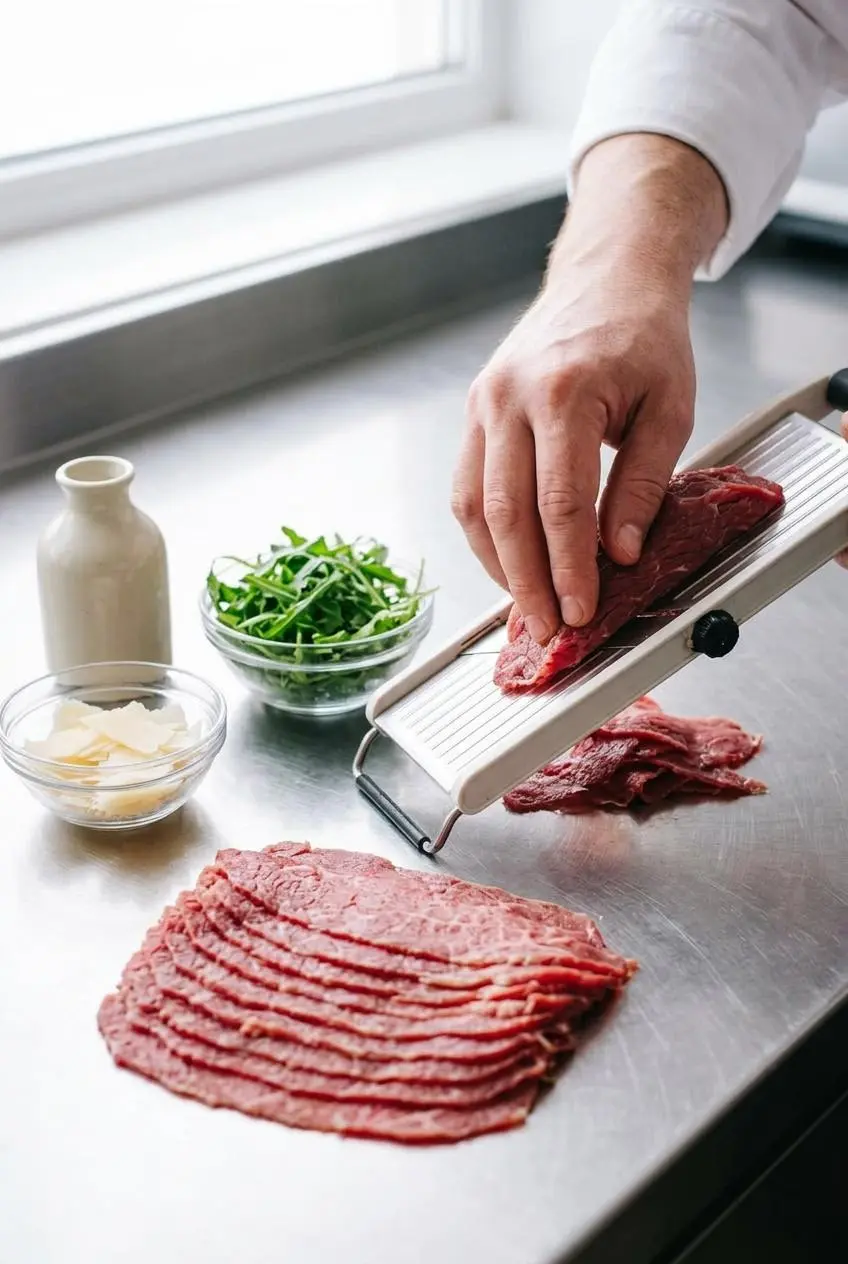
Paper-thin slices come from cold, firm meat and a sharp blade, not brute force. Once the tenderloin softens, the knife drags and the slices turn ragged instead of clean.
Freezer-Firming Method
For especially neat slicing, chill the tenderloin for 60 to 90 minutes before cutting. The ideal texture feels like a dense rubber eraser: firm enough to guide the knife, but pliable enough that it does not crack or chip beneath the blade.
Keep the beef wrapped while it chills. If it becomes rock-hard, let it soften slightly in the refrigerator until the knife can pass through with steady pressure. Avoid slicing beef at room temperature, since warm meat compresses under the blade and tears into uneven pieces.
Rolling and Pounding Between Parchment
Two sheets of parchment keep the beef from sticking to the mallet and protect the slices from rough handling. Work one piece at a time and press from the center outward with gentle, even taps.
Use the flat face of a meat mallet or a heavy rolling pin. The textured, spiked side can puncture the meat and leave holes. Stop as soon as the slice spreads into a thin, nearly see-through disk, because repeated pounding can make the edges fragile.
Classic Dressing and Plating Technique
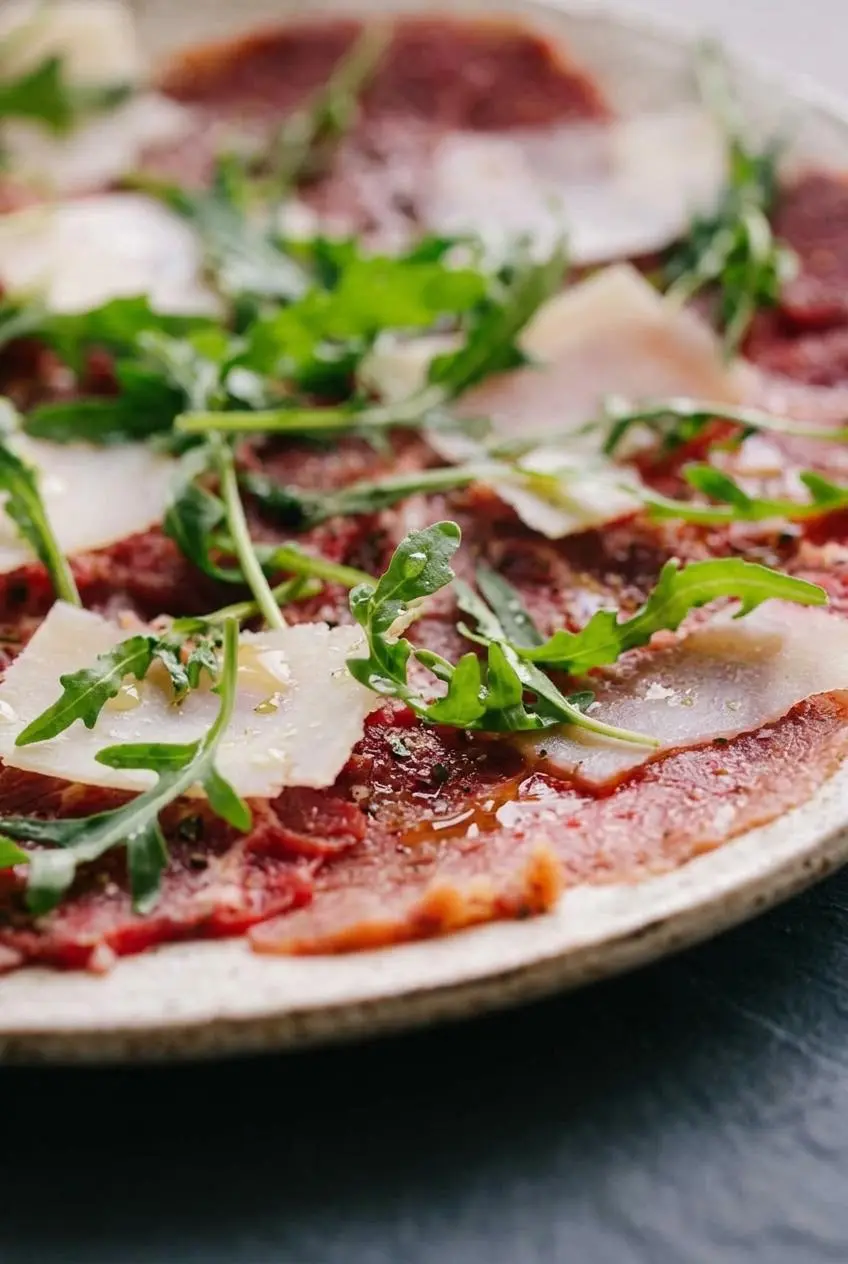
Carpaccio needs a restrained hand with dressing. The beef should taste clean and rich first, with lemon, olive oil, cheese, and greens adding contrast rather than hiding it.
Balancing Olive Oil and Fresh Lemon
Drizzle olive oil over the plated beef first, then add just a small squeeze of lemon immediately before serving. Lemon juice changes the surface of raw beef as it sits, so dressing too early can dull the rosy color and give the slices a cured texture.
Freshly cracked black pepper matters here. Its sharp fragrance rises when it meets the oil, especially after the arugula is dressed and scattered over the plate.
Shaved Parmigiano and Arugula Placement
Use a vegetable peeler to pull broad shards from a firm wedge of Parmigiano Reggiano. Pre-shredded cheese lacks the delicate shape and can clump instead of settling lightly across the beef.
Toss the arugula with lemon juice, olive oil, salt, and pepper just before serving, then place it in a loose mound over the center. This keeps the leaves crisp and lets the beef remain visible around the edges.
Venetian Cipriani Style Mustard Drizzle
For an optional Venetian-inspired finish, replace the plain olive oil drizzle with a light creamy mixture of mayonnaise, Dijon mustard, Worcestershire sauce, and lemon juice. It adds tangy richness and works especially well when serving carpaccio as a passed appetizer.
Keep the sauce light and use it sparingly so the tenderloin still tastes like tenderloin. This variation belongs on top at serving time, never as a marinade for the beef.
Serving and Entertaining Ideas
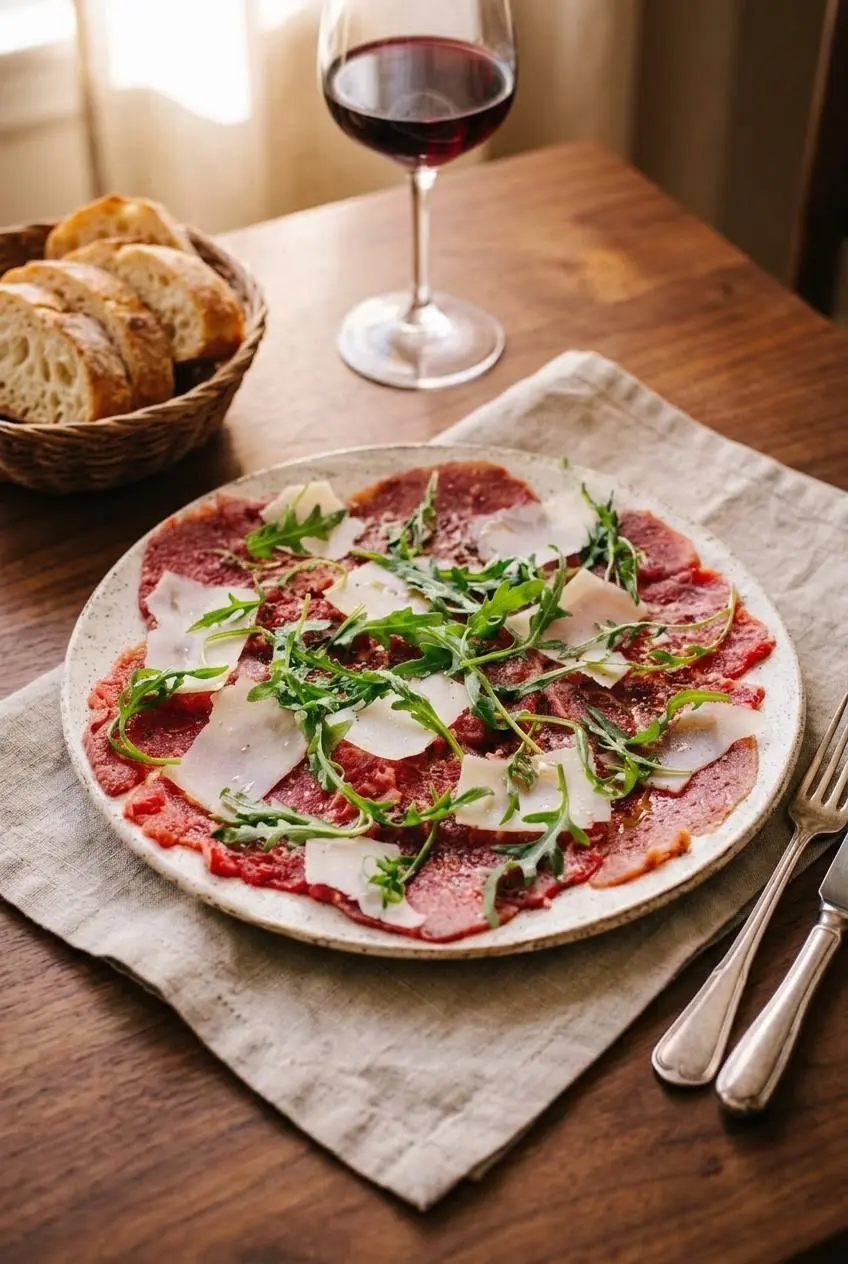
Serve carpaccio as soon as it is dressed, while the plate is cold and the arugula still has lift. Warm crusty ciabatta, garlic-rubbed crostini, or crunchy breadsticks are great for catching the olive oil and lemon at the edge of the plate.
For an Italian-style dinner, follow this light starter with a rich baked main such as classic beef lasagna. Keep the carpaccio portion modest so its clean, bright flavor does not compete with the rest of the meal.
Offer optional finishing touches separately so guests can choose their level of briny crunch:
- Quick-fried capers for crisp, salty bursts.
- Very thinly sliced shallots for sharpness and texture.
- Fresh lemon zest for a more fragrant citrus finish.
- Microgreens or shaved truffle for a dinner-party presentation.
Keep the platter chilled and serve it promptly rather than leaving raw beef out during a long gathering. Once dressed, carpaccio does not hold well as leftovers, since the lemon softens the beef and wilts the greens.
Troubleshooting Common Preparation Mistakes
Most carpaccio problems come down to temperature, knife sharpness, or heavy-handed pounding. These quick fixes protect the tender texture that makes the dish special.
- The beef tears while slicing: The tenderloin is likely too soft or the knife needs sharpening. Return the wrapped meat to the freezer for 15 minutes, then slice with long, smooth strokes.
- The slices are too thick: Place them between parchment sheets and flatten gently with a rolling pin or the smooth side of a mallet. Work outward from the center to avoid a thick middle and torn edges.
- The beef looks gray: Lemon juice was probably added too soon. Plate first, then use lemon only moments before serving.
- The arugula is limp: Soak it briefly in ice water, dry it thoroughly, and wait to dress it until the beef is already plated.
- The carpaccio tastes flat: Add flaky sea salt and freshly cracked pepper just before serving. Pre-ground pepper lacks the fragrant bite that balances the rich beef and cheese.
- The slices feel chewy: Check that you are cutting across the grain and using center-cut tenderloin. Flattening helps, but it cannot fully correct a tough cut.
Conclusion
Restaurant-style carpaccio comes together through small details: excellent center-cut tenderloin, a very sharp knife, a firm chill, and a cold platter.
Keep the dressing light, add the lemon at the last moment, and let the beef stay the star. A little patience makes every slice feel elegant.
Frequently Asked Questions
Is Beef Carpaccio Completely Raw?
Yes. Classic carpaccio is made with raw beef tenderloin sliced very thinly and finished with olive oil, lemon, arugula, Parmesan, salt, and pepper. A quick exterior sear is an optional adaptation for people who prefer lightly cooked edges, but the center remains raw.
How Do You Avoid Getting Sick From Beef Carpaccio?
Buy a whole center-cut tenderloin from a trusted butcher, keep it below 40 °F, sanitize surfaces, and serve it immediately after plating. Safe food handling, chilling, and storage practices help reduce foodborne illness risk. Raw beef carries risk, so vulnerable diners should choose a cooked alternative.
What Is the Best Cut of Beef for Carpaccio?
Center-cut beef tenderloin, also sold as filet mignon, is the best cut. It has a fine grain, very little connective tissue, and a naturally tender bite. Choose a whole piece rather than pre-sliced beef so you can chill, trim, and cut it cleanly at home.
Can You Make Beef Carpaccio Ahead of Time?
For the best texture, prepare carpaccio close to serving time. You can chill the whole tenderloin in advance and have the parchment, sharp knife, plates, and garnishes ready. Wait to slice, season, dress, and add arugula until just before serving. Dressed carpaccio is best enjoyed right away rather than saved for later.
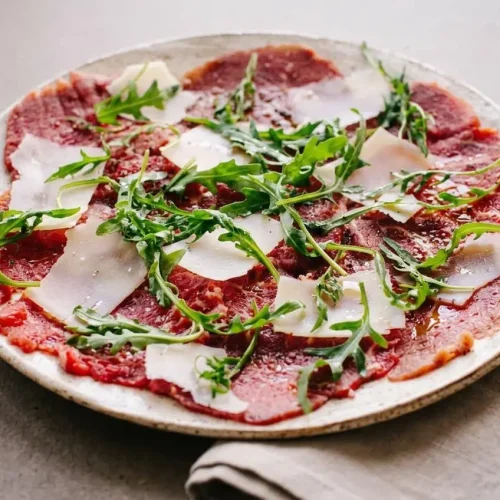
Beef Carpaccio

Equipment
- Very Sharp Knife
- Knife Sharpener
- Meat Pounder or rolling pin
- Plastic wrap or parchment paper
- Chilled serving plate
Ingredients
- 8 oz Filet mignon beef tenderloin
- Flaky sea salt for sprinkling
- Freshly cracked black pepper
- 2 cups arugula
- 1 tablespoon freshly squeezed lemon juice plus more for squeezing over the beef
- 1 tablespoons extra virgin olive oil plus more for drizzling
- 2 oz Parmigiano Reggiano or Grana Padano cheese
Instructions
- Chill the filet mignon in the freezer for 1 to 2 hours, stopping when it is firm but still yields slightly when pressed. The beef should feel dense and semi-firm, not frozen solid.
- Sharpen a long, very sharp knife, then cut the tenderloin across the grain into slices about ¼ to ⅛ inch thick. Use one smooth forward stroke per cut rather than sawing, which can tear the fibers.
- Sandwich each slice between two sheets of plastic wrap or parchment paper and flatten it with the smooth side of a meat mallet. Tap gently until the beef spreads into a very thin round with a translucent sheen.
- Peel back one sheet, support the beef with your palm, and lay it onto a chilled serving plate before removing the second sheet. Handle each round lightly so it stays intact and smooth.
- Continue until the beef covers two dinner plates or one extra-large platter, overlapping the slices slightly where needed. A mostly even layer gives each serving the same tender texture.
- Drizzle the beef with extra virgin olive oil, add a light squeeze of lemon juice, and season with flaky sea salt and freshly cracked black pepper. The surface should glisten without sitting in a pool of dressing.
- Use a vegetable peeler to shave long pieces of Parmigiano Reggiano or Grana Padano over the beef. The cheese should fall in loose curls rather than thick, heavy strips.
- Toss the arugula with 1 tablespoon lemon juice, 1 tablespoon olive oil, salt, and pepper, then scatter it over the beef and serve immediately. The greens should stay crisp and smell peppery as the dressing coats them.