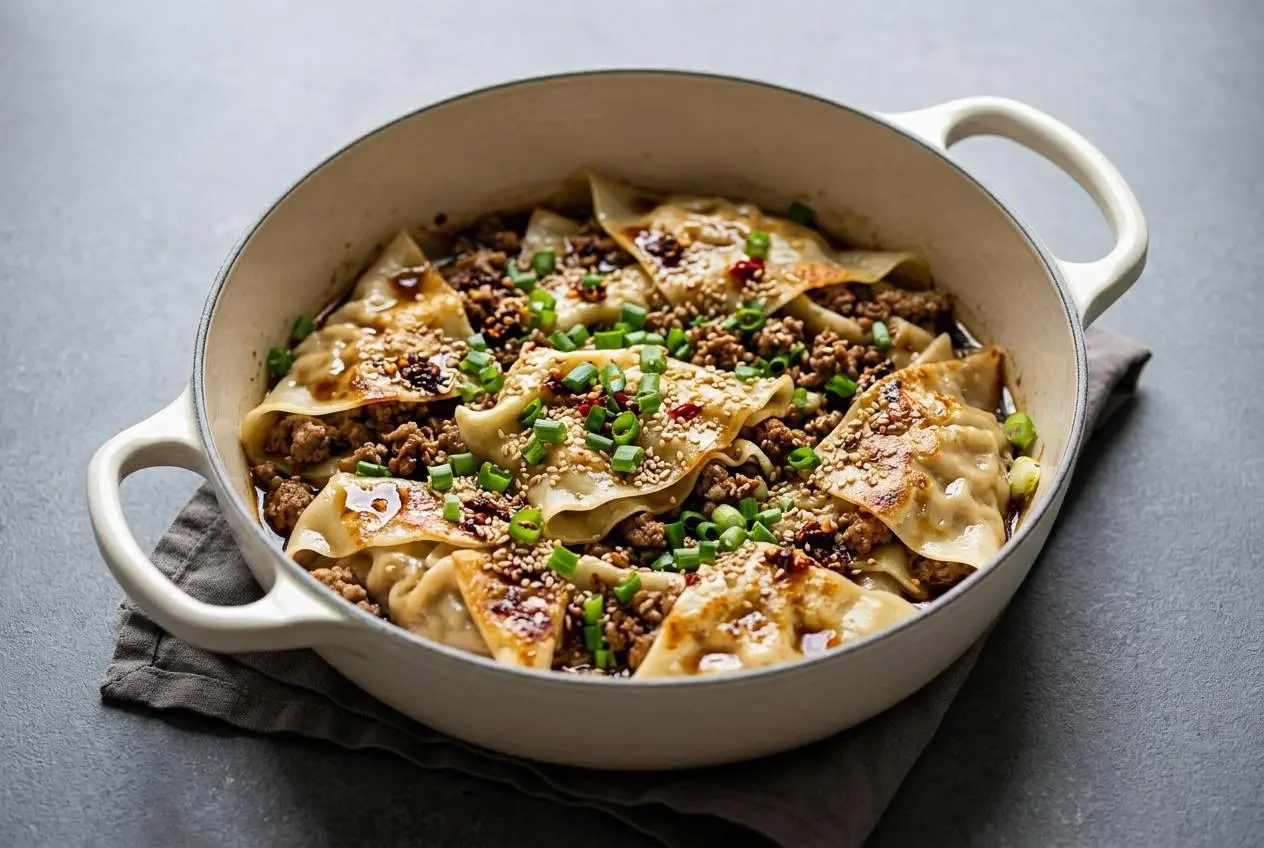
Drape dumpling wrappers over seasoned ground pork mounds, then steam and crisp them in one skillet. These blanket dumplings deliver tender tops and golden meat bottoms without pleating, with a prep and cooking time of about 25 minutes.
When crispy potstickers sound good but folding dough doesn’t, no fold blanket dumplings offer a practical shortcut. Each wrapper covers the top and sides of the filling, leaving the meat underneath exposed to brown against the skillet.
Ginger, garlic, green onions, and toasted sesame oil bring familiar dumpling flavor to every bite. Assemble everything on a plate before heating the pan, then let covered steam and uncovered heat do different jobs. That final crackle is worth waiting for.
Choose a nonstick skillet with a snug-fitting lid, and leave room between the dumplings rather than squeezing them all into one batch.
Ingredients Needed and Smart Substitutions
The filling ingredients provide savory depth, aroma, moisture, and structure, while the wrappers soften in steam. Vegetable oil helps brown the exposed meat bottoms, water cooks the dough, and the serving sauces add contrast to the rich filling.
- 24 dumpling wrappers
- 2 teaspoons vegetable oil
- ⅔ cup water
For the Filling
- 1 pound ground pork or ground chicken or turkey
- 4 green onions finely chopped
- 1½ tablespoons soy sauce
- 1½ tablespoons grated fresh ginger
- 1 tablespoon toasted sesame oil
- 1 clove garlic minced
- 1 teaspoon cornstarch
- ½ teaspoon black pepper
For Serving
- dumpling sauce chili crisp or sesame seeds
Cornstarch helps bind the meat juices as the filling cooks, giving the unsealed mound enough structure to stay together. Toasted sesame oil contributes fat and a nutty aroma, particularly helpful with lean poultry.
Fresh ginger brings warmth and brightness, while garlic adds a deeper savory edge. Chop the green onions finely so they distribute through the filling rather than poking out in large pieces. Soy sauce seasons the meat throughout.
I keep unused wrappers beneath a lightly damp paper towel so their edges stay flexible while shaping the filling.
Dumpling Wrappers vs Wonton Wrappers and Rice Paper
- Round dumpling wrappers: Wheat-based gyoza or potsticker wrappers provide sturdy coverage and a pleasantly chewy steamed top.
- Square wonton wrappers: These work without cutting or folding, though thinner varieties can draw up more around the edges during cooking.
- Rice paper: This produces a different, stickier texture rather than a wheat-dumpling bite. Briefly dip it in warm water until pliable before draping it over the filling, and check the package for handling directions.
Rice paper alone doesn’t make the whole dish gluten-free. If that matters for your meal, check the soy sauce, wrappers, and serving sauces as well.
Where to Find Wrappers at the Grocery Store
Check refrigerated produce displays near tofu, plant-based proteins, or fresh pasta, then look in the deli aisle. Asian supermarkets often carry wrappers in refrigerated cases or the freezer section. Ask for gyoza or potsticker wrappers if “dumpling wrappers” doesn’t turn up a match.
How to Make the No Fold Blanket Dumplings Step by Step
Plan on 15 minutes of prep and about 10 minutes of cooking for 6 servings. A smaller skillet will require batches, so allow additional cooking time rather than crowding the pan.
- Stir the ground meat, green onions, soy sauce, ginger, sesame oil, garlic, cornstarch, and black pepper together in a medium bowl until evenly distributed.
The mixture should look cohesive, with the aromatics spread throughout rather than gathered in pockets. - Portion heaping tablespoons of filling onto a plate, then cap each mound with a wrapper and press the dough against its top and sides while keeping the underside exposed.
A snug fit helps the dough grip the tacky filling without needing a folded seam. - Heat the vegetable oil in a large nonstick skillet over medium-high heat, arrange the dumplings with gaps between them, and carefully pour the water around them with the lid ready before covering and steaming for 6 to 8 minutes, continuing as needed to reach the appropriate internal temperature below.
The wrappers should soften from opaque and floury to glossy and slightly translucent, but their appearance alone cannot confirm that the meat is done. - Lift off the lid and keep cooking until the remaining water disappears and the exposed meat bases brown lightly.
Listen for bubbling to give way to a sharper crackle, then check underneath for a golden crust. - Transfer the dumplings to a serving plate and finish with additional green onion and your chosen dumpling sauce.
Serve while the tops remain tender and the freshly browned bottoms are crisp.
Keep your face and hands clear when adding water because steam rises immediately. Pour around the dumplings rather than directly over them, and cover promptly to trap the steam.
If cooking in batches, divide the oil and water between them as needed. Carefully wipe away browned residue between batches so it doesn’t scorch, and keep the remaining uncooked dumplings chilled while the first batch cooks.
Why Building on a Plate Beats Building in a Hot Pan
- Plate assembly: A parchment-lined plate gives you time to press the wrapper around cool, moist filling without reaching over splattering oil.
- Hot-pan assembly: Meat begins to firm and shrink as it heats, making it harder for a loosely dropped wrapper to catch and stay attached.
Press gently rather than flattening the filling. You want a compact mound with enough wrapper covering its sides, not a thin patty with dough perched on top.
Safe Internal Temperatures by Meat Type
Use a food thermometer to check the center of the filling: cook ground pork or beef to 160°F and ground chicken or turkey to 165°F. The lower temperature used for whole pork cuts does not apply to ground pork.
Insert the probe from the side into the center of a mound, keeping its tip away from the hot skillet. If the filling needs more cooking, continue the covered phase before concentrating on the crust.
Expert Tips and Troubleshooting for Crispy Bottoms
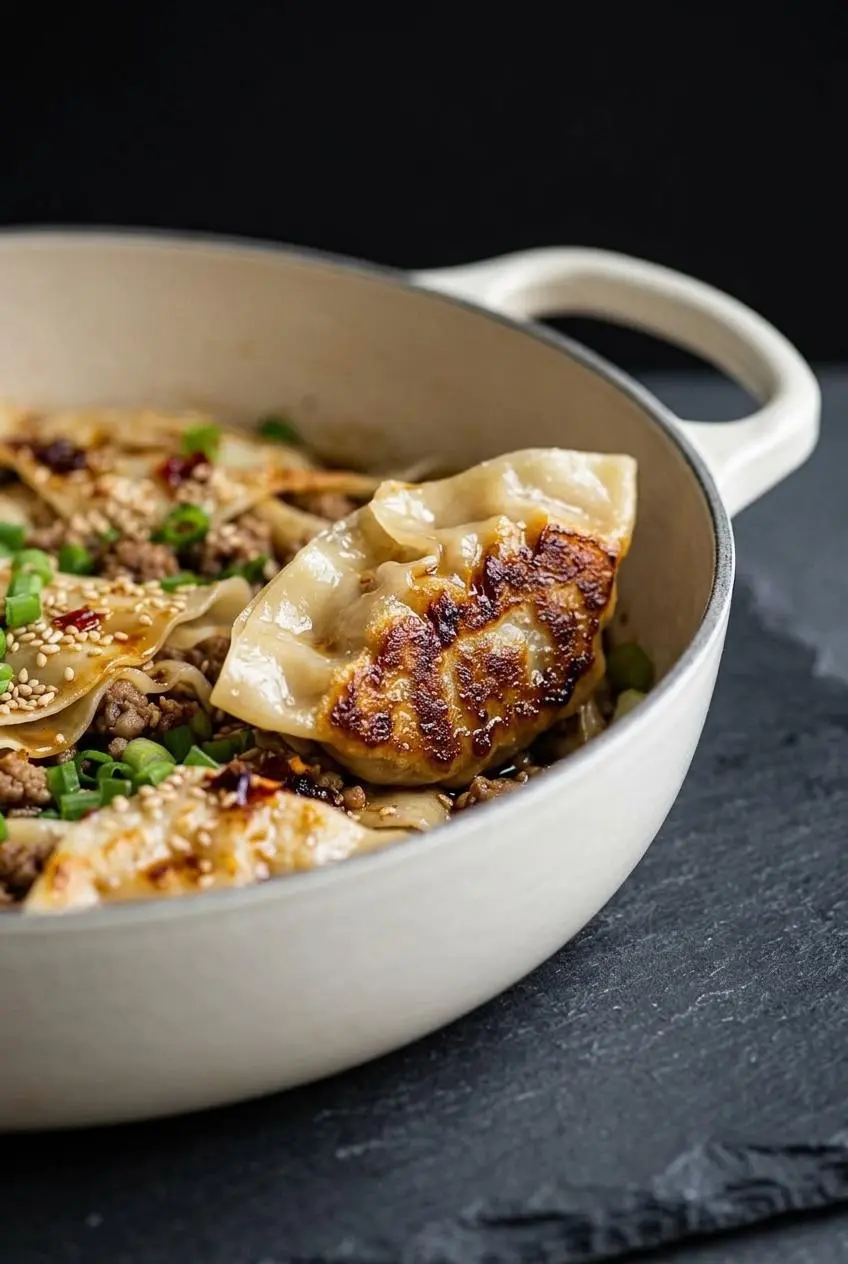
Most texture problems come from dry dough, crowded cooking space, or water left in the skillet. Match the fix to the problem instead of simply turning up the heat.
- Dry, cracked wrapper edges: Exposure dries the dough before cooking. Keep the unused stack covered with a lightly damp paper towel, not a dripping one.
- Wrappers slipping off: Loose dough doesn’t grip well. Assemble on the plate and gently press around the filling before transferring each dumpling.
- Pale, soggy bottoms: Crowding slows evaporation. Leave gaps between mounds and cook uncovered after steaming until no water remains.
- Chalky patches on top: Dry flour may need more moisture. As an optional adjustment, lightly brush or mist the wrapper tops with water before steaming.
- Wrappers pulling upward: Thin wrappers can contract during cooking. Start with flexible dough and press it down around the sides rather than laying it flat across the peak.
- Bottoms browning too quickly: Once the water evaporates, browning accelerates. Lower the heat if needed and check underneath instead of waiting for a strong toasted smell.
Don’t stop the moment the lid comes off. The covered phase cooks the filling and dough; the uncovered phase dries the skillet and builds the crust.
Easy Variations and Flavor Boosters
Keep these changes optional and separate from the ingredient list above. Start with one adjustment so you can judge its effect on moisture and texture.
Ground Chicken, Turkey, or Shrimp Options
- Ground chicken or turkey: Both are listed filling options. Lean versions can taste drier, so a little extra sesame oil or finely grated carrot can soften the bite.
- Ground beef: This optional swap gives the filling a richer, more pronounced meat flavor; use the ground-meat temperature given above.
- Finely chopped raw shrimp: Shrimp offers a springier seafood filling, either alone or mixed with pork. Treat this as a separate variation and check doneness requirements for the proteins you use rather than relying on wrapper appearance.
Adding Cabbage, Carrots, or Double Wrappers
- Finely minced napa cabbage: Adds tenderness and vegetable texture. Keep pieces small so the mound holds together, or try cabbage dumplings for a cabbage-focused option.
- Grated carrot: Adds gentle sweetness and moisture without large chunks interrupting the filling.
- Finely diced water chestnuts: Bring a crisp contrast to the tender meat.
- Double wrappers: Stack wrappers for a thicker, chewier top, recognizing that thicker dough may need more steaming before it loses its floury texture.
Best Dipping Sauces and Serving Ideas
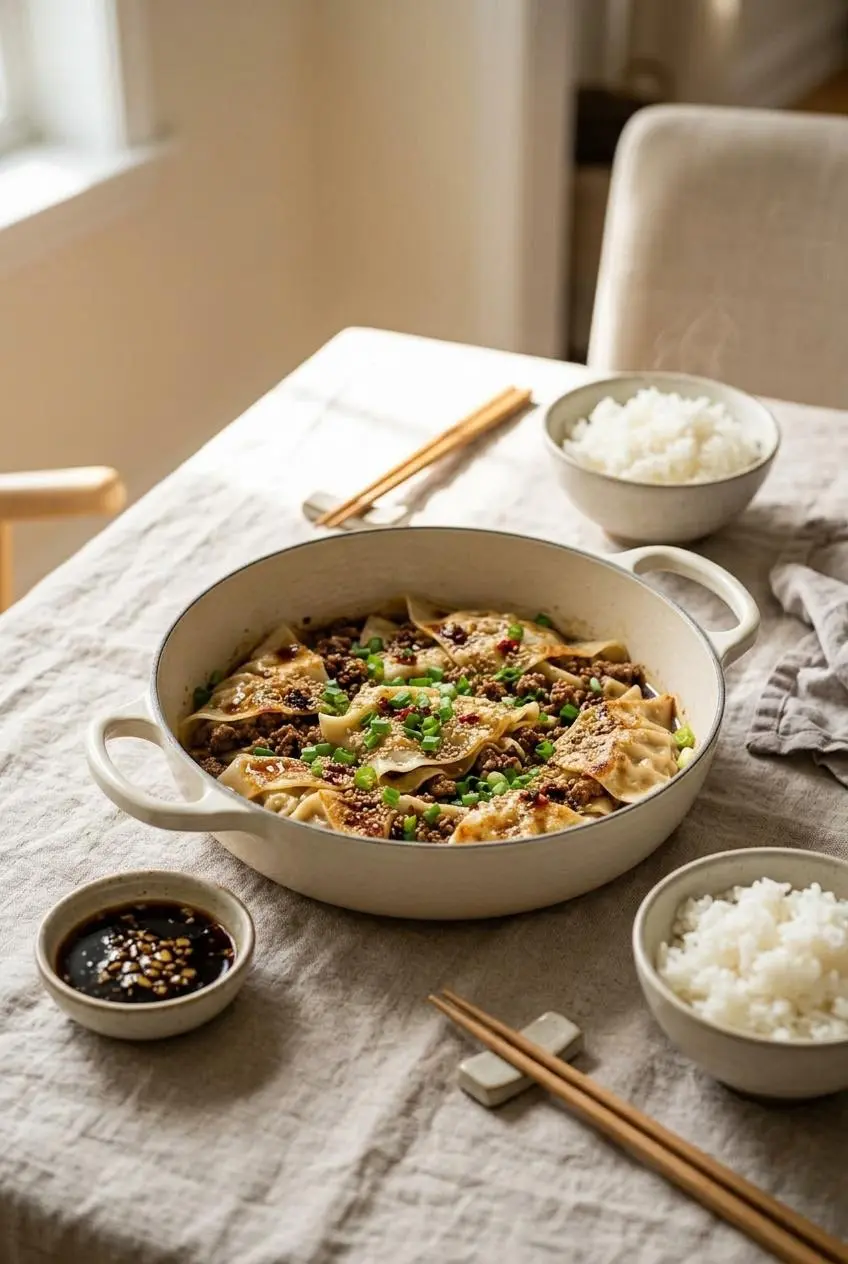
A tangy dipping sauce balances the filling’s richness, while chili crisp adds heat and crunch. Keep sauce on the side if you want the bottoms to stay crisp longer.
For a stir-together sauce, combine these optional ingredients, tasting as you go:
- Soy sauce for the savory foundation.
- Rice vinegar for a clear tang that cuts through the meat’s richness.
- Toasted sesame oil for nutty aroma, added sparingly so it doesn’t dominate.
- Minced garlic for a sharp savory bite.
- Grated ginger for freshness and warmth.
Begin with soy sauce and rice vinegar, then stir in the aromatics and a little sesame oil. Adjust toward more vinegar for brightness rather than adding more soy sauce automatically.
Finish the hot dumplings with chili crisp, sesame seeds, and sliced green onions as desired. For dinner, add smashed cucumber salad, sautéed baby bok choy, slaw, or steamed rice. Homemade fried rice makes a heartier pairing.
Make-Ahead, Storage, and Freezing Guide
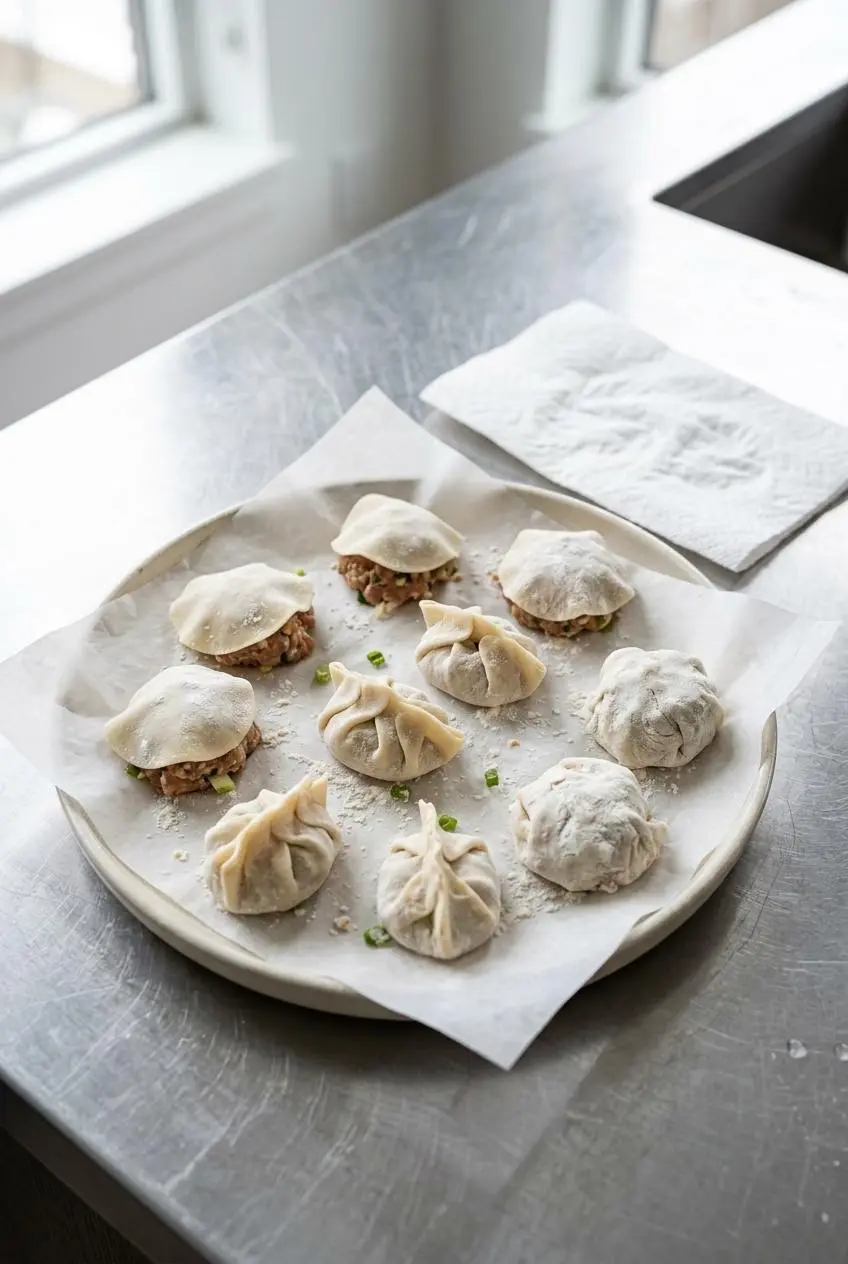
Protect the wrappers from drying out before cooking, and protect the crust from sauce afterward. Keep raw and cooked dumplings in separate containers.
- Prepare ahead: Arrange assembled raw dumplings on a parchment-lined plate, cover tightly, and refrigerate until cooking. Keep them in a single layer so the wrappers don’t stick together.
- Store cooked dumplings: Refrigerate promptly in an airtight container, with dipping sauce stored separately.
- Freeze cooked portions: Pack cooked dumplings in airtight freezer containers or bags, separating layers to reduce sticking. Expect some loss of wrapper texture after reheating.
- Reheat in a skillet: Add a splash of water and cover to heat the centers, then uncover to evaporate moisture and restore some crispness underneath.
- Microwave if needed: It reheats conveniently but softens the crust, so it won’t reproduce the freshly crisped bottom.
For cooked leftovers, use a conservative limit of 3 days in the refrigerator and refrigerate perishable food within 2 hours. Reheat portions thoroughly rather than warming only the wrapper.
Conclusion
These 25-minute dumplings bring savory filling, tender steamed tops, and crispy meat bottoms to the table without pleating. Building them on a plate makes the assembly easier to control.
Leave room in the skillet and finish uncovered so the water can evaporate before serving. Add chili crisp if you like heat, and enjoy them while that golden crust is at its best.
Frequently Asked Questions
Why Are These Called No-Fold Blanket Dumplings?
A wrapper covers each seasoned meat mound like a blanket instead of enclosing it with folds or pleats. The bottom stays exposed, and steam softens the dough around the filling.
Can I Use Wonton Wrappers or Rice Paper Instead of Round Dumpling Wrappers?
Yes. Square wonton wrappers work as a thinner substitute. Briefly soften rice paper in warm water before draping it over the meat, and expect a stickier texture rather than the chew of wheat dough.
How Do I Keep the Dumpling Wrappers From Sliding Off the Meat?
Assemble them on a plate before heating the skillet. Gently press each wrapper against the top and sides of the raw filling so the moist surface helps it grip.
What Sauce Do You Put on Blanket Dumplings?
Serve dumpling sauce or the soy sauce, rice vinegar, sesame oil, garlic, and ginger mixture described above. Chili crisp, sesame seeds, and green onions also make flavorful optional finishes.
Where Do You Buy Dumpling Wrappers in the Grocery Store?
Look near refrigerated tofu and fresh pasta in the produce section, or check the deli aisle. Asian supermarkets often stock them in refrigerated cases or the freezer aisle.
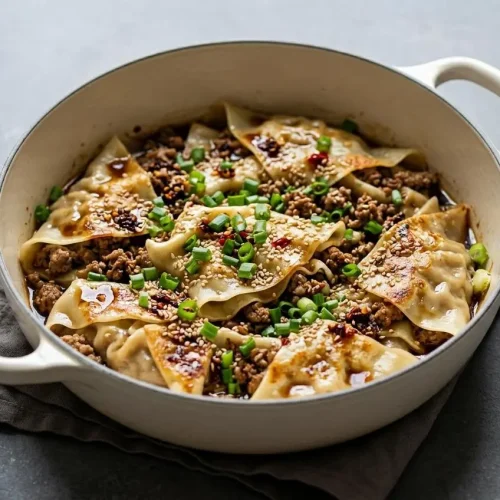
No Fold Blanket Dumplings

Equipment
- Skillet
Ingredients
- 24 dumpling wrappers
- 2 teaspoons vegetable oil
- ⅔ cup water
For the Filling
- 1 pound ground pork or ground chicken or turkey
- 4 green onions finely chopped
- 1½ tablespoons soy sauce
- 1½ tablespoons grated fresh ginger
- 1 tablespoon toasted sesame oil
- 1 clove garlic minced
- 1 teaspoon cornstarch
- ½ teaspoon black pepper
For Serving
- dumpling sauce chili crisp or sesame seeds
Instructions
- Stir the ground meat, green onions, soy sauce, ginger, sesame oil, garlic, cornstarch, and black pepper together in a medium bowl until evenly distributed. The mixture should look cohesive, with the aromatics spread throughout rather than gathered in pockets.
- Portion heaping tablespoons of filling onto a plate, then cap each mound with a wrapper and press the dough against its top and sides while keeping the underside exposed. A snug fit helps the dough grip the tacky filling without needing a folded seam.
- Heat the vegetable oil in a large nonstick skillet over medium-high heat, arrange the dumplings with gaps between them, and carefully pour the water around them with the lid ready before covering and steaming for 6 to 8 minutes, continuing as needed to reach the appropriate internal temperature below. The wrappers should soften from opaque and floury to glossy and slightly translucent, but their appearance alone cannot confirm that the meat is done.
- Lift off the lid and keep cooking until the remaining water disappears and the exposed meat bases brown lightly. Listen for bubbling to give way to a sharper crackle, then check underneath for a golden crust.
- Transfer the dumplings to a serving plate and finish with additional green onion and your chosen dumpling sauce. Serve while the tops remain tender and the freshly browned bottoms are crisp.