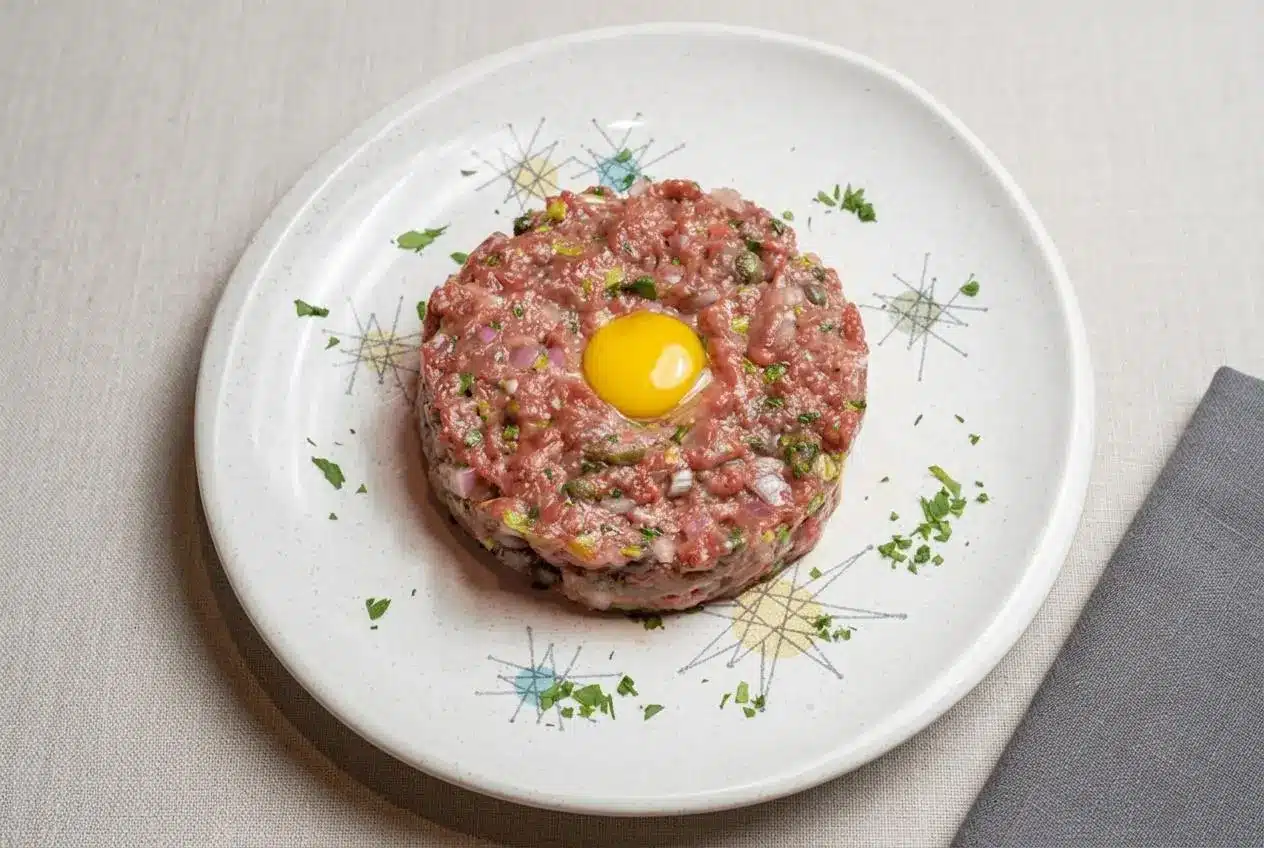
Beef tartare is a classic French dish of finely hand-diced raw beef tossed with an emulsified egg yolk, mustard, shallot, and caper dressing, then served chilled.
Classic beef tartare has a chilled, velvety texture with savory beef flavor, sharp shallot, and bright pops of brine from capers. The key is keeping every component cold and mixing at the last moment.
This version balances silky beef with a glossy yolk dressing and fresh herbs, so each bite stays distinct rather than heavy. Clean knife cuts make all the difference.
Set your serving plates and mixing bowl in the refrigerator before you begin so the tartare stays cold from chopping through plating.
Choosing the Best Beef and Food Safety Rules
Raw beef deserves careful handling from the butcher counter to the plate. Choose a fresh, lean whole-muscle cut that you can trim and dice yourself, rather than relying on pre-ground meat.
Do not use store-bought ground beef for tartare. Grinding mixes the exterior of the meat throughout the package, while a whole-muscle steak lets you trim away exterior fat, sinew, and any questionable edges before chopping. Raw beef still carries risk, so buy from a butcher you trust, keep it cold, use clean equipment, and serve promptly.
Top Sirloin vs Beef Tenderloin
Top sirloin is an excellent choice when you want a fuller, beefier flavor with a tender but slightly firmer bite. It holds its shape well under a knife and works especially nicely with the rich egg yolk dressing.
Beef tenderloin or filet mignon offers the softest texture and a milder flavor. Strip loin can also work when carefully trimmed, offering more beef character than tenderloin. Skip chuck eye and heavily marbled cuts, which can feel chewy or waxy when raw.
Ask the butcher for a very fresh, intact whole-muscle steak and request that it be trimmed of exterior connective tissue. If you have clean, firm fat trimmings, save them for homemade beef tallow rather than mixing them into the tartare.
The Golden Rules of Cold Chain Safety
Keep the beef refrigerated until the moment you are ready to cut it, and return it to the cold immediately after chopping. Keep your refrigerator at 40°F or below, maintain clean hands and sanitized knives, and avoid cross-contact with other foods. These safe food handling practices help reduce avoidable risks during preparation.
On a warm day, nest your mixing bowl over a larger bowl of ice while you work. Work in small, quick stages instead of leaving the meat on the counter. The beef should feel cold and firm, never soft or warm.
Because this dish contains raw egg yolk, people who are pregnant, very young, older, or immunocompromised should take extra care and consider pasteurized eggs. Raw or undercooked eggs require added caution for pregnant people and other sensitive groups.
Essential Ingredients for Classic Beef Tartare
Each ingredient supports the tartare’s balance: beef provides structure, yolk and oil create richness, vinegar adds lift, and herbs, shallots, and capers bring freshness, crunch, and briny contrast.
- 16 ounces top sirloin, cleaned and trimmed
- 2 teaspoons sherry vinegar
- 1/2 teaspoon dry mustard
- 2 large egg yolks
- 1/4 cup light olive oil
- 6 tablespoons finely diced shallots
- 1/4 cup celery leaves, finely chopped and divided
- 2 tablespoons finely chopped fresh parsley, divided
- 2 tablespoons small, brined capers, drained and unrinsed
- 1 teaspoon kosher salt
Top sirloin gives the finished tartare a clean, mineral-rich beef flavor without excess fat. Trim away silver skin and tough fat seams so each tiny piece feels tender. The egg yolks and light olive oil form a smooth binder that coats the beef without hiding it.
Sherry vinegar and dry mustard sharpen the dressing, while shallots provide a crisp allium bite. Capers bring concentrated salinity, and celery leaves with parsley brighten the richness with green, aromatic flavor.
I prefer light olive oil here because a bold, peppery oil can overwhelm the delicate flavor of chilled raw beef.
How to Make Beef Tartare
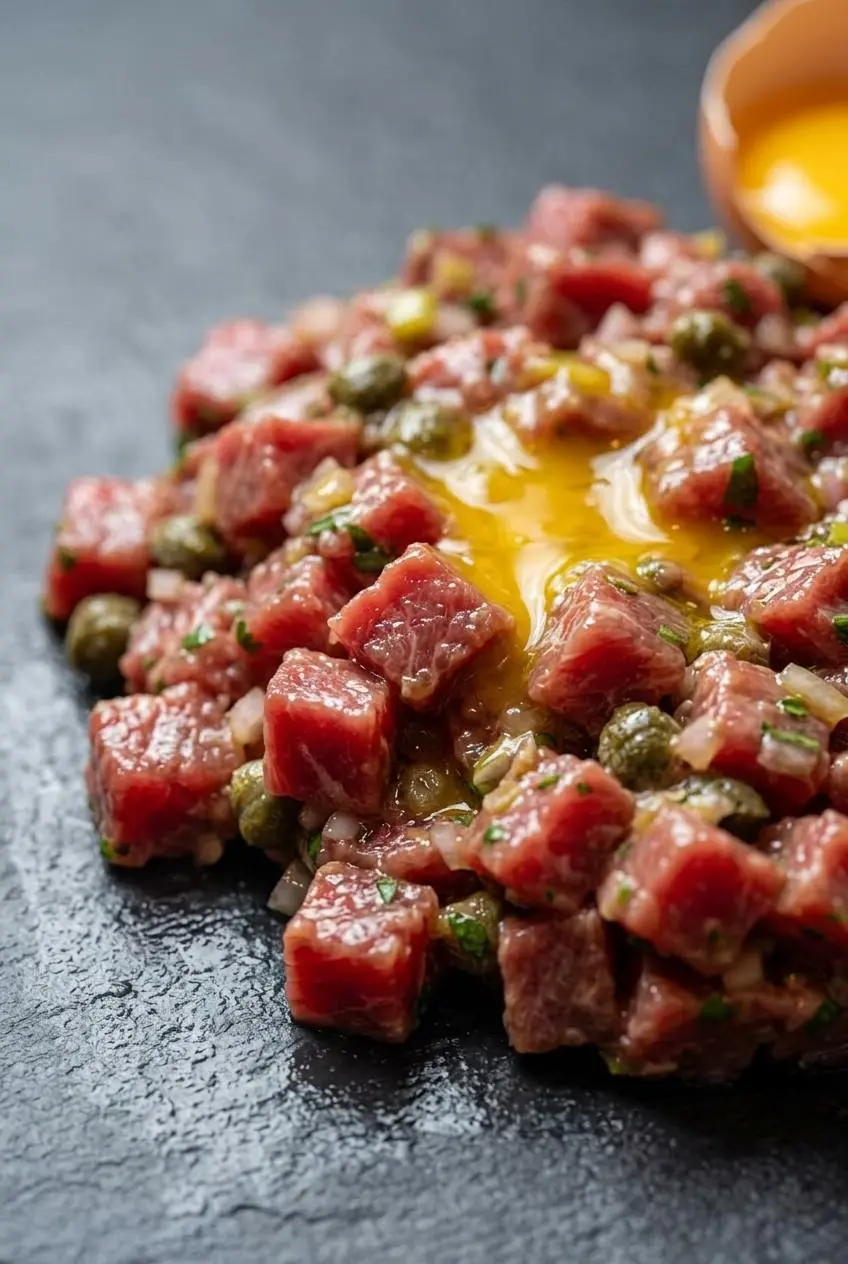
The method moves quickly once the beef comes out of the refrigerator. Prepare the dressing first, keep the chopped meat cold, and combine them only when you are ready to plate.
- Slice the trimmed sirloin into 1-inch pieces and chill it in the freezer for 10 minutes.
The meat should feel semi-firm at the edges, which keeps the knife from sliding and helps the fat stay neat. - Whisk the sherry vinegar, dry mustard, and egg yolks in a small bowl, then slowly drizzle in the light olive oil while whisking constantly.
Continue until the dressing looks thick, smooth, and glossy, with no separated oil around the edges. - Stir the shallots, capers, kosher salt, and about two-thirds of the celery leaves and parsley into the emulsified dressing.
The capers and herbs should be evenly suspended through the creamy binder. - Finely hand-chop the chilled beef, or pulse it in four separate batches 3 to 4 times in a food processor fitted with an S-blade.
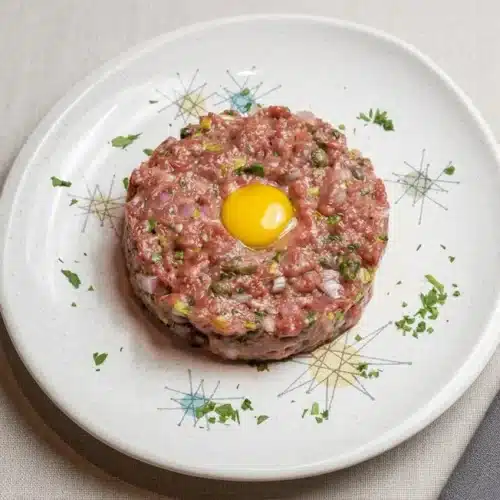
Stop when the beef has distinct small pieces rather than a sticky, paste-like texture. - Use clean hands to fold the beef and dressing together quickly, then shape it with a 3 3/4-inch pastry ring and finish with the reserved herbs and lemon zest.
The finished tartare should look bright crimson with a light, even sheen over each piece.
Freezer Chilling and Hand-Dicing
That brief freezer chill is a texture move, not a long-term storage step. Cold beef firms up just enough to resist the blade, so you can make tidy, delicate pieces instead of crushing the meat.
For a refined hand-cut texture, slice the steak into thin sheets, stack a few sheets, and cut them into narrow batons. Turn the batons crosswise and cut them into small, even cubes, about 1/8 inch. A sharp chef’s knife slices through the fibers cleanly and leaves the beef silky rather than smeared.
A food processor can work when time is tight, but use restraint. Process only small batches and use short pulses. Continuous processing creates a dense paste, which loses the airy, tender texture that makes tartare special.
Whisking the Emulsified Binder
Whisk the yolks, vinegar, and dry mustard together before adding oil. The yolks help the oil and vinegar stay combined, producing a cohesive dressing that clings to the beef instead of pooling on the plate.
Add the oil in a thin stream while whisking without stopping. Once the mixture turns glossy and lightly thickened, stir in the shallots, capers, salt, and herbs. The dressing should taste assertive on its own because the cold beef will soften its sharpness.
Molding and Final Plating
For a polished restaurant-style plate, place the pastry ring on a chilled plate and spoon in the dressed tartare. Press gently with the back of a spoon, then lift the ring straight up. Do not pack it tightly, or the texture becomes dense.
A rustic bistro mound works just as well. Spoon the tartare into a neat pile, scatter the reserved celery leaves and parsley over the top, and finish with lemon zest for a fragrant lift.
Flavor Twists and Global Variations
Keep the main preparation intact, then use these ideas as optional flavor directions for another batch or occasion. Each variation changes the personality of the dish without changing the hand-cut technique.
Classic French Bistro Accents
For a more traditional bistro profile, add Dijon mustard, finely minced cornichons, Worcestershire sauce, and freshly cracked black pepper to the dressing. A pinch of cayenne adds warmth without distracting from the beef.
Serve this version with toasted bread and a sharply dressed green salad. For another French-style beef dinner on a colder night, try rich beef bourguignon.
Asian-Inspired Sesame Soy Style
For an Asian-inspired tartare, replace the mustard-and-vinegar direction with toasted sesame oil, tamari or soy sauce, finely grated ginger, scallions, Asian pear matchsticks, and toasted sesame seeds. The pear brings crisp sweetness, while sesame adds a nutty aroma.
Keep the seasoning restrained so the beef remains the focus. If those savory sesame-soy flavors appeal to you in a cooked meal, a Korean beef bowl makes an easy weeknight alternative.
Bright Citrus and Herb Infusion
For a fresher profile, fold lemon zest and a little cornichon brine into the emulsion, then use extra minced parsley and celery leaves. The citrus aroma and gentle pickle tang cut through the yolk richness particularly well.
Add acidic ingredients gradually and taste before folding them into the beef. Tartare should taste lively, not aggressively sour.
Common Mistakes and Practical Troubleshooting
Tartare has very little room to hide mistakes, but most problems are easy to prevent when you watch temperature, knife work, and timing.
Preventing Dull Grey Discoloration
- Problem: The beef turns dull or gray before serving.
Cause and fix: Vinegar begins changing the meat’s color once it touches the beef. Keep the chopped sirloin and acidic dressing separate until just before plating. - Problem: The tartare looks wet on the plate.
Cause and fix: Warm beef releases moisture and loosens the dressing. Chill the bowl, work quickly, and fold only until coated.
Avoiding a Mushy Texture
- Problem: The tartare feels pasty instead of tender.
Cause and fix: A dull knife tears the beef, and overprocessing compresses it. Chill the steak first and use a sharp knife for clean, distinct cuts. - Problem: The pieces are uneven and chewy.
Cause and fix: Tough sinew or exterior fat was left behind. Trim carefully before chilling, then cut the meat into consistently small pieces.
Balancing Salt and Acidity
- Problem: The tartare tastes too salty or briny.
Cause and fix: Capers and kosher salt can build quickly. Fold in a touch more cold olive oil or another egg yolk to round out the flavor. - Problem: The dressing tastes too sharp.
Cause and fix: The vinegar has taken over. Add a little more yolk or oil, then taste again before combining it with the beef.
How to Serve and Pair Beef Tartare
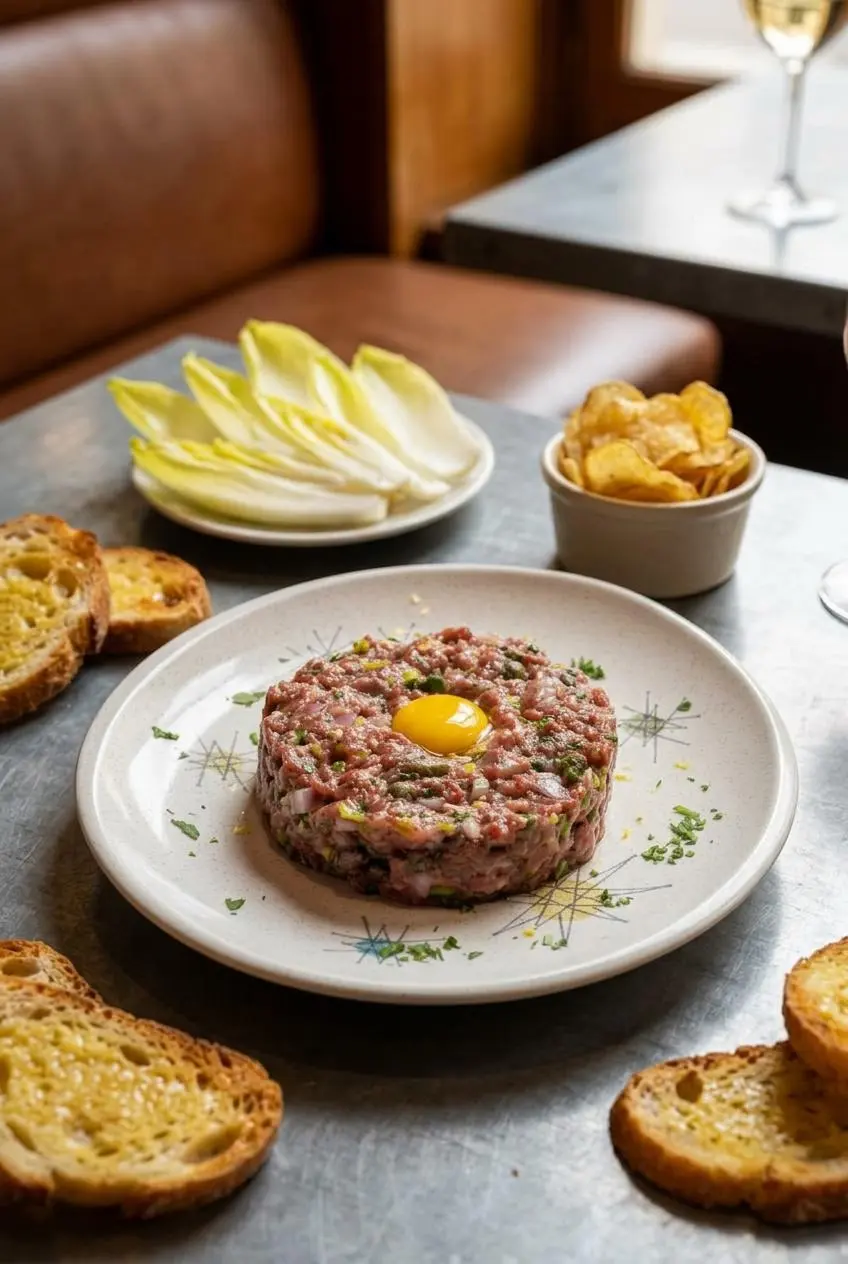
Serve tartare immediately on chilled plates, with something crisp nearby for scooping. The contrast between cold, silky beef and warm or crunchy accompaniments makes the whole plate feel complete.
- Offer buttery crostini, grilled sourdough, or toasted baguette slices for a classic bistro approach.
- Add kettle-cooked potato chips or thin French fries for salty crunch.
- Use raw Belgian endive leaves when you want a fresh, sturdy scoop without bread.
- Pair the tartare with a simple arugula salad dressed with lemon and olive oil.
- Finish with celery leaves, minced parsley, lemon zest, and a light pinch of flaky sea salt.
Preparing Components Before Serving
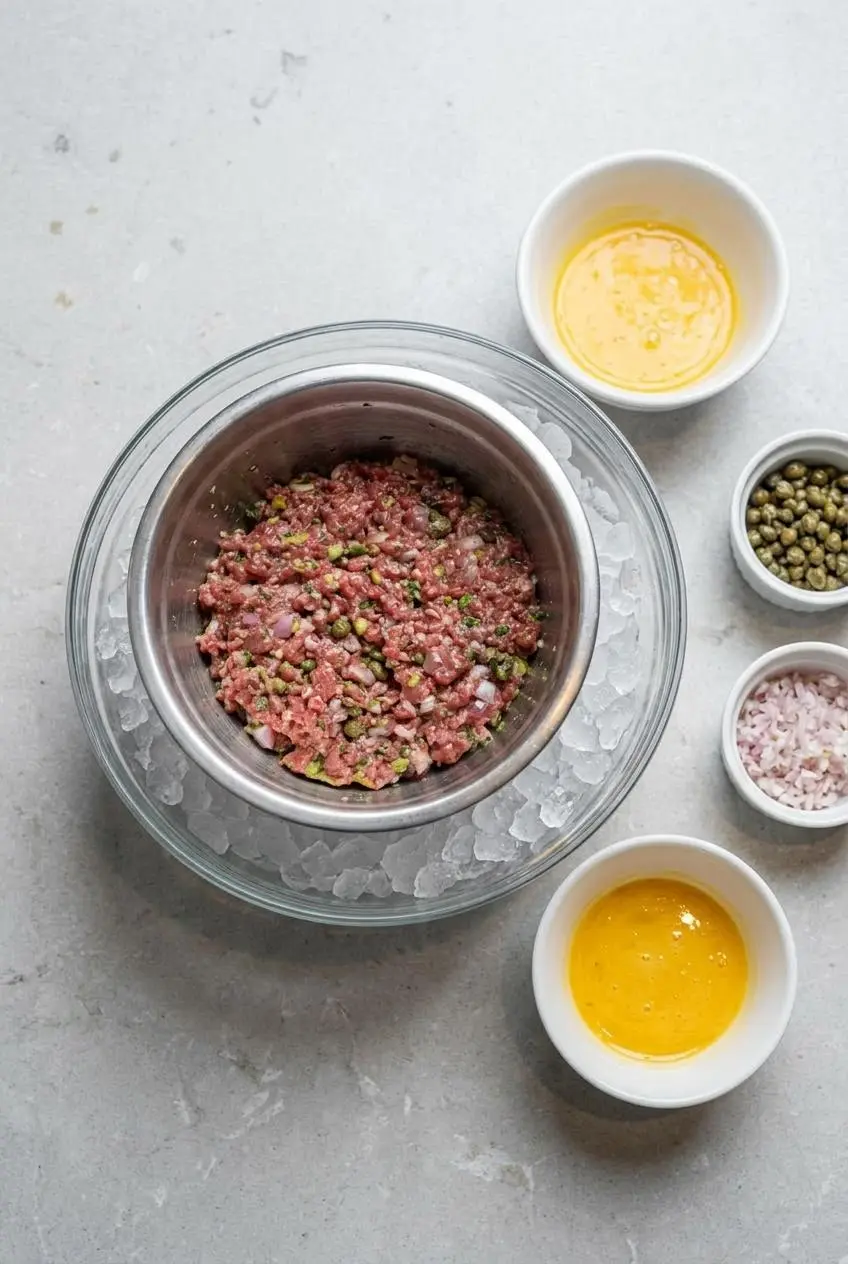
For entertaining, prepare the dressing and chop the beef separately, then keep both covered and chilled until it is time to serve. Combine them only minutes before plating so the beef stays bright and the texture remains clean.
Avoid holding mixed tartare for later. It is at its best immediately after folding, while the dressing is glossy, the herbs are fresh, and the beef is cold and vivid.
Conclusion
Making beef tartare at home is all about thoughtful sourcing, cold ingredients, and a sharp knife. The payoff is a tender, beefy dish with a silky dressing and bright briny contrast.
Plate it as soon as it is mixed, add warm toast or crisp chips, and enjoy the balance of chilled tartare and fresh herbs at its peak.
Frequently Asked Questions
Is Beef Tartare Completely Raw?
Yes. Traditional beef tartare uses uncooked beef and raw egg yolk. The beef is finely chopped, seasoned with aromatics, and served chilled right after mixing. Because it is raw, careful sourcing, clean equipment, and prompt serving matter.
What Is the Safest Cut of Beef to Use for Beef Tartare?
Choose a fresh, lean whole-muscle cut such as top sirloin, beef tenderloin, or filet mignon. Buy it from a trusted butcher and ask for a freshly cut piece with exterior sinew trimmed away. Keep the beef cold and hand-dice it yourself rather than using packaged ground beef.
Can I Use Store-Bought Ground Beef for Tartare?
No. Avoid packaged ground beef for any raw tartare preparation. Grinding distributes meat from the exterior throughout the package, making it a poor choice for serving uncooked. Use an intact whole-muscle steak that you can trim and chop while cold.
Can You Make Beef Tartare Ahead of Time?
You can prepare the chopped beef and emulsified dressing separately before serving. Keep both covered and chilled, then fold them together only minutes before plating. Serving immediately preserves the tartare’s bright color, clean texture, and fresh herb flavor.
Beef Tartare

Equipment
- 3 3/4-inch pastry ring
- Food processor
Ingredients
- 16 ounces top sirloin cleaned and trimmed
- 2 teaspoons sherry vinegar
- 1/2 teaspoon dry mustard
- 2 large egg yolks
- 1/4 cup light olive oil
- 6 tablespoons shallots finely diced
- 1/4 cup celery leaves finely chopped and divided
- 2 tablespoons fresh parsley finely chopped, divided
- 2 tablespoons small, brined capers drained and unrinsed
- 1 teaspoon kosher salt
Instructions
- Slice the trimmed sirloin into 1-inch pieces and chill it in the freezer for 10 minutes. The meat should feel semi-firm at the edges, which keeps the knife from sliding and helps the fat stay neat.
- Whisk the sherry vinegar, dry mustard, and egg yolks in a small bowl, then slowly drizzle in the light olive oil while whisking constantly. Continue until the dressing looks thick, smooth, and glossy, with no separated oil around the edges.
- Stir the shallots, capers, kosher salt, and about two-thirds of the celery leaves and parsley into the emulsified dressing. The capers and herbs should be evenly suspended through the creamy binder.
- Finely hand-chop the chilled beef, or pulse it in four separate batches 3 to 4 times in a food processor fitted with an S-blade. Stop when the beef has distinct small pieces rather than a sticky, paste-like texture.
- Use clean hands to fold the beef and dressing together quickly, then shape it with a 3 3/4-inch pastry ring and finish with the reserved herbs and lemon zest. The finished tartare should look bright crimson with a light, even sheen over each piece.