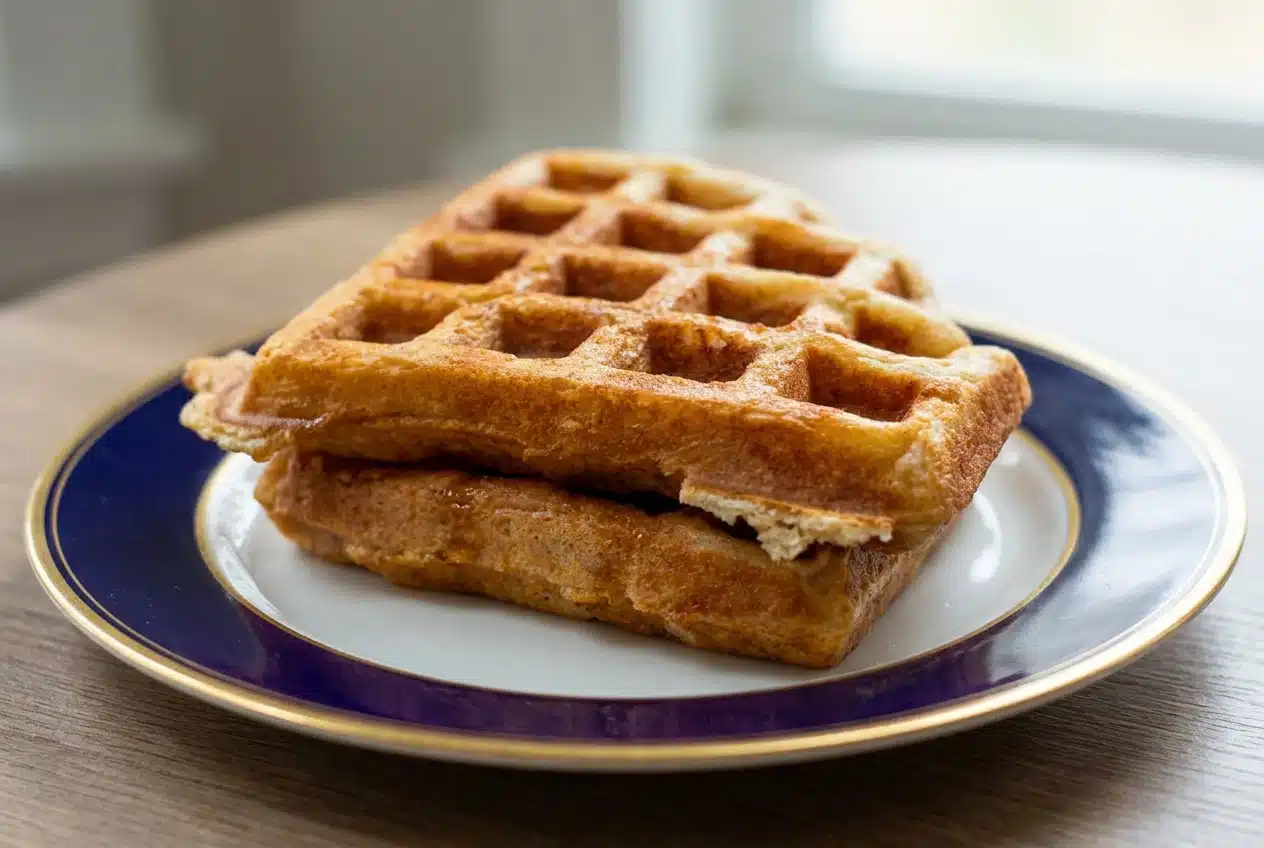
For overnight sourdough waffles with crisp edges and airy, tangy centers, mix active starter, milk, and flour the evening before. In the morning, whisk in the remaining ingredients and cook the batter in a fully preheated waffle iron.
These plain sourdough waffles start with a sponge, the mixture you make before adding the eggs, oil, and leaveners. If you have discard and want waffles today, choose a separate same-day recipe.
Most of the prep happens before breakfast, leaving you free to focus on getting each waffle as golden as you like. The first bite starts with a crunch.
Set a wire rack beside the waffle iron before you cook so the first waffle has somewhere to go.
Ingredients
Active starter brings tang, milk hydrates the flour, and flour and eggs give the waffles structure. Olive oil adds richness, baking powder and baking soda help lift the batter, and salt balances the sugar or maple syrup.
- 2 cup milk
- 1 cup active sourdough starter
- 2 1/2 cup unbleached flour
- 4 tbsp olive oil
- 2 tsp baking powder
- 1 tsp baking soda
- 1 tsp salt
- 1/4 cup sugar or maple syrup
- 2 eggs
Only the starter, milk, and flour go into the evening bowl. Save the olive oil, eggs, sweetener, salt, baking powder, and baking soda for the morning. The sweetener helps the waffles brown, and the eggs give the airy centers enough structure to hold together when you lift them out.
Active Starter vs. Discard
Use starter that has been fed and is visibly bubbly. Discard is the portion removed when you feed your starter, and it may be less active. If discard is what you have on hand, use a waffle recipe designed for it rather than swapping it into this sponge.
How to Make the Overnight Sourdough Waffles
Prep: , including the starter and sponge prep. Cook: . Yield: 8 servings.
Mix the Evening Sponge
The sponge should look evenly moistened after mixing, not perfectly smooth. If you don’t have a starter yet, begin with this sourdough starter recipe before planning waffle morning.
I’d stop stirring as soon as the dry streaks disappear. A lumpy sponge is fine; a pocket of dry flour at the bottom of the bowl is what you want to avoid.
The first evening
- Feed the starter in the afternoon.
Look for bubbles throughout before measuring it for the sponge. - In the evening, stir 1 cup of active starter, 2 cups of milk, and 2 1/2 cups of flour together in a bowl.
Stop once all the flour is damp, even if the mixture still looks uneven. - Cover the bowl with foil or plastic wrap and refrigerate the milk sponge overnight rather than leaving it on the counter.
If you’re using a lidded container, leave one side slightly open so gas can escape.
Finish the Batter and Cook
Look for bubbles on the surface of the rested sponge before adding the morning ingredients. The finished batter should be loose enough to ladle and spread across the hot plates.
The next morning
- Add the olive oil, baking powder, baking soda, salt, sugar or maple syrup, and eggs on top of the sponge.
Whisk those additions together at the surface first, then whisk down through the sponge until no streaks remain. - Fully preheat the waffle iron, then ladle a heaping scoop of batter into the center.
The batter should spread across the plates without spilling past the edges. - Close the lid and cook for 5 minutes before checking the waffle.
If the outside needs more crunch, close the lid and check again every couple of minutes until it’s golden and crisp to your liking. - Lift the cooked waffle out of the iron and continue with the remaining batter.
Look for the same golden color and crisp exterior on each waffle.
How to Get Crisp Waffles
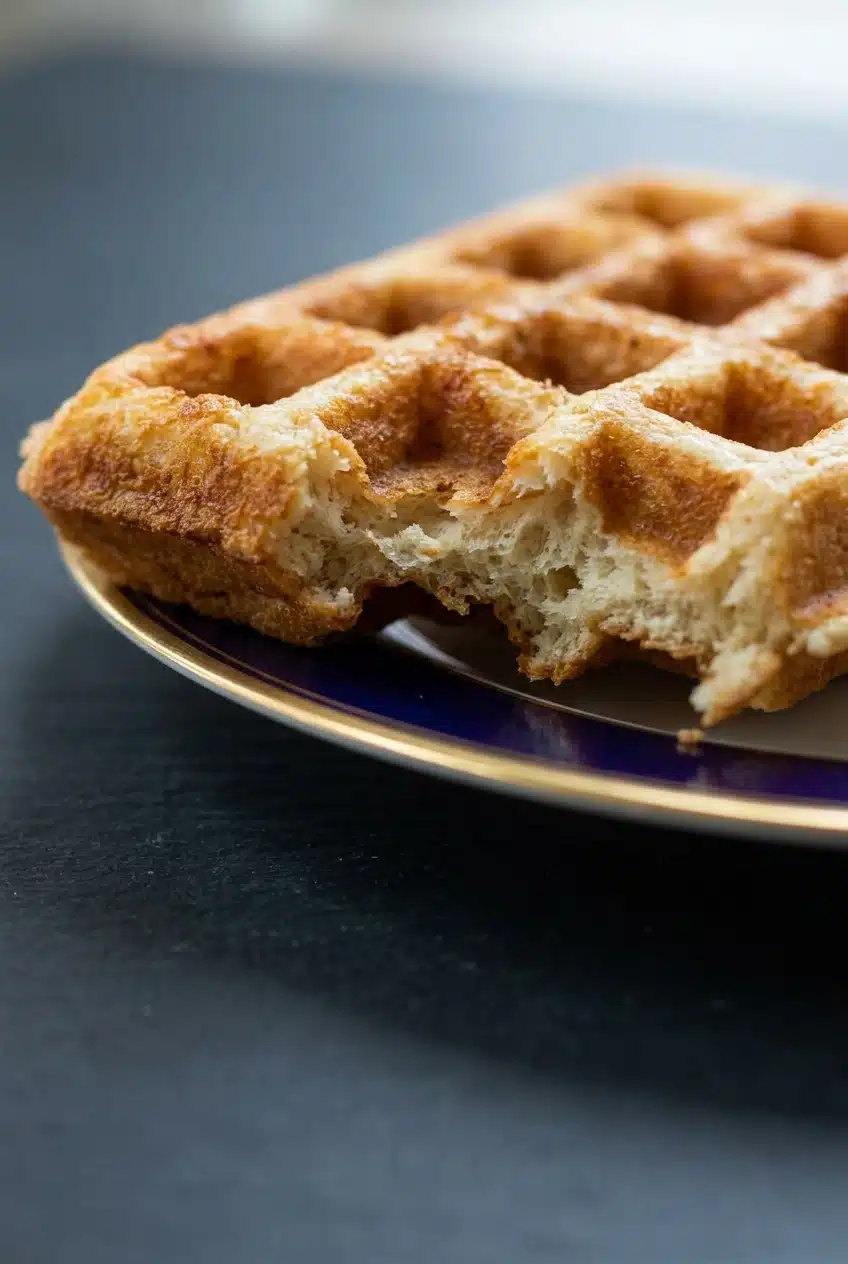
Notice when the waffle feels soft: straight from the iron or after it’s been sitting. Those are two different problems.
- Pale and soft: The iron may not have fully heated, or the waffle may need more browning. Wait for the iron’s ready signal before pouring and look for a golden exterior before lifting.
- Sticking: The waffle may need longer to release. If it still clings once browned, check your iron’s greasing instructions before pouring the next one.
- Overflowing: The scoop is too large for your iron. Use less batter on the next waffle and keep the pour centered.
- Crisp at first, then soft: Stacking traps steam between the waffles. Set them apart in a single layer on a wire rack while the rest cook.
Use the First Waffle to Check Your Iron
If you’re unsure how much your iron holds, use the first waffle as a check. Bare corners suggest you can pour a little more next time; batter at the seam tells you to pull back. Use the first waffle’s color and crispness to decide when to check the next one.
Same-Day and Whole-Grain Variations
Pick the recipe that matches the starter, flour, and time you have rather than changing the overnight batter on the fly.
Same-Day Sourdough Discard Waffles
For waffles today, choose a same-day formula written for discard. Skipping the sponge rest here won’t give you that formula. If you’re happy to cook on a griddle instead, sourdough discard pancakes are another way to use what you have.
Whole-Grain Sourdough Waffles
For a nuttier flavor, choose a recipe developed with whole-grain flour. Whole-grain flour can absorb liquid differently, so a direct swap may change how this batter spreads and how light the waffles turn out.
Make-Ahead Prep and Reheating Cooked Waffles
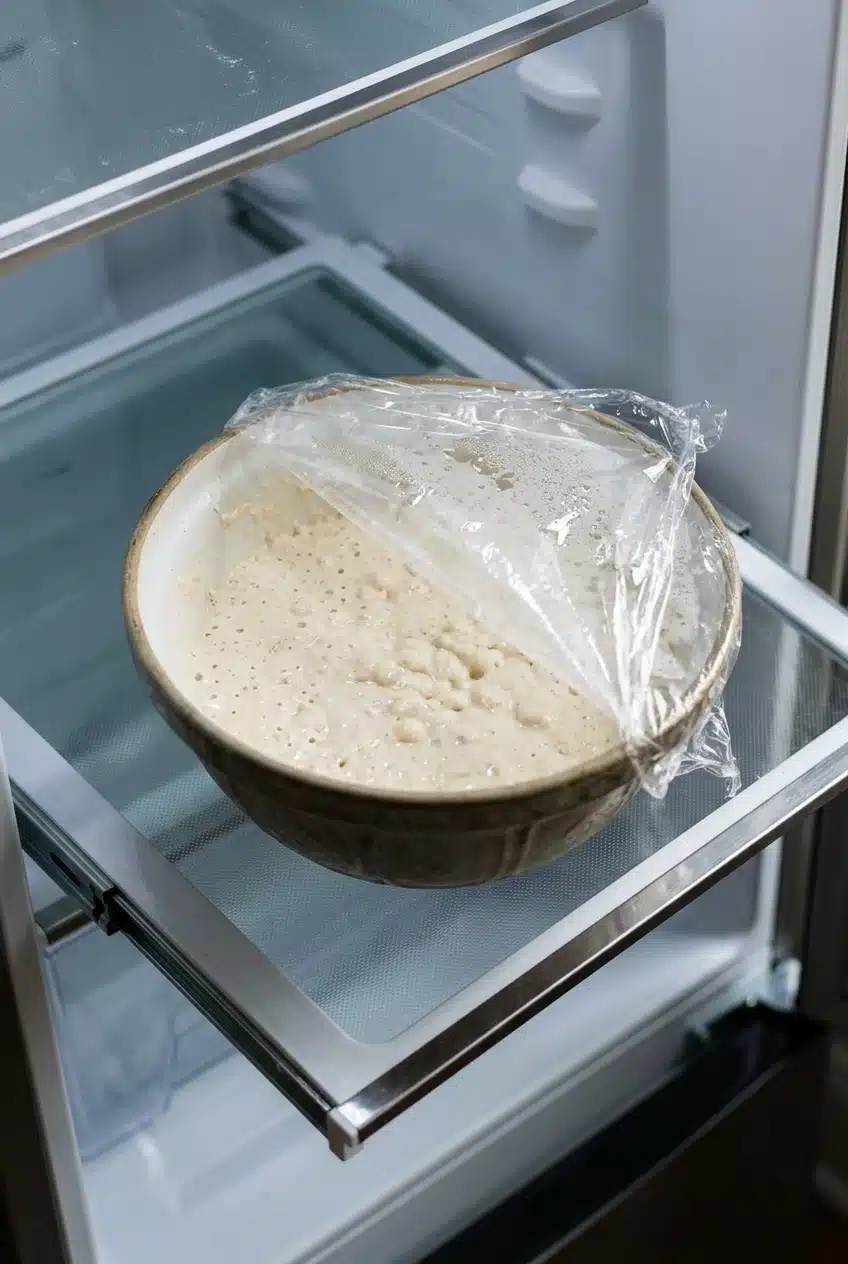
For a head start, mix the sponge in the evening and leave the eggs and other additions for when you’re ready to cook. The flour-and-milk sponge and the finished, egg-containing batter are separate stages.
Rack holding is for waffles you’re about to serve. For cooked leftovers, keep them covered in the refrigerator. Reheat them without toppings in a toaster if you’d like to bring back some crispness, then add butter or syrup.
What to Serve With Waffles
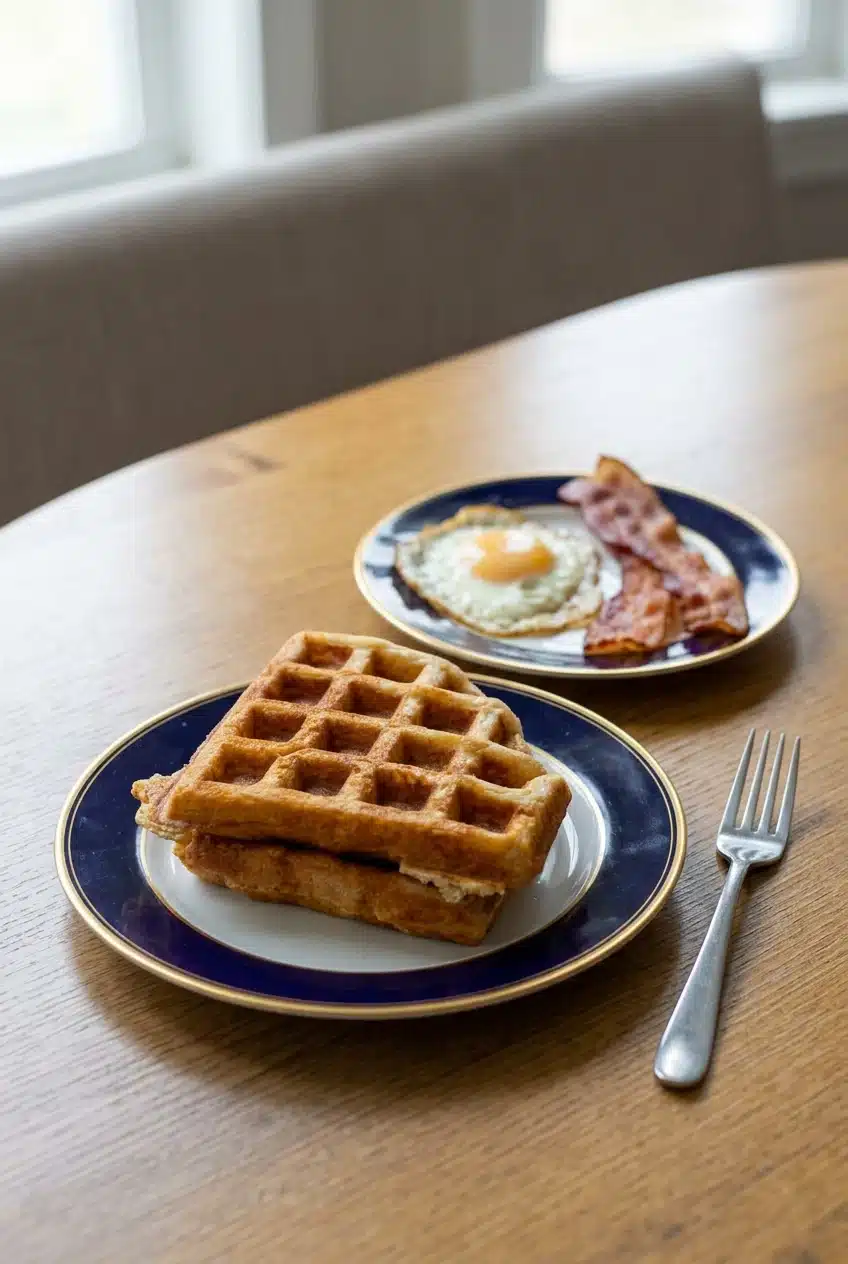
The tangy centers go as well with a savory brunch plate as they do with maple syrup.
- Classic: Add butter and maple syrup while the waffles are warm.
- Fruity: Spoon on fresh berries and whipped cream, or try a dollop of homemade peach jam.
- Savory: Serve with fried eggs and bacon, and skip the syrup if you prefer.
- Cinnamon sugar: Sprinkle it over a warm, buttered waffle as an optional finish. Leave it out of the batter.
The Takeaway
Start with bubbly active starter for the overnight waffles. If you have discard and breakfast can’t wait, use a same-day formula built for it.
Let the first waffle’s golden color and crisp edges guide the batch. Then bring them to the table while the edges still crunch.
Frequently Asked Questions
Do I Need Active Starter, or Can I Use Sourdough Discard?
Use active starter for this overnight recipe. If you want to use discard, choose a recipe written for it rather than swapping it in.
Can I Make Sourdough Waffles the Same Day?
Yes, with a separate same-day formula. Simply skipping the sponge rest changes this recipe.
What Should the Overnight Sponge Look Like Before I Finish the Batter?
Look for bubbles on the surface. The sponge doesn’t have to look smooth before you whisk in the remaining ingredients.
Why Are My Sourdough Waffles Soft Instead of Crisp?
If they come out pale and soft, check that the iron is fully hot and give them more time to brown. If they soften after cooking, keep them apart on a wire rack instead of stacking them.
Can I Refrigerate Raw Sourdough Waffle Batter?
For this recipe, refrigerate the unfinished sponge and add the eggs and remaining ingredients just before cooking. If breakfast is delayed, keep the sponge chilled rather than mixing the full batter ahead.
Sourdough Waffles

Equipment
- Mixing Bowl
- Whisk
- Ladle
- Waffle iron
Ingredients
- 2 cup milk
- 1 cup active sourdough starter
- 2 1/2 cup unbleached flour
- 4 tbsp olive oil
- 2 tsp baking powder
- 1 tsp baking soda
- 1 tsp salt
- 1/4 cup sugar or maple syrup
- 2 eggs
Instructions
The first evening
- Feed the starter in the afternoon. Look for bubbles throughout before measuring it for the sponge.
- In the evening, stir 1 cup of active starter, 2 cups of milk, and 2 1/2 cups of flour together in a bowl. Stop once all the flour is damp, even if the mixture still looks uneven.
- Cover the bowl with foil or plastic wrap and refrigerate the milk sponge overnight rather than leaving it on the counter. If you’re using a lidded container, leave one side slightly open so gas can escape.
The next morning
- Add the olive oil, baking powder, baking soda, salt, sugar or maple syrup, and eggs on top of the sponge. Whisk those additions together at the surface first, then whisk down through the sponge until no streaks remain.
- Fully preheat the waffle iron, then ladle a heaping scoop of batter into the center. The batter should spread across the plates without spilling past the edges.
- Close the lid and cook for 5 minutes before checking the waffle. If the outside needs more crunch, close the lid and check again every couple of minutes until it’s golden and crisp to your liking.
- Lift the cooked waffle out of the iron and continue with the remaining batter. Look for the same golden color and crisp exterior on each waffle.