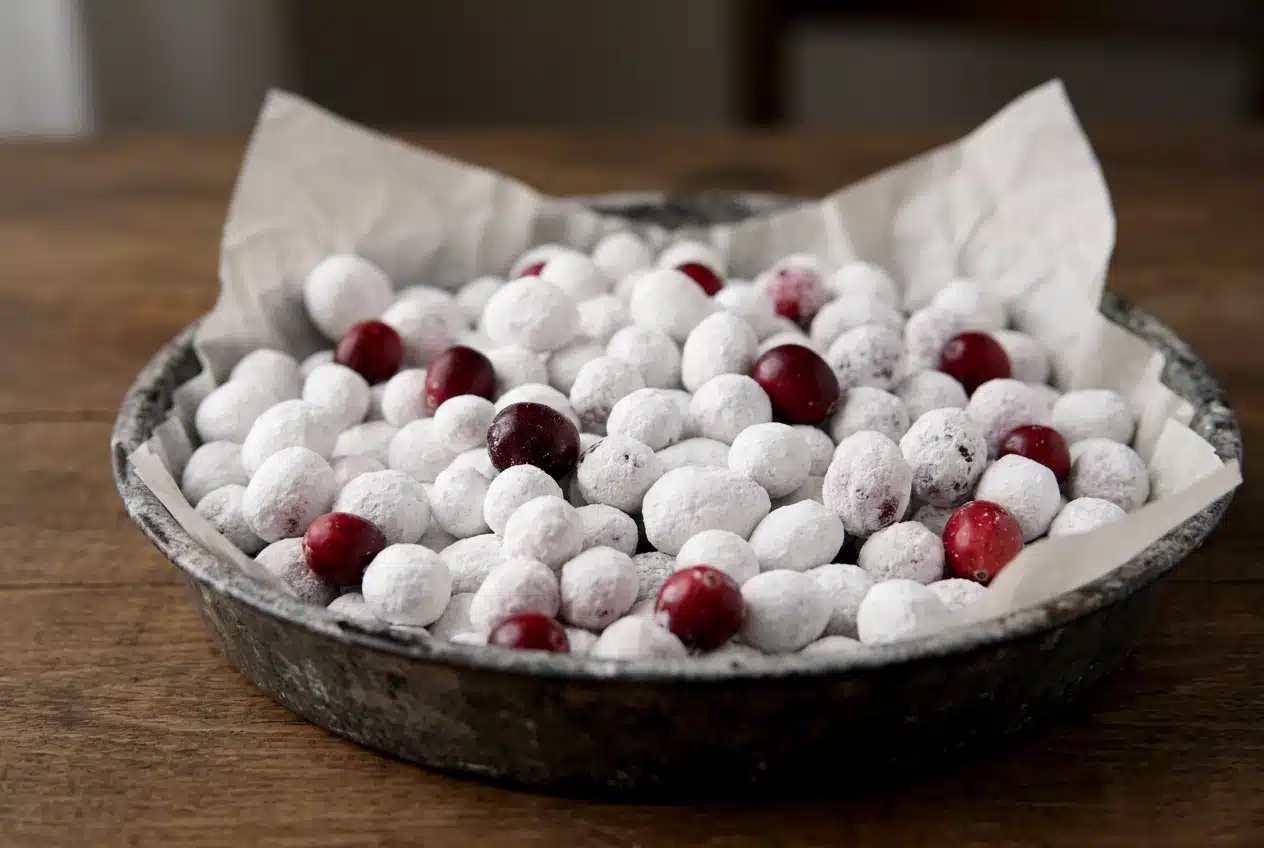
This candied cranberries recipe turns fresh berries into crunchy, sweet-and-tart bites. Soak them in orange juice and lemon-lime soda, drain without drying, coat with powdered sugar, and bake gently. Leaving the berries damp helps the sugar form an opaque shell around the juicy fruit.
These snowy cranberry bites keep their fresh, tart centers beneath a crisp sugar coating. They’re a snack rather than a cooked cranberry sauce or chewy dried fruit.
The contrast makes them especially welcome on a holiday dessert spread, where their sharp tang balances cookies and richer treats. The trick is setting the coating without bursting the berries. That little snap is worth watching for.
I’d choose firm, intact cranberries over softer berries here; the skin needs to hold that juicy center.
Ingredients for Candied Cranberries
Cranberries provide the tart pop, lemon-lime soda adds sweetness, and orange juice brings citrus brightness. Their damp surface holds the powdered sugar, which becomes the sweet outer shell during gentle baking.
- 12 ounce bag fresh cranberries
- 1-1/2 cups lemon-lime soda ((like Sprite or 7Up))
- 1 cup orange juice
- 1 cup powdered sugar
Use fresh, firm cranberries and sort out bruised or broken fruit before soaking. Frozen berries can release excess moisture and soften, making a crisp, even coating harder to achieve.
The soda and orange juice balance the berries’ tartness, but don’t expect the centers to taste like candy. Much of the sweetness comes from the shell, with the fruit keeping its characteristic tang.
Choose fresh powdered sugar, also called confectioners’ sugar. Some brands contain cornstarch, which can leave a noticeable starchy finish; a tapioca-starch blend is an optional alternative if that flavor bothers you.
How to Make Candied Cranberries
Keep the berries damp after soaking, then watch the coating rather than waiting for the fruit to look cooked. The oven’s job is to set the shell, not soften the cranberries.
- Wash the cranberries under running water, drain them, and transfer them to a large bowl with the lemon-lime soda and orange juice.
The berries should sit in the citrus-soda mixture with room to stir. - Cover the bowl and place it in the refrigerator for 12–24 hours.
The cranberries will remain buoyant, so floating berries are normal. - Set the oven to 200°F, then pour the soaking mixture through a strainer without rinsing or towel-drying the fruit.
The drained skins should still feel damp enough to hold sugar. - Transfer the damp berries to a large plastic bag containing the powdered sugar, close it, and shake gently.
A fully white coating should hide the red skins; add a little more powdered sugar if bare patches remain. - Distribute the coated fruit across a parchment-lined baking sheet in a single layer.
Leave the berries separated so their wet coatings don’t stick together. - Place the tray in the oven for 5 minutes, taking care not to extend the baking.
The coating should begin to set without wrinkled skins or leaking red juice. - Take the tray out and leave the berries to reach room temperature before serving.
As they cool, the shell should feel dry and firm rather than loose and powdery. - Transfer any remaining cooled cranberries to an airtight container and refrigerate.
The berries should be completely cool before the lid goes on so trapped warmth doesn’t dampen the coating.
Expert Tips and Troubleshooting
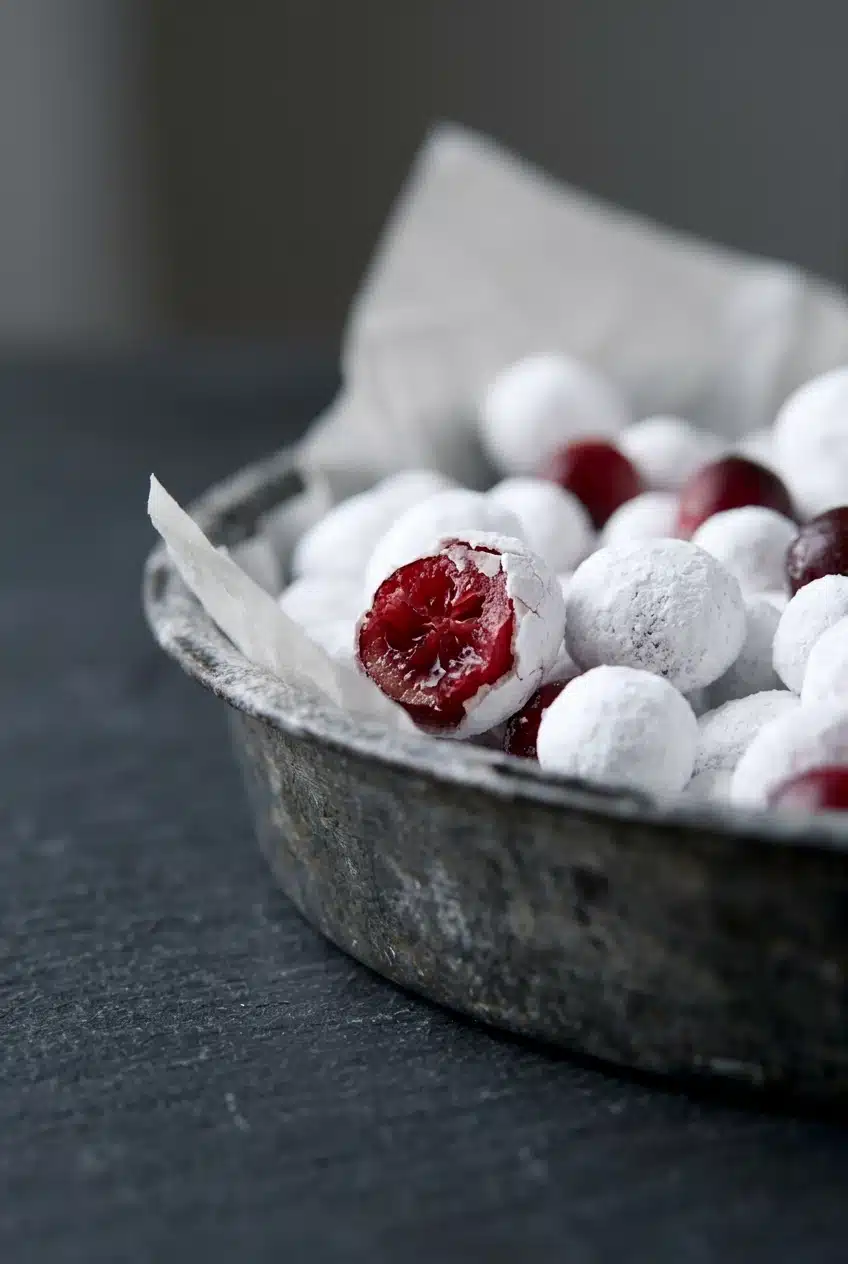
Most coating problems come from excess moisture, too little surface dampness, or too much oven heat.
- Berries float above the soak. Stir them occasionally, or use a clean plate that fits inside the bowl to hold them beneath the liquid without crushing them.
- The soda loses its fizz. That’s expected during soaking. Carbonation isn’t what holds the sugar on; the sweet liquid left on the skins does that work.
- The coating looks patchy. Towel-drying removes the moisture needed for adhesion. Drain without drying, then shake gently until the berries look uniformly white.
- The sugar tastes chalky. Check the powdered sugar’s freshness and starch blend. Try a fresh package or a tapioca-starch version rather than covering an unpleasant flavor with more sugar.
- The coating becomes a paste. Thick simple syrup can make powdered sugar clump. Keep syrup for the classic granulated-sugar variation instead of substituting it into this method.
- The berries wrinkle or leak. Excess heat has started cooking the fruit. Remove the tray rather than baking longer to chase a harder shell.
- A toaster oven heats unevenly. Its nearby elements can overheat the fruit. A standard oven is the more forgiving choice; watch closely if using a countertop oven.
- The cooled shell needs more firmness. Try chilling the berries after they reach room temperature. Don’t use extra baking as the first fix.
Candied Cranberries vs. Sugared Cranberries and Variations
Choose the coating style for how you plan to serve the fruit. The names overlap, but the finishes are quite different.
Powdered Sugar Snowballs vs. Classic Sugared Cranberries
Powdered-sugar cranberries have an opaque white shell with a crisp bite, making them especially suited to snacking. Classic sugared cranberries have visible sparkling crystals and show more of the red fruit, so they work well as decorative garnishes.
Classic Simple-Syrup Sugared Cranberries
This optional direction pairs simple syrup with granulated or superfine sugar for a sparkling finish. It’s a separate coating approach, not a syrup substitution for the baked powdered-sugar method.
For another fruit-centered treat, try this candied grapes recipe.
Soaking Liquid Flavor Variations
If you want to change the citrus profile, consider these optional directions without changing the main ingredient list:
- Orange juice alone: emphasizes orange flavor without the lemon-lime soda notes.
- Lemon-lime soda alone: gives a lighter citrus flavor without orange juice’s fuller character.
How to Serve Candied Cranberries
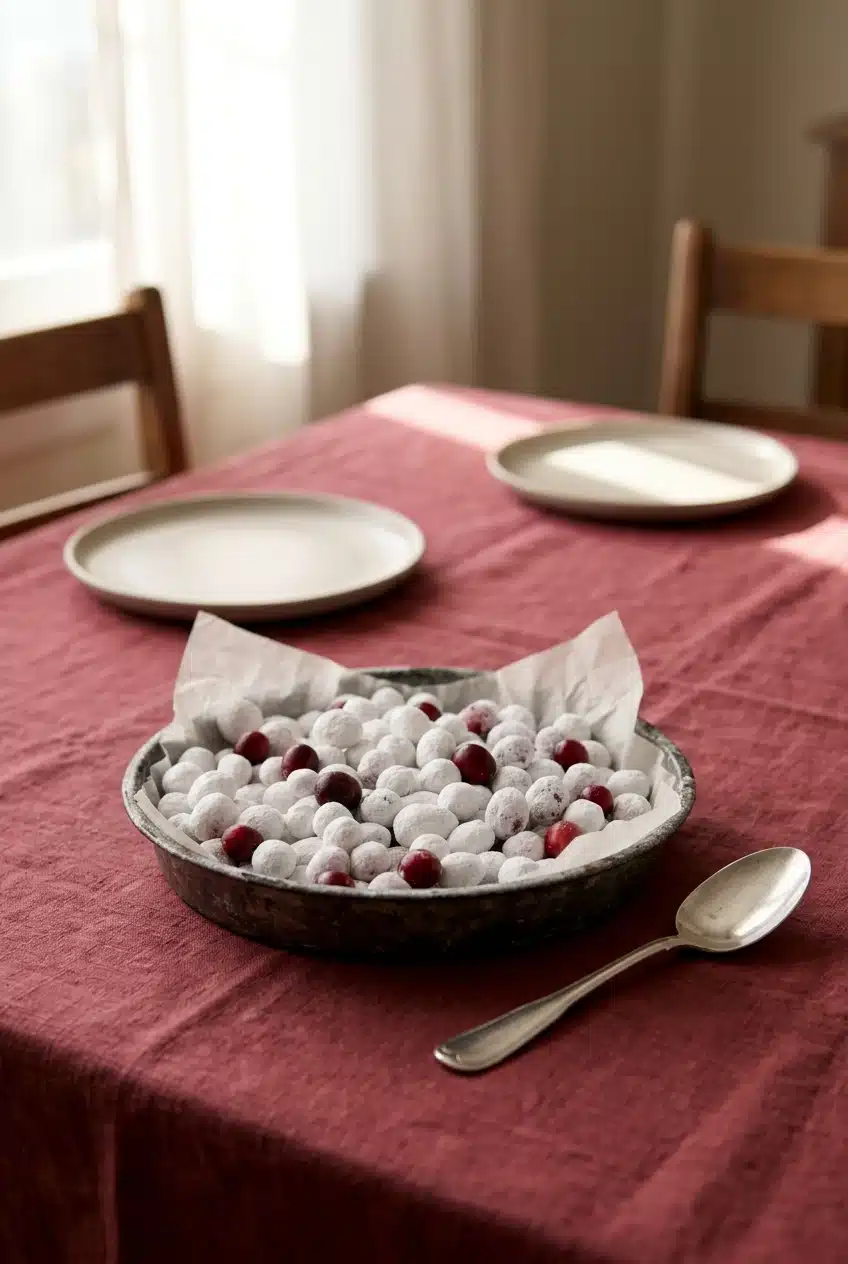
Serve them chilled in a small bowl for a sweet-and-tart Thanksgiving appetizer or Christmas treat. Their crisp shell makes them particularly satisfying on their own.
On a dessert board, keep them alongside cookies, shortbread, and candied nuts. Use the classic granulated-sugar variation when you want a sparkling garnish for frosted cakes or festive nonalcoholic drinks.
Make-Ahead and Storage Tips
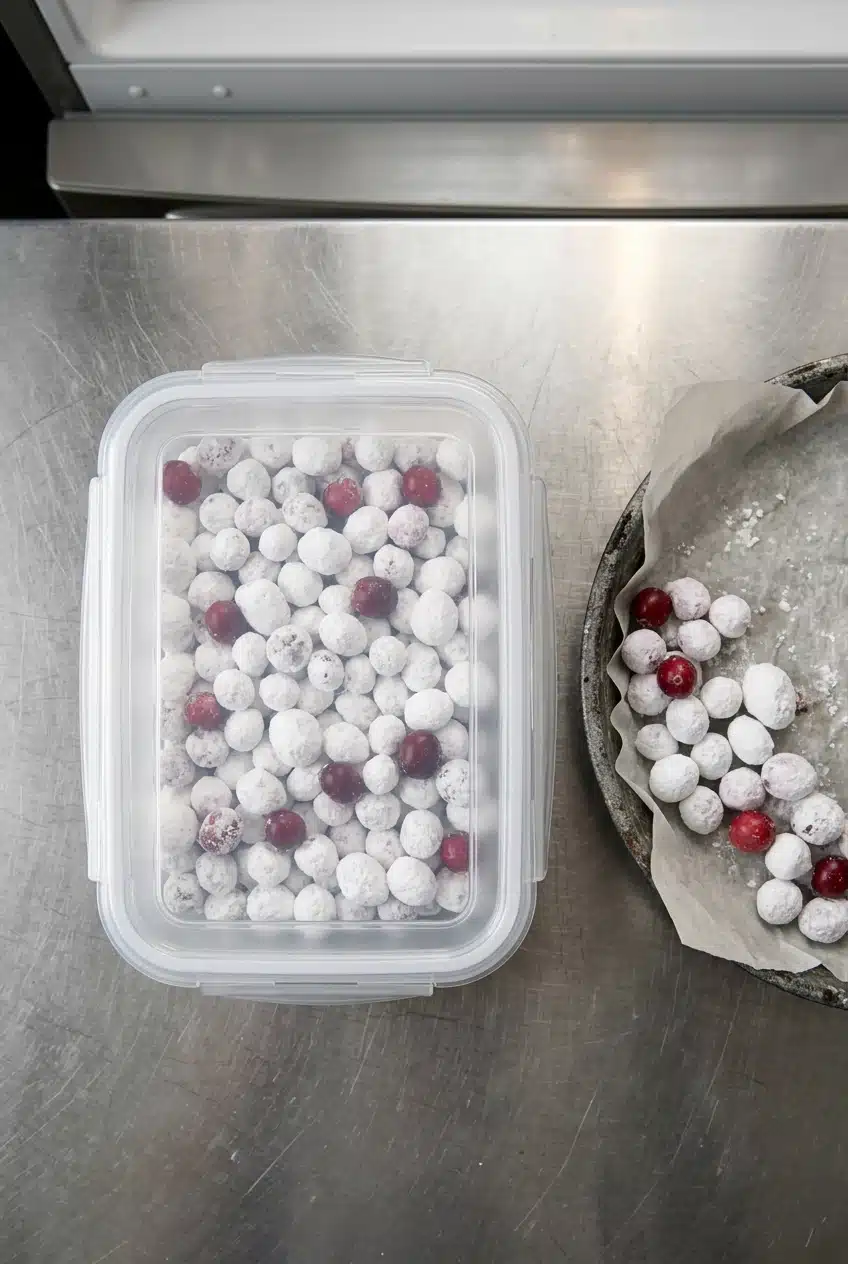
Plan around the refrigerated soak first, then leave room for baking and complete cooling before packing. If you want a firmer finish, add the optional chilling stage after the berries reach room temperature.
Store the cooled berries in an airtight container in the refrigerator. Keeping the lid closed protects the coating from ambient humidity; sealing warm berries can trap moisture and soften the shell.
Don’t treat the sugar coating as a preservation method or assume that crunch confirms freshness. Keep them chilled between servings, and discard berries if you notice concerning changes or are uncertain about their handling.
Final Thoughts on Making Candied Cranberries
The appeal is that crisp sweet shell followed by a juicy, tart cranberry pop. Damp berries, complete sugar coverage, and gentle heat give you the best chance of keeping that contrast.
Follow the measurements and low oven setting above, then let the coating finish firming as the berries cool. Give them a little space on the tray, and let the tart centers shine.
Frequently Asked Questions
What Is the Difference Between Candied Cranberries and Sugared Cranberries?
This powdered-sugar version uses a sweet soak and gentle baking to create an opaque, crisp shell. Classic sugared cranberries pair syrup with granulated sugar for a sparkling garnish.
Why Do My Candied Cranberries Have a Chalky Powdered Sugar Aftertaste?
The powdered sugar’s freshness or cornstarch content may contribute to that finish. Use fresh powdered sugar, or try a tapioca-starch blend if you dislike the taste of your current brand.
Can I Use Frozen Cranberries for Candied Cranberries?
Fresh cranberries work better for this crisp-shell method. Frozen fruit can soften and release moisture, making the coating harder to set evenly.
Can You Bake Candied Cranberries in a Toaster Oven?
A standard oven is more forgiving because the heating elements sit farther from the fruit. If using a toaster oven, watch closely for hot spots, wrinkling, or leaking berries rather than extending the bake.
How Should I Store Candied Cranberries and How Do I Know if They Are Still Good to Eat?
Cool them completely, then refrigerate them in an airtight container. A crisp shell doesn’t establish freshness, and a softened shell alone doesn’t tell you whether they’re suitable to eat. Discard berries with concerning changes or uncertain storage history rather than tasting them to check.
Candied Cranberries Recipe

Equipment
- large bowl
- Strainer
- Large plastic bag
- Baking Sheet
- Parchment Paper
Ingredients
- 12 ounce bag fresh cranberries
- 1-1/2 cups lemon-lime soda ((like Sprite or 7Up))
- 1 cup orange juice
- 1 cup powdered sugar
Instructions
- Wash the cranberries under running water, drain them, and transfer them to a large bowl with the lemon-lime soda and orange juice. The berries should sit in the citrus-soda mixture with room to stir.
- Cover the bowl and place it in the refrigerator for 12–24 hours. The cranberries will remain buoyant, so floating berries are normal.
- Set the oven to 200°F, then pour the soaking mixture through a strainer without rinsing or towel-drying the fruit. The drained skins should still feel damp enough to hold sugar.
- Transfer the damp berries to a large plastic bag containing the powdered sugar, close it, and shake gently. A fully white coating should hide the red skins; add a little more powdered sugar if bare patches remain.
- Distribute the coated fruit across a parchment-lined baking sheet in a single layer. Leave the berries separated so their wet coatings don’t stick together.
- Place the tray in the oven for 5 minutes, taking care not to extend the baking. The coating should begin to set without wrinkled skins or leaking red juice.
- Take the tray out and leave the berries to reach room temperature before serving. As they cool, the shell should feel dry and firm rather than loose and powdery.
- Transfer any remaining cooled cranberries to an airtight container and refrigerate. The berries should be completely cool before the lid goes on so trapped warmth doesn’t dampen the coating.