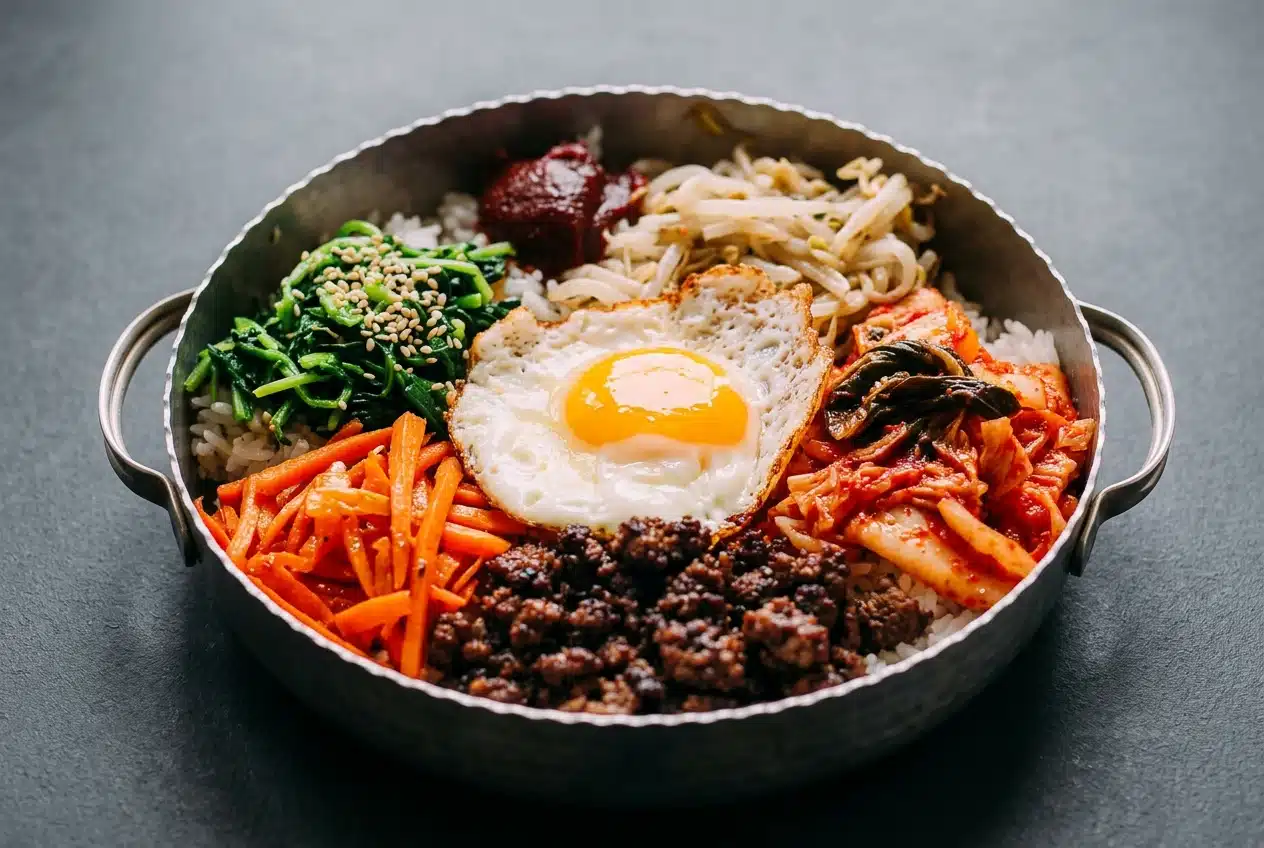
Beef bibimbap is a Korean mixed rice bowl with savory beef, seasoned vegetables, kimchi, a fried egg, and spicy-sweet gochujang. Start the rice first, prepare the vegetables while it cooks, then finish with beef and eggs so the hot components reach the table freshly cooked.
This beef bibimbap combines warm rice with garlicky greens, crunchy sprouts, and browned ground beef. Each topping brings a different texture, and mixing them together turns the separate components into a satisfying bowl.
The cooking feels manageable when you give each component its turn instead of juggling everything at once. Keep the vegetables distinct and the sauce adjustable. The payoff is in the first spoonful.
Set out separate bowls for the vegetables before blanching so you can drain, season, and clear the stove without scrambling.
Core Ingredients and Pantry Swaps
Rice gives the bowl structure, beef supplies savory richness, and seasoned vegetables add crunch and freshness. Garlic and sesame oil bring aroma, while kimchi, gochujang, egg, and sesame seeds balance acidity, heat, richness, and toasted flavor.
- 2 1/2 cups medium grain white rice
- 1 1/2 cups mung bean sprouts
- 1 bunch watercress or spinach
- 1 large carrot
- 2 cloves garlic
- Salt
- 2 teaspoons sesame oil ((divided))
- 1 tablespoon vegetable oil
- 1 pound ground beef
- 1 tablespoon soy sauce ((dark soy sauce, if you have it))
- 4 eggs
- ½ cup napa cabbage kimchi
- 2 tablespoons gochujang ((Korean red pepper paste))
- 2 teaspoons toasted sesame seeds
Think of the bowl in layers: steamed rice, seasoned vegetables known as namul, soy-browned beef, and finishing toppings. Medium-grain rice has enough stickiness to gather toppings on a spoon while retaining individual grains.
Watercress brings a peppery edge; spinach tastes milder. Sprouts provide a juicy crunch, and finely cut carrots add sweetness without overwhelming a bite. Regular soy sauce seasons the beef, while dark soy sauce also gives it deeper color. Gochujang supplies concentrated chili flavor and sweetness, and kimchi adds tang.
How to Make Beef Bibimbap Step by Step
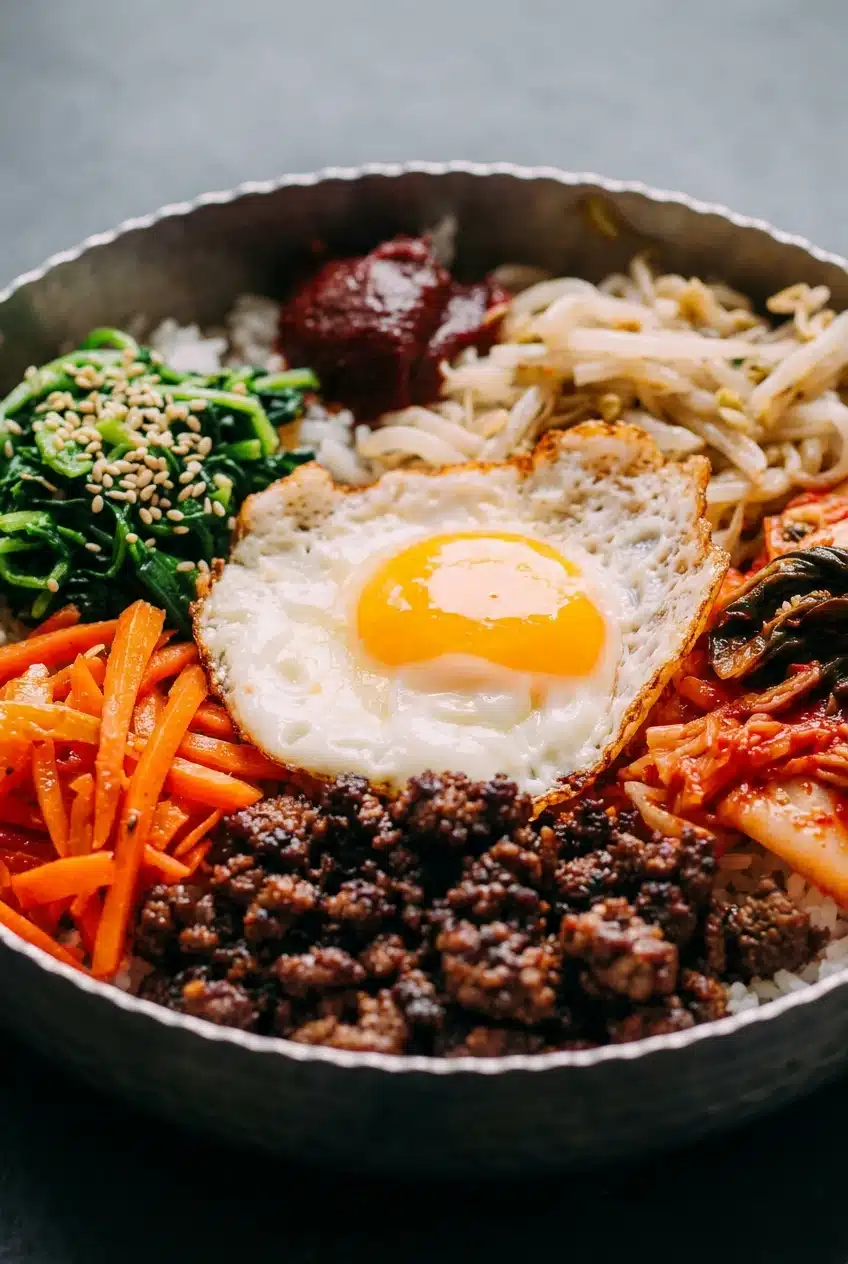
Let the rice cook while you handle the vegetables, then leave the beef and eggs until the end. This sequence uses the same boiling water for the blanched toppings and the same skillet for carrots and beef.
Prep: 15 minutes · Cook: 30 minutes · Total: 45 minutes · Servings: 4
- Begin cooking the rice in a rice cooker, or use the stovetop directions on its package, then bring a medium pot of water to a boil.
The rice can cook in the background while the boiling water handles the vegetable toppings. - Rinse the sprouts and watercress or spinach, cut the carrot into fine matchsticks, and mince the garlic.
Aim for evenly cut carrots so they soften together without losing their crunch. - Cook the sprouts in the boiling water for about 5 minutes, lift them into a colander with a slotted spoon, then blanch the greens in the same water for 1 minute and drain them in another colander.
The sprouts should retain some bite, while the greens should look wilted rather than dull and limp. - Cold-rinse and thoroughly squeeze both vegetables, place the sprouts in a medium bowl, roll the greens into a compact bundle and cut across it 3 or 4 times before placing them in another bowl, then toss each with salt to taste, 1 teaspoon sesame oil, and half the minced garlic.
The vegetables should feel moist but release no dripping water when squeezed, with the garlic and oil distributed throughout. - Heat the vegetable oil in a skillet over medium-high heat and stir-fry the carrots for about 1 minute before transferring them to a dish.
Look for bright orange strands that bend slightly but still offer a little crunch. - Raise the skillet heat to high, crumble in the ground beef and brown it before adding the soy sauce, while cooking the eggs sunny-side up in a separate skillet.
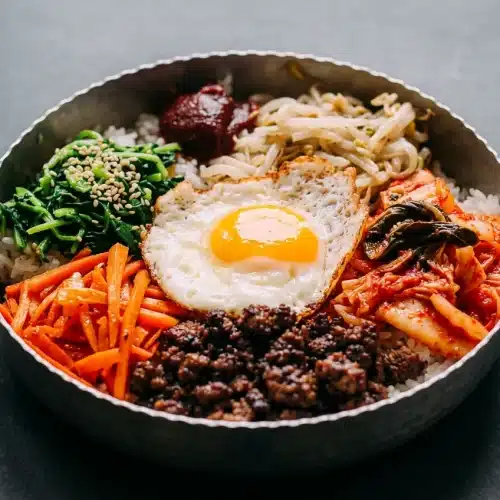
Look for browned beef crumbles and set egg whites surrounding yolks that remain runny. - Portion the rice into four bowls and distribute the beef, seasoned greens, sprouts, carrots, kimchi, and eggs over it, then finish with gochujang and toasted sesame seeds.
Keep the toppings in distinct sections with the egg on top, ready to mix into the warm rice.
Pro Tips and Common Mistakes for Crisp Texture and Balanced Flavor
Separate cooking gives each vegetable the attention it needs: leafy greens wilt quickly, sprouts need longer blanching, and carrots benefit from a quick stir-fry. Keep gochujang adjustable rather than committing every bowl to the same heat level.
Moisture Control for Crisp Namul Vegetables
Cold running water stops the blanched vegetables from continuing to soften. After rinsing, squeeze them thoroughly before seasoning; water caught between leaves and stems will otherwise dilute the garlic and sesame oil.
I’d judge the greens by the squeeze, not just the colander: they should form a damp bundle without sending drops into the bowl.
Optional Skillet-Crisped Rice (Dolsot-Style Finish)
For an optional finish inspired by dolsot bibimbap, spread cooked rice across a lightly sesame-oiled heavy skillet. Let the underside toast undisturbed until it develops golden, crisp edges, then add the toppings. This gives you some stone-bowl-style crunch without changing the main cooking sequence.
Common Mistakes to Avoid
- Watery bowls: poorly drained greens and sprouts release liquid into the rice, so squeeze them before adding seasoning.
- Limp vegetables: crowding everything into the skillet traps steam, so keep the toppings separate and preserve their different textures.
- Pale beef: a crowded pan encourages steaming, so give the crumbles room to contact the hot surface.
- A firm yolk: cooking the egg beyond the runny stage removes the glossy coating it contributes when mixed, so watch the whites as they set.
- Mushy rice: excess moisture makes the bowl heavy once sauce joins it, so aim for cooked grains that still hold their shape.
Popular Bibimbap Variations and Easy Substitutions
Keep these swaps optional and choose them for the texture or flavor you want. The measured recipe above uses ground beef and white rice.
Thinly Sliced Steak (Ribeye or Sirloin Bulgogi-Style) vs. Ground Beef
Ground beef needs no slicing and breaks into small pieces that distribute evenly through the bowl. Thinly sliced ribeye or sirloin gives a more traditional bulgogi-style topping with distinct, tender strips.
Bibimbap names the mixed rice dish; bulgogi names a marinated meat preparation that can become one of its toppings. For that sliced-steak direction, use this beef bulgogi recipe rather than treating the ground-beef seasoning as a full bulgogi marinade.
Gluten-Free (Tamari/Coconut Aminos) and Rice Swaps (Brown Rice or Cauliflower Rice)
For a gluten-free adaptation, choose certified gluten-free tamari or appropriately labeled coconut aminos, and check the gochujang and kimchi labels too. Coconut aminos can shift the sweetness and salt balance, so taste as you season.
- Rice choices: short-grain white rice offers a similarly cohesive texture, brown rice brings more chew, and cauliflower rice makes a softer vegetable foundation.
- Vegetable additions: optional shiitake mushrooms, zucchini, bell pepper, or snow peas add earthy flavor, tenderness, sweetness, or snap.
- Meatless or egg-free bowls: replace beef with sautéed tofu or extra mushrooms, and omit the egg if desired; choose vegetarian kimchi when needed.
- Sauce adjustments: straight gochujang gives concentrated flavor, while a thinned bibimbap sauce, or bibimbap jang, spreads more readily through the rice.
Thinning sauce changes its consistency, not necessarily its heat. For a milder bowl, start with less sauce and keep the kimchi portion adjustable.
How to Serve and Mix Bibimbap Like a Traditional Bowl
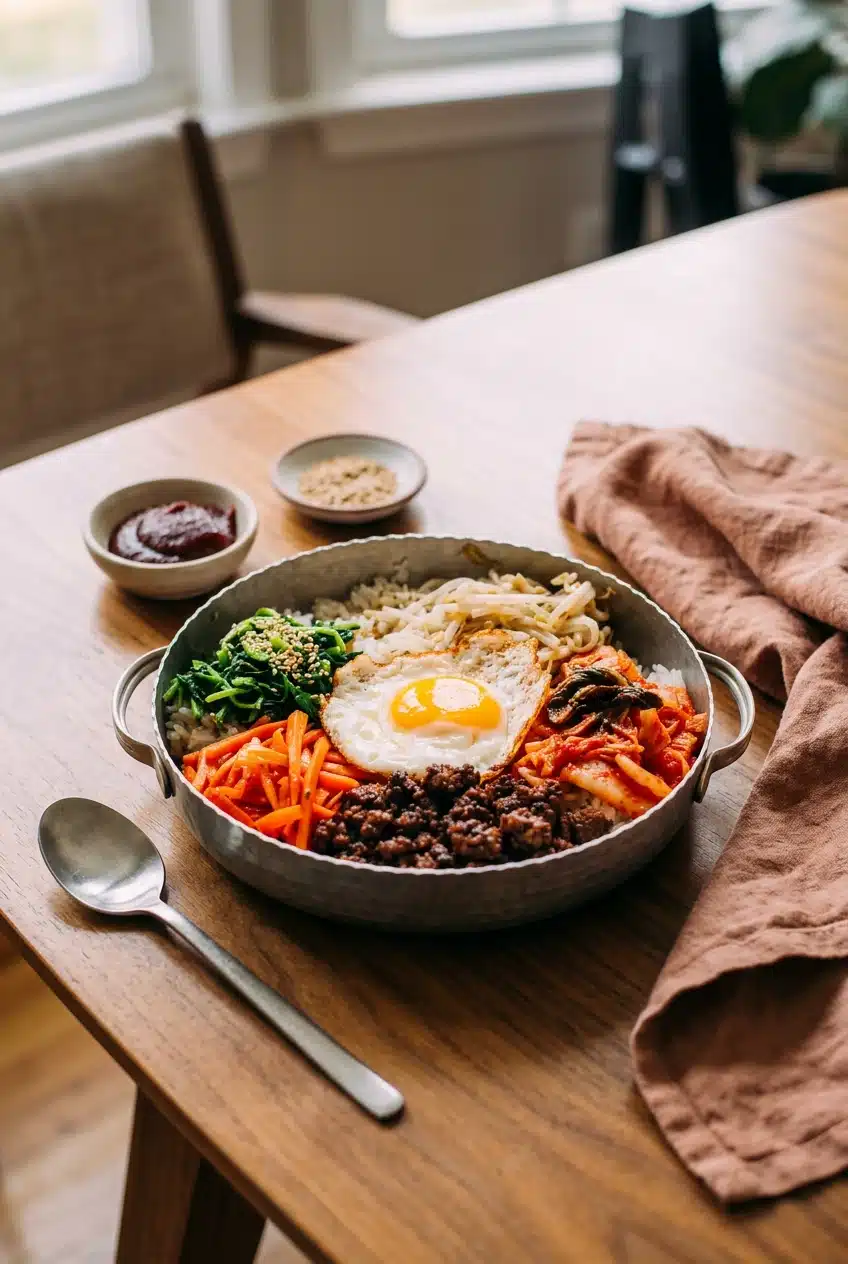
Arrange the beef, greens, sprouts, carrots, and kimchi in separate color sections over warm rice, with the fried egg centered. Bring gochujang and extra toasted sesame seeds to the table so everyone can finish their own bowl.
Then mix thoroughly with a spoon, reaching down into the rice rather than eating each topping separately. The yolk and gochujang should create a glossy coating, with crunchy vegetables and savory beef scattered through every bite.
Make-Ahead Prep, Storage, and Reheating Tips
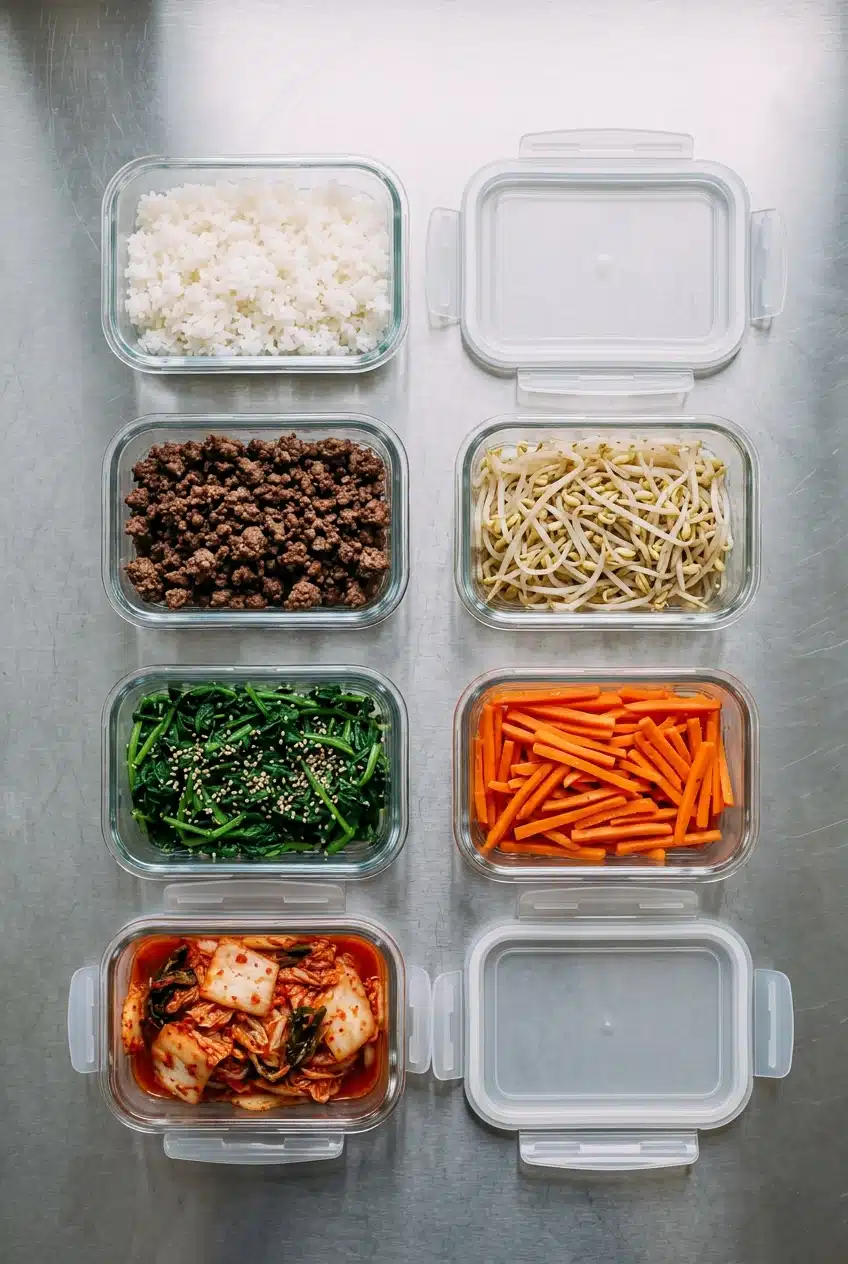
Keep components separate rather than storing fully assembled bowls. Use separate airtight containers for cooked rice, seasoned beef, blanched vegetables, and kimchi, and keep chilled components refrigerated.
When assembling again, reheat the rice and beef separately from the vegetables and kimchi. Keep the kimchi cool and cook a fresh egg just before serving; this preserves the contrast between warm rice, savory meat, and crisp toppings.
If extra seasoned beef needs a different destination, Korean beef tacos offer another way to use its savory flavor without assembling more rice bowls.
Bringing Your Homemade Bowl Together
Starting with rice, moving through the vegetables, and finishing with beef and eggs makes a multi-component dinner feel orderly. Thorough draining and separate cooking keep the textures distinct until you mix.
Try the classic combination first, then experiment with seasonal vegetables or the optional crisped-rice finish. Leave the sauce on the table and make each bowl your own.
Frequently Asked Questions
What Is the Difference Between Ground Beef Bibimbap and Sliced Steak Bibimbap?
Ground beef offers quick preparation and small crumbles that mix evenly into rice. Thinly sliced ribeye or sirloin gives a bulgogi-style topping with a more distinct, tender bite.
Why Do Bibimbap Recipes Cook Each Vegetable Separately?
Greens, sprouts, and carrots soften at different rates, so separate cooking gives you better control. It also preserves their individual colors and prevents vegetable moisture from steaming everything together.
Is Beef Bibimbap Spicy, and How Can I Adjust the Heat?
Most heat comes from the gochujang and kimchi, rather than the rice, beef, or seasoned vegetables. Serve the chili paste on the side and add it gradually as you mix.
How Do I Make Crispy Dolsot-Style Rice Without a Stone Bowl?
Use the optional sesame-oiled heavy-skillet finish described above. Let the cooked rice develop a golden underside before adding toppings instead of stirring it constantly.
How Can I Store and Reheat Leftover Beef Bibimbap Components Safely?
Keep rice, beef, vegetables, and kimchi covered, chilled, and separated rather than leaving an assembled bowl out. Reheat the rice and beef separately, keep kimchi cool, and finish with a freshly cooked egg.
Can I Make Beef Bibimbap Gluten-Free or Swap the White Rice?
Use certified gluten-free tamari or appropriately labeled coconut aminos, and check the other condiments for gluten-containing ingredients. Brown rice or cauliflower rice can replace white rice, though each changes the bowl’s texture.
Beef Bibimbap

Equipment
- Rice Cooker
- Medium pot
- Slotted spoon
- Colander
- Medium bowls
- Skillet
Ingredients
- 2 1/2 cups medium grain white rice
- 1 1/2 cups mung bean sprouts
- 1 bunch watercress or spinach
- 1 large carrot
- 2 cloves garlic
- Salt
- 2 teaspoons sesame oil ((divided))
- 1 tablespoon vegetable oil
- 1 pound ground beef
- 1 tablespoon soy sauce ((dark soy sauce, if you have it))
- 4 eggs
- ½ cup napa cabbage kimchi
- 2 tablespoons gochujang ((Korean red pepper paste))
- 2 teaspoons toasted sesame seeds
Instructions
- Begin cooking the rice in a rice cooker, or use the stovetop directions on its package, then bring a medium pot of water to a boil. The rice can cook in the background while the boiling water handles the vegetable toppings.
- Rinse the sprouts and watercress or spinach, cut the carrot into fine matchsticks, and mince the garlic. Aim for evenly cut carrots so they soften together without losing their crunch.
- Cook the sprouts in the boiling water for about 5 minutes, lift them into a colander with a slotted spoon, then blanch the greens in the same water for 1 minute and drain them in another colander. The sprouts should retain some bite, while the greens should look wilted rather than dull and limp.
- Cold-rinse and thoroughly squeeze both vegetables, place the sprouts in a medium bowl, roll the greens into a compact bundle and cut across it 3 or 4 times before placing them in another bowl, then toss each with salt to taste, 1 teaspoon sesame oil, and half the minced garlic. The vegetables should feel moist but release no dripping water when squeezed, with the garlic and oil distributed throughout.
- Heat the vegetable oil in a skillet over medium-high heat and stir-fry the carrots for about 1 minute before transferring them to a dish. Look for bright orange strands that bend slightly but still offer a little crunch.
- Raise the skillet heat to high, crumble in the ground beef and brown it before adding the soy sauce, while cooking the eggs sunny-side up in a separate skillet. Look for browned beef crumbles and set egg whites surrounding yolks that remain runny.
- Portion the rice into four bowls and distribute the beef, seasoned greens, sprouts, carrots, kimchi, and eggs over it, then finish with gochujang and toasted sesame seeds. Keep the toppings in distinct sections with the egg on top, ready to mix into the warm rice.