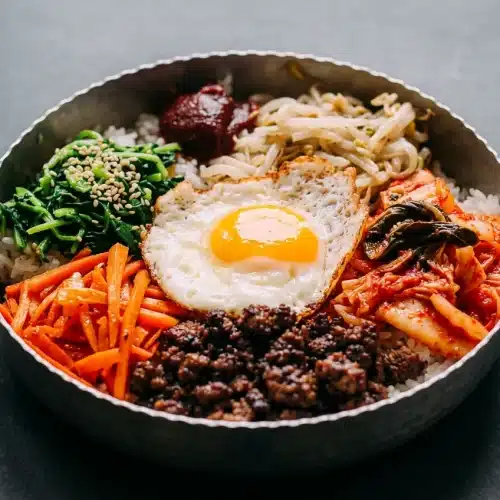
Beef Bibimbap

Warm steamed rice topped with browned ground beef, crisp blanched sprouts and greens, stir-fried carrots, kimchi, a runny egg, and gochujang in 45 minutes.
Equipment
- Rice Cooker
- Medium pot
- Slotted spoon
- Colander
- Medium bowls
- Skillet
Ingredients
- 2 1/2 cups medium grain white rice
- 1 1/2 cups mung bean sprouts
- 1 bunch watercress or spinach
- 1 large carrot
- 2 cloves garlic
- Salt
- 2 teaspoons sesame oil ((divided))
- 1 tablespoon vegetable oil
- 1 pound ground beef
- 1 tablespoon soy sauce ((dark soy sauce, if you have it))
- 4 eggs
- ½ cup napa cabbage kimchi
- 2 tablespoons gochujang ((Korean red pepper paste))
- 2 teaspoons toasted sesame seeds
Instructions
- Begin cooking the rice in a rice cooker, or use the stovetop directions on its package, then bring a medium pot of water to a boil. The rice can cook in the background while the boiling water handles the vegetable toppings.
- Rinse the sprouts and watercress or spinach, cut the carrot into fine matchsticks, and mince the garlic. Aim for evenly cut carrots so they soften together without losing their crunch.
- Cook the sprouts in the boiling water for about 5 minutes, lift them into a colander with a slotted spoon, then blanch the greens in the same water for 1 minute and drain them in another colander. The sprouts should retain some bite, while the greens should look wilted rather than dull and limp.
- Cold-rinse and thoroughly squeeze both vegetables, place the sprouts in a medium bowl, roll the greens into a compact bundle and cut across it 3 or 4 times before placing them in another bowl, then toss each with salt to taste, 1 teaspoon sesame oil, and half the minced garlic. The vegetables should feel moist but release no dripping water when squeezed, with the garlic and oil distributed throughout.
- Heat the vegetable oil in a skillet over medium-high heat and stir-fry the carrots for about 1 minute before transferring them to a dish. Look for bright orange strands that bend slightly but still offer a little crunch.
- Raise the skillet heat to high, crumble in the ground beef and brown it before adding the soy sauce, while cooking the eggs sunny-side up in a separate skillet. Look for browned beef crumbles and set egg whites surrounding yolks that remain runny.
- Portion the rice into four bowls and distribute the beef, seasoned greens, sprouts, carrots, kimchi, and eggs over it, then finish with gochujang and toasted sesame seeds. Keep the toppings in distinct sections with the egg on top, ready to mix into the warm rice.
Notes
Moisture control: Rinse the blanched sprouts and greens under cold running water and squeeze them thoroughly until no water drips so they do not dilute the garlic and sesame oil or make the rice watery.
Texture tip: Cook each vegetable separately so nothing steams into a limp mash, give the ground beef room in a hot pan to brown, and keep the egg yolks runny for a glossy coating when mixed.
Skillet-crisped rice: For a dolsot-style finish, spread cooked rice across a lightly sesame-oiled heavy skillet and let the underside toast undisturbed until golden and crisp at the edges before adding toppings.
Storage and reheating: Store cooked rice, beef, blanched vegetables, and kimchi in separate airtight refrigerated containers. Reheat the rice and beef separately, keep the kimchi cool, and cook a fresh egg before serving.
Heat and swaps: Serve gochujang on the side so each person can adjust the spice level, and use certified gluten-free tamari or swap in brown or cauliflower rice if needed.
Nutrition information is an estimate based on common ingredients and serving sizes. Values may vary depending on brands, portions, and substitutions.