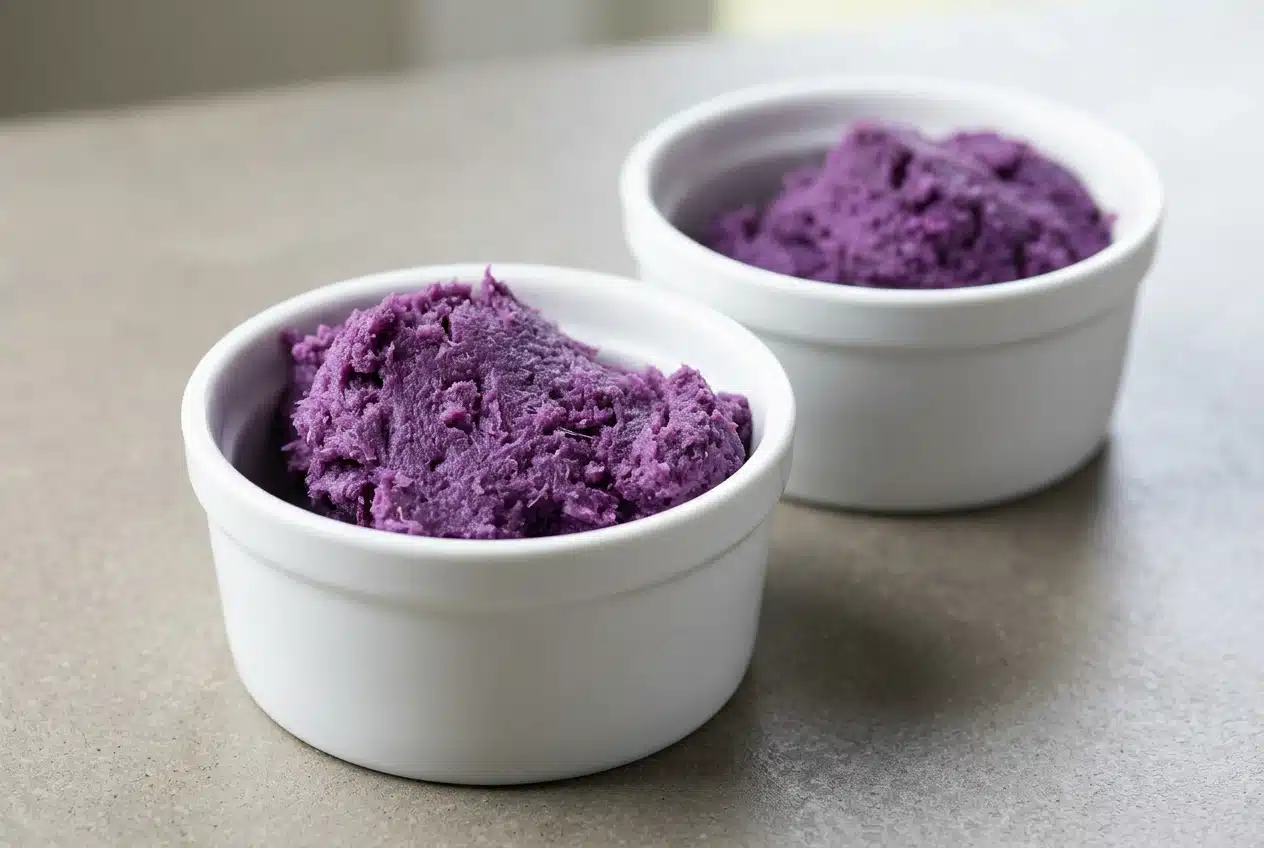
Ube halaya is a thick Filipino purple yam dessert made by cooking mashed ube with milk, sugar, and butter. This fresh-yam version turns creamy and glossy with steady stirring, and a clear spoon trail tells you when it’s ready.
Also called halayang ube, ube halaya works as both a sweet spread and a dessert to enjoy by the spoonful. Its earthy sweetness and gentle vanilla-nutty flavor give it a character all its own.
This version leaves out coconut milk, keeping fresh purple yam at the center of the flavor. The cooking takes patience, but the changing texture gives you useful feedback along the way. Watch for that glossy finish.
Keep your fork or potato masher ready so you can mash the boiled yam while it’s still warm.
Key Ingredients and Smart Substitutions
Purple yam provides body and earthy flavor, milk brings creaminess, brown sugar adds warm sweetness, salt balances the richness, and butter gives the finished halaya a smooth, glossy finish.
- 1 12-oz can evaporated milk
- ½ cup packed brown sugar
- 2.2 lbs fresh ube or purple yam (see notes)
- 1 10-oz can condensed milk
- ½ tsp salt
- ¼ cup unsalted butter (softened and cubed)
Fresh Ube vs. Purple Sweet Potato and Taro
For the fresh ube listed above, shop by the ingredient name rather than purple color alone. Look for produce labeled “ube” or “purple yam,” and ask the produce staff if the label is unclear. Asian and Filipino markets are useful places to look.
Okinawan purple sweet potato and taro are different ingredients, even when they appear beside ube in the produce aisle. Purple sweet potato makes a sweet purple spread with a different flavor; taro does not provide the same characteristic ube taste. Don’t assume that a purple-fleshed tuber is automatically ube.
I’d give the warm-mashing stage more attention than the final color. Thoroughly mashed yam does more for a creamy spoonful than a deeper shade of purple.
Why Milk and Sugar Choices Matter
Evaporated milk supplies creamy liquid without bringing the sweetness of condensed milk. The condensed milk contributes both sweetness and body, helping the mixture become a rich paste rather than a plain yam mash.
Brown sugar gives the sweetness a warmer, caramel-like edge. Salt keeps that sweetness from tasting flat, while butter rounds out the texture and adds sheen near the end of cooking.
Coconut milk isn’t part of this version. Without its distinct aroma, the mellow fresh-yam flavor stays more prominent. Coconut-forward halaya is another delicious direction, but it changes the balance rather than acting as an invisible swap.
How to Make Ube Halaya Step by Step
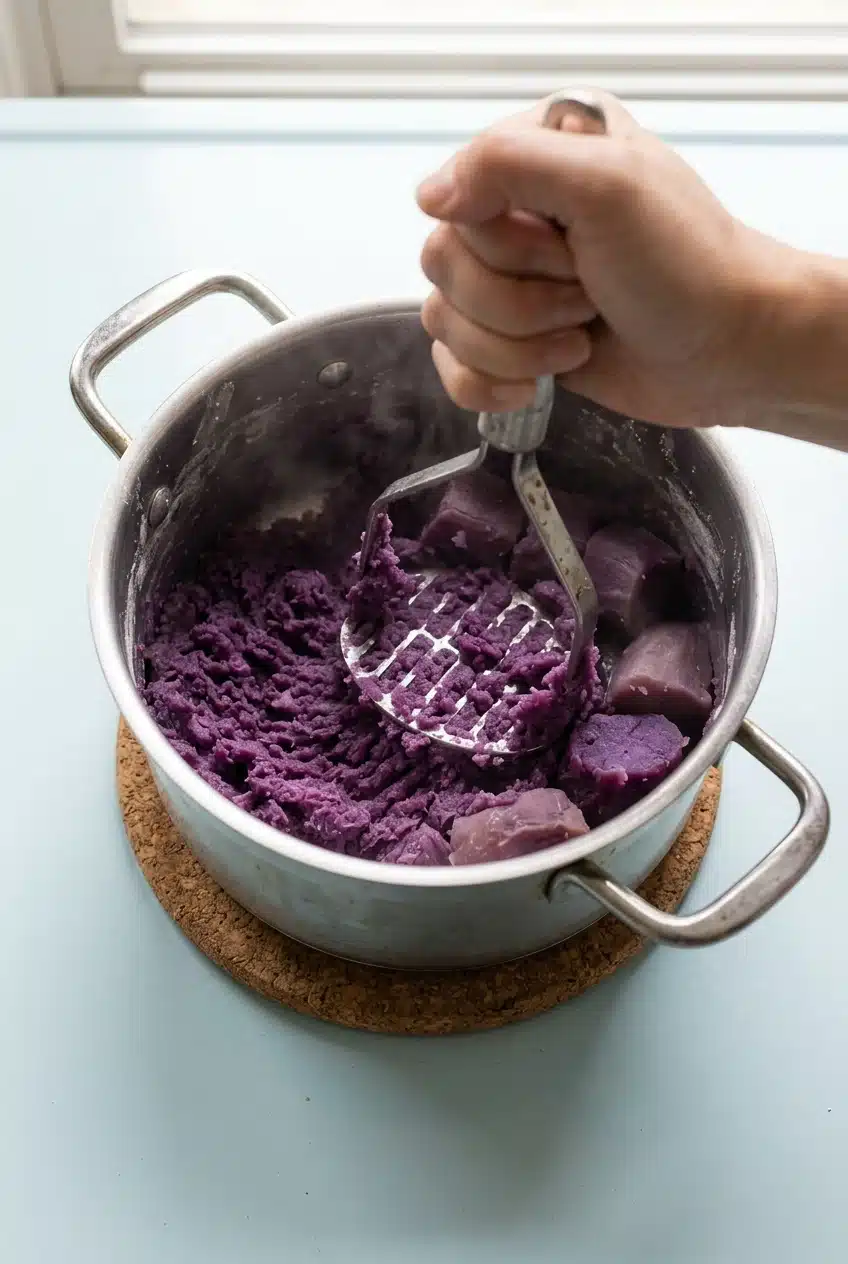
The key stages are tenderizing the yam, mashing it while warm, and stirring the milk mixture until it holds a path across the pan. Plan for 15 minutes of prep and 75 minutes of cooking, totaling 90 minutes. The yield is 48 tbsp, or 48 tablespoon-size servings.
- Cut the unpeeled ube into pieces that fit inside your pot, submerge them in water, and boil for about 30 minutes.
Test the thickest pieces with a fork; the flesh should offer very little resistance. - Lift the cooked pieces from the water, let them cool for about 10 minutes, then remove the skins and crush the warm flesh with a fork or potato masher.
A thorough mash at this stage leaves fewer firm pieces in the finished dessert. - Dissolve the brown sugar in the evaporated milk over medium heat in a large nonstick skillet or wok, then mix in the mashed yam, condensed milk, and salt.
The mixture will begin loose and uneven-looking as the yam combines with the milks. - Keep the mixture moving continuously, scraping across the bottom and around the sides, with the heat no higher than medium.
As moisture cooks away, the mixture grows more cohesive and offers increasing resistance to the spoon. - Work in the softened, cubed butter when the mixture has thickened considerably, around 20 minutes into stirring.
Continue stirring until no separate butter remains and the paste looks evenly glossy. - Check for doneness around 30 minutes into stirring by drawing your spoon through the center of the pan.
The exposed path should remain distinct rather than immediately filling with flowing jam. - Spoon the finished halaya into a heat-proof container and let it cool.
The paste becomes firmer as it cools, so its hot consistency should still have some softness.
Expert Tips and Troubleshooting
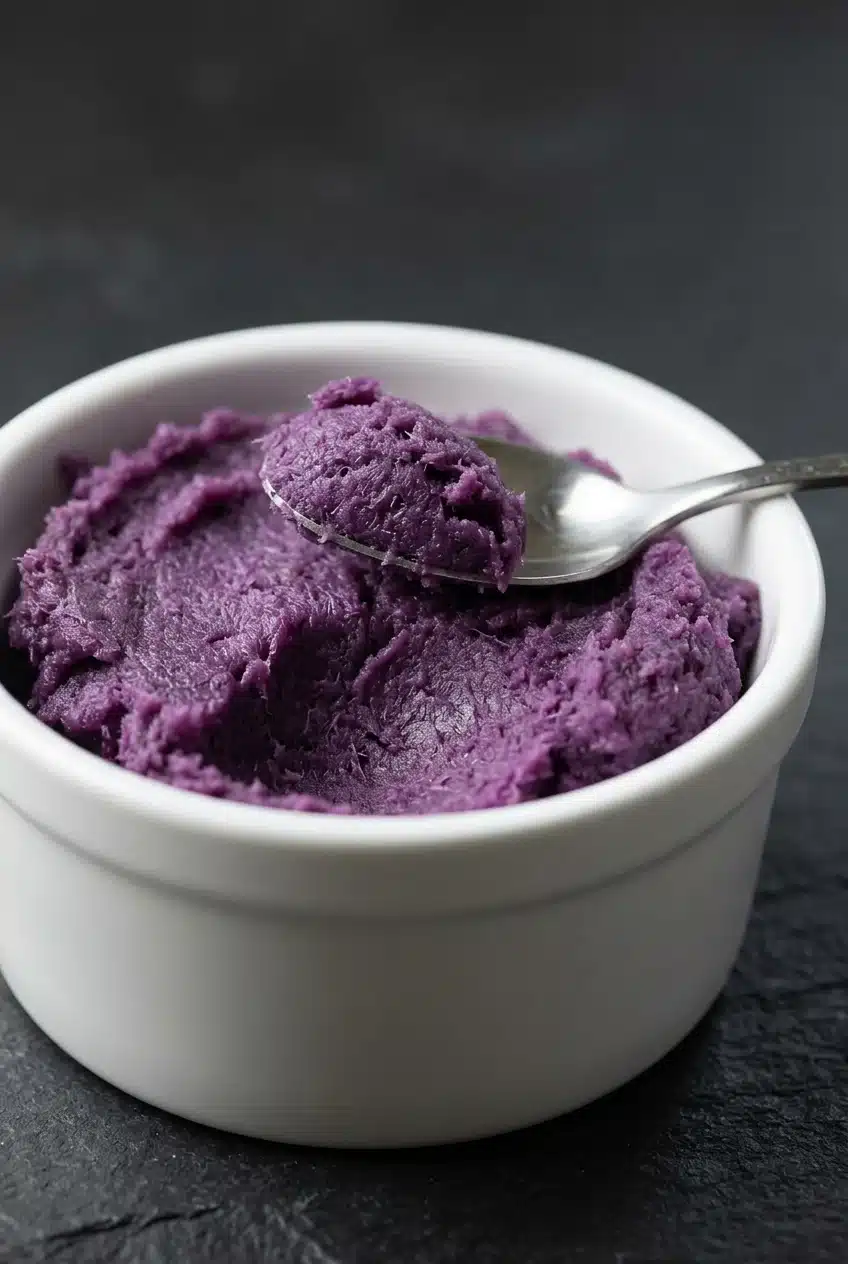
Pan width and burner strength affect how quickly the mixture thickens. Treat the cooking times as checkpoints, then let the spoon-trail cue guide your final decision.
A wide nonstick skillet or wok gives moisture room to evaporate and makes it easier to sweep the bottom. A long-handled spatula also keeps your hand farther from the thick bubbles that can sputter as the paste concentrates. Keep the heat moderate rather than trying to hurry the process.
Spreadable Jam vs. Sliceable Dessert Consistency
Judge the halaya with cooling in mind. A hot paste that already feels stiff can become denser than you intended once it cools. For a creamy spread, don’t keep cooking merely because the warm mixture still feels soft.
A firmer platter-style dessert depends on a cohesive paste, but this recipe uses the same center-path check rather than separate cooking schedules. Look for a clear trail and noticeable drag on the spoon, not a dry mass. Cooling supplies part of the final firmness.
Fixing Lumpy, Thin, or Pale Ube Halaya
- Lumpy texture: Coarse pieces usually trace back to incomplete mashing. Give the warm yam a thorough mash before adding it to the milk mixture; prolonged simmering won’t make substantial chunks disappear.
- Slow thickening: A gentler burner or narrower pan can slow evaporation. Continue steady scraping at no higher than medium heat and wait for the center trail instead of increasing the heat.
- Catching on the bottom: Concentrated milk and sugar need constant movement. Sweep the whole pan, including the edges, rather than stirring only through the center.
- Pale color: Don’t use color as a doneness test. Ube extract is an optional color and aroma direction, but it isn’t required for this fresh-yam recipe.
Optional Technique for Ultra-Silky Halaya
Warm-mashed halaya can retain a delicate yam texture, which suits a homemade spread beautifully. An extra-fine preparation gives a more uniform, polished paste, but that is an optional texture preference rather than a requirement for success.
Silkiness and thickness are separate qualities. Cooking longer concentrates the paste; it doesn’t replace careful preparation of the yam.
Flavor Variations and Shortcuts
Different forms of ube and different milk choices can be useful, but they don’t all behave like fresh mashed yam. Treat these as optional directions, not interchangeable replacement formulas.
Frozen Grated Ube Shortcut
Frozen grated ube is a practical shopping alternative when whole fresh yam is unavailable. Check the package for its ingredients and preparation requirements, since products can differ. Its texture and aroma may also differ from freshly cooked yam; ube extract remains an optional flavor direction.
Pantry Ube Powder Method
Pure ube powder offers another alternative, but it isn’t the same as a sweetened ube drink mix or dessert mix. Choose a recipe developed for the particular powder rather than replacing fresh yam by volume. Expect differences in moisture, flavor, and texture.
Coconut Milk and Plant-Based Variations
Coconut milk brings a more pronounced coconut aroma, while plant-based fat offers a different finish from butter. For a fully plant-based version, the evaporated milk, condensed milk, and butter all need appropriate alternatives. Replacing only one dairy ingredient doesn’t make this recipe dairy-free or vegan.
Festive Toppings: Latik or Grated Cheese
- Latik: Toasted coconut curds add nutty coconut flavor and a contrasting texture.
- Grated cheddar cheese: A savory, salty finish balances the sweet yam paste.
Ways to Serve and Bake with Halaya
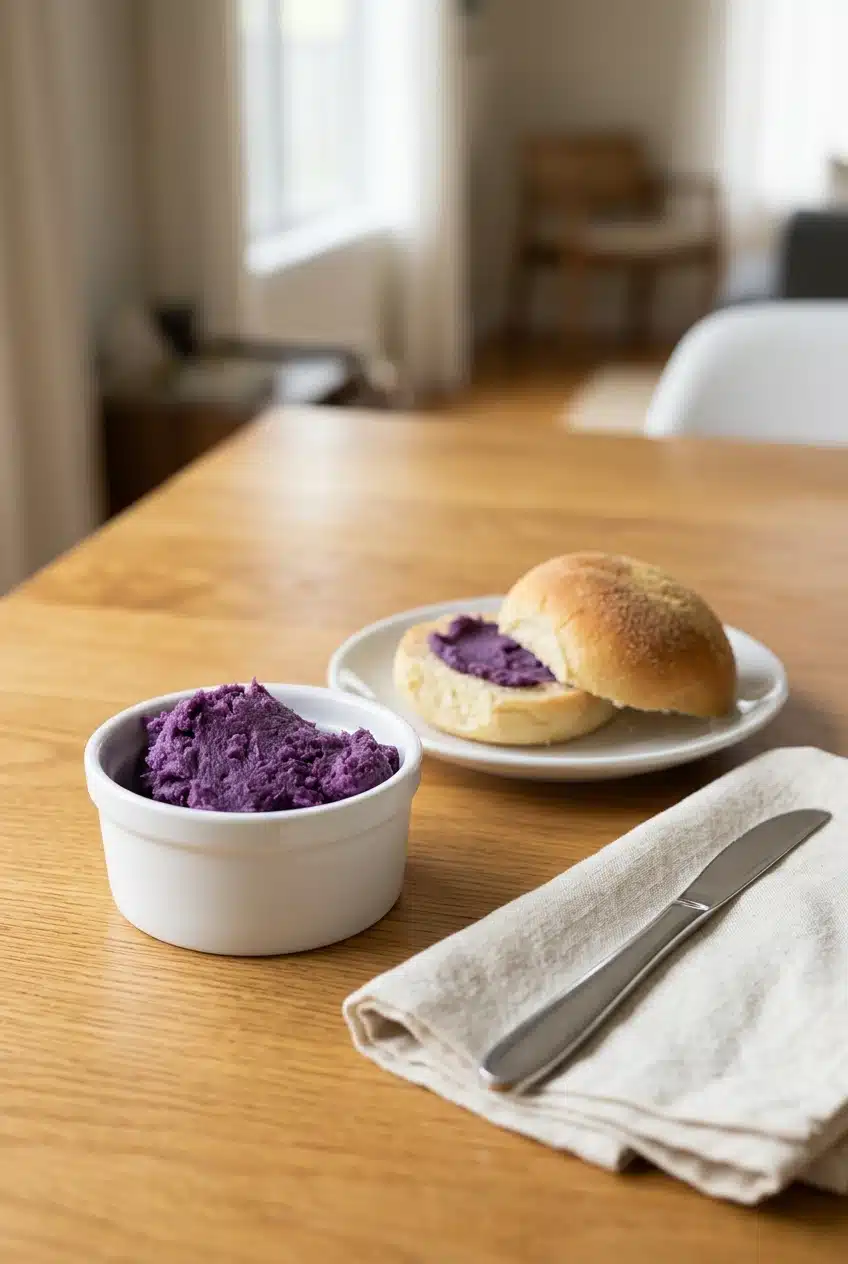
Choose the serving style that suits the halaya’s rich texture, whether you want a breakfast spread, a dessert accompaniment, or a filling.
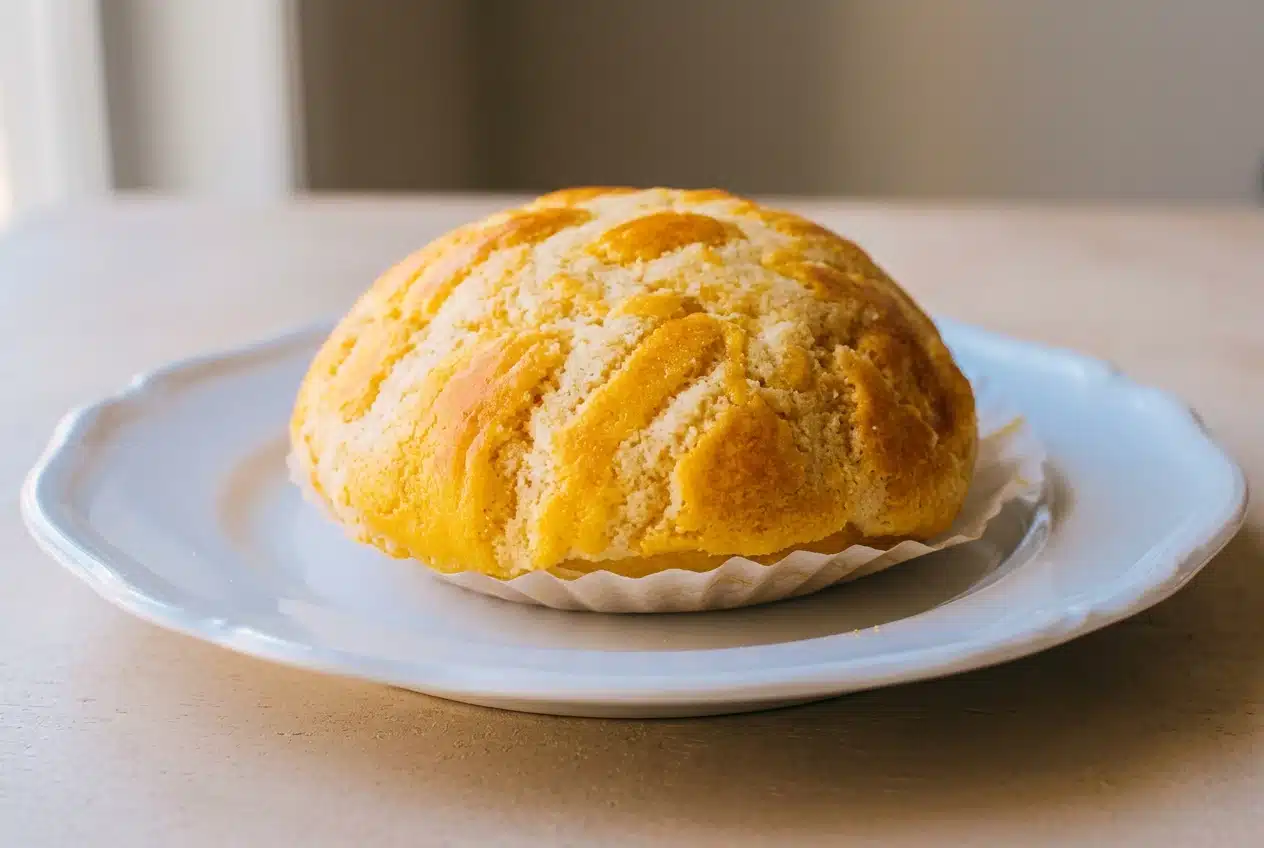
- Breads and breakfast: Pair it with warm pandesal, ensaymada, toast, pancakes, or waffles.
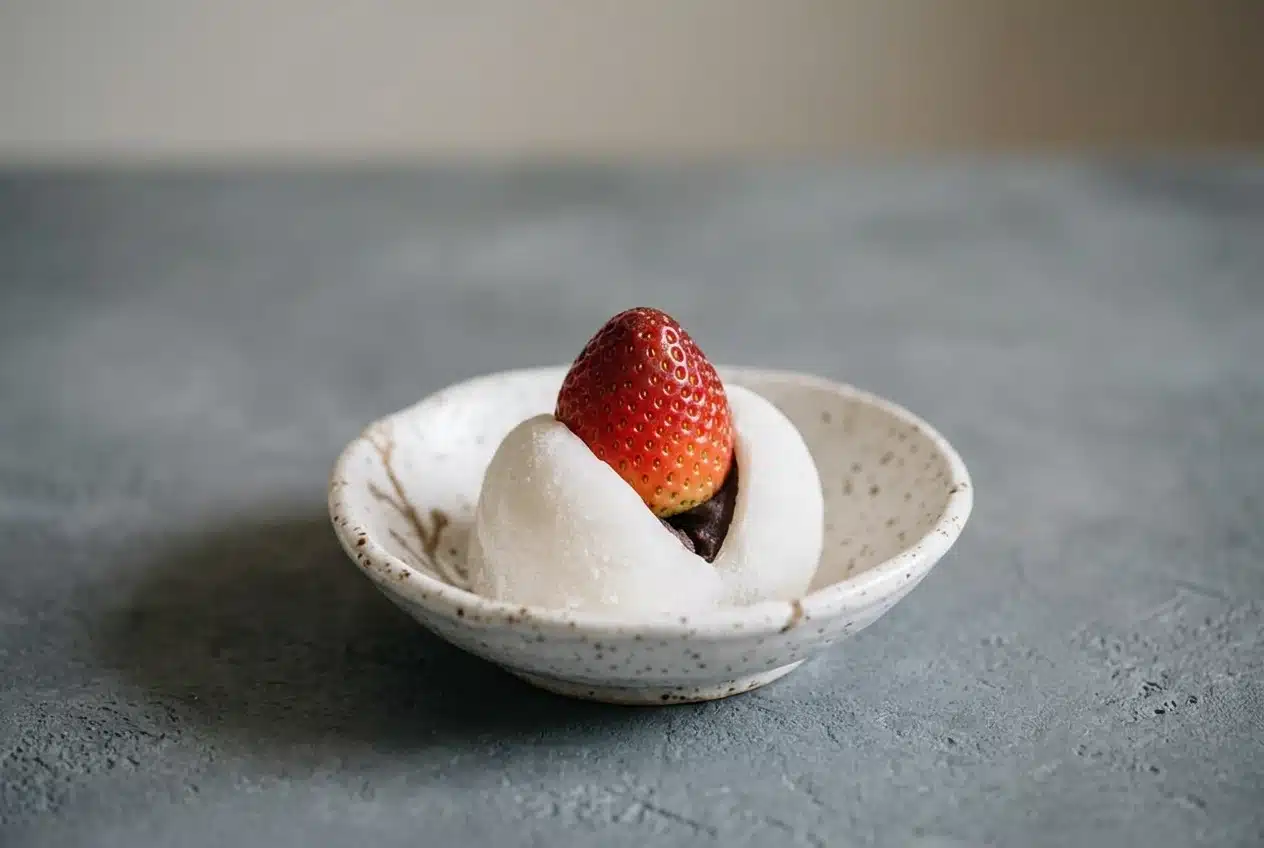
- Filipino desserts: Enjoy it with halo-halo, the layered shaved-ice dessert, or alongside leche flan and vanilla ice cream.
- Baking: Use a recipe designed for halaya when making ube cakes, cheesecakes, crinkles, brownies, or filled soft buns, since the paste adds moisture and sweetness.
- Celebrations: A platter of halaya fits a holiday dessert table, including Noche Buena gatherings.
- Drinks: Halaya can also supply the purple-yam flavor in an ube latte.
For a contrasting cake pairing, consider halaya as a filling between layers of classic yellow cake. Its earthy flavor complements the cake’s buttery sweetness.
Cooling and Caring for Homemade Halaya
Transfer the finished paste to a heat-proof container for the cooling stage. This is also when the texture settles, so don’t judge its final firmness straight from the pan.
For leftovers, use a clean, covered container and keep the halaya chilled as a precaution. Treat it as a homemade milk-and-yam dessert rather than a shelf-stable preserve. No specific storage duration is established here.
Final Thoughts on Homemade Halaya
Fresh-yam halaya rewards steady stirring with a creamy, glossy paste and a mellow, earthy sweetness. Careful warm mashing gives that texture a good start.
Keep the heat moderate, scrape continuously, and stop when the spoon leaves a distinct path. Let the cooling finish its work, then enjoy the result one creamy spoonful at a time.
Frequently Asked Questions
What Are the Differences Between Ube Jam and Ube Halaya?
Ube jam and ube halaya commonly refer to the same Filipino purple yam dessert. Here, “jam” means a thick yam paste, not a fruit preserve made with added pectin.
What Is Ube and What Does It Taste Like?
Ube is purple yam used in Filipino desserts. Its flavor is mellow and earthy-sweet, with notes often compared to vanilla and nuts.
Can I Substitute Frozen Grated Ube or Ube Powder for Fresh Purple Yam?
Both are optional alternatives, but neither is an automatic direct replacement in this fresh-yam recipe. Use product-specific directions and a recipe developed for that form of ube.
Can I Use Purple Sweet Potato Instead of Ube?
It can make a sweet purple spread, but the result will have a different flavor from ube halaya. Choose true ube when you want this recipe’s characteristic purple-yam taste.
Why Is My Ube Halaya Lumpy or Taking a Long Time to Thicken?
Lumps usually reflect coarse yam pieces, so thorough warm mashing matters. Thickening varies with pan width and burner output; maintain constant stirring and follow the spoon-trail cue.
How Should I Store Homemade Ube Halaya?
Keep leftovers covered in a clean container and chilled as a precaution. Don’t treat homemade halaya as a shelf-stable jarred preserve or assume a specific storage life.
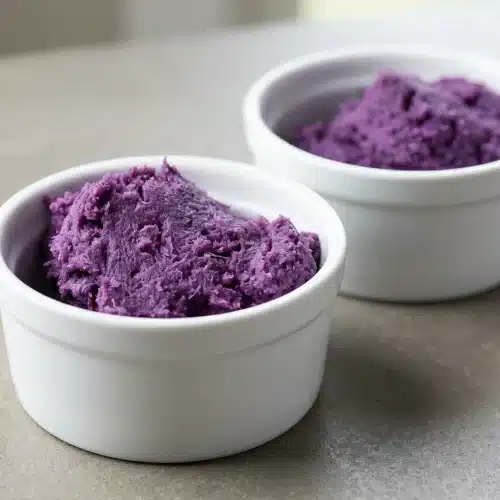
Ube Halaya

Equipment
- Pot
- Potato masher
- Large nonstick skillet or wok
- heat-proof container
Ingredients
- 1 12-oz can evaporated milk
- ½ cup packed brown sugar
- 2.2 lbs fresh ube or purple yam see notes
- 1 10-oz can condensed milk
- ½ tsp salt
- ¼ cup unsalted butter softened and cubed
Instructions
- Cut the unpeeled ube into pieces that fit inside your pot, submerge them in water, and boil for about 30 minutes. Test the thickest pieces with a fork; the flesh should offer very little resistance.
- Lift the cooked pieces from the water, let them cool for about 10 minutes, then remove the skins and crush the warm flesh with a fork or potato masher. A thorough mash at this stage leaves fewer firm pieces in the finished dessert.
- Dissolve the brown sugar in the evaporated milk over medium heat in a large nonstick skillet or wok, then mix in the mashed yam, condensed milk, and salt. The mixture will begin loose and uneven-looking as the yam combines with the milks.
- Keep the mixture moving continuously, scraping across the bottom and around the sides, with the heat no higher than medium. As moisture cooks away, the mixture grows more cohesive and offers increasing resistance to the spoon.
- Work in the softened, cubed butter when the mixture has thickened considerably, around 20 minutes into stirring. Continue stirring until no separate butter remains and the paste looks evenly glossy.
- Check for doneness around 30 minutes into stirring by drawing your spoon through the center of the pan. The exposed path should remain distinct rather than immediately filling with flowing jam.
- Spoon the finished halaya into a heat-proof container and let it cool. The paste becomes firmer as it cools, so its hot consistency should still have some softness.